
The Inclusion of the Creative Tourism Segment through Placemaking: Analysis of Tourism Activity in Lavras Novas, Brazil
Journal: Creative Industries R&D @creativejour
Section: КРЕАТИВНЫЕ КЛАСТЕРЫ, ХАБЫ И УРБАНИСТИКА | CREATIVE CLUSTERS, HUBS AND URBANISM
Article in issue: 1 (2), 2025.
Free access
Lavras Novas is a tourist district admired for its architecture, landscapes, and tranquil atmosphere. Creative tourism, characterized by innovation, emerges as a tool to renew tourism activity, promoting tourists participation in the community’s daily life. This research aims to understand how creative tourism, through placemaking, can intensify and diversify tourism in Lavras Novas. The motivation for the study arises from the authors’ curiosity about the dynamics and sustainability of local tourism, seeking to contribute to the understanding of creative tourism. The methodology employed is both qualitative and quantitative, including a semi-structured interview with a strategic actor in the region and the application of questionnaires for data collection. Identified challenges highlight the need for planning and diversification of tourism to preserve local identity and transform public spaces. The study aims to offer new perspectives for tourism in Lavras Novas, promoting sustainable development and community participation.
Similar articles in the section Production and services according to economic sectors
Short address: https://sciup.org/14134263
IDS: 14134263 | UDC: 338.48-44(815.1-21) | DOI: 10.7868/S3033671625020035
Креативный туризм как инструмент диверсификации туристической активности: кейс района Лаврас-Новас (муниципалитет Ору-Прету, штат Минас-Жерайс, Бразилия)
Лаврас-Новас – это туристический район, восхищающий своей архитектурой, пейзажами и спокойной атмосферой. Креативный туризм, характеризующийся инновациями, выступает в качестве инструмента для обновления туристической сферы, способствет вовлечению туристов в повседневную жизнь местных сообществ. Это исследование направлено на понимание того, как креативный туризм с помощью создания общественных пространств может усилить и разнообразить туризм в Лаврас-Новас. Мотивацией к исследованию послужил интерес авторов к вопросу динамики и устойчивости местного туризма, а также стремление внести вклад в понимание креативного туризма. В работе использовалась как качественная, так и количественная методология, включая проведение полуструктурированного интервью и применение анкет для сбора данных. Выявленные задачи подчёркивают необходимость планирования и диверсификации туризма для сохранения местной идентичности и трансформации общественных пространств. Исследование стремится предложить новые перспективы для туризма в Лаврас-Новас, которые будут способствовать устойчивому развитию и более широкому вовлечению общественности.
Text of the article The Inclusion of the Creative Tourism Segment through Placemaking: Analysis of Tourism Activity in Lavras Novas, Brazil
Tourism is an important socioeconomic element, conceived through a process of cultural exchange between visitors and local communities (BENI, 1999). However, the characteristics of overtourism, defined as the “excess of tourists in certain destinations” (OVERTOURISM, 2018, translated by Felipe Ishara Rodrigues), generate challenges such as environmental degradation, gentrification, pollution, and pressure on infrastructure.
This scenario is evident in Lavras Novas, a district of Ouro Preto (MG), whose tourism development began with its discovery by visitors in the 1980s. Today, tourism constitutes the village’s main economic activity, exclusively recognized for its natural beauty, preserved architecture, and tranquil atmosphere. However, the rapid and unplanned growth of tourism has produced both positive and negative impacts, resulting in challenges for the local community and for environmental preservation.
The core problem of this research lies in the impact of unplanned tourism growth, which affects cultural identity, infrastructure, and the quality of life of local residents. The study raises questions such as: How does tourism affect local governance and culture? What strategies can ensure cultural preservation and community inclusion in tourism development? How does the increase in tourism affect infrastructure and management in Lavras Novas?
In this context, creative tourism and placemaking emerge as solutions to promote more authentic, human, and sustainable tourism experiences, highlighting cultural uniqueness and encouraging active community participation in the revitalization of public spaces.
Creative tourism thus fosters the development of unique experiences in which each visitor’s personal engagement provides, on the one hand, the enjoyment of unique, tailor-made moments and, on the other, a deeper understanding of the meaning of local values, practices, and culture, thereby enabling the acquisition of new skills (Carvalho et al., 2014, p. 637).
Therefore, the main objective of this study is to understand the incorporation of creative tourism through placemaking in Lavras Novas, in order to enable the diversification of tourism activities and promote more meaningful interactions between tourists and the community. To achieve this general goal, the following specific objectives were outlined:
-
1. Analyze the role of the tourism trade in creating creative experiences;
-
2. Promote a basic placemaking diagnosis in Lavras Novas;
-
3. Examine how creative tourism can foster public policies for local development.
This study seeks to contribute to the understanding of the relevance of creative tourism in Lavras Novas, identifying how this segment can support the region’s tourism development. Furthermore, it aims to broaden the discussion on the role of creative tourism in cultural heritage preservation, local development, and the use and remodeling of public spaces to meet community needs, promoting meaningful tourism experiences.
Theoretical Framework
Creative Territories
Creative territories can be understood as those that are strategically planned to transform their areas by harnessing creativity.
According to the Ministry of Culture, creative territories are “neighborhoods, cities, or regions that present creative cultural potentials capable of promoting comprehensive and sustainable development, combining preservation and promotion of their cultural and environmental values” (Ministério da Cultura, 2013, p. 40). It is important to understand that these are places transformed in their appearance and use, giving rise to a dynamic environment that stimulates creativity and simultaneously awakens citizens’ interest, boosting economic and sustainable development (Via Estação Conhecimento, 2021).
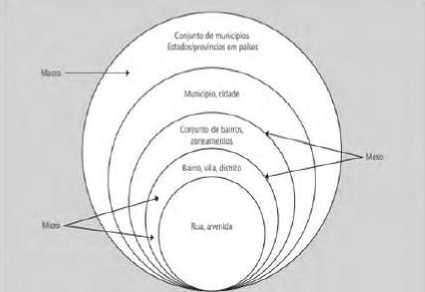
Figure 1 – Levels of creative territories
Source: Emmendoerfer e Ashton, 2014, p.464.
Authors such as Florida (2002) and Ashton (2013) argue that this more synergistic relationship produces talent, increases job opportunities, generates knowledge among the community and workers in creative sectors, enhances the creative potential of companies, attracts tourists, promotes social and cultural diversity, contributes to the city’s economy, and improves the quality of life of its citizens—all while maintaining constant dialogue with the local community and with both public and private sectors.
For these transformations to occur, planning is necessary to change the reality of many people who work directly or indirectly with creative sectors, encompassing a wide range of activities that diversify the economy of a given locality. This can only be truly effective through investment, planning, and the joint work of public and private institutions, as well as organized civil society.
In conclusion, creative territories emerge as contributors to sustainable development and innovation, and they play a major role in issues related to social well-being. By cultivating an environment conducive to cultural expression, collaboration, and diversity, such spaces not only prosper economically but also promote the quality of life of their inhabitants.
Placemaking
In a literal sense, placemaking is defined as the production of spaces with the aim of transforming public places, seeking to create opportunities to strengthen the connections between people and places. Its origin lies in community participation, where citizens come together to improve a given region or space.
Placemaking is also understood as:
“A place is a location to which people assign meaning and with which they have an emotional connection, going far beyond its location or physical attributes. It is a blend of its physical form with the activities that happen there, generating a sense of attachment to the place”. (Somos Cidade, 2022, p. 1)
Since placemaking refers to a process that seeks to foster greater community involvement, improve quality of life, and enhance urban spaces, researchers must pay close attention when choosing the most suitable tools and approaches for each space, adapting them to the characteristics of each community and public area.
Researchers directly engaged with this thematic issue follow a systematized methodology to evaluate the success of public spaces. This evaluation is based on four fundamental qualities: accessibility, comfort, sociability, and the level of activity of the place. Based on these criteria, a tool was developed to guide and facilitate the analysis process. The aspects encompassed by the concept of placemaking are illustrated in Fig. 2.
Following the diagram, access and connections refer to the ease of entering and leaving the location, its visibility, and the importance of the surrounding streets for overall flow. Accessible spaces have high turnover. Comfort and image are evaluated based on factors such as cleanliness, safety, and convenience. In the category of uses and activities, the analysis focuses on whether there is something to do in the place. Sociability is more complex, as it depends on whether people feel comfortable and connected to the space, enabling them to use it and identify with it.
In summary, placemaking offers an approach to urban development that places people at the center of the process of change and revitalization, seeking to create spaces that meet community needs. By revitalizing public spaces, these practices foster environments conducive to creative and touristic experiences, aligning with new tourism demands that value participatory interactions and engagement with local culture.
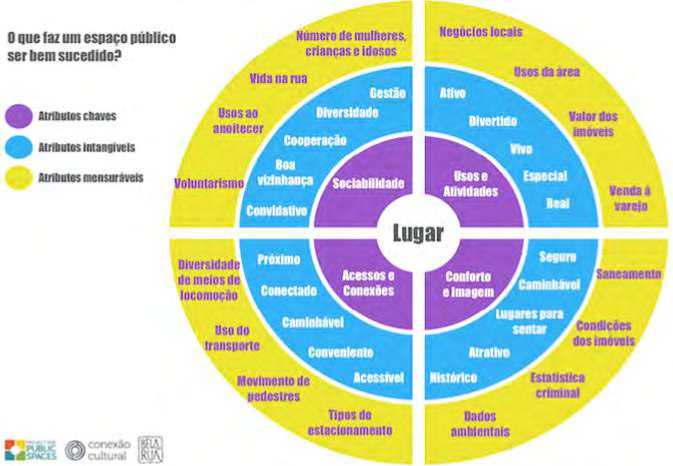
Figure 2 – Public space evaluation tool
Source: Medium, 2017, p.1.
Historical Evolution of the Concepts of Creative Tourism and the Profile of the New Tourist
Author Greg Richards reinforces this conceptual framework in the following excerpt:
“Creative tourism incorporates elements from other tourism segments, such as: the emphasis on everyday life, the intangible, the spontaneity of creative experience, and the mundane, as opposed to specialized tourism in these spaces. This announced an important repositioning of the ‘local’ in relation to tourism – and the local becomes a new arbiter of authenticity”. (Richards, 2021, p. 8, our translation).
Supporting this discourse, Fonseca and Cavalcante (2021, p. 271) state:
“Creative tourism is also responsible for valuing culture, fostering a sense of belonging to the customs and traditions of the local community, as well as generating economic alternatives linked to tourism activity. Its participants are encouraged to understand the importance of cultural heritage preservation and to contribute to the construction of a new heritage, through creative workshops. This new modality of tourism is directly related to built heritage, as it proposes the revitalization and reuse of these spaces through activities that enhance their value”.
As already mentioned, the goal is for tourists to interact with the local community while learning new skills, simultaneously contributing to the local economy. This type of tourism also contributes to the preservation of cultural traditions and heritage, promoting the sustainable development of communities and strengthening their identities.
Pereira (2005) identified some characteristics of this new tourist profile: open access to culture, greater curiosity in traveling and learning about other cultures. This tourist is more demanding, possesses higher cultural capital, and seeks products that showcase the culture of the visited place while allowing continuity of their cultural habits.
In synthesis, creative tourism is a typology that defines strategies to consolidate tourism activities by associating them with creativity and cultural appreciation of people and places. It is a segment that brings tourists and residents closer together, grounding this interaction in respect for visited sites and the community. Ultimately, this tourism segment positions itself against mass tourism by proposing deeper cultural connections and offering alternative scenarios to cultural attractions often saturated by overuse.
Sustainable Local Development
When people became more concerned with the environment, climate factors, and the planet’s imbalance, the concept of sustainable development emerged. The most widely accepted definition frames development as that which meets the needs of the present without compromising the ability of future generations to meet their own needs (Brundtland, 1991).
In this regard, Figueiredo presents a concept of sustainable development: “Sustainable development would therefore be development that, contrary to traditional conceptions, presupposes a way of living and acting in which the purpose of production and consumption is to provide the well-being of the majority of the population, while causing a smaller impact on the environment through new forms of knowledge about the human/nature relationship.” (Figueiredo, 1999, p. 39)
Moreover, this development model must be strategic and cannot be imposed in a top-down, vertical fashion. Ideas must be conceived and applied jointly with the community and supported by responsible policies. For this to occur, partnerships among all participating actors are essential, involving a redistribution of power among the State, private entities, civil society, and the third sector.
The idea of this type of development is grounded in the need for the emergence and strengthening of actors rooted in their territories, with the capacity for socioeconomic initiatives that leverage local potential while aiming to improve the overall quality of life of the population (Tabosa et al., 2004, p. 3).
On the global stage, in 2015 the UN created an action plan for all stakeholders to work collectively in order to guide the world toward a more sustainable path.
The 2030 Agenda, consisting of 17 SDGs, was introduced in 2015 to provide a global framework balancing social, economic, and environmental sustainability through measurable goals designed to address interrelated challenges and achieve sustainable development (Mio et al., 2020).
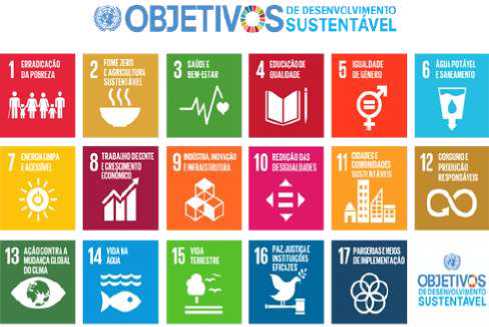
Figure 3 – Sustainable Development Goals – SDGs.
Source: FIOCRUZ, 2023, p.1.
The SDGs aim to integrate economic, social, and environmental aspects to create a fairer and more balanced future, encouraging governments, businesses, and civil society to work together to achieve these goals.
It is important to emphasize that for this type of development to be achieved, it depends on managers’ recognition of the need to establish planning that acknowledges that natural resources will eventually be depleted, as they are not renewable sources. The continuity of the world as we know it depends on how we manage our impacts in the present and in the near future. Resources are finite, and we are all responsible for their conservation (CEBDS, 2023, p.1).
Although these practices represent significant progress, challenges remain and require continuous and collaborative efforts to achieve broader sustainable development in Brazil. This type of development faces a series of complex and interconnected challenges, as mentioned above, which demand innovative approaches and global cooperation.
In this context, awareness and behavioral change are urgent and fundamental factors to overcome these challenges, as individuals, governments, businesses, and civil society unite to build a sustainable and equitable future for present and future generations.
Exploring the Hidden Treasure of Lavras Novas – MG
Lavras Novas is one of the twelve districts of the municipality of Ouro Preto, Minas Gerais, and the last to be elevated to this category in 2005 by Law No. 121/05 (Rosvadoski; Gava; Deboca, 2013). The district is located 13 km from the city and 120 km from Belo Horizonte.
The positive impacts brought by tourism are immeasurable; however, some negative aspects can be identified throughout the trajectory of the tourism sector in Lavras Novas. According to Rodrigues:
“The main environmental problems identified in the urbanized sector were: loss of architectural identity; noise pollution; contamination of water resources due to poor sanitation; high consumption of narcotics; and conflicts between the habits of the local population and those of visitors” (Rodrigues et al., 2003, p.246).
Many of the new buildings in Lavras Novas do not follow the traditional style, resulting in the loss of the historical and cultural heritage of the village. In addition, it is observed that some residents have modified their homes for tourist rentals in order to obtain economic benefits.
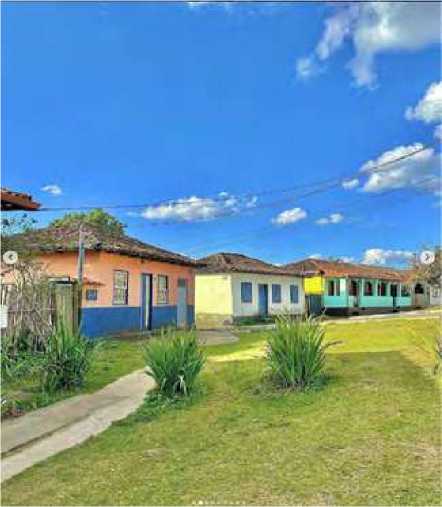
Figure 4 – Traditional architecture of Lavras Novas
Source: Instagram @lavrasnovasmg, 2023
Below, Fig. 5 exemplifies how the architecture of Lavras Novas has been altered due to the growth of tourism activity and the emergence of new enterprises designed to meet both the demand and the preferences of the tourists who visit the district every year.
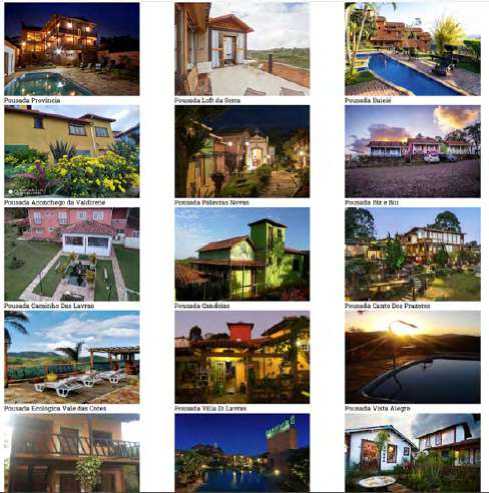
Figure 5 – Loss of architectural identity in Lavras Novas caused by hotels and guesthouses
Source:
The lack of tourism planning that occurred in Lavras Novas caused a very noticeable spatial division within the district: one world directed toward tourists and another toward residents, leading to consequences for inhabitants whose space is constantly invaded by people seeking leisure. Moreover, many of these visitors have no interest in experiencing a different culture or acquiring new knowledge (Cordeiro, 2015).
At the same time that tourists bring revenue to the locality, they also modify its characteristics and the customs of its people, who were once accustomed to subsistence farming and to a lifestyle free from the excesses of large cities. Lavras Novas was not prepared to receive tourists. There was no planning whatsoever, either on the part of public agencies or by local residents, resulting in a series of problems for the community (Castro et al., 2003, p.2).
Teixeira (2004) highlights that the increase in visitor flow to Lavras Novas sparked the interest of entrepreneurs and other stakeholders in investing in local tourism. In this context, the community began to perceive the impacts of tourism on its daily life and, in response, initiated dialogues with the public authorities, addressing issues such as:
“We are establishing a partnership with the Tourism Department to control the number of people who enter during holidays. Cars, too, can only park in designated areas and cannot circulate freely. Loud music is prohibited. If someone disobeys, we gather together and ask them to leave. Any resident has the right and duty to help, to explain, or even to send them away, although this is rarely necessary. (...) Another important point is that we no longer change the dates of festivals to coincide with holidays to attract more people. This is not acceptable; we have not done this since 2010, and we will continue to uphold it.” (Chaves, 2013, p.6)
This demand arose mainly due to the purchasing power of investors, who constructed buildings that differed significantly from the traditional style, being larger and more modern than those existing in the district (Dutra, 2013).
Currently, Lavras Novas, in the midst of tourism growth, attracts visitors seeking authenticity and the quintessential Minas Gerais experience, being recognized for its artisan community and local gastronomy. The increase in tourism requires a balance between development and environmental and cultural preservation. Sustainable management is crucial to maintaining its authenticity and protecting its heritage, ensuring that the village continues to be a unique destination where nature and rural charm coexist in harmony.
Methodology
The methodology adopted in this research sought to combine qualitative and quantitative approaches, employing bibliographic review, semi-structured interviews, structured questionnaires, and systematic observation. The quantitative investigation, according to Minayo and Sanches (1993), provided observable indicators and trends, while the qualitative component focused on values, beliefs, and opinions, following Gibbs (2009) for data analysis guidelines.
The structured questionnaires were created using Google Forms and applied in a hybrid manner, being distributed via Instagram and WhatsApp to around 40 participants from the tourism trade of Lavras Novas. The application period lasted 15 days and resulted in 14 responses. The questions addressed topics such as perceptions of tourism, Creative Tourism, Municipal Public Policies, and Sustainable Development.
Fieldwork included systematic observation of the spatial transformations in Lavras Novas due to tourism. Houses, businesses, public spaces, and the functioning of the district on weekends were observed. The author applied an adapted table categorizing spaces into bars/restaurants, events, and natural areas, based on perceptions and local knowledge. This analysis was carried out on January 13, 2024, alongside the in-person application of questionnaires.
Results and discussion
In Lavras Novas, there exists an institutional mechanism known as the “Administrative Board” (Mesa Administrativa) or “Brotherhood of Our Lady of Pleasures” (Irmandade de Nossa Senhora dos Prazeres), which plays a significant role in supporting the local population, both by controlling certain actions and guiding others. Given the relevance of this instrument for the management and organization of tourism activities in the region, the interview began with a broad question aimed at understanding its functioning and contribution to tourism development: How does the Administrative Board participate in the tourism activities of Lavras Novas?
The Administrative Board, together with the association, holds considerable influence over local events and decisions. Many issues are decided by it, determining benefits or challenges for entrepreneurs based on discussions about impacts and improvements. Its decisions carry great weight and influence, underscoring its importance in the decision-making process and community management. (E1)
The interviewee’s statements revealed that the Administrative Board plays an active role in local governance, contributing significantly to matters related to tourism. By restricting land ownership, this entity has the ability to control territorial expansion within the district, thereby serving as a mechanism to mitigate the processes of loss of identity resulting from the rapid growth Lavras Novas has experienced due to the increase in tourism activities.
Loss of identity occurs when individuals with higher purchasing power seek to replicate external patterns, such as those seen in soap operas, without considering local identity. This can affect the aesthetic and architectural harmony of the region. Investments lacking cultural sensitivity may deteriorate the essence of the community. A lack of control can result in negative impacts on the image and environment of the locality. (E1)
The development of tourism in Lavras Novas has provided the local community with greater awareness of the relevance of this activity, particularly due to the economic growth resulting from increased tourist flows. The research included a question regarding the degree of community involvement in this development process. The data presented in Fig. 6 indicate that most respondents reported being directly involved in tourism activity and its progress, highlighting the integration of the population into the sector.
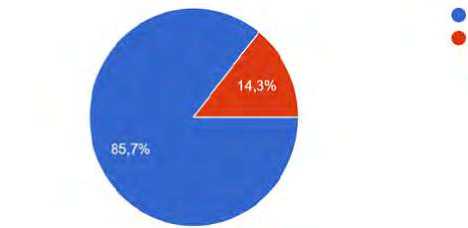
Yes
No
Figure 6 – Community involvement in tourism development
Source: Author’s elaboration, based on data collected for the research on January 13, 2024
During the interview, in order to indirectly understand the profile of the tourist visiting Lavras Novas and how they interact with the people and the environment, the following question was posed: Do you see this tourist engaging with the community, or is it the kind of tourist who just goes to the restaurant, eats, and leaves, going back to the hotel? How does it work?
Currently, the local community of Lavras Novas demonstrates not only understanding but also entrepreneurship in relation to tourism. The connection between tourists and residents is evident, as the latter are responsible for running local establishments. Even within a capitalist perspective, this interaction is valued, since residents share their history and their vision of Lavras Novas. This authenticity enriches the tourist experience and reflects the evolution of the community over time. (E1).
It is understood that tourists who visit Lavras Novas seek to understand the dynamics of local life and wish to have authentic experiences with the community. This interest is aligned with the fact that the local population is directly involved in tourism activities, which contributes to offering genuine experiences.
During the interview and the administration of questionnaires, specific questions were included to assess the impact of municipal public tourism policies on Lavras Novas. In the interview, the following response was obtained:
The public authorities underestimate Lavras Novas, but more intervention would improve residents’ quality of life and the tourist experience. Lavras Novas needs government support to prosper economically and to address the shortage of labor (E1).
Throughout the application of the questionnaires, several participants expressed the perception that the local community often organized collectively to perform tasks that, under ideal conditions, should be the responsibility of public authorities.
To achieve the research objectives, it was essential to investigate the potential of creative tourism. The questionnaire addressed the segments in which the tourism trade operates. The results reveal that the majority are involved in activities related to handicrafts, as shown in Fig. 7.
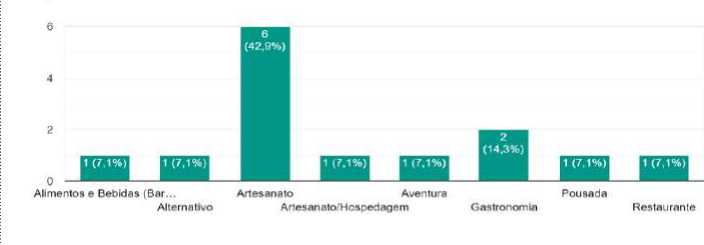
Figure 7 – Which tourism segment are you involved in?
Source: Prepared by the author, based on data collected for the research on January 13, 2024.
When asked about the creative tourism segment, most respondents stated that they are not familiar with this segment. This is shown in the results generated in the graph below:
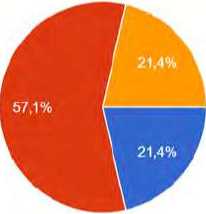
• Yes
• No
• I’ve heard of it
Figure 8 – Do you know the creative tourism segment?
Source: Prepared by the author, based on data collected for the research on January 13, 2024.
Following a brief explanation about the creative tourism segment, respondents were asked what kind of creative experience they could offer to tourists. The collected responses include: offering gastronomic experiences to attract tourists, such as inviting them to observe kitchen processes. However, currently this experience is lacking, as products are purchased externally. Other suggestions include enjoying the landscape, watching crochet handicrafts being made, and providing live music with local performers. Seasonal workshops were also considered.
The questionnaire also included a question about what could be improved in Lavras Novas. Most participants noted the need for new tourism planning for the district. This planning should include improvements in local marketing, formulation of external public policies for event access, as well as the expansion of basic services such as pharmacies, gas stations, and public restrooms.
Moreover, the importance of creating a commercial association was emphasized, considered essential to guide merchants and promote tourism sustainably, in coordination with the local administration and the residents’ association. This was corroborated during the interview with the following statement:
Currently, I notice a gap in public authority action in Lavras Novas, especially regarding the need for an effective presence of officials from Ouro Preto to ensure the proper functioning of the locality. This is essential not only to address traffic issues, as recently observed with demands for improvements in circulation and parking, but also to regulate the public use of available spaces in the area (E1).
To understand the use of public spaces in Lavras Novas, a table based on the studies by Mediotte, Emmendoerfer, and Pimentel (2024) was adapted. This instrument was applied by one of the authors through on-site observation. The analysis considered accessibility, activities, comfort, image, and sociability of the spaces as the main evaluation axes.
For the analysis of public spaces, the district of Lavras Novas was divided into three complexes: the central area, which includes bars and general commerce (Complex 01); the event area (Complex 02); and the natural areas (Complex 03).
Table 1 – The analysis of public spaces, the district of Lavras Novas was divided into three complexes
|
Question |
Complex 01 |
Complex 02 |
Complex 03 |
|||
|
Yes |
No |
Yes |
No |
Yes |
No |
|
Accessibility
|
Is there a good connection between the space and the adjacent buildings? |
x |
x |
x |
|||
|
Do the occupants or residents of adjacent buildings use the space? |
x |
x |
x |
|||
|
Are there buildings without windows or any other features that discourage people from circulating in the space? |
x |
x |
x |
|||
|
Can people easily walk to the space? |
x |
x |
x |
|||
|
Is the space visible from a distance? |
x |
x |
x |
|||
|
Is the space accessible for people with special needs/disabilities? |
x |
x |
x |
|||
|
Are there shops or other commercial services within a short distance from the space? |
x |
x |
x |
|||
|
Is there signage for adjacent locations? |
x |
x |
x |
|||
|
If so, does the signage provide guidance or additional information about the space and the surrounding areas? |
x |
x |
x |
Activities and Uses of the Spaces
|
Are people using the space? |
x |
x |
x |
|||
|
Is it used by people of different ages? |
x |
x |
x |
|||
|
Are people in groups? |
x |
x |
x |
|||
|
Are people alone? |
x |
x |
x |
|||
|
Are people socializing with each other? |
x |
x |
x |
|||
|
Are there different activities taking place in the space, such as walking, eating, practicing a sport, relaxing, or reading? |
x |
x |
x |
|||
|
Are there more men than women using the space? |
x |
x |
x |
|||
|
Are there more women than men using the space? |
x |
x |
x |
|||
|
Is there a presence of public management in the space? |
x |
x |
x |
|||
|
Would occasional commercial activity be appropriate for the space (e.g., handicrafts, local products, food market)? |
x |
x |
x |
|||
|
Is the first impression of the space positive? |
x |
x |
x |
|||
|
Are there enough places to sit? |
x |
x |
x |
|
Question |
Complex 01 |
Complex 02 |
Complex 03 |
|||
|
Yes |
No |
Yes |
No |
Yes |
No |
|
|
Are the spaces clean and free of visible litter? |
x |
x |
x |
|||
|
Does the space feel safe? |
x |
x |
x |
|||
|
Are there security personnel or police patrolling the area? |
x |
x |
x |
|||
|
Do vehicles dominate the use of the space and hinder pedestrian circulation or easy access? |
x |
x |
x |
|||
|
Do the products on offer present a consistent image that aligns with the identity of the space? |
x |
x |
x |
|||
|
Are shops or open-air markets appropriately located and well integrated with the space? |
x |
x |
x |
|||
|
Is the space digitalized (e.g., on Google Maps) and connected by Wi-Fi? |
x |
x |
x |
|||
|
Sociability |
||||||
|
Is this a space you would choose to meet your friends? |
x |
x |
x |
|||
|
Are there other people in the space meeting friends? |
x |
x |
x |
|||
|
Are people communicating with each other? |
x |
x |
x |
|||
|
Are people communicating with people from other groups? |
x |
x |
x |
|||
|
Do people make eye contact with each other in this space? |
x |
x |
x |
|||
|
Do people seem to know each other by sight or by name? |
x |
x |
x |
|||
|
Do people point out features of the space with pride? |
x |
x |
x |
|||
|
Are people smiling? |
x |
x |
x |
|||
|
Is there a diversity of ages and ethnic groups that generally reflects the community as a whole? |
x |
x |
x |
|||
|
Source: Adapted from Mediotte et al. (2024, p. 7-15) |
||||||
The central area of Lavras Novas is dominated by commerce, which alters the village’s character, although some establishments preserve the original architecture. Accessibility is limited for people with reduced mobility, and high prices deter local residents. The lack of adequate parking causes congestion, affecting pedestrians. Despite this, the community’s hospitality and sense of belonging stand out.
Local events are popular, but accessibility and ticket costs limit participation, in addition to traffic congestion. In the natural areas, the waterfalls are remote and difficult to access, but ecotourism ensures their preservation and proper signage.
The analysis reveals that Lavras Novas has well-maintained landscapes and conveys a sense of safety, with a peaceful environment and a strong sense of belonging among residents. However, tourism activity lacks planning, leading to issues such as vehicle congestion, excessive noise, and infrastructure overload, as indicated in the questionnaires and interviews.
Final Considerations
This study investigated the feasibility of introducing creative tourism, through placemaking, in Lavras Novas, aiming to intensify and diversify tourism activity. The importance of involving residents in decision-making processes to preserve local culture was highlighted.
It was observed that land ownership by the Irmandade Nossa Senhora dos Prazeres helps prevent uncontrolled growth of external enterprises, preserving the region’s cultural identity.
The results suggest potential for creative tourism but reveal a lack of understanding of this concept among local residents and merchants. Handicrafts represent a rich activity in the region; however, many merchants do not prioritize local products. Tourism infrastructure in Lavras Novas requires investment in accessibility, safety, and mobility, as evidenced by the lack of parking and difficulties in access. The research faced time constraints that limited more comprehensive data collection.
It is concluded that better coordination between public authorities, business owners, and residents, along with the Residents’ Association and Administrative Board, is essential to achieve more effective outcomes for the community.
This study aims to inspire future research in the field of creative tourism and in the improvement of public space structuring through placemaking, promoting more sustainable practices and policies for the development of the region.
References The Inclusion of the Creative Tourism Segment through Placemaking: Analysis of Tourism Activity in Lavras Novas, Brazil
- 1. Beni, M. C. (1999). Política e estratégia do desenvolvimento regional: planejamento integrado e sustentável do turismo. Revista Turismo Em Análise, 10(1), 7-17. doi: 10.11606/issn.1984-4867.v10i1p7-17.
- 2. Chaves, F. N. (2015). Lavras Novas – MG: Das Minas de ouro às Rotas de Turismo. Revista Extraprensa, 8(1), 74-81. doi: 10.11606/extraprensa2014.85183.
- 3. Cordeiro, E. D. (2008). O turismo como fomentador da configuração espacial do município de Ouro Preto: O novo distrito de Lavras Novas. Cultur: Revista de Cultura e Turismo, 1(1), 1-26.
- 4. Dutra, C. A., & Laschefski, K. A. (2013). Representações do turismo em Lavras Novas: Potencial de geração de conflitos ambientais. Revista Geografias, 9(1), 55–69. doi: 10.35699/2237-549X.13353.
- 5. Emmendoerfer, M. L., & Ashton, M. S. G. (2014). Territórios criativos e suas relações com o turismo. Revista Turismo & Desenvolvimento, 4(21/22), 459-468. doi: 10.34624/rtd.v4i21/22.12433.
- 6. Emmendoerfer, M. L., Mediotte, E. J., Vasconcelos, C. A. de S., Vitória, J. R., & Neto, A. de P. (2022). Placemaking como vetor de desenvolvimento em uma sociedade pós-pandemia. DELOS: Desarrollo Local Sostenible, 13(37).
- 7. Mediotte, E. J., Emmendoerfer, M. L., Silva Junior, A. C. da, & Almeida, T. C. de. (2023). O papel da governança e do placemaking para o desenvolvimento territorial: Reflexões para as cidades (que buscam ser) criativas. Boletim De Conjuntura (BOCA), 13(37), 138–152. doi: 10.5281/zenodo.7585188.
- 8. Mediotte, E. J., Emmendoerfer, M. L., & Pimentel, T. D. (2024). Placemaking perspective and determinants of sustainable tourism: A case study in a creative design city in Brazil. In T. Allis & S. Carnicelli (Eds.). Tourism in Latin America: Current practices and future developments. CABI Tourism Cases, 1-14.
- 9. Medium. (2017). O que faz um espaço público ser bem-sucedido e outro não? Disponível em https://medium.com/@placemakinglab/o-que-faz-um-espa%C3%A7o-p%C3%BAblico-ser-bem-sucedido-e-outro-n%C3%A3o-dfdc592e4276
- 10. Pettinati, L. M. R. dos R. (2016). Turismo cultural e a preservação do patrimônio de Lavras Novas, Ouro Preto, MG (Dissertação de Mestrado Profissional, Universidade Federal do Rio de Janeiro).
- 11. Quirino, N. K. (2019). O turismo como setor estratégico nas relações econômicas e sociais do distrito de Lavras Novas em Ouro Preto (Dissertação de Mestrado, Universidade Federal de Ouro Preto, Mariana).
- 12. Richards, G. (2018). Small cities with big dreams: Creative placemaking and branding strategies.
- 13. Silva, P. R. d. (2013). A dinâmica local alterada pelo turismo no distrito de Lavras Novas, Ouro Preto, MG.
- 14. Santos, J. F., Carvalho, R., & Figueira, L. M. (2012). A importância do turismo cultural e criativo na imagem de um destino turístico. Revista Turismo & Desenvolvimento, 3(17/18), 1559-1572. doi: 10.34624/rtd.v3i17/18.13263.
- 15. Silva, V. J. da. (2006). Integrated marketing planning and the social-cultural impacts of tourism in small communities (Master’s thesis). Universidade Federal de Viçosa.
- 16. Soares, D. de S., & Vieira, E. T. (2019). Conexões, cultura e inovações nas cidades criativas: Diferenciais para o desenvolvimento regional. Revista Brasileira De Gestão E Desenvolvimento Regional, 15(2).
- 17. Transformando Nosso Mundo: A Agenda 2030 para o Desenvolvimento Sustentável. URL: https://brasil.un.org/sites/default/files/2020-09/agenda2030-pt-br.pdf
- 18. Traverso, L. D., Patias, T. Z., Toselli, C., & Silva, L. D. (2023). Turismo e Objetivos do Desenvolvimento Sustentável: Uma análise a partir da produção nacional e das políticas públicas brasileiras. Caderno Virtual de Turismo, 23(1). doi: 10.184.72/cvt.23n1.2023.2073.
