
The Peopling of Mongolia by Homo sapiens denisovan
Journal: Archaeology, Ethnology & Anthropology of Eurasia @journal-aeae-en
Section: Paleoenvironment, the stone age
Article in issue: 2 т.53, 2025.
Free access
The article continues a series of publications in this journal, addressing the peopling of Iran, Tajikistan, and Uzbekistan by H. s. denisovan. Around 400 ka BP, two large populations branched off from the ancestral taxon H. heidelbergensis in the Levant. One of them migrated to Europe, where its hybridization with natives gave rise to a new taxon H. s. neanderthalensis 200–150 ka BP. The other, having passed through the Iranian Highland, settled in Central Asia, where its mixture with local Central Asiatic H. erectus, natural and sexual selection, and adaptation to various environments in the vast Central Asiatic region 200–150 ka BP resulted in the emergence of a morphologically and genetically distinct taxon, whose informal name is H. s. denisovan.
Short address: https://sciup.org/145147487
IDS: 145147487 | DOI: 10.17746/1563-0110.2025.53.2.003-024
Text of the scientific article The Peopling of Mongolia by Homo sapiens denisovan
Initial peopling of Mongolia by Homo erectus
The topic of the initial peopling of Mongolia arouse the interest of scientists in the early 20th century in connection with the Osborn-Matthew hypothesis on the possible Central Asian center of evolution of animals, including anthropoid apes (Larichev, 1969). The members of the Central Asian Expedition of the American Museum of Natural History under the leadership of R.C. Andrews over a period of five years in the 1920s conducted a large-scale survey and searched for Early Paleolithic sites (Andrews, Osborn, 1926). These surveys covered a significant part of the territory of Gobi and the Gobi Altai. Numerous lithic artifacts were collected from surface in the areas of the Arts-Bogdo and Gurvan-Saikhan ridges and Lake Orog Nuur. In the course of the field work, the researchers collected quite extensive materials, some of which were described (Fairservis, 1993). I had a chance to view this collection in 1975.
The systematic study of the Stone Age in Mongolia is associated with the activities of the outstanding researcher of the Paleolithic of Central and Northern Asia, Academician A.P. Okladnikov (1981, 1986; Okladnikov, Abramova, 1994). During his first expedition to Mongolia in 1949, along with a number of sites with the surface occurrence of artifacts, he discovered a unique well-stratified Paleolithic site of Moiltyn. In 1960, Okladnikov resumed field work in Mongolia, which continued intermittently until his death in 1981.
Mongolia is an amazing country. My first expedition to Mongolia took place in 1966, and I was fascinated with its endless plains, intermountain basins, and impressive mountains. I participated in twenty expeditions and managed to cover more than fifty thousand kilometers. I travelled through the
same places many times at various seasons of the year, and the landscapes always opened up with new facets and looked new.
Over 1000 Paleolithic sites have been discovered in Mongolia, mostly with a surface cultural layer (Derevianko, 2017). This is due to the specific natural and climatic conditions of this region. In the Pleistocene, owing to strong wind denudation, there were no soil formation and loose sediments were not accumulated; at present, large areas, especially on hill tops, show bedrock surfaces with concentrations of lithic artifacts of various periods.
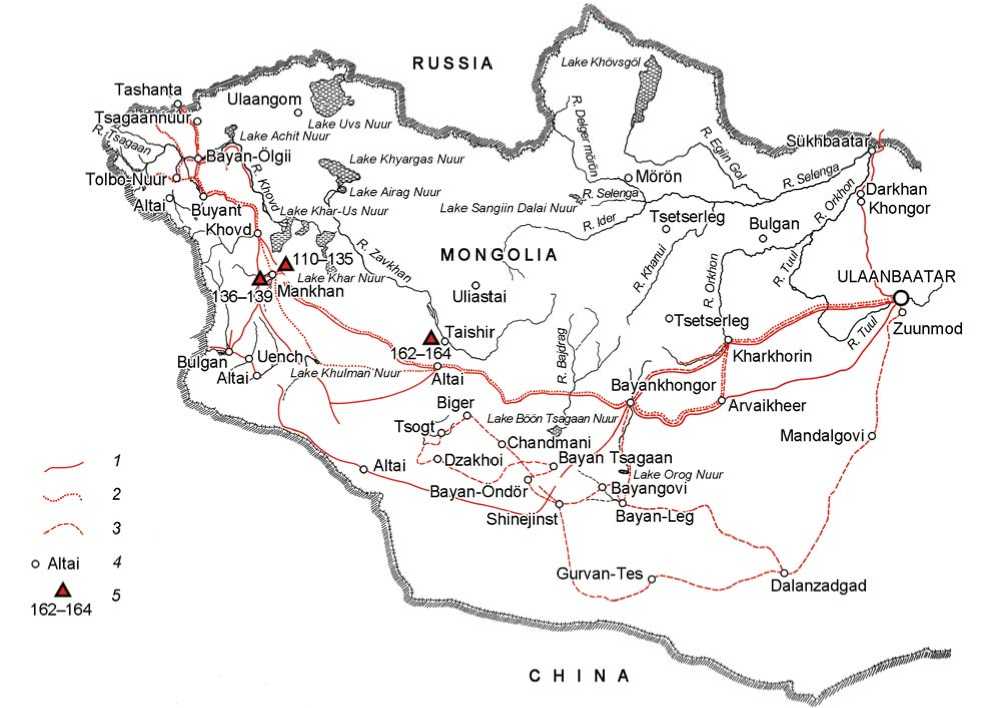
Each field season lasted for one or two months, and the number of Paleolithic sites discovered varied from year to year. For example, in 1983–1985, in the course of archaeological survey in the Mongolian Altai, 193 sites were recorded (Fig. 1). In addition to localities with the surface occurrence of artifacts, well-stratified sites were revealed in the basins of the Orkhon, Selenga, and Tuin-Gol Rivers and in the Tsagaan Agui and Chikhen caves. The findings of these expeditions were published in more than 100 papers and 13 monographs (Kamenny vek..., 1990, 2000; Archaeological Studies..., 1996, 1998, 2000; Derevianko, Krivoshapkin, Larichev, Petrin, 2001; Derevianko, Zenin, Olsen et al., 2002; Derevianko, Petrin, 1995; Derevianko, Olsen, Tseveendorj et al., 2000a, b; Derevianko, Kandyba, Petrin, 2010; Derevianko, 2017, 2019; and others).
Owing to insufficient number of well-stratified sites with available geochronological attribution, the period of the initial peopling of Mongolia by H. erectus can be determined only by indirect data. The initial migration of H. erectus from Africa to the western regions of Central Asia occurred prior to 800 ka BP. At the site of Kuldara in Tajikistan, V.A. Ranov discovered culture-bearing layers in pedocomplexes 11 and 12, overlain by loess and paleosol layers over 100 meters thick (Ranov et al., 1987; Ranov, 1988; etc.). Initially, the site was dated to about 800 ka BP (Ranov, 1992a, b); later, its age was reassessed to 915–950 ka BP (Ranov, Lomov, 2001). In the Altai, 14 km from Denisova
Lake Khovsgbl
Tsagaanhuur,
SukhBaatai
■Bayan-Olgii
Lake Khyargas Nuur
:NdUr
Lake Airag Nuur
Lake Sangnn Dalai Nuur
^Lake Khar-Us Nuur
Bulgan
MONGOLIA
ULAANBAATAR
Uliastai
°Tset:
Zuunmod
Uenchf<
Kharkhorin
Bayankhongor
Arvaikheer
Lake Boon Tsagaan Nuur»
Tsogto/
Mandalgovid
Altai
Lake Orog Nuur
Bayan-Leg
Gurvan-Tes
Darkhan
'Khongor
Bulgan fl Altai
Bayan-Ondbr .. $ Shinejinst
△ Taishir \б2-164^У oChandmani - !
oDzakhoi ._Bayan Tsagaan
^M'^'B'uyant^ "^tz-Khovd.
Ulaangom SSSa о Lake Uvs Nuur i Lake Achit Nuur
Lake Khar Nuur- if36-139 Mankhan
Lake KhulmahNuur""^/^^^ \—-^^ Biger
13—^Mbrdn 4
^l Safen^\ ^-^- ^ R nij/7 Tsetserleg
Tashanta
Dalanzadgad ж 5 162-164
о Altai 4
CHINA
Fig. 1 . Survey routes of the Stone Age study team of the Joint Soviet-Mongolian expedition in the territory of the Mongolian Altai in 1983–1985 (after (Kamenny vek..., 1990)).
1 – 1983 route; 2 – 1984 route; 3 – 1985 route; 4 – aimag centers; 5 – archaeological sites.
Cave downstream the Anui River, the site of Karama was discovered; its stratigraphic sequence revealed four culture-bearing layers with pebble-flake industry dating back to 600 (500)–800 ka BP (Derevianko, Shunkov, 2005; Stoyanka..., 2005; Bolikhovskaya, Derevianko, Shunkov, 2006). Mongolia was a transit territory in H. erectus migrations; this was the only way for the hominins moving from Tajikistan to the Altai. Hence, colonization of Mongolia by H. erectus could have taken place no later than 800 ka BP.
The initial stage of the Denisovans dispersal
The migration of the morphologically and genetically rising Denisovans from the western regions of Central Asia to Mongolia began ca 400–350 ka BP (Derevianko, 2024, 2025). This is evidenced by the findings of excavations in Tsagaan Agui Cave, located in the Bayankhongor aimag, 40 km northeast of the Bayanlig Somon center. The cave site was discovered by the Joint Soviet-Mongolian Historical and Cultural Expedition in 1987. In 1988–1989, cultural deposits of the cave were studied by the Soviet-Mongolian team of researchers of the Stone Age of Mongolia (Derevianko, Petrin, 1995). Since 1995, for four years, Tsagaan Agui Cave has been studied by the Joint Russian-Mongolian-American Archaeological Expedition (Archaeological Studies..., 1996, 1998, 2000; Derevianko, Olsen, Tseveendorj et al., 2000a, b; Derevianko, Devyatkin, Simakova et al., 2000; Kamenny vek..., 2000; Derevianko, Krivoshapkin, Olsen, 2005; Derevianko, 2017; and others).
The cave can be conventionally subdivided into four parts: the Pre-Entry Zone, the Entry Chamber (the narrowest part of the cave), the Great Chamber (the largest cavity in the cave) with a large opening in the ceiling, and the Small Chamber.
On the basis of pollen and other analytical data (see Table ), three cycles of sedimentation during the Pleistocene were identified at the site. Cycle 1 is represented by layers 11, 10 in the Pre-Entry zone, layer 6 in the Entry Chamber, and layers 11–13 of the Great Chamber. The results of the pollen analysis indicate that the territory around the cave was forested by mixed- and coniferous-deciduous woods. The samples taken from Pre-Entry layer 11 have revealed the initial stage of the Brunhes chron (Gnibidenko, 1998), corresponding to MIS 18 and 19. The RTL date of 470 ± 117 ka BP (RTL-800) was derived for layer 10 in the Pre-Entry Zone, and the date of 520 ± 130 ka BP (RTL-805) for layer 12 in the Great Chamber.
Cycle 2 of sedimentation (layers 6–11 of the Great Chamber, layer 5 of the Entry Chamber) took place during the relative cooling period as compared to the general fairly warm climate. Lithological horizons composed of sands, sandy loams, and loams with fine and coarse-grained deposits, as well as alluvial pebbles, were accumulated. For layer 11 of the Great Chamber, the date of 450 ± 123 ka BP (RTL-803) was generated, which corresponds to MIS 12.
Cycle 3 of sedimentation (layers 4 and 5 of the Pre-Entry Zone, layers 2–5 of the Great Chamber) took place during the growing aridization and cooling period as compared to the previous stage. Steppe cenoses dominated in the region; severely reduced forested areas consisting mainly of coniferous and small-leaved species still existed in the mountains. The following dates are available for the Great Chamber layers: layer 5 was dated to 227 ± 57 ka BP (RTL-804), the upper part of layer 4 was dated by the ESR method to 44 ± 5 ka BP; layer 3 was dated to the range of 30–33 ka BP according to several radiocarbon determinations.
The resulting geochronological sequence of Tsagaan Agui Cave should be considered preliminary. Apparently, the RTL age of the lower layers was greatly overestimated. This is confirmed by the results of radiocarbon and ESR dating, as well as by the animal bones typical of the Upper Pleistocene found in layer 5 dating back to ca 200 ka BP.
The culture-bearing layers belonging to cycle 1 of sedimentation yielded quite few lithic artifacts: two bifacially worked pieces, a combination tool, several flakes and retouched fragments. One side-scraperlike bifacial tool was fashioned on a robust piece of rock (Fig. 2, 3 ). It has a triangular cross-section. The base side partially retains the natural cortex— a kind of back. The opposite edge bears discontinuous retouch on both sides. The morphology of the other tool (Fig. 2, 4 ) suggests its classification as a bifacially processed implement resembling Acheulean handaxes. The artifact shows an elongated oval shape and a lenticular cross-section. Reduction was executed by large and broad detachments. The proximal part is fashioned by large transverse removals; the distal portion shows negative scars of large detachments on one side, and smaller ones on the other; edge of the artifact shows signs of additional retouch. The combination tool (Fig. 2, 2 ), with working elements of notched and side-scraper-like products, was made on a large and thick flake. The notch was shaped on one of the longitudinal edges of the artifact by a removal, and shows additional rejuvenation by fine marginal
Summary table of the main pollen data, chronological determinations, and paleoclimatic reconstructions for Tsagaan Agui Cave
|
ф Е го О го ф 0 |
ел Ф ГО Q |
1 |
со со ю со см 1 а. со ю со +1 со О) |
СО СО Г- СО СО t t t ю со со со ю об ой об -— ^ Ю Ю Ю ^- _ _ ТГ сососососо 222 о СМ СМ СМ СМ СМ со ^^^ SSS £ со 1 Ф 02 02 02 02 02 ф Ш J (Г ф0-m О О Ю СО О _| N О СО S ГО Q_ а. ГО ^ СО СО Ю М- СО —1 02 02 02 —1 ^ +1 +1 +1 +1 +1 ГО ГО ГО S СО ГО N ’t ’t СО СО +| СО М- о- СО СО +1 +1 +i N см" со со о" СО СО 0- со см СОСОСОСОСО Ю СО см |
со о °? _j 02 го со см +1 о ю |
ю о °? а. 02 5 о со +1 о см ю |
|
Ф ГО Е О |
.ГС Ф I ^ oj Е о. Е С СО Е со гс V ■О 1 о СМ 2 |
ел >> .ГС ° Г- §i | £ го гс гс ^ О с о о го О |
Ф -о ф о Е £ о. ф 2 2 с ф гс ^ § ГС ф-о то о С с о о го Е О |
га га Д Е §§ 5 Е л га В^ Е “ го с ° га ■ГС Q- Е £ В Е ■^ ~ # Е 2 га га g о 2 cl lo |
||
|
го с ф о 0_ |
ф 2 ел ел Ф 1 CL t ГО ф о ел ф ф ■° £ .1 го Е ф ел |
Е ф" ГО" -Гс ел" сл" "ел B-S^SgeS-S § й £ и R £ 8 5 1|^р|в° 1 3 g ф 3 £ га Й rcsip^ih 1 raagra§Wsf $ ЕВй £&ЙЬ ” 2 0 О 0_ и О CQ 5 га 0 |
о. о~ ' гс а А сп -о f^graraS^oS i™ £В й &^Е~ гс ■Es Bfeg-Q-rcrao. Во. >S Ё2 -orcrag СГС°2'ГСГСГООФ 2 1 ^ „ ф ф ГО LL "2 ОФ^ЕЕтЕ^ .ГО s-pll^s гс iS 1 гс ел Ф ф го ° 2 ф го сп с О -Гс 75 Ф ф E^Eroro-g^grcrc о 2 2 2 £ ф 2 с £ 2 Q |
S^rcY^^CMOg Д' 1 ° -S E^SSSgSrc raoj-s-ge-rc-^s ■о 1 Ш е Д 1 ^ га $ й Е ° R *" &> -о о. LD СО LD аз гс ел со см го^го |
||
|
ф го _1 |
о |
ю см |
7 со |
см со |
||
|
ф о N с ш Ё 0_ |
ел ф го Q |
1 |
а. 02 го ^ см 5S RS |
а. 02 го N o' -<- о ^ |
||
|
ф го ^ о |
гс го .ГС Ф ГС В ^ га Е о. Е 2 со Е со гс V ■О 1 о см 2 |
ф ф ф off Е га ? ” га g гс ~ « § ^ ° Е Е Е > В ®р аЕ |
ТВ *4 ф ГО А N Ф о 2 О ел О ГС ГС о .о СП ^ ф о = ^ ^ ел О |
”“ с ° и
^ ~ ^ § £ ■О га га s Е Е -о Е сп ° га g ° 5 Е CL СО |
||
|
го с ф о 0_ |
ф 2 ел ел Ф t ГО ф о ел ел ф ■° гс .1 го Е “ ф сл |
ел Q. ГС Ф f^- Ч— ел" ГС ГО о m ° $ । 8^ й Ж гс S со « 2 ° -А — о .<5 со ■с .Е га 3 с ,g о "со z ^ ^ п £ с га ч- ч- о t га .2 ° °-Ч ф га 2 2 ^ & Jш а га га га ю со га |
I гс. 2 6 ел s 7 w ж 1 D ел со I (D 1 3 s -W го 1 С ф ф ф о и ° Яз 3’ я Е 2 1 S й 2 С О О "О S ° ё и о ^ < > ; S ° £ ф Ф 2 со 2 см Q ел СО О |
СП ел" -О 2 ФелсОГС^-^-ф spiral' ЕЕ - S га Я S5 о 8 о е га с га и ^ w 5 2 о о S? ^ Р 1 ? А» <»0 ® racoSoww^ora Е-ёсОГСиетОМ 0 |
чёр 5 СП ел 3«f ГС ^^З^ФФГО^ о 2 00 2 ° ° 2 7 « 00 ^ 0. g, га" га fe2$5 rai |^ 1 3 го Е о m ГС-ГС до гс о . 2 Е 73 Ф л ГС тч _ ГС Е 1 §- га О В £ га « га 1 ° га га бЗсл^фгсЕЕгс гссзЧф.^оого га Sg t § ^ ш S $^rcg.SE£B ЕОДиоО-га^га |
|
|
ф го _1 |
о |
ф я |
е 2 о. ^ ю |
N СО |
О ч- |
retouch. The fragment of an end-scraper-like tool (Fig. 2, 1 ) was worked by semi-abrupt dorsal retouch.
The presence of a bifacial tool in the lowermost cultural layer points to the arrival of Denisovans to Mongolia, who had the lithic industry different from the pebble-flake variety of H. erectus . Unfortunately, the paucity of finds in the layers of sedimentation cycle 1 and the unreliability of the geochronological attribution do not allow for age estimation of this significant event.
Primary reduction in the lithic industry related to the initial stage of sedimentation cycle 2 is illustrated by various types of cores, preforms, core-like fragments, laminar spalls, flakes, shatters and chunks. The collection of lithic artifacts contains Levallois cores for the production of flakes and elongated spalls. The Levallois flake cores are rounded in shape. Striking platform was prepared by removals on one side, while flakes (including laminar) were detached from the opposite side (Fig. 3, 1 ). Cores for the production of elongated subtriangular spalls are convex; the flaking and back surfaces were prepared by centripetal removals; a wide striking platform beveled toward the back surface was usually shaped by a single large detachment (Fig. 3, 4 ). The collection includes a small number of subprismatic single- and double-platform cores (Fig. 3, 6 ). Their striking platforms were prepared by a single wide removal followed by minor subsequent trimming. Usually, the main reduction was carried out from one of the platforms, while the opposite platform was used to maintain the required convexity of the flaking surface. The number of blanks detached from cores of this type was usually limited to two or three (elongated spalls with subparallel longitudinal edges). The blanks include laminar specimens (Fig. 3, 8 , 9 ). The collection also contains a core modified into a side-scraper (Fig. 3, 5 ), a fragment of a carinated end-scraper-type tool (Fig. 3, 2 ), a side-scraper-like tool made on a convergent blank (Fig. 3, 7 ), and a spall with irregular retouch (Fig. 3, 3 ).
The choice of the blank production strategy that the Denisovans used at Tsagaan Agui may have been largely due to the poor quality of the available raw materials. Numerous internal voids and crystalline inclusions often resulted in defects. The industry clearly shows the bifacial flaking and Levallois reduction strategies, which characterize the initial stage of the dispersal of Denisovans in Mongolia.
In the second half of the Middle Pleistocene, the Mongolian Paleolithic demonstrates significant variability in lithic industry. This is explained by the fact that representatives of the morphologically and genetically rising Denisovan taxon arriving to this
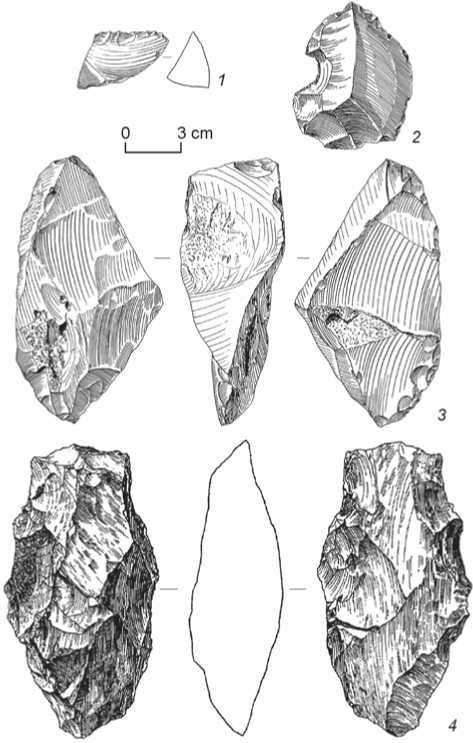
Fig. 2 . Lithic artifacts from the layers of sedimentation cycle 1 in Tsagaan Agui Cave (after (Arkheologicheskiye issledovaniya..., 2000)).
1 – end-scraper-like implement; 2 – combination tool; 3 – bifacial tool; 4 – handaxe-like bifacial tool.
region encountered an indigenous population here— Central Asian H. erectus with a pebble-flake industry. Over a long period of time, hominins of these two taxa settled in the vicinity to one another, and could have assimilated and passed on innovative stone processing technologies to each other.
In Mongolia, same as in other regions of Central Asia, the Denisovans used bifacial handaxe-type tools only at the initial stage of habitation. The sites with bifacial tools are quite few; while the Levallois primary reduction technique spread across almost the entire region. Currently, handaxe-type tools have been reported from the sites of Otson-Mant, Mandal-Gobi, Mount Yarkh, and Dno Gobi in eastern Mongolia and the southeast of the Gobi Altai (Okladnikov, 1986; Derevianko, 2014, 2019). Seven Paleolithic sites have been discovered in the Otson-Mant area, located east of Mount Sain-Shand. In this area, a vast valley is bordered
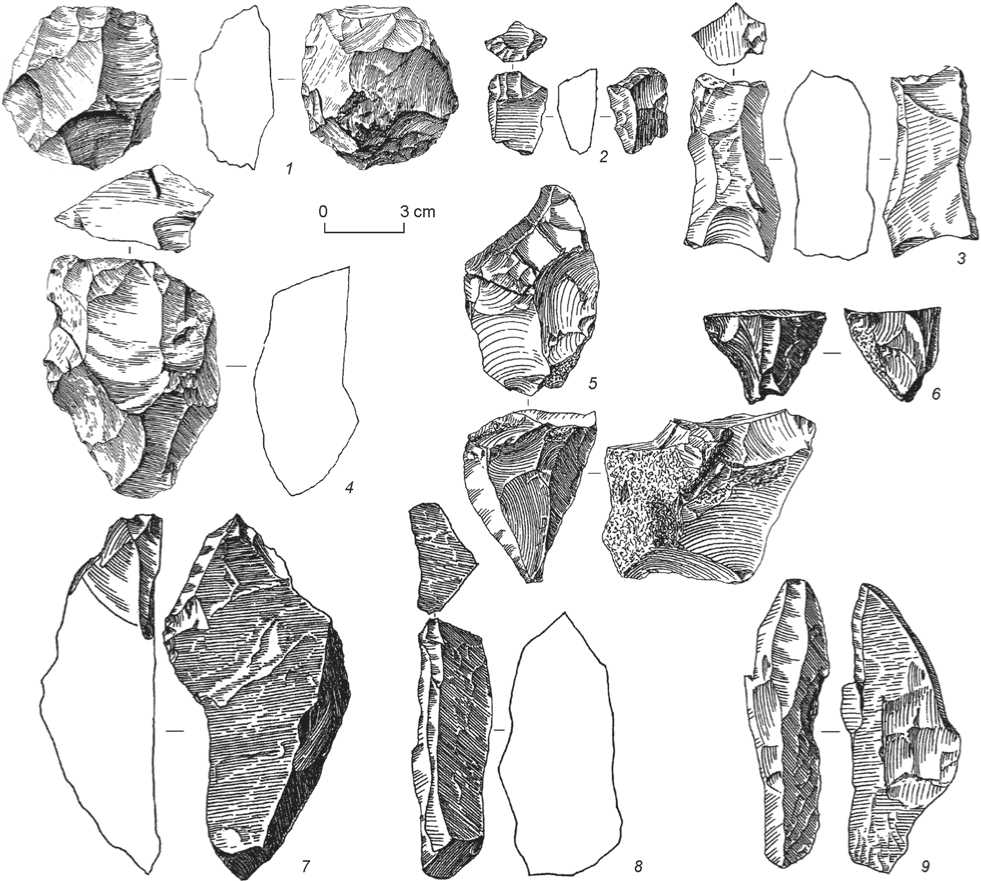
Fig. 3 . Lithic artifacts from the layers of sedimentation cycle 2 in Tsagaan Agui Cave (after (Arkheologicheskiye issledovaniya..., 2000)).
1 , 4 , 6 – cores; 2 – tool fragment; 3 – flake with irregular retouch; 5 – core modified as a side-scraper; 7 – side-scraper-like implement fashioned on a convergent blank; 8 , 9 – laminar blanks.
on the east and west by ridges of low hills composed mainly of coarse-grained granites. The granites are covered with chert deposits (Okladnikov, 1986: 12).
Paleolithic sites were located at the foot of granite remnants. The largest number of lithic artifacts was recorded at the site of Otson-Mant-7, where loci A and B were established. The limited area of the site yielded many flakes, various blanks, including laminar flakes and blades. Black chert was used as a raw material. Several bifacial tools were found at locus A. One of them was made of a flat chert pebble, subtriangular in plan view and lenticular in cross section (Fig. 4, 2). Both of its surfaces were treated by flake removals of various sizes, directed mainly from the edge to the center. The sharp distal part was formed by small longitudinal and transverse removals followed by additional retouch. The proximal oval-shaped part was especially thoroughly treated on both surfaces. This specimen was used as a chopping tool. The other bifacial item was also made on a pebble. Both surfaces were shaped by longitudinal and transverse removals (Fig. 4, 8). The biface was used as a chopping tool; later, several flakes, including laminar ones, were detached from it.
Primary reduction at the sites of Otson-Mant was based on radial and Levallois techniques. One Levallois core from locus 7A was made from a subtriangular
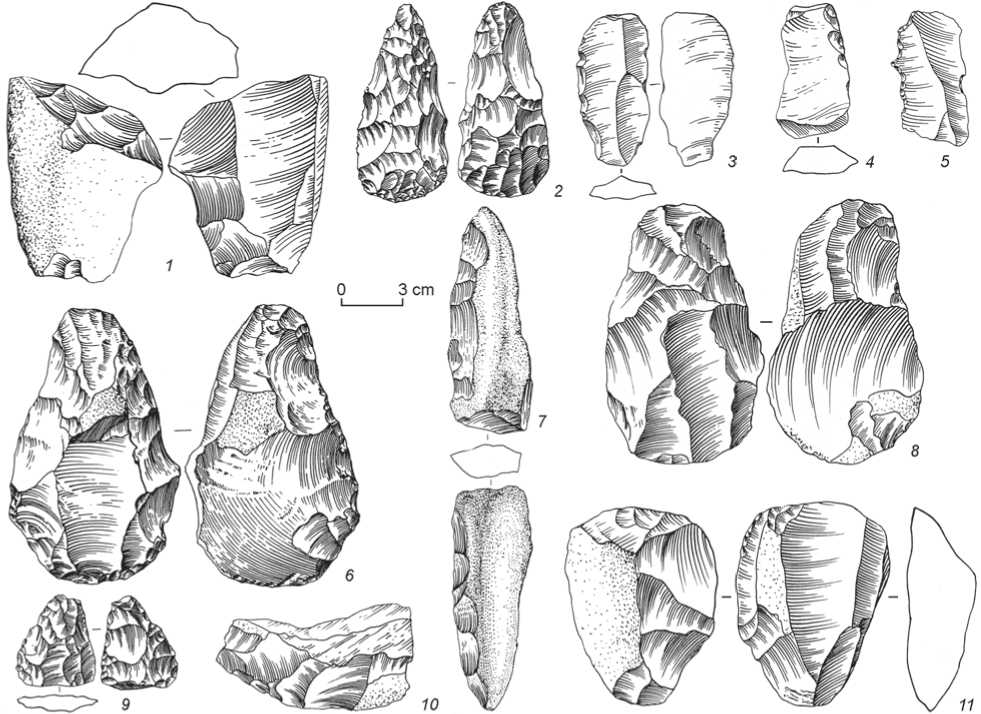
Fig. 4 . Lithic artifacts from Otson-Mant (after (Okladnikov, 1986)).
1 , 11 – cores; 2 , 6 , 8 , 9 – bifaces; 3 , 4 – retouched blades; 5 – denticulate tool; 7 – backed knife (side-scraper); 10 – side-scraper.
pebble (Fig. 4, 11 ). One of its surfaces bears a striking platform prepared by a series of spall detachments; the striking platform forms an acute angle with the flaking surface for the production of laminar blanks. The tools kit from this locus comprises side-scrapers of several varieties (Fig. 4, 10 ), denticulate-notched tools, and retouched flakes.
Bifacial tools were also recorded in locus 7B. One such tool was fashioned on a subtriangular pebble (Fig. 4, 6 ). Both of its surfaces bear negative scars of transverse and longitudinal removals of various sizes. One surface and the lower oval-shaped cutting edge were trimmed by irregular marginal retouch. This bifacial tool, same as the biface from locus 7A, was subsequently used as a nucleus. This locus also yielded discoidal, sub-rectangular, and Levallois cores (Fig. 4, 1 ). A fragment (upper part) of a small biface (Fig. 4, 9 ), thoroughly treated by small longitudinal and transverse removals from both surfaces and retouch, is worth noting. Another product was designated by Okladnikov as a biface blank. According to the shape
(pebble flat in plan view) and degree of preparation, this tool should probably be attributed to side-scrapers or naturally-backed knives (Fig. 4, 7 ). Locus 7B revealed laminar flakes with traces of retouch, including notched-denticulate retouch (Fig. 4, 3–5 ).
All loci at Otson-Mant presumably belong to the same chronological stage. The surfaces of all artifacts bear a distinct patina and traces of severe corrasion. The edges of negative scars are considerably smoothed. According to Okladnikov, these loci “belong not to the Late, but rather to the Middle Acheulean period” (1986: 13). In my opinion, the Otson-Mant loci and other sites with bifaces should be dated to ca 350–250 ka BP. Occurrences of bifacially processed tools suggest that this industry can be attributed to the Late Acheulean.
The Otson-Mant area attracted Denisovans not only as a source of good quality raw materials for stone tools manufacturing. The topography of the area, intersected by deep channels of now-extinct watercourses, indicates that it provided sufficient water resources in the pluvial periods of the Pleistocene.
In 1968, in the southeastern part of Mongolia, localities with a much larger number of bifacial tools were discovered. One of them was located on the way from Somon Mandakh to Somon Undurshil. The majestic domed peak of Mount Yarkh, revered by Mongolians, is clearly visible from the road. About 4 km to the west of the mount, the slope of a small hill, composed mainly of whitish-gray quartzite, yielded many yellow jasper-like rocks of various sizes scattered over the surface. Among the rocks, thousands of stone artifacts were identified, showing varying degrees of preparation and made from this raw material. This site used to be a workshop. To manufacture tools, the Denisovans used partings or broke out pieces of rock from vein outlets. Many nodules showing the initial stage of processing were observed among the densely scattered lithic artifacts. The rocks were characterized by fissuring, internal cavities, and were covered with porous cortex, which had to be removed before flaking.
Primary reduction was executed through three main techniques: discoid, Levallois, and subprismatic. Discoidal cores were prepared on thick and ovoid pebbles (Fig. 5, 6 , 11 ). Negative scar on one surface was used as a striking platform; on the other surface, the next shortened flake was detached from the edge to the center. Some cores partially retained their pebble cortex in the middle part. Levallois cores were found in small numbers (Fig. 5, 5 ). These were prepared on thick subtriangular or ovoid pebbles. Striking platform was shaped by transverse removals from one side; the other side was used for the detachment of laminar blanks. All subprismatic cores are single-platform, with one flaking surface. Stone partings and pebbles demonstrate striking platforms prepared by transverse removals on one surface; the striking platform formed an acute angle with the flaking surface, from which laminar flakes and blades were detached.
Tools are dominated by those with bifacial working; they can hardly be classified into a specific type. The most numerous group of bifacially processed tools are side-scrapers. Their only distinguishing feature is additional retouch on one lateral edge. Such artifacts were fashioned on flat blanks. Bifacial sidescrapers are mainly longitudinal (Fig. 5, 2 , 4 , 8 , 12 ). Several convergent side-scrapers were identified (Fig. 5, 13 , 19 ). One of them was fashioned on a sub-triangular flake (Fig. 5, 13 ). First, the entire dorsal surface was flaked, then, the edges were trimmed by one-stepped large-faceted retouch. Ventral surfaces exhibit traces of fine irregular retouch. There are scraper-like combination tools with points (Fig. 5, 3 , 7 ).
These were prepared mainly on flat pebbles. One or partially two edges of these tools were treated by large-faceted retouch or small removals with discontinuous rejuvenation by fine retouch. A point was fashioned at one of the ends by retouch and chip removals.
Pointed tools were fashioned on bifaces (Fig. 5, 17 , 18 ) and flakes. One of these was made from a subtriangular pebble split lengthwise. One surface shows flake scars from the edges to the center. Pebble cortex was retained only partially (Fig. 5, 18 ). Two removals were made from the opposite surface. Another unifacial tool made on a pebble split lengthwise shows dorsal surface prepared by spall removals (Fig. 5, 15 ). A large biface-point was shaped in an original way (Fig. 6, 2 ). Its pointed part was carefully treated by small longitudinal removals; but two faces bear negative scars of large detachments.
One of the most numerous typological groups consists of bifaces of various sizes (see Fig. 5, 1 , 9 , 10 , 14 , 16 ; 6, 1 , 3–6 ). These tools were manufactured of large flakes and pebbles; in plan view, they are mostly ovoid, more rarely subtriangular and heart-shaped. They were formed mainly by large removals from the edges to the center. The bifaces also bear negative scars of longitudinal removals. The tip of some bifaces was carefully prepared by flaking and additional trimming with retouch. There are bifaces with an ovalshaped distal part, without a distinct tip. Many of them do not show traces of trimming with retouch on lateral edges. Some bifaces have only one face prepared by flaking, while the opposite face is only partially processed. One such item was made of a pebble split lengthwise. The lateral sides of the bifaces are serrated. All the stone tools show heavily abraded surfaces.
The Mount Yarkh lithic industry is characterized by a distinct bifacial processing of not only bifaces, but also scraper- and point-like items. Although the bifaces from this site are somewhat different from the classic Acheulean handaxes, the composition of the tool kit leaves no doubt that this industry belonged to the Late Acheulean.
Westwards of Mount Yarkh, there is one more mountain, rising above the steppe plain, Chin. Abundant Paleolithic artifacts have been found at its foot, on the slopes, and on the summit. In this region of the Middle Gobi, the most informative group of Paleolithic sites in Mongolia was discovered (Okladnikov, 1986: 13–14). The sites are located 53 km north of the town of Mandalgovi, the administrative center of the Middle Gobi aimag (now, the Dundgovi aimag). This area is called the Yorool (Bottom) Gobi. It is a deep depression bordered by steep basalt cliffs
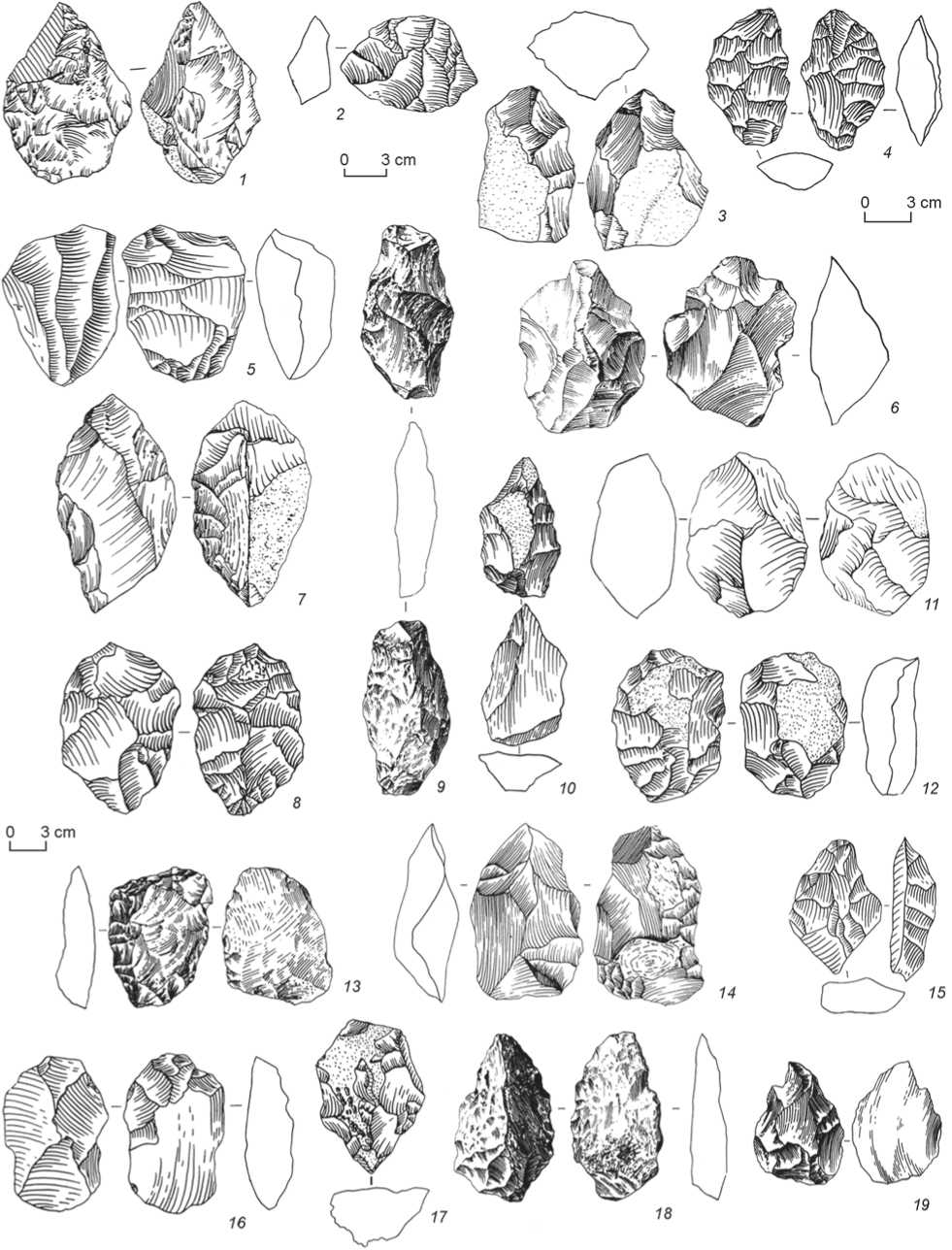
Fig. 5 . Lithic artifacts from Mount Yarkh (after (Okladnikov, 1986)).
1 , 9 , 10 , 14 , 16 – bifaces; 2 , 4 , 8 , 12 – side-scraper-bifaces; 3 , 7 – side-scrapers with points; 5 , 6 , 11 – cores; 13 , 19 – side-scrapers on flakes;
15 – uniface; 17 , 18 – pointed tools.
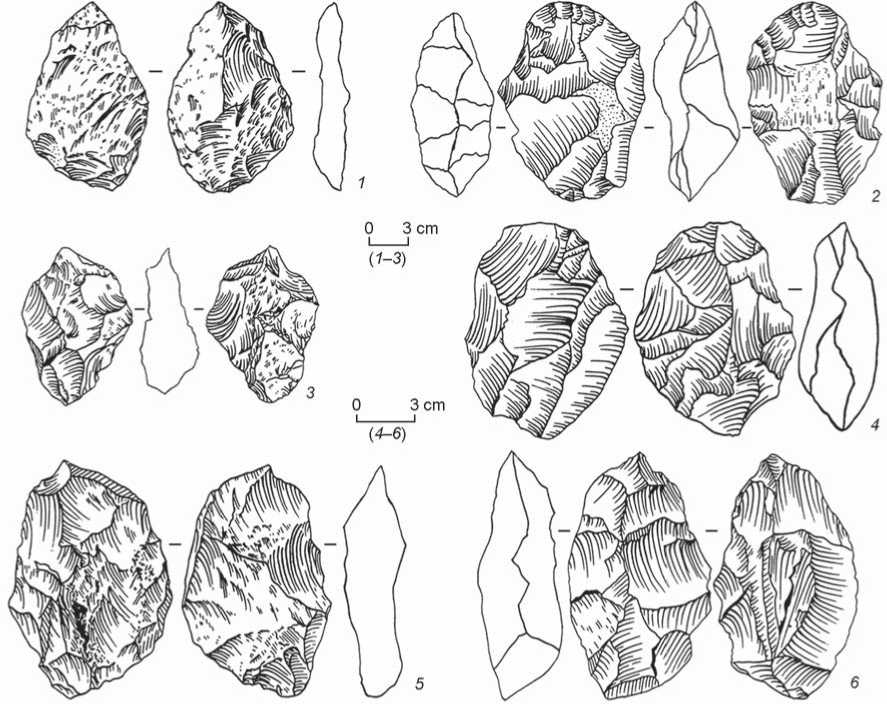
Fig. 6 . Bifaces ( 1 , 3 – 6 ) and pointed bifacial tool ( 2 ) from Mount Yarkh (after (Okladnikov, 1986))
30–40 m high on the south and north. Along the edges of the cliffs, abundant artifacts attributable to a wide cultural and chronological range (from the Early to the Late Paleolithic) are concentrated.
Some artifacts with heavily abraded surfaces and a layer of patina were noted in the assemblage. This lithic industry contains bifacially processed tools. Primary reduction at the sites under consideration is illustrated primarily by discoidal (Fig. 7, 6 ; 8, 2 ), Levallois, and subprismatic single- and doubleplatform (Fig. 9, 7 ) cores. The bifaces demonstrate various shapes: ovoid, lenticular, subtriangular, and heart-shaped (see Fig. 7, 1–5 , 7 , 8 ; 8, 3–5 ; 9, 1 – 3 , 5 , 6 ). They were manufactured mainly from pebbles. Isolated bifaces retained pebble cortex. All the bifaces were treated by removals of various sizes directed from the edges to the center. A few bifaces show longitudinal removals. Some of these tools have the well-prepared distal part. Apparently, these were used as multifunctional tools. Chisel-like tools were also noted (see Fig. 8, 1 , 6 ). Some bifacial items could have been used primarily as side-scrapers
(see Fig. 9, 4 ). In terms of typology, the industry with bifaces from the site of Yorool Gobi can be defined as Late Acheulean.
Sites with isolated bifaces were also found in other areas of Mongolia. However, these artifacts are probably casual; and these sites can only tentatively be classified as the Late Acheulean.
The surface occurrence of cultural layer at the sites with bifaces does not provide grounds for the age estimation. Considering the heavily abraded surface of the negative scars on stone tools, as well as the Late Acheulean appearance of the lithic industry, these sites should be attributed to the initial stage of the dispersal of Denisovans in Mongolia.
One of the most important Paleolithic sites in Mongolia is the Flint Valley, discovered in 1995 by participants of the Joint Russian-Mongolian-American Expedition in the course of surveying the southern face of the Gobi Altai (Derevianko, Zenin, Olsen et al., 2002). This valley borders upon the Arts Bogdo Ridge in the south and reveals the outcrops of light-gray chalk flint of good quality over an area of tens of square
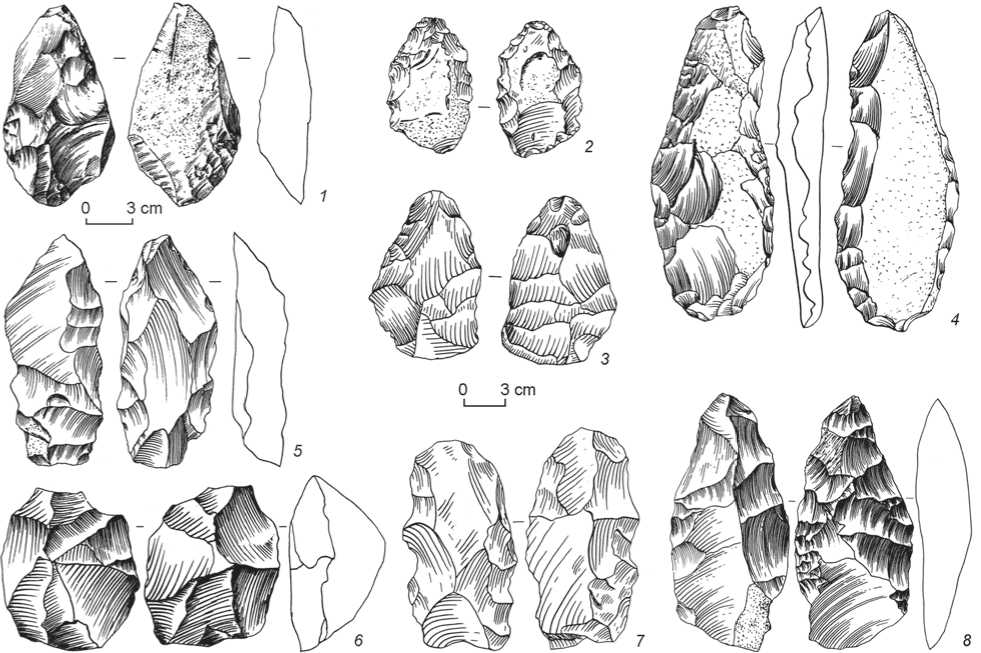
Fig. 7 . Bifaces ( 1–5 , 7 , 8 ) and core ( 6 ) from Dno Gobi (after (Okladnikov, 1986))
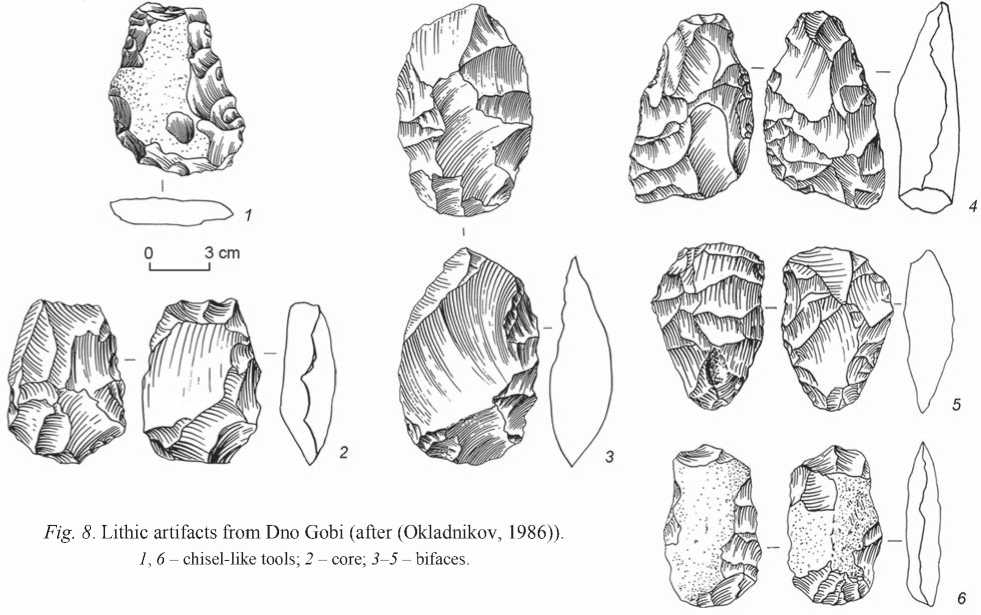
Fig. 8 . Lithic artifacts from Dno Gobi (after (Okladnikov, 1986))
1 , 6 – chisel-like tools; 2 – core; 3 – 5 – bifaces.
3 cm j
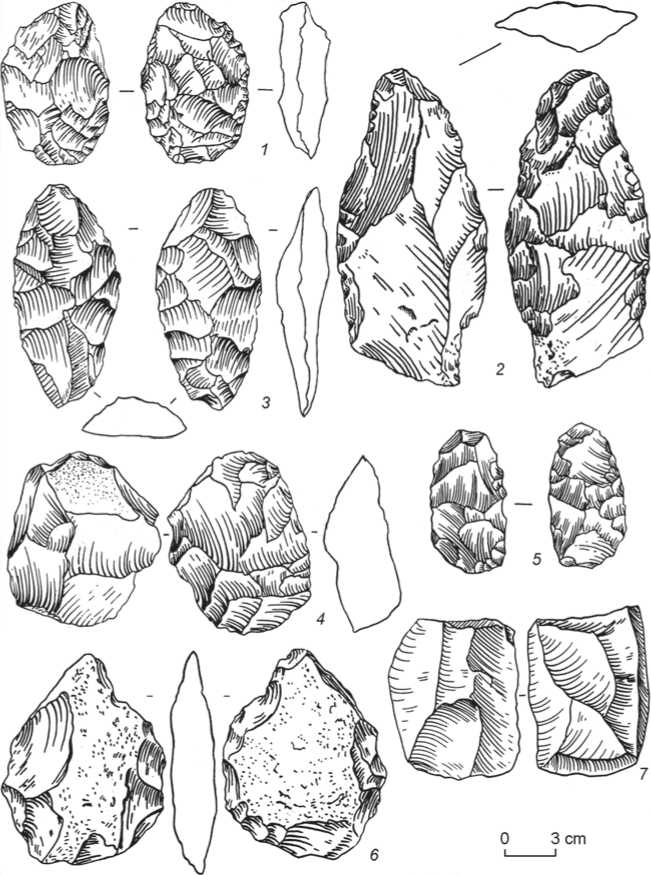
Fig. 9 . Lithic artifacts from Dno Gobi (after (Okladnikov, 1986)).
1 – 3 , 5 , 6 – bifaces; 4 – bifacially prepared side-scraper; 7 – core.
of tools, core-like products, and the most impressive artifacts illustrating primary reduction and the tool kit. The finds were catalogued and mapped.
As a result of field studies in the Flint Valley, a total of 29,867 stone products was collected from an area of 86 m 2 , resulting in 350 artifacts per 1 m 2 on average. For the present paper, the heavily abraded assemblage numbering 2320 items is of special interest. As a result of physical and chemical weathering and corrasion, negative scars of flake removals and retouch on the surfaces of many artifacts were hardly traceable; magnifying glass was often used for the identification of finds.
Primary reduction in this assemblage is illustrated by single-platform unifacial cores with longitudinal and transverse orientations of flaking scars (5.22 % of the total number of finds). Preparation of the striking platform beveled toward the back surface was carried out mainly by kilometers—an inexhaustible source of raw material for the manufacture of stone tools. At present, the climate of this region is arid. During the Pleistocene, in the cool periods, when extremely arid climatic conditions dominated, hominins rarely visited it; however, during pluvial periods, which are evidenced by deep canyons from temporary watercourses, the valley provided favorable conditions for human habitation: outcrops of high-quality lithic raw materials were adjacent to permanent sources of fresh water.
The Flint Valley yielded abundant lithic artifacts scattered on the surface of some hills. One of the hills was carefully explored and revealed more than 1 million stone implements. Two loci of 25 m2 and three loci of 12 m2 were arbitrary chosen on the hill, where the researchers of the expedition collected all the available archaeological materials. Spatial distribution of finds in each square was recorded, with indication a single removal, less often by two removals. In some cases, discontinuous rejuvenation of the flaking arc was noted. Most cores demonstrated flaking surfaces prepared by centripetal removals.
The single-platform unifacial cores for the production of one target blank of given parameters are noteworthy. Such cores were shaped using the techniques typical of the preparation of Levallois cores. Notably, quite few well-prepared Levallois cores were found, but the share of Levallois blanks was significant. Levallois blade cores were also identified (Fig. 10, 2 ).
The tool kit of the heavily abraded assemblage contains 230 items (9.91 % of all the finds). Single sidescrapers with longitudinal or transverse working edges are most numerous. Few double and convergent sidescrapers were also identified. The tool kit includes items with a pointed working part, denticulate, denticulate-notched, and multifunctional tools (Fig. 10, 3 ).
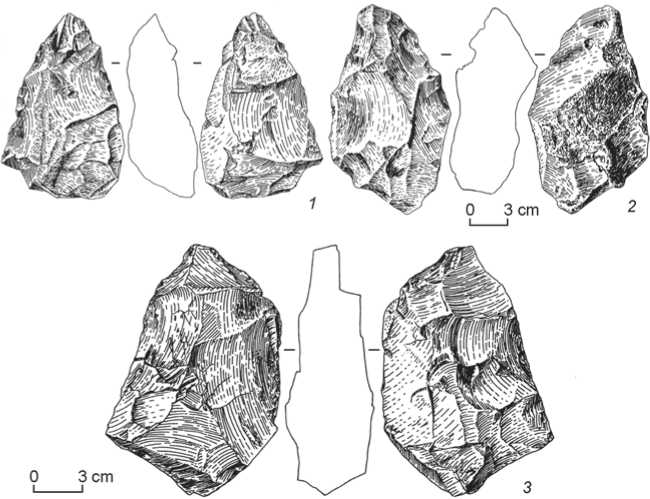
Fig. 10 . Lithic artifacts from Flint Valley (after (Derevianko, Zenin, Olsen et al., 2002)).
1 – bifacially prepared tool; 2 – core; 3 – combination tool.
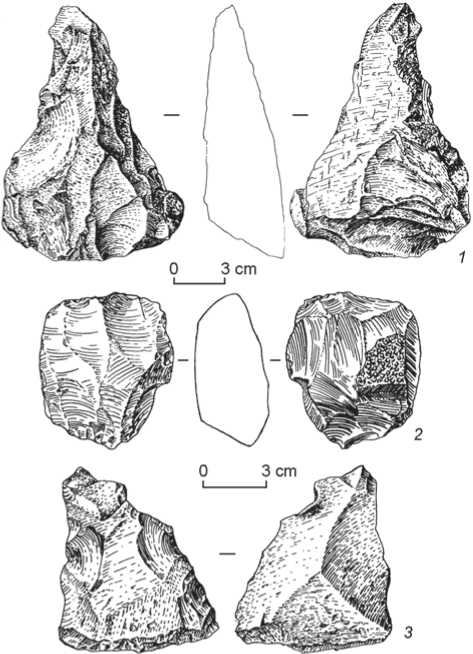
The heavily abraded assemblage is distinguished by the presence of bifacially processed ovoid and sub-triangular artifacts. Large robust bifaces predominate (Fig. 10, 1 ; 11). Smaller items are also quite robust. All the bifaces are treated by large marginal flake removals; some artifacts demonstrate the unfinished preparation. The shaping of these items indicates the apparent use of bifacial processing. However, many bifaces can hardly be classified as classic Acheulean handaxes. The use of the Levallois technique of primary flaking and the bifacial technology in preparation of some artifacts allows us to attribute this assemblage to a Denisovan variant of the Early Middle Paleolithic.
Despite the lack of any cultural-stratigraphic sequence, which hampers the possibility of dating the heavily, moderately, slightly, and non-abraded assemblages of the Flint Valley, this area is of extreme importance. It shows the dynamics of the development of the Denisovan lithic industry from the initial stage of Denisovan settlement in Mongolia till the terminal Middle Paleolithic. Heavily and moderately abraded assemblages can be roughly dated to the range of 250–150 ka BP, and slightly and non-abraded to 100–60 (50) ka BP.
The initial stage of the Denisovan habitation in Mongolia is illustrated by several dozen sites with a lithic industry featuring the Levallois primary
reduction technique aimed at the production of flakes, blades, and pointed blanks. The groups of sites of Nariyn Gol, Uench, Barlagin Gol, Mankhan, etc. contain hundreds and thousands of lithic artifacts scattered on the surface. These assemblages, dating back to the second half of the Middle Pleistocene, show many parallels with the materials from cultural layers 22.1–19 of the Main Chamber and layers 15 and 14 of the East Chamber of Denisova Cave, which yielded the dates in the range of 280–150 ka BP (Jacobs et al., 2019). The lithic industry of these sites demonstrates bifacial processing of stone implements, but contains no tools of the Acheulean handaxe type.
Bifacial technology is most clearly manifested in the south of Mongolia. It was recorded at a small number of sites. But this does not indicate the smallness
Fig. 11 . Bifacially prepared tools from Flint Valley (after (Derevianko, Zenin, Olsen et al., 2002)).
of the Denisovan population in this area. Bifacial processing of stone implements was very widespread, while the manufacture of tools resembling Acheulean handaxes was quite rare.
The overall trend in the development of the hominin lithic industry in Mongolia in the second half of the Middle and the first half of the Upper Pleistocene is the growing role (up to the dominance) of the Levallois flaking technique aimed at the production of certain flakes, pointed and blade blanks. At the terminal stage of the Middle Pleistocene, the share of blade reduction of sub-prismatic and prismatic cores and the frequency of using blades for manufacturing tools of various types began to increase.
The Denisovan lithic industry in the terminal Middle Paleolithic
Over 200 Paleolithic sites in Mongolia can be attributed to the terminal stage of the Middle Paleolithic. About 120 such sites have been established in the Valley of the Lakes in northwestern Mongolia alone (Derevianko, Petrin, 1987; Derevianko, Nikolaev, Petrin, 1992; Kamenny vek..., 2000). The valley is a large depression stretching from northwest to southeast. It separates the mountain ranges of Khangai and Gobi Altai. The depression is about 400 km long and from 30 to 50 km wide. In the north, the Valley of the Lakes borders upon a low tectonic-denudational bench of the South Khangai Range. The middle part of the valley is plain and contains three large lakes: Bon Tsagaan Nuur, Orog Nuur, and Tatsin Tsagaan Nuur. The lakes are fed by the waters of the Baidarik-Gol, Nariyn-Gol, and Tatsin-Gol rivers, flowing from Khangai in the north. The water level in the lakes is currently unstable and depends on the water level in the feeding rivers. In dry years, it falls by 5–10 m, exposing a wide strip of coastal ledges.
Some sites discovered in the Valley of the Lakes (Fig. 12) can be attributed to the early stage of the Denisovan dispersal in northwestern Mongolia. These sites are located primarily in the valleys of the Nariyn-Gol and Baidarik-Gol rivers (Kamenny vek..., 2000). Based on the main technical and typological features
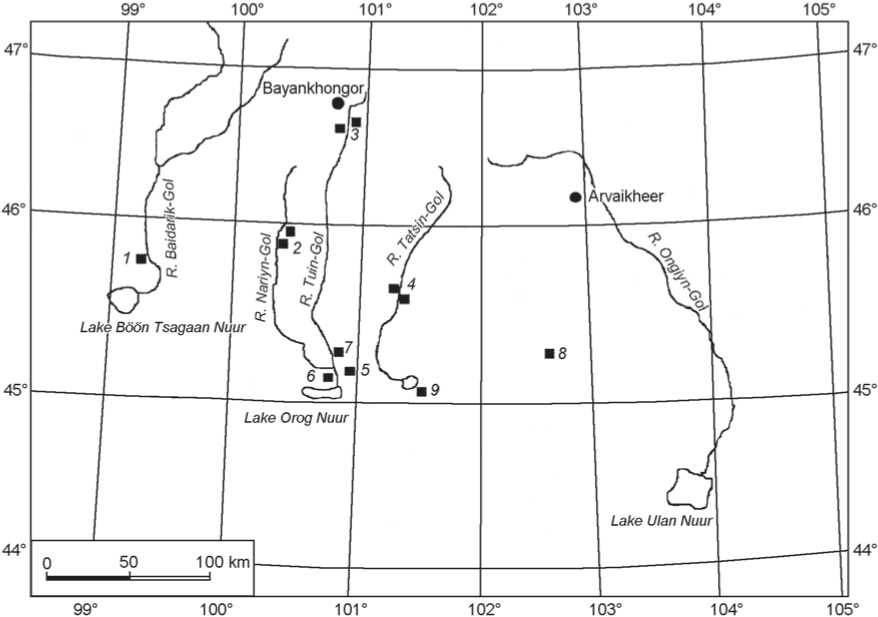
Fig. 12 . Map of the northern edge of the Lake Valley showing locations of the terminal Middle Paleolithic sites (after (Kamenny vek..., 2000)).
1 – Baidarik-Gol-1 (12 sites); 2 – Nariyn-Gol-1 (37 sites); 3 – Tuin-Gol-1 (35 sites of the left side and 19 sites on the right side); 4 – Tatsin-Gol-1 (four sites); 5 – Orog-Nuur-1 and -2; 6 – Bogd-1 (three sites) and -5 (seven sites); 7 –Argalant-1 (five sites); 8 – Guchin-Us-1 (seven sites); 9 – Zodokh-Guvshikh-1 (two sites) and Zhinst (one site).
of the lithic industry, the overwhelming majority of the sites in the Valley of the Lakes can be correlated to the terminal stage of the Middle Paleolithic and dated to the range of 90–50 ka BP. Moreover, the lithic assemblages of these sites show many parallels in the primary reduction, typology of stone tools, and manufacture techniques with the terminal Middle Paleolithic industry of Denisova Cave.
The Orog-Nuur-1 and -2 technocomplexes are most typical of the northern coast of the Valley of the Lakes; they have been defined as the Orog-Nuur terminal stage of the Mongolian Middle Paleolithic. Orog-Nuur-1 yielded 273 artifacts, including 40 cores (of them, 15 were Levallois nuclei). The latter can be classified into several varieties, but all of these cores were intended for detaching blanks in the form of flakes, blades, and pointed forms (Fig. 13, 1, 2, 7–9; 14, 8). In addition, double-platform unifacial (see Fig. 13, 3) and bifacial cores (see Fig. 13, 5), and those showing radial flaking pattern (see Fig. 13, 4; 14, 9) were identified. Analysis of the cores has shown a definite uniformity of the collection in terms of technical and typological features and the degree of abrasion.
The tool kit includes 96 items. Most of them were fashioned on Levallois blanks. Seven Levallois points were identified. Four of them are elongated (see Fig. 14, 1–4 ), and three are shortened (see Fig. 14, 5–7 ). At one of the elongated points, the tip is missing, the dorsal side bears subparallel negative scars, and the lateral edges are covered with facets of fine regular retouch (see Fig. 14, 3 ). Another such point shows a similar dorsal faceting; one of its lateral sides has notches
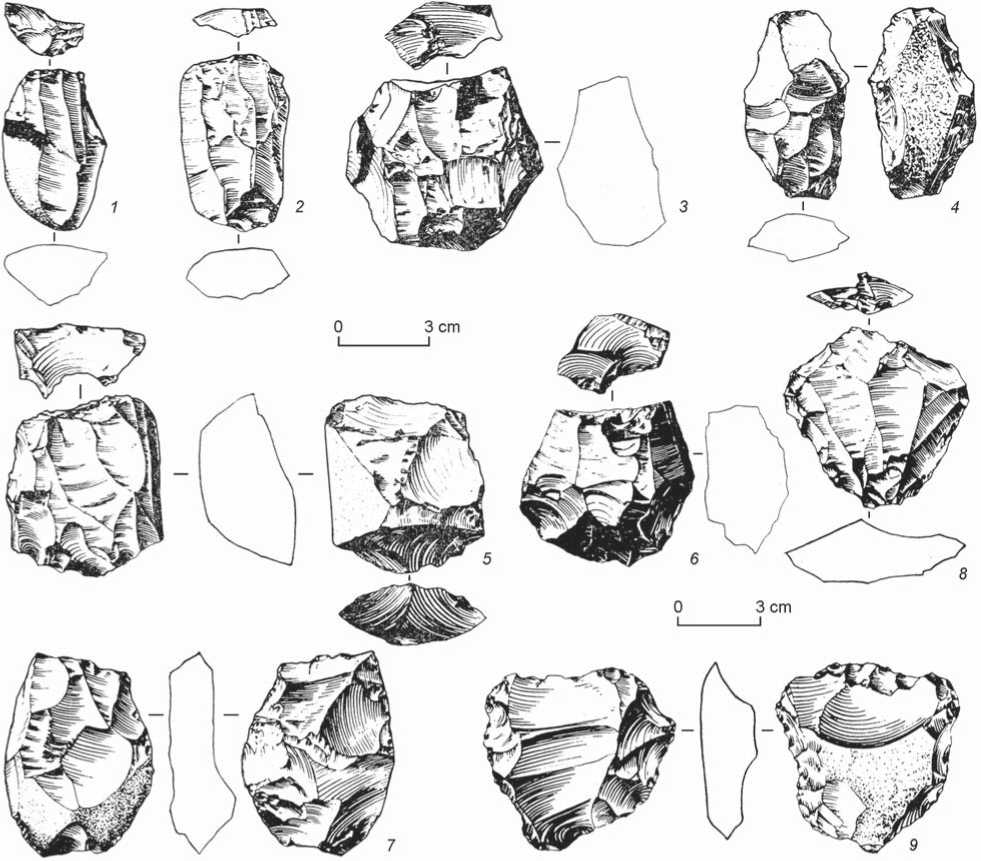
Fig. 13 . Cores from Orog-Nuur-1 (after (Derevianko, Petrin, 1990))
1 , 2 , 7 – 9 – Levallois cores; 3 , 5 , 6 – double-platform cores; 4 – radial core.
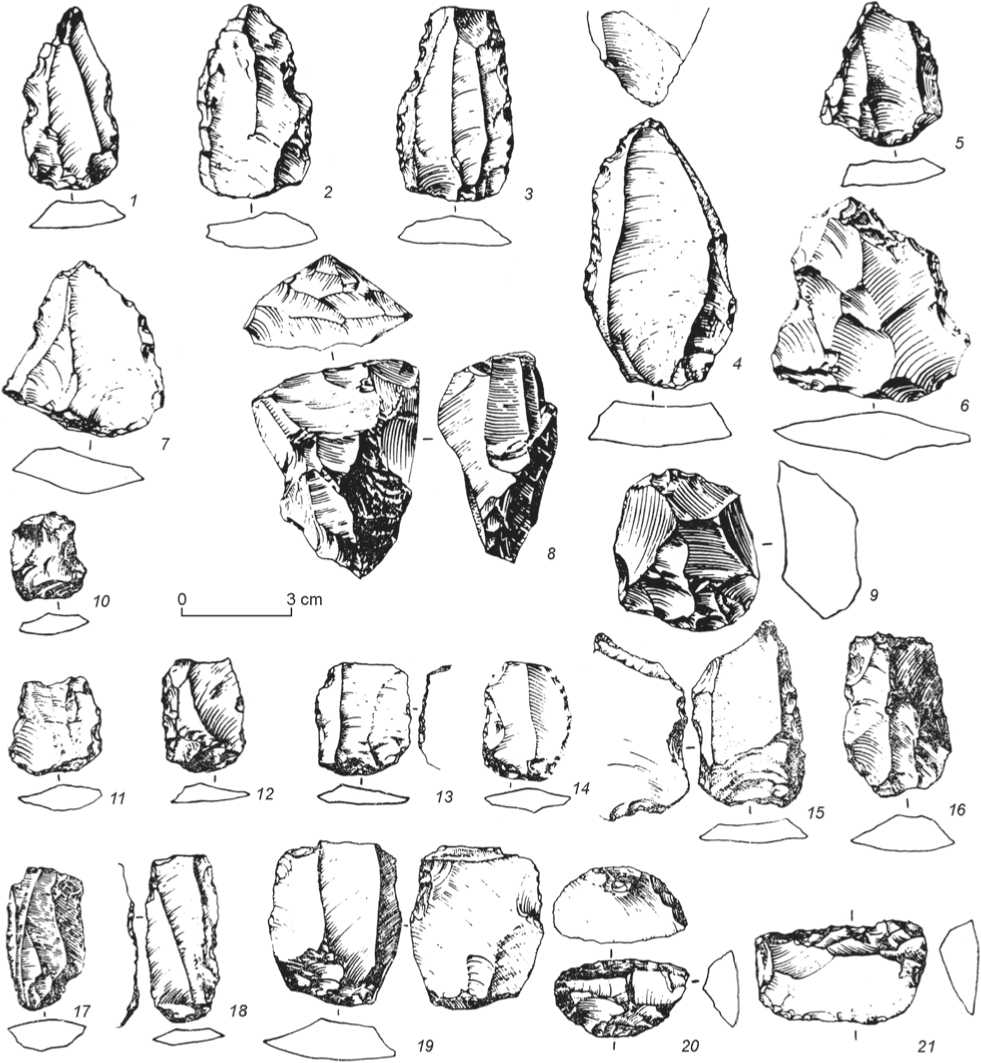
Fig. 14 . Lithic artifacts from Orog-Nuur-1 (after (Derevianko, Petrin, 1990)).
1 – 7 – points; 8 , 9 – cores; 10 , 11 – flakes; 12 – 14 , 16–19 – blades with irregular retouch; 15 , 20 , 21 – side-scrapers.
formed by retouch; it also bears a negative longitudinal scar resembling a burin one (see Fig. 14, 1 ). The third elongated point demonstrates both original “early” retouch and “fresh” (i.e. accidental) one on the edges (see Fig. 14, 4 ). The shortened points (see Fig. 14, 5–7 ) show marginal retouch, including very abrupt one.
Retouched Levallois blades are represented by 12 intact and fragmented specimens (see Fig. 14, 12–14 ,
16–18 ), nine proximal fragments (see Fig. 14, 19 ), and two distal ones. Some intact specimens are shortened. Irregular retouch is observed along the edges of the blades. Levallois flakes (see Fig. 14, 10 , 11 ) are relatively small.
The greatest number of the tools falls within the category of side-scrapers. These vary primarily in size and type of secondary working. Three large scrapers are noteworthy. One of them is made on a pebble; it has a robust back part, the working edge is slightly convex, the clear facets of stepped retouch are visible. The other two side-scrapers are made on large spalls; their working edges are either straight or slightly convex. The fragment of a longitudinal side-scraper was fashioned on a blade (see Fig. 14, 15). Its working edge was treated from the dorsal face and discontinuously trimmed from the ventral face. The other side-scrapers are small. Of these, a semicircular raclette is noteworthy, which shows continuous marginal retouch from the dorsal face (see Fig. 14, 20). The retouch is abrupt and modifying. There is a small area retouched from the ventral face. Notably, the bulb of percussion of the tool was cut off by a series of flattening removals. The sidescraper made of a laminar secondary flake is interesting (see Fig. 14, 21). One of its longitudinal edges was treated by very abrupt two-stepped retouch, and the opposite edge (the back) by finer retouch. Fragments of two side-scrapers were recorded; the working edge of one of them was shaped with flat retouch.
The tool kit also includes denticulate-notched implements, two burins, retouched flakes, and a chisel-like tool. In general, this technocomplex is homogenous in terms of the degree of surface abrasion and technical and typological characteristics.
The site of Orog-Nuur-2 is located 1.5 km from Orog-Nuur-1. The stone tools here were made of the same chert, and show the same degree of the scar surface abrasion. In total, 730 items were found. Of these, 198 artifacts (27.1 %) illustrate primary reduction. Cores from this site are identical to those from Orog-Nuur-1. They are dominated by Levallois, single- and double-platform unifacial cores, and double-platform bifacial varieties. Flakes, blade flakes, blades, core trimming elements, and tools found at Orog-Nuur-1 and -2 made up a single technical and typological complex.
The Orog-Nuur-2 toolkit includes 296 items. Here, as at the neighboring site, Denisovans often used Levallois blanks in tool manufacturing. The Orog-Nuur-2 tools were prepared mainly on blades, including pointed ones, and laminar blanks. Point-like implements are particularly noteworthy (Fig. 15, 2 , 5–8 ). Several distal and proximal fragments could also have been used by the hominins as points (Fig. 15, 1 , 3 , 4 , 9 , 11 , 12 ). Combination implements were shaped by fine and medium sharpening and semi-abrupt retouch. Judging by their shape and modification pattern, they could have been used as tools with denticulate-notched functions (Fig. 15, 10 , 15–17 , 20 ), side-scrapers and end-scrapers (Fig. 15, 18 , 19 ), scraper-burins
(Fig. 15, 13 ), and side-scrapers with well-prepared distal ends (Fig. 15, 14 ). In the tool kit, end-scrapers (Fig. 15, 21 , 22 , 24 ), burins (Fig. 15, 23 , 26 ), and borers (Fig. 15, 25 ) are identified. There are blades and flakes with traces of irregular retouch (Fig. 15, 27 , 28 ). Almost all the tools bear signs of dorsal one-stepped, predominantly fine-faceted, abrupt and semi-abrupt sharpening retouch. Additional ventral retouch is observed on some items.
The Orog-Nuur-1 and -2 lithic industry is characterized by the predominance of the Levallois technique in primary reduction. The blanks are dominated by blades from which various tools were made. At the same time, no well-prepared Upper Paleolithic blade cores were found in these technocomplexes, and the number of Upper Paleolithic tools is minor. The lithic industry of these sites, as well as those from other locations in the Valley of the Lakes, should be attributed to the terminal stage of the Middle Paleolithic.
About 100 short-term sites with Middle Paleolithic industry have been discovered in the foothills of the Ikh-Bogdo and Arts-Bogdo ridges (Okladnikov, Larichev, 1963; Okladnikov, 1986; Kamenny vek..., 1990; and others). Lightly abraded and nonabraded lithic artifacts have been discovered here; typologically, these can be attributed to the terminal stage of the Middle and Upper Paleolithic. In the Otson-Mant region, localities with bifaces reminiscent of the Acheulean have been discovered; several sites with the Late Middle and initial (Early) Upper Paleolithic industry have also been identified. These are the sites of Mukhar-Bulag, Ikh-Bulag, and others (Derevianko, Petrin, Krivoshapkin, 1998; Derevianko, Krivoshapkin, Larichev, Petrin, 2001). According to the main technical and typological features of primary reduction, types of stone tools, and manufacturing techniques, assemblages from these localities are close to materials from layers 11 and 12 of Denisova Cave, which belong to the terminal stage of the Middle Paleolithic, the Middle to Upper Paleolithic transition, and the initial Upper Paleolithic. However, “closeness” does not mean “identityˮ. Certainly, lithic industry of hominins inhabiting various regions in the territory of the Altai and Mongolia has local variations, but these were formed due to different environmental conditions and different quality of lithic raw materials for making tools. These hominins were Denisovans. In the Mousterian industry of Neanderthals, who inhabited the vast territory of Eurasia, researchers distinguish more than 10 local variations (cultures). There is no doubt that in the course of further study
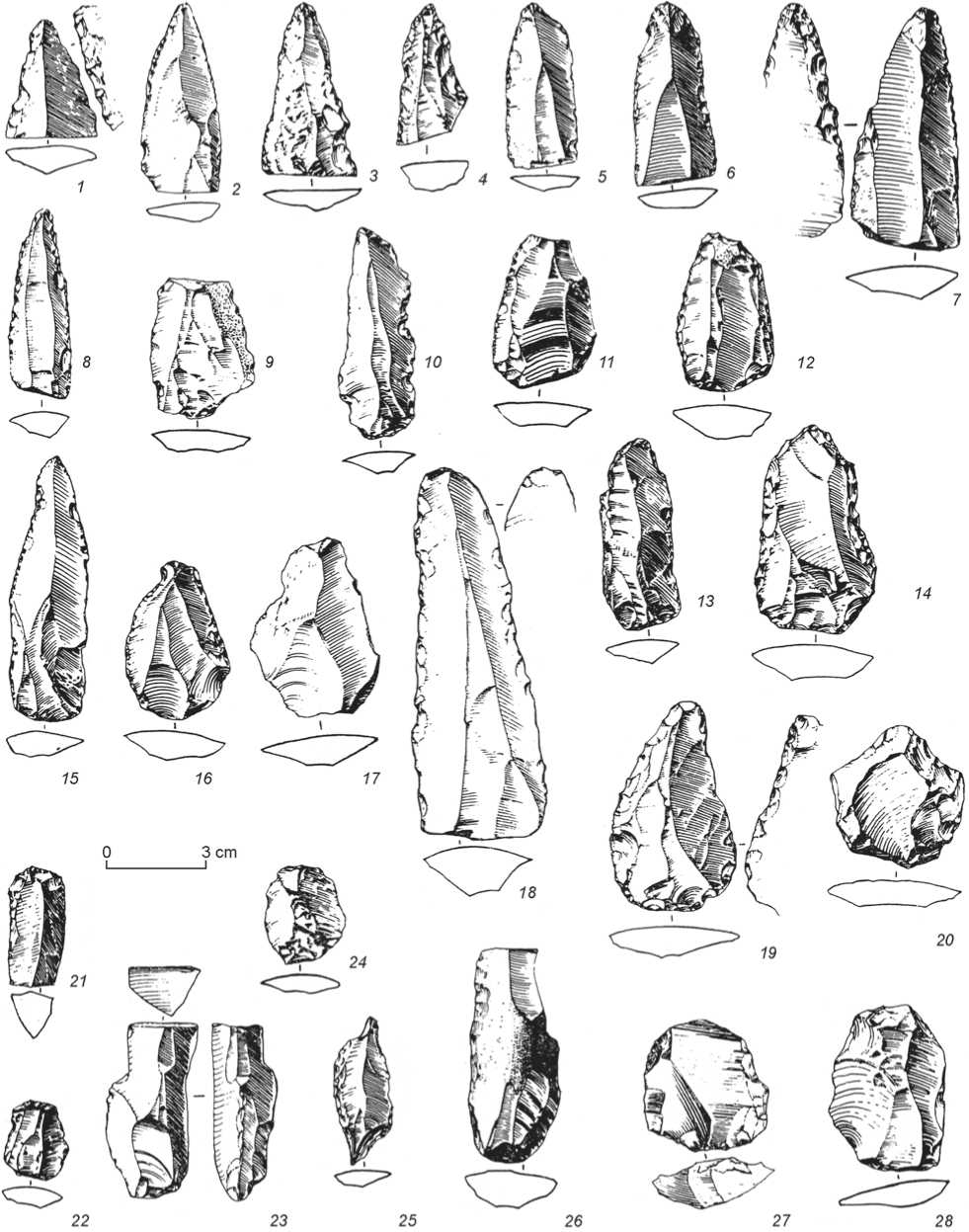
Fig. 15 . Lithic artifacts from Orog-Nuur-2 (after (Derevianko, Petrin, 1990)).
1 – 9 , 11 , 12 – intact and fragmented points; 10 , 15–17 , 20 – denticulate-notched tools; 13 – side-scraper-burin; 14 – side-scraper-point;
18 , 19 – combinations of side- and end-scrapers; 21 , 22 , 24 – end-scrapers; 23 , 26 – burins; 25 – borer; 27 , 28 – flakes with irregular retouch .
of Denisovans and their material culture in Central, East, and Southeast Asia, a significant number of variants of the Denisovan industry will also be identified. In this respect, the sites dating to the terminal stage of the Middle Paleolithic, the Middle to Upper transition, initial and early Upper Paleolithic are of particular interest. Such well-stratified sites have been studied in the valleys of the Orkhon and Selenga rivers in the northern part of Mongolia.
Cultural layers dating to the terminal stage of the Middle Paleolithic were studied in floodplain sediments at the sites of Orkhon-1, -7, and Moiltyn Am. The total of 14,193 stone products were recovered (Derevianko, Kandyba, Petrin, 2010). Primary reduction at these sites was executed mainly using the unidirectional unifacial Levallois and parallel flaking cores, usually with a longitudinal orientation of flaking; radial and orthogonal cores are also present. Among the tools, denticulate-notched items are most numerous. The categories of lateral and angle side-scrapers and retouched spalls are less numerous. Side-scrapers with concave working edges are also present. Solitary combination tools and bifacially prepared artifacts are identified. The lithic industry in the Orkhon Valley looks archaic, due to the poor quality of the raw material, which is characterized by macro-crystallinity and fracturing in the texture, preventing laminar reduction. Radiocarbon and ESR dates in the range of 65–55 ka BP were generated for the site in the floodplain facies of the Orkhon River alluvium. However, A.V. Astashkin and his co-authors argued that sample No. 4 can be dated back to 71 ka BP according to the results of ESR dating (1993: 15).
A specific feature of the sites in the Orkhon Valley is that the lithological layers covering the floodplain sediments contain lithic artifacts of the initial (early) Upper Paleolithic. Thus, at Orkhon-1, -7, and Moiltyn Am, the continuity in the Denisovan industry development can be traced for almost 20 thousand years.
Since the early 2000s, the Joint Russian-American-Mongolian Expedition has carried out large-scale studies of the initial Upper Paleolithic in the Selenga River valley in Northern Mongolia. Two groups of sites—Tolbor and Kharganyn-Gol—are of particular importance. The Tolbor group is located in the Ikh-Tulberiyn-Gol River valley; about 45 sites were discovered here, six of which were partially excavated. The Kharganyn-Gol group includes about 19 sites, two of which were partially studied (oral communication by E.P. Rybin). In addition, within the area of 10 km around the confluence of the Ikh-Tulberiyn-Gol (Tolbor) and Selenga rivers, five sites with long stratigraphic sequences are being studied: Tobor-4, -15, -16, -21, and Kharganyn-Gol-5 (Khatsenovich, 2018; Rybin, 2020). So far, no cultural layers of the terminal Middle Paleolithic and the Middle to Upper Paleolithic transition have been uncovered at these sites. But in general, the lithic industry shows a clear blade Upper Paleolithic trend. The derived calibrated interval of 48–47 ka BP indicates that the Upper Paleolithic in Mongolia, as in the Altai, is among the earliest in Eurasia.
Conclusions
The initial dispersal of African H. erectus in the territory of Mongolia might have occurred earlier than 800 thousand years ago. The arrival of a new population of hominins with a Late Acheulean industry in this area is evidenced by the groups of sites of Flint Valley, Otson-Mant, Dno Gobi, and others, which technocomplexes show a significant role of the Levallois primary reduction strategy, and which tool kits are dominated by bifacially processed tools of the Acheulean handaxe type. The hominins who started peopling Central Asia 400–350 ka BP were morphologically and genetically evolving Denisovans. After the split from Neanderthals in the Levant around 400 ka BP, these early humans with the Late Acheulean industry gradually migrated to the east of Asia.
In Central Asia, the early stage of the Denisovan dispersal can be traced in Tajikistan (Derevianko, 2024) and Uzbekistan (Derevianko, 2025). In Tajikistan, pedocomplex 4 at the Obi-Mazar site dating to 364– 420 ka BP reveals clear elements of a different lithic industry in the primary reduction pattern and the tool kit in its cultural layer dating to the terminal stage of the Early Paleolithic Karatau culture (pebble-flake industry of H. erectus ); this evidences the arrival of representatives of a new taxon, the Denisovans, to this territory. The Denisovans mixed with the indigenous population of late H. erectus with a pebble-flake industry. Both Denisovans and H. erectus belonged to an open genetic system; interbreeding between these two taxa produced fertile offspring. Assimilation and diffusion of their lithic industries took place. This was the initial stage of the process of morphological and genetic evolution of H. denisovan .
In Mongolia, the Denisovans also encountered the indigenous H. erectus population with a pebble-flake industry. Subsequently, same as in the western part of Central Asia, assimilation and diffusion of their industries occurred. The most vivid confirmation of mixing between H. erectus and H. denisovan is the archaic dental system detected in the latter.
The fragment of a skullcap discovered in the Salkhit Valley in Mongolia provides the evidence of hybridization between representatives of the morphologically and genetically evolving Denisovan taxon and morphologically modern humans. This fossil includes a virtually complete frontal bone, and partially complete parietals and nasals with well-expressed archaic features, which gave D. Tseveendorj and his co-authors grounds to identify a new taxon— Mongolanthropus (Tseveendorj, Batbold, Amgalantugs, 2006, 2007). Anthropological analysis established its relationship with Neanderthals and H. erectus in some parameters, but overall, in terms of physical morphology, it was a modern human with pronounced ancestral features inherited from H. erectus (Coppens et al., 2008). The comparison of the findʼs dimensions with the skulls of various hominin species using multidimensional scaling analysis showed similarities with Neanderthals, H. erectus , and Asian archaic H. sapiens (Kaifu, Fujita, 2012), which allowed the researchers to classify the Salkhit hominin as a Late Pleistocene modern human.
A study of three samples of biomaterial from the Salkhit skull showed that the mtDNA lineage of this individual belongs to macrohaplogroup N, which is among the basic ones, common to all non-African modern humans (Devièse et al., 2019). The sequencing of nuclear DNA from the skull fragment showed 18 segments of Denisovan heritage longer than 0.2 cM in the genome of this hominin. Unfortunately, the data concerning the Denisovan phenotype are quite scarce. But its morphology should exhibit mosaic structure. Owing to the small number of H. erectus , which probably inhabited not all areas of Central Asia, Denisovans did not mix with the indigenous population in all parts of this vast region. Therefore, not all representatives of this morphologically and genetically evolving taxon were equally likely to exhibit features typical of H. erectus . The Salkhit fossil provided limited information; however, the available data suggest certain similarity between this individual and Denisovans (Derevianko, 2024).
In 2006, a geomorphological and stratigraphic research was conducted in the approximate area of discovery of the Salkhit skullcap (Derevianko, Tseveendorj, Gladyshev et al., 2007). The valley is located in the Norovlin sum of the Khentii aimag. Since 2001, the Bayan-Erdes company had been mining gold there; the workers found the skull and delivered it to the Institute of Archaeology of the Mongolian Academy of Sciences. By 2006, a significant share of the loose deposits had been completely destroyed, up to the granite bedrock.
In the immediate vicinity of the place where the skullcap was found, in the areas undisturbed by gold miners, several excavation trenches were established. The most significant information was collected from the trench on the western edge of the Salkhit Valley. It was 10 m long. Loose sediments were excavated to a depth of 4.25 m, down to the weathering crust. The crust was overlain by a layer of sandy-gravel-rubble sediments, which were rather unstable. The changes could have been caused by climatic fluctuations towards warming (the Karga period), which led to an increase in humidity and water availability in the region contributing to intense erosion-denudation processes underlying the accumulation of absolutely unsorted clastic sediments of deluvial-proluvial genesis. Sufficient amount of free water led to the formation of an alluvial-proluvial deposit at this level, which appears to be a former channel of a small watercourse filled with dippinglayered sandy material.
The next horizon covering the Karga strata is layer 3, characterized by slope genesis. This horizon was apparently formed during the Sartan period, which was characterized by the general cooling. The deposits of layer 4 were accumulated due to the deluvial-proluvial processes in the Holocene. The soil-vegetation horizon covering the profiles was also formed during the Holocene.
Summarizing the data obtained from the analysis of the stratigraphic profile of the Salkhit Valley the conclusion can be made that the lowermost layer of the loose sediments is not older than the Early Karga period (final MIS 3). Initially, the age of the Salkhit skull was determined to be ~23 ka BP, but it turned to be underestimated owing to poor sample preparation, and currently the skull is dated to 34,950–33,900 cal BP (Devièse et al., 2019). In Mongolia, this time is correlated with the Middle Upper Paleolithic, characterized by blade industry recorded at the sites of Chikhen-1 and -2.
Acknowledgement
This study was supported by the Russian Science Foundation, Project No. 25-18-00775 “Complex Chronology of the Archaeological Sites of the Altai (Stone Age–Middle Ages)”.
