
The Representation of National Identity in Outdoor Advertising in Kyrgyzstan
Journal: Bulletin of Science and Practice @bulletennauki
Section: Социальные и гуманитарные науки
Article in issue: 3 т.12, 2026.
Free access
This study aims to examine how national identity is represented in outdoor advertising in Kyrgyzstan within the context of the glocalization process. The primary focus of the research is on the national identity indicators employed in outdoor advertisements. In contemporary advertising shaped by globalization and glocalization, the representation of national identity has become a significant area of scholarly inquiry. The study adopts a quantitative research design and employs content analysis as its methodological approach. The sample consists of 93 outdoor advertisements containing national identity indicators, identified on major central streets of Bishkek, the capital city of Kyrgyzstan, between December 2023 and May 2024. The advertisements were analyzed according to a coding framework that includes country-related, cultural, historical, linguistic, religious, shared public, and national belonging codes. The findings indicate that national identity is most frequently represented through cultural codes in outdoor advertising, followed respectively by shared public and country-related codes. In addition, the results reveal that national identity indicators are predominantly presented through modern representational forms and that national identity is used more extensively in advertisements of domestic brands compared to those of foreign brands. Overall, the study demonstrates that national identity in outdoor advertising in Kyrgyzstan is primarily reproduced through cultural indicators within a modern narrative framework.
Similar articles in the section Sociology

Short address: https://sciup.org/14134742
IDS: 14134742 | UDC: 316 | DOI: 10.33619/2414-2948/124/60
Репрезентация национальной идентичности в наружной рекламе Кыргызстана
Целью данного исследования является анализ того, каким образом национальная идентичность представляется в наружной рекламе в Кыргызстане в контексте процессов глокализации. Основное внимание в работе уделяется индикаторам национальной идентичности, используемым в наружной рекламе. В современных рекламных практиках, формирующихся под воздействием глобализации и глокализации, репрезентация национальной идентичности в публичном пространстве становится значимым направлением научных исследований. В исследовании использован количественный исследовательский дизайн, а в качестве методологического подхода применён контент-анализ. Выборку составили 93 образца наружной рекламы, содержащие индикаторы национальной идентичности, выявленные на основных центральных улицах города Бишкек - столицы Кыргызстана - в период с декабря 2023 года по май 2024 года. Рекламные материалы были проанализированы на основе системы кодирования, включающей страновые, культурные, исторические, языковые, религиозные, общие публичные коды, а также коды национальной принадлежности. Результаты исследования показывают, что национальная идентичность в наружной рекламе наиболее часто репрезентируется через культурные коды, за которыми следуют общие публичные и страновые коды. Кроме того, установлено, что индикаторы национальной идентичности преимущественно представлены в современных формах репрезентации. Также выявлено, что элементы национальной идентичности чаще используются в рекламе отечественных брендов по сравнению с зарубежными. В целом исследование демонстрирует, что национальная идентичность в наружной рекламе Кыргызстана в основном воспроизводится через культурные индикаторы в рамках современной нарративной модели.
Text of the scientific article The Representation of National Identity in Outdoor Advertising in Kyrgyzstan
Бюллетень науки и практики / Bulletin of Science and Practice
UDC 316
The process of globalization has significantly reshaped economic, cultural, and communicative structures in recent decades. Products and brands now circulate beyond national borders within an increasingly interconnected global market. According to the World Trade Organization, global trade volume has steadily expanded since the 1990s, contributing to the growing visibility of multinational corporations and global brands worldwide [31].
Contrary to early assumptions that globalization would lead to cultural homogenization, contemporary studies emphasize that global processes have instead contributed to the reconfiguration of national and local identities within new social and cultural contexts [23, 24, 31].
In Central Asia, this process has been accompanied by intensified efforts to preserve and rearticulate national identity in the public sphere, particularly under conditions of glocalization [1].
Advertising plays a crucial role in forming and reproducing national identity. It circulates cultural meanings, national values, and symbolic markers within specific social contexts [13].
As a form of advertising with high visual impact and continuous public exposure, outdoor advertising provides a particularly suitable medium for examining how national identity is made visible in everyday life. Outdoor advertisements function as visual texts embedded in the cultural landscape, reflecting social structures and values [17, 28].
Despite this significance, academic research focusing on the visual representation of national identity through outdoor advertising remains limited in the context of Central Asia, particularly in Kyrgyzstan. Yet, Kyrgyzstan represents a distinctive post-Soviet setting in which national identity has been actively reconstructed through symbols and visual indicators in public space. Within this framework, the present study aims to analyze how national identity is represented through national identity indicators in outdoor advertising in Kyrgyzstan. The study focuses specifically on the visual and linguistic elements employed in outdoor advertisements and seeks to answer the following research questions: (I) Through which indicators is national identity represented in outdoor advertising? (II) To what extent are national identity indicators used? (III) How are these indicators presented in modern or traditional forms? (IV) In which product or service categories are national identity indicators more frequently employed? (V) Which languages are preferred in outdoor advertisements containing national identity indicators?
Identity and National Identity
Identity is commonly defined as the set of enduring characteristics that distinguish individuals or groups and enable both self-recognition and differentiation from others [17].
In this sense, identity functions not only as a marker of individuality but also as a means through which individuals position themselves socially. It is shaped both within reference groups and through interaction with the broader social environment [29].
While shared similarities strengthen group cohesion, identity also emerges through perceived differences from others, which are socially reinforced through values, beliefs, and behavioral norms [1-5, 18].
From a sociological perspective, identity is closely linked to individuals’ self-perception and sense of belonging [21].
These processes are central to the construction of the self and reflect how individuals locate themselves within social structures [30].
In the social sciences, identity is generally examined under three main categories: personal, psychosocial, and national–cultural identity. This study focuses on national identity as a collective and socially constructed form of belonging. The emergence of national identity is closely associated with the rise of the nation-state, particularly following the French Revolution. During this period, the alignment between state structures and citizen identities led national identity to become a dominant reference point within defined territorial boundaries [32].
Understanding national identity therefore requires examining the historical and ideological foundations of nationalism. According to Gellner, national belonging has become a central component of modern identity; however, it is not an innate or biological attribute but a product of historical and social construction that is often perceived as natural [8].
Similarly, Anderson conceptualizes the nation as an “imagined political community”, emphasizing that shared belonging does not require direct interpersonal interaction but is sustained through collective imagination, symbolic boundaries, and a sense of solidarity [2, 3].
Nationalism theory is commonly summarized through three key assumptions: the world is divided into distinct nations; individuals primarily belong to a single nation; and nations represent the legitimate source of political authority [7, 28].
Within this framework, national identity operates as a unifying mechanism that organizes collective loyalty and political legitimacy. National identity is thus understood as a dynamic form of psychological and cultural belonging shaped by historical experience [10].
Guibernau emphasizes its fluid and modern character, highlighting shared beliefs, values, and perceived common origins as core elements [11].
Rather than a fixed essence, national identity is increasingly viewed as a socially produced construct formed through cultural and discursive practices [3].
In everyday life, it functions as a symbolic link connecting individuals to the nation and the state [7], structured around shared language, history, culture, and symbols [12, 13].
Despite diverse theoretical approaches, there is broad agreement regarding the core components of national identity. Smith identifies these as a shared territory, collective myths and historical memory, a common public culture, equal legal rights and obligations, and an integrated economic structure [26].
Together, these elements provide continuity and coherence to national identity over time. Alternatively, national identity can be understood through the interaction of subjective and objective elements. Emotional attachment, shared cultural experience, and collective will form the subjective dimension, while territory, language, and institutional structures constitute the objective foundation of national belonging [20, 27].
The interplay between these dimensions enables the formation and persistence of the nation. Given the contextual variability of national identity across societies, there is no universally fixed set of defining elements. Accordingly, this study adopts a contextualized approach, drawing on established theoretical frameworks while considering the specific historical, cultural, and social characteristics of Kyrgyzstan in defining national identity and its indicators.
The Relationship Between National Identity and Advertising
Contemporary theoretical approaches conceptualize national identity not as a fixed and immutable essence, but as a social construct that is continuously reconstructed through historical, cultural, and discursive processes [2].
Within this process of construction, the media - and advertising in particular - emerge as key domains in which national identity is rendered visible and repeatedly reproduced.
Advertising is not merely an economic communication activity aimed at promoting products and services; it also constitutes a symbolic field in which cultural meanings, values, and identities circulate. According to Hall (1997), representation is not a passive reflection of reality but a process through which meaning is produced via language, visual codes, and shared cultural conventions. In this context, advertisements generate specific national narratives by employing indicators such as national flags, colors, folkloric motifs, traditional clothing, historical references, and discursive expressions emphasizing collective identity, such as the notion of “we” [12, 13].
Barthes’ (1977) semiotic approach provides an important theoretical framework for understanding the relationship between national identity and advertising. Barthes argues that advertising texts produce “myths” through visual and linguistic signs, presenting particular ideological meanings as natural and self-evident. Advertisements constructed around national symbols tend to depoliticize and naturalize national identity, transforming it from a contested social construction into a shared and unquestioned reality. In this way, acts of consumption become symbolically associated with expressions of national belonging [4, 6].
In this regard, Billig’s (1995) concept of “banal nationalism” is particularly useful for explaining how advertising reproduces national identity in everyday life. Billig contends that national identity is not only invoked during periods of crisis or conflict but is continuously reinforced through routine, ordinary practices. Outdoor advertising, through the repetitive display of national colors, local language, and cultural symbols in public space, plays a significant role in sustaining this form of everyday nationalism. References to domestic production, national unity, and collective solidarity are among the most frequently employed strategies in making national identity visible through advertising [5].
The use of national identity as an advertising appeal has been explicitly addressed in Pollay’s (1984) seminal study, which identified national identity as one of the 42 cultural advertising appeals present in advertising messages. Pollay conceptualizes national identity as a secondary appeal associated with the state and collective belonging, operating alongside primary appeals that address fundamental human needs. Similarly, Moriarty (1991) includes patriotism as a distinct advertising appeal within broader appeal classifications. From this perspective, advertisements that incorporate national identity indicators are not limited to state-sponsored communication but also contribute— through commercial brands and institutions — to the construction of country image and nation branding processes. Hetsroni (2000) further emphasizes that patriotic advertising establishes a symbolic connection between products or services and feelings of national attachment and loyalty [11-16].
Within the advertising literature, national identity is also examined as a persuasive element. Empirical studies demonstrate that national identity cues can positively influence consumer attitudes toward advertisements and brands. For instance, Yoo and Lee (2016) show that patriotic advertising generates stronger emotional responses when individuals’ national identity is activated. Likewise, Carvalho (2014) finds that advertisements featuring national symbols possess greater persuasive power in contexts where national identity salience is heightened. These findings underline the strategic role of national identity as a symbolic resource in advertising communication [28-32].
International scholarship has explored the relationship between advertising and national identity across diverse geographical contexts. Minowa and Belk (2017) analyze how national identity is constructed through visual rhetoric and aestheticization in Japanese advertising, while Roberts (2014) examines the commercialization of national history through packaging design in Russia. Kaneva and Popescu (2011) investigate how nation-branding processes redefine national identity in post-communist societies [15. 19, 23].
At the same time, the literature also cautions that the use of national identity in advertising does not always yield positive outcomes. Exclusionary or overly nationalist discourses may marginalize or stereotype certain ethnic and cultural groups [15].
Consequently, contemporary advertising research increasingly approaches national identity not as a singular or homogeneous construct, but as a plural, negotiated, and context-dependent phenomenon. In conclusion, the relationship between national identity and advertising is complex and dynamic. Advertisements function as cultural texts that both represent and reproduce national identity. Owing to their high visibility in public space, outdoor advertisements play a particularly significant role in the everyday reconstruction of national identity through visual symbols. This perspective provides a strong theoretical foundation for examining how national identity is visually articulated in outdoor advertising in the context of Kyrgyzstan.
This study aims to examine how national identity is represented in outdoor advertising in Kyrgyzstan through specific indicators. In contemporary advertising practices shaped by globalization and glocalization processes, the ways in which national identity becomes visible in public space constitute an important field of discussion within cultural representation and communication studies. Theoretical approaches that conceptualize national identity not as a fixed or immutable structure but as a social construct continuously reproduced through everyday practices and symbolic representations position advertising as one of the key actors in this process [3, 5, 23].
In this respect, Kyrgyzstan represents a particularly relevant case due to its post-Soviet nationbuilding process, in which national identity has been actively reconstructed through cultural and symbolic representations in public space. At the same time, the limited number of empirical studies focusing on the visual representation of national identity through outdoor advertising in Central Asia, and particularly in Kyrgyzstan, makes this research both timely and necessary. The study was conducted using a quantitative research design and employed content analysis as its primary method. Content analysis is a widely used technique that enables the systematic, objective, and replicable examination of meanings embedded in media texts [16, 20].
Within the scope of this research, content analysis was applied to identify how national identity is represented in outdoor advertisements not through explicit political discourse, but through visual and linguistic indicators. The population of the study consists of outdoor advertisements in Kyrgyzstan. The sample was limited to a central urban area in Bishkek, the capital city of Kyrgyzstan, where pedestrian density and the concentration of outdoor advertising are highest. Specifically, the sample area includes. The sample area includes A. Masaliyev Street, 7 April Street, Jibek-Jolu Avenue, U. Asanaliev Street and A. Çortekov street. Between December 2023 and May 2024, a total of 93 outdoor advertisements containing national identity indicators were identified in these locations and included in the analysis. A purposive sampling strategy was employed, and advertisements that did not contain any national identity indicators were excluded from the study. Although the findings cannot be generalized to all advertising practices in Kyrgyzstan, the selected sample is considered sufficient for identifying dominant patterns and tendencies in the contemporary representation of national identity within the specified urban context [21-24].
The coding scheme used in the study was developed based on the existing literature on national identity and advertising. The national identity appeal defined in Richard Pollay’s (1983) classification of advertising appeals and Anthony D. Smith’s (1991) conceptualization of national identity served as the main theoretical foundations for the coding process. In addition, national identity coding system developed by Gündüz Kalan (2019) for the Turkish context was taken as a reference and adapted to the national, historical, cultural, and linguistic context of Kyrgyzstan [10, 22, 25, 26]. Each advertisement was coded using a binary system indicating the presence (1) or absence (0) of predefined indicators. The inclusion of multiple national identity indicators within a single advertisement was permitted. To ensure consistency and reliability, the coding procedure followed clearly defined operational criteria and was applied uniformly across all advertisements. This methodological framework enabled a systematic examination of the indicators, contexts, and intensity through which national identity is represented in outdoor advertising in Kyrgyzstan [25, 26].
Table 1 NATIONAL IDENTITY CODES FOR KYRGYZSTAN
|
Code Category |
Indicators |
|
Country Codes |
References to Kyrgyzstan, national flag, national anthem, state emblem, snow leopard ( Ak Bars ), map of Kyrgyzstan |
|
Cultural Codes |
Traditional clothing, food and beverages, customs, folkloric elements |
|
Historical Codes |
Historical events, historical sites, historical figures |
|
Linguistic Codes |
Expressions in the Kyrgyz language, proverbs, idioms |
|
Religious Codes |
Religious buildings, religious holidays and commemorative days, rituals, religious expressions |
|
Shared Public Codes |
Works of art, celebrities, popular culture icons, public symbols |
|
National Belonging Codes |
We” discourse, references to being Kyrgyz, “the Other” discourse, expressions of national pride |
Findings
Within this study, 93 outdoor advertisements containing national identity indicators, identified on selected central streets of Bishkek, the capital of Kyrgyzstan, between December 2023 and May 2024, were examined.
Table 2 DISTRIBUTION OF OUTDOOR ADVERTISING
TYPES CONTAINING NATIONAL IDENTITY INDICATORS
|
Outdoor advertising types |
Frequency (n) |
Percentage (%) |
|
Billboard |
22 |
23,3 |
|
Banner |
25 |
0,5 |
|
Building wrap |
22 |
20,5 |
|
Advertising on public transport |
12 |
10,5 |
|
Console advertising |
12 |
10,5 |
Within the defined research area, outdoor advertisements incorporating national identity indicators were observed across five different advertising formats. As shown in Table 2, banner advertisements constitute the most frequently used medium for national identity representation (n = 25; 23.3%). This is followed by billboards and building wraps, each accounting for 22 advertisements (20.5%). In contrast, public transport advertisements and console advertisements represent the least frequently used formats (n = 12; 10.5%). This distribution indicates that national identity is more commonly articulated through static and large-scale advertising surfaces within urban public space.
Table 3
NATIONAL IDENTITY CODES IDENTIFIED IN OUTDOOR ADVERTISEMENTS
|
Kyrgyzstan`s national identity codes |
Frequency (n) |
Percentage (%) |
|
Country Codes |
22 |
23,6 |
|
Cultural Codes |
81 |
87 |
|
Historical Codes |
16 |
17 |
|
Linguistic Codes |
7 |
7,5 |
|
Religious Codes |
0 |
0 |
|
Shared Public Codes |
27 |
29 |
|
National Belonging Codes |
15 |
16,1 |
An examination of the distribution of national identity codes used in outdoor advertising reveals that national identity is most prominently represented through cultural codes (n = 81; 87%). This finding indicates that national identity is primarily made visible in advertisements through traditional clothing, folkloric elements, ornamental motifs, and everyday cultural practices. Cultural codes are followed by shared public codes (n = 27; 29%) and country-related codes (n = 22; 23.6%).
Table 4
SYMBOLS USED TO REPRESENT NATIONAL IDENTITY IN OUTDOOR ADVERTISING
|
Symbols |
Frequency (n) |
|
|
1 |
Ak kalpak |
17 |
|
2 |
Food and beverages |
9 |
|
3 |
Shyrdak |
3 |
|
4 |
National flag |
16 |
|
5 |
Famous individuals |
13 |
|
6 |
Clothing |
31 |
|
7 |
Historical places |
9 |
|
8 |
Historical figures |
7 |
|
9 |
Kyrgyz landscape |
10 |
|
10 |
Ala-Too |
16 |
|
11 |
Ornament |
28 |
|
12 |
National symbolic animals |
5 |
|
13 |
State emblem |
2 |
|
14 |
Yurt (Boz üy) |
3 |
|
15 |
National symbolic objects |
3 |
|
16 |
Traditional musical instruments |
6 |
|
17 |
Som (national currency) |
1 |
In contrast, historical codes (n = 16; 17%), national belonging codes (n = 15; 16.1%), and linguistic codes (n = 7; 7.5%) are used at more limited levels. Notably, no religious codes were identified within the scope of the analyzed advertisements. Overall, these findings suggest that in outdoor advertising in Kyrgyzstan, national identity is conveyed indirectly through cultural and shared public indicators, rather than through explicit historical, political, or religious references.
An examination of the symbols used in the representation of national identity in outdoor advertising reveals that the most frequently employed indicators are traditional clothing (n = 31), ornamental motifs (n = 28), ak kalpak (n = 17), the national flag (n = 16), and Ala-Too (n = 16). In addition, elements such as Kyrgyz landscapes, famous individuals, and historical sites appear in advertisements with moderate frequency. By contrast, symbols such as the state emblem, the national currency (som), and certain symbolic objects are used at a very limited level. Overall, these findings indicate that national identity in outdoor advertising is predominantly conveyed through cultural and everyday visual symbols rather than through official state symbols.
Table 5
PRODUCT AND SERVICE CATEGORIES
OF OUTDOOR ADVERTISEMENTS USING NATIONAL IDENTITY INDICATORS
|
Product and Service Categories |
Frequency (n) |
Percentage (%) |
|
|
1 |
Food and beverages |
21 |
22,6 |
|
2 |
Clothing, footwear, and accessories |
12 |
12,9 |
|
3 |
Durable consumer goods and household items |
3 |
3,2 |
|
4 |
Financial service |
4 |
4,3 |
|
5 |
Real estate and construction |
6 |
6,5 |
|
6 |
Food service (restaurants, cafés) |
10 |
10,8 |
|
7 |
Telecommunications and digital services |
6 |
6,5 |
|
8 |
Public services |
6 |
6,5 |
|
9 |
Educational services |
3 |
3,2 |
|
10 |
Entertainment and event services |
13 |
14 |
|
11 |
Logistics and delivery services |
4 |
4,3 |
|
12 |
Other private services |
5 |
5,3 |
|
Total |
93 |
100 |
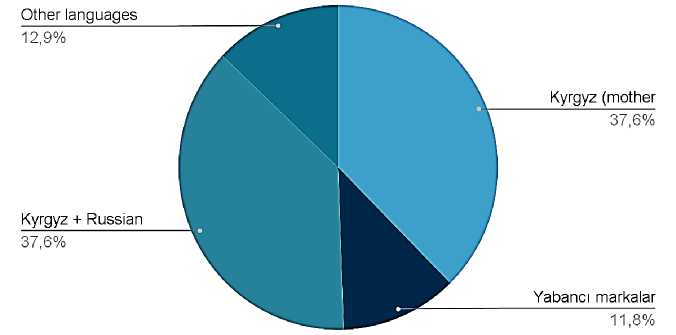
Figure 1. Distribution of Language Use in Outdoor Advertisements Containing National Identity Indicators
An examination of the distribution of outdoor advertisements employing national identity indicators across product and service categories shows that these indicators are used most intensively in the food and beverage sector (22.6%) and entertainment and event services (14%). These categories are followed by clothing, footwear, and accessories (12.9%) and food service establishments (10.8%). In contrast, the use of national identity indicators is relatively limited in the categories of durable consumer goods and household items and educational services, each accounting for 3.2%. Overall, the findings suggest that national identity is more frequently employed in advertisements for everyday consumption-oriented and experience-based products and services, rather than in functional or utilitarian sectors.
An analysis of language preferences in outdoor advertisements that include national identity indicators shows that Kyrgyz (37.6%) and Kyrgyz–Russian bilingual usage (37.6%) are the most frequently employed language forms. In comparison, Russian alone (11.8%) and other languages (12.9%) are used to a more limited extent. These findings indicate that both the mother tongue and bilingual communication practices play a significant role in the representation of national identity in outdoor advertising. At the same time, the coexistence of Kyrgyz and Russian reflects the multilingual public structure of Kyrgyzstan, suggesting that advertisements simultaneously address national identity and the broader linguistic diversity of the public sphere.
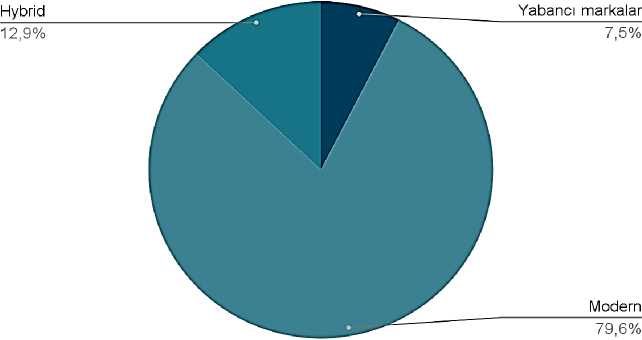
Figure 2. Distribution of Presentation Forms of National Identity Indicators
Figure presents the percentage distribution of outdoor advertisements that include national identity indicators according to their presentation forms. The findings reveal that national identity indicators are predominantly represented through modern presentation forms (79.6%). This is followed by hybrid presentations, in which traditional and modern elements are used together (12.9%). The traditional presentation form is the least frequently employed (7.5%). Overall, the table indicates that national identity in outdoor advertising is mainly conveyed through modern representational strategies.
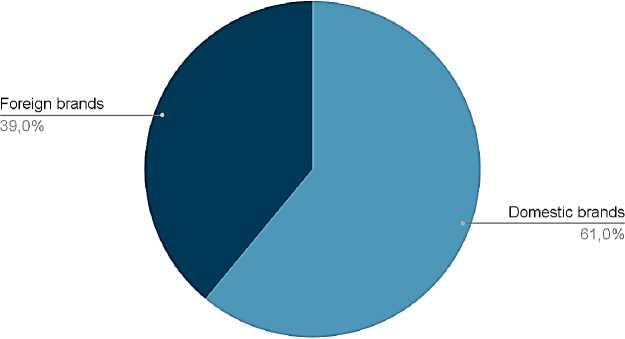
Figure 3. Distribution of National Symbols by Domestic and Foreign Brands
An analysis of the 45 outdoor advertisements that include national symbols indicates that such symbols are used more frequently by domestic brands (61%) than by foreign brands (39%). This finding suggests that national identity indicators are more intensively employed by domestic brands as a strategy to emphasize belonging, locality, and social proximity. In contrast, foreign brands appear to adopt national symbols to a more limited extent, likely as a means of adapting to the local cultural context rather than constructing a primary identity narrative.
These findings indicate that national identity in outdoor advertising in Kyrgyzstan is largely constructed through symbols that are associated with everyday life, culturally familiar, and visually easily recognizable. Overall, the results show that national identity in outdoor advertisements is represented through cultural, public, and visual indicators, particularly via modern presentation forms, bilingual practices, and symbols connected to daily life. In this context, national identity is made visible in advertising not through explicit political or historical discourses, but rather through symbolic strategies aimed at generating a sense of cultural belonging and social closeness.
Discussion and conclusion
This research analyzed the representation of national identity in outdoor advertising in Kyrgyzstan through a content analysis of advertisements containing national identity indicators. The findings demonstrate that national identity is constructed in advertising as a flexible and contextdependent phenomenon rather than a static or singular concept.
The analysis reveals that cultural codes constitute the dominant form of national identity representation. Symbols related to traditional clothing, ornamentation, national landscapes, and everyday cultural practices are widely employed, whereas historical, political, and religious references are limited. This indicates a preference for culturally neutral and socially inclusive forms of representation that avoid overt ideological messaging.
Furthermore, national identity indicators are predominantly presented through modern visual formats. Traditional symbols are incorporated into contemporary graphic design and advertising aesthetics, reflecting the interaction between local identity and global communication practices. This supports the view that national identity in advertising is shaped by glocalization rather than cultural isolation.
The distribution of national identity indicators across product and service categories shows a clear concentration in food, entertainment, and daily consumption sectors. This suggests that national identity is strategically mobilized as an emotional and symbolic resource within consumer culture. The more frequent use of national symbols by domestic brands further indicates that national identity serves as a tool for reinforcing local affiliation and trust.
Language use patterns reveal the prominence of Kyrgyz and Kyrgyz–Russian bilingualism, mirroring the multilingual structure of Kyrgyz society. While this reflects an inclusive communication strategy, the presence of advertisements that do not comply with national language regulations points to the need for improved regulatory enforcement.
In conclusion, the study demonstrates that outdoor advertising in Kyrgyzstan reproduces national identity primarily through cultural and everyday-life-related symbols framed within modern visual narratives. By addressing a gap in the literature on Central Asia, this research offers empirical insights into the relationship between advertising and national identity and provides a basis for future studies employing broader samples and mixed methodologies.
