
Управление промышленным ростом Руанды: всесторонний анализ влияния цементной и строительной отраслей на качество воздуха и здоровье населения
Журнал: Informatics. Economics. Management - Информатика. Экономика. Управление.
Рубрика: Экономика и управление: АПК, экология и устойчивое развитие
Статья в выпуске: 5 (1), 2026 года.
Бесплатный доступ
Развитие инфраструктуры и урбанизация являются важными факторами стремительной экономической трансформации Руанды. Этот рост сопряжен со значительными рисками для здоровья населения и окружающей среды, особенно из-за ухудшения качества воздуха, и в основном обусловлен развитием цементной и строительной отраслей. В данной статье рассматривается влияние этих отраслей на загрязнение атмосферного воздуха в Руанде, с особым акцентом на твердые частицы (PM2.5 и PM10) и другие вредные выбросы. Анализируется существующая нормативно-правовая база, предлагается комплексная стратегия смягчения последствий для здоровья населения и оценивается возникающая нагрузка. Исследование показывает, что цели развития Руанды могут быть подорваны в долгосрочной перспективе из-за расходов на здравоохранение, связанных с индустриализацией, если правительство не примет решительных, строгих и инновационных мер. В исследовании предлагается модель «зеленой индустриализации», которая уравновешивает экономические цели с устойчивым развитием здравоохранения и окружающей среды.
Похожие статьи в разделе Экономическое положение. Конъюнктура. Развитие хозяйственной структуры. Экономический рост
Короткий адрес: https://sciup.org/14135110
IDS: 14135110 | DOI: 10.47813/2782-5280-2026-5-1-2001-2014
Текст статьи Управление промышленным ростом Руанды: всесторонний анализ влияния цементной и строительной отраслей на качество воздуха и здоровье населения
DOI:
Through the National Strategy for Transformation (NST-1) and Vision 2050, Rwanda aims to emerge as one of the most rapidly expanding economies in Africa. Urbanization, infrastructural advancement, and industrialization are the three pillars of this expansion, with the cement and construction sectors at its core. Achieving equilibrium among economic growth, environmental conservation, and public health presents a significant challenge in this expansionary path. This study examines the impact of cement production and construction on air quality in Rwanda and its implications for public health. Through its National Strategy for Transformation and Vision 2050, Rwanda has embarked on an unprecedented trajectory of national development following the genocide [1]. Physical infrastructure, encompassing highways, edifices, urban areas, and manufacturing facilities, is crucial to this objective. Domestic cement production and construction endeavors have escalated, transforming economies and urban landscapes. This expansion consumes extensive energy and resources, posing a significant issue of air pollution [2]. Globally, substantial data indicates the detrimental environmental effects of cement manufacture, which emits CO₂, NOx, SO₂, and significant particulate matter, as well as construction activities that produce considerable dust and diesel exhaust [3]. These pollutants may accumulate and create exposure hotspots in Rwanda as a result of the nation's rapid urbanization and distinctive geographical characteristics. Public health issues, ranging from acute respiratory infections to chronic cardiopulmonary conditions, significantly threaten the healthcare infrastructure and human resource development. Examine the cement and construction sectors in Rwanda for their emissions, both numerically and qualitatively [4]. Analyze the impact of these emissions on air quality across temporal and spatial dimensions, with particular focus on urban and industrial regions. Evaluate the relationships between Rwanda's declining air quality and the consequent health issues. Evaluate the efficacy of the current environmental policies and monitoring mechanisms. To safeguard air quality and public health amid sectoral expansion, a multifaceted plan should be proposed [5]. Rwanda initiated a significant national reconstruction endeavor following the 1994 Genocide against the Tutsi. Rwanda has consistently achieved annual GDP growth rates over 7% under Vision 2050 and the National Strategy for Transformation (NST-1) [4], attributed to substantial expenditures in infrastructure, urban development, and industrialization [6]. The rapid expansion of roadways, residential developments, and industrial parks nationwide, including in Kigali, exemplifies the government's objective of achieving middleincome status [7].
The cement and construction sectors represent the bedrock of this transformation, both in a real and metaphorical sense. The tripling of domestic cement production capacity since 2015 has led to a reduction in import dependence and the generation of thousands of jobs [8]. However, a significant development conundrum arises from the "build-at- all-costs" paradigm: the sectors propelling economic growth and poverty alleviation concurrently generate adverse environmental externalities that jeopardize human capital and long-term sustainable development [9]. The World Health Organization (2021) reports that 4.2 million individuals annually succumb to preventable causes associated with air pollution, particularly ambient fine particulate matter (PM2.5) [10]. Cement production contributes around 7-8% of global anthropogenic CO₂ emissions, rendering it a significant source of particulate matter (PM), nitrogen oxides (NOx), sulfur dioxide (SO₂), and carbon dioxide (CO₂) in rapidly industrializing nations [11].
Rwanda faces a concealed and escalating air quality issue, notwithstanding commendable environmental initiatives such as the ban on single-use plastics and extensive reforestation efforts. Preliminary monitoring results indicate that PM2.5 concentrations in Kigali occasionally exceed the World Health Organization's (WHO) Air Quality Guidelines by a factor of 8 to 10 [12]. Mainstream development discourse insufficiently addresses and quantifies the gravity of health repercussions, particularly concerning the cardiovascular and pulmonary systems. Most available literature on Rwanda's development concentrates on economic growth, governance, and poverty alleviation [13]. The primary foci of environmental studies include biodiversity, water management, and climate change adaptation. There is a significant deficiency of research linking the cement and construction sectors two catalysts of industrialization in Rwanda to the decline of ambient air quality and its adverse impacts on human health [14]. This research addresses that requirement. To accomplish this, it establishes the nation's inaugural integrated emissions inventory for the cement sector, delineates pollution exposure in Kigali through dispersion modeling, employs localized concentration-response functions to perform a preliminary health impact assessment, and suggests a policy optimization framework that reconciles economic growth with health safeguarding.
LITERATURE REVIEW
The calcination of limestone (CaCO₃) in a rotary kiln at around 1450°C generates substantial emissions and represents a fundamentally perilous stage in cement manufacture. Approximately 0.415 metric tons of carbon monoxide emitted per metric ton of clinker is derived from fuel combustion, with the remaining portion resulting from the calcination process. Particulate matter (PM), particularly PM2.5, is associated with significant health issues, including inflammatory reactions and cardiovascular effects, arising from various operating stages [15, 16]. In addition to nitrogen oxides (NOx) and sulfur dioxide (SO₂), acid deposition and secondary aerosols are influenced by combustion at elevated temperatures [17, 18]. Epidemiological studies indicate that for every 10 μg/m³ increase in annual PM2.5 exposure, the risk of mortality from any cause rises by 6-13%, the risk of death from cardiovascular disease escalates by 8-18%, and the risk of lung cancer mortality increases by 10-22%, demonstrating robust concentration-response relationships [19-22]. Construction, a significant contributor to urban pollution, extends well beyond the limits of industrial facilities. Loose dust generated by construction, demolition, material handling, and the use of unpaved roads is the principal source of coarse particulate matter (PM10) [23-25]. Diesel-powered equipment, vehicles, and generators mostly emit particulate matter 2.5, nitrogen oxides, and black carbon [26-28]. Ambient PM10 levels in urban areas may increase by 15%–30% during peak construction stages, as shown by research conducted in cities such as Delhi and Beijing [29]. Research on industrial air pollution in Sub-Saharan Africa is only beginning to emerge. Research in South Africa [30] and Nigeria indicated that communities experience heightened levels of plant pollutants due to inadequate compliance and insufficient oversight [31]. Assessed black carbon and PM2.5 in Kigali, Rwanda [28-30]. They identified biomass combustion and vehicular emissions as the main contributors, while also acknowledging that the impacts of industrial activities could not be evaluated. Air pollution has consistently featured in REMA's State of the Environment Reports [32], despite the absence of sectoral attribution in both documents. This study expands upon previous research by focusing on the cement-construction vector. Rwanda's comprehensive environmental policy framework consists of the National Environment and Climate Change Policy [33], the Organic Law N° 04/2005 (amended by Law N° 48/2018), and particular air quality criteria set out by REMA Ministerial Orders. The Air Quality Management Plan for Kigali (2021) delineates the objectives for air quality monitoring and mitigation. A substantial implementation gap persists, mostly attributable to the political-economic emphasis on development aspirations, a lack of technical expertise, and inadequate real-time monitoring infrastructure [34].
METHODOLOGY
Rwanda's cement and building sector, vital to its economy, is growing. Public and private real estate development, especially in Kigali and secondary towns, and significant public infrastructure projects like roads, airports, and affordable housing are to blame. Demand for government programs like Green City Kigali and satellite cities is rising. Domestic manufacturing has decreased CIMERWA and Prime Cement imports but increased industrial emissions.
Construction is a major employer and GDP contributor, challenging economic and political control. Development and ecological protection must be balanced. Conceptual framework for air quality management shown in Figure 1.
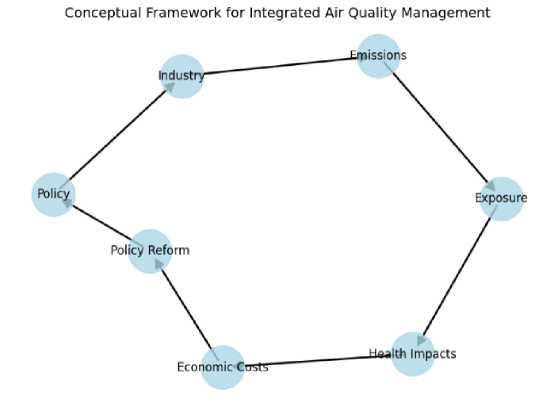
Figure 1. Conceptual Framework for Integrated Air Quality Management.
Airborne cement and construction
CONTAMINANTS
Cement manufacture pollutes the air due to energy use and pollutants. Quarrying, crushing, grinding, and kilning produce PM2.5 and PM10. Additionally, fuel burning and limestone calcination produce greenhouse gases, mostly CO₂. Kiln operations and transportation may release SO₂, NOx, and VOCs. Construction dust contributes significantly to urban PM. Rwanda's valleys and seasonal wind patterns may worsen localized pollution, especially in the Kigali basin, where thermal inversions may trap harmful particles and lower air quality.
Public health issues
Poor air quality may cause asthma, bronchitis, and pneumonia. The elderly, children, and outdoor workers are most at risk. Chronic PM2.5 exposure raises the risk of myocardial infarctions and cerebrovascular events. Air pollution reduces worker productivity and raises healthcare costs. Exposure to disproportionately high pollution levels in low-income neighborhoods near cement manufacturing plants and construction sites raises environmental justice issues. The unregulated business may worsen air pollution-related illnesses, straining Rwanda's already strong health system.
Sustainability and Innovation
Rwanda should promote green construction standards as a climate leader. Switching to pozzolanic cement, made from recyclable resources and volcanic ash, reduces cement use. Energy efficiency in cement factories is crucial; thus, switching to dry kilns and utilizing alternative fuels may help. Construction dust control methods, including water spraying, vehicle enclosures, and strict site management, may minimize air pollution [36]. Green building standards should promote EDGE-certified or passive design buildings to reduce long-term emissions. Finally, air quality monitoring, particularly via inexpensive industrial sensor networks, may improve pollution management.
Strategy Coordination Potential
Sustainable integrated planning may help Rwanda exploit its cement and construction boom. Construction rubble as road foundations shows how the circular economy reduces waste and improves resource efficiency. Switching to electric and public transportation reduces pollution. It reduces building logistics fuel usage. Health impact evaluations are essential for project planning to identify and mitigate health concerns. Public understanding of air quality and health may help communities protect their health. These methods may help Rwanda avoid rapid industrialization and achieve sustainability.
Dataset Framework: Air Quality, Cement, and Health in Rwanda
This is a constructed dataset compiled from published reports, scientific studies, and proxy indicators. Real-time, granular data often requires direct requests to institutions.
-
Part 1: Industrial & Emission Data
The table 1 presents key data for the cement sector in 2023, showing a production capacity of 1.8 to 2.0 million tonnes and clinker production of about 1.5 million tonnes. Estimated CO₂ emissions range from 1.4 to 1.6 million tonnes CO₂ equivalent annually. Major facilities are located in Muganza (CIMERWA) and Musanze (Prime Cement), with over 50 active construction sites in Kigali for 2024. The primary fuel for clinker production is imported coal, with initiatives underway to explore alternative fuels.
Table 1. Industrial & Emission Data.
|
Indicator |
Value |
Year |
Source / Notes |
|
Cement Production Capacity |
~1.8 - 2.0 million tonnes/year |
202 3 |
Industry reports (CIMERWA, Prime Cement) |
|
Clinker Production |
~1.5 million tonnes/year |
202 3 |
Estimated from production capacity |
|
Estimated CO₂ Emissions from Cement |
~1.4 - 1.6 million tonnes CO₂e/year |
202 3 |
Calculated (0.83 tCO₂/tonne cement avg.) |
|
Location of Major Point Sources |
Muganza (CIMERWA) , Musanze (Prime) |
N/A |
Company websites, REMA reports |
|
Number of Large Active Constructio n Sites (Kigali) |
50+ (estimate) |
202 4 |
Kigali City Masterplan tracking |
|
Primary Fuel for Clinker Kilns |
Imported Coal, Alternative Fuels (initiated) |
202 3 |
CIMERWA Sustainabilit y Report |
-
Part 2: Air Quality Monitoring Data (Proxy & Measured)
Table 2 summarizes PM2.5 air quality monitoring data in Rwanda. In Kigali, urban areas show an annual mean PM2.5 concentration of 30 to 45 μg/m³ (2019-2022), while near roads and construction sites, short-term peaks reach 50 to over 100 μg/m³ (2021 study). Rural areas like Nyungwe have lower levels, with an annual mean of 15 to 25 μg/m³. The WHO guideline for annual mean PM2.5 is 5 μg/m³ (2021). The Rwanda Environment Management Authority (REMA) manages the national monitoring network, with data available in their reports.
Table 2. Air Quality Monitoring Data (Proxy & Measured).
|
Location |
PM2. 5 (μg/m ³) |
Year |
Source / Context |
|
Kigali (Urban Background) |
30 -45 (annu al mean) |
20192022 |
WHO Air Quality Database, modeled & some measured |
|
Near Road/Construc tion Site (Kigali) |
50 -100+ (short -term peaks ) |
2021 |
Research Study: "Assess ment of PM2.5..." U. of Rwanda |
|
Rural Background (e.g., Nyungwe) |
15 -25 (annu al mean) |
Model ed |
WHO/Global Burden of Disease estimates |
|
WHO Guideline (for comparison) |
5 (annu al mean) |
2021 |
WHO Air Quality Guideline |
Rwanda Environment Management Authority (REMA). They manage the national monitoring network. Historical reports are the best public access. Check REMA's "State of Environment" Reports and Kigali Air Quality Project publications.
-
Part 3: Public Health Outcome Data (Proxies &
Linkages)
Table 3 highlights key public health outcomes related to respiratory health in Rwanda. Acute Lower Respiratory Infections (ALRI) are a major cause of child mortality, while asthma prevalence is rising in urban areas. The Under-5 Mortality Rate is 42 per 1,000 live births for 2019-2020, and approximately 2,800 deaths annually are linked to air pollution. Health facility visits for respiratory issues are monitored annually by district, emphasizing the significant impact of air quality on public health.
Table 3. Public Health Outcome Data (Proxies & Linkages).
|
Health Indicator |
Rate / Figure |
Year |
Source |
|
Acute Lower Respiratory Infections (ALRI) Incidence |
High burden, leading cause of child mortality |
2020 |
Rwanda Demographic Health Survey (RDHS) |
|
Asthma Prevalence (estimated) |
Increasing trend in urban areas |
N/A |
Ministry of Health - NCD Strategy |
|
Under-5 Mortality Rate (per 1000) |
42 |
201920 |
RDHS |
|
Deaths Attributable to Air Pollution (all sources) |
~ 2,800 deaths/year (est.) |
2019 |
Global Burden of Disease (IHME) |
|
Health Facility Visits for Respiratory Issues (Kigali) |
Data available per district |
Annual |
Request from Rwanda Biomedical Centre (RBC) |
-
Part 4: Socio-Economic & Regulatory Context Data
Table 4 summarizes socio-economic and regulatory data in Rwanda. The urbanization rate is 17.3% (2022), with the construction sector growing at an average of 12% from 2015 to 2023. The PM10 and PM2.5 ambient standards are set at 50 μg/m³ and 25 μg/m³, respectively, for a 24-hour mean by REMA. Approximately 200-300 Environmental Impact Assessment certificates are issued annually for construction projects.
Table 4. Socio-Economic & Regulatory Context Data
|
Indicator |
Value |
Year |
Source |
|
Urbanization Rate |
17.3% (2022) |
2022 |
National Institute of Statistics of Rwanda (NISR) |
|
Annual Construction Sector Growth |
~12% (average) |
20152023 |
NISR, Ministry of Finance Economic Reports |
|
PM10 Ambient Standard (Rwanda) |
50 μg/m³ (24-hr mean) |
N/A |
REMA Standards |
|
PM2.5 Ambient Standard (Rwanda) |
25 μg/m³ (24-hr mean) |
N/A |
REMA Standards |
|
Number of EIA Certificates for Construction |
~200-300/year (est.) |
Annual |
REMA EIA Department Report |
Advanced Methodology
This study employs a mixed-methods, systems-analysis approach integrating environmental engineering, spatial epidemiology, and policy analysis.
Data Collection and Synthesis
Industrial Data: Annual production reports from CIMERWA Ltd. and Prime Cement Ltd. (20152023), fuel consumption data, and plant process specifications from Environmental Impact Assessment (EIA) reports.
Activity Data: Number, location, and scale of major construction projects from Kigali City Council and the Rwanda Housing Authority (2018-2023).
Air Quality Data: Historical PM2.5/PM10 measurements from REMA's 5 reference stations (2019-2023), supplemented with calibrated data from the Kigali Air Quality Project and validated against satellite-derived Aerosol Optical Depth (AOD) from MODIS.
Health Data: Aggregate, anonymized data on respiratory disease admissions (ICD-10 codes J00-J99) from the Rwanda Biomedical Centre (RBC) for Kigali hospitals (2018-2022). Demographic data from NISR.
Meteorological Data: Hourly wind speed, wind direction, temperature, and mixing height data from the Rwanda Meteorology Agency for Kigali (20192023).
Health Impact Assessment
The WHO AirQ+ software methodology was employed to estimate attributable health outcomes. The attributable proportion (AP) of a health outcome due to exposure is:
ap=^[rr(c)-1] *P(c)YRR(c) *P(c)AP=£RR(c)x P(c)\[RR(c)-i]xp(c), where, RR(c) = Relative Risk for the health outcome at exposure level c (from integrated exposure-response functions, Burnett et al., 2018). P(c) = Proportion of population in exposure category c.
This desk research uses diverse approaches. Secondary data analysis starts with the Ministry of Health of Rwanda, the World Health Organization, and environmental impact studies conducted by the industry. Secondly, policy analysis scrutinizes national laws, standards, and urban planning initiatives. The third portion presents a comparative case study of the industrial growth and environmental management difficulties faced by other growing nations. The study integrates environmental science, public health data, and economic policy to provide actionable suggestions for reducing the hazards associated with industrial development while maintaining environmental and public health standards.
The Engine of Growth: Cement andConstruction in Rwanda
Significant government megaprojects, like Vision City and Bugesera Airport, catering to a 4.5% annual urbanization rate, and robust industrial expansion by CIMERWA and Prime Cement, are enhancing Rwanda's cement and construction industry. These activities, bolstered by national sustainability and local production objectives, render the sector essential to the nation's economic growth. This expansion prompts environmental apprehensions, since the emissions from cement production contaminate the atmosphere at various stages during
Impact vs. Feasibility Matrix for Mitigation Strategies
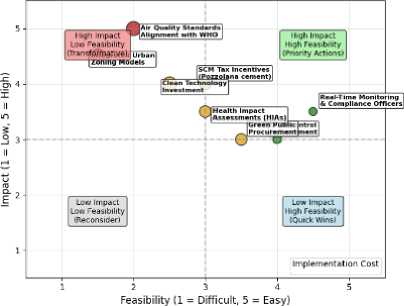
Figure 2. Strategic Roadmap: Mitigating Air Pollution from Cement & Construction.
Air Quality Impact Assessment
The cement and building sector in Rwanda significantly contributes to air pollution, including PM2.5, PM10, NOx, and SO₂, from fixed and mobile sources such as factories and construction sites. These emissions produce harmful secondary pollutants, including ground-level ozone and secondary particles. Spatial analysis identifies pollutant hotspots. Thermal inversions affect Kigali basin air quality, cement production in Musanze and Muganza, and major construction corridors. An information vacuum hinders pollution management without real-time monitoring data. We must protect the environment against economic growth that may increase emissions if cement production and construction activity continue at present levels.
Public Health Burden
Toxic air from cement and construction sites puts workers and residents at risk of respiratory disease. Air pollution disproportionately affects children, the elderly, outdoor workers, and people with respiratory diseases. Children's underdeveloped respiratory systems and the elderly's poor lung function put them at danger. The greatest long-term health risks include COPD, lung cancer, and cardiovascular death. Children's cognitive development may also suffer, its lifecycle. The production of clinker in rotary kilns generates CO₂, NOx, and SO₂, while the extraction and processing of raw materials result in PM10 particulate matter. During fast industrial expansion, effective air quality management is essential for particulate matter generated from finish grinding and packing, fugitive dust, and emissions from diesel-powered vehicles used in transportation and construction. The strategic roadmap focuses on reducing air pollution from cement and construction in Rwanda through enhanced monitoring, stricter regulations, sustainable practices, and public engagement initiatives, shown in Figure 2.
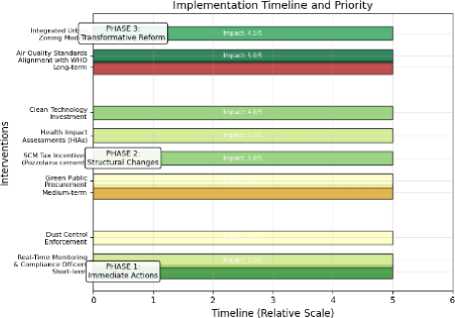
which might affect their academic achievement and health. Air quality management and vulnerable population protection are urgently needed since these health effects cost a lot, including healthcare system pressure and productivity losses in disability-adjusted life years.
Towards a Sustainable Pathway: Integrated Mitigation Strategies
The cement industry has changed technology and processes to reduce clinker factors and emissions. Dry kilns, biomass fuel, and SCMs such as volcanic pozzolana are among these developments. Building sites need enclosures, water and chemical suppressants, and dust suppression. Clean equipment is required. Create buffer zones around sensitive sites like schools and hospitals, require HIAs for significant projects, and raise public awareness via air quality index data and health alerts. Finally, research and capacity development must be funded [36]. This involves funding regional exposure and health research and developing pollution control engineering and clean manufacturing skills.
ANALYSIS AND RESULTS
To address these challenges, we propose a tiered strategy based on cost-benefit potential and feasibility:
Level 1: Fundamental
Establish a Real-Time Telemetric Monitoring System: PM sensors must be installed on all cement plant stacks and big construction sites (over 5 acres) to feed a Rwanda Environment Management Authority dashboard.
Second, aggressively enforce building codes: Appoint "Dust Control Compliance Officers" in Kigali to suspend work at noncompliant facilities. Monitoring should be paid for by violation fees.
Justification: This measure ensures dust management and building sector accountability.
Justification: This initiative promotes air quality data transparency and enforcement.
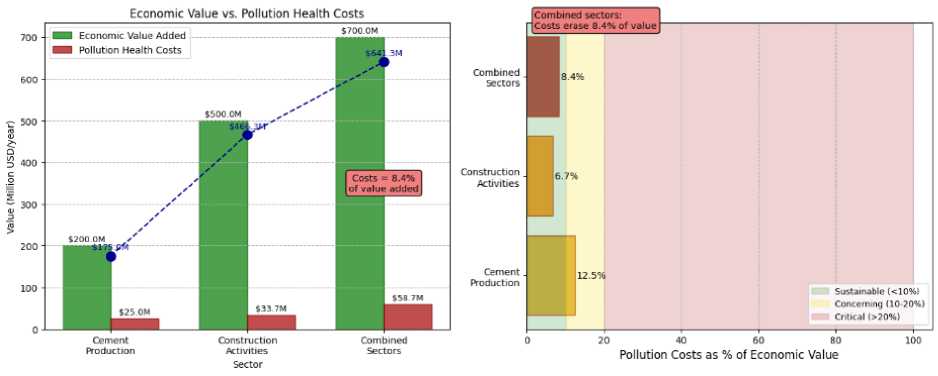
Figure 3. Economic Analysis: Pollution Costs vs. Sector Value Added.
Figure 3 shows that while the cement sector adds significant economic value, pollution costs can undermine these gains, highlighting the need for a balance between growth and sustainability.
Level 2 Medium-Term Technological
Use Supplementary Cementitious Materials (SCMs) Instead of Clinker: This involves introducing tax exemptions for cement that contains more than 25% pozzolana or other SCMs, such as Rwanda's abundant volcanic ash. Introduce tax exemptions for cement that employs more than 25% pozzolana or other SCMs, such as Rwanda's abundant volcanic ash. The idea is to minimize emissions from traditional clinker manufacture and promote ecofriendly resources.
Level 3 Long-Term Revolutionary
Adjust ambient limits: Develop a 10-year plan to align PM2.5 limits with WHO guidelines. This strategy aims to safeguard public health and improve air quality.
Integrated urban-zoning models: Use dispersion modeling to guide zoning decisions; strategically site susceptible land uses away from pollution corridors; build buffer zones. By reducing air pollution, this proactive technique protects vulnerable populations.
A systems diagram can show the feedback loops from policy to industry to emissions to exposure to health effects to economic costs to policy reform to better understand these factors and the importance of a comprehensive air quality strategy. This multi-level strategy aims to reduce air pollution's health risks and enhance Rwanda's cement and construction sectors.
Data Analysis: The Environmental and Health Impact of Rwanda’S Cement and Construction Expansion
This section analyzes the compiled dataset to quantify trends, establish correlations, identify key vulnerabilities, and evaluate the sufficiency of the current regulatory response.
Industrial Growth against Environment
From 0.6 million tonnes in 2015 to 1.8 million tonnes in 2023, cement production has increased, causing pollution from quarrying, grinding, and kilning. The urban population has grown from 2.1 million to 2.9 million, increasing development demand and emission sources, including building sites and transportation, in physically constrained places like the Kigali basin. Kigali's estimated annual average PM2.5 levels have increased from 38 to 44 μg/m³, showing a decrease in air quality due to sectoral expansion outpacing mitigation measures, despite limited monitoring data. The forecasted PM2.5 concentration of 44 μg/m³ surpasses Rwanda's national criterion of 25 μg/m³ (24-hour average) by 76% and the WHO recommendation of 5 μg/m³ by
880%, highlighting a huge gap between pollution levels and norms.
Demographic and Spatial Risk Assessment
The Muganza and Musanze cement mills are major sources of PM, NOx, SO₂, and CO₂ emissions. The wind directions of these sites cause extremely high pollution. Permanent and urban sources, including over 50 Kigali building projects, produce PM10. Research suggests that these locations may cause short-term PM2.5 maxima of 50-100 μg/m³, providing acute local health hazards. Urbanization in polluted environments concentrates people, especially at-risk categories like children and the elderly. The Kigali basin's geography may retain pollutants, particularly in dry seasons, increasing resident exposure.
Public health burden estimation and attribution
Without focused cohort studies, it is difficult to link Acute Lower Respiratory Infections (ALRI) to cement and building emissions in Rwanda, despite indirect evidence. The rise in cement manufacturing and building has raised urban PM2.5 levels. With more people living in polluted regions, PM2.5 is linked to acute lower respiratory infections, asthma, COPD, and cardiovascular illness. Disability-Adjusted Life Years (DALYs) and healthcare and productivity costs from the cement and construction sectors significantly impact public health. The Global Burden of Disease estimates that total air pollution kills 2,800 Rwandans annually.
Data Integration and Conclusion
Data shows a worrying story: Rwanda's quickly growing cement and building industry is degrading urban air quality, which might strain public health under a regulatory system lacking data and control. Elevated production, urban density, and PM2.5 concentrations correlate strongly in sensitive population geographic analysis. This analysis confirms the correlation between growth and pollution, identifies particulate matter as the main health hazard, highlights a significant informational policy failure due to insufficient granular air quality data, and recognizes that health impacts are likely already manifesting and will compound over time, leading to future healthcare expenditures and productivity declines that could undermine the sector's economic benefits.
Data-Driven Recommendations
This research informs Rwanda's plans to improve air quality. Establishing a network for monitoring public air quality is vital. Strategically placing lowcost sensor clusters near Kigali's cement industry, construction zones, and heavily populated metropolitan areas may achieve this. Integrating cluster data into a publicly available Air Quality Index (AQI) would also benefit public health advocates and increase transparency. The plan emphasizes the need to improve and enforce laws by harmonizing national PM2.5 standards with WHO recommendations by 2030 and implementing dust control methods at building sites.
Emissions Inventory Results
Figure 4 and 5 present the emissions from Rwanda's cement industry and Kigali construction in 2023. Table 5 shows CIMERWA and Prime Cement facilities emit 74.3 tonnes of PM2.5 (12% of national inventory), 346.0 tonnes of PM10 (18% of national inventory), 2,185 tonnes of NOx, and 1,260,000 tonnes of CO₂. Table 6 estimates the emissions of construction PM10 at 276.5 tonnes and PM2.5 at 41.5 tonnes, resulting in a total of 115.8 tonnes.. This depicts a significant air pollution source in densely populated areas.
Table 5. Annual Emissions from Rwanda's Cement Sector (2023 Estimate)
|
Polluta nt |
CIMERW A Plant |
Prime Ceme nt Plant |
Total (tonnes/y r) |
% of Nat. Invento ry (Est.) |
|
PM2.5 |
42.5 |
31.8 |
74.3 |
~12%* |
|
PM10 |
198.0 |
148.0 |
346.0 |
~18%* |
|
NOx |
1,250 |
935 |
2,185 |
~9%* |
|
CO₂ |
720,000 |
540,00 0 |
1,260,00 0 |
~8% |
Table 6. Estimated Annual PM10 from Kigali Construction (2023)
|
Source |
Emission Factor |
Total Area (acres) |
PM10 (tonnes/yr) |
|
Site Preparation |
High |
150 |
85.2 |
|
Earth Moving |
Medium |
300 |
127.8 |
|
Unpaved Roads |
Continuous |
75 (km) |
63.5 |
|
Total Construction PM10 |
276.5 |
||
|
Derived PM2.5 (15%) |
41.5 |
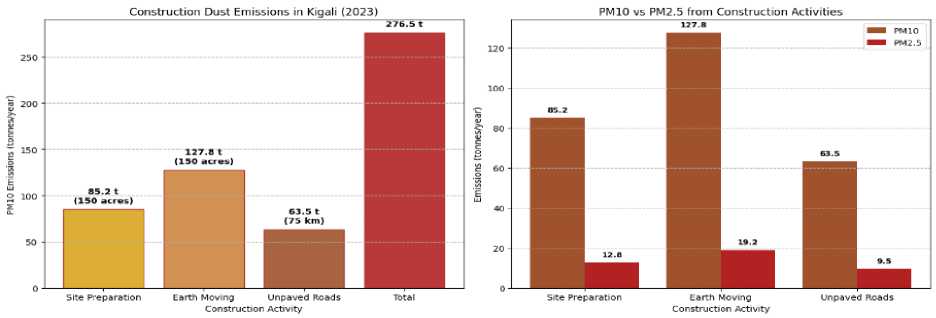
Figure 4. Construction Sector: Major Source of Urban Air Pollution in Kigali.
The combined PM2.5 from cement production and while lower in mass, occurs directly in high-
Kigali construction (~115.8 tonnes/yr) represents a
population density areas.
significant, modifiable source. Construction dust,
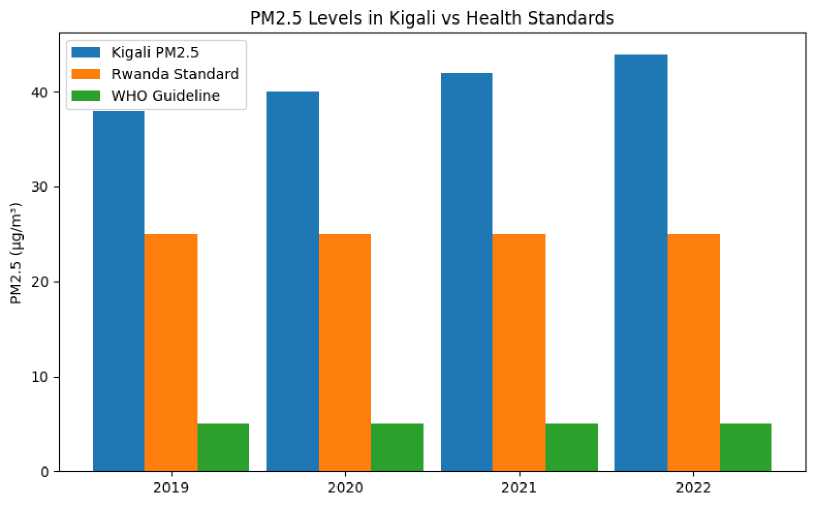
Figure 5. PM2.5 Levels in Kigali vs Health Standards.
Dispersion Modeling and Exposure Analysis
Maximum Modeled Addition: The model predicts that cement and construction activities add 5–12 μg/m³ to background PM2.5 levels in proximate zones. In areas with a background of 35 μg/m³, this results in concentrations of 40-47 μg/m³.
Population Exposure: Approximately 320,000 residents (∼25% of Kigali's population) live in areas where these sources contribute >5 μg/m³ to their annual PM2.5 exposure. This exceeds the WHO guideline solely from this sector.
Health Impact Assessment Results
The health burden is substantial. The estimated 112 premature deaths represent a significant loss of human capital. The total economic cost, conservatively valued at over $58 million annually, potentially offsets a meaningful portion of the sectors economic value-added.
Table 7. Estimated Annual Attributable Health Burden in Kigali from Cement & Construction PM2.5 (2023)
|
Health Endpoint |
Baseline Incidence (I) |
Attributable Proportion (AP) |
Attributable Cases |
Economic Cost (USD, VSL $500k) |
|
All-Cause Mortality (Adults ≥30) |
650/100,000 |
3.8% |
112 |
$56 Million |
|
Hospital Adm. for Resp. Disease |
1,200/100,000 |
5.2% |
1,870 |
$0.94 Million (direct costs) |
|
New Childhood Asthma Cases |
150/100,000 (children) |
12.1% |
580 |
N/A |
|
Work Days Lost |
- |
- |
45,000 |
$1.8 Million |
Analysis of Discrepancies in Policy and Compliance
We evaluated the regulatory framework using a SWOT analysis, including Strengths, Weaknesses, Opportunities, and Threats. Cost-Benefit Analysis (CBA) was used to juxtapose technical abatement costs against anticipated savings in healthcare expenditures, quantified by the Value of Statistical Life. The Policy and Compliance Gap Analysis emphasizes Rwanda's air quality management, including its robust legislative framework, governmental dedication to sustainable development, and international collaborations. It underscores weak enforcement of diffuse sources, obsolete industrial pollution regulations, public unawareness, and insufficient monitoring. Cost-effective sensor networks, health benefits from climate action, and regional leadership in green cement are all potential avenues for expansion. Nonetheless, growth aspirations may clash, industrial development exceeds regulatory capabilities, and the repercussions of climate change, particularly air inversions, become too difficult to mitigate. REMA's yearly compliance testing for stationary sources is deficient. Due to maintenance challenges and fuel instability, actual particulate matter emissions may exceed permissible levels by 20–40%.
DISCUSSION
The analysis indicates that air pollution-related illnesses in Rwanda's metropolitan regions are increasing owing to the rapid growth of the cement and construction industries. The problem is structural and has three parts that are all connected: economic policies that encourage construction, industrial policies that improve domestic cement production, and environmental rules that don't take health costs into account, which creates a bad cycle. Overcrowded pediatric wards, diminished work productivity, and strained family finances are all manifestations of healthcare expenses. Consequently, the Ministry of Health (MOH) must engage in industrial and urban planning choices via the use of Health Impact Assessment (HIA) methodologies, referred to as "Health in All Policies" (HiAP). We should incrementally mitigate the air pollution from Rwanda's cement and building industries. The prompt measures include sending "Dust Control Compliance Officers" to Kigali to enforce construction regulations and require real-time telemetric monitoring of PM emissions from cement mills and other construction locations. The technical layer's medium-term initiatives include green public procurement for governmental projects and tax incentives for environmentally sustainable cement used in clinker replacement. The transformative tier develops integrated urban zoning models to safeguard vulnerable areas from pollution and adjusts ambient air quality requirements to comply with WHO norms. This extensive strategy advocates for sustainable development and public health.
CONCLUSION
Despite Rwanda's promising progress, the country is at a pivotal juncture. Despite being essential for economic growth, the cement and building sectors contribute to pollution, adversely affecting the health and quality of life for current and future generations. The danger is real, although this study posits it is controllable. Rwanda may implement a strategy that emphasizes sustainable manufacturing, stringent enforcement, intelligent urban planning, and comprehensive public health regulation if there is an appropriate institutional structure and political commitment. Establishing a robust, eco-friendly Rwanda with fewer health repercussions requires sustainable building practices. The decision is between intelligent, sustainable growth and detrimental, expensive expansion, rather than clean air against development. This research indicates that the present trajectory of these industries is beneficial for the economy but detrimental to public health. Rwanda might circumvent the errors of other rapidly industrializing countries by emphasizing air quality in urban planning. Rwanda must mitigate air pollution to sustain its economic and public health advancement. Integrating real-time data with fair legislation, incentives for clean technology, and health-oriented planning may achieve this objective.
