
Editorial. Рубрика в журнале - Economic and Social Changes: Facts, Trends, Forecast
What will Putin bequeath to his successor in 2024?
Scientific article
In accordance with the title of the journal Economic and Social Changes: Facts, Trends, Forecast, in the editorial article we analyze objective and real trends and facts in Russia’s domestic and foreign political and socio-economic life. Trying to distance ourselves from a subjective viewpoint, we rely in our analysis on the assessments given by experts from different fields of knowledge (economists, sociologists, public figures, etc.), as well as on a long-term database of sociological data, formed on the results of our own observations for the period since 1996 up to the present time. For more than 20 years now, every two months, we analyze the data of a sociological monitoring, which shows that there are significant and largely positive changes in the President’s foreign policy, but the dynamics of the domestic socio-economic situation in Russia are stagnant: during the period from 2000 to the present time, the key issues of concern to people have not changed, and the relevance of many of them has even increased...
Free
Where does the soullessness of the ruling elites lead?
Scientific article
On April 21, 2021, President V.V. Putin once again addressed the Federal Assembly of the Russian Federation and outlined the country's key upcoming development areas. Presidential Address was mostly social and aimed at solving domestic problems: comprehensive support for population and business in the “post-covid” period, restoration of the economy and social sphere's normal functioning, as well as the ability of the Government to maintain health of citizens and improve the demographic situation. The President touched upon many important issues that were demanded by a wide range of Russian society, gave instructions to the Government of the Russian Federation and regional authorities, and announced specific measures to support people in difficult life situations. Meanwhile, the issues of Russia's foreign policy and its positioning within the framework of international relations remained basically outside this Presidential Address. The President only hinted that “those behind provocations that threaten the core interests of our security will regret what they have done in a way they have not regretted anything for a long time”, “we ourselves will determine in each specific case where the red line will be drawn with regard to Russia”. However, as many experts note, after the victory of J. Biden in the US presidential election, there was the beginning of the culmination of the struggle between global forces for the return of dominant positions in the world that they have gradually lost over the past decades, for a unipolar or multipolar form of the future world order, prospects for the transition of world civilization from modernism to postmodernism. In these conditions, the issues related to Russia's civilizational self-determination and awareness of a kind of the state we are building, reasons that prevent us from effectively implementing the welfare state principles in the country, many of which were embodied in the amendments to the Constitution of the Russian Federation in July 2020, become more relevant than ever.
Free
Scientific article
The article deals with the problem of poverty and other consequences of the inefficient current system of public administration. The current state of affairs concerning the implementation of the May 2012 decrees, the long-term dynamics of official statistics and sociological surveys, concrete facts, and assessments of many experts suggest that the orientation of the ruling elites toward obtaining personal benefits is the main threat to the implementation of the tasks set out by the President (overcoming the lag; finding breakthrough solutions to the country's internal problems) and to the achievement of specific development indicators that he pointed out in the Address to the Federal Assembly on March 1, 2018. The article provides information on major results of the 2012 and 2018 presidential elections indicating a significantly increasing support for Vladimir Putin in Russian society (especially in large cities) and at the same time the people's rising hopes for his showing the political will and making decisive action on the nationalization of the elites that hinder the implementation of national interests in the dynamic development of the standard of living and quality of life...
Free
“Intellectual feebleness” of the ruling elites and the “deep people” of the “long state”
Scientific article
In 2018, Russian society faced a contradiction, caused by the discrepancy between the official political rhetoric and the real actions of the Government. Instead of the priorities stated in the President's Address to the Federal Assembly and in the “May decree” (reducing poverty twofold, Russia's joining the top five economies of the world, etc.), the society was faced with the need to take a “bitter medicine” in the form of raising the retirement age. Moreover, the news about the changes in pension legislation reached the general public just after the inauguration of the President (the inauguration took place on May 7, 2018, and the draft law on the pension reform was submitted to the State Duma on June 16). The initial reaction to the pension reform was adamantly negative: according to the surveys conducted by the Public Opinion Foundation, almost 80% of Russians were against the reform. Over the following months, a wave of protests swept across the country and stopped only after Vladimir Putin made an official appeal to the Russian people on August 29 and explained that the pension system has to be reformed; he proposed some adjustments that would soften some conditions of the reform for certain population groups. However, despite the fact that the visible signs of public discontent (protests, critical articles, etc.) are gradually fading, the level of people's support for the authorities, including the President of the Russian Federation, continued to decline; fundamental changes began to take place in the public consciousness, and such changes are of a long-term nature. This fact proves that the pension reform only triggered a more profound internal discontent that has been accumulating over the last years. Thus, at the beginning of 2019, the fundamental question concerning the legitimacy of power in Russia became one of the most pressing and urgent for society and authorities with regard to actual implementation of the tasks set out in the “May Decree”, qualitative growth of the standard of living and, by and large, preservation of the Russian statehood. A deep and ideologically saturated article of V. Putin's personal adviser V. Surkov, which was published in February 2019, addresses this very issue (as some experts think), and it has caused a wide resonance in the academic, political and social environment. The following materials present our views on Surkov's article and on a significant set of issues raised in it. The conclusions we come to are supported not only by the results of our own studies of the long-term dynamics of public opinion, but also by expert assessments, which largely reflect the real situation in the country.
Free
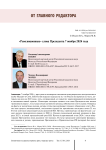
“Revolutionary” words of the Russian President on November 7, 2024
Scientific article
November 7, 2024, speaking at the plenary session of the Valdai International Discussion Club in Sochi, Vladimir Putin expressed the hope that Russia would not return to “the path it followed before 2022”; a path fraught with “hidden, veiled intervention against our country”. Some experts assessed these words of the President as the beginning of a “revolution from above”, that is, as the beginning of an active process of renewal of elites in the country. Based on facts and expert assessments, we consider the process of elites renewal in Russia as an evolutionary process that has been going on for almost 25 years. In this context, we analyze a number of decisions made by Vladimir Putin from the very beginning of his presidential terms (since 2000). The launch of the special military operation in February 2022 and Vladimir Putin’s fifth presidential term (which began in May 2024 after the inauguration of the President) only accelerated this process. The article continues the monitoring (that started in June 2022) of federal laws and decrees adopted by the President and the RF Government. Special attention is paid to analyzing the effectiveness of migration policy in the Russian Federation as one of the specific examples of systemwide problems faced by the public administration as a whole. It is concluded that the key decisions of the head of state, especially those adopted during almost three years of the special military operation (such as the “Time of Heroes” program, personnel appointments in the RF Government, decision of the Constitutional Court to lift the statute of limitations on real estate acquired through corrupt proceeds, etc. act as a kind of practical tools to achieve the major goal: strengthening Russia’s national sovereignty in the context of civilizational conflict with the Collective West, as well as solving key tasks to achieve this goal - renewal of elites and consolidation of society. Our contribution consists in a comprehensive approach to analyzing the process of elites renewal in the country, including by systematizing the administrative decisions of the head of state made in the periods before and after the start of the special military operation.
Free
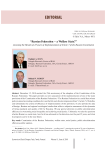
Scientific article
December 12, 2018 marked the 25th anniversary of the adoption of the Constitution of the Russian Federation. The paper provides our own assessment of the implementation of one of the main provisions of the Constitution of the Russian Federation: “The Russian Federation is a social State whose policy is aimed at creating conditions for a worthy life and a free development of man” (Article 7). We define and substantiate the criteria of efficiency of implementation of this provision; we also provide the data of foreign, Russian and regional sociological studies that reflect a subjective assessment of the dynamics of living standards and quality of life by Russians. We pay special attention to public administration efficiency in overcoming social inequality and achieving social justice. Ultimately, we raise the questions whether Russia is a social state, how far it has advanced in this direction over the past 25 years, and what its prospects can be in the near future.
Free
