
Восприятие туристами культуры льда и снега на горнолыжных курортах провинции Цзилинь в Китае — взгляд через призму знаний и психологии

Статья в выпуске: 1, 2026 года.
Бесплатный доступ
В статье представлены результаты исследования взаимосвязи идентификации знаний и психологической идентификации с удовлетворенностью туристов горнолыжных курортов в провинции Цзилинь в Китае. В связи с ростом потребления услуг ледового и снежного туризма и спроса на высококачественные услуги в отрасли изучение потребностей туристов и решение управленческих проблем на горнолыжных курортах стали ключевыми темами академических исследований и управленческой практики. Исследования по управлению туризмом на горнолыжных курортах немногочисленны, в предыдущих работах часто затрагивались теоретические вопросы. Проведенное ис- следование представляет собой теоретическое обоснование основных переменных и направлено на количественную оценку культуры ледового и снежного туризма. В условиях развития туризма на горнолыжных курортах Китая многообразие форм туристического опыта открывает более широкую перспективу исследований, в том числе в изучении факторов, влияющих на удовлетворенность туристов. Новизна исследования заключается в использовании смешанных методов, включающих контент-анализ в сочетании с анализом данных, что позволяет сделать обоснованные выводы и дать рекомендации.
Похожие статьи в разделе Спорт. Игры. Физическая культура. Спортивные игры
Короткий адрес: https://sciup.org/148333118
IDS: 148333118 | УДК: 796.52(510) | DOI: 10.18101/2304-4446-2026-1-3-15
Study on Tourists' Perception of Ice and Snow Culture in Ski Resorts of Jilin, China — A Knowledge and Psychology Perspective
The study investigated the interactive relationship of knowledge identification, psychological identification and tourist satisfaction of Jilin Province, China in the context of ice and snow culture. With the upgrading of ice-snow tourism consumption and the demand for high-quality industrial development, the innovation of business concepts, exploration of tourist needs, and resolution of management issues in ski resorts have become core topics in academic research and industrial practice. Tourism management of ski resorts is insufficiently explored, and previous studies relatively frequent used grounded theory. The research provides a theoretical foundation of main variables and aims to quantify ice and snow tourism culture. In the context of ski resort tourism in China, the multi-dimensional tourist experience norms emphasize broader perspectives of research, incorporating factors into tourist satisfaction analysis. The innovation of this research lies in use of mixed research methods, including content analysis, that are combined with data analysis, providing valuable and sophisticated insights and recommendations.
Текст научной статьи Восприятие туристами культуры льда и снега на горнолыжных курортах провинции Цзилинь в Китае — взгляд через призму знаний и психологии
With the vigorous development of ice and snow tourism, tourist’ cognition and emotional experience of ice and snow culture are increasing. Jilin Province located in the northeast of China, endowed with rich ice and snow cultural tourism resources, for a long time attracts large number of tourists. In recent studies, there is relatively little research on the relationship between tourists' knowledge identification, psychological identification, and tourism satisfaction in Jilin ski resorts and related ice and snow culture. This study aims to fill this research gap. By systematically reviewing the relevant literature and deeply analyzing the existing research achievements and limitations, this study provides guidance for future research and offers theoretical basis and practical suggestions for the sustainable development of Jilin's ice and snow tourism.
I n pr e v i ous s tu d i es, the number of studies on ski resort customer sa t is f a c tio n i s r e lat i v el y sma ll , wi t h mo st research focusing on the field of psychology re la ted to job s at i s f ac ti on . H ow ev e r , i n the unique context of ski resorts, a core place for i c e a nd s now to ur is m, rese a r c h on tourist satisfaction is still insufficient. From th e pe r sp ect i ve of a nt hr op olog y , e l eme nt s such a s " sk i i ng " and " i ce a nd s now" ca r r y unique cultural c onnot a tio ns a nd v a l u es i n di f fer e nt c u l t ur a l ba ckg r ou nds.
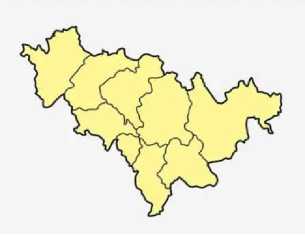
Fig. 1. Map of Jilin Province
Literature Review
Ps yc holo gi c a l id ent i f ication theory stems from the integration of c o g nitive ps y chol og y a nd pla ce the or y . B oor st i n ( 1964 ) f i r s tl y coined conceptualized cognition, s ubseq uent re sea r ch i nt e grated a brand new perspective, applying in i c e a nd s now c ul t ure t ou ri sm , t our ist s’ psychological identification with ice and snow c ul t ur e pl a y s a n im porta n t ro l e i n r e i n fo rci ng t he ir t our is m s at i sfaction, especially by strengthening c ul t ure r e s ona n c e a n d f o s ter emotional connection, shaping identity recog ni t i o n. It a l s o i m pr ov es to ur is m sa tisfa ction through following pathways: enriching cul t u ra l t o uri s m a c t i v i t i es, im prov i ng serv i ce pe rc e p ti on, whi c h enables tourists to gain a more unique e xpe r i e n c es in i ce a nd sno w cul tur e .
The in- d e pt h exp l or a tion of ice and snow culture and related an t hro pol og i c al f e a t ur es l i k e hi s tor y a nd folk customs are the key to enhancing ps yc hol og i ca l identification.
Ice-sno w cult ura l he ritage shapes contemporary identities, in prev i ous cu l t ur a l r e s e a rc he s, the re i s a universal conclusion that cultural heritage imp a c t s na t i ona l na r ra t i v e and e mot i ona l identification in tourism. Tourists’ satisfaction a lso r el a tes with technol o g y l i ke V R and AR. For instance, research has found that t o ur is t s w ho a c qui r e k now l e dg e of c ultural heritage through AR technology have a n e mo t i ona l i de nt if i c at io n i n t e n si t y 30 % higher than that of the traditional interpretation g ro up, a nd the improvement i n sa t i s f ac ti on i s more s i g nif i ca nt [29].
Applying satisfaction theory to ice and snow tourism research reveals that satisfaction in ice and snow tourism is not only an interaction between cognition and emotion, but is also an integration of tourists' knowledge and emotional identification. Tourist satisfaction firstly stems from customer research, in this research context, tourists with insufficient knowledge reserves are prone to anxiety or experience deviations due to their lack of understanding of information such as transportation and service processes at the destination, which can reduce their satisfaction. By acquiring knowledge in advance, tourists can plan their trips more clearly, reduce uncertainties, and make the experience more in line with expectations [31].
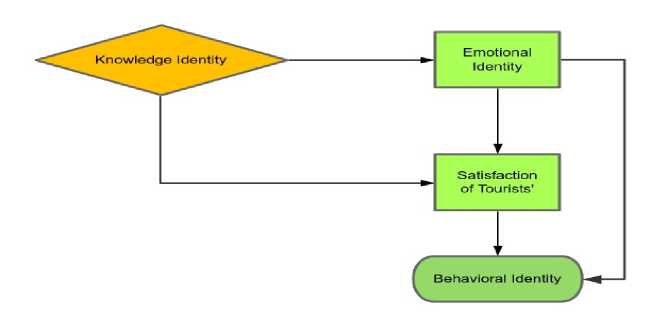
Fig. 2. Research scheme design
Research Methodology
This research conducts survey data analysis as quantitative method that combined with qualitative analysis of content analysis and in-depth interviews. Questionnaires are conducted in a sampling, respondents consist of tourists in major ski resorts in Jilin Province, China, including Changbaishan Ski Resort, Beidahu Ski Resort, and Miaoxiangshan Ski Resort. Data is collected by survey online and analyzed it using SPSS 24. A total of 512 questionnaires were distributed, with 500 valid questionnaires returned, resulting in an effective recovery rate of 97.6%. In the in-depth interviews, 10 tourists were selected, among respondents in different ages, genders, and occupations. The interviews focused on various levels of ice and snow culture. This study also conducts Content Analysis Methodology on WeChat Public Platform Subscription Accounts.
Research Hypothesis:
H1: Knowledge identification has a significantly positive impact on tourist satisfaction.
H2: Tourist satisfaction has a significantly positive impact on behavioral identification.
H3: Tourist satisfaction mediates the relationship between knowledge identification and behavioral identification.
H4: Emotional identification moderates the relationship between knowledge identification and tourist satisfaction, such that higher levels of emotional identification strengthen the positive impact of knowledge identification on satisfaction.
H5: Emotional identification has a significantly positive direct impact on behavioral identification.
Data analysis
Demographic Description
|
Basic Information of Respondents |
|||
|
Variables |
Levels |
People |
Percentage (%) |
|
gender |
male |
307 |
61.4 |
|
female |
193 |
38.6 |
|
|
age |
Under 18 years old |
167 |
33.4 |
|
18–30 years old |
162 |
32.4 |
|
|
31–45 years old |
101 |
20.2 |
|
|
46–60 years old |
44 |
8.8 |
|
|
Above 60 years old |
26 |
5.2 |
|
|
profession |
student |
249 |
49.8 |
|
Professional workers |
124 |
24.8 |
|
|
freelancer |
52 |
10.4 |
|
|
retired |
26 |
5.2 |
|
|
others ( please note ) |
49 |
9.8 |
|
|
Residential place |
Within Jilin Province |
500 |
100 |
|
Do you have a “mental accounting” system in your travel spending? (For example, do you budget separately for transportation, accommodation, and dining?) |
yes |
363 |
72.6 |
|
no |
137 |
27.4 |
|
|
Do you adjust your spending behavior during travel based on “cost-effectiveness”? |
yes |
358 |
71.6 |
|
no |
142 |
28.4 |
|
|
Do you easily get influenced by other tourists during your travel (for example, following trends to visit popular attractions)? |
yes |
366 |
73.2 |
|
no |
134 |
26.8 |
|
This translation and presentation ensure clarity and readability, making it easier to understand the demographic and behavioral patterns in the context of tourism consumption.
Descriptive statistics
|
Cases |
Minimum |
Maximum |
average |
Standard |
Kurtosis |
Skewness |
|
|
Knowledge Identity |
500 |
1 |
5 |
3.480 |
0.915 |
-0.322 |
-0.534 |
|
Affective Identity |
500 |
1 |
5 |
3.586 |
0.897 |
-0.517 |
-0.232 |
|
Satisfaction |
500 |
1.2 |
5 |
3.619 |
0.849 |
-0.387 |
-0.498 |
|
Behavior Identity |
500 |
1.2 |
5 |
3.556 |
0.873 |
-0.312 |
-0.710 |
The skewness of each variable ranges from -0.517 to -0.312, with absolute values less than 2; the kurtosis of each variable ranges from -0.710 to 0.232, with absolute values less than 7. This indicates that they all basically conform to a normal distribution.
Reliability testing
|
Reliability testing |
||
|
Dimension |
items |
Crobach's α |
|
Knowledge Identity |
5 |
0.866 |
|
Affective Identity |
5 |
0.866 |
|
Satisfaction |
5 |
0.857 |
|
Behavior Identity |
5 |
0.860 |
The reliability of each dimension ranges from 0.857 to 0.866, all of which are greater than 0.7. This indicates that they all have high internal consistency.
Factor analysis
|
KMO and Bartlett’s Test of Sphericity |
||
|
KMO |
0.908 |
|
|
Bartlett’s Test of Sphericity |
Chi-square Approximation |
4583.638 |
|
df |
190 |
|
|
sig |
0.000 |
|
The KMO value is 0.908, which is greater than 0.7, indicating that the data are suitable for factor analysis. The Bartlett's test of sphericity shows a chi-square approximation value of 4583.638, with a significance level less than 0.001, which also indicates that the data are suitable for factor analysis (Fig. 3).
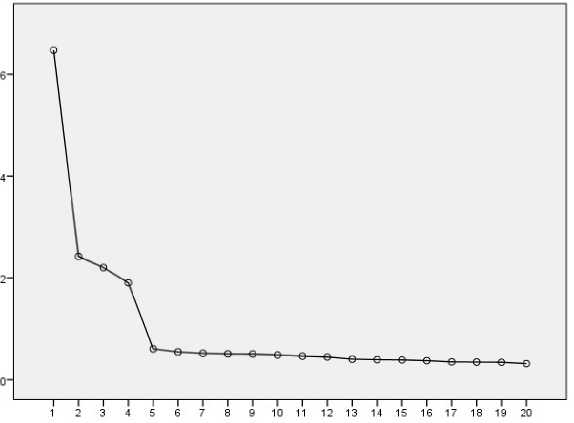
Scree Plot
|
Rotated Component Matrix |
||||
|
Component |
||||
|
1 |
2 |
3 |
4 |
|
|
Knowledge identity 1 |
0.749 |
|||
|
Knowledge identity 2 |
0.800 |
|||
|
Knowledge identity 3 |
0.752 |
|||
|
Knowledge identity 4 |
0.785 |
|||
|
Knowledge identity 5 |
0.757 |
|||
|
Affective Identity 1 |
0.770 |
|||
|
Affective Identity 2 |
0.787 |
|||
|
Affective Identity 3 |
0.772 |
|||
|
Affective Identity 4 |
0.806 |
|||
|
Affective Identity 5 |
0.781 |
|||
|
Satisfaction 1 |
0.767 |
|||
|
Satisfaction 2 |
0.753 |
|||
|
Satisfaction 3 |
0.797 |
|||
|
Satisfaction 4 |
0.801 |
|||
|
Satisfaction 5 |
0.755 |
|||
|
Behavior Identity 1 |
0.777 |
|||
|
Behavior Identity 2 |
0.783 |
|||
|
Behavior Identity 3 |
0.742 |
|||
|
Behavior Identity 4 |
0.765 |
|||
|
Behavior Identity 5 |
0.798 |
|||
The table shows that the items can be divided into four dimensions, which is consistent with the theoretical expectations.
Correlation
|
Correlation |
||||
|
Knowledge identity |
Affective identity |
Satisfac tion |
Behavior Identity |
|
|
Knowledge identity |
1 |
|||
|
Affective identity |
.379** |
1 |
||
|
satisfaction |
.354** |
.266** |
1 |
|
|
Behavior identity |
.384** |
.293** |
.310** |
1 |
|
**. The correlation is significant at the 0.01 level (two-tailed) |
||||
The correlation coefficients between knowledge identity, emotional identity, and satisfaction with behavioral identity are 0.384, 0.293, and 0.310, respectively, all of which are significant at the 0.01 level.
Moderated Mediation Effect
A model using knowledge identity as the independent variable, emotional identity as the moderator, satisfaction as the mediator, and behavioral identity as the dependent variable was established using the Model 7 in the PROCESS plugin, with 5,000 bootstrap samples.
|
Moderated Mediation Effect |
||||||||
|
Satisfaction |
Behavior Identity |
|||||||
|
coeff |
se |
t |
p |
coeff |
se |
t |
p |
|
|
constant |
3.578 |
0.037 |
96.338 |
0.000 |
2.815 |
0.165 |
17.036 |
0.000 |
|
Knowledge Identity |
0.277 |
0.041 |
6.708 |
0.000 |
0.300 |
0.041 |
7.239 |
0.000 |
|
Affective Identity |
0.174 |
0.043 |
4.055 |
0.000 |
||||
|
Satisfaction |
0.205 |
0.045 |
4.593 |
0.000 |
||||
|
Knowledge Identity X Affective Identity |
0.131 |
0.041 |
3.176 |
0.002 |
||||
|
F |
32.038 |
55.440 |
||||||
|
R2 |
0.162 |
0.182 |
||||||
Knowledge identity has a significant positive effect on satisfaction [B = 0.277, P < 0.001];
Emotional identity has a significant positive effect on satisfaction [B = 0.174, P < 0.001];
The interaction term of knowledge identity and emotional identity has a significant positive effect on satisfaction [B = 0.131, P = 0.002], indicating that emotional identity has a positive moderating effect on the influence of knowledge identity on satisfaction.
|
Mediation Effect Analysis |
|||||
|
Effect Type |
Effect |
se |
LLCI |
ULCI |
|
|
Direct Effect |
0.300 |
0.041 |
0.218 |
0.381 |
|
|
Indirect Effect |
(M-SD) |
0.033 |
0.014 |
0.007 |
0.063 |
|
M |
0.057 |
0.015 |
0.030 |
0.088 |
|
|
(M+SD) |
0.081 |
0.020 |
0.045 |
0.123 |
|
When the moderator variable emotional identity takes a low value (M — SD), the mediation effect is 0.033, with a 95% confidence interval of [0.007, 0.063], which does not include 0 and is therefore significant.
When the moderator variable emotional identity takes the mean value (M), the mediation effect is 0.057, with a 95% confidence interval of [0.030, 0.088], which does not include 0 and is therefore significant.
When the moderator variable emotional identity takes a high value (M + SD), the mediation effect is 0.081, with a 95% confidence interval of [0.045, 0.123], which does not include 0 and is therefore significant.
Research Findings
Based on the data analysis above, the relationships among the three variables could be seen. For Correlation Analysis, Knowledge Identification and Satisfaction:
r = 0.354, p < 0.01, Emotional Identification and Satisfaction: r = 0.266, p < 0.01, Satisfaction and Behavioral Identification: r = 0.310, p < 0.01.
Knowledge Identification: Mean = 3.480, SD = 0.915
Emotional Identification: Mean = 3.586, SD = 0.897
Satisfaction: Mean = 3.619, SD = 0.849
Behavioral Identification: Mean = 3.556, SD = 0.873
The study findings indicate that tourist satisfaction, knowledge identification, emotional identification are significant factors influencing behavioral identification in ski resort and ice-snow culture in Jilin Province, China. The significance of strethening the connections of the three factors could improve tourists’ satisfaction.
All the hypothesis are confirmed.
Interview Table
INTERVIEW RESULTS
Q1 Generally speaking, what are the most satisfying factors of Jilin Ice and Snow Culture touring for you?
Satisfying factors:
-
• Full fish feast in Chagan Lake
-
• Skiing itself
-
• Ice and snow sculpture
-
• Manchu and Korean ethnic group related activities
Q2 There are common influencing factors of your sensations in your tour in Jilin Ski resort, what are they?
In sum, the main contribution mainly comes from:
-
• Service, ice and snow cultural icons
-
• Surroundings are nice
Q3 What do you think of Ski Resort in Jilin Province if you are a really fan of ice and snow culture? Will it affect your satisfaction as a tourist?
-
• respect for the ice and snow culture in Tourism
-
• Contribution to sports like skiing
-
• Career of tour guide or ski resort service in the future
-
• Better understanding of sports news of skiing
-
• Self– improvement in further study of ice and snow culture
Q4 Will you feel your knowledge and psychological identification in Jilin Ice and Snow Tourism?
Knowledge identification:
-
• History&Culture understanding implemented in
-
• Promotion of skiing skills& Professionalism
Psychologicalidentification:
-
• Pride of culture in being a local person
-
• Understanding & sharing positive emotion with coworkers
-
• Recognition for related Tourism contributions
-
• Feeling inspired & Emotional Ties
Content Analysis Methods
With the widespread use of social media, the WeChat Public Platform has become an important channel for disseminating the ice and snow culture. By analyzing the content on subscription accounts, gaining a deep understanding of tourists' perceptions and emotional responses to ice and snow culture is more likely, thereby providing a basis for optimizing tourism products and services.
Data resources: Selected Wechat Subscriptions Platform related to ice and snow culture in Jilin Province, like "Changbai Mountain Tourism"
Data types include daily published articles, user comments from these subscription accounts.
Time Range: November 2024 to July 2025.
In this research, a comprehensive content analysis approach was employed to explore tourists’ perceptions and emotional responses to Jilin’s ice and snow culture. The methods included text analysis, image and video analysis, and user comment analysis.
For text analysis, natural language processing techniques were utilized to extract keywords such as “skiing,” “ice sculpture,” and “Chagan Lake Winter Fishing” from articles. In terms of image recognition technology, which was employed to analyze the main elements in visual content, such as skiing scenes, ice sculptures, and folk activities. User interaction analysis was conducted by counting the likes, shares, and comments on images and videos to assess user engagement.
Analysis Results
The cognitive analysis results revealed that tourists have a high level of awareness of keywords such as “skiing,” “ice sculpture,” and “Chagan Lake Winter Fishing.” Topic modeling indicated that ice and snow sports, tourism, folklore, and cuisine are the main themes of interest to tourists. Furthermore, tourists showed a high level of interest in content related to ice and snow sports and tourism, particularly descriptions of skiing and ice sculpture activities.The emotional analysis results showed that tourists’ overall emotional tendency towards Jilin’s ice and snow culture is positive, with a high level of satisfaction. The intensity of emotions expressed in user comments is relatively high, indicating a strong emotional response from tourists to ice and snow cultural activities. However, tourists’ emotional responses exhibited certain fluctuations over time, especially during the peak periods of ice and snow activities, such as the Winter Fishing Festival.
The user interaction analysis demonstrated that the high number of likes and shares for images and videos indicates a high level of user engagement with visual content. The large number of user comments also shows a high level of user interaction, particularly under articles that promoting ice and snow related activities.
Content Optimization Suggestions
According to data analysis results, our team propose suggestions for optimizing ice and snow culture content based on Wechat Platform article subscription analysis. The findings indicate that tourists of ski resort and users of related tourism activities are 11
expected to be more involved in culture phenomena, particularly with better advanced understandings and knowledge about ice and snow culture, the emotion and dedication will be affected and satisfaction will be improved. The most prominent feature is the service, related festivals will be involved in activities more emotionally based on users’ comments on articles on platforms. Based on the review of selected 100 articles around ice and snow culture topic in Jilin Province China, a series of articles that delve into the historical origins and development context of ice and snow culture, adopting a narrative storytelling approach. Launch a user experience sharing section to encourage readers to share their stories is another innovation of these articles, based on interactive data, it could be seen that the interactivity of culture and behavior present an increase trend in recent 6 months compared to last year.
Conclusions and Predictions
Data analysis above revealed a significant correlation among the variables. It could be seen that in the identification, the more knowledgeable tourists are about ice and snow culture, the higher their satisfaction with ice and snow tourism tends to be. This indicates that knowledge identification plays a crucial role in ice and snow tourism. By gaining a deep understanding of ice and snow culture, tourists can better appreciate its unique charm, thereby enhancing their overall travel experience and satisfaction.
The ice and snow tourism in Jilin offers a multifaceted experience that combines natural beauty, cultural richness, and recreational activities, contributing to a high level of satisfaction among tourists and promoting the region as a premier destination for winter travel. The ski resorts, such as Beidahu and Songhuahu, provide excellent skiing conditions and facilities, attracting both professional athletes and casual skiers. The ice and snow sculpture exhibitions feature intricate and beautiful works of art, reflecting the creativity and skill of local artists. The natural beauty and well-maintained surroundings of the ski resorts enhance the overall experience, creating a pleasant and memorable visit. The cultural richness of Jilin's ice and snow tourism is highlighted by the traditional full fish feast at Chagan Lake, offering a unique culinary experience that showcases local ingredients and traditional cooking methods. The rich cultural traditions of the Manchu and Korean ethnic groups add a unique dimension to the tourism experience, with traditional dances, music, and crafts that highlight the diversity of Jilin's cultural heritage. The presence of iconic ice and snow cultural elements, such as traditional ice fishing and winter festivals, enhances the cultural experience and provides a sense of authenticity to the tourists' visit. From a psychological and knowledge identification perspective, visitors gain a deeper understanding of the historical and cultural context of Jilin's ice and snow activities through educational materials and guided tours. The ski resorts offer opportunities to improve skiing skills and learn about professional standards in the sport, enhancing the tourists' knowledge and appreciation of winter sports. Local residents often feel a sense of pride in their cultural heritage, which is shared with visitors, enhancing their overall experience. The shared experience of working in the tourism industry fosters a sense of community and positive emotions among colleagues, contributing to a welcoming and enjoyable atmosphere for tourists. Contributions to the tourism industry, such as guiding or service roles, are recognized and valued, enhancing job satisfaction and the overall quality of service provided to tourists. The vibrant and dynamic atmosphere of 12
the ski resorts often inspires visitors and creates emotional connections to the place and its culture, leading to repeat visits and positive word-of-mouth recommendations.
In conclusion, ice and snow culture and the relations in this research, in social emotional level, when tourists in this context interact with local residents and service provider, the emotional experience will be enhanced. Knowledge acquisition could stimulate tourists' "willingness to actively participate" to some extent, prompting them to transform from passive tourists to active experiencers in ski resort, and thereby enhance the depth and sense of value of the experience. The findings above not only enrich the relations study of psychology, knowledge identification and tourist satisfaction, but also provide a universal guidance for the management of ski resort.
For research limitations, this study only focus on Jilin Province in China, the scale could be expanded to other high — latitude provinces and countries in the Northern Hemisphere in future studies, in addition, more specific variables across emotional identification dimension could be explored further.
