
A Study of Seima-Turbino Bronze Artifacts Discovered in China
Journal: Archaeology, Ethnology & Anthropology of Eurasia @journal-aeae-en
Section: The metal ages and medieval period
Article in issue: 1 т.53, 2025.
Free access
We describe Seima-Turbino artifacts from museum collections and sites in China—two spearheads from the Gansu Provincial Museum and two daggers from the Tianshui Museum. The composition of metal was analyzed. Spearheads are made of copper with minor additions, and daggers are made of bronze. The shape of the latter is identical to that of the specimens from Sopka-2/4B. Their type and technology suggests that they were not made by people of the Qijia culture, but were imported by the Seima-Turbino people. Typology and chronology of daggers and spearheads from China are examined. Parallels with those from Western Siberia are listed. We conclude that ties between the cultures of Qijia and Seima-Turbino date to 2200–2000 BC, and the origin of metallurgy in China was intrinsically linked to that phenomenon.
Similar articles in the section Prehistory. Prehistoric remains, artefacts, antiquities
Short address: https://sciup.org/145147246
IDS: 145147246 | DOI: 10.17746/1563-0110.2025.53.1.064-073
Text of the scientific article A Study of Seima-Turbino Bronze Artifacts Discovered in China
Seima-Turbino remains are widely distributed throughout the Eurasian steppes and are renowned for their advanced casting techniques and unique metal products. Celts, spearheads, daggers, and knives are frequently discovered in Seima-Turbino burial sites, all of which are highly recognizable. In recent years, researchers in China have continuously discovered, identified, and discussed celts and spearheads associated with the Seima-Turbino phenomenon (Saiyima-tuerbinnuo wenhua..., 2019; Shao Huiqiu, 2021). Through investigation, we have found that the Gansu Provincial Museum collects two spearheads of Seima-Turbino type, and the Tianshui Museum two daggers of this type. In this study, we employed a handheld XRF fluorescence analyzer to conduct a metal composition analysis of these four Seima-Turbino metal artifacts. By examining their properties and casting techniques, the research aims to explore the interaction and exchange of Seima-Turbino artifacts and casting technology in the eastern Eurasian continent.
Methods and samples
The alloy composition of two spearheads and daggers was analyzed using a handheld X-ray fluorescence (XRF) analyzer from Thermo Scientific, the Niton XL3 series. The detection mode was “Metal→ →Standard Element”, and the testing time for each point was about 30 seconds. Valid data points were obtained from the midrib of each spearhead, various locations on the blade, the bottom of the socket, and
the edges of the barb and loop. The detection points of two daggers were distributed in the middle of the dagger body and on both sides of the handle.
Spearhead No. 47922, Gansu Provincial Museum . This spearhead was collected by Gansu Provincial Museum in the 1990s from a village near Lanzhou city. It has a total length of 38.9 cm, with the widest part of the spearhead measuring 13.5 cm and the diameter of the socket being 4.2 cm. The spearhead is characterized by a wide leaf-shaped blade with a rounded and blunt tip, a midrib, and a broad barb and a loop located on opposite sides of the socket. At the lower end of the socket, there are three parallel raised chords 0.1 cm wide, and a nearly square-shaped hole about 1.5 × 1.5 cm in size. The loop is flat on one side and convex on the other, with a small piercing ca 1 mm in diameter (Fig. 1). The spearhead is intact, and shows no signs of chopping or cutting. Additionally, a casting core is observed inside the socket, which is different in color (grayish-green) from ordinary clay. The texture of the core is hard, with evidence of burning.
Based on analysis, this spearhead is made of copper with small amounts of impurities such as arsenic, iron, and bismuth (Cu-As-Fe) (see Table ).
Spearhead No. 12308, Gansu Provincial Museum . This spearhead was collected in 1957 by Gansu Provincial Museum from a market in Lanzhou city. It is in good condition and has a total length of 35.1 cm, with a maximum width of 11.7 cm and the diameter of the socket 4.0 cm. The spearhead has a narrow leaf-shaped blade with a midrib. Its barb is broken and still retains the marks of the break. The crosssection of the barb is diamond-shaped. The barb and the loop are located on opposite sides of the socket. There are three parallel raised chords at the lower end of the socket, which are 0.3 cm wide, and three parallel raised chords on the upper end, which are ca 0.1 cm wide. The blade has several notches and even some rolled edges, indicating that it was likely used for chopping or cutting (Fig. 2). Additionally, casting core is observed inside the socket, which is different in color (grayish-green) from ordinary clay. The texture of the core is hard, with evidence of burning.
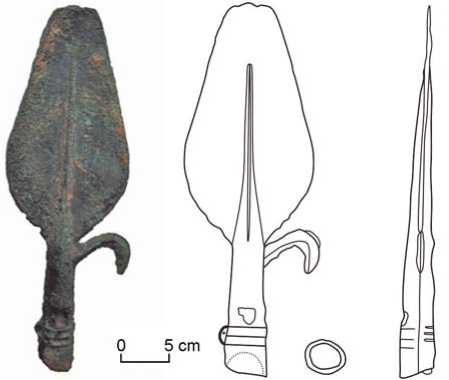
Fig. 1. Spearhead No. 47922, Gansu Provincial Museum.
Upon analysis, the spearhead was found to be composed of copper, with trace amounts of impurities such as lead, iron, and bismuth (Cu-As-Ag) (see Table ).
Dagger No. 1, Tianshui Museum, Gansu . The dagger measures 24.7 cm in total length, with a blade length of 15.3 cm and a maximum width of 3.6 cm. The handle is 9.4 cm long and 2.4 cm wide, with a handle-blade connection width of 2.6 cm. The dagger body is narrow and elongated, with a rounded and blunt tip in the shape of a willow leaf. The handle of the dagger protrudes on both sides, with a concave center and an I-beam section. There are small holes at both ends of the handle: one of a circular shape and a diameter of 0.2 cm near the dagger body, and the other of an irregular shape with a length of 1.5 cm and a width of 0.5–0.8 cm at the other end (Fig. 3, 1 ).
The analysis has shown that dagger No. 1 is composed of bronze (Cu-Sn) (see Table ).
Dagger No. 2, Tianshui Museum, Gansu . The dagger measures 21.3 cm in total length, with a blade length of 10.9 cm and the maximum width of 3.4 cm. The handle is 10.4 cm long and 2.3 cm wide, with a handle-blade connection width of 2.6 cm. The dagger body is narrow and elongated, with a rounded and blunt tip in the shape of a willow leaf.
Elemental composition of the spearheads and daggers, wt%
|
Sample |
Cu |
As |
Fe |
Ag |
Sn |
Pb |
Other |
|
Spearhead 47922 |
97.05 |
0,73 |
1,59 |
– |
– |
– |
0.63 |
|
Spearhead 12308 |
94.72 |
0.38 |
– |
1.72 |
– |
– |
3.18 |
|
Dagger 1 |
85.87 |
0.147 |
– |
– |
12.712 |
0.098 |
1.173 |
|
Dagger 2 |
75.553 |
0.033 |
– |
– |
21.369 |
0.28 |
2.765 |
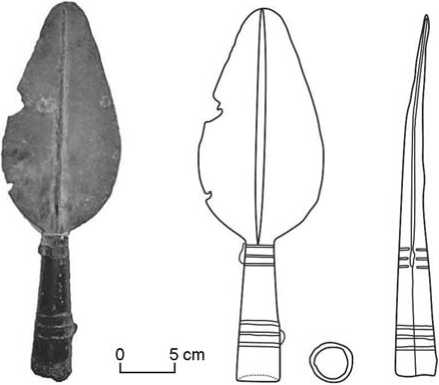
Fig. 2. Spearhead No. 12308, Gansu Provincial Museum.
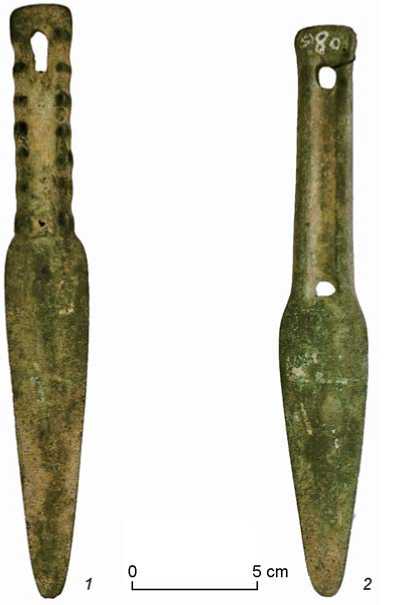
Fig. 3. Daggers No. 1 and 2, Tianshui Museum, Gansu.
The handle of the dagger protrudes on both sides, with a concave center and an I-beam section. There are oval holes at both ends of the handle: one with a length of 0.8 cm and a width of 0.5 cm near the dagger body, and the other measuring 0.8 × 0.7 cm at the other end (Fig. 3, 2 ).
The analysis has shown that dagger No. 2 is composed of bronze (Cu-Sn) (see Table ).
Typology and chronology of spearheads
To date, a total of 16 Seima-Turbino type spearheads have been discovered in China, including one from Shenna site (Qinghai Province), one collected by Datong County Cultural Relics Management Office (Qinghai), two by Gansu Provincial Museum, one by Shaanxi History Museum, four from Xiawanggang site (Xichuan, Henan Province), one collected by Shanxi Museum, one by Shanxi Arts and Crafts Museum, one by Chaoyang Cultural Relics Management Office, one by National Museum, and three by Nanyang Museum. Additionally, a piece of barb with a diamondshaped cross-section and a ridge in the middle was unearthed in the third phase of the Xiawanggang site in Xichuan (Xichuan Xiawanggang..., 1989: 298–299). This fragment was similar to the barbs from Shaanxi History Museum, Gansu Provincial Museum, and Nanyang Museum collections.
Typology . Based on the shape of the spearheads under study, they can be divided into two types.
Type A has a leaf with barb and ring on the same side. The tang of the spearhead is forked at the connection with the base of the spearhead leaf, forming a fork-shaped ridge. This type of spearhead is very similar to those found at the Turbino and Rostovka cemeteries and is believed to have been directly introduced by the Seima-Turbino people. This fact provides favorable evidence for the cultural ties between the Seima-Turbino and Chalcolithic archaeological cultures in China. Two spearheads of type A have been found: one is kept in Shanxi Arts and Crafts Museum and the other in Chaoyang Cultural Relics Management Office in Liaoning.
Type B has a wide leaf with a ridge running through the center of the leaf. The socket has a barb on one side and a ring on the other side. Three raised cords are at the lower end of the socket. There are currently 14 spearheads of type B found, mainly distributed in Gansu, Shaanxi, Shanxi, and Henan provinces. As compared to type A spearheads, those of type B have wider leaves, which change from narrow willowshaped to wide leaf-shaped, and have a blunt and round tip, which lost its practical combat function. The forkshaped ridge disappears and becomes a central ridge, and the barbs and rings of most type B spearheads are on different sides of the socket.
The analysis of metal composition has shown that the Seima-Turbino spearheads kept in the Gansu Provincial Museum are copper. Spearhead No. 12308 contains 1.72 % silver, which distinguishes it from other Seima-Turbino spearheads discovered in China. A certain proportion of silver is found in some spearheads, daggers, and celts excavated from Turbino cemetery. This proportion demonstrates significant fluctuations, sometimes exceeding 50 %, while artifacts with lower silver content make up around 1 % (Chernykh, 1970: 127–171). The Cu-Ag alloy metal items were found only at Seima-Turbino sites. Therefore, there is a close connection between the spearhead No. 12308 and the metal artifacts from Turbino cemetery.
According to statistics, 9 copper spearheads (56.3 % of the total number of items from this category), 5 arsenic-copper spearheads (31.3 %), and 2 bronze spearheads (12.4 %) have been discovered within China. The spearhead from Liaoning is very similar to that from Rostovka cemetery, both in appearance and in metal composition. This suggests that type A spearheads were directly imported from Western Siberia. However, unlike the Rostovka specimen, the Liaoning spearhead did not undergo secondary processing and grinding.
Chronology . During excavations in China, 5 spearheads of the Seima-Turbino type were discovered: 1 from Shenna site in Qinghai Province, and 4 from Xiawanggang site in Xichuan in Henan Province. In addition, the latter site yielded the abovementioned copper barb.
The Xiawanggang spearheads pertain to the settlement complex where pit XWGT2H181 was investigated in 2008, in the northeast of square T2. The pit was recorded in layer 4.B and breaks through layer 5. It is nearly circular in plan view, 0.5 m deep, with a mouth diameter of 1.15 m. The filling consists of two distinct layers: the lower one is soil light gray in color, while the upper one is composed of a large number of blocks of red-burnt clay, stones, and hard soil. Four spearheads were found at the bottom of the pit, stacked and adhered together. Three of them were oriented with their points to the west, and one to the east. The filling contained a small amount of pottery shards of Longshan and Yangshao cultures (Xichuan Xiawanggang, 2020: 195–196). The pit was intentionally dug out to bury the four spearheads and then reinforced and sealed with red-burnt clay and hard soil stones (Gao Jiangtao, 2009). Gao Jiangtao believes that the sediments enclosing the pit were formed over a very short period of time in a broad stratigraphic horizon. The cultural layer of Xiawanggang site contains artifacts from three stages: the Late Longshan culture, Erlitou culture, and Western Zhou period. Gao attributes the four spearheads to the Late Longshan culture (Gao Jiangtao, 2015).
According to the 14C dating data and the stratigraphic sequence of sediments, the Longshan materials at Xiawanggang were attributed to the period of approximately 2200–1880 BC (Xichuan Xiawanggang..., 2020: 589–602).
A copper barb (T15 ® A:39) 3.8 cm long was unearthed from the layer of Erlitou culture at Xiawanggang (Xichuan Xiawanggang..., 1989: 298), underlain by Longshan cultural layer. During the excavation works, the barb could have been displaced. Regardless of the actual situation, the barb belongs to the period earlier than the third phase of the Erlitou, i.e., 1610–1555 BC (Zhongguo kaoguxue..., 2003: 80–81).
During the 1991–1993 works at the Shenna site (Wang Guodao, 1995), a Seima-Turbino spearhead was discovered. It was attributed to the Qijia culture.
The third phase of the Erlitou culture is dated to 1610–1555 BC, while the main period of the Qijia culture and the late period of the Longshan culture pertain to 2000 to 1600 BC (Zhongguo kaoguxue..., 2003: 535–557). In summary, the Seima-Turbino spearheads discovered in China date back to approximately 2000–1600 BC.
Typology and chronology of daggers
The number of daggers unearthed at Seima-Turbino sites is far less than that of spearheads. Based on the shape of the handle and blade, daggers can be classified into three types: A, B, and C (Fig. 4).
Type A . The handle is trapezoidal in shape, occupies about half of the entire length of the dagger, and is slightly shorter than the blade. It is decorated with simple lines or triangles. The blade is leaf-shaped and waisted. Dagger of this type have been discovered at the cemeteries of Seima, Reshnoye, Pesochnoye, and at the sites of Iset I, Irbitskoye Ozero, and Shaitanskoye Ozero II.
Type B . The handle is trapezoidal or rectangular in plan view, is significantly shorter than the blade, and occupies about one-third of the dagger’s length. It is decorated with vertical grooves or perforated triangles, sometimes with animal images. Parallel lines are often used to adorn the junction between the handle and the blade. The blade has willow-leaf shape. The upper part of the blade has the same width as the handle. Such daggers have been discovered at the Seima cemetery, near Perm, and in the Galich hoard.
Type C . The handle is rectangular in shape, with two protruding sides and a concave middle section.
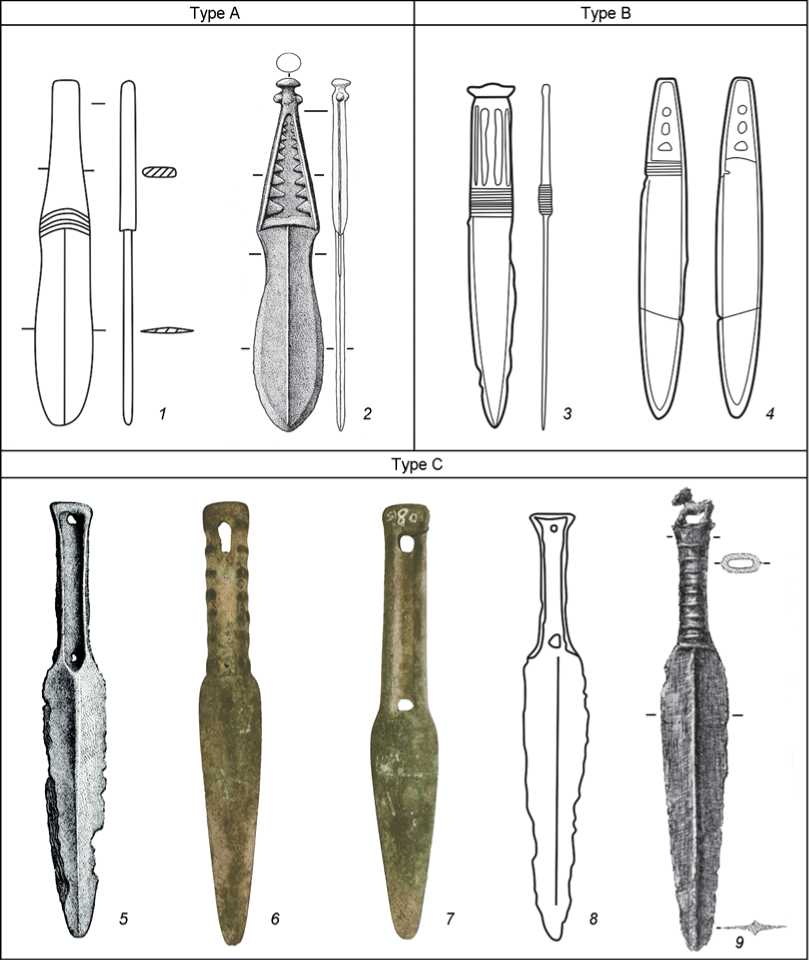
Fig. 4. Daggers of the Seima-Turbino type.
1 – Reshnoye cemetery; 2 – Shaitanskoye Ozero II; 3 , 4 – Seima cemetery; 5 – Sopka-2/4, burial 420; 6 , 7 – Tianshui Museum, Gansu; 8 – Ili valley, Xinjiang; 9 – Karakol hoard.
The cross-section resembles an I-beam. Perforations are often present at both ends of the handle, and the blade has an evident longitudinal ridge. The three most representative examples were unearthed in burials 420, 425, and 443 at the Sopka-2/4B cemetery (Molodin, 1993). Identical daggers have also been found at the Second Karakol hoard on the eastern shore of Issyk-Kul Lake (Vinnik, Kuzmina, 1981), in Charyshskoye of the Altai Territory (Kiryushin, Shulga, Grushin, 2006; Kovtun, 2013: Ph. 161–162), in the Yenisei Governorate in Russia (Chlenova, 1976:
Pl. 8, 22; Kovtun, 2013: Pl. 111, 7), and in Tianshui, Gansu Province in China (listed above). In addition, in the Ili River valley, Xinjiang, a dagger with unclear cross-section was discovered (Li Suyuan, 2014), but judging from its shape it undoubtedly belongs to type C. Other daggers have been found in Kurshim and Semey (Semipalatinsk) in eastern Kazakhstan, and in Zmeinogorsk in Russia (Altai..., 2006). In their appearance, these daggers show parallels to those with I-beam section handles from Sopka-2/4B: narrow and elongated, with perforations or horizontal parallel raised cords on both ends of the handle, and the dagger’s head embellished with a standing animal. The distinguishing feature of this type of dagger is the elliptical cross-section of the handle (Fig. 4, 9), and its distribution area is slightly more southern, indicating a regional variation (Molodin, 2015) (Fig. 5).
The daggers of type A have been discovered at the cemeteries of Seima, Reshnoye, at the sites of Iset I, Irbitskoye Ozero, and Shaitanskoye Ozero II. This points to their distribution primarily to the west of the Ural Mountains. This region is the western outskirts of the Seima-Turbino transcultural phenomenon. The blade of this type of dagger (slightly narrowing near the handle and widening downward, with a central ridge) is similar to daggers of the Abashevo culture. The only difference is that Abashevo daggers have no handle. Metal composition analysis has revealed that daggers of type A are mostly made of bronze with tin content up to 12.18 % and a small amount of copper. (Grushin et al., 2006; Lunkov, Orlovskaya, Kuzminykh, 2009; Lunkov, Kuzminykh, Orlovskaya, 2011, 2013; Chernykh, Kuzminykh, 1989: 218–238).
Daggers of type B have been found in the Seima cemetery, near Perm, and in the Galich hoard. As compared to daggers of type A, the daggers of type B have shorter handles, their blades near the handles do not narrow and have no central ridges. Such artifacts are also discovered in the Abashevo materials. Fewer daggers of type B have been analysed, and they are mainly made of bronze (Cu-Sn) or arsenic-copper (Cu-As) alloys (Chernykh, Kuzminykh, 1989: 297–298).
Daggers of both types A and B are concentrated in the western region of the Seima-Turbino distribution area, and may be closely related to the Abashevo culture; those of type C are primarily found in the eastern region of this area.
Two daggers collected in the Tianshui Museum, as well as the daggers unearthed at Sopka-2/4B, belong to type C. Their handles have I-beam section with grooves and perforations. Daggers from Sopka-2/4B, in the longitudinal grooves of their
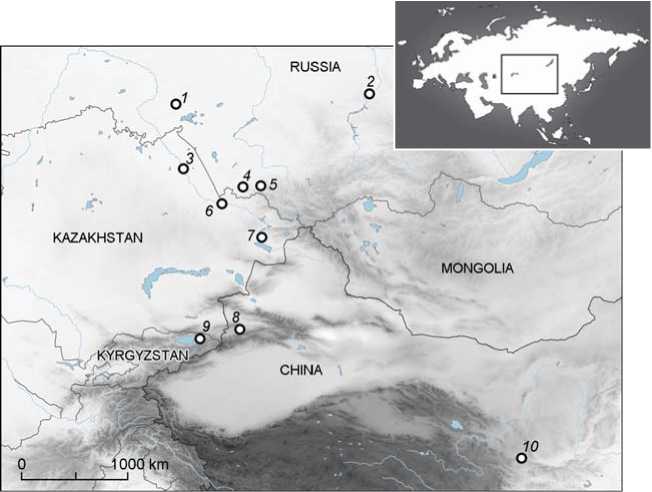
Fig. 5. Distribution of daggers of type C.
1 – Sopka-2 cemetery; 2 – Yenisei Governorate; 3 – Pavlodar; 4 – Zmeinogorsk;
5 – Charyshskoye; 6 – Semey (Semipalatinsk); 7 – Kurshim; 8 – Ili valley, Xinjiang;
9 – Karakol; 10 – Tianshui, Gansu.
handles, have revealed the remains of decayed wood; and the dagger unearthed from burial 425 had a piece of leather wrapped around its handle. This suggests that the grooves were used to place wooden planks therein, to give volume, and then the handle was wrapped with a strap. The strap was fastened using perforations, and if these were absent, the unevenness on both sides of the handle’s first section was used to hold the leather through the grooves (Molodin, 2015) (Fig. 6, 1 ). The two daggers from the Tianshui Museum have grooves or perforations on their handles, which likely have been used for the same purposes.
Li Suyuan once classified the dagger found in the Ili valley (Fig. 6, 2 ) as a spearhead typical of the Andronovo culture (2014). However, in fact, such metal artifacts are Seima-Turbino daggers of type C, similar in shape to daggers found in Semipalatinsk and other places. The dagger excavated from the Zhukaigou site in Inner Mongolia has a perforation at the handle wrapped with hemp rope (Tian Guangjin, 1988). It has a similar shape to the daggers from Sopka-2/4B and possibly demonstrates the influence of the Seima-Turbino traditions. Its decoration in the form of grid imprint is a regional feature of the Ordos (Lin Yun, 2011) (Fig. 6, 3 ).
The Seima-Turbino remains are dated to approximately 2200–1900 BC, with the finds from
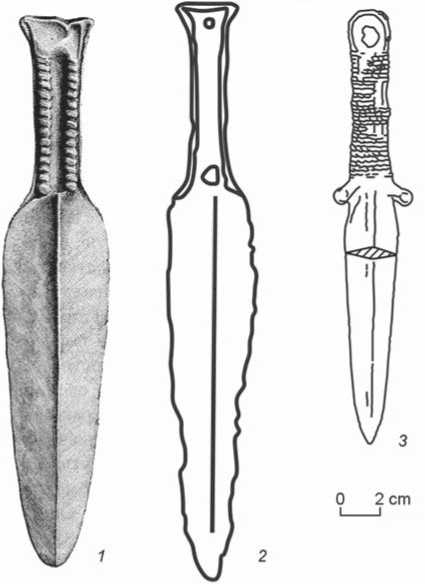
Fig. 6. Daggers from Sopka-2/4B, burial 425 ( 1 ), Ili valley in Xinjiang ( 2 ), and Zhukaigou site, burial 1040 in Inner Mongolia ( 3 ).
the Sopka-2/4 cemetery being the earliest among the known daggers of this type (Marchenko et al., 2017). Typological analysis suggests that the daggers with handles excavated from this cemetery may represent the most primitive form of Seima-Turbino daggers (Kovtun, 2016). Therefore, the daggers of type C are dated to around 2200 BC. For comparison, the Qijia culture in the Hexi Corridor is estimated to have existed between 2000–1600 BC (Yang et al., 2019), while the Longdong region, where Tianshui city is located, saw the formation of the Qijia culture around 2200 BC (Jia et al., 2013). Consequently, the two daggers of type C kept in the Tianshui Museum, similar to those from Sopka-2/4B, are believed to date to 2200 BC or later.
Interaction between the Qijia and the Seima-Turbino cultures
The Qijia culture materials show parallels to Seima-Turbino artifacts. According to L.G. Fitzgerald-Huber, the single-eared celt and the arched-back knife found at the Xinglin site in Min County, Gansu Province, as well as the bone-handled bronze knife and bronze awl unearthed at the Huzhuzongzhai site in Qinghai Province, and the strip-shaped metal artifact excavated at the Huangniangniangtai site in Wuwei, demonstrate similarities in typology with artifacts from Seima-Turbino sites. The triangular patterns on the middle of the strip-shaped metal artifact from Huangniangniangtai are identical to those on the handle of a dagger of the Seima-Turbino type. It cannot be ruled out that this artifacts can be a part of such a dagger (Fitzgerald-Huber, 1995). Additionally, C. Debaine-Francfort suggests that the celt from the Qijiaping site is similar to those celt from Seima-Turbino sites (1995: 269–299). V.I. Molodin compared the spearhead from the Shenna site in Qinghai with those from Seima-Turbino sites, and suggested that cultural exchange existed between the Qijia culture and the Seima-Turbino communities (Molodin, Komissarov, 2001). Mei Jianjun also argues that the bone-handled knife from the Weijiataizi site (Gansu) and the spearhead from the Shenna site are similar to the Seima-Turbino relics (Mei Jianjun, Gao Binxiu, 2003).
Three barbed spearheads (one from collection of the Cultural Relics Management Office in Datong County, Qinghai Province (Liu Xiang, 2015), and two from the Gansu Provincial Museum) and two daggers (from the Tianshui Museum) of the Seima-Turbino type are the evidence of the fact that the Qijia culture was deeply influenced by Seima-Turbino traditions. The prefecture-level city of Tianshui, located in the southeastern part of Gansu Province, in the western section of the Qinling Mountains, is part of the eastern distribution area of the Qijia culture. The Qijia remains found at the Shizhaocun site in Tianshui exhibit earlier features than those from archaeological sites in central and western Gansu (Zhao Xin, Ye Maolin, Tian Fuqiang, 1990). The academic circles generally agree that the Qijia culture originated in the Longdong region (Wang Hui, 2012). Therefore, it is possible that during the early formation stage of the Qijia culture and Seima-Turbino remains, there was communication between Western Siberia and the eastern Hexi Corridor.
Metal component analysis indicates that Qijia metal artifacts were made of pure copper, arsenic-copper, and bronze. Metallographic analysis shows that these were produced using both casting and forging methods (Xu Jianwei, 2010: 56–58). Notably, bronze artifacts found at the sites of Zongri, Gamatai, and Mogou are primarily small objects such as beads, earrings, and tube-shaped ornaments, produced by forging. Conversely, pure copper artifacts discovered at the sites of Huangniangniangtai, Qijiaping, Zongri, Gamatai, and Xinglin were mainly cast and include knives and celts (Guo Deyong, 1960; Sun Shuyun, Han Rubin, 1981; Xu Jianwei, 2010: 56–58; Wang Lu et al., 2022; Yang Yimin, 1985; Liu Rui, Gao Jiangtao, Kong Deming, 2015) (Fig. 7). Thus, the traditional metal artifacts processing techniques of the Qijia culture involve forging small tincopper decorative items and casting large practical copper items. Two bronze-cast daggers from the Tianshui Museum do not conform to this tradition.
A significant characteristic of Seima-Turbino metal artifacts is the use of Cu-Sn alloys (Chernykh, Kuzminykh, 1989: 178–192). Tin-copper and tin-arsenic-copper products absolutely dominate in the eastern region of this culture. The daggers of Seima-Turbino type cast in tin-copper show significant fluctuations in tin content, ranging from as low as 1.2 % to as high as 15 %. The content of arsenic and lead is relatively stable, with As less than 0.1 % and Pb around 0.1 %
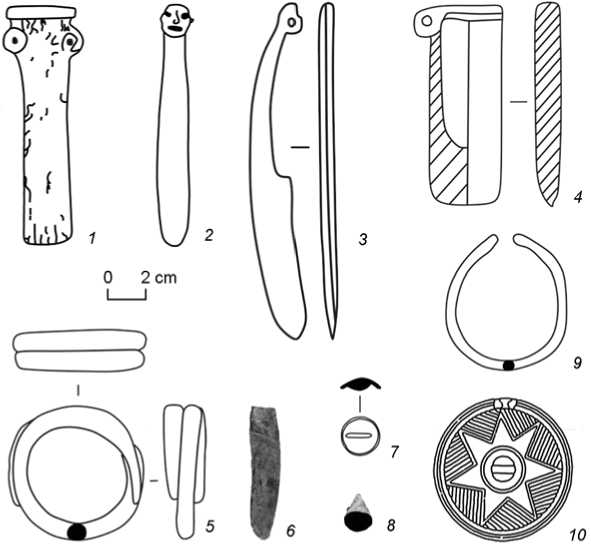
Fig. 7. Metal artifacts of the Qijia culture.
1 , 2 – celt and daggers from the Qijiaping site; 3 , 4 – knife and celt from the Xinglin site; 5 , 10 – ring and mirror from the Gamatai site; 6–8 – respectively, knife, button, and cone-shaped cap from Mogou; 9 – bracelet from the Xinzhuangping site.
(Ibid.: 163–177). The two daggers from the Tianshui Museum are consistent with this characteristic. Thus, the type, use, and casting techniques of these artifacts suggest that they were not produced locally and are not the relics of the Qijia culture, but were directly imported by Seima-Turbino people.
Conclusions
The discovery of Seima-Turbino spearheads in the Gansu Provincial Museum and Seima-Turbino daggers in the Tianshui Museum indicates that during the Early Bronze Age, represented by the Qijia culture, Seima-Turbino artifacts spread from Western Siberia to Northwestern China. Combined with the discovery of Seima-Turbino barbed spearheads in Qinghai, Shaanxi, Shanxi, Henan, Liaoning, and other regions, it can be concluded that there was a close cultural exchange between Seima-Turbino communities and populations of northwestern and central plains of China. Along with new types of products, there was the dissemination of metal production technologies. The discovery of cast Seima-Turbino spearhead in Fukang, Xinjiang, and stone celt-casting molds unearthed at the Erlitou site of Dongxiafeng further strengthens the evidence that early bronze casting technology in China was closely related to the Seima-Turbino phenomenon.
Acknowledgements
This study was supported by the Major Special Project of Philosophy and Social Science Research of the Ministry of Education of the People’s Republic of China in 2024, titled “A Comparative Study on the Origins of Chinese and Foreign Civilizations” (2024JZDZ058), the Archaeological Talent Promotion Program of China (2024-267), and Yulin Science and Technology Plan Project “Research on Bronze Ware of Eurasian Type in Yulin Region” (CXY-2021-127).
