
Barents Euro-Arctic Cooperation: Results and Consequences for Russia
Журнал: Arctic and North @arctic-and-north
Рубрика: Political processes and institutions
Статья в выпуске: 64, 2026 года.
Бесплатный доступ
This article examines the outcomes of the Barents Euro-Arctic cooperation, particularly its cross-border dimension, analyzing both the declared and the actual interests of the participating actors and their consequences in the context of Russia’s national interests. The study is based on the concept of neoclassical realism. This approach allows for the examination of the formation and development of this multilateral format as the result of a combination of external conditions in the post-bipolar world and domestic political and economic transformations in Russia during the 1990s, and through the prism of the national interests of the member states. The study is based on official documents of the Barents Euro-Arctic Council, statistical materials from relevant institutions, and foreign policy documents of Nordic countries, primarily Norway as the initiator of the cooperation format. It is established that all participating states had an interest in developing the Barents Euro-Arctic cooperation. However, the officially declared goals and the actual objectives of the members of this framework differed significantly. The cooperation de facto narrowed to the humanitarian sphere. Alongside the positive results, there were obvious negative consequences for Russia’s national interests. This cooperation reduced international tensions in the region for several decades and made it possible to sustain the socio-cultural, scientific, and educational sectors in Russia’s northern regions during the country’s deepest crisis of the 1990s and early 2000s. However, the issue of ensuring Russia’s military security in the region was only postponed. The outcomes of this “soft power” influence manifested in the public consciousness of residents in Russia’s northern territories. The prestige and political influence of Russia globally and in the region declined substantially. Due to low solvency and a lack of capacity for proportional co-financing, Russia played a subordinate role in this format of multilateral international cooperation.
Короткий адрес: https://sciup.org/148334389
IDS: 148334389 | УДК: [94(470.1/.2)(48)"1990/2020":327](045) | DOI: 10.37482/issn2221-2698.2026.64.202
Текст научной статьи Barents Euro-Arctic Cooperation: Results and Consequences for Russia
DOI:
The radical transformation of international relations, the escalation of political confrontation, and the stance adopted by Western states towards Russia are necessitating a re-evaluation of the forms, mechanisms and outcomes of multilateral international cooperation with Western countries in the North and the Arctic, in which our country has been involved. In this context, Barents Euro-Arctic cooperation is of particular interest, having long been regarded as one of the most successful examples of dialogue between Russia and the countries of Northern Europe. However, international processes in the Arctic over the past decade, the deterioration of relations with the Nordic countries, and the accession of Sweden and Finland to NATO make it essential to examine this format of international cooperation through the prism of its relationship with the national interests of the member states. Review of this experience will allow for a balanced assessment of the results of this cooperation and the limits of acceptable humanitarian engagement in the sphere of foreign policy.
The formation and development of the Barents Euro-Arctic Region has been analyzed in considerable detail by a number of experts, including V.I. Goldin (Goldin, 2019; Goldin, 2015; Goldin, Zaykov, Nielsen, 2015), K. Zimmerbauer (Zimmerbauer, 2013), Yu.F. Lukin (Lukin, 2010), K. Hossain and D. Cambou (Hossain, Cambou, 2018), G. Hønneland (Hønneland, 2017; Hønneland, 1998), J. Eriksson (Eriksson, 1995). Many of the authors mentioned were at the origins of the Barents cooperation and contributed to its development, which allows considering their works as evidence of direct participants in the process of the region’s formation and reconstructing the logic of its creation. At the same time, a significant portion of these studies was conducted during a period when the neoliberal paradigm dominated Russian foreign policy, which largely determined the emphasis on the positive aspects of cooperation and its interpretation as an equal partnership.
Studies by Yu.P. Okunev (Okunev, 2012), E.Yu. Tereshchenko (Tereshchenko, 2018), I.A. Medby (Medby, 2022) and E. Korteniemi1 are devoted to cooperation in various spheres within the Barents Region. In these works, Barents cooperation is generally considered outside the context of competing national interests and is interpreted primarily as an instrument for stabilization and trust building in the Nordic region. Interpreting the BEAR as a predominantly depoliticized and value-neutral space of interaction neglects the relationship between humanitarian practices and the foreign policy interests of the participating states. This necessitates further analysis of Barents cooperation and its outcomes in the context of its impact on Russia’s national interests.
The aim of this article is to analyze the results of cooperation within the BEAR, which has predominantly covered the humanitarian sphere, and to identify their implications for Russia’s national interests in the region.
Methods and materials
For many years, the Barents Euro-Arctic cooperation has been viewed by researchers through the prism of neoliberalism, which was consistent with Russia’s foreign policy paradigm of the 1990s and early 2000s. The authors of this article will attempt to present the results of this interaction from the perspective of neoclassical realism, according to which states on the global stage are guided primarily by national interests, while foreign policy activities are shaped, on the one hand, by external systemic factors of the international environment (the nature of international relations, the balance of power on the global stage), and, on the other hand, by internal political, institutional, and personal variables (the elites’ perceptions of external threats and oppor-
POLITICAL PROCESSES AND INSTITUTIONS
Flera H. Sokolova, Elizaveta A. Trufanova. Barents Euro-Arctic Cooperation… tunities, the state’s internal socio-economic condition, and the nature of the political decisions taken) (Konyshev, 2020).
With regard to the formation and development of the Barents Euro-Arctic Region, neoclassical realism makes it possible to explain the strategy of the Nordic countries, primarily Norway, as a rational response to the transformation of the international system. The end of the Cold War and the weakening of Russia in the early 1990s created a new structural configuration of global and Northern European security, which was perceived by the Norwegian political elite as a window of opportunity to expand their political influence over Russia by non-violent means, as reflected in the initiative to establish the Barents Euro-Arctic Region. In the context of declining military risks and the absence of a direct threat from Russia, Norway relied on the institutionalization of humanitarian and regional cooperation as a tool for long-term influence and stabilization of the peripheral space.
In turn, Russia of the 1990s also demonstrated a willingness to embrace external value systems and institutional models, as it sought to integrate into the European space and its system of political and economic values, albeit on an equal partnership basis, as reflected in the 1993 Russian Foreign Policy Concept2. Thus, the concept chosen for this study allows for a realistic assessment of the results of cooperation within the BEAR and their implications for Russia.
The aim was achieved through the use of general scientific research methods. In particular, the analytical method allowed for a dynamic presentation of the results of cooperation in key areas of interaction and the correlation of the declared goals of the association’s participants with their foreign policy priorities. The synthesis method enabled the authors to formulate generalized conclusions and to present their own findings.
The source base for the study consisted of official documents of the Barents Euro-Arctic cooperation (the 1993 Kirkenes Declaration and the “anniversary” declarations of 2003, 2013, and 2023, chairmanship programs, and other documents), as well as official statistics from the Norwegian Barents Secretariat*. Particular attention was paid to sources from Norway, the initiator of the cooperation: Norwegian foreign policy documents were used (the 2008–2009 White Paper, which outlines the goals and reasoning for the country’s foreign policy initiatives since the 1990s, and a report from the Norwegian Defence Research Establishment). These documents generally facilitate the achievement of the stated aims and objectives of the study.
Historical and political context of the creation of the Barents Euro-Arctic Region
In the context of the bipolar confrontation, the Arctic was viewed as a space of high politics and strategic competition, which led to its intensive militarization. Significant armed forces and
POLITICAL PROCESSES AND INSTITUTIONS
Flera H. Sokolova, Elizaveta A. Trufanova. Barents Euro-Arctic Cooperation… elements of nuclear infrastructure were deployed in the region, including strategic nuclear submarines (Heininen, Lomagin, 2016). At the same time, the logic of the Cold War stimulated the development of economic activity and infrastructure, particularly in the Barents Sea region, which became an area of strategic security and was included in the sphere of national interests of the leading powers (Hossain, Cambou, 2018).
The preconditions for a shift in the architecture of international relations in the region were determined by comprehensive changes within the Soviet Union. In particular, Mikhail Gorbachev’s reforms were launched. The state’s foreign policy underwent significant changes aimed at abandoning the confrontational logic of the Cold War. The policy of “new thinking”, put forward by M.S. Gorbachev, envisaged the democratization of public life, the reduction in ideological tensions, and the recognition of interdependence in international relations.
One of the key factors in the intensification of contacts between the USSR and the countries of Northern Europe was Mikhail Gorbachev’s “Murmansk speech” of October 1, 1987. In an address to the international community, primarily the Northern European states, the Soviet leadership outlined the need to reduce military tensions in the Arctic and to move towards cooperative forms of interaction. The so-called “Murmansk Initiatives” proposed six areas of multilateral cooperation, including the creation of a nuclear-free zone in northern Europe, the restrictions on naval activity, the joint development of Arctic resources, the development of scientific cooperation and an environmental agenda, and the opening of the Northern Sea Route to foreign vessels (Panikar, Sokolova, 2026). These proposals set a new vector for the USSR’s policy in the northern latitudes and became an important step toward institutionalizing multilateral cooperation in the region.
The initiative to establish the Barents Euro-Arctic Region (BEAR) belonged to Norway. In particular, the Norwegian Minister for Foreign Affairs, Thorvald Stoltenberg (who served as Minister of Defense from 1979 to 1981), proposed the term “Barents Region” at a conference in Tromsø on April 24, 1992, putting forward an initiative to institutionalize interaction between the northern territories of the Nordic states and Russia (Hønneland, 1998). Thorvald Stoltenberg played a decisive role in shaping this concept, which secured his status in historiography as a key architect and “founding father” of the Barents cooperation. However, other countries in the region also expressed interest in developing contacts. Finland considered the possibility of expanding the Northern Calotte framework to include Russian territories; however, the Norwegian side surpassed Helsinki by proposing its own institutional model for cooperation (Hønneland, 2017).
The Barents Euro-Arctic cooperation was formally established on January 11, 1993, with the signing of the Kirkenes Declaration in Kirkenes, Norway. The document, signed by the foreign ministers of Norway, Russia, Sweden, Finland, Denmark, and Iceland, as well as a representative of the European Commission, laid the institutional foundation for cooperation in the region. The
POLITICAL PROCESSES AND INSTITUTIONS
Flera H. Sokolova, Elizaveta A. Trufanova. Barents Euro-Arctic Cooperation… adoption of the Declaration led to the establishment of the Barents Euro-Arctic Council and the Barents Regional Council, formalizing the multilateral cooperation format3.
The Barents Euro-Arctic cooperation was initially positioned as a mechanism for ensuring the sustainable development of the region, based on the principles enshrined in the 1992 Rio Declaration on Environment and Development. Priority objectives included maintaining regional stability and strengthening international peace and security through the development of bilateral and multilateral cooperation in the areas of economy and trade, science and technology, tourism, ecology, infrastructure, education, and culture, as well as the implementation of special projects aimed at improving the situation of indigenous peoples of the North4.
Cooperation at the sub-national level initially covered the province of Lapland (Finland), the counties of Nordland, Troms and Finnmark (Norway), the county of Norrbotten (Sweden), and the Arkhangelsk and Murmansk Oblasts (Russia). The possibility of expanding it to include other administrative units was considered. This level of cooperation was intended to strengthen the socio-economic development of the participating regions, including creating conditions for trade, attracting foreign investment, improving transport and communications infrastructure, promoting contacts between people, and developing cultural ties5.
Overall, the participants regarded the Barents Region cooperation initiative as part of the process of expanding European partnership and integration, with Russia’s inclusion in these processes, and expressed their full “support for the ongoing reform process aimed at strengthening democracy, the market economy and local institutions”6.
However, based on an analysis of the works of foreign experts who were directly involved in the BEAR’s creation, statements by Norwegian politicians, and official documents defining Norway’s foreign policy priorities, we will attempt to identify the true reasons for Norway’s interest in creating the BEAR.
-
L. Heininen and D. Cambou rightly note that, following the collapse of the Soviet Union, the Nordic states “had the opportunity to reconsider their foreign policies to cooperate with, rather than confront, Russia, with the goal of reducing Cold War military tensions and increasing political stability in the European North” (Hossain, Cambou, 2018). J. M. Kvistad points to another equally important objective for the Norwegian government: to ensure the economic development of Northern Norway by using Russia as a trading partner7.
However, Norway’s key interest in creating the BEAR was geopolitical in nature. After the end of the Cold War, Norway, a member of NATO but not of the European Union, risked being sidelined in European politics. It also played a secondary role in the Council of the Baltic Sea
States, established in 1992 (Aalto, Aasland, Anker et al., 2008). The Barents Region was intended to serve as a link not only between Russia and the Nordic countries, but also with Europe as a whole, which would enable Norway to assume a new, more significant role in the evolving European system of international relations (Zimmerbauer, 2013). Thus, Norway’s initial interest in developing cooperation in the region was driven by a desire to increase its influence in Europe as a transmitter of European values to Russia, despite Russia’s foreign policy course being oriented towards cooperation with the West.
Attempts to strengthen political influence over Russia through “soft” methods were also evident. The founders of the BEAR sought to create a common identity among residents and transform it from a “region on paper” into a “region of living identity” (Brown-Leonardi, 2010), which was reflected in the 2003 Kirkenes Declaration, where the need to strengthen the “Barents cultural identity” was emphasized8.
The concept of “Pomor trade”, actively advanced by Norway and referring to traditional forms of exchange between residents of northern Norway and Russian Pomors in the 18th–20th centuries, made a significant contribution to the creation of the Barents Region’s image and the promotion of a common identity9. Expert and analytical centers, whose activities supported the formation and development of the Barents Euro-Arctic Region, analyzed the history of the North and the Arctic in order to highlight “those aspects of Russia’s good-neighborly relations with the Nordic countries that are of the greatest interest for the formation of a northern identity”10. Appealing to shared historical experience served as a symbolic basis for the “revival” of cross-border ties and emphasized the cultural affinity of the regions. The topic of Pomor trade and the Pomor people in general was actively promoted by politicians. For example, at the ceremony to award an honorary doctorate at the Northern (Arctic) Federal University in 2011, Thorvald Stoltenberg declared that he was a Pomor, highlighting the historical ties between Arkhangelsk and Norway11. The history of the Pomor trade contributed to the formation of Barents identity through various cultural initiatives: Pomor festivals were held in Norway, the Pomor Museum was opened in Vardø, etc. Although the fact of economic interaction between Norwegians and Russians cannot be denied, the Norwegian narratives about the “Pomors” and “Pomor trade” created the ground for the development of separatist and nationalist ideas in the regions (Kornilenko, 2023). For example, ideas of separation from Russia were discussed among the population of the Arkhangelsk Oblast12. The desire to form a common regional identity for people who had lived on opposite sides of the border for centuries, with different political, cultural, and religious traditions, was a potential field for “soft power”, especially on the part of Norway.
This is confirmed by Norway’s official foreign policy documents, in particular the 2008– 2009 White Paper, which provides a retrospective analysis of the country’s foreign policy priorities in the 1990s13. An analysis of the document reveals that the formation of the BEAR became a tool for addressing specific national objectives within the new post-bipolar reality. According to Norwegian military experts, following the collapse of the Soviet Union, the direct military threat was replaced by a more complex and uncertain security environment, in which short-term risks were linked to internal instability in Russia, while long-term risks were associated with the possible restoration of its military capabilities14. Engaging Russia in cooperation was intended to minimize the threat of military confrontation. Moreover, such “soft stabilization” created a predictable environment necessary for protecting Norway’s key national interest — sovereign control over maritime resources (oil, gas, and fisheries) on the basis of international law15. However, this agenda never replaced, but merely complemented, the hard security architecture; the key cornerstones of the Oslo policy remained NATO and the transatlantic alliance as a guarantee of deterrence16. Thus, the Barents Region was initially designed as a pragmatic element of Norway’s foreign policy strategy, where “soft” security institutions were linked to entirely realistic goals of protecting sovereignty and national interests.
This is also confirmed by an analysis of the defense policies of the Nordic countries, which viewed Barents Euro-Arctic cooperation as part of a broader regional security architecture in which “hard” and “soft” instruments were institutionally separated. The positions of the Nordic countries demonstrate a clear orientation toward Euro-Atlantic mechanisms of collective defense and deterrence. Thus, after the end of the Cold War, Finland and Sweden gradually integrated their military strategies into the framework of cooperation with NATO and collective defense, abandoning their previous neutrality in favour of enhanced collaboration and joint operations under the auspices of the alliance (Friis, Tamnes, 2024; Mezhevich, Nogaev, 2024). The mi l-itary-political dimension of the Nordic countries’ strategies evolved significantly towards deeper integration with the North Atlantic Alliance, while the Barents Euro-Arctic cooperation became part of the Northern European policy framework as an element of “soft stabilization” of the bor-
POLITICAL PROCESSES AND INSTITUTIONS
Flera H. Sokolova, Elizaveta A. Trufanova. Barents Euro-Arctic Cooperation… der region, deliberately separated from the sphere of military security, but functionally complementing it.
Russia’s active involvement in Nordic cooperation was driven by a number of factors that emerged in the country in the late 1980s and early 1990s. Firstly, the disintegration of the bipolar system of international relations and the collapse of the Soviet Union. Secondly, a belief that radical transformations within the country would allow Russia to integrate into the European space on the basis of equal partnership. Thirdly, a change in the political elite, whose actions were often guided not by the country’s national interests, but by personal ambitions for power. Fourthly, the country’s profound socio-economic crisis. Finally, the consequences of radical liberal reforms, which were implemented according to Western models without taking the country’s specific circumstances into account. The focus on economic independence of the constituent entities of the Russian Federation and the weakening of state support had disastrous implications for subsidized regions. Territories, previously dependent on centralized supply and planned resource allocation, found themselves in an institutional vacuum and economic isolation. In particular, many regions of Northern Russia were forced to develop strategies for adapting to new conditions and seek ways to survive and develop independently. One of the solutions to this problem was to establish partnerships with neighboring countries, which often took the form of sponsorship. For example, in December 1991, Norway, as part of its “Neighbour Aid” campaign, allocated 20 million kroner for the development of Russia’s north-western regions (Eriksson, 1995).
Thus, the establishment of Barents Euro-Arctic cooperation was driven, on the one hand, by a radical transformation of the international relations system and the disintegration of the bipolar system following the collapse of the Soviet Union, and, on the other hand, by processes taking place within Russia itself. Formally, the Barents Euro-Arctic Region was conceived as a neoliberal project; however, its creation was based on the national interests of European states, primarily Norway. It provided Russia with short-term benefits, but in the medium and long term, it undermined Russia’s national interests and contributed to a decline in the country’s prestige and political weight on the global stage. The project also left unresolved the pressing issue of ensuring national security in the military sphere, which Russia hoped to address when these initiatives were launched.
Results of the Barents cross-border cooperation17
Since its formal establishment in 1993, cooperation in the Barents Region developed across a broad range of areas. Officially, this cooperation covered economy, ecology, transport, humanitarian and cultural exchanges, and other areas, as set out in strategic documents (Fig. 1).
|
Kirkenes Declaration, 1993 |
Kirkenes Declaration, 2003 |
Kirkenes Declaration, 2013 |
The Barents Program, 2019-2023 |
Program of the Finnish chairmanship, 2021-2023 |
|
environment |
sustainable development |
economy |
international competitiveness |
sustainability |
|
economic cooperation |
economy |
finance |
climate and environment |
|
|
science and technology |
||||
|
science and technology |
people-to-people contacts |
culture |
environment |
|
|
infrastructure |
infrastructure |
knowledge |
||
|
people-to-people contacts |
people-to-people contacts |
|||
|
indigenous peoples |
indigenouspeoples |
environment |
||
|
youth |
||||
|
human contacts |
peop Le-to-peopLe contacts |
culture |
transport and logistics |
|
|
cultural relations |
culture |
health |
infrastructure |
|
|
tourism |
tourism |
tourism |
transport and communication |
Fig. 1. Goals set out in the Barents cooperation documents18.
However, even at the initial stage of interaction, despite the breadth of the officially stated areas, there was a tendency to prioritize humanitarian and socio-cultural initiatives, as they were the most flexible, seemingly less politicized, and best adapted to influencing the public consciousness of the region’s residents. As Yu.F. Lukin rightly notes, in the Barents Euro-Arctic Region, “cultural ties, contacts in education and science developed most significantly” (Lukin, 2010).
Cultural cooperation underwent active growth within the Barents Region, with its agenda covering a wide range of initiatives. This area proved to be most receptive to cross-border forms of interaction, creating a space for regular exchanges, joint projects and direct dialogue between the inhabitants of Russia’s northern territories and the countries of Northern Europe. The cultural sphere became one of the most effective tools for building a transnational regional community, where the emphasis on shared culture and history served as the foundation for further deepening cooperation and strengthening humanitarian ties.
One of the key areas of cooperation was large-scale cultural events and festivals. For example, the annual Barents Spektakel, held since 2004, brought together artists, musicians, and contemporary art figures from Russia, Norway, Finland, and Sweden, creating sustainable professional contacts. The event took place in Kirkenes, Norway, which provided the town with an opportunity for economic development after the closure of its main mines. The annual organization of various festivals (the Barents Spektakel, the Barents Bird Festival, the Pomor Festival, etc.) contributed to the development of cultural diversity and the formation of a perception of the northern region as a single cultural and historical area (Okunev, 2012).
The Norwegian Barents Secretariat served as a key institutional instrument for supporting humanitarian initiatives in the Barents Euro-Arctic Region, providing organizational and financial support for cross-border projects (Tevlina, 2012). At the same time, the Russian-Norwegian vector clearly predominated in the structure of the Barents cooperation (Bestuzheva, 2014), which determined the focus specifically on bilateral programs. Since its establishment in 1993, the Secretariat supported the implementation of over 60,000 projects, with total co-financing exceeding 300 million Norwegian kroner (Fig. 2).
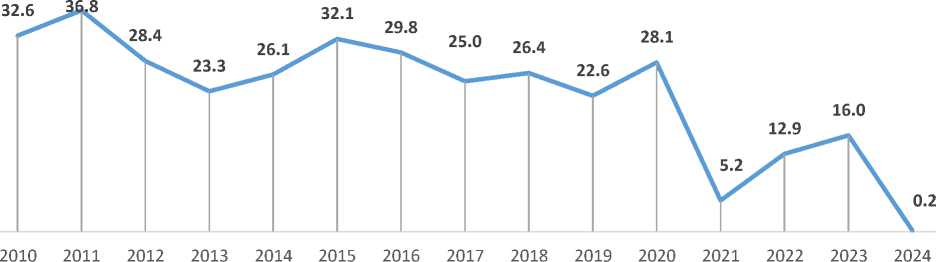
Fig. 2. Project funding volumes by the Norwegian Barents Secretariat*, 2010–2024, million kroner 19.
One of the earliest practical outcomes of the institutionalization of the Barents cooperation was the establishment of academic channels of interaction. Cooperation in education and science developed actively, involving student exchanges, the creation of language course programs, and the introduction of dual degree programs. For example, in April 1993, the Norwegian-Pomor Center began operating at the Pomor State University (PSU) in Arkhangelsk. It served as an information and coordination platform for students and lecturers, facilitating the implementation of academic mobility programs, joint research events, and the development of partnerships with
*The Norwegian non-governmental organization "Norwegian Barents Secretariat" (Barentssekretariatet IKS) was added to the list of "undesirable organizations" in Russia on February 25, 2026 (by decision of the Prosecutor General's Office of the Russian Federation; officially published/formalized via Ministry of Justice Order No. 293-r dated March 6, 2026). URL: ;
19 Compiled by the authors based on data: Statistics on Projects. URL: (accessed 13 December 2025).
Northern European universities20. Student and academic staff exchanges became the main forms of cooperation. Since 1995, the Barents Plus program was launched, aimed at developing student and academic staff exchanges between higher education institutions in the Russian and Norwegian parts of the Barents Region (Salo, Vasaliev, 2016). Approximately 80 exchanges of students and 15 exchanges of lecturers between Russia and the Nordic countries were financed annually (until the end of cooperation in 2022)21. The North2North program was also implemented between universities in north-western Russia and northern Norway. The formation of a panEuropean higher education area following the signing of the Bologna Declaration in 1999 was also reflected in the Barents cooperation agenda. In this context, the relevant BEAR working group initiated discussions on the creation of a coordinated research and educational space for the region, and this proposal received support from universities in the Barents Region (Goldin, 2019).
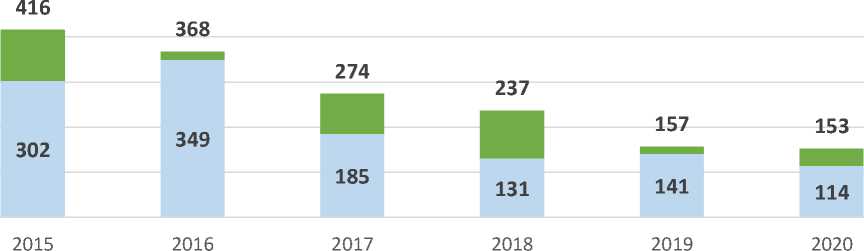
The scale of cooperation in the Barents Region at later stages can be considered using the example of the Northern (Arctic) Federal University (NArFU), the largest Russian educational institution in the BEAR, which was joined by PSU in 2010. Data on the number of students who participated in academic mobility activities are presented in Fig. 3. As can be seen, the overwhelming majority of the university’s students participating in academic exchange programs travelled to countries of the Barents Euro-Arctic Region.
■ Total Of which in BEAR countries
Fig. 3. Participation of NArFU students in academic mobility programs, 2015–2020, number of students22.
Academic collaboration between researchers from north-western Russia and the northern regions of Norway, Sweden, and Finland (Nasonova, 2013) played an important role in the Barents Euro-Arctic cooperation, resulting in a number of joint academic works on the history and culture of the region. One of the most significant outcomes of this collaboration was the seminal work “The Barents Region: A Transnational History of Subarctic Northern Europe”, published in 2015 (Elenius, 2015). The monograph was the result of sustained collective work by an international research team comprising 27 authors, including representatives from Russia, Norway, Finland and Sweden (Goldin, 2015).
Cooperation in the fields of science and higher education facilitated the formation of sustainable long-term ties between universities in the Barents Region, an important outcome of which was a series of large-scale joint research projects. In particular, in 2007, the University of Tromsø and the Pomor State University supported the Norwegian-Russian project “Neighbourly Asymmetry: Norway and Russia 1814–2014”, which involved leading researchers from both countries (Goldin, Zaikov, Nielsen, 2015; Goldin, Sokolova, 2022). The work analyzed the shared historical experience, forms of contacts, and cooperation in the North over two centuries. Significant academic achievements include the publication of a two-volume encyclopedia of the Barents Region, including 415 articles devoted to the historical, socio-cultural, economic, and political aspects of the BEAR’s development (Olsson M.-O., 2016a; Olsson M.-O., 2016b).
The financial contribution made by the countries of Northern Europe to the development of Russian higher education institutions became a significant element of cooperation. For a long time, the Secretariat of the Barents Euro-Arctic Region served as a key international partner of the Pomor State University. From 2000 to 2004, more than 70% of the funds obtained from international sources came from institutions and organizations of Nordic countries. PSU received 11.7 million rubles from the BEAR Secretariat for research projects23, accounting for approximately 35% of all funds the university raised from international institutions. This example demonstrates that educational and scientific cooperation within the BEAR framework was clearly practical and mutually beneficial, simultaneously contributing to the strengthening of humanitarian ties and the development of Russian science, as well as expanding the influence of Nordic partners in the Russian academic space.
Youth cooperation became one of the most actively promoted areas of collaboration in the Barents Euro-Arctic Region. Youth exchange programs, joint educational projects, summer schools, and cultural and sporting events facilitated the development of contacts between young people of the region. The activities of the Barents Regional Youth Council, established in 2004 and functioning primarily as a forum for discussion and a representative body, played a special role.
One of the Council’s goals was “to strengthen the Barents identity among the region’s young people by establishing contacts across cultural and geographical boundaries”24, reflecting a desire to create a symbolic space of community. In practice, this was achieved mainly through communication and expert collaboration, rather than through large-scale practical projects. Nevertheless, even in this format, youth cooperation served a specific purpose. Regular communication, participation in meetings, and involvement in the pan-European discussion space contributed to the expansion of the cultural and professional horizons of participants, the formation of sustainable cross-border contacts, and the reinforcement of a positive perception of the Nordic countries as an open and attractive space for self-fulfillment, stimulating educational and migration mobility. It is worth noting that the funding for youth cooperation within BEAR had an asymmetrical structure. The main contribution was provided by Norway: the Ministry of Foreign Affairs allocated more than 20 million kroner annually to the northern counties for cross-border projects (Averyanova, 2014).
An analysis of cultural, youth, and scientific-educational cooperation within the BEAR framework reveals the high intensity of humanitarian interactions. These forms of cooperation facilitated the establishment of sustainable cross-border contacts, the development of networking between sub-national and non-state actors, and the creation of a favorable environment for dialogue in the northern regions of Russia and Northern Europe.
Although the most intensive cooperation in the Barents Euro-Arctic Region took place in the socio-cultural, scientific, and educational spheres, interaction in other areas is also evident. The environmental dimension became one of the priority areas of Barents Euro-Arctic cooperation due to increasing environmental risks. Official documents, including the Kirkenes Declaration25, emphasize the need to restore areas affected by the operation of nuclear facilities. Particular attention was paid to the Russian part of the Barents Euro-Arctic Region, where, in the middle of the 20th century, a significant level of radioactive contamination accumulated as a result of atmospheric nuclear tests, the sinking of nuclear submarines, and the burial of reactors in the Barents Sea and near the Novaya Zemlya archipelago (Heininen, 2016).
A practical tool for environmental cooperation in the Barents Euro-Arctic Region was the identification and elimination of so-called environmental “hot spots”, defined as polluted industrial facilities and localized sources of environmental damage posing a threat to public health and ecosystems26. In 2003, a joint expert group presented a report on environmental problems in the Russian part of the Barents Region, identifying 42 “hot spots”. The implementation of clean-up measures was funded by the owners of the enterprises, federal and regional authorities in Russia,
Flera H. Sokolova, Elizaveta A. Trufanova. Barents Euro-Arctic Cooperation… and with additional support from a specialized subgroup on “hot spot” elimination27. As of 2020, 12 problematic sites had been completely removed from the list, 3 sites had been partially removed, while another 27 “hot spots” and 3 partial sites remained classified as environmentally unfavorable areas28. Overall, this format of interaction demonstrated the applied nature of the Barents cooperation and was limited to Russian territory. Work in this area was suspended in 2022.
Despite the significant natural resource potential of the Barents Euro-Arctic Region, economic cooperation never became its sustainable foundation. By the end of the 20th century, the focus of the participants gradually shifted from economic objectives to the “human dimension”, while cross-border business partnerships, which had been the subject of high expectations in the 1990s, remained difficult to implement (Elenius, 2015). One of the reasons for this, according to Northern European researchers, was the economic structure of the regions involved in the Barents cooperation: the predominance of large-scale industrial production and the service sector reduced the demand for institutions of interregional economic cooperation29. Large enterprises generally did not require intermediaries when establishing foreign economic relations, while the service sector was significantly more developed in Northern European countries than in Russian regions, further limiting the potential for cooperation. Russian researchers attribute the underdeveloped nature of economic cooperation in the region to trade and administrative barriers: a complex visa regime for businesses, inefficient customs procedures, and complicated import regulations, which objectively necessitated a transition to a more liberalized and preferential trade regime between the countries of the region (Plastinin, Siluanova, 2012). The implementation of large-scale investment projects was also limited. In fact, the only example was an attempt to develop the Shtokman field, in which the Norwegian company StatoilHydro (now Equinor) owned 24% of the shares in the joint venture; however, the project was never launched30. Consequently, as Y.F. Lukin notes, economic and political relations in the region were characterized more by competition and the pursuit of unilateral benefits than by sustainable partnership (Lukin, 2010).
Cross-border tourism occupied a special place within the framework of economic cooperation in the Barents Euro-Arctic Region, being regarded as one of the few practical areas of collaboration. Since the mid-2010s, there was an increase in tourist trips by Russian citizens to the northern European countries of the BEAR, while tourist flow from Norway, Sweden, and Finland to Russia, conversely, showed a downward trend (Tereshchenko, 2018). At the same time, the develop- ment of tourism links continued to hold significant potential for the region, contributing to the modernization of transport infrastructure, the expansion of cultural contacts between residents of the northern territories, and the attraction of additional investment.
Discussions on the visa regime as a means of facilitating cross-border contacts became a key element of tourism cooperation in the Barents Euro-Arctic Region. In practical terms, a number of steps were taken to liberalize travelling. In 2008, the Pomor visa was introduced, simplifying the visa application process for residents of the Arkhangelsk and Murmansk Oblasts; in 2012, a visa-free regime was established for residents of a 30-kilometer border zone, which led to an increase in cross-border mobility (Zaretskaya, 2016). At the same time, a political discussion on the issue of further liberalization of the visa regime developed. The idea of easing the visa regime was first raised in 2008 at a meeting of the Minister of Foreign Affairs of Norway, J.G. Støre, and the Governor of the Murmansk Oblast, Y. Evdokimov; later, in 2018, the Norwegian province of Finnmark, during its chairmanship of the Barents Regional Council, put forward an initiative to introduce a visa-free regime in the BEAR31. Taking into account the restrictions arising from the Schengen Agreement, a compromise option of a 72-hour visa-free stay within the region was pro-posed32. Despite active discussions, these initiatives did not lead to the establishment of a fully-fledged visa-free regime in the Barents Euro-Arctic Region.
The development of inter-municipal contacts and partnerships between towns and municipalities was an important addition to inter-state and inter-regional cooperation in the Barents Eu-ro-Arctic Region. Russian administrative units, together with Norwegian, Finnish, and Swedish regions, participated in project and dialogue-based initiatives aimed at strengthening practical ties, exchanging experiences, and developing regional infrastructure. Since 1993, the Arkhangelsk Oblast concluded 11 agreements with Northern European regions (8 with Norway, 2 with Finland, and 1 with Sweden)33, while the Murmansk Oblast concluded 19 agreements (13 with Norway, 4 with Finland, and 2 with Sweden)34. Regional councils and working groups helped to coordinate joint projects and build trust at the local government level, while individual localities participated in partnership programs with cities abroad, opening up further opportunities for cultural, educational and social exchanges (Boldyreva, Boldyrev, Cherednikova, 2023). Activities at the municipal level complemented the formal framework of the Barents cooperation and reflected active international regional interaction that went beyond the scope of intergovernmental agreements. Initiatives were mainly focused on developing cultural and social ties, as well as on exchanging best
Flera H. Sokolova, Elizaveta A. Trufanova. Barents Euro-Arctic Cooperation… practices in various fields. In practice, active cooperation was maintained primarily in regional capitals (Arkhangelsk, Murmansk, etc.), while in other municipalities it was limited to establishing contacts and exchanging information, and in a number of areas it was suspended for financial rea-sons35. Thus, within the Russian regions participating in the Barents cooperation, the development of partnership and inter-municipal ties was uneven, reflecting differences in financial capacity, administrative resources and the degree of involvement of individual municipalities in international cooperation.
The Barents Euro-Arctic cooperation was characterized by a predominantly humanitarian dimension, while economic interaction was limited and fragmented. The most sustainable and institutionalized forms of interaction emerged in the areas of culture, education, science, and youth exchanges, where cross-border projects facilitated the formation of close horizontal ties between the regions and populations of the Barents Region countries. For Russia, participation in the Barents cooperation during the 1990s and 2000s had significant social and economic effects, primarily at the regional level. The Arkhangelsk Oblast and other north-western regions gained access to educational programs, academic exchanges, grant funding, and infrastructure initiatives, which contributed to the development of human capital, increased youth mobility, and the regions’ inclusion in international networks. For example, in 2010-2015, under the Kolarctic36 cross-border cooperation program, project applications from the Arkhangelsk Oblast received funding totalling over 19 million euros, of which approximately 700,000 euros were allocated to the Northern (Arctic) Federal University (Kudryashova, Zarubina, 2018). Overall, the Barents Euro-Arctic cooperation was serving a compensatory and stabilizing function for Russia’s northern regions for several decades, ensuring an influx of financial and expert resources and promoting the preservation of scientific, educational, and cultural potential. It supported the integration of Russian territories into international humanitarian and academic networks, particularly during periods when federal support declined.
A significant contribution was also made to improving the environmental situation, including through the implementation of projects to eliminate environmental “hot spots” and reduce transboundary environmental risks. Inter-municipal links and town-twinning arrangements played a considerable role in the formation of a dense network of interactions, enabling the Barents cooperation framework to be implemented into specific cultural, educational, and social initiatives at the local community level. Taken together, the mechanisms of Barents cooperation facilitated the development of the socio-cultural and scientific-educational spheres in Russia’s northern regions during the post-Soviet period, helped to build trust among residents of border areas, and strengthened the stability and predictability of cooperation in Northern Europe.
At the same time, an analysis of cooperation practices within the BEAR reveals its dual nature. Alongside the obvious mutually beneficial outcomes, a number of initiatives served as “soft power” instruments, primarily on the part of Northern European states (Sokolova, Trufanova, 2025). The asymmetry of financial and institutional resources, Norway’s dominant role in shaping the agenda, and the priority given to the “human dimension” of cooperation have contributed to the formation of a favorable image of Northern Europe and the consolidation of normative and value-based orientations that did not always coincide with the interests of the Russian side. As a result, not all forms of interaction led to sustainable mutually beneficial effects, and some projects took the form of unilateral influence disguised as depoliticized regional cooperation.
It is worth noting the asymmetrical outbound mobility of students in the Barents Region (Fig. 3). Education (more specifically, academic exchanges and the provision of educational opportunities to international students) is an important mechanism for exercising “soft power”. Students participating in exchange programs in another country “will gradually become familiar with the scientific and cultural achievements of the host country, along with learning the language, and will return with acquired knowledge and personal relationships” (Manukyan, 2023). They can become transmitters of the culture and values of the country where they studied. G. Hønneland also highlighted this potential within the BEAR, calling these students — young Russians who speak Northern European languages and are familiar with Western business practices — the “Barents generation” (Hønneland, 1998). It is noteworthy that the author includes only residents of Russia in this “generation”, which points to a direct influence from Northern European states, rather than the other way round.
It is well known that “soft power” is aimed primarily at strengthening influence over another state by creating an attractive image of one’s own culture, values, and political ideas to advance one’s national interests. At the same time, it fosters in the population of the target country a sense of inconsistency between their own country and the proposed values. The extent to which Norway has succeeded in influencing the public consciousness of residents of Russia’s northern regions, particularly young people and intellectual workers, is demonstrated by a series of studies by a professor at NArFU (a professor at the Pomor State University in the 1990s and early 2000s), based on an analysis of media publications (Repnevskiy, 2010; Repnevskiy, 2013). The author rightly asserts that “during the last one and a half decades of the 20th century and the beginning of this century... due to the active efforts of scientists and journalists, numerous personal, business, and friendly contacts... a sense of community and involvement between the two countries in everything happening in the Arctic has emerged” (Repnevsky, 2010). The author writes that residents of Russia’s regions began to feel “admiration for the fact that Norway has been ensuring the well-being of its citizens for such a long historical period” (Repnevskiy, 2010), and that in the regional public consciousness, Norway was perceived as “a democratic country that helps to develop democracy for all those who want it abroad” (Repnevskiy, 2013). However, the author himself rightly acknowledges the idealistic nature of this image (Repnevskiy, 2013).
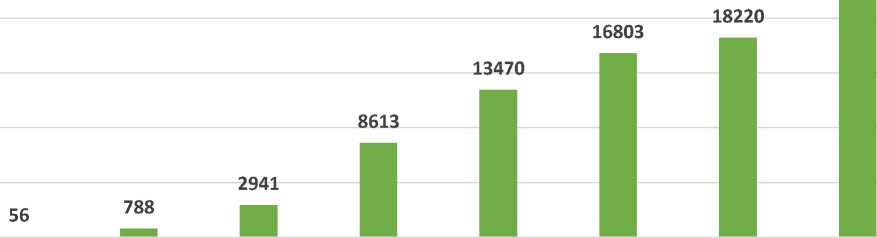
Nevertheless, the effects of “soft power” were not one-sided. The attractive image of a “welfare society” attracted Russians and resulted in an increase in the number of migrants from Russia to Norway (Fig. 4). The rise in the number of people of Russian origin in the countries of Northern Europe contributed to the growth and institutionalization of Russian diasporas. The expansion of Russian-speaking communities, the implementation of cultural initiatives, educational projects, and the development of professional networks enabled Russian citizens to exert a certain influence on the socio-cultural and scientific-educational spheres of Northern Europe.
1990 1995 2000 2005 2010 2015 2020 2024
Fig. 4. Number of migrants from Russia to Norway, 1990–2024, people37
Overall, cooperation within the Barents Region, while contributing to the formation of a positive image of the countries of Northern Europe, has, to a greater extent, stimulated the outflow of human capital from Russia rather than facilitated its professional fulfilment or the establishment of a sustainable channel for “soft power” influence on Russia.
Furthermore, as Russians lived in Northern European countries for a long period of time, they began to perceive the values of their host communities more realistically and projected their vision of life in these countries onto Russia. Above all, their hopes for full integration into the professional spheres of these countries in the context of the Bologna Process remained unfulfilled. For example, the Russian-speaking community in Norway in the mid-2000s was characterized by a high level of education — 47% of migrants had higher education; however, only a small proportion found employment in their field of specialization (Bagreeva, 2014). The majority were employed in the service sector, the hotel and restaurant industry, and the social sector, often starting their careers in low-skilled positions or remaining outside the labor market for long periods (Bagreeva, 2014).
Gradually, a more realistic view of Barents Euro-Arctic cooperation and the true intentions of its founders was formed under the influence of the practical military activities of the Nordic countries. As noted earlier, Norway was one of the founding members of NATO and continued to rely on leading Atlantic powers in its security policy. Already in the early 1990s, Sweden and Finland were consistently integrated into Euro-Atlantic security structures. In 1992, they became observers in the North Atlantic Cooperation Council, and in 1994, they joined NATO’s Partnership for Peace program, thereby opening the way to regular consultations and deeper military cooperation with the Alliance. Subsequently, both countries participated in operations and missions under the auspices of NATO, as well as in the Response Forces, which contributed to increasing their interoperability with NATO. In addition to institutional rapprochement with NATO, the Nordic countries actively developed practical military-political cooperation in the 1990s and 2000s, which was reflected in regular participation in joint exercises, increased interoperability, and the purchase of American military-industrial products38. Sweden, Finland, and Norway consistently participated in multinational exercises under the auspices of NATO and adapted their defense doctrines to the logic of collective security, demonstrating the priority of the Euro-Atlantic vector in the sphere of “hard” security (Friis, Tamnes, 2024). Against this backdrop, the Barents Euro-Arctic cooperation retained a distinctly humanitarian character and was deliberately taken beyond the military agenda.
In general, the Barents Euro-Arctic cooperation was characterized by ambiguous results for both Russia and the countries that initiated the project.
Conclusion
In summary, it should be noted that all participating countries were interested in the development of the Barents Euro-Arctic cooperation, but their common interest was limited to a single objective: to reduce international tensions in the region. As part of its neoliberal policy, Russia was committed to comprehensive integration into the European space on equal terms and to using this cooperation as a means of promoting the socio-economic development of the country and its northern regions by gaining access to the latest technologies. Meanwhile, the countries of Northern Europe, and above all Norway, as the initiator of the regional association, were interested in Russia’s resource base, in strengthening their political influence in the region and over Russia, and in ensuring their own security through both hard and soft power. Consequently, issues relating to military cooperation were initially removed from the BEAR agenda, and cooperation was effectively limited to the humanitarian sphere, specifically matters of culture, ecology, science, education and youth.
When assessing the results of this cooperation, it should be acknowledged that the region received a stimulus for international multilateral and bilateral cooperation in the North and the Arctic, in which, along with states, sub-national and non-state actors in international relations were involved. International tension noticeably decreased. For almost 25 years, the North and the Arctic were associated with the territory of “dialogue and cooperation”. The development of
Flera H. Sokolova, Elizaveta A. Trufanova. Barents Euro-Arctic Cooperation… cross-border cooperation provided a certain impetus to the development of the northern territories of the organization’s member states through progress in the socio-cultural and scientific-educational spheres. At the level of regional communities, business and interpersonal contacts expanded, mutual understanding, interpenetration of cultures, and trust increased.
However, Russia’s expectations for the development of economic cooperation and a definitive resolution to issues of military security remained unfulfilled. As a recipient of financial resources, Russia was forced to accept the rules of the game that were imposed upon it. For their part, the countries of Northern Europe, above all Norway, were able to exert a certain influence through “soft power” on the public consciousness of the inhabitants of Russia’s northern regions, particularly among young people and those working in the cultural, scientific and educational sectors. The Nordic countries, mainly Norway, were often perceived as “welfare states”. However, the Northern European states were unable to fully utilize “soft power” mechanisms to establish a stable base of supporters within Russia capable of actively promoting their values or political agendas. On the contrary, the opposite trend was observed: Russian citizens who migrated to Norway, Finland and Sweden, as well as Russian cultural and professional communities participating in cross-border projects, influenced the humanitarian agenda of Northern European countries, from the development of Russian-language cultural initiatives to the expansion of professional and educational exchanges.
Making a realistic assessment of the impact of this cooperation on Russia’s national interests, a number of points should be highlighted. The problem of ensuring Russia’s military security in the region was set aside only temporarily, until NATO’s eastward expansion became evident. In the context of weakening connections between the federal center and its constituent entities, there were risks of growing separatist sentiments, especially among those ethnic groups that had relatives in the countries of Northern Europe (Sami, Karelians, Finns), as well as supporters of the common identity shared by Russian and Norwegian Pomors. These sentiments could potentially be fueled by a part of the regional intellectual community, which had a very positive and at the same time often idealistic perception of Northern European values. Furthermore, Russia mistakenly assumed that the Cold War ended by mutual consent, while Western countries initially believed that it had lost the war. Consequently, Russia’s prestige and political influence in the world and the region declined significantly, which was further exacerbated by the country’s financial and economic weakness.
