
Bone Carving Among Early Iron Age Nomads of Eastern Kazakhstan: The Case of Berel
Журнал: Archaeology, Ethnology & Anthropology of Eurasia @journal-aeae-en
Рубрика: The metal ages and medieval period
Статья в выпуске: 3 т.53, 2025 года.
Бесплатный доступ
This study addresses carved bone artifacts crafted by Early Iron Age nomads of Eastern Kazakhstan as compared to those from more easterly areas of the Altai-Sayan Highland. A large sample of carved horn details of harness and bridle from a horse burial in mound 36 at the Berel cemetery, Altai, is described with a view to revealing the peculiarities of this craft among the Early Iron Age nomads of Kazakhstan. A comprehensive analysis (structural, morphological, and technological) suggests that all the artifacts were manufactured using two types of horn plate as blanks. The collection evidences a variety of techniques for processing antlers. Details of bridle and harness, made of various materials, attest to mobility, rationality, and cyclicity in Early Iron Age nomadic societies of Eurasia.
Короткий адрес: https://sciup.org/145147550
IDS: 145147550 | DOI: 10.17746/1563-0110.2025.53.3.131-139
Текст научной статьи Bone Carving Among Early Iron Age Nomads of Eastern Kazakhstan: The Case of Berel
Specific aspects of bone carving depend on the methods of economy, which also applies to multivariant nomadism with significant local differences (Tairov, 2007: 64–70; Gutsalov, 2011: 12). Carved items of horn were typical objects of Early Iron Age nomadic cultures (Sarmatian, Tasmola, Pazyryk) in the mountain-steppe belt of Eurasia (Kadyrbaev, 1966: 324, 325; Smirnov, 1976: 74–89; Grach, 1980: 77–80, 178, 179). The emergence of graves with horse burials in the early 1st millennium BC was one of the main features of the transition to nomadism (Bokovenko, 1994, 2011). The set of horse equipment from those burials was the most dynamically evolving category of material culture of the Early Iron Age (Bokovenko, 1981, 1986; Marsadolov, 1998; Gorbunova, 2001;
Valchak, 2009: 9; Besetaev, 2014: 17–18; Shulga, 2015: 9). Such items reflect one of the main features of nomadic way of life—mobility (Masanov, 1995: 112), which is also revealed in specific aspects of bone carving. Details of horse harness play a special role in this context. First, they clearly show local features (Gorbunova, 2001: 194). Second, treatment of raw horn materials is most fully manifested precisely in manufacturing the elements of horse harness in the Early Iron Age (Borodovsky, 2007: 96, fig. 74, 75). Third, the complete and consistent technological process of such items provides wide opportunities for description of local features of bone carving in nomadic societies.
Another trait of nomadic way of life is dispersion of production (Masanov, 1995: 115, 122). This precludes accumulation of artifacts and blanks of bone carving
in specific places (camps, settlements, or necropolises). Funerary offerings from nomadic burials do not always provide information about the entire production cycle of bone carving. However, there is one exception in Eastern Kazakhstan, a part of the vast Altai-Sayan Highland—a set of numerous horn details of horse harness from mound 36 at the Berel necropolis (Samashev, Borodovsky, 2004; Samashev, 2011: 287, 288). For several reasons, it is the most important source among the carved horn details of horse harness ever discovered in burial complexes of the Early Iron Age nomads in Eurasia. First, by the mid 1st millennium BC, the process of development of the nomadic economic and cultural type in this region had been completed (Veinstein, 1973; Veinstein, Kryukov, 1984), and the Berel necropolis belongs precisely to that period (Evraziya..., 2005: 75; Samashev, 2011: 287, 288). Second, nomadic tradition in different regions of Eurasia has varying degrees of self-sufficiency (Samashev, 2017a: 17), which is fully manifested in ancient bone carving. Third, as compared to the steppe regions of Kazakhstan, the southwestern part of the Altai Mountains shows peculiarity of the nomadic way of life (Ibid.). All these factors make the set of horn details of horse harness from Berel mound 36 particularly representative and informative.
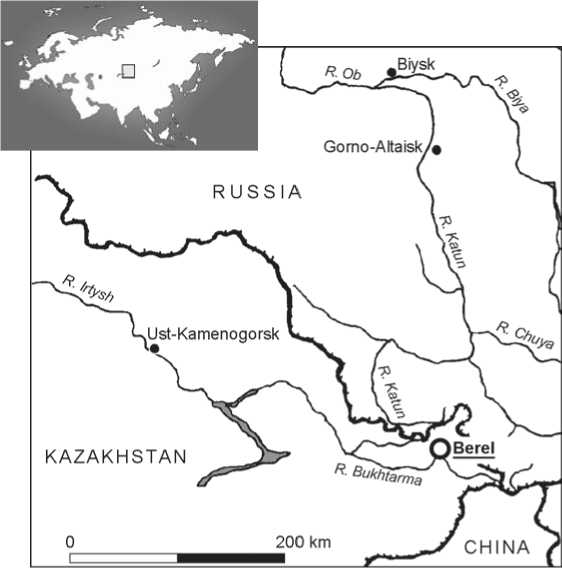
Fig. 1 . Location of the Berel necropolis.
Material and methods
The material for studying bone carving in nomadic societies has become the collection of horn details of horse bridle and harness (64 spec.) from Berel mound 36 (Fig. 1), which was explored by Z.S. Samashev in 2002–2004 (Samashev, Borodovsky, 2004). Almost all of the items have preserved the obvious remnants of natural structure of original horn raw material in the form of distinctive curvature, fragments of superficial keratinized canals, and combination of bone tissue and spongy substance. The methodological basis for studying horn items was structural and technological analysis, which made it possible to reveal the relationship between the natural features of raw material and the technology of manufacturing artifacts from organic material (solid horn). This method elucidates the influence of the original form of raw material on the morphology of blanks, reveals the operation sequence from the selection of material to finished items, and identifies specific features of some local and historical technological traditions. A constructive-morphological approach (Shchapova, 2000: 60, 67), in shaping the external appearance of the item, implies active use of the advantages given by the natural form of the original horn blank obtained from a certain part of the antler (tines, branches, forks, beams, and burrs). Technical-morphological analysis (Pankovsky, 2015: 277) focuses primarily on the technique of processing raw materials, which in their finished form retained their natural shape affecting the final morphology of the item.
A combination of these approaches has made it possible to reveal that almost all horn items from Berel mound 36 (Fig. 2)* were made from one-piece horn plates (Fig. 3; see Table ) of various sizes. Such blanks were obtained by cutting the beam of a solid deer (elk) antler and its forks. In all studied items, the dissection of antler beam and its forks appeared quite consistent (Fig. 3). Items made from tines, beams, and burrs of solid horn were absent from the details of horse harness. This feature clearly distinguishes Berel mound 36 from other Pazyryk burial complexes where a wide range of carved bone blanks was found.
*All photos and drawings are by A.P. Borodovsky.
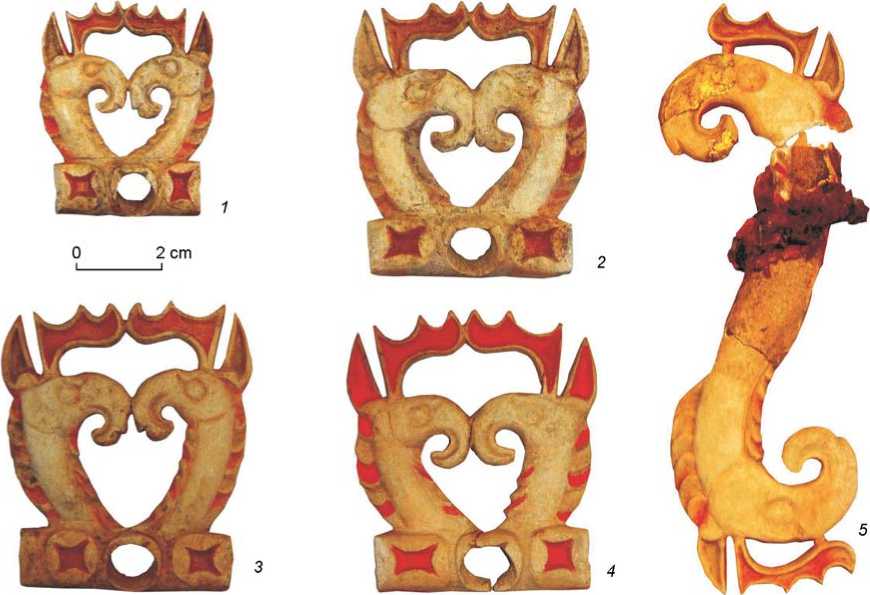
Fig. 2 . Horn details of horse bridle and harness.
Noteworthy also is the use of one-piece plates obtained from antler forks and used in manufacturing some details of horse harness and bridle (B-36/15, 33, 39, 45, 46, 66), which makes the funerary offerings from Berel mound 36 look similar to those from the 2nd Pazyryk mound. An example is the forehead plaque with a carved image of horned predator devouring two waterfowl (Rudenko, 1948: Pl. III), which was also made of a one-piece plate cut from an antler fork.
Use-wear analysis of the collection of horn details of horse harness from Berel mound 36 has provided ambiguous results. According to E.Y. Girya, there were no traces of marking on horn items, while A.N. Usachuk identified them (Samashev, 2017b: 292, 293). However, it should be emphasized that preliminary marking before manufacturing various elements (spikes, holes) in the Early Iron Age bone carving were many times observed on mass-produced items (arrowheads, belt plaques, buckles, tubular beads, and combs) (Borodovsky, 1997: Pl. 31, 1–3 ; 52, 5 ; 53, 1 ). Marking indicates not only a plan of treatment, but also some kind of “blueprint” for the future product as reflection of a carrier of certain technological information before starting the process of item manufacture.
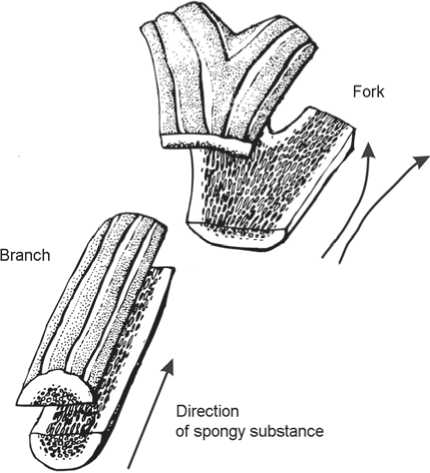
Fig. 3 . Horn plates for parts of horse bridle and harness.
Notably, in manufacturing stock-produced articles, templates are needed for replication. Obvious similarity between a number of horn plaques (B-36/21, 23, 28, 30, 38, 40, 55, 57, 61, 62) with paired images of griffins from Berel mound 36 suggests the use of
Elements of bridle and harness from burial mound 36 at the Berel cemetery
|
Name of the item |
Numbers |
Amount |
Blank |
|
Plaque with griffin images |
B-36/17–19, 21, 23, 25, 26, 28, 30, 32, 34, 35, 47–49, 51, 55, 57, 61, 62, 67 |
21 |
One-piece horn plate (wall of antler branch) |
|
Y-plate (arched pendant) |
B-36/15, 39, 46, 66 |
4 |
One-piece horn plate (antler fork) |
|
Rounded horn plaque (round browband) |
B-36/33 |
1 |
" |
|
Large teardrop-shaped plaque (ring-shaped poitrail) |
B-36/45 |
1 |
" |
|
Elongated teardrop-shaped plaque (nose pendant) |
B-36/41 |
1 |
One-piece horn plate |
|
Cheek-pieces |
B-36/54, 56 |
2 |
One-piece horn plate (wall of antler branch) |
|
Bone plate |
B-36/3, 4, 43 |
3 |
One-piece horn plate |
|
Narrow plate |
B-36/1, 2, 10 |
3 |
" |
|
Oblong plate |
B-36/36, 37, 40, 44, 52, 60, 63 |
7 |
" |
|
Strip with ornamentation in relief |
B-36/9, 13, 14, 16, 20, 22, 24, 27, 29, 31, 58, 64, 65 |
13 |
" |
|
Bone clasp with a hole in the middle |
B-36/5 |
1 |
" |
|
Bone rim of saddle pad |
B-36/6 |
1 |
" |
|
Fragment of a bone item |
B-36/7 |
1 |
" |
|
Girth buckle |
B-36/8 |
1 |
" |
|
Front fragment of saddle rim |
B-36/11 |
1 |
" |
|
Front right fragment of saddle rim |
B-36/12 |
1 |
" |
|
Small rounded detail |
B-36/59 |
1 |
" |
|
Small detail with a hole |
B-36/68 |
1 |
" |
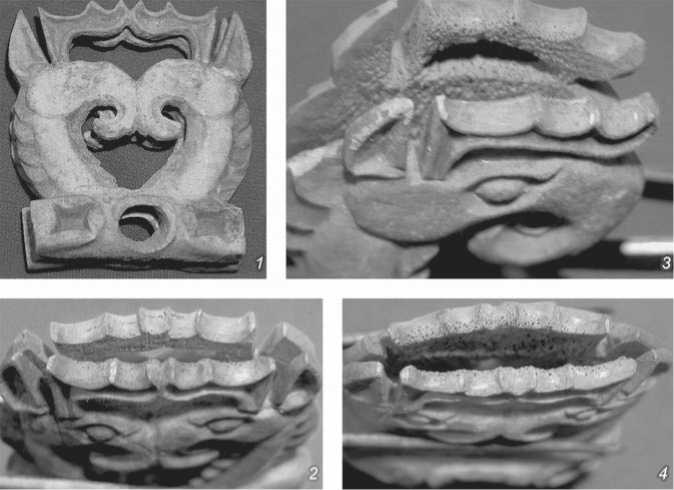
Fig. 4 . Paired horn plates with images of griffins.
some initial sample as a basis for marking. An indirect confirmation is the mirror-like joining of a number of finished plaques (Fig. 4). Such correspondence was also typical of plate cheek-pieces with griffin images (see Fig. 2, 5; 5). This evidence suggests that some finished product served as initial sample (Shchapova, 2000: 113). Such item was a carrier of information, and some population, personified by carver craftsmen, knew its methods of reproduction (Ibid.: 114). Moreover, the sample itself (griffin image) was one of the most vivid symbols of the Early Iron Age nomadism and had clearly expressed local features.
The absence of traces of raw material cutting on the horn items from Berel can be explained by their multiple processing, manifested not only by thoroughness in executing all decorative and contour elements on the items, but also by the application of various holes on their ornamented surfaces (Fig. 6, 1). This production algorithm is especially clearly revealed in cutting inclined holes
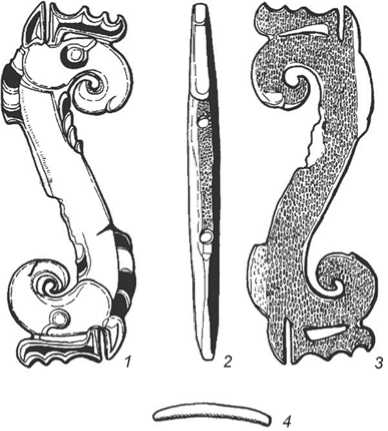
Fig. 5 . Trace-drawing of a horn cheek-piece.
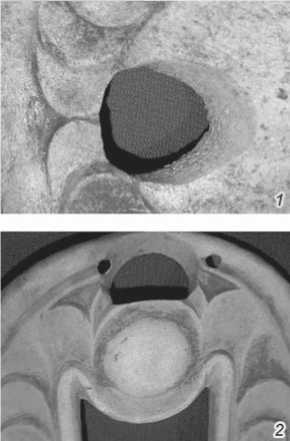
Fig. 6 . Holes cut in ornamentation.
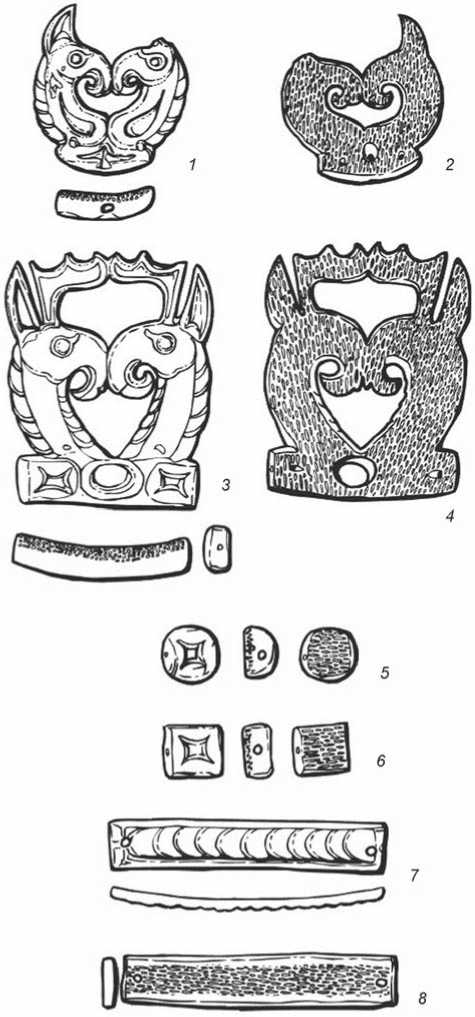
Fig. 7 . Trace-drawings of parts of horse bridle and harness.
for inserts in the bases of horn plaques. The base strips were decorated with three rounded bulges with crossshaped depressions (see Fig. 2, 1–4). Traces of cutting off the décor for making the hole are clearly visible in the central part. Along with these items, the collection contains several similar decorated strips where such an ornamental element was not cut off (Fig. 7, 5, 6; 8, 3, 4). All this clearly shows the sequence of creating decorative elements and their subsequent cutting off for making fastening holes. No less important is the fact that the strip with three bulges and cross-shaped cutouts thereon appears both as part of the item (B-36/18, 32, 38) and as individual similar elements (B-36/59, 68) (see Fig. 7, 3–6; 8).
Technological features of executing similar decorative elements and images in the extensive series of carved bone items also reflect the level of professionalism of their creators. The suggestion made by Girya and Usachuk that there were several craftsmen working on the horse harness set from
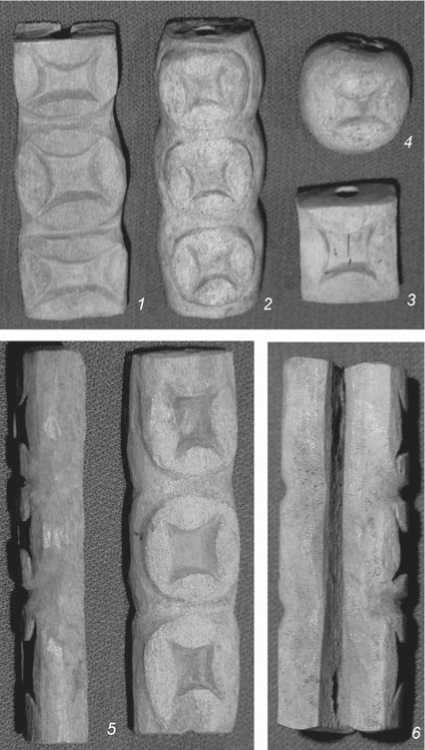
Fig. 8 . Ornamented horn strips.
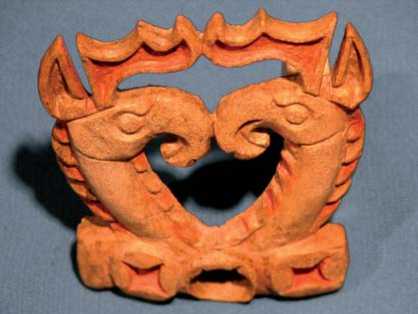
Fig. 9 . Multidirectional trimming of plumage on the inner side of the necks of paired griffins depicted on the plaques of horse bridle and harness.
Berel mound 36 (see (Samashev, 2017b: 295)) can be illustrated not only by obvious differences in carving the general outline of the plaques, but also by the distinctive execution of some elements of griffin images (eyes, ears, cheekbones, beaks, horns, and neck plumage). Such features appear most clearly in rendering the plumage on the inner part of griffins’ necks. For example, in some items (B-36/17, 19, 26, 35, 47, 49, 61, 67) it has oppositely aligned direction (see Fig. 2, 1; 7, 3), while in others (B-36/28, 30) opposite orientation to each other (see Fig. 2, 4) or consistently directed orientation (B-36/21, 23, 57, 62) (see Fig. 2, 2, 3; 9). These features can be explained not only by the errors of the carvers, but also by the presence of several craftsmen. This might have been a reflection of work carried out by different artisans on ready-made templates on standard blanks of plaques with griffin images while finishing their decoration.
Discussion
A closer look at the set of horn details of horse harness from Berel mound 36, using material science, technical-morphological, and use-wear analysis, shows that it reflects the peculiarity of bone carving among Early Iron Age nomads in the Altai-Sayan. Its distinctive features include the following. First, finished products in the funerary offerings of burial sites are significantly dispersed*. Second, specific carved bone items quickly spread over large distances and marked the presence or influence of nomadic groups. Examples include parts of weaponry (arrowheads, bow overlays, horse-bridle fittings), as well as individual types of product made from specific blanks, such as burrs of shed antlers of animals with solid antlers (red deer, elk). In turn, items made from the bone and horn of migratory animals (roe deer, saiga, black-tailed gazelle), appearing in the areas adjacent to steppe regions, by no means always serve as a sign of mobile bone-carving tradition, since this material could have been be processed by local craftsmen. Third, semi-finished items and blanks are almost completely absent from the carved bone artifacts discovered in burials of nomads. The exceptions are isolated burial sites of the Early Iron Age (Berel, mound 36) (Samashev, Borodovsky, 2004) and Middle Ages (Kara-Koba-1) (Borodovsky, Samashev, Sirazheva, 2017) in the Kazakh Altai. This region is geographically, culturally, and historically more close to the Altai-Sayan Highland in the east rather than steppe regions of Kazakhstan in the west.
Different levels of production skills, which were observed after use-wear analysis of the horn details of horse harness from Berel mound 36, resulting from the work of several craftsmen (Samashev, 2017b: 295), may reflect another feature of bone carving— cooperation for the purpose of the cohesive integrity of the production process in nomadic societies (Masanov, 1995: 126). In the set of horse harness from Berel mound 36, this feature is additionally confirmed by the coloring and metal (tin, gold) coating of the items (Borodovsky, 2014, 2016; Samashev, 2017b). Such decoration was another stage of work, yet not directly related to bone carving.
Generally, carved bone parts of bridle and harness details (browband, poitrail, dispensers) from Berel mound 36 were made of one-piece horn plates obtained from antler forks. In the Early Iron Age, such blanks were also used for manufacturing wide belt plaques (Borodovsky, 2007: 119, fig. 102; p. 139, fig. 121). This emphasizes the natural connection and complementarity of individual parts of horse equipment (plaques, overlays, tubular beads, buckles) and belt fittings (Shulga, 2003: 82, 83). The technological versatility of original blanks in bone carving clearly reflects the principle of optimality typical of nomadism (Gutsalov, 2011: 12; Bokovenko, 2024: 47).
There is a marked similarity in the compositional features of the Berel horn plaques with images of griffins and wooden bridle decorations from the Pazyryk burials on the Ukok plateau (Ak-Alakha-1, -3, -5, Kuturguntas, Verkh-Kaldzhin) (Polosmak, 1994: Fig. 55, 58; 2001: Fig. 25–28, 56, 58, 60, 65, 82). Such similarity can be interpreted not only as close interaction between the bone-carving and wood-working industries in the Pazyryk period, but also as an integrative feature of various types of craftsmanship, which was quite typical of nomadic societies (Masanov, 1995: 126, 130).
Another important feature of nomadism is cyclicity (Bokovenko, 2024: 40). It occurs, among other things, in the Early Pazyryk burial complexes with burials of horses in the Altai Mountains, in the form of archaic harness (Shulga, 2015: 245, fig. 16). Usually, this feature is interpreted as a chronological paradox (Chlenova, Kubarev, 1990: 53, 54) caused by territorial isolation. However, for nomadic societies, this factor was relative, since with this type of economy, dispersion was always combined with integration (Masanov, 1995: 115, 122, 130), which was typical not only of social aspects, but also of the production process (Ibid.: 115, 122, 126, 130).
The archaic appearance of certain elements of material culture in the form of bone carving could have been caused by cyclic processes (Bokovenko, 2024: 41, 47, 48). In this case, one and the same type of optimal blank was reproduced over a fairly long period of time. This is especially clearly demonstrated in cheek-pieces made from one-piece horn plates (see Fig. 3, 5 ). This type of blank for rod-shaped cheek-pieces had been widely used in vast steppe expanses of Eurasia since the Early Scythian period. The nomadic mode of production was based on rationality (Masanov, 1995: 120), which could not but be reflected in bone carving, replicating over time the optimal technology once created.
Another important feature of ancient bone carving among the nomads was marginality of processes involving concentration of cultural tradition (Ibid.: 130). In this context, it is no coincidence that the set of bone-carving items from Berel mound 36 demonstrates the highest concentration of carved bone artifacts in a Pazyryk grave with the accompanying horse burial. In other Pazyryk burial complexes of the Central Altai, both ordinary (Borotal-1, Baragash, Ala-Gail-3, Barangol-2) and elite (Pazyryk, Bashadar, Tuekta, Shibe, Katanda), such ornaments are quite rare.
In the context of identifying the local peculiarity of bone-carving in nomadic societies of the second half of the 1st millennium BC, the location of the Berel cemetery can be described as a frontier on the border of mountain and steppe zones. In the Early Iron Age, a special form of economy with limited seasonal nomadism in the intermountain basins emerged in this region (Samashev, 2017a: 14). This way of life could not but influence specific aspects of bone carving, revealed by the evidence from the Berel cemetery.
Conclusions
The Berel set of horse equipment items is extremely important for zoning the specific features of bone carving among Early Iron Age nomads in the presentday Kazakhstan. A number of unique local bonecarving industries emerged in the Scythian period in vast expanses from the Aral Sea region to the Altai Mountains. The evidence from the Berel necropolis, located in Eastern Kazakhstan, indicates a close connection of ancient bone carving with the Altai-Sayan Highland and the Upper Ob River basin. The main features of nomadism—dynamism, dispersion, optimality, self-sufficiency, rationality, and cyclicity—are fully manifested in the set of artifacts from the grave with the accompanying horse burial in Berel mound 36. Such features are clearly associated with the mountain summer cattle-breeding. This specifity of nomadic economy provided bone carving with clear advantages in access to mass sources of raw materials (solid horn), relative stationarity of production, and continuity in specialization of craftsmen. Notably, the problem of originality of bone carving among Early Iron Age nomads is much broader, and requires identification and clarification of historical and territorial peculiarity. This concerns the Scythians, Sarmatians, Saka people, Pazyryk people, and the multicultural population of the Scythian period in present-day Tuva, as well as inhabitants of the adjacent vast regions with whom various groups of nomads came into contact.
Acknowledgment
The author is grateful to Z.S. Samashev and B.A. Sirazheva for the opportunity to repeatedly study the collection of horn items from mound 36 of the Berel necropolis.
