
«Caches» in Mammoth Skulls at Sites of the Kostenki-Avdeyevo Culture (Zaraysk and Kostenki 1 layer I)
Журнал: Archaeology, Ethnology & Anthropology of Eurasia @journal-aeae-en
Рубрика: Paleoenvironment, the stone age
Статья в выпуске: 3 т.53, 2025 года.
Бесплатный доступ
We analyze the archaeological evidence of the deliberate placement of valuables («caches») in mammoth skulls at sites of the Eastern Gravettian Kostenki-Avdeyevo culture (Zaraysk A, E, F, and Kostenki 1 layer I). Six such finds are examined, specifically their spatial arrangement, stratigraphic context, and composition. Special attention is paid to the connection of «caches» with living structures (semi-subterranean dwellings) and ritual complexes, as evidenced by the presence of ocher, specific placement of artifacts, etc. A classification of «caches» is suggested: lost (accidentally left), returnable (intended for subsequent retrieval), and irretrievable (ritual sacrifices). The composition of such complexes is diverse. A «special» cache at Zaraysk E contained 24 artifacts including Kostenki knives, placed in the alveolus of a mammoth skull; at Kostenki 1, a spatula made of a rib with a figured top had been hidden in the skull. Notably, the tradition of using mammoth skulls for storing valuables has been traced over a long period of time at sites of the Upper Paleolithic Kostenki-Avdeyevo archaeological culture belonging to the Eastern Gravettian. It was practiced on the Russian Plain even after the LGM at sites of the Anosovo-Mezin type, representing another cultural tradition. Our findings indicate a complex interaction of utilitarian and symbolic practices among ancient hunters, expanding our knowledge of their worldview.
Короткий адрес: https://sciup.org/145147541
IDS: 145147541 | DOI: 10.17746/1563-0110.2025.53.3.023-035
Текст научной статьи «Caches» in Mammoth Skulls at Sites of the Kostenki-Avdeyevo Culture (Zaraysk and Kostenki 1 layer I)
Hoarding is an ancient stereotype of human behavior. In this article, we analyze “caches” inside mammoth skulls that were used as constructive elements in settlements of the Eastern Gravettian Kostenki-Avdeyevo culture. This practice was much less widespread than utilization of skulls in this capacity. However, it existed for a long time. We found six “caches” in mammoth skulls at the sites of Zaraysk and Kostenki 1 layer I (hereinafter (I)). We will hardly ever know the reason why those “caches” originated: either their owners wanted to hide valuables from foreign eyes or merely to avoid the risk of losing them, or again certain ritual beliefs were involved. These two spheres of life appear to be largely inseparable. The term “non-utilitarian items”, therefore, is a convention, and can have various meanings.
A joke goes that whenever an archaeologist finds anything for which no traditional explanation relating to the utilitarian domain is available, s/he
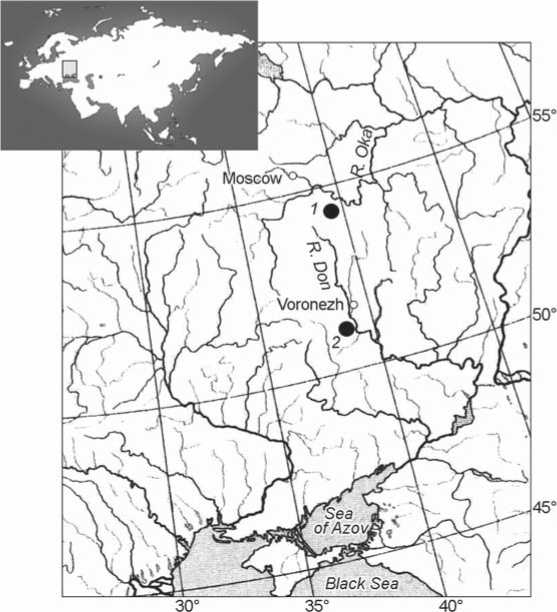
Fig. 1. Location of the Zaraysk ( 1 ) and Kostenki 1 ( 2 ) sites.
attributes the find to the ritual domain. In some cases, such attribution is quite justified though requires an evidence base. We can talk about a unique object or a feature of cultural layer. This can be an object or a group of objects deliberately placed in a certain context or creating such a context. The context can be whether artificial (for instance, a pit or an accumulation of fauna remains) or natural (a frost crack, a washed-out cavity with intentionally placed items, etc.).
There are a lot of artifacts, found at sites of the Kostenki-Avdeyevo culture (and at Eastern Gravettian sites in general), that can hardly be interpreted in the context of the hunters’ utilitarian activities alone. The Eastern Gravettian is a cultural tradition represented in Central and Eastern Europe by sites of “mammoth hunters” dating to the period from 30 to 21 ka BP (uncalibrated) or, in view of the date from the upper layer of Zaraysk, even to 16–15 ka BP. This is the so called stratum of sites with “venuses”, shouldered points, and Kostenki knives (Amirkhanov, 2000; Vostochnyi gravett, 1998).
The following types of “non-utilitarian objects” can be attributed to materials of the Kostenki-
Avdeyevo culture: 1) “cache”; 2) accumulation of large faunal remains; 3) objects of portable art; 4) various artifacts with ornament and engraving; 5) Paleolithic “ceramics”; 6) pigments. Noteworthy is also the “ritual complex”, which can include several of the above-mentioned objects. Because, clearly, all the variety of nonutilitarian practices known within this cultural tradition cannot be addressed in a single article, we will examine but one of them—“caches”.
“Caches”. We use the term “caches” with reference to buried or otherwise hidden valuables. In archaeological sense, this is an assemblage. “Caches” are normally classified into lost (left against the will of the owner), returnable (intended for subsequent retrieval), and irretrievable (hidden forever, ritual sacrifices). It is difficult to separate the latter from the term of “ritual complex”, which also implies some sacral, ritual component and irretrievability of hiding. A good example of the ritual complex with a clear archaeological context and a reliable evidence base is the bison statuette placed in a specially prepared pit at the Zaraysk site. An intentionally made triangular elevation on the bottom of the pit, ocher strewn onto the figurine, and a mammoth scapula covering it attest to a preplanned rite. The assemblage can be considered ritual because of several reasons: deliberate damaging of the statuette, coloring it with ocher, pointed bone fragment located near the bison’s neck, etc. (Amirkhanov, Lev, 2009: 290–317). This ritual complex may have been related to magic acts intended to secure lucky hunting.
Pits with female figurines or with other intentionally buried symbolic items are also attributed to the ritual complexes, in case the archaeological context provides us with a sufficient evidence base. In Zaraysk, examples of this sort are two storage pits containing “venuses” covered with mammoth scapulae; an ornamented cone of mammoth tusk with a drilled hole, located in a small pit with ocher (Ibid.: 331–332); a heavily worn bifacial point placed at the bottom of a pit and covered with ocher (Lev, Girya, 2022). At Kostenki 1 (I), such artifacts are rather common. One of the most striking examples is a complete female figurine, which was placed in a pit covered with a mammoth scapula (Praslov, 1986: 15–16).
Accumulation of large faunal remains. Certain experts believe that accumulations of bones are caused by ancient hunting and/or natural cataclysms killing animals on a large scale. According to J. Svoboda, S. Péan, and P. Wojtal (2005: 210), Milovice G can be interpreted as a site where mammoths were repeatedly killed and butchered. M. Oliva writes about similar objects at Kraków-Spadzista and Doln Vestonice I in a somewhat different way: “For the most part, these were remains after the consumption of meat, but humans might not have just thrown them away but also piously deposited them according to the habits of the period. Other bones, mainly the large non-meat ones, were dragged up for the purpose of the presentation of the group, or perhaps of individuals, and maybe also to honour the remains of the killed animals, or their “guardian spirits”... The piled remains of mammoths (and later also the huts of mammoth bones) certainly served for all passers-by as a marking of a place to which a group of capable hunters undoubtedly returned over time... This already suggests that the accumulation of mammoth bones wasn’t a common economically-conditioned phenomenon. This unusual behaviour aimed to express something special. The situations at Kraków-Spadzista B and Dolní Vestonice I indicate that the bones were brought (intentionally?) to former living floors and, at Dolní Vestonice I, were burned on large surfaces, which cannot be confused with standard hearths” (Oliva, 2021: 15).
Similar accumulations are also known at Zaraysk (Amirkhanov, 2009), Kostenki 1 (I), and Khotylevo-2. This tradition persisted on the Russian Plain at a later time. K.N. Gavrilov wrote: “Bone- and earthen structures of the Anosovo-Mezin type demonstrate the final, highest stage of the tradition underlying large piles of animal bones heaped by Paleolithic hunters of Central and Eastern Europe. Their immediate precursors are accumulations of mammoth bones intentionally placed by Eastern Gravettians at Milovice-1 and Khotylevo-2” (2015: 200). Remarkably, intentionally stored valuables were repeatedly found in mammoth skulls forming structures of the Anosovo-Mezin type (Khlopachev, Gavrilov, 2019: 35).
Other categories of “non-utilitarian objects”, specific of the Kostenki-Avdeyevo culture (and of other cultures) and definitely deserving a no less close attention, are nonetheless not mentioned in this publication. Further on, we will focus on the “caches” found in the mammoth skulls at Zaraysk A, E, F, and Kostenki 1 (I) (Fig. 1).
Zaraysk A. “Cache” between tusks in sq. Á-2
The “cache”, comprising large stones, cores, and a chunk of ocher, was placed in a mammoth skull, between bases of tusks No. 3 and 4 in sq. Б-2 (Fig. 2). The occlusal plane of the cranium in whose alveoli these tusks were found was directed upwards. With a rather high probability this complex stratigraphically belongs to the second cultural layer with a typical occupation area manifested by a line of large hearths and semi-subterranean dwellings. The skull lay 1.5 m from the entrance zone of semisubterranean dwelling E. It is possible that in close proximity there was another dwelling destroyed during the construction of the St. Nicholas tower in the Zaraysk Kremlin.
The right distal end of tusk No. 3 sunk at a depth of 60 cm into the infill of the first generation natural deformation, which during the formation of the second cultural layer had been preserved in the form of hollows or cavities incompletely filled with ground. The skull, the proximal end of tusk No. 3, and the medial part of tusk No. 4, laying on the surface for a long time, were subject to considerable erosion. The distal end of tusk No. 3 is much better preserved due to quick burying.
Left tusk No. 4 and tusk No. 3 belonged to an adult male mammoth (not older than 30 years, age identification by E.N. Mashchenko). The diameter of tusk No. 4 is about 10 cm, the curve length is 140 cm, the chord length is 100 cm. The surface of the tusk is in a state of decay. A part of the tusk was compressed vertically due to soil deformations. Another part shows longitudinal foliation. The tusk covered a hearth belonging to the earliest first cultural layer. The medial and worst preserved part of the tusk lay in humified loam of Zaraysk upper paleosol, with its ends penetrating into brownish sandy loam (Fig. 2).
The hearth is slightly extended along the southwest–northeast line. It has a small depth and typical lens-like shape. Similarly to other hearths of the first cultural layer, it is covered by an ocher lens represented by fragments in the section. The hearth is also overlain by lenses of light fine-grained sand serving as a microstratigraphic marker.
The finds were lying close to each other and formed a cluster. It is hardly possible to reconstruct their initial position because of extremely poor preservation of bones. The artifacts were squeezed between the alveoli or between the tusks below
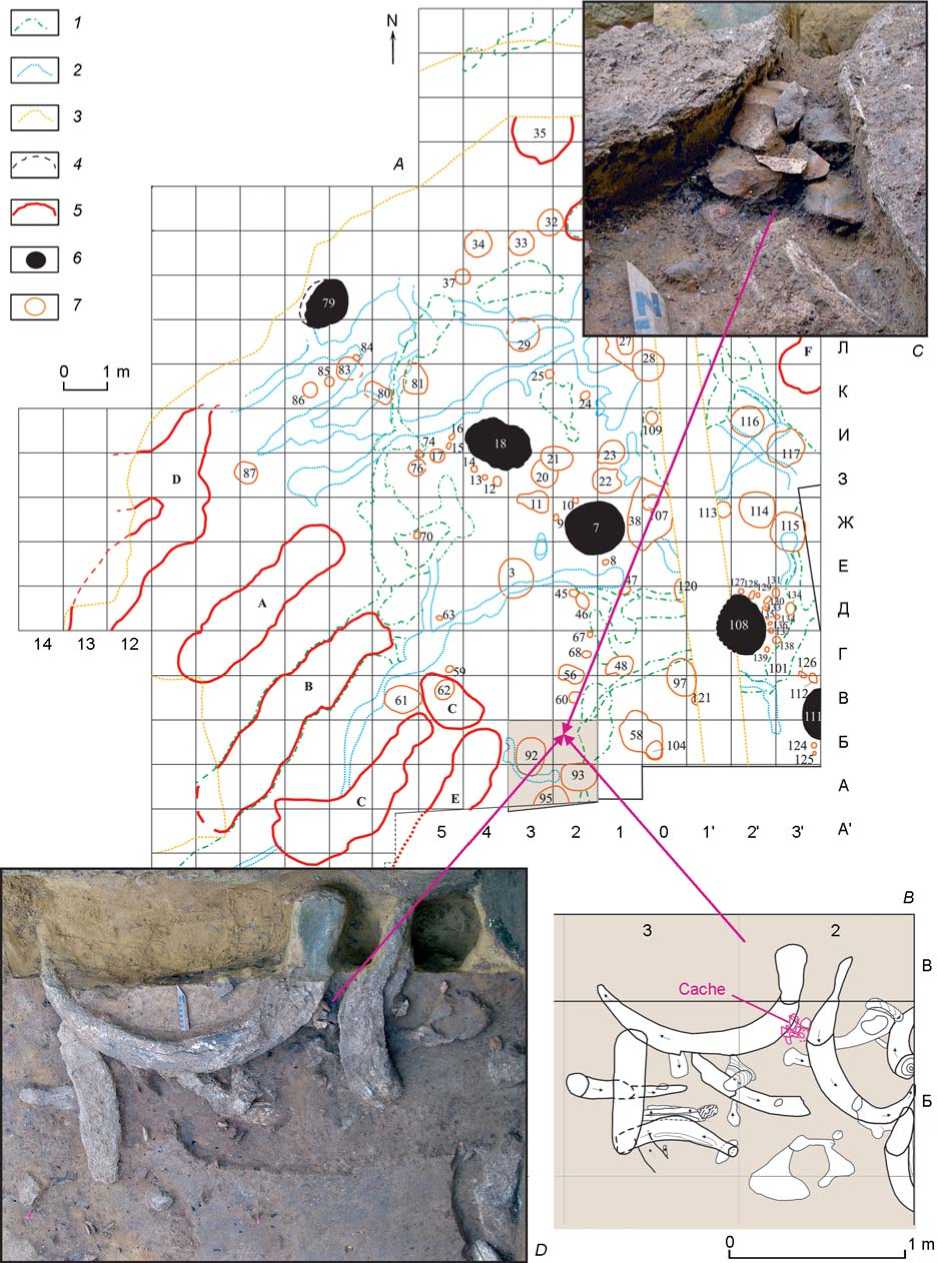
Fig. 2. “Cache” in mammoth skull, sq. Б-2, Zaraysk A.
A – plan of features in the second cultural layer and location of the “cache” ( 1 – disturbances of the first generation; 2 – cracks of the second generation; 3 – places with missing habitation layer; 4 – presumed contours of the objects; 5 – boundaries of pits; 6 – hearths; 7 – semisubterranean dwellings); B – “cache” on the plan of sq. Б-2; C , D – photograph of artifacts in situ , close-up, view from above.
the alveoli. The typological composition of the cluster is noteworthy: three cores, three hearth stones, a flake, and two blades of medium size one of which is retouched. The finds lay in brownish sandy loam; a solid chunk of ocher mass underlay one of the cores.
Zaraysk E. “Cache” in mammoth skull in sq. È-7, 8
One of the most remarkable features of the Zaraysk E site, excavated since 2016 (Lev, 2018), is a “cache” of flint artifacts, which the camp dwellers had hidden in the alveolus of a mammoth skull. The facial part of the mammoth skull was dug into the ground to a depth of 20–25 cm in sq. И-7, 8, near the entrance to the semi-subterranean dwelling (pit 18), to the left of the center (Fig. 3). Right near the entrance, there was a suboval pit measuring 115 × 135 cm. The pit was lens-like in the section and up to 25 cm deep. It was filled with burned bone lenses; a thick lens of ocher was located among them. A similar pit in front of semisubterranean dwelling C was found at Zaraysk A, 2 m from the first “cache” (see Fig. 2). Hearth 3 was located within a distance of 1 m from pit 23. The entrance to semi-subterranean dwelling 18 was oriented towards the hearth.
The skull is heavily deformed and destructed by modern soil processes. Its remains are clustered on an area stretching in the north-to-south direction and forming a projection oriented to the east. The outline of the skull measure 600 × 300 mm. According to E.N. Mashchenko, the skull belonged to a 16–25-year old female. The occipital part was missing, and the alveoli were dug into the parent sediment nearly upright, at a small angle. The alveoli are about 30 cm long.
Tools and blades were intentionally and compactly placed in the left alveolus of the skull dug into the parent sediment 30 cm below the upper line of the dwelling’s wall. The bottom of the dwelling was 5 cm above the parent sediment––a feature typical of the second cultural layer, associated with classic living structures of the Kostenki type.
Large flint artifacts dominated the assemblage: a flake, two flake-blades, a crested blade, retouched blades and bladelets, two end-scrapers, two dihedral burins, five Kostenki knives, including two double-edged pieces, and a hearth stone (24 spec. altogether). In other words, only seven items of 24 artifacts were not tools (Fig. 4, Table 1). The artifacts were placed very compactly and formed two groups. Six items of the first group were located in the middle part of the alveolus. They were found by accident, because the artifacts had been hidden behind the alveolus from all sides. After they had been extracted, the dense ochreous infill of the alveolus became visible. During its clearing, 18 new artifacts emerged. They were situated close to one another, clustering near the proximal part of the alveolus.
Notably, fragments of alveoli were also found in the sediment filling the entrance zone of the dwelling in sq. И, К-7, very close to the skull placed on its wall. The poor preservation of bone prevented us from conserving the skull or extracting it as a monolith for further cleaning at the laboratory.
No doubt this was a “cache” made before the cranium was placed on it. Its meaning remains unclear: whether these were tools destined for a specific work or for some rite. The context makes the latter possibility more likely, since a very dense placement of artifacts and the digging of alveoli into the ground hardly presupposed future extraction.
Zaraysk F. “Cache” in mammoth skull in sq. Á-63
Mammoth skull No. 121 was discovered in sq. Б-63, 64 of the site. It was found in horizontal position in lilac-colored sandy loam rich in coals and ocher, next to the wall of pit 7, in the upper part of the infill. The facial part was directed downward and somewhat inclined to the southwest (Fig. 5). The braincase was decayed. According to some morphological and stratigraphic traits, pit 7 can be classified as a semisubterranean dwelling. Its base consisted of the first generation natural structure. The left alveolus of the skull contained a large tusk in the initial anatomical position. It had a significant curve; its roundish end rested against parent light sand with iron stains on the bottom of the pit. Sand around the tusk was greenish in color. A part of the alveolus exfoliated from the tusk was located nearby.
There was no tusk in the right alveolus. During the cleaning, it was found out that this cavity was used for storing two large flint blades. They penetrated the alveolus, filled with brown sandy loam, for at least 10 cm. The blades lay horizontally: one of them was found with its
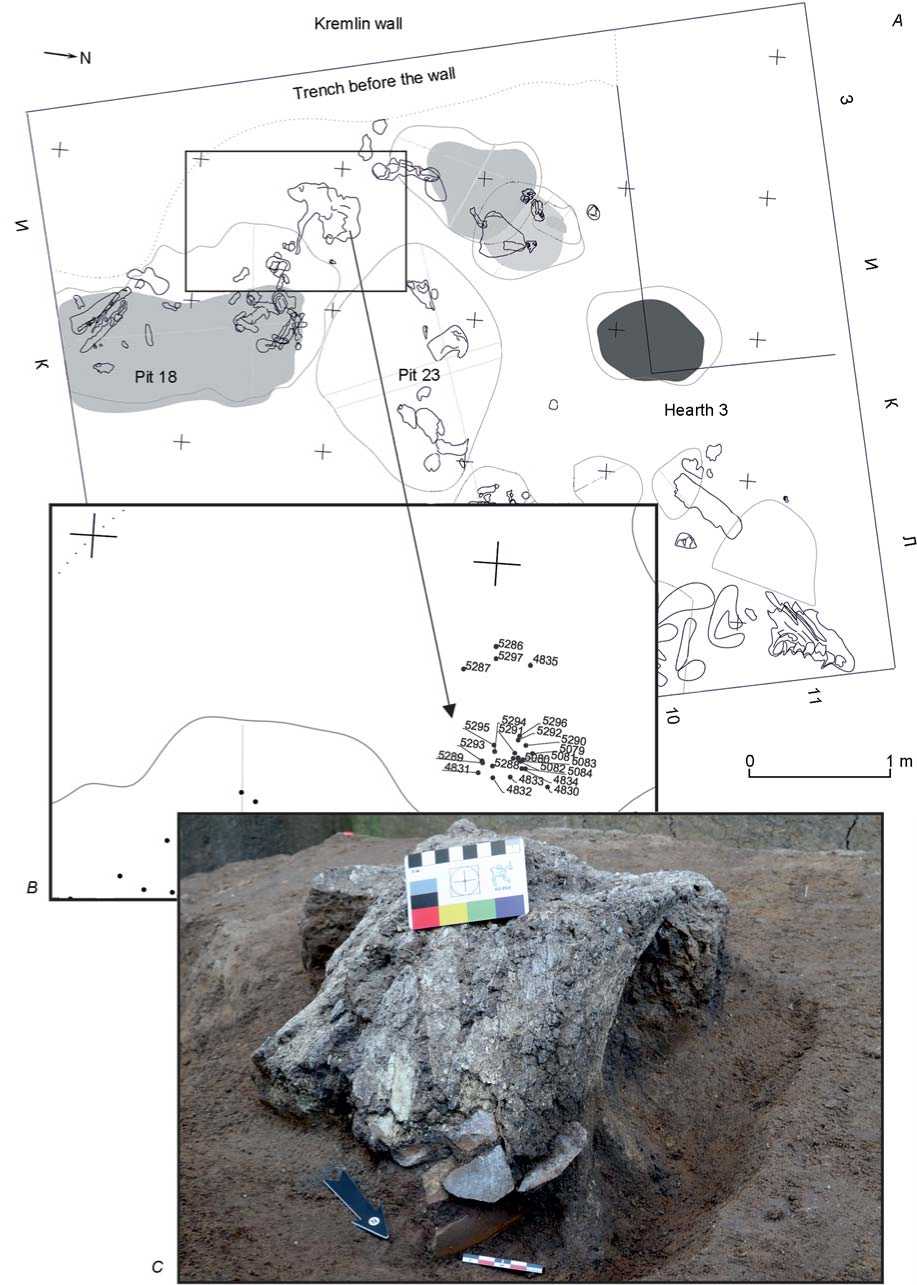
Fig. 3. “Cache” in mammoth skull, sq. И-7, 8, Zaraysk E.
A – plan of the excavated area with pits and faunal remains; B – plan showing the location of the finds in the skull; C – photograph of the artifacts in situ in the skull.
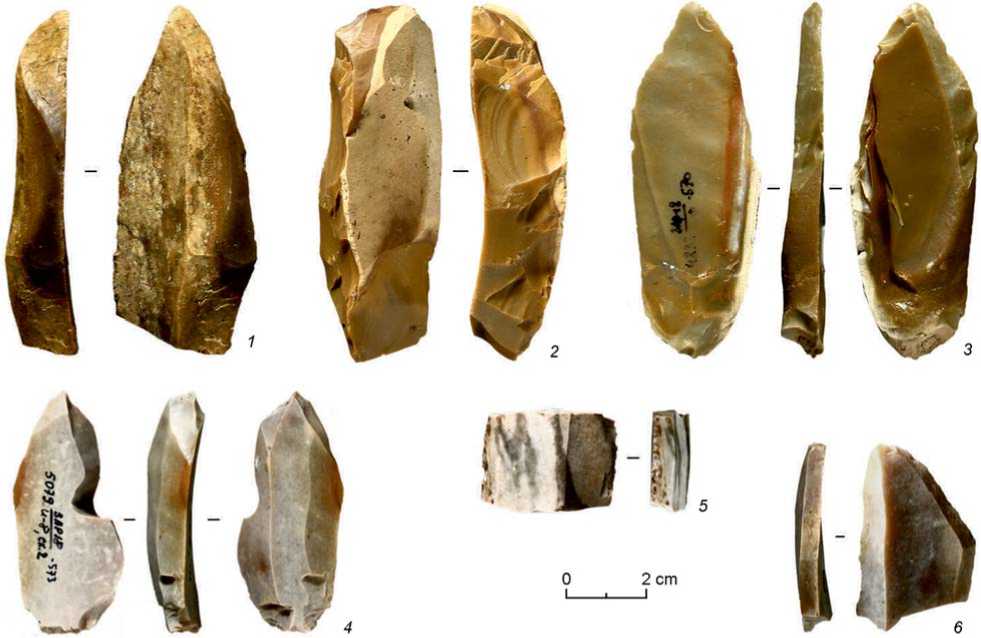
Fig. 4. Items from “cache” in mammoth skull, sq. И-7, 8, Zaraysk E.
1 , 3 , 6 – Kostenki knives; 2 – end-scraper; 4 – dihedral burin; 5 – fragment of a retouched blade.
ventral surface up, the other one rested on its ridge. A medium-sized flake with a chalky cortex, two small flakes, and a microblade with irregular retouch lay on the ridge near the blades. These small items could have been transported into the alveolus by taphonomic processes, together with earth from the cultural horizon, and then the skull was gradually displaced to the bottom of the pit. The southeastward shift of the tusk from the edge of the pit was registered stratigraphically in the excavation baulk. The skull was apparently situated on the wall of the semisubterranean dwelling, with its occipital part directed downwards, and the tusk was part of the ceiling, which eventually collapsed. This “cache”, same as two others described above, was associated with the second cultural layer.
The flint blades are noteworthy. The blades are long (155 mm and 165 mm), with a curved profile. They demonstrate striking platforms carefully prepared in the Kostenki technique and retouch along the right edge. The first blade has a distal end modified in the technique of Kostenki knives (Klaric et al., 2015). The platform of the knife for detaching longitudinal edge flakes was formed
Table 1. Composition of finds from the mammoth skull in sq. И-8
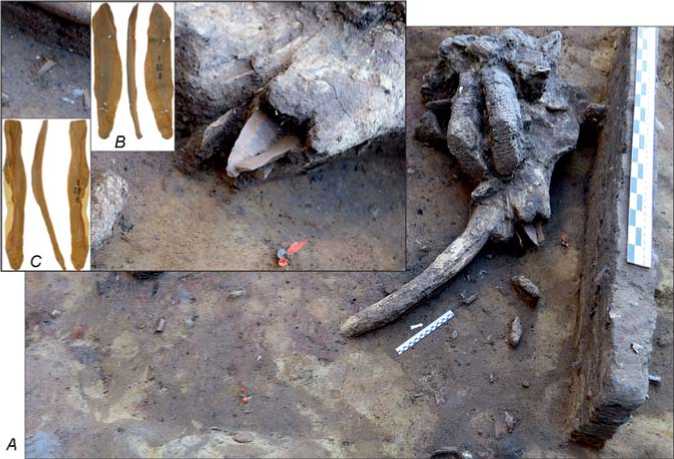
Fig. 5. “Cache” in mammoth skull, sq. Б-63, Zaraysk F.
A – location of the artifacts in the alveolus, close-up; B – Kostenki knife; C – retouched blade.
from the right edge and fine retouch along the edge above the latter scar (possibly, use-wear traces). Flat retouch along the right edge was partially removed by the first edge spall almost reaching the middle of the blade lengthwise.
The profile of the second blade is more curved (Fig. 5, C ). Its left edge bears a spot of chalky cortex; the distal end is broken. The right side of the distal part exhibits fine dorsal flat retouch. The proximal part is retouched on both the ventral and dorsal faces. The central third of the right edge is unretouched. Typologically, such blades can be regarded as knives. At a certain stage of their utilization, they were rejuvenated in the technique used for Kostenki knives to maintain the sharpness of the working edge. Traceological analysis will hopefully shed light on the destination of those blades.
Kostenki 1 (I), 1982. “Cache” in mammoth skull in semi-subterranean dwelling E1
Three-chamber semi-subterranean dwelling E is located in the northwestern part of the second complex. The dwelling consisted of three adjacent isolated pits/chambers (Fig. 6; 7, A, B). Judging by the infill, chambers E1 and E2 were destined for habitation, while chamber E3, being not so wide and deep as two others, served as a bone carving workshop. Entrances to the chambers are clearly visible both in plan and in profile view; chambers E2 and E3 had a common entrance, whereas chamber E1 had a separate entrance, and the pit adjoining it was situated in sq. УФ-7, whose border with the pit of the dwelling was marked by a gentle ledge, and its sides, by shelf-like steps. A large mammoth skull lay on the ledge across the entrance, and close to it lay a large part of the cranium without teeth or condyles. Apparently, cranial bones had been placed at the edge of the deeper part of the entrance to make the aperture higher; they collapsed together with the dwelling. Cavities inside the skulls were used as storages. Three large flint blades were found inside the right tusk alveolus (Fig. 7, D). The forth blade of the same size lay under the skull. A polar fox scapula was located on the entrance ledge. Among the few finds in the entrance zone, on the floor of the outermost border of chamber E1, there was a typically Kostenki-Avdeyevo diadem made of mammoth ivory blade with carved out lugs (Fig. 7, C). Judging by the location, the diadem lay on a shelf formed by the ledge near the entrance. There were also found flint blades (in the alveolus of the skull and under it) and an ivory polisher (under the skull).
Kostenki 1 (I), 1983. “Cache” in mammoth skull in sq. ð-66
On the line of squares прс-62-70, a massive accumulation of several groups of large mammoth bones was excavated. The accumulation was oriented roughly to the northwest–southeast, stretching downward along the slope (the angle of inclination is 45°). No doubt the bones were heaped intentionally, as evidenced by their position: some of them were thrust between others and dug into the ground. A part of the accumulation in sq. прс-65, 66 included two fragmented mammoth skulls (Fig. 8, A ); both were located in sq. р-66. One of them rested on its occipital part; teeth and tusk alveoli were
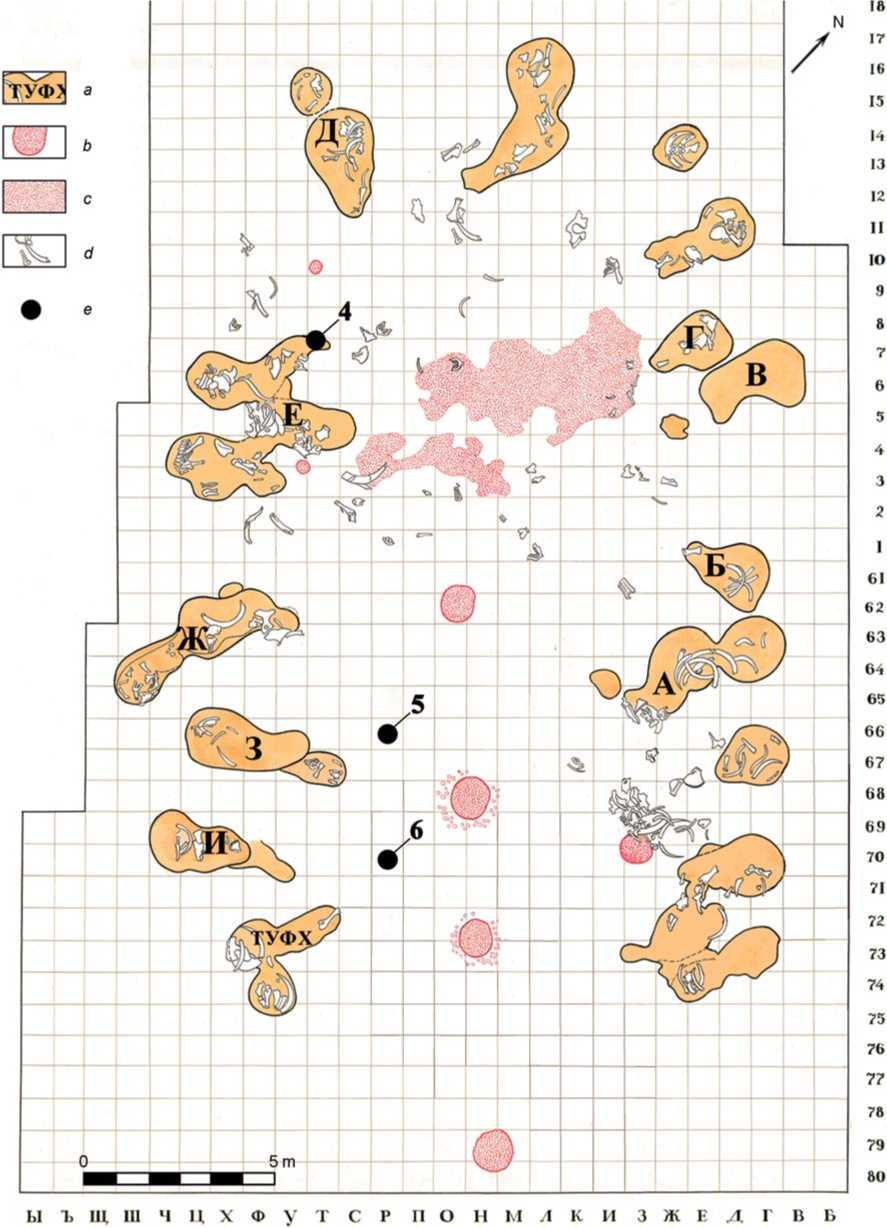
Fig. 6. General plan of the second complex at Kostenki 1, layer I. Figures 4–6 correspond to the numbers of “caches” in mammoth skulls in the order they are described in the text.
a – semi-subterranean dwellings and storage pits; b – hearths and pits with ash and coals; c – ashy and coaly spots; d – bones and tusks; e – locations of the “caches”; А, Б, В, Г, Д, Е, Ж, З, И, ТУФХ – designations of the semi-subterranean dwellings.
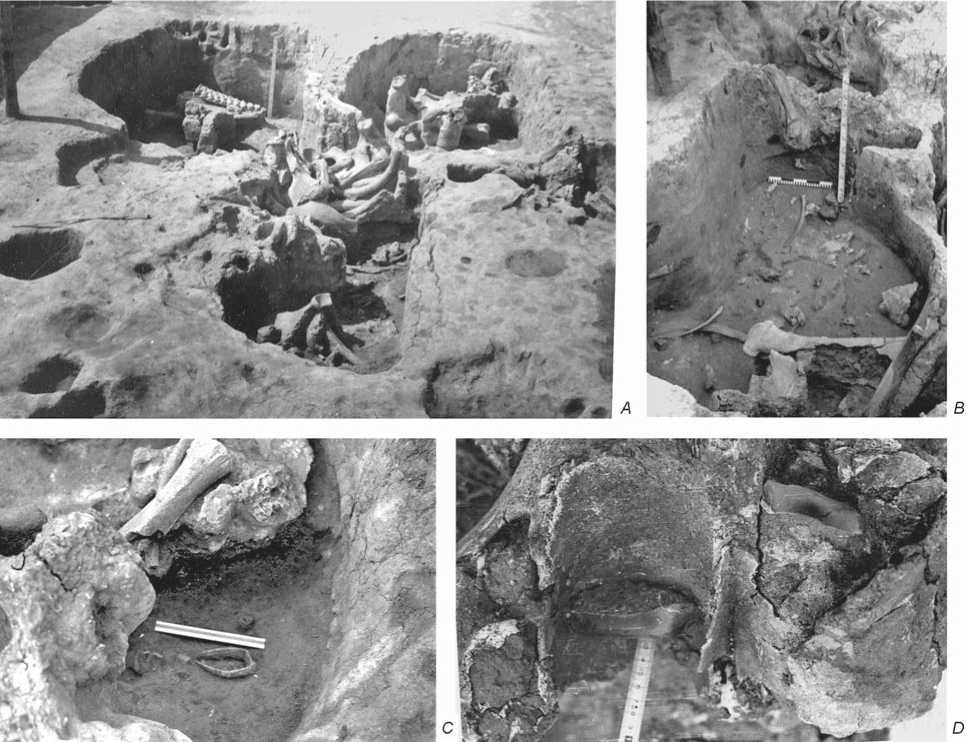
Fig. 7. Complex of semi-subterranean dwellings Е, Kostenki 1, layer I, 1982.
A – general view; B – part of the complex in sq. уфхц-6-7; C – diadem; D – “cache” of flint blades in the alveolus of mammoth skull. Photographic Department of the Institute for the History of Material Culture RAS Archives. Albums О.3495-5, О.3495-41, О.3495-44, and О.3495-91.
directed to the west; a large femoral fragment had been hammered into the nasal aperture (which was later destroyed), penetrating the cranial cavity. Another skull belonged to a younger individual; its facial part was oriented to the north-northwest. The frontal and parietal parts were destroyed down to the zygoma, and the alveoli were dug indo the parent sediment to the depth of ~30 cm.
An alveolus of one of these skulls (possibly directed to the north-northwest) contained a “cache” comprising over 20 blades and flakes of chalk flint and quartzite (Table 2). The “cache” lay compactly; therefore, it was extracted from the alveolus as a monolith. Cleaning of the “cache” was conducted in laboratory conditions, with detailed recording of arrangement of the finds (Fig. 8, B, C, D, E). The artifacts were located at different angles; some of them lay perpendicular to each other. A small wedge of a long bone epiphysis (Fig. 8, B) was situated among them. A fragment of a colored flint concretion underlay the artifacts.
Kostenki 1 (I), 1984. “Cache” in mammoth skull in sq. ð-70
A skull of an adult mammoth was found between the line of hearths and the semi-subterranean dwelling in sq. туфх-72-75 (see Fig. 6), in a hollow filled with colored sandy loam in sq. рс-71. The occipital part of the skull rested on bones hammered into ground at an angle of 60°—a tibia split lengthwise and a fibula. The tibia (48 cm long) rose above the colored layer to a height of 22 cm, the fibula to a height of 10 cm. The frontal part of the skull was directed to the northwest, alveoli were situated in sq. р-70
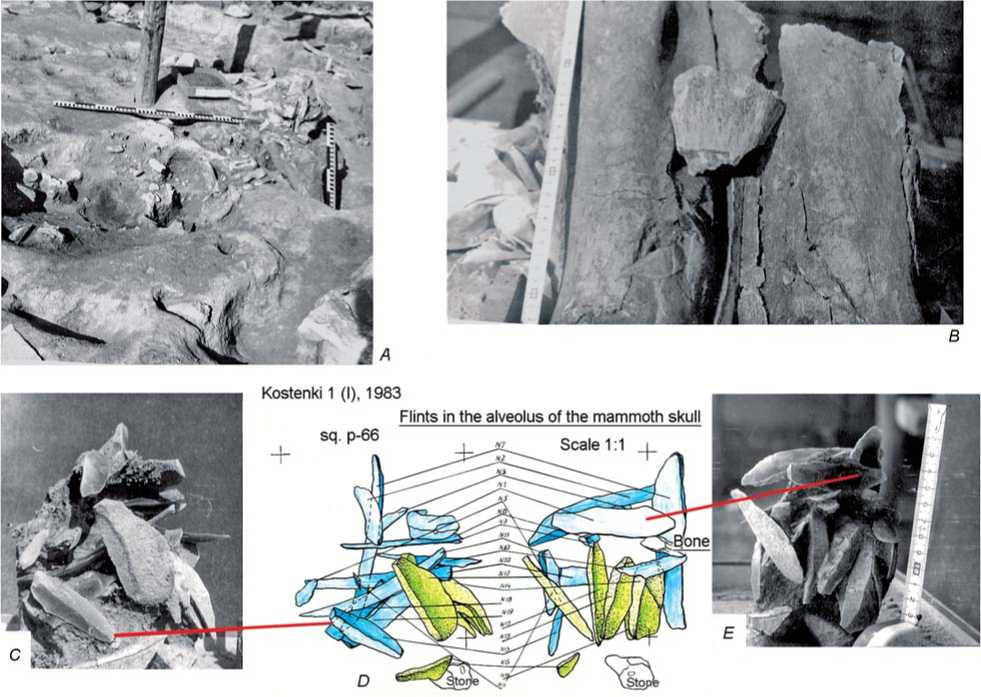
Fig. 8. Hollow in sq. рс-65 and mammoth skulls dug in sq. р-66 ( А ); alveoli with the “cache” of flint artifacts extracted as a monolith; above, a bone wedge from the “cache” ( B ); flints from the alveolus of the mammoth skull from sq. р-66 ( C , D , E ). Kostenki 1, layer I, 1983. Photographic Department of the Institute for the History of Material Culture RAS Archives. Albums О.3479-9,
О.3480-70, О.3480-72, and О.3480-73.
(Fig. 9, А ). The maxilla was missing; teeth were knocked out, and the parietal and occipital parts were destroyed evidently by camp dwellers. Southwest of the skull, the layer had intensive dark red color. The layer was loose, from 5 to 2–3 cm thick, almost homogeneous. A large fragment of a pelvic bone, lying inclined, adjoined the skull from the north.
The cavities inside the skull were filled with dusty fine-grained gray sediment without admixture of cultural layer. The left alveolus contained a complete spatula with a figured top made of a rib and positioned longwise (Fig. 9, B ). The top was found deep inside the alveolus, and the working edge below touched the cultural layer, which blocked the alveolus from below. Under the spatula on the alveolus wall, there lay a flat, green, rounded pebble with traces of wear suggesting
Table 2. Composition of finds of various raw materials from the mammoth skull in sq. р-66
|
Category |
Number of specimens |
|
Chalk flint |
|
|
Kostenki knife on a crested spall |
1 |
|
Blade |
2 |
|
Fragment of a blade |
4 |
|
Fragment of a retouched blade |
2 |
|
Retouched crested blade |
1 |
|
Microblade |
1 |
|
Flake-blade |
2 |
|
Flake |
1 |
|
Total |
14 |
|
Quartzite |
|
|
Lateral crested spall |
1 |
|
Retouched lateral crested spall |
1 |
|
Blade with cortex |
2 |
|
Retouched blade with cortex |
1 |
|
Fragment of a retouched blade with cortex |
1 |
|
Flake |
1 |
|
Total |
7 |
|
Colored flint |
|
|
Fragment of a concretion |
1 |
|
Total |
22 |
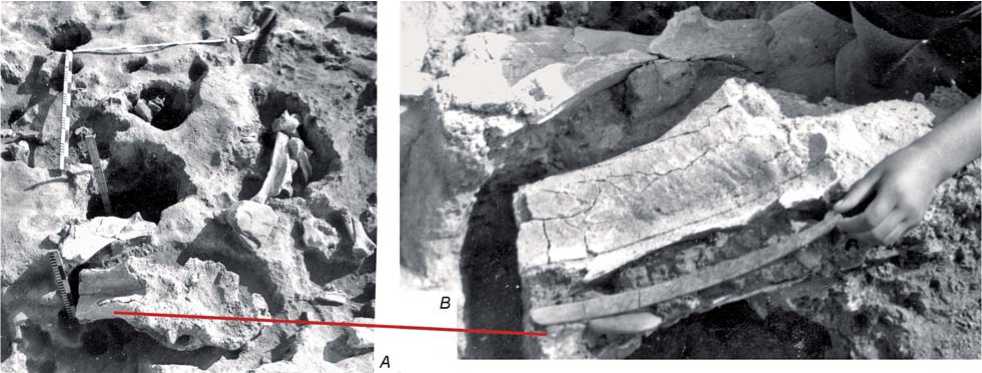
Fig. 9. “Cache” in sq. р-71 of Kostenki 1, layer I, 1984.
A – general view, alveoli of the mammoth skull are in the foreground; B – bone spatula in the alveolus of the mammoth skull. Photographic Department of the Institute for the History of Material Culture RAS Archives. Albums О.3465-41 and О.3465-43.
its use as a retoucher. The right alveolus was filled with the sediment of cultural layer––dense loam containing small bone coals and ocher coating. A small flake was found within the sediment. The left alveolus was obviously empty and closed, while the ground from the cultural layer freely flowed into the right one. Several flints lay compactly directly on the loam, under the alveoli. A little further south, near the upright positioned long bones, on which the occiput of skull rested, lay one more small ivory spatula with missing ends.
Discussion
The practice we have discussed consisted of hiding things, which ancient hunters deemed valuable, in cavities of large mammoth bones, primarily crania. This practice, documented at certain sites of the Eastern Gravettian, can apparently be regarded as a cultural tradition, which existed in the periglacial zone. Such caches were placed in interdental cavities and alveoli of teeth, including tusks. In Central Europe, despite the abundance of Gravettian sites with large accumulation of faunal remains, such caches are very few. One of them was discovered at Dolní Věstonice I. As M. Oliva notes, “The alveolus of a lower mammoth jaw enlarged by a suppurating process held a large prismatic core of the Kraków-Częstochova Jurrassic flint. It is the largest piece of this precious raw material, brought from a distance of about 300 km, in the entire Gravettian below the Pavlov Hills” (2021: 11–12). As we see, at this Early Graverrian site with large accumulations of mammoth bones (as at the sites described above), valuables were cached in natural cavities of mammoth crania. At later Epigravettian sites of the Russian Plain, this custom was more common.
Notably, a considerable number of caches in mammoth skulls are spatially associated with semisubterranean dwellings. Regardless of the animals’ age or sex, one half of the crania had been placed directly on the walls of those dwellings, and the other half at a distance of 1.5–2.0 m from their entrances. Typologically, cached flint artifacts belonged to the Kostenki-Avdeyevo industry. Similar high-quality blades were also found in pits specially destined for caches, which will be addressed in a separate study. The purpose of assembling the toolkits and supplementing them with hearth stones is unclear. The absence of bone tools in “caches” at Zaraysk, too, needs explanation; a possible reason being poor preservation of bone artifacts and of faunal remains in general.
So far, it can be concluded that in Eastern Europe, the practice of caching valuables in mammoth skulls had survived the LGM and was documented by sites of the Anosovo-Mezin tradition, which is not directly derivable from the Kostenki-Avdeyevo culture either typologically or technologically or in terms of any other criteria (Khlopachev, Gavrilov, 2019: 35).
Conclusions
Over the long history of the Eastern Gravettian studies, experts have more than once mentioned evidence of rites practiced by the sites’ dwellers. However, by far not all objects we mention as nonutilitarian were regarded as evidence of rituals. A long-standing paradigm that prevailed in Paleolithic studies was purely utilitarian, forcing one to consider all finds in the context of subsistence strategies in the harsh conditions of the periglacial zone. Though, many artifacts demonstrated the shortcomings of such approach. Figurines, ornaments, pigments, “ceramics”, caches in animal crania, pits, and elsewhere, as well as structures composed of large bones but obviously having nothing to do with houses (Gavrilov, 2024), unambiguously demonstrate that the ancient hunters’ mentality was richer than previously believed. “Caches” in mammoth skulls take a special place, but they should definitely be viewed in the general cultural context.
Acknowledgments
S.Y. Lev’s study was part of Research and Experimental Project 122011200271-7 “Evolution of Material Culture in the Stone Age of the Russian Plain and Caucasus: General Trends and Local Manifestations”; that of M.N. Zheltova, of the Basic Research Project “Northern Eurasia in the Stone Age: Problems of Human Dispersal, Cultural Adaptation, and Technological Evolution” (FMZF-2025-0007).
Our sincere gratitude is due to N.A. Lazarevskaya of the Photographic Department of the Institute for the History of Material Culture RAS Archives for her invaluable help and support.
