
Challenges and Opportunities of the Transition to a Knowledge Economy in the Regions of the Russian Arctic Zone
Journal: Arctic and North @arctic-and-north
Section: Social and economic development
Article in issue: 63, 2026.
Free access
The article analyzes the challenges and opportunities associated with the transition of Russia’s Arctic regions to a knowledge economy, focusing on developing cities in these territories as key multifunctional centers. Based on a historical and contemporary analysis of approaches to the development of the Arctic and remote northern territories, as well as a study of regulatory documents on development strategies for these regions, the author demonstrates the special role of universities and research centers as drivers of economic growth and social stability. A quantitative assessment of educational infrastructure and migration trends reveals systemic issues, including youth outmigration, declining student enrollment, and imbalances in the development of the education sector compared to the situation across Russia as a whole. These issues are further highlighted by the results of a pilot survey of school students in the Murmansk Oblast and the Republic of Sakha (Yakutia), which revealed a low level of intention among young people to study at local educational institutions. As a solution, the author proposes the introduction of career guidance and mentoring mechanisms within a new framework of complementary development. This approach aims to retain skilled professionals, stimulate the development of scientific and educational infrastructure, and create conditions for the sustainable development of these territories.
Short address: https://sciup.org/148333992
IDS: 148333992 | UDC: 314.15(985)(045) | DOI: 10.37482/issn2221-2698.2026.63.6
Text of the scientific article Challenges and Opportunities of the Transition to a Knowledge Economy in the Regions of the Russian Arctic Zone
DOI:
H, ORCID:
The development of Arctic territories is one of the key strategic objectives currently recognized and pursued by the entire international community. In this context, the importance of protecting Russia’s national interests in the Arctic, maintaining and accelerating the pace of development and advancement of the country’s Arctic territories is increasing.
∗ © Bazhutova E.A., 2026
This work is licensed under a CC BY-SA License
Approaches to the development of the Arctic and remote northern territories in different historical periods were based on various aspects of socio-economic development. During the Soviet era, the key priorities were industrial and transport development (Slavin, 1961), settlement of sparsely populated areas (Pokshishevskiy, 1951), analysis of natural resources and their distribution (Mintz, 1968), development of industrial complexes in Siberia (Bandman, 1976), and comprehensive development of northern regions (Vityazyeva, 1972). Over time, these concepts evolved, forming a unified theory of economic development of the northern territories of the USSR in the 1970s.
Significant changes in theoretical approaches occurred with the onset of economic reforms in Russia. Regional development in the North transitioned from a planned model to a marketbased one, leading to a shift in focus in scientific research. During this period, such topics as structural policy ( Structural Policy , 1994), the interaction of market and state mechanisms (Luzin, Pavlov, 1983), the formation of regional markets (Pilyasov, 1994), the specifics of privatization in northern regions, and the analysis of the social consequences of reforms (Navasardov, 1994) began to dominate.
Unlike Russian studies, international research into Arctic development focused more on sector-specific aspects (Zamyatina, Pilyasov, 2018). Key areas of study included the urbanization of northern territories, the impact of climate change, the development of the mining industry, the agro-industrial complex, the policies of countries involved in Arctic development, as well as the management of shared resources and co-management. In addition, issues related to the knowledge economy in the North and the Arctic were actively researched.
The latest study addresses the development of knowledge infrastructure in the Arctic, the strengthening of existing and the creation of new research centers and universities to ensure the sustainability of the Arctic’s socio-economic development (Dorais, Dranaeva, 2014), the creation of local competencies, and the accumulation and practical application of traditional knowledge of indigenous peoples in local development (Johnson, 2014; Pulsifer, McCann, McNeave, 2014).
In the modern economy, the growing role of the knowledge economy is a global trend that is also characteristic of the Arctic. Arctic cities abroad are cities where universities and research centers are located. In the typology of Arctic urban agglomerations, proposed by N.Yu. Zamyatina and R.V. Goncharov, such cities were defined as key multifunctional centers (based on the presence of a university) (Zamyatina, 2020). The specialization of most universities and research centers existing in the Arctic is focused on the development of specific knowledge related to overcoming the negative impact of the natural conditions of polar territories (Arctic medicine, climatology, etc.) and the use of local resources (geology, ocean sciences, polar agriculture, etc.). Therefore, the development of centers for the generation of specific Arctic knowledge and competencies can be attributed to the number of factors outweighing the unfavorable environment for urban development, including after the weakening role of, for example, mining (Zamyatina, 2020). At the same time, the share of Arctic cities of Russia among the
SOCIAL AND ECONOMIC DEVELOPMENT
Ekaterina A. Bazhutova. Challenges and Opportunities of the Transition … university/higher education centers is significantly lower. In their study, the authors identified only four out of 16 key multifunctional centers in Russia: compared to the global Arctic, Russia is clearly lagging behind in terms of developing the Arctic knowledge economy (Zamyatina, 2020).
It is clear that remote but powerful cities near oil fields are currently underdeveloped as urban bases for the surrounding area (administrative, information, scientific, and educational centers). In the future, as the role of resource industries declines, the classic urban functions of providing services to the surrounding area could form the basis for their diversification and preservation. The basis for the long-term viability of remote industrial centers is the reorientation of their economies toward the surrounding area, the development of locally in-demand services, primarily scientific and educational (Zamyatina, 2020). Furthermore, the development of universities in the Arctic zone facilitates the formation of scientific and educational centers capable of attracting investment and personnel to the region. Universities become key bases for conducting expeditions and applied research. Thus, the development of universities in the Arctic zone is necessary to solve complex problems related to the development of the region, ensuring sustainable development and strengthening national and international competitiveness in the context of increasing geopolitical confrontation between the Russian Federation and unfriendly countries, including in the Arctic (Lapytov, 2024).
The aim of this study is to identify the opportunities and challenges associated with the development of universities in the regions of the Russian Arctic, which, in turn, will contribute to the transition of their economies towards a knowledge economy and the development of Arctic cities into key multifunctional centers.
The following research tasks are set in this study:
-
• to review Russian and international theoretical approaches to establishment and development of universities in the Arctic;
-
• to analyse the strategic development plans of the regions of the Arctic zone of the Russian Federation with regard to higher and secondary vocational education;
-
• to assess the current state of the higher and secondary vocational education system in the Russian Arctic regions;
-
• to develop recommendations for mitigating risks and exploiting opportunities to support the transition of the economies of the AZRF regions towards a
knowledge ‑ based economy.
In order to achieve these objectives, a comprehensive approach to the research methodology was used, including both quantitative and qualitative methods, as well as an analysis of regulatory documents. Quantitative data analysis was applied to assess the current state of the educational infrastructure and migration processes. The data sources were statistical data from open sources of the Ministry of Science and Higher Education of the Russian Federation and Rosstat. For a deeper understanding of the reasons for migration and the educational intentions of young people, a pilot survey of school students was conducted. Comparative and theoretical
SOCIAL AND ECONOMIC DEVELOPMENT
Ekaterina A. Bazhutova. Challenges and Opportunities of the Transition … approaches were used to identify differences in the dynamics of educational infrastructure and migration.
Discussion and results
The issues of the creation and development of universities in the Arctic zone of Russia, as well as their role in the implementation of regional policy, have been addressed in a number of scientific works by domestic and foreign researchers. In particular, the role of universities in the implementation of Russia’s Arctic strategy is examined in the works of E.V. Kudryashova and S.E. Sorokin (Kudryashova, 2012; Kudryashova, Sorokin, 2019), M.V. Getsen and D.N. Bezgodov (Getsen, Bezgodov, 2013). The development of universities in the Arctic zone and their role in regional policy are discussed by A.A. Lapytov (Lapytov, 2024). Studies of international experience in integrating Arctic universities into the implementation of territorial development strategies have been conducted by K.S. Zaykov and N.A. Kondratov (Zaikov, Kondratov, 2022), A.O. Kochnev (Kochnev, 2015), I.V. Rogachev and S.I. Shubin (Rogachev, Shubin, 2019). Analysis and assessment of the potential of the professional education system of the territories of the Arctic zone of Russia are carried out in the work of A.V. Simakova and V.A. Gurtov (Simakova, Gurtov, 2020). The role of universities in the development of Arctic territories and regions is actively studied within the framework of international Arctic research. The study of the role of universities in shaping Arctic policy and conducting research, with an emphasis on their significance for the sustainable development of the region as centers of knowledge for addressing Arctic challenges, are presented in the works of M. Sfraga (Sfraga, Wilson, Sverdrup et al., 2020), P. Sköld, B. Evengård 1, A. Husebekk (Husebekk, 2017), O.A. Misund and D.W. Aknes (Misund, 2017; Misund, Aknes, Christiansen et al., 2017). G. Fondahl, V. Filippova and L. Mack examine the role of universities in supporting the indigenous peoples of the Arctic through educational programs and research aimed at preserving their culture and traditions (Fondahl, Filippova, Mack, 2015). J.N. Larsen and G. Fondahl represent universities as drivers of sustainable development in the Arctic in their report “Arctic Human Development Report II (AHDR-II, 2014)” 2. The importance of universities in knowledge creation and human capital development in the Arctic, particularly in terms of international cooperation and building networks for dialogue and the exchange of knowledge and resources to overcome Arctic challenges, is substantiated in the works of L. Kullerud 3, O. Snellman (Snellman, 2021), L. Heininen, H. Exner-Pirot, J. Barnes, and others (Heininen, Exner-Pirot, Barnes, 2020).
These researchers and their works demonstrate that the development of universities in the Arctic is regarded as a key element for the region’s sustainable development, supporting indigenous peoples, and addressing global challenges such as climate change and economic transformation.
The important role of universities is also reflected in the strategic development goals for the AZRF regions until 2030. Accordingly, each regional strategic development plan contains a section dedicated to education development (Table 1), confirming adherence to the aforementioned principle of the viability of remote industrial centers, which is linked to the reorientation of the Arctic economy toward a knowledge economy.
Table 1
Strategic development goals for regions within the Arctic Zone of the Russian Federation in terms of education development 4
|
Region |
Strategic goal |
Key tasks for the development of education |
Regulatory documents |
|
Regions fully included in the AZRF |
|||
|
Murmansk Oblast |
Center for training personnel for the Arctic |
College development, mentoring, creation of university campuses and engineering centers |
Murmansk Oblast Government Resolution No. 82-PP of February 21, 2017, “Socioeconomic Development Forecast for the Murmansk Oblast until 2035” Murmansk Oblast Government Order No. 460-RP of December 28, 2024, “Strategic Development Plan for the Murmansk Oblast until 2030: TO LIVE — IN THE NORTH!” |
|
Nenets Autonomous Okrug |
Possibility of obtaining higher education in the region |
Cooperation with leading universities, development of secondary vocational education, distance learning |
Resolution of the Assembly of Deputies of the Nenets Autonomous Okrug of November 7, 2019 No. 256-sd “Strategy for the Socio-Economic Development of the Nenets Autonomous Okrug until 2030” |
|
Yamalo-Nenets Autonomous Okrug |
Eliminating personnel shortages |
Modernization of secondary vocational education and adaptation to labor market needs |
Resolution No. 478 of June 24, 2021 “On the Strategy for the Socio-Economic Development of the Yamalo-Nenets Autonomous Okrug until 2035” |
|
Chukotka Autonomous Okrug |
Improving access to education |
Establishment of a university, development of distance learning, mentoring |
Order of the Government of the Chukotka Autonomous Okrug of July 16, 2014 No. 290-rp “Strategy for the Socio-Economic Development of the Chukotka Autonomous Okrug until 2030” |
|
Regions partially included in the AZRF |
|||
|
Republic of Karelia |
Scientific and educational center |
Support for universities, integration of science and education, |
Order of the Government of the Republic of Karelia of December 29, 2018 No. 899r-P |
|
and interaction with enterprises |
“Strategy for the SocioEconomic Development of the Republic of Karelia until 2030” |
||
|
Komi Republic |
Training personnel for the regional economy |
Modernization of secondary vocational education, development of the higher education cluster, employment monitoring |
Resolution of the Government of the Komi Republic of April 11, 2019 No. 185 “Strategy for the Socio-Economic Development of the Komi Republic until 2035” |
|
Arkhangelsk Oblast |
Accessible and high-quality education |
Applied Bachelor’s degree programs, digital environment, cluster interaction |
Regional Law “On Approval of the Strategy for the SocioEconomic Development of the Arkhangelsk Oblast until 2035” |
|
Khanty-Mansi Autonomous Okrug |
Digital transformation of education |
Creation of a scientific and technological center, consortiums in key industries |
Order of the Government of the Khanty-Mansi Autonomous Okrug - Yugra of November 3, 2022, No. 679-rp “On the Strategy for the Socio-Economic Development of the Khanty-Mansi Autonomous Okrug - Yugra until 2036 with Targets until 2050” |
|
Krasnoyarsk Krai |
Comprehensive development of the educational sphere |
Development of secondary vocational education and creation of educational centers in the northern regions |
Order of the Government of Krasnoyarsk Krai of February 3, 2023 No. 81-r “Strategy for the Socio-Economic Development of Northern and Arctic Territories and Support for Indigenous Minorities of Krasnoyarsk Krai until 2035” |
|
Republic of Sakha (Yakutia) |
Training personnel for the Arctic economy |
Educational clusters, needs forecasting, expansion of secondary vocational education |
Decree of the Head of the Republic of Sakha (Yakutia) of August 14. 2020 No. 1377 “Strategy for the SocioEconomic Development of the Arctic Zone of the Republic of Sakha (Yakutia) until 2035” Decree of the Head of the Republic of Sakha (Yakutia) of December 30, 2023 No. 17 “On the Development of a Unified Education System of the Republic of Sakha (Yakutia) until 2030” |
The development of the education system in the regions of the Russian Arctic, as indicated by an analysis of regional strategic planning policy documents, is aimed at addressing staffing, infrastructure and socio-economic challenges. The main areas of development include:
Development of higher education and science — Arctic regions are developing their own training centers adapted to northern conditions. Some regions are focused on creating and opening their own universities (Nenets Autonomous Okrug, Chukotka Autonomous Okrug), while others are improving and expanding the capacity of existing higher education institutions (Murmansk Oblast, Krasnoyarsk Krai), as well as concentrating on the establishment of engineering and scientific-educational centers, educational clusters, and the development of
SOCIAL AND ECONOMIC DEVELOPMENT
Ekaterina A. Bazhutova. Challenges and Opportunities of the Transition … networking and international cooperation (Republic of Karelia, Republic of Sakha (Yakutia), Arkhangelsk Oblast, Khanty-Mansi Autonomous Okrug, Komi Republic, Murmansk Oblast).
Training personnel for the regional economy — Arctic regions are experiencing an imbalance between supply and demand in the labor market. This issue is identified as one of the key challenges in the Strategy for Developing the Russian Arctic Zone and Ensuring National Security until 2035, approved by Decree of the President of the Russian Federation No. 645 of October 26, 2020. Therefore, within the framework of their strategies, all Arctic regions are focusing on eliminating this imbalance and training personnel to meet the needs of the regional economy, as well as increasing the attractiveness of education. This is planned to be achieved through the modernization of secondary vocational education (Yamalo-Nenets Autonomous Okrug, Komi Republic, Arkhangelsk Oblast); the implementation of targeted and dual training programs, the implementation of specialized vocational training programs, training and retraining in professions typical of the Far North, in such industries as mining, reindeer herding, fishing, and ship repair (Chukotka Autonomous Okrug, Republic of Sakha (Yakutia)); the development of WorldSkills methods to improve the quality of vocational training.
Combating population outflow and improving access to education — population outflow remains a key challenge for Arctic regions. Therefore, retaining human resources is becoming vital. This is planned to be achieved through the development of distance education, especially in remote areas (Chukotka, Yakutia); the implementation of digital educational environments, online courses, and LMS platforms (Arkhangelsk Oblast, Khanty-Mansi Autonomous Okrug); the development of virtual laboratories and simulators for training specialists in a remote learning environment; and the creation of incentives to retain graduates in the region (benefits, housing, guaranteed employment).
Currently, 59 higher education institutions (HEIs) and 274 secondary vocational education institutions operate in the Russian Arctic, with 391,895 students enrolled in them, according to 2023 data (Table 2). Moreover, the majority of higher and secondary vocational institutions in the AZRF are located in regions that are partially included in the Arctic zone. The percentage ratio of universities and colleges in the Russian Arctic differs slightly from the national average, with a prevalence of secondary vocational education institutions by 8% (Table 3). However, this discrepancy is more pronounced in terms of student numbers. The Arctic zone is characterized by a predominance of students in secondary vocational education institutions — by 13% across all regions of the AZRF, by 34% in regions fully included in the AZRF, and by 25% in regions partially included in the AZRF (Table 5). This situation is largely due to the specific nature of the economy in Arctic regions, where the extraction and processing of minerals predominate and enterprises in these industries have a high demand for qualified workers. The existing disparities in student enrollment, despite the number of educational institutions being in line with the national average, create difficulties in maintaining universities in the Arctic and pose risks, both for the development of the educational institutions themselves and for the achievement of the strategic goals set for the development of education in the Russian Arctic as a whole.
Table 2
Number of higher and secondary vocational education institutions in the Russian Federation and the AZRF 5
|
Number of educational institutions, including branches |
Number of students (as of 2023) |
|||
|
HEI |
SSEI |
HEI |
SSEI |
|
|
Russian Federation |
1 248 |
3 641 |
4,325.280 |
3,711.087 |
|
AZRF |
59 |
274 |
158.507 |
233.388 |
|
Regions fully included in the AZRF |
5 |
36 |
7.694 |
30.727 |
|
Murmansk Oblast |
3 |
21 |
7.477 |
18.328 |
|
Nenets Autonomous Okrug |
0 |
3 |
0 |
1.069 |
|
Yamalo-Nenets Autonomous Okrug |
1 |
8 |
92 |
10.594 |
|
Chukotka Autonomous Okrug |
1 |
4 |
125 |
736 |
|
Regions partially included in the AZRF |
54 |
238 |
150.813 |
202.661 |
|
Republic of Karelia |
4 |
16 |
10.925 |
15.659 |
|
Komi Republic |
6 |
22 |
13.110 |
20.544 |
|
Arkhangelsk Oblast |
6 |
44 |
17.816 |
26.960 |
|
Khanty-Mansi Autonomous Okrug |
9 |
30 |
20.169 |
35.867 |
|
Krasnoyarsk Krai |
15 |
80 |
65.614 |
74.464 |
|
Republic of Sakha (Yakutia) |
14 |
46 |
23.179 |
29.167 |
Table 3
The ratio of educational institutions and student numbers in the AZRF and the Russian Federation 6
|
Share of educational institutions in the total number of educational institutions |
Share of students in the total number of students (as of 2023) |
|||
|
HEI |
SSEI |
HEI |
SSEI |
|
|
Russian Federation |
26% |
74% |
54% |
46% |
|
AZRF |
18% |
82% |
40% |
60% |
|
Regions fully included in the AZRF |
12% |
88% |
20% |
80% |
|
Regions partially included in the AZRF |
18% |
82% |
29% |
71% |
Negative trends exacerbating these disparities in the Arctic Zone of the Russian Federation include the annual decline in student enrollment and the population outflow, including for educational reasons.
An analysis of the average annual rates of change in the number of university students from 2015 to 2023 by mode of study shows that the decline in student enrollment in the Russian Arctic exceeds the national average, which is also on a downward trend (Table 4). The highest rates of decline (-10.4%) are observed in the regions that are fully included in the AZRF, exceeding the national average by 9.2%. Other characteristics of the Russian Arctic regions that differ from the national figures include a decline in the number of full-time students, a higher rate of decline in the number of part-time students, and an increase in the number of students in combined
(evening) programs. This pattern is a consequence of the established practice of studying at Arctic universities while simultaneously working. The decline in student enrollment in Arctic universities poses high risks for ensuring the adequate capacity of the existing Arctic higher education system, its further strengthening and expansion, and creates problems and challenges for the development of scientific activity in terms of staff renewal and recruitment.
Table 4 Average annual rates of change in the number of university students from 2015 to 2023 by mode of study in the Russian Federation and the AZRF 7
|
students, total |
full-time students |
students in combined (evening) programs |
part-time students |
|
|
Russian Federation |
-1.2% |
1.5% |
15.7% |
-7.7% |
|
AZRF |
-4.0% |
-0.4% |
17.4% |
-11.1% |
|
Regions fully included in the AZRF |
-10.4% |
-4.6% |
3.7% |
-15.9% |
|
Murmansk Oblast |
-8.6% |
-3.7% |
2.3% |
-13.7% |
|
Nenets Autonomous Okrug |
0.0% |
0.0% |
0.0% |
0.0% |
|
Yamalo-Nenets Autonomous Okrug |
-34.1% |
-53.0% |
1.1% |
-39.0% |
|
Chukotka Autonomous Okrug |
-15.0% |
-4.5% |
0.0% |
-20.8% |
|
Regions partially included in the AZRF |
-3.5% |
-0.2% |
18.8% |
-10.6% |
|
Republic of Karelia |
-3.3% |
0.6% |
75.6% |
-12.4% |
|
Komi Republic |
-5.4% |
-2.2% |
16.7% |
-10.6% |
|
Arkhangelsk Oblast |
-3.0% |
2.4% |
17.5% |
-13.1% |
|
Khanty-Mansi Autonomous Okrug |
-3.7% |
0.2% |
115.9% |
-14.8% |
|
Krasnoyarsk Krai |
-3.8% |
-0.8% |
8.5% |
-9.9% |
|
Republic of Sakha (Yakutia) |
-1.8% |
-0.2% |
20.8% |
-6.2% |
The decline in student numbers at universities in the Arctic region of the Russian Federation is due to high levels of migration among the population aged 15 to 18.
A study of migration flows by age groups, previously conducted by the author (Bazhutova, 2025), identified regions with a pronounced trend of population decline among young people aged 15 to 18 (Murmansk Oblast, Yamalo-Nenets Autonomous Okrug, Nenets Autonomous Okrug, Arkhangelsk Oblast, Chukotka Autonomous Okrug, the Republic of Sakha (Yakutia) and the Komi Republic) and regions where, conversely, an inflow of this age group is observed (Krasnoyarsk Krai, the Republic of Karelia).
-
7 Source: compiled by the author based on calculations for 2015–2023, presented on the website of the Ministry of Science and Higher Education of the Russian Federation. URL: https://minobrnauki.gov.ru/opendata/9710062939- svedeniya-o-chislennosti-studentov-obrazovatelnykh-organizatsiy-osushchestvlyayushchikh-obrazovateln (accessed 25 February 2025); as well as the Ministry of Education of the Russian Federation. URL: https://docs.edu.gov.ru/document/0c0e3fdbb7805c5c3a3b09e35bde4ed6/ (accessed 25 February 2025).

Symbols:
1 - Murmansk Ob ast
2 - Nenets AO s - Arkhangelsk Oblast
4 - Krasnoyarsk Kra
5- Republic of Karelia
5 - Komi Republic
7 - Republic of Sakha {Yakutia)
a * Chukotka AO
9 - Yama o-Nenets AC
Fig. 1. Heat map of migration growth by age in the AZRF. Compiled by the author on the basis of Rosstat data.
This migration of young people is explained by their desire to obtain an education (Stepus, Simakova, 2018; Varshavskaya, Chudinovskikh, 2014) and, in the first case, indicates the insufficient development of the higher and secondary vocational education system in these Arctic regions; in the second case, it serves as an example of how the trend of youth decline can be reversed if a well-developed educational infrastructure is available. For example, in Krasnoyarsk Krai, there are 22 universities that provide training in 158 specialties with a total of 324 study programs. Although the Republic of Karelia does not have such a large number of universities, Petrozavodsk State University, for which Karelia is famous, has high rankings in the country’s higher education institutions. It ranks 2nd in the overall ranking of leading universities and 38th among all universities in Russia.
Thus, the current state of the higher and secondary vocational education system in the AZRF demonstrates that Arctic cities are at high risk of unsustainable development and raises doubts about the achievement of strategic development goals for Russia’s Arctic cities as key multifunctional (university) centers. This leads to a competitive disadvantage in attracting human resources, and to the out-migration of young people — the main potential for the future sustainable development of Arctic cities. Recruiting specialists from other regions increases costs and makes the introduction of new technologies less cost-effective (Detter, Levkina, 2023). The outflow of the youth and the inability to attract talented people from other regions limit the possibilities of transitioning to a knowledge economy and lead to the population “shrinkage” and the uncontrolled collapse of the settlement system. This necessitates the search for possible solutions to reverse the prevailing negative trends.
The viability of educational institutions is determined by their demand among the population; therefore, the outflow of population from the AZRF regions is recognized as the key reason for the current negative trends. Taking into account the presented analysis of the genderage structure of migration flows, it is required to conduct a more in-depth study of the educational intentions of school students in the regions of the Russian Arctic as potential university applicants, and the identification of possible prospects for retaining them to continue their studies at universities and higher education institutions in the Russian Arctic is needed. Identifying the motives for educational migration and developing potential solutions based on these motives will ensure the implementation of the concept of developing Arctic urban agglomerations as key multifunctional (university) centers and will facilitate the transition of the economies of the AZRF regions towards a knowledge-based economy.
In order to identify measures capable of reversing the current negative trends in higher and secondary vocational education in the AZRF regions, a qualitative analysis was carried out in addition to the quantitative analysis. This involved conducting a pilot survey and assessing the views of the group most sensitive to the migration situation in the Arctic: young people aged 13 to 17. The choice of this target audience of school students, starting from the 7th grade, was justified by the fact that they provide the timeframe for influencing their decisions about enrolling in universities and colleges, as well as the choice of educational institution and specialization.
A questionnaire survey was conducted among students in grades 7–11. The Murmansk Oblast and the Republic of Sakha (Yakutia) were selected to compare educational intentions in the western and eastern parts of the AZRF. The survey was conducted using Yandex Forms. It involved 140 school students from the Murmansk Oblast and 587 school students from the Republic of Sakha (Yakutia).
The analysis of the collected survey responses allowed us to draw the following conclusions.
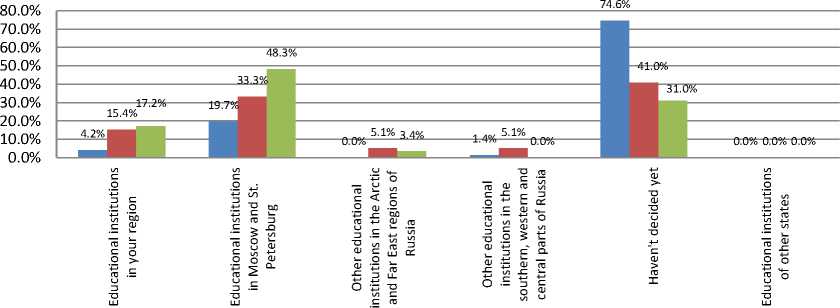
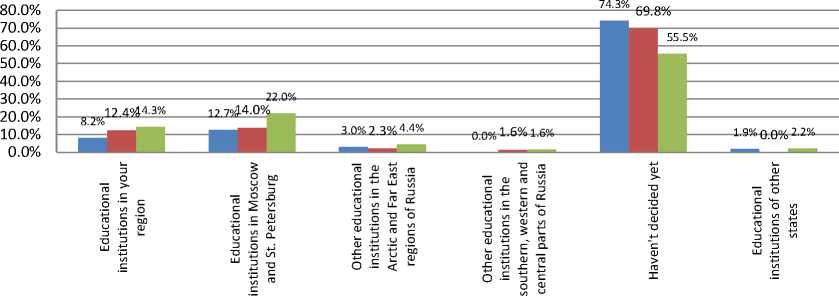
The educational intentions of school students in the western and eastern parts of the AZRF differ in terms of the geographic focus of their educational choices. Among the students surveyed in the Murmansk Oblast, there is a typical orientation toward enrolling in universities in the central and southern regions of the country (Fig. 2). By contrast, students in the Republic of Sakha (Yakutia) are more likely to plan to study in the capital and abroad, specifically in East Asian countries such as China, Korea, and Japan (Fig. 3).
■ Grades 7-8
■ Grade 9
■ Grades 10-11
Fig. 2. Educational intentions of school students in the Murmansk Oblast. Compiled by the author on the basis of the results of a pilot survey.
■ Grades 7-8
■ Grade 9
■ Grades 10-11
Fig. 3. Educational intentions of school students in the Republic of Sakha (Yakutia). Compiled by the author on the basis of the results of a pilot survey.
In both the western and eastern parts of the Russian Arctic, a key issue is the low level of interest among school pupils in applying to local and regional higher and secondary vocational education institutions, and to educational institutions in the Arctic and the Russian Far East (as shown in the diagram for the Russian Far East) in general. The share of 11th-grade students in the Murmansk Oblast who have such intentions is 17.2%, and 9th-grade students — 15.4% (Fig. 2). The share of 11th-grade students in the Republic of Sakha (Yakutia) is 14.3%, and 9th-grade students — 12.4% (Fig. 3). At the same time, a fairly large proportion of students in both regions have not yet decided on an educational institution to continue their studies: 31% of 11th-grade students and 41% of 9th-grade students in the Murmansk Oblast (Fig.2); 55.5% of 11th-grade students and 70% of 9th-grade students in the Republic of Sakha (Fig. 3). This represents a pool of prospective students who could be encouraged to apply to the region with appropriate support and assistance in decision-making. Mentoring was proposed as a form of such support, and this hypothesis was also tested through a survey of school students.
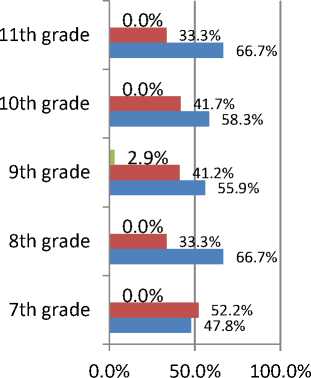
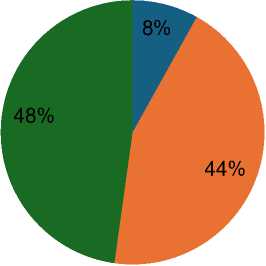
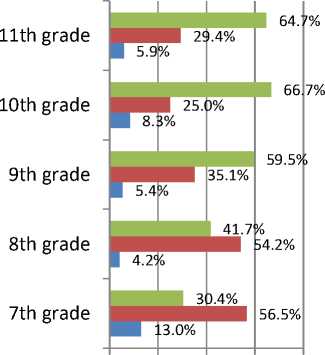
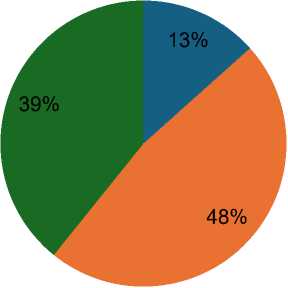
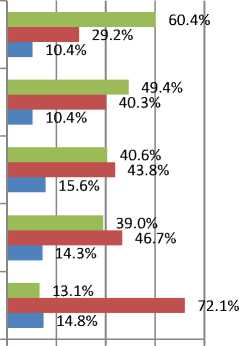
The survey revealed that school students are interested in the opportunity to work with a mentor when choosing an educational institution and a field of study. In the Murmansk Oblast, 69% of respondents expressed this preference (Fig. 4), while in the Republic of Sakha (Yakutia) the share was 75% (Fig. 5). Students in grades 7 and 8 in the Murmansk Oblast are most willing to work with mentors (Fig. 4). At the same time, 7th-grade students are interested in choosing a profession (55%), while 8th-grade students — in choosing an educational institution (Fig. 6). In the Republic of Sakha (Yakutia), 9th- and 10th-grade students (Fig. 5) are more interested in a mentor regarding choosing an educational institution (Fig. 7). As a potential mentor, students in the Republic of Sakha would prefer to see an experienced specialist or manager (Fig. 9), while students in the Murmansk Oblast would prefer university or vocational college students (Fig. 8).
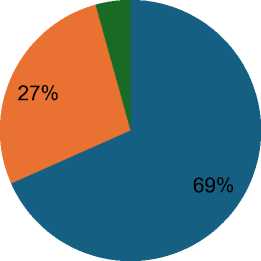
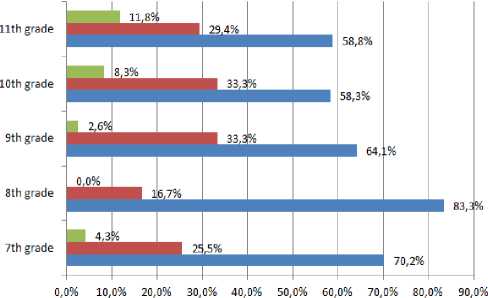
Fig. 4. Distribution of responses from school students in the Murmansk Oblast to the question regarding their need for a mentor. Compiled by the author on the basis of the results of the pilot survey.
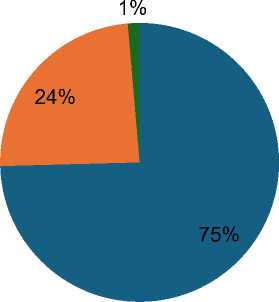
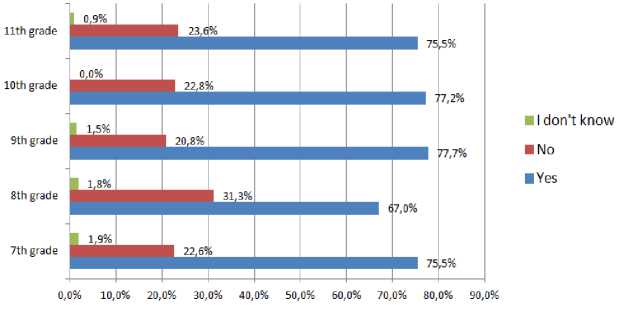
Fig. 5. Distribution of responses from school students in the Republic of Sakha (Yakutia) to the question regarding their need for a mentor. Compiled by the author on the basis of the results of the pilot survey.
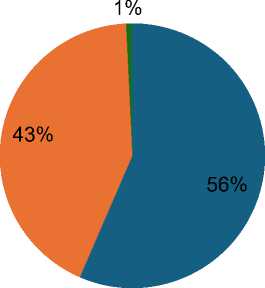
■ about something else
■ about choosing a profession
■ about choosing an educational institution
Fig. 6. Distribution of responses from school students in the Murmansk Oblast to the question regarding the topic of conversation with a mentor. Compiled by the author on the basis of the results of the pilot survey.
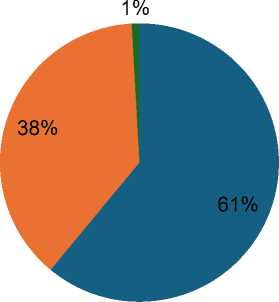
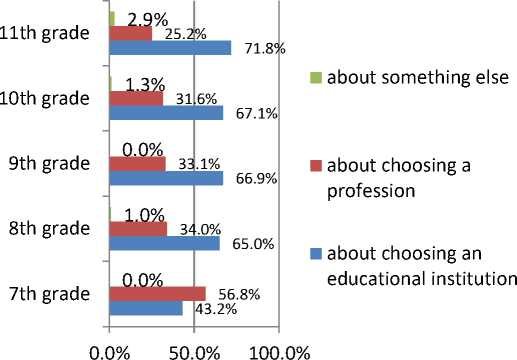
Fig. 7. Distribution of responses from school students in the Republic of Sakha (Yakutia) to the question regarding the topic of conversation with a mentor. Compiled by the author on the basis of the results of the pilot survey.
0.0%20.0%40.0%60.0%80.0%
■ student
-
■ experienced specialist and supervisor
-
■ young specialist
Fig. 8. Distribution of responses from school students in the Murmansk Oblast to the question of who they see as a mentor. Compiled by the author on the basis of the results of the pilot survey.
11th grade
10th grade
9th grade
8th grade
7th grade
■ student
■ experienced specialist and supervisor
■ young specialist
0.0% 20.0%40.0%60.0%80.0%
Fig. 9. Distribution of responses from school students in the Republic of Sakha (Yakutia) to the question of who they see as a mentor. Compiled by the author on the basis of the results of the pilot survey.
Confirming the proposed hypothesis for scaling up the mentoring system for schoolchildren and focusing this system on the problem of outflow of applicants from Arctic regions by engaging representatives of universities/secondary vocational institutions, specialists, and heads of organizations operating in these regions is consistent with the national project “Youth and Children”. The objectives set by the Government of the Russian Federation for the development of the career guidance program should cover all students by the end of 2030 8. The proposed recommendations complement the key priorities outlined by the Ministry for the Development of the Far East and Arctic in the Strategy for the Development of the Arctic Zone of the Russian Federation until 2035. For example, in the Arctic Zone of the Russian Federation, one of the key priorities was identified as projects for the development of scientific and educational infrastructure, including the creation of new and the modernization of existing higher and secondary education institutions. At the same time, given the current problem of outflow of applicants from Russia’s Arctic territories, the question arises as to who will study at these updated universities and secondary vocational institutions. A mentoring system for school students should become a supportive environment for Arctic educational organizations, helping to retain young people in the Arctic regions.
Another important aspect should be the unified efforts of all Arctic regions to combat the problem of population outflow, which is a common challenge. Strengthening complementary development could be reflected in the establishment of a mechanism for cross-regional exchange of university applicants between Arctic regions. On the one hand, this would satisfy young people’s need for independence and their desire to explore new territories; on the other, it would preserve the human resource potential of the macro-region as a whole by organizing education-driven migration within it. Furthermore, this will create a foundation for the development of scientific activity and the improvement of technologies used and in demand in the Arctic regions; it will ensure the utilization of existing educational facilities in secondary and higher vocational education, and optimize the costs of their creation and development. On this basis, the proposed expanded system of mentoring and career guidance should cover all regions within the AZRF, forming a unified communication strategy aimed at increasing the attractiveness of the AZRF regions for young people, reducing population outflow, and retaining the population within the macro-regional boundaries. A further direction for research could be the extension of the proposed complementary approach not only to the territory of the AZRF, but also to the regions of the Russian Far East as a whole, for which the problem of population outflow is also relevant.
Conclusion
The development of Arctic territories as a knowledge economy represents a strategic approach that enables economic growth to be combined with sustainable development and the preservation of a unique ecosystem. Investment in science and education is essential for the successful implementation of this approach. Russia, with its significant Arctic territories, has a good chance of becoming a leader in this process if it can effectively integrate innovation and knowledge into its Arctic strategy.
Currently, the development of education in the Arctic zone of the Russian Federation is aimed at training personnel to meet economic needs, combating population outflow, developing digital technologies, and strengthening the region’s scientific potential. These objectives are planned to be achieved through the creation, modernization, and expansion of the higher and secondary vocational education infrastructure in the Arctic regions.
However, the current state of the higher and secondary vocational education system in the AZRF presents a number of serious challenges related to the outflow of young people, declining student enrollment, and the insufficient development of educational infrastructure. These problems are exacerbated by migration trends, with young people preferring to receive education in the central and southern regions of the country or abroad. This creates risks for the sustainable development of Arctic territories and the implementation of strategic plans for education development in the regions, calling into question the enrolment rates and demand for both existing higher and secondary education institutions in these territories and those planned for establishment in areas where they are insufficient or do not exist. This raises doubts about the investment attractiveness of decisions to modernize regional educational infrastructure and requires the development of additional proactive measures to mitigate these risks.
A study of the educational intentions of school students in grades 7–11 in the western and eastern Arctic regions revealed that the key factors influencing their educational intentions are the underdevelopment of local universities and colleges, as well as the lack of effective career guidance and support mechanisms for young people in choosing educational institutions. In particular, a survey of school students in the Murmansk Oblast and the Republic of Sakha (Yakutia)
showed that a significant portion of students have not yet decided on an educational institution. This opens up opportunities to redirect them towards local educational institutions, provided that appropriate support is offered.
A promising solution could be the introduction of a mentoring system, which would enable school pupils to receive guidance on choosing a career and an educational institution. The survey results confirmed high interest among students in working with mentors, with both experienced professionals and university students being considered as mentors. This aligns with national projects in education and youth policy, as well as the strategic development goals of the Arctic zone of the Russian Federation. Furthermore, to address the problem of youth outflow from the Arctic regions, it is proposed to develop cross-regional cooperation between the AZRF regions. It is necessary to create conditions for the exchange of prospective students between these regions, to retain human capital and stimulate the development of scientific and educational infrastructure, as well as to strengthen the knowledge economy in Arctic regions by enhancing their complementary development in the educational sphere.
Therefore, to successfully implement the strategy for developing Arctic cities as key multifunctional centers, it is necessary to focus efforts on developing local educational infrastructure, implementing a mentoring system, and strengthening interaction between Arctic regions. This will not only retain young people in these regions, but also create the conditions for the transition to a knowledge economy, which is an important step towards the sustainable development of these territories. A further direction for research could be the extension of the proposed complementary approach not only to the territory of the AZRF, but also to the regions of the Russian Far East as a whole, for which the problem of population outflow is also relevant.
