
Conceptual Model of a New Subject of Public Legal Relations “Zemstvo Rescuer” for the Purpose of Ensuring Sustainable Socio-Economic Development of Remote and Isolated Arctic Territories
Journal: Arctic and North @arctic-and-north
Section: Social and economic development
Article in issue: 63, 2026.
Free access
This article examines the current socio-economic challenges relating to ensuring the safety and well-being of residents in remote and hard-to-reach areas of the Arctic region of the Russian Federation. The aim of the study is to provide a scientific basis for measures to ensure the safety and well-being of the population living in the Far North, as well as the social security of Russian citizens in remote and in-accessible areas of the Arctic, with a view to the sustainable socio-economic development of the Arctic regions of Russia. The object of the study is the population of remote and isolated territories in the Arctic zone of Russia. The subject of the study is defined as the system of life support for the population, which ensures the safety of people’s livelihoods in these territories under specific conditions of economic de-velopment, climate, transport links, and the state of road, transport, social and other infrastructure. The objectives of the study are: to analyze socio-economic and environmental problems in the process of vital activity of the population in these territories; to formulate the solutions of these problem through the introduction of a new subject of social legal relations “Zemstvo Rescuer”; to construct conceptual and descriptive models of a prototype life safety system, taking into account the functioning of this new subject of legal relations. The results of the research were approved at the International Scientific and Practical Conference “State Policy in the Field of Security in the Arctic Zone of the Russian Federation”, held in January 2025 as part of the working program of the “Safe Arctic – 2025” exercises involving the forces and resources of the unified state system for the prevention and elimination of emergencies in the Arctic zone of the Russian Federation.
Short address: https://sciup.org/148333998
IDS: 148333998 | UDC: 332.02(985)(045) | DOI: 10.37482/issn2221-2698.2026.63.121
Text of the scientific article Conceptual Model of a New Subject of Public Legal Relations “Zemstvo Rescuer” for the Purpose of Ensuring Sustainable Socio-Economic Development of Remote and Isolated Arctic Territories
DOI:
The Arctic zone of the Russian Federation (hereinafter referred to as the AZRF) differs significantly from other regions of our country in its socio-economic, natural resource, demographic, and environmental conditions and factors. The following characteristics should be highlighted
∗ © Tshovrebov E.S., Masloboev A.V., 2026
2698.20 26.63.121
This work is licensed under a CC BY-SA License
( Chupriyan, 2006) :
-
• extreme natural and climatic conditions, including permanent ice cover or drifting ice in the Arctic seas;
-
• high resource intensity and dependence of economic activity and the population’s livelihoods on supplies of fuel, technical and medical equipment, food and essential goods from other constituent entities of the Russian Federation;
-
• intensified permafrost degradation (thawing) and the resulting processes, events and phenomena that pose a threat to the population’s livelihood;
-
• vulnerability of ecological systems to hazardous man-made processes and emergency situations caused by human industrial and economic activities;
-
• focal nature of industrial and economic development of territories;
-
• low population density;
-
• remoteness from major industrial centers, and challenges of organizing life support for settlements in remote and inaccessible areas of the Far North.
All these contradictions, factors, conditions and constraints, which have multiple cause-and-effect relationships, characterize the process of life, management, and life support in the northern territories of the country as a complex, multifaceted, multi-level, and multi-parameter system.
Current methods for assessing the quality of life — in terms of livability, comfort and, above all, safety of the population in Arctic regions — do not take into account the so-called “northern” factor, whereas there is already an urgent need to develop a concept (strategy) for the quality and safety of life for the population of northern regions, an action plan for its implementation, complete with a set of indicators for assessing the standard of living and safety of life in the Arctic regions.
Various concepts, strategies, standards and other documents lack uniform terminology, a conceptual framework (definition) that is interpreted clearly, precisely and unambiguously, and algorithms for providing emergency assistance in situations where the use of rescue forces and resources, or comprehensive rescue centers, is impossible. There are also no legal instruments regulating the types, forms and processes of providing assistance to the population in situations where it is impossible to deploy (due to climatic or other factors) or where the deployment of specialized rescue units, stationed at a considerable distance from the locations of hazardous events, incidents or emergencies and their consequences, takes a long time.
Taking into account the lack of research into this pressing issue, as well as the legal, organizational and managerial contradictions, the complex task of optimizing the public safety system in the Far North and ensuring its functionality, sustainability and effectiveness cannot be achieved without developing a strategy (concept). It should define the objectives, priorities and tasks of ensuring public safety, as well as the approaches, measures, resources and means for its phased im-
SOCIAL AND ECONOMIC DEVELOPMENT
Eduard S. Tshovrebov, Andrey V. Masloboev. Conceptual Model of a New Subject … plementation in the short, medium and long term, and provide a scientifically grounded forecast of the system’s development under all possible scenarios, external and internal influencing factors, and constraints.
Materials and methods
The main purpose of the concept being developed is to ensure the safety and well-being of the population in the Arctic zone of the Russian Federation.
The object of the study is the population of remote and inaccessible territories of the Arctic zone of Russia.
The subject of the study is defined as the provision of essential services to the population, ensuring the safety of people’s livelihoods in these territories under specific conditions of climate, transport links, and the state of road, transport, social and other infrastructure.
Conceptual modelling serves as the theoretical basis for developing this strategy. It represents a formal description of aspects of the Arctic environment identified during the study, with the aim of understanding, communicating, systematizing, and analyzing the interconnected processes, events, and phenomena occurring in the Arctic zone of the Russian Federation. Conceptual modelling is carried out by constructing a set of interrelated concepts underlying the research methodology, thereby providing a systematic description of the area under study.
The materials for the study were the scientific works of Russian and foreign scientists in the field of ensuring safety and assessing risks to the life of the population (Akimov, Ivanova, Shishkov, 2023; Oltyan, Arefyeva, Kotosonov, 2020; Zhou, Brose, Kastenberg et al., 2011; Faleev, Oltyan, Arefieva et al., 2018; Avdotin, Akimov, Plyushchikov, 2021, problems of sustainable socioeconomic development (Prokhotskiy, Zalikhanov, 2008; De Haan, Lundström, Sturm, 2006; Sku-fina, Serova, 2024; Kutsenko, Sidorenko, Miroshnichenko et al., 2012; Zholdakova., Sinitsyna, Pechnikova et al., 2018), socio-ecological and economic problems of the Russian Arctic (Selin, 2011; Kutsenko, Pavlenko, Plate et al., 2020; Ledeneva, 2021; Skufina, Samarina, Baranov et al., 2021; Serova, Serova, 2021), and problems of organizing emergency rescue operations in the AZRF (Baryshev, 2020; Ilyukhin, 2018) 1 . The study is also based on the authors’ own works: articles in the fields of environmental economics, environmental safety, the economic aspects of human life and life support in territories, and conceptual and mathematical modelling of various systems (Masloboev, Masloboev, 2021; Tskhovrebov, 2023; Tskhovrebov, Gordienko, Gursky, 2023; Masloboev, Bystrov, 2020; Masloboev, 2019).
Results and discussion
At the first stage, we determined the extent to which conceptual modelling is the most appropriate approach within the context of this study for achieving the research objectives.
According to (Emelyanov, Popkov, Oleynik, 2004), a conceptual model provides a theoreti- cal framework within which the situation, processes, phenomena and events under investigation are described and subsequently formalized. Conceptual modelling enables the clear formulation of research objectives and scientific hypotheses, followed by the development of mathematical and computer models, based on conceptual descriptions, as well as systems and algorithms for automating the solution of these problems.
The main result of constructing a conceptual model of a life support system for ensuring public safety in remote and hard-to-reach areas is the development of mechanisms and methods for its improvement, optimization, and increased efficiency in light of the primary tasks faced by federal and regional executive authorities, local self-government bodies, and participants of the Russian Emergency System (RSChS) in the field of public safety, and the protection of the population and territories from natural and man-made emergencies.
In developing the conceptual model, a worst-case scenario has been considered, in which, due to various factors and conditions, it becomes impossible to implement one or more interrelated stages of the operation of specialized rescue units, including (Chuprian, 2012):
-
• transmission, reception, and processing of information about an emergency in the area of responsibility; response decisions; coordination of search and rescue operations;
-
• landing and deployment of a rescue base camp and/or temporary hospital;
-
• provision of emergency technical, psychological and medical assistance to victims using air and other modes of transport.
This situation is particularly relevant when defining the division of responsibilities for providing emergency assistance to the population in remote and inaccessible areas of the AZRF, taking into account specific conditions and factors: climate, economic management, natural resource use, the presence of man-made hazards, population size and composition, and the provision of medicines, technical equipment, essential goods, and timely and comprehensive medical, technical and psychological assistance.
In developing the conceptual model, it was taken into account that at the current stage of Russia’s socio-economic development, the contradictions and shortcomings of the life support system of remote and hard-to-reach areas of the AZRF require prompt, timely, and comprehensive measures to address potential adverse events, incidents, emergencies, their dangerous consequences, and fundamentally new solutions for organizing the safe livelihoods of the population of the Far North.
The absence of effective strategic measures at the state level regarding life in Russia’s Far North — measures designed to ensure its sustainable socio-economic development and the environmental safety of these territories — remains a serious problem that hinders the sustainable development of the entire country.
In order to resolve the existing contradictions using scientific methods, a research hypothesis has been formulated. The hypothesis is that the introduction of a new entity in public legal relations — the “Zemstvo Rescuer” — will significantly eliminate the shortcomings and contradic-
SOCIAL AND ECONOMIC DEVELOPMENT
Eduard S. Tshovrebov, Andrey V. Masloboev. Conceptual Model of a New Subject … tions in the system for ensuring the safety of the population in remote and inaccessible northern territories, provided that its functions, powers, competences, interrelationships, logistical support and organizational structure are optimized.
According to (Tskhovrebov, 2021), during the stage of constructing and structuring a model, defined as a formalized description of a set of concepts, objects, subjects and the relationships between them, the process of modelling the object of study is carried out using the “entity– relationship” method, which links the subject, object and context of the research area in the form of a system of external and internal conditions for the object’s existence and factors influencing it in the aspect under study.
The main stages of constructing a conceptual model for optimizing the process of ensuring public safety and providing emergency assistance to the population in remote and hard-to-reach areas are defined as follows (Tskhovrebov, 2021):
-
• establishing the aim and the concept (strategy) for achieving it;
-
• selecting, systematizing, and analyzing input and output variables;
-
• identifying controlling and disturbing influences, factors, conditions and constraints, and establishing cause-and-effect relationships between them;
-
• determining the most characteristic properties and parameters;
-
• developing the structure of the functional model.
According to (Tskhovrebov, 2021), in the process of forming and structuring the conceptual model, the modelling of transitions between static states within the framework of a dynamic description of the system, for the purpose of assessing its behavior, current and projected changes, is based on methods of system dynamics: the construction of graphical logical-analytical diagrams of cause-and-effect relationships and the influences of stages, factors and parameters on development.
The abstract representation of the state transition processes “problem – concept – solution – implementation”, following (Tskhovrebov, 2021), is implemented in the form of diagrams (current states, their transformation under external influences, resolution of the situation with the transition to the final state) and directed graphs for a visual representation of the results of system transformation. This process is shown schematically in Fig. 1.
Context (security)

Object of the study (human activity in remote and inaccessible areas)

Subject of the study (optimal interaction of subjects of public legal relations in order to ensure life safety)
Fig. 1. Logical structure of the conceptual model.
The conceptual model of a prototype life safety system for remote and hard-to-reach areas, implemented through the introduction of a new public legal subject, the “Zemstvo Rescuer”, is presented in the diagram in Fig. 2.
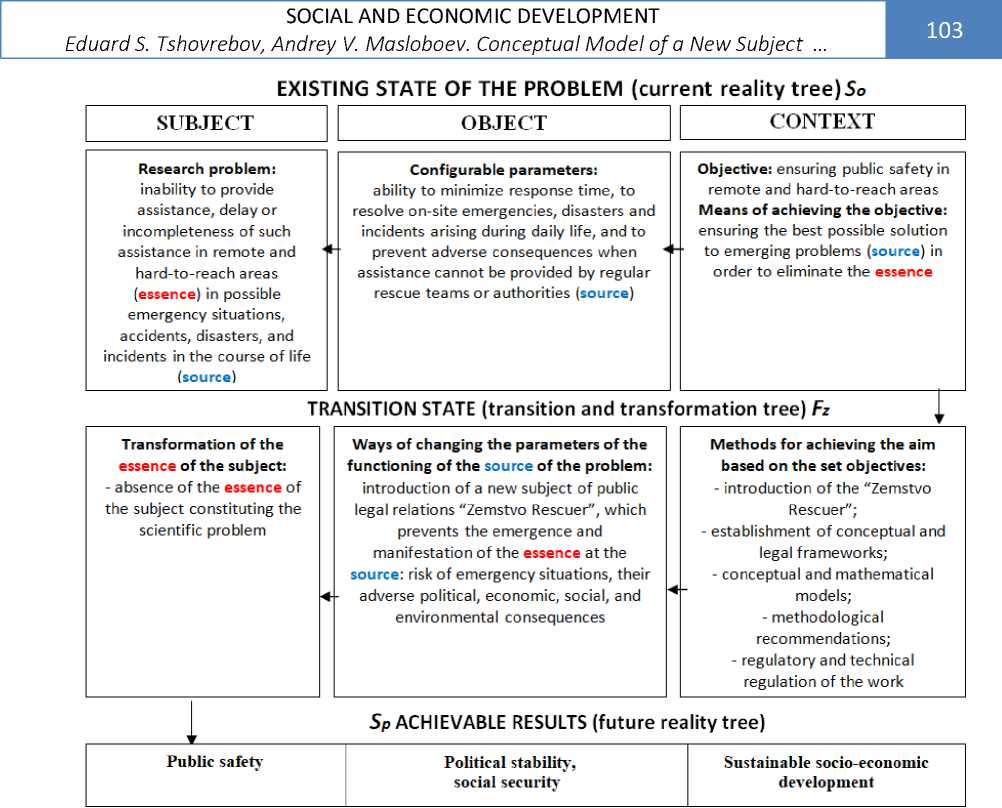
Fig. 2. Conceptual model of a prototype life safety system for Arctic territories, including the new public legal subject, the “Zemstvo Rescuer”.
The algorithm of the logical sequence of actions for creating the new public legal subject, the “Zemstvo Rescuer”, for the purpose of ensuring public safety in remote and hard-to-reach areas is presented in the flowchart (Fig. 3).
Unresolved pressing problems in ensuring the safety of life in remote and hard-to-reach areas

Identified contradictions in problem resolution that require a fundamentally new approach, measures, and actions
Search and selection . of solution options

Introduction of a new subject of public legal relations, the “Zemstvo Rescuer”, as a fundamentally new solution to the acute socio-economic problem of ensuring public safety

Quantitative and qualitative requirements for the performance of the “Zemstvo Rescuer” Performance criteria
Required knowledge, skills, and competencies

Functions and powers of the “Zemstvo Rescuer” as a subject ensuring public safety in remote and hard-to-reach areas

Geographical location and operational time parameters, taking into account various factors, conditions, and constraints

Interaction with other subjects of public legal relations (types, forms)

Logistics and technical support
Sources, forms, and procedures of funding

Establishment of conceptual framework and scope of activity in regulatory legal acts of various levels
Fig. 3. Algorithm of the logical sequence of actions for creating the new public legal subject, the “Zemstvo Rescuer”.
The set of current problems and unresolved contradictions, identified at the conceptual model specification stage during the structural-logical and systems analysis, which hinder the full implementation of the idealized conceptual model proposed in this work for ensuring life safety in remote and inaccessible territories of the AZRF, determined the need to formulate the task of mathematical modelling.
According to the study (Tskhovrebov, 2021), its aim is to ensure that the required quality (efficiency) indicators of the system’s operation and the parameters of assistance provision are met, as well as to minimize the time required to provide such assistance in conditions of destabilizing environmental influences (adverse phenomena, abnormal situations, events, incidents, manmade accidents, emergencies contributing to the disruption of normal living conditions).
The parameters of the mathematical modelling problem, including the selection and justification of the nomenclature and designations of input, internal and output indicators, and the establishment of their composition, dimensions and measurement ranges, are given in Table 1 and the following description.
Table 1
Parameters of the mathematical modelling problem
|
Simulation parameters |
Parameter composition |
Specified conditions |
|
S — system (object of study) |
Life safety systems in numerous settlements in hard-to-reach and remote areas s1,…,sh |
S = { s e S | u e [ 1, h ]} |
|
Р — a range of input parameters |
р1,…,рw —population of the service area, distance between settlements |
p , e X , i = 1... w V s e S 3 p e P hw |
|
С — a range of output parameters |
с 1 ,…, с r — optimizable output parameters (response time, taking into account the method and distance of arrival) while ensuring р 1 ,…, р w |
c e C , i = 1... r ; C c P ; C ® P , V p e P 3 c e C wr |
|
Т — a range of internal system parameters |
т 1 ,…,т g — legal (clear regulation of the functions, tasks, and powers of the “Zemstvo Rescuer” in current legislation); informational (information on the rescuer’s location and assistance capabilities, ensuring constant communication with them if necessary); technical (material, medical and technical resources and equipment used in a specific sequence and in accordance with their intended purpose); professional (knowledge, skills, competence, and personal and professional qualities of the “Zemstvo Rescuer”); economic (timely funding for the work of the “Zemstvo Rescuer”); organizational (well-established inter-departmental and intersubject interactions) |
T =&) ; 3 p e P V T e T ^ P ^ C w g wr |
|
E — a range of external destabilizing environmental factors (emergency |
e1,…,em — destabilizing environmental parameters (adverse phenomena, emergency situations, events, incidents, accidents, disas- |
E = { e a e E | a e [ 1, m ] } |
|
situations) that affect the system’s operating conditions (public safety) |
ters that disrupt normal living conditions and require the intervention of the “Zemstvo Rescuer”), in relation to which a set of corrective actions F is developed to overcome them, provided that the functioning of internal parameters is ensured in order to achieve the system’s output parameters |
|
|
F — a set of control (corrective) actions affecting the state of the system S and its elements under the influence of E |
f 1 ,…,f k — organizational, regulatory, technical, informational, and educational functions implemented by the “Zemstvo Rescuer”, aimed at ensuring compliance with quantitative and qualitative criteria, indicators, and targets relating to life safety in remote and hard-to-reach areas |
V e e E 3 f e F mk |
|
Q — a set of performance indicators of the “Zemstvo Rescuer” system |
q1,…,qn — output quali-ty/performance indicators |
E = { y , ,•••, У г e P*y , ,..., y r £ C } ^ 0 |
Based on the results of the study (Tskhovrebov, 2021), the substantive (verbal) formulation of the scientific problem consists of developing a methodology (procedure) M that implements a mechanism for:
-
1) ensuring achievable values q 1 л ,…,q n д of qualitative and quantitative life safety indicators under conditions of emergency situations q ,..., qn ( v q Д < q n , qn e Q , П = 1.. n ) in the range of values of input and output parameters ( Р, С );
-
2) minimizing output parameters (time to provide assistance) c ,..., c ( c e C , j = 1.. r ) in the range of values of P , measured in units of time, taking into account the distance factor by varying the values of internal parameters (information, capabilities, interaction, interchangeability, technology) through management actions f ,..., f ( f e F , l = 1.. k ) , under the influence of destabilizing environmental factors e,...,e ( e e E , a = 1.. m ) .
-
1 , , m a ,
Then, following the research methodology described in (Tskhovrebov, 2021), the formal formulation consists of searching for a mathematical method M that effectively implements the prototype of the “Zemstvo Rescuer” model in practice:
-
1) M = {S , P , T , E , F , Q} ^ q n\ ( v q n < q n , qn e Q, П = 1.. n ) ;
-
2) M = ( S , P , T , E , F , Q) ^ min c \ c e C , j = 1.. r , subject to constraints:
-
a. on the variable parameters: T e [ T min, T min ] T e T c TM „, g = 1..| T\ ;
e m e [ e m max, e m mX 1 e € E C E , m = ^ E | ; f k e[ f max, f mx ] f k e F C F don , k = ^ F | ;
-
b. on the input parameters: p „ e[ p max, p max], p e P c P „, w = 1..| P |,
where Р доп — the population size served by the “Zemstvo Rescuer”, determined by organi-
SOCIAL AND ECONOMIC DEVELOPMENT
Eduard S. Tshovrebov, Andrey V. Masloboev. Conceptual Model of a New Subject … zational and technical capabilities and taking into account spatial and transport factors; E доп — the range (composition) of emergency situations to be overcome, which the “Zemstvo Rescuer” can resolve, eliminate, mitigate, or localize, or prevent the adverse consequences of such situations that threaten the safe operation of system S ; F доп — the set of necessary control actions of minimal composition, enabling the overcoming of destabilizing factors of the external environment E for the effective application of the set of parameters T , ensuring the achievable performance indicators of the modelled system: C and Q; Т доп — the sufficiently permissible number of internal environment factors contributing to the achievement of the best result under the given conditions.
A systems analysis of the model’s structure, reliability and adequacy revealed: its multicomponent and multi-factor nature, the multiplicity of its constituent elements, uncertainty, complexity of formalizing the initial and final boundary conditions and variable parameters, and the unreliability of their values prevent the direct application of mathematical modelling methods for the abstract representation of a system prototype with a high degree of approximation to actual operating conditions. Therefore, the research methodology is based on supplementing the conceptual model with predictive, abstract-logical constructions with the local application of mathematical methods, systems theories, and non-exact sets to form the configuration of the proposed organizational and technical system and target indicators of life safety. Taking into account the presence of the tasks set out in the work, for which there are no strict approaches that would allow obtaining an unambiguous result in an optimal (in dynamic, imprecisely defined conditions) preparation time for making design, organizational, technical, and management decisions, the research methodology is based on the theory of soft computing using imprecise and mathematically non-rigorously determined methods and algorithms (Tskhovrebov, Gordienko, 2023).
In order to ensure the reliability and adequacy of the conceptual model, and to maximize its correspondence to the real system, a descriptive model of the М s life safety system prototype has been created using set-theoretical constructs, incorporating the “Zemstvo Rescuer”, which reflects the state and functional-structural interaction of a set of parameters, elements and processes with external and internal factors. It is presented in formalized form as follows:
Ms = S , P , T , E , F , Q Y (1)
S h , w , g , m , k , ^n
In the course of the study, the following parameters are subject to systems analysis:
S h — life safety facilities across a range of settlements in hard-to-reach, remote areas (temporary settlements, urban and rural settlements, the presence and condition of residential, industrial, energy, transport and social infrastructure, as well as warning and communication systems) s,,...,sh : S = S e S | u e [ 1, h ] } ( serviced facilities, areas where there is a need for emergency assistance by the “Zemstvo Rescuer” );
P w — size, composition, and distribution of the population potentially in need of assistance (pensioners, workers, children, shift workers, indigenous nomadic populations, individuals released from correctional facilities, reindeer herders, facility maintenance personnel, etc.) ( potential subjects of rescue and assistance by the “Zemstvo Rescuer” );
Q п — a set of measurable current and projected parameters of the system state as indicators and targets ( final results of the “Zemstvo Rescuer” activities );
F k — a set of control situational actions affecting the state, structure, and interrelationships between components: F = { f | k e F } — organizational and regulatory functions implemented by the “Zemstvo Rescuer” to ensure the safety of system S and formed by a subset of institutional elements, i.e., organizational, regulatory, technical, informational, and educational functions implemented by the “Zemstvo Rescuer” to achieve compliance with quantitative and qualitative criteria, metrics, and indicators of the state of public safety in remote and hard-to-reach areas ( functionality of the “Zemstvo Rescuer” );
F 1 — prevention of emergencies and hazardous events, phenomena, and incidents (preventive, warning, informational, and other activities);
F 2 — rescue of people, flora and fauna, and property in the event of abnormal situations, disasters, and emergencies;
-
F 3 — assistance to citizens both in their daily lives and to victims of hazardous events and emergencies;
Т g — a set of internal conditions determining the capabilities, timing, quality and scope of the assistance provided — the operational actions of the “Zemstvo Rescuer” to ensure the safety of the system T = { T | g e T } — is determined by the following groups of factors ( capabilities ):
-
Т 1 — informational (information on the rescuer’s location and assistance capabilities, ensuring constant communication with them if necessary);
-
Т 2 — technical (a variety of material, medical, informational and technical resources and products applied in a specific sequence and in accordance with their intended purpose);
-
Т 3 — professional (availability of the necessary professional competencies, theoretical knowledge, practical skills, and professional qualities);
-
Т 4 — psychological and physical (necessary and sufficient level of mental and psychological state, physical fitness);
-
Т 5 — economic (timely funding for the operation of the “Zemstvo Rescuer”);
-
Т 6 — organizational (inter-departmental and inter-subject interactions).
Parameter Т 3 is determined on the basis of the required competencies of the “Zemstvo Rescuer” in accordance with the tasks assigned to it within the current regulatory framework:
-
• Federal Law “On Education in the Russian Federation”;
-
• Federal Law “On the Protection of the Population and Territories from Natural and ManMade Emergencies”;
-
• Order of the Ministry of Education and Science of Russia “On Approval of the Procedure for Organizing and Implementing Educational Activities under Additional Professional Programs”.
An indicative list of professional competencies within the model is proposed taking into ac- count the requirements of the professional standards approved by the Russian Ministry of Labor:
-
Т 31 — “Rescuer”;
-
Т 32 — “Civil Defense Specialist”;
-
Т 33 — “Industrial Environmental Safety Specialist”;
-
Т 34 — “Radio Communications and Telecommunications Specialist”;
-
Т 35 — “Occupational Health and Safety Specialist”;
-
Т 3 6 — “Specialist in Providing Medical Care to Minors Studying in Educational Institutions”;
-
Т 37 — “Off-Road Vehicle Driver”;
-
Т 38 — “Specialist in Technical Diagnostics and Monitoring of the Technical Condition of Motor Vehicles during Periodic Technical Inspections”;
Е m — a set of external influences on the life safety system S, defined as the aggregate of subsets of sources of abnormal events, incidents, and emergencies: E \ e | m e E } ( area of activity by types of abnormal events, incidents, and natural and man-made emergencies ).
It is formed on the basis of an analysis of the frequency and level of hazardous consequences of the most typical for the region (hard-to-reach, remote part) emergency situations, incidents, and disasters within the framework of the functionality of the “Zemstvo Rescuer” in order to ensure the safety of the system F = { ft | k e F } and existing capabilities T = { T | g e T } , taking into account other influencing conditions and factors (climatic, meteorological, transport, etc.).
For remote northern territories, the range of such hazardous events (in accordance with the criteria for classifying events as natural or man-made emergencies, established by Order No. 429 of the Russian Ministry of Emergency Situations dated 5 July 2021) may include the following:
-
Е 1 — transport accidents (water and road transport, including snowmobiles, scooters, and boats);
-
Е 2 — accidents involving life support systems (heating and electricity networks, communications, autonomous energy sources, sewage systems, and treatment facilities);
-
Е 3 — accidents involving oil spills;
-
Е 4 — accidents at hydraulic structures;
-
Е 5 — explosions (including those with subsequent combustion), destruction, and collapse of buildings and structures;
-
Е 6 — thermokarst, landslides, avalanches;
-
Е 7 — very heavy snow (snowfall);
-
Е 8 — severe frost, freezing;
-
Е 9 — severe blizzards;
-
Е 10 — icing and frosts;
-
Е 11 — snow avalanches;
-
Е 12 — very strong winds, hurricane-force winds;
-
Е 13 — forest fires;
-
Е 14 — epidemics of viral and other infections, mass poisonings.
These also include events and incidents related to:
-
Е 15 — violation of safety regulations on water bodies (ice breaking away with people on it, rescue of drowning persons, etc.);
-
Е 16 — disorientation in forests, forest-tundra, mountains, and on water bodies, search and recovery of missing or lost people;
-
Е 17 — cases of acute intestinal and respiratory viral diseases, injuries and wounds, exacerbation of chronic diseases, and inappropriate behavior of people under the influence of alcohol.
The main objective of the model is to transform the content and parameters of the specified functions, without changing their composition, in order to ensure safe living conditions in hard-to-reach areas.
For the purposes of analyzing and empirically verifying changes in the state of public safety over time (current, forecast), and possible variants of system behavior, a dynamic multiple model of the “Zemstvo Rescuer” functionality was developed as a systemic assessment of the need, volume, and timing of assistance (P, C), implemented through the capabilities of T, taking into account the framework of the functional F. It is described by a system of differential equations based on the application of a non-linear differential equation reflecting Volterra’s exponential law of development: dx- = sx, i = 1..n, where x = x (t), s — coefficient of change in the state of the i-th com-dt i i i i ponent of the system; t — current time of its operation:
dP = Fk (P, C , T P dt ‘y w ’ r ’ g^w
C = Fk ( P , C , T ) C ,
dt ,V w ’ r ’ g- r, dT- = Fk (P, C , T )T t w, r, g g where Fk (P, C, T) — non-linear function of the control action on the k-th hierarchical sys- tem, reflecting the influence of the parameters of internal interactions in relation to the subject and object of study between the components P,Cr,T and external influences Ek(t) on the system dynamics; dPw — rate of change in the size, composition, and distribution of the served popula-dt tion over time; dCr — intensity of assistance provided within a given time interval in a given terri-dt tory; dTg — rate of change in the ability to provide assistance over time. dt
Conclusion
Based on the results of the conducted research, conceptual and descriptive models of a prototype life safety system for remote and hard-to-reach areas of the Far North were developed, based on the creation of a new subject of public legal relations — “Zemstvo Rescuer”. The scope of the new subject’s activities in providing assistance and rescue services to the population, the functionality of the “Zemstvo Rescuer”, the range of the facilities and territories where there is a need for operational assistance by the “Zemstvo Rescuer” are characterized; potential entities for rescue and assistance by the “Zemstvo Rescuer” are identified; the scope of activity by types of abnormal events, incidents, and natural and man-made emergencies, its potential capabilities, and the final results of the “Zemstvo Rescuer” activities are defined.
According to the authors, the objectives and final results of the newly developed system for ensuring life safety and life support in remote and inaccessible northern Arctic territories will contribute to the achievement of sustainable socio-economic development in the Arctic zone of the Russian Federation.
The results of the research were approved at the International Scientific and Practical Conference “State Policy in the Field of Security in the Arctic Zone of the Russian Federation”, held in January 2025 as part of the working program of the “Safe Arctic – 2025” exercises involving the forces and resources of the unified state system for the prevention and elimination of emergencies in the Arctic zone of the Russian Federation.
