
Contemporary Payment Systems in the Republic of Serbia: Technological Transformation, Consumer Sentiments, and Strategic Perspectives
Journal: Ekonomski signali @esignali
Article in issue: 1 vol.21, 2026.
Free access
This paper provides a comprehensive evaluation of contemporary payment systems in the Republic of Serbia, examining the intersection between institutional infrastructure upgrades and empirical financial consumer behaviour. Structurally, the analysis highlights recent macro-environmental milestones executed by the National Bank of Serbia, including the deployment of the high-performance DinaCard Switch, advanced EMVCo security protocols, and the continuous growth of the Instant Payment System (IPS). To evaluate market readiness, primary empirical research (N = 30) was conducted to track user adoption frequencies, safety perceptions, and transitional barriers regarding digital instruments. The empirical findings reveal a distinct development paradox: while infrastructure efficiency is exceptionally high, a psychological trust deficit and deeply ingrained cash habits (46.7%) restrict total mobilization. Ultimately, the paper synthesizes these insights to establish a strategic optimization roadmap, advocating for targeted financial literacy frameworks, transparent dispute resolution integration, and regulatory alignment with the Single Euro Payments Area (SEPA) to accelerate cashless integration.
Short address: https://sciup.org/170213256
IDS: 170213256 | UDC: 336.71:004(497.11) | DOI: 10.5937/ekonsig2601035M
Savremeni platni sistemi u Republici Srbiji: tehnološka transformacija, stavovi korisnika i strateške perspektive
Ovaj rad pruža sveobuhvatnu evaluaciju savremenih platnih sistema u Republici Srbiji, analizirajući povezanost između unapređenja institucionalne infrastrukture i empirijski utvrđenog ponašanja korisnika finansijskih usluga. Analiza ističe najznačajnije nedavne razvojne aktivnosti koje je realizovala Narodna banka Srbije, uključujući implementaciju visokoperformantnog sistema DinaCard Switch, primenu naprednih bezbednosnih EMVCo protokola i kontinuirani rast Sistema za instant plaćanja (IPS). Radi procene spremnosti tržišta za dalju digitalnu transformaciju, sprovedeno je primarno empirijsko istraživanje (N = 30) sa ciljem praćenja učestalosti korišćenja digitalnih platnih instrumenata, percepcije njihove bezbednosti i identifikovanja prepreka u procesu prelaska sa tradicionalnih na savremene načine plaćanja. Rezultati istraživanja ukazuju na postojanje izraženog razvojnog paradoksa: iako je efikasnost platne infrastrukture na veoma visokom nivou, psihološki deficit poverenja korisnika i duboko ukorenjene navike korišćenja gotovine (46,7%) i dalje ograničavaju punu mobilizaciju potencijala digitalnih platnih sistema. Na osnovu dobijenih nalaza, rad formuliše strateški okvir za optimizaciju i dalji razvoj platnog prometa u Srbiji, naglašavajući potrebu za unapređenjem finansijske pismenosti, uspostavljanjem transparentnih mehanizama za rešavanje sporova i regulatornim usklađivanjem sa Jedinstvenim područjem plaćanja u evrima (SEPA), kako bi se ubrzala integracija bezgotovinskih oblika plaćanja i podstakao održivi ekonomski razvoj.
Text of the scientific article Contemporary Payment Systems in the Republic of Serbia: Technological Transformation, Consumer Sentiments, and Strategic Perspectives
The rapid evolution of financial technology (FinTech) and the institutional drive toward cashless economies have fundamentally re-engineered the structural landscape of contemporary banking. Nationally and globally, modern payment systems no longer serve as mere passive conduits for fund transfers; instead, they operate as critical macroeconomic pillars that directly influence monetary velocity, transactional security, and aggregate economic efficiency. In the Republic of Serbia, this dynamic has manifested through an intensive regulatory and technological modernization process spearheaded by the central bank. However, while institutional infrastructure has rapidly converged with international benchmarks, the ultimate velocity of this digital transition depends heavily on the microlevel behaviour, technical literacy, and trust paradigms of domestic financial consumers (Vukša et al., 2024; Milojević et al., 2026).
As regional markets strive for greater international economic integration, academic discourse has increasingly focused on the structural impacts of cross-border standardization (Vladisavljević et al., 2023; Kostadi-nović, Ilievska Kostadinović, 2026). In this context, alignment with the Single Euro Payments Area (SEPA) guidelines is identified as a critical milestone for Western Balkan economies. Recent macroeconomic analyses confirm that SEPA integration radically minimizes cross-border transaction friction and eliminates predatory intermediary fees, serving as a powerful institutional driver for trade acceleration and financial convergence with advanced European markets (European Central Bank [ECB], 2026).
By synthesizing these diverse theoretical and empirical perspectives, this paper establishes a holistic evaluation of the current payment ecosystem in the Republic of Serbia.
Moving beyond isolated institutional metrics or purely theoretical concepts, this study explicitly connects the macroeconomic and technical upgrades executed by the National Bank of Serbia with primary, localized empirical research. Ultimately, this approach aims to identify the specific friction points restricting total digital mobilization and to formulate an integrated, data-driven strategic roadmap for future system optimization.
Empirical Assessment of the Serbian Payment Infrastructure
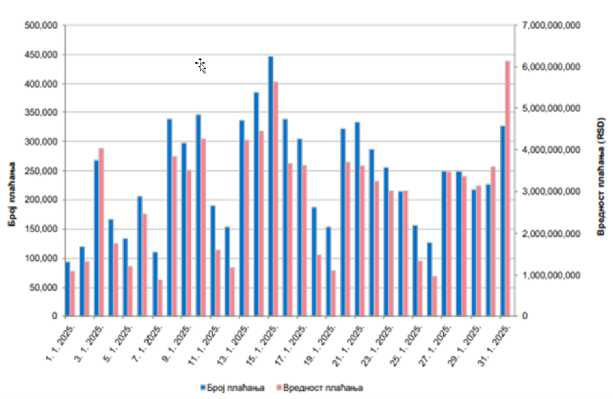
During the January observed period, the Instant Payment System (IPS) maintained by the National Bank of Serbia exhibited uninterrupted 24/7 operational availability over a 31-day cycle. Throughout this duration, the network successfully settled an aggregate volume of 7,538,690 individual transactions, resulting in a total financial turnover of RSD 89.9 billion. This operational load translates into a mean daily transaction frequency of 243,184 transfers and an average daily financial throughput of RSD 2,900.4 million. Furthermore, the data indicates that the average ticket size per transaction was RSD 11,926.9, while the settlement velocity remained highly opti- mized, requiring an average execution window of merely 1.2 seconds. Ultimately, these performance indicators underscore the significant structural capacity, speed, and realtime processing capabilities of the central bank's clearing infrastructure under high-volume conditions (National Bank of Serbia [NBS], 2025).
this aggregate volume, the Clearing system settled 1.2 million transfers, accounting for 7.4% of the total, whereas the dominant share of 15.0 million payments (92.6%) was executed via the RTGS network. The mean daily transaction volume reached 809,631 payments, with the RTGS and Clearing frameworks averaging 749,496 and 60,134 daily transac-
Figure 1: IPS Payment System – Daily Turnover Values and Volume of Payments in January 2025.
Source: National Bank ofSerbia
Operational Analysis of the RTGS and Clearing Systems
In January 2025, the Real-Time Gross Settlement (RTGS) and Clearing systems operated by the National Bank of Serbia collectively processed 16.2 million transactions over a course of 20 business days. Within tions, respectively.
In terms of macroeconomic financial value, the total throughput within the RTGS system reached RSD 20,701.9 billion. Conversely, the Clearing system handled RSD 28.9 billion, representing a minimal share of 0.1% of the total national clearing and settlement turnover. Consequently, the average daily financial turnover stood at RSD 1,035.1 billion for the RTGS system, compared to RSD 1.4 billion recorded within the Clearing framework.
Throughout the 11,100 minutes of total system production allocated to both platforms, no technical disruptions or operational bottlenecks were registered. This uninterrupted performance resulted in a perfect 100% system availability rate, empirically confirming the exceptional reliability, structural integrity, and technical efficiency of Serbia's national payment architecture (National Bank of Serbia [NBS], 2025).
The Interbank Foreign Currency Clearing System and the International Foreign Currency Clearing System operated by the National Bank of Serbia - which collectively encompass a network of 231 participating financial institutions – recorded an aggregate settled transaction value of EUR 107,936,901.06 during the analyzed period. Mirroring the core domestic settlement frameworks, these foreign currency clearing architectures experienced zero operational delays or technical disruptions, successfully maintaining a flawless 100.0% system availability rate (National Bank of Serbia [NBS], 2025).
Table 1: NBS RTGS and Clearing Systems Performance – January 2025.
|
Датум |
Вредност промета у RTGS (А) |
Вредност промета у клирингу (Б) |
% Б/(А+Б) |
Бро| плаПа»ьа у RTGS (Ц) |
%Ц/Е |
Бро| nnaha№a у клирингу (Д) |
%Д® |
Укупаи бро| плаЬан>а (Е) |
|
3.1.2025. |
952.541.30 |
1.622.74 |
0.17% |
954.448 |
94.14% |
59.454 |
5.86% |
1.013.902 |
|
6.1.2025. |
895 732.65 |
1 256.43 |
0.14% |
705 758 |
93.77% |
46.910 |
6.23% |
752 668 |
|
8. 1.2025 |
2.760 741.41 |
1 341.81 |
0.05% |
653 776 |
91.97% |
57.048 |
8.03% |
710.824 |
|
9.1.2025. |
759.854.24 |
1 313.49 |
0.17% |
653 911 |
92.43% |
53.546 |
7.57% |
707 457 |
|
10.1.2025. |
804.546.67 |
1.898.12 |
0.24% |
804.018 |
91.64% |
73.378 |
8.36% |
877.396 |
|
13.1.2025. |
786.576,13 |
1.803,24 |
0.23% |
941.973 |
91,63% |
86.047 |
8,37% |
1.028.020 |
|
14.1.2025. |
692.725.99 |
1.343,24 |
0.19% |
782.525 |
92,57% |
62.853 |
7,43% |
845.378 |
|
15.1.2025. |
2.878.423.08 |
1.947.75 |
0.07% |
973.318 |
92.14% |
83.059 |
7.86% |
1.056.377 |
|
16.1.2025. |
714.767.25 |
1.162.06 |
0.16% |
845.022 |
94.05% |
53.489 |
5.95% |
898.511 |
|
17.1.2025. |
721.214.90 |
1.336.21 |
0.18% |
701.231 |
92.34% |
58.182 |
7.66% |
759.413 |
|
20. 1.2025. |
564.217,93 |
1.754,95 |
0.31% |
1.064.987 |
93.09% |
79.023 |
6.91% |
1.144.010 |
|
21. 1 2025 |
454.152.48 |
1 131,14 |
0.25% |
910 830 |
94.46% |
53.450 |
5,54% |
964.280 |
|
22 1 2025 |
2.277 877.45 |
1.030,42 |
0.05% |
588 671 |
92.31% |
49.037 |
7,69% |
637 708 |
|
23.1.2025. |
376.940.31 |
1.020.67 |
0.27% |
578.650 |
92.55% |
46 583 |
7.45% |
625.233 |
|
24. 1.2025. |
436.427.80 |
1.472.90 |
0.34% |
592.424 |
91.39% |
55.848 |
8.61% |
648.272 |
|
27.1.2025. |
845.159,20 |
1.662,20 |
0.20% |
805.540 |
92,33% |
66.956 |
7,67% |
872.496 |
|
28. 1. 2025. |
434.368.67 |
1.270.35 |
0.29% |
574.194 |
91.43% |
53.849 |
8,57% |
628.043 |
|
29. 1.2025. |
2.296.360.09 |
1.195.96 |
0.05% |
511.089 |
91.41% |
48.014 |
8.59% |
559.103 |
|
30.1.2025. |
506.903.12 |
1.258.79 |
0.25% |
533.782 |
91.55% |
49.244 |
8.45% |
583.026 |
|
31.1.2025. |
542.362.79 |
2.130.23 |
0.39% |
813.777 |
92.42% |
66.716 |
7.58% |
880.493 |
|
У купно |
20.701 893.46 |
28 952.70 |
0.14% |
14 989 924 |
92.57% |
1 202 686 |
7.43% |
16 192 610 |
|
Дневно. |
1.035 094.67 |
1 447.63 |
749 496 |
60.134 |
809 631 |
Source: National Bank ofSerbia
Milanović, M., Pavlović, N., Savić, M. Contemporary Payment Systems in the Republic of Serbia: Technological Transformation, Consumer Sentiments, and Strategic Perspectives month (National Bank of Serbia
Performance Indicators of the NBS Interbank and International Foreign Currency Clearing Systems
A detailed breakdown of the metrics from January 2025 reveals that the
[NBS], 2025).
The National Bank of Serbia has announced the successful deployment of cutting-edge technological
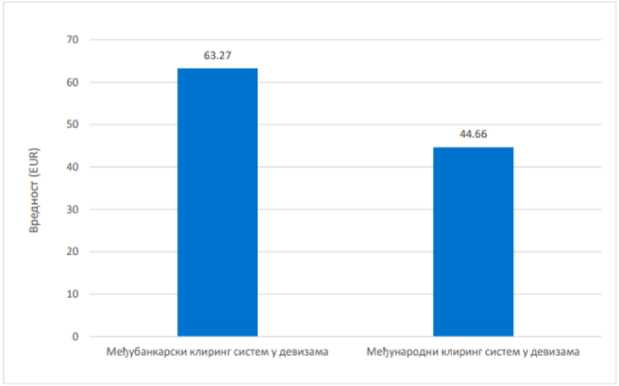
Figure 2: NBS Interbank and International Foreign Currency Clearing Systems – Transaction Value Ratio in January 2025 (in Millions of Euros)
Source: National Bank ofSerbia
financial volume settled within the Interbank Foreign Currency Clearing System reached EUR 63.3 million. Concurrently, the International Foreign Currency Clearing System accounted for EUR 44.7 million, bringing the cumulative transactional value across both clearing networks to exactly EUR 108.0 million. In terms of operational scheduling, both foreign currency settlement frameworks conducted their clearing cycles over a standard duration of 20 business days during the observed innovations across its core clearing and settlement networks, further elevating the parameters of security, interoperability, and macro-operational efficiency within domestic financial transfers.
In a coordinated effort with commercial banking institutions and relevant financial technology stakeholders, the central bank integrated several critical architectural infrastructure components designed to modernize the national DinaCard platform:
-
• The Next-Generation DinaCard Switch: Built upon a modern, high-performance architecture, this core transaction processing module ensures enhanced infrastructural stability, accelerated processing velocities, and superior system resilience against volatile transaction surges.
-
• DinaCard Secure Solution: Fully aligned with the highest international card security paradigms (EMVCo standards), this framework integrates Strong Customer Authentication (SCA) protocols, thereby substantially optimizing fraud mitigation and merchant-consumer protection within global e-commerce environments.
-
• DinaCard Directory Server and Access Control Server (ACS): These components deploy an advanced user verification model, seamlessly enabling the domestic DinaCard brand to engage with global 3D Secure verification networks.
-
• Advanced Dispute Management Solution: This system reengi
neers the operational lifecycle of contested transactions, ensuring transparent, highly precise, and rapid communication channels among all participating financial intermediaries during chargeback or dispute resolution procedures (National Bank of Serbia [NBS], 2025).
Comparative Analysis with Developed and Regional Markets
A comparative structural evaluation of contemporary payment architectures across the Republic of Serbia, neighbouring regional economies, and advanced global markets indicates that although Serbia has experienced monumental growth in digital and cashless transaction adoption over recent years, certain metrics remain below the average of leading European nations. Contemporary research into financial payment frameworks suggests that mobile and electronic payment penetration in Serbia is still in a transitional developmental stage relative to specific regional peers and advanced Western markets. This gap is particularly evident when examining the deep daily integration of electronic transaction platforms and mobile commerce channels across Europe and North America (Savić et al., 2024).
Central bank data confirms a powerful, non-linear upward trend in domestic cashless transactions, spearheaded by the continuous year-over-year expansion of the national instant payment infrastructure (IPS NBS). Throughout 2025, tens of millions of instant transactions were recorded, reflecting significant volume and value expansions compared to preceding fiscal periods. This dynamic signals a rapid behavioural shift and widening systemic acceptance of modern financial services within the domestic economy. Such momentum positions Serbia highly favourably within the regional Western Balkan cluster, where the country occupies a leading role in digital transaction infrastructure growth and volume acceleration (National Bank of Serbia [NBS], 2025).
Nevertheless, macro-environmental indicators - such as the volume of active payment cards per capita, the penetration rate of contactless and mobile wallet solutions, and the aggregate share of cashless settlements within total retail turnover - reveal that Serbia still lags behind the highly integrated digital economies of Western Europe, which have successfully embedded digital channels into everyday consumer habits. In a regional context, while Serbia maintains operational parity with immediate neighbouring markets, it possesses immense latent growth potential. Unlocking this capacity depends on deeper structural alignment with international protocols, such as the Single Euro Payments Area (SEPA). Accession to the SEPA network would radically streamline and lower the cost of cross-border Euro transactions, catalysing closer convergence with developed financial markets.
In conclusion, while the Republic of Serbia continues to execute critical technological upgrades and register robust growth metrics in electronic payment channels, a definitive developmental asymmetry persists when benchmarked against leading global financial systems. Expanding payment access points, fostering continuous digital innovation, and systematically adopting international interoperability protocols remain the defining variables that will accelerate Serbia’s integration into advanced global payment ecosystems.
Empirical Analysis of Consumer Sentiments and Financial Behaviour
To complement the macro-environmental transaction metrics provided by the central bank, a primary empirical study was conducted via a quantitative survey targeting financial consumers in the Republic of Serbia (N = 30). The primary research objective was to evaluate user adoption rates, safety perceptions, and behavioural transitions regarding modern payment technologies, establishing a direct link between institutional infrastructure upgrades and end-user experiences.
Demographic Profile of the Sample
The demographic baseline indicates a balanced and representative distribution of respondents. In terms of gender, the sample comprises 14 male respondents (47%) and 16 female respondents (53%), minimizing genderbased analytical bias.
The age distribution is predominantly skewed toward the economically active population, which represents the core user segment of modern financial services. Specifieflect the segment with the highest transactional frequency in the domestic economy.
Analysis of Payment System Adoption and Consumer Habits
The empirical data reveals a nuan-ced landscape regarding the adoption of digital banking channels. When questioned about electronic banking usage, 46.7% of participants answered affirmatively, while 53.3% indicated non-usage. This distribution suggests that while digital transformation within the banking sector has achieved significant penetration, a notable digital divide persists, leaving substantial room for educational and promotional strategies by financial institutions.
Despite this divide, the operational frequency of electronic payments among active users is relatively high, as illustrated in the comprehensive survey matrix below.
Table 2: Empirical Breakdown of Consumer Payment Modalities and Channel Adoption
|
Survey Question / Variable |
Response Options |
Frequency (n) |
Percentage (%) |
|
Frequency of Electronic Payments |
Daily |
10 |
33.3% |
|
Several times a week |
14 |
46.7% |
|
|
Rarely |
6 |
20.0% |
|
|
Primary Payment Modality |
Cash |
14 |
46.7% |
|
Payment cards |
10 |
33.3% |
|
|
Mobile payments |
6 |
20.0% |
|
|
Contactless Card Adoption |
Yes |
6 |
20.0% |
|
No |
24 |
80.0% |
|
|
Digital Wallet Usage (e.g., Apple/Google Pay) |
Yes |
11 |
37.0% |
|
No |
19 |
63.0% |
Source: Author’s own research
The data confirms that traditional payment mechanisms, particularly cash (46.7%), still retain a primary position in everyday retail transactions. However, the combined share of alternative digital channels – payment cards (33.3%) and mobile solutions (20.0%) - collectively accounts for more than half of the sample's preferences (53.3%), indicating an ongoing paradigm shift toward digital payment ecosystems.
A critical friction point is observed in contactless payments, where 80% of respondents reported non-adoption. This lag suggests that deeply ingrained consumer habits, potential deficiencies in targeted financial literacy, or systemic scepticism toward automated card mechanisms continue to slow down the adoption curve. Similarly, the 63% non-adoption rate for digital wallets highlights that mobile-device-integrated payments
Table 3: Consumer Sentiment Regarding Trust, System Efficiency, and Technological Advantages
|
Sentiment Dimension |
Response Options |
Frequency (n) |
Percentage (%) |
|
Trust in Electronic Payment Security |
Full trust |
10 |
33.0% |
|
Partial trust |
15 |
50.0% |
|
|
No trust |
5 |
17.0% |
|
|
Perception of System Modernity & Efficiency |
Modern and efficient |
17 |
57.0% |
|
Partially modern |
9 |
30.0% |
|
|
Outdated |
4 |
13.0% |
|
|
Core Advantage of Modern Systems |
Speed and simplicity |
18 |
60.0% |
|
Security |
7 |
23.0% |
|
|
24/7 Availability |
5 |
17.0% |
Source: Author’s own research
are still in a transitional phase, constrained by varying degrees of commercial bank support and consumer unfamiliarity with mobile security architectures.
Infrastructure Trust, Modernization Perception, and Future Trends
Consumer sentiment regarding system integrity and innovation serves as a vital indicator of market maturity. The qualitative perceptions of the respondents are structured in the previous table.
The metric on institutional trust demonstrates that while the majority exhibits baseline confidence (83% combined full or partial trust), a dominant 50% remain cautious. This widespread partial scepticism emphasizes the necessity for commercial banks and regulatory bodies to implement robust, continuous consumer education frameworks regarding electronic transaction safety. This is highly relevant given the recent deployment of advanced security architectures like the DinaCard Secure solution and Strong Customer Authentication (SCA) protocols, which aim to bridge this exact trust gap.
On a macroeconomic level, consumer evaluation of the domestic financial infrastructure is heavily positive; 57% of respondents view the pay- ment systems in Serbia as highly modern and efficient, which correlates directly with the high adoption rates of mobile banking applications, utilized by 83% of the sample. Furthermore, the primary driver for digital migration is utilitarian, with 60% of consumers identifying timeefficiency, speed, and operational simplicity as the ultimate benefits of modern financial frameworks. This user sentiment closely aligns with the empirical performance of the NBS IPS network, which boasts an average processing velocity of just 1.2 seconds.
Ultimately, a forward-looking perspective remains strong within the domestic market, with 47% of the total sample explicitly anticipating that physical fiat currency (cash) will eventually be entirely superseded by digital transaction ecosystems in the future, confirming that the structural transition toward a cashless society is psychologically well underway.
Strategic Roadmap for Payment System Optimization: An Integrated Synthesis
The empirical findings extracted from the primary consumer rese-arch, when benchmarked against the macroeconomic performance indicators of the National Bank of Serbia (NBS), reveal a critical developmental paradox within the domestic payment ecosystem. While the central bank's core infrastructure demonstrates world-class technical efficiency - evidenced by the NBS Instant Payment System (IPS) operating at a flawless 100% availability rate with an average transaction velocity of 1.2 seconds - the micro-level consumer data exposes a persistent reliance on traditional cash mechanisms (46.7%) and a pronounced deficit in full institutional trust (50% partial trust).
To bridge this asymmetry and accelerate the transition toward a highly digitalized, cashless national economy, the financial sector must orchestrate a synchronized, multi-stakeholder optimization strategy. Synthesizing consumer behavioural insights with systemic requirements yields four pillars for future development:
1. Architectural Trust Mitigation and Financial Literacy Frameworks
The structural transition from a cash-dominant environment to a digital paradigm cannot be achieved through technological deployment alone; it requires a profound cognitive shift in public risk perception. The widespread partial scepticism among consumers highlights an urgent necessity for the NBS and commercial banking institutions to establish continuous, transparent educational campaigns.
These initiatives should actively decode the cryptographic security layers of recent structural upgrades, specifically emphasizing the backend protective capabilities of the Di-naCard Secure solution and global EMVCo compliance. By translating abstract technical milestones into tangible consumer reassurances regarding fraud mitigation and data privacy, institutions can effectively convert cautious observers into confident digital participants.
2. Streamlining Contactless and Mobile Wallet Interoperability
A significant friction point identified in the empirical sample is the high non-adoption rate of contactless payments (80%) and digital wallets (63%), which contrasts sharply with the widespread usage of standard mobile banking applications (83%). This imbalance proves that domestic consumers do not reject digital technology inherently, but are constrained by habit persistence and fragmented merchant-level integration.
To resolve this operational bottleneck, commercial banks must leverage the newly integrated Di-naCard Directory Server and Access Control Server (ACS) systems to simplify the user-onboarding lifec- ycle for digital wallets (e.g., Apple Pay, Google Pay). Simultaneously, expanding the domestic point-of-sale (POS) terminal infrastructure to support seamless QR-code interactions ("IPS skeniraj" and "IPS pokaži") will lower transaction barriers for both merchants and consumers, gradually eroding the structural dominance of physical fiat currency.
3. Restructuring Cost Models and Promoting Advanced Dispute Resolution
The utilitarian drive of the domestic market is highly evident, with 60% of consumers defining "speed and simplicity" as the primary advantage of modern payment networks. However, the high non-adherence rate to electronic banking platforms (53.3%) suggests that the perceived transaction fees, maintenance costs, and procedural complexities still outweigh the digital premium for a large segment of the population.
Financial intermediaries should introduce progressive, low-cost account maintenance models specifically tailored for younger and lower-income demographics. Furthermore, commercial institutions must aggressively market and utilize the newly deployed central bank Dispute Management Solution. By ensuring a highly automated, lightning-fast, and transparent chargeback mechanism for contested retail transfers, banks can drastically reduce consumer anxiety regarding digital transaction failures, creating a more resilient behavioural foundation for cashless systems.
-
4. Regulatory Harmonization, Fin-tech Integration, and SEPA Alignment
The long-term evolutionary velocity of Serbia's payment infrastructure relies heavily on systemic integration with mature international financial frameworks. Rather than pursuing unregulated or highly volatile decentralized architectures, regulatory efforts should remain strictly oriented toward institutional fin-tech modernization and deeper alignment with the Single Euro Payments Area (SEPA) standard.
Fostering agile, collaborative sandboxes between the regulatory authorities, established commercial banks, and emerging fintech developers will catalyse the creation of sophisticated, highly secure open-banking solutions. Ultimately, establishing a unified regulatory framework that reduces bureaucratic barriers and introduces fiscal incentives for digital merchants will not only elevate domestic consumer satisfaction but will also fortify the macro-competitive position of the Republic of Serbia within the regional and European financial markets.
Conclusion
The comprehensive structural and empirical investigation conducted in this paper delivers a definitive evaluation of contemporary payment systems in the Republic of Serbia, mapping the complex intersection between institutional infrastructure modernization and end-user behavioural dynamics. The primary macroeconomic indicator established throughout this research confirms that the financial architecture engineered by the National Bank of Serbia (NBS) operates at an elite technical and operational standard. The deployment of the high-performance Di-naCard Switch, the integration of advanced EMVCo cryptographic standards, and the exceptional reliability of the national Instant Payment System (IPS) - characterized by a transaction processing velocity of 1.2 seconds - collectively validate that the domestic retail payment backbone possesses the capacity to sustain a highly integrated digital economy.
However, the core scientific value of this study emerges from the structural paradox identified through the primary empirical research (N = 30). The gathered data demonstrates that despite the absolute technical availability of fast, secure electronic and contactless payment networks, a significant transitional friction per- sists at the micro-consumer level. Traditional payment modalities, spearheaded by physical fiat currency (cash), still maintain a primary foothold, commanding 46.7% of everyday retail preferences. Furthermore, the stark non-adoption rates for contactless mechanisms (80%) and mobile digital wallets (63%) - juxtaposed against a high general utilization of standard mobile banking applications (83%) - clearly prove that the domestic digital divide is not driven by a structural rejection of modern technology, but rather by deeply ingrained behavioural habits and a pronounced institutional trust deficit, with 50% of financial consumers exhibiting only partial confidence in electronic transaction safety frameworks.
To bridge this developmental asymmetry and accelerate Serbia's transition toward a resilient, cashless economic model, the financial sector must execute a synchronized strategy that treats technological, economic, and behavioural variables as an interconnected matrix. Resolving the prevailing trust deficit requires the launch of collaborative, centralbank-backed educational frameworks that explicitly communicate the concrete protection mechanisms of the DinaCard Secure network and Strong Customer Authentication
(SCA) protocols, thereby translating abstract cryptographic safety into tangible consumer reassurance.
Simultaneously, commercial intermediaries must streamline user-onboarding lifecycles by leveraging the DinaCard Directory Server and Access Control Server (ACS) to optimize digital wallet adoption, while expanding merchant-level QR-code networks through automated IPS skeniraj and IPS pokaži interfaces. This structural adjustment must be reinforced by progressive, low-cost banking service models designed to lower the entry barrier for younger or lower-income cohorts, alongside the aggressive commercial deployment of the newly established Dispute Management Solution to minimize consumer anxiety regarding failed transfers.
Ultimately, these localized operational shifts must be anchored by systematic regulatory alignment with the Single Euro Payments Area (SEPA) framework, which will fundamentally reduce cross-border friction, bypass predatory intermediary fees, and catalyse deeper macro-financial convergence with advanced European economies.
In conclusion, while the structural transition toward an optimized digital payment landscape in the Republic of Serbia is psychologically well underway - as evidenced by the 47% of consumers who explicitly anticipate the eventual obsolescence of cash - the final velocity of this migration depends on moving beyond purely technical updates. By actively synchronizing rigorous regulatory oversight, continuous FinTech innovation, and user-centric behavioural strategies, Serbia can effectively dissolve remaining market frictions, securing a highly competitive, integrated, and modernized financial ecosystem within both regional and global frameworks.
