
Developing Criteria and Indicators for Assessing Students’ Knowledge in a Digital Educational Environment
Журнал: Бюллетень науки и практики @bulletennauki
Рубрика: Социальные и гуманитарные науки
Статья в выпуске: 10 т.12, 2026 года.
Бесплатный доступ
The digital transformation of higher education requires the development of assessment systems capable of measuring not only the amount of knowledge acquired by students but also their ability to understand, apply, analyze, evaluate, and create information in technology-mediated contexts. This article examines the theoretical and methodological foundations for developing criteria and indicators for assessing students’ knowledge in a digital educational environment. The study employs systematic analysis, comparison, classification, synthesis, and pedagogical modelling. The proposed framework includes six assessment criteria: conceptual knowledge, comprehension and interpretation, practical application, analytical and problem-solving ability, knowledge integration and creation, and reflective and self-regulated learning. Each criterion is operationalised through measurable qualitative and quantitative indicators. A four-level assessment scale — advanced, proficient, developing, and insufficient — is introduced to improve transparency and consistency. The article also proposes a weighted formula for calculating an integrated student knowledge score. Particular attention is given to validity, reliability, fairness, transparency, accessibility, academic integrity, and the pedagogically responsible use of learning analytics and artificial intelligence. The findings indicate that digital assessment becomes educationally meaningful when assessment tasks are aligned with learning outcomes, indicators are observable and measurable, students receive timely feedback, and automated data are combined with professional teacher judgement. The proposed framework may be adapted to different university disciplines, learning management systems, and blended or fully online educational programmes.
Короткий адрес: https://sciup.org/14139302
IDS: 14139302 | УДК: 378(575.2(045) | DOI: 10.33619/2414-2948/131/71
Разработка критериев и показателей для оценки знаний учащихся в цифровой образовательной среде
Цифровая трансформация высшего образования требует разработки систем оценки, способных измерять не только объем знаний, полученных студентами, но и их способность понимать, применять, анализировать, оценивать и создавать информацию в технологически опосредованном контексте. В данной статье рассматриваются теоретические и методологические основы разработки критериев и показателей оценки знаний учащихся в цифровой образовательной среде. В исследовании использованы методы системного анализа, сравнения, классификации, синтеза и педагогического моделирования. Предлагаемая система включает шесть критериев оценки: концептуальные знания, понимание и интерпретация, практическое применение, способность к анализу и решению проблем, интеграция и создание знаний, а также рефлексивное и саморегулируемое обучение. Каждый критерий реализуется с помощью поддающихся измерению качественных и количественных показателей. Для повышения прозрачности и последовательности введена четырехуровневая шкала оценки: продвинутый, профессиональный, развивающий и недостаточный уровни. В статье также предлагается взвешенная формула для расчета интегрального балла знаний учащихся. Особое внимание уделяется обоснованности, надежности, справедливости, прозрачности, доступности, академической честности и педагогически ответственному использованию учебной аналитики и искусственного интеллекта. Полученные результаты показывают, что цифровое оценивание становится значимым с образовательной точки зрения, когда задачи оценивания согласованы с результатами обучения, показатели доступны для наблюдения и измерения, учащиеся получают своевременную обратную связь, а автоматизированные данные объединяются с профессиональной оценкой преподавателя. Предлагаемая система может быть адаптирована к различным университетским дисциплинам, системам управления обучением и смешанным или полностью онлайн-образовательным программам.
Текст научной статьи Developing Criteria and Indicators for Assessing Students’ Knowledge in a Digital Educational Environment
UDC 378(575.2(045)
The digital transformation of higher education has changed the ways in which educational content is delivered, learning activities are organised, and students’ achievements are evaluated. Learning management systems, online tests, interactive assignments, electronic portfolios, simulations, videoconferencing platforms, and learning analytics provide educators with considerable amounts of data about student performance. Nevertheless, the availability of digital data does not automatically guarantee accurate or pedagogically meaningful assessment. Traditional assessment has frequently focused on the reproduction of factual information. Such an approach is insufficient in a digital educational environment, where students are expected to search for information, evaluate digital sources, solve problems, participate in collaborative projects, and create new educational products. Consequently, assessment must address different levels and manifestations of knowledge rather than measure only the number of correct answers. Online assessment can be understood as the systematic collection and interpretation of data about students and learning processes for the purpose of making evidence-based conclusions about learning outcomes. A systematic review of online assessment in higher education demonstrates that digital assessment can support feedback, student engagement, and interactive learning, but its effectiveness depends on assessment design and pedagogical integration [1].
The principal difficulty lies in transforming broadly formulated learning outcomes into observable and measurable indicators. For instance, the outcome “the student understands the theoretical concept” is too general for consistent assessment. It must be operationalized through specific actions: defining the concept, explaining its essential characteristics, comparing it with related concepts, providing examples, and using it to interpret a professional problem.
The distinction between assessment criteria and indicators is therefore fundamental. A criterion represents a significant dimension or quality against which performance is judged. An indicator is an observable or measurable manifestation showing the extent to which that criterion has been achieved.
The purpose of this study is to develop and theoretically substantiate a system of criteria and indicators for assessing students’ knowledge in a digital educational environment.
The study addresses the following research questions: What principles should guide the development of digital knowledge assessment? Which criteria adequately represent different levels of student knowledge? Through which indicators can these criteria be measured? How can qualitative and quantitative evidence be integrated into an overall assessment? What conditions ensure the validity, reliability, fairness, and transparency of digital assessment?
A digital educational environment is an integrated system of technological, informational, pedagogical, and organizational resources supporting teaching, learning, communication, assessment, and educational management. It includes not only technological platforms but also learning materials, assessment practices, interaction patterns, feedback mechanisms, and institutional policies.
Digital assessment may be formative or summative, synchronous or asynchronous, automated or teacher-mediated. Its instruments include: online quizzes and examinations, case-based assignments, discussion forums, digital portfolios, simulations and virtual laboratories, project presentations, peer- and self-assessment, oral examinations conducted through videoconferencing, and analytics generated by learning management systems [2, 5].
Technology can improve assessment efficiency, accessibility, feedback speed, and variety. At the same time, it can introduce problems related to digital inequality, academic integrity, privacy, technical failure, and excessive dependence on automatically generated scores. Technology should therefore enhance assessment principles rather than determine them.
Bennett et al. argue that technology shapes assessment design by influencing what evidence can be collected and how students interact with assessment tasks [2].
The implication is that an assessment method should be chosen in relation to the intended learning outcome, not merely because a digital tool is available. Assessment validity depends on the relationship among learning outcomes, assessment tasks, criteria, and evidence. If a course outcome requires students to apply knowledge, a multiple-choice test measuring factual recall cannot serve as the only assessment instrument. Similarly, collaborative competence cannot be assessed solely through an individual final examination (Figure 1).

Learning outcomes
Assessment criteria
Observable indicators
Digital assessment tasks
Evidence of learning
Judgement and feedback
Figure 1. Constructive alignment in digital assessment
The framework is cyclical because assessment results should provide information not only about students but also about the appropriateness of learning outcomes, teaching activities, and assessment tasks. Validity, reliability, and fairness are generally recognised as central assessment quality requirements. Validity concerns whether the assessment supports the intended interpretation of students’ performance. Reliability refers to the consistency of results across tasks, assessors, and conditions. Fairness requires that students have equitable opportunities to demonstrate their knowledge without irrelevant technological, linguistic, social, or physical barriers .
Digital assessment additionally requires: technological accessibility; transparency of algorithms and scoring rules; protection of personal data; compatibility with assistive technologies; mechanisms for handling technical disruption; authentication proportionate to assessment risks; meaningful human oversight. UNESCO’s principles of good practice emphasise technical rigour, ethical responsibility, fairness, and appropriate use of assessment data .
These principles remain applicable when assessment is conducted through digital platforms. The study follows a theoretical and methodological research design. It does not report experimental scores from a particular student sample. Instead, it develops a conceptual framework that can subsequently be tested and validated in different educational contexts. The following methods were employed:
— Theoretical analysis to identify major concepts and quality requirements in educational assessment.
— Comparative analysis to distinguish criteria, indicators, descriptors, and assessment instruments.
— Classification to organise indicators according to levels of cognitive and self-regulated activity.
— Synthesis to combine pedagogical and technological requirements.
— Pedagogical modelling to develop an integrated assessment framework.
— Expert-oriented validation design to specify how the framework should be reviewed before institutional implementation.
Four principles guided the selection of criteria: alignment with expected learning outcomes; observability of student performance; measurability through more than one source of evidence; adaptability to different disciplines and digital platforms. The proposed system is based on eight principles [4, 6-9].
Table 1 PRINCIPLES OF CRITERIA-BASED DIGITAL ASSESSMENT
|
Principle |
Meaning |
Practical implication |
|
Outcome alignment |
Assessment reflects intended learning outcomes |
Every criterion is linked to a course or programme outcome |
|
Validity |
Tasks measure the intended knowledge or ability |
Recall tests are not used as the sole measure of problem-solving ability |
|
Reliability |
Judgements remain sufficiently consistent |
Standardised rubrics and assessor moderation are applied |
|
Transparency |
Requirements are understandable to students |
Criteria and performance descriptors are published in advance |
|
Measurability |
Indicators can be observed and documented |
Ambiguous indicators such as “knows well” are avoided |
|
Multidimensionality |
Different manifestations of knowledge are assessed |
Tests are combined with cases, projects, and reflective tasks |
|
Fairness and accessibility |
Irrelevant barriers are minimised |
Alternative formats and reasonable adjustments are available |
|
Developmental orientation |
Assessment supports further learning |
Students receive feedback and opportunities for improvement |
The principles must operate together. Highly reliable automated testing, for example, may still lack validity if it measures only recognition of information while the learning outcome requires independent analysis. Six criteria are proposed for assessing students’ knowledge in a digital educational environment (Table 2).
Table 2
CRITERIA AND INDICATORS FOR ASSESSING STUDENTS’ KNOWLEDGE
|
Criterion |
Core question |
Main indicators |
Sources of digital evidence |
|
Conceptual knowledge |
What does the student know? |
Accuracy of definitions; command of terminology; recognition of facts, principles, and relationships |
Online tests, concept maps, short-answer tasks |
|
Comprehension and interpretation |
Does the student understand the content? |
Ability to explain ideas; classify information; compare concepts; provide examples; summarise arguments |
Written responses, recorded explanations, discussion forums |
|
Practical application |
Can the student use knowledge? |
Appropriate selection of methods; correct execution of procedures; transfer to new situations |
Cases, simulations, virtual laboratories, applied assignments |
|
Analysis and problemsolving |
Can the student investigate and solve a problem? |
Identification of relevant data; evaluation of sources; logical reasoning; justification of decisions |
Problem scenarios, research tasks, data analysis |
|
Integration and knowledge creation |
Can the student construct a new product or solution? |
Synthesis of ideas; originality; interdisciplinary connections; quality of the final product |
Projects, portfolios, digital presentations, prototypes |
|
Reflection and self-regulation |
Can the student evaluate and improve learning? |
Goal setting; self-assessment accuracy; use of feedback; revision of work; learning strategy selection |
Reflective journals, portfolio revisions, selfassessment forms |
The six criteria form a progression from knowledge reproduction to the independent construction and regulation of knowledge.
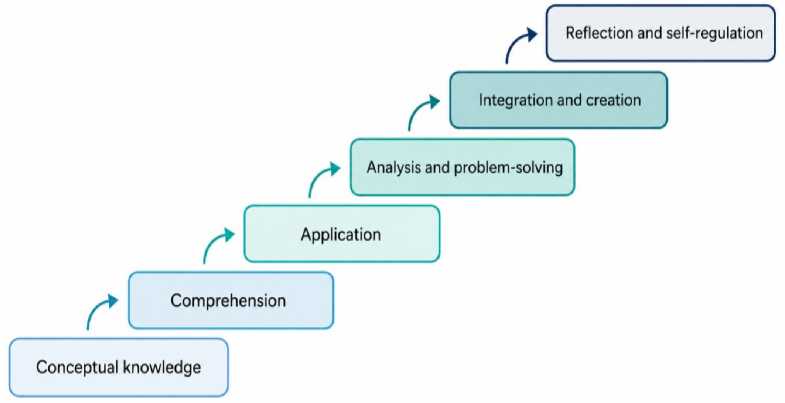
Figure 2. Progression of knowledge assessment criteria
The progression does not imply that lower-level knowledge is unimportant. Conceptual accuracy remains necessary for analysis and creation. However, assessment should not stop at factual reproduction. An indicator must describe observable student behaviour. The statement “the student has good analytical knowledge” cannot be scored consistently. It can be operationalised through the following indicators: identifies the central problem; distinguishes relevant from irrelevant information; verifies the credibility of sources; establishes causal relationships; compares alternative explanations; justifies a conclusion with evidence; acknowledges limitations or uncertainty. Indicators may be quantitative, qualitative, or combined [10].
EXAMPLES OF QUANTITATIVE AND QUALITATIVE INDICATORS
Table 3
|
Assessment dimension |
Quantitative indicator |
Qualitative indicator |
|
Conceptual accuracy |
Percentage of correct answers |
Accuracy and appropriateness of terminology |
|
Source use |
Number or proportion of relevant sources |
Credibility, diversity, and integration of sources |
|
Problem-solving |
Number of correctly completed stages |
Coherence and justification of the selected strategy |
|
Participation |
Frequency of meaningful contributions |
Relevance and intellectual quality of contributions |
|
Revision |
Number of corrected errors |
Extent to which feedback improves the work |
|
Project performance |
Proportion of requirements completed |
Originality, applicability, and coherence of the product |
Activity data require cautious interpretation. A high number of platform logins does not necessarily demonstrate strong knowledge. Time spent online can also be affected by technical conditions, learning preferences, or accessibility needs. Behavioural analytics should therefore support, but not replace, direct evidence of student performance. A four-level scale is proposed to describe the quality of student knowledge.
GENERAL PERFORMANCE DESCRIPTORS
Table 4
|
Level |
General descriptor |
Typical evidence |
|
4: Advanced |
Demonstrates accurate, integrated, transferable, and independently applied knowledge |
Provides well-supported solutions, critically evaluates information, and creates original outcomes |
|
3: Proficient |
Demonstrates generally accurate knowledge and applies it in familiar and partly unfamiliar situations |
Explains concepts correctly and completes tasks with minor limitations |
|
2: Developing |
Demonstrates partial or fragmented knowledge and requires guidance |
Reproduces basic information but has difficulty applying or justifying it |
|
1: Insufficient |
Demonstrates major conceptual gaps and cannot apply knowledge appropriately |
Provides inaccurate, incomplete, or unsupported responses |
Descriptors should be adapted to the subject area. In a language course, application may concern communicative performance; in engineering, it may involve technical calculations or design; in medicine, it may relate to clinical reasoning; and in law, it may involve interpretation of norms and construction of legal arguments. The following rubric illustrates how the criteria can be applied to an online case-based assignment.
SAMPLE ANALYTICAL RUBRIC FOR A DIGITAL ASSESSMENT TASK
Table 5
|
Criterion Advanced — 4 |
Proficient — 3 Developing — 2 Insufficient — 1 |
|
Conceptual Uses all relevant knowledge concepts accurately and establishes |
Uses most Demonstrates partial Demonstrates concepts accurately knowledge and some major with minor terminological errors misconceptions omissions |
Бюллетень науки и практики / Bulletin of Science and Practice Т. 12. №10 2026
|
Criterion |
Advanced — 4 |
Proficient — 3 |
Developing — 2 |
Insufficient — 1 |
|
relationships among them |
||||
|
Application |
Selects and applies an appropriate method independently in a new context |
Applies an appropriate method with minor errors |
Applies the method only with guidance or incompletely |
Cannot select or apply an appropriate method |
|
Analysis |
Critically evaluates evidence and alternative explanations |
Analyses relevant information and supports the main conclusion |
Analysis is descriptive or partially supported |
Conclusions are unsupported or inconsistent |
|
Digital source use |
Selects, verifies, and integrates credible sources ethically |
Uses mainly credible sources with generally correct attribution |
Uses a limited range of sources or inconsistent citation |
Uses unreliable or unattributed material |
|
Solution quality |
Produces a coherent, feasible, and original solution |
Produces a coherent and feasible solution |
Produces a partially feasible solution |
Does not provide a workable solution |
|
Reflection |
Critically evaluates the process and uses feedback to improve the result |
Identifies strengths and limitations and makes revisions |
Provides general reflection with limited revision |
Provides no meaningful reflection or revision |
An analytical rubric is preferable when the assessment is intended to provide detailed feedback. It shows where the student performs well and where improvement is needed.
The overall score may be calculated using a weighted model:
n
S = ^ Wi Pi, i=i where: Sis the integrated assessment score; Wiis the weight assigned to criterion i; Pi is the normalised student score for criterion i; ^wi = 1. A possible distribution is presented below.
Table 6 SUGGESTED WEIGHTING OF ASSESSMENT CRITERIA
|
Criterion |
Weight |
|
|
Conceptual knowledge |
0.20 |
|
|
Comprehension and interpretation |
0.15 |
|
|
Practical application |
0.20 |
|
|
Analysis and problem-solving |
0.20 |
|
|
Integration and knowledge creation |
0.15 |
|
|
Reflection and self-regulation |
0.10 |
|
|
Total |
1.00 |
Suppose a student receives normalised scores of 85, 80, 75, 90, 78, and 88 respectively. The integrated score is: S = (0.20 x 85) + (0.15 x 80) + (0.20 x 75) + (0.20 x 90) + (0.15 x 78) + (0.10 x 88) = 82.5.
The weighting must reflect course priorities. A theoretically oriented course may assign greater weight to conceptual understanding, whereas a practice-based programme may prioritise application and problem-solving. Weights should be approved before assessment and communicated to students. A single assessment instrument cannot capture all dimensions of knowledge. A balanced digital assessment system should therefore triangulate evidence [11-13].
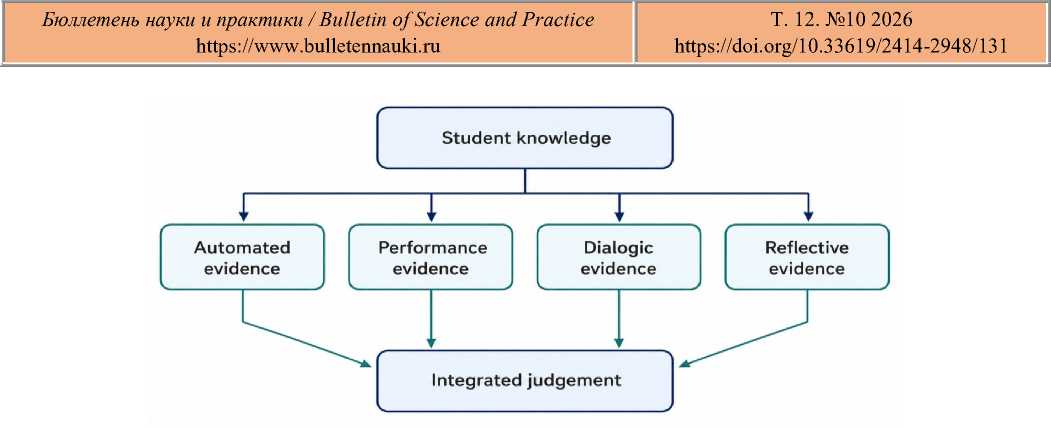
Figure 3. Triangulation of digital assessment evidence
Automated evidence includes quiz results and task-completion data. Performance evidence includes projects, cases, simulations, and portfolios. Dialogic evidence comes from oral examinations, forums, consultations, and presentations. Reflective evidence includes self-assessment, revision histories, and reflective journals. Triangulation reduces the risk of judging knowledge on the basis of a single test score or a potentially misleading platform metric. The proposed framework demonstrates that knowledge assessment in a digital educational environment should be multidimensional. Digital technologies can make assessment more frequent, interactive, and data-informed, but they may also encourage the collection of easily measurable information instead of educationally significant evidence. A major concern is the relationship between measurement and learning. Indicators should not be selected merely because the platform can generate them. Login frequency, number of clicks, or time spent viewing a resource may describe participation, but these metrics do not directly demonstrate understanding. Claims about student knowledge should be primarily based on the quality of completed tasks, explanations, decisions, and created products.
The findings correspond with research showing that online assessment supports learning when it includes authentic tasks, interaction, timely feedback, and opportunities for self-regulation. Gikandi, Morrow, and Davis identified learner engagement, authentic assessment, and continuous feedback as important characteristics of online formative assessment [3].
Digital assessment also requires attention to academic integrity. Traditional high-stakes examinations frequently depend on surveillance and remote proctoring. However, excessive surveillance may create privacy, equity, and trust concerns. An alternative is to use authentic, personalised, and process-oriented tasks that require students to apply knowledge, explain decisions, provide intermediate products, and reflect on revisions. The development of generative artificial intelligence has made assessment redesign even more important. If students can generate standardised answers using AI tools, assessment should place greater emphasis on: application to specific contexts; explanation of reasoning; evaluation of AI-generated content; oral defence of submitted work; documentation of the work process; ethical disclosure of permitted AI use; comparison and revision of different solutions. AI-assisted scoring can increase speed and consistency, particularly for structured tasks. Nevertheless, automated systems may reproduce bias, misinterpret creative responses, or provide insufficiently transparent scores. Human academic judgement must therefore remain part of consequential assessment decisions. Before institutional use, the criteria and indicators should undergo a validation process. Reliability should not be reduced to a single coefficient. For complex projects, inter-rater agreement and moderation may be more informative than internal consistency. For tests, item difficulty, discrimination, and score stability may be appropriate. The proposed framework offers several benefits: alignment between outcomes and assessment; transparent expectations; consistent teacher judgement; integration of formative and summative assessment; support for meaningful feedback; adaptability to different disciplines; reduced dependence on a single assessment instrument [12].
Table 7
RECOMMENDED VALIDATION STAGES
|
Stage |
Procedure |
Purpose |
|
Content validation |
Review by subject and assessment experts |
Determine whether criteria adequately represent learning outcomes |
|
Cognitive review |
Interviews or think-aloud sessions with students |
Establish whether instructions and descriptors are understood |
|
Pilot implementation |
Application to a small student group |
Identify technical and pedagogical problems |
|
Inter-rater analysis |
Independent scoring by two or more assessors |
Examine scoring consistency |
|
Statistical analysis |
Item analysis and reliability estimation where appropriate |
Evaluate measurement properties |
|
Fairness review |
Comparison across relevant student groups |
Detect irrelevant barriers or systematic disadvantage |
|
Revision |
Modification of tasks, indicators, and descriptors |
Improve the framework before wider implementation |
However, several limitations should be recognized. First, the framework is theoretical and requires empirical validation. Second, the weighting of criteria cannot be universal because disciplines have different epistemological and professional requirements. Third, digital access and teacher competence may influence implementation. Finally, the use of detailed rubrics may become overly mechanical if assessors treat descriptors as substitutes for professional judgment.
Practical Recommendations: Higher education institutions and teachers should take the following steps when developing digital assessment criteria: begin with clearly formulated and measurable learning outcomes; distinguish knowledge reproduction from comprehension, application, analysis, and creation; use observable indicators rather than general expressions such as “good knowledge”; select assessment instruments after defining criteria, not before; combine tests with authentic tasks, projects, oral explanations, and reflection; publish criteria, weights, and descriptors before students begin the task; use several sources of evidence when making high-stakes decisions; provide timely feedback connected to particular criteria; allow students to revise their work when the assessment is formative; review indicators for accessibility and cultural or technological bias; establish procedures for academic integrity and acceptable AI use; and regularly evaluate the validity and reliability of the assessment system.
Conclusion
The development of criteria and indicators is a central requirement for objective and pedagogically meaningful assessment in a digital educational environment. Digital technologies expand the range of available evidence but do not independently ensure assessment quality. The proposed framework includes six interrelated criteria: conceptual knowledge, comprehension and interpretation, practical application, analysis and problem-solving, knowledge integration and creation, and reflection and self-regulation. Each criterion is represented by observable indicators and can be assessed through multiple forms of digital evidence. A four-level performance scale improves transparency, while a weighted scoring model supports the calculation of an integrated result. Nevertheless, numerical aggregation should be accompanied by qualitative feedback and professional interpretation. Effective digital assessment must be valid, reliable, fair, transparent, accessible, and aligned with learning outcomes. Automated tools and learning analytics should support teacher judgement rather than replace it. Future studies should empirically test the proposed model, examine its psychometric characteristics, and adapt the indicators to specific academic disciplines and cultural contexts.
