
Digital platforms in the Russian labor market: Paradoxes and contradictions of transformation
Journal: Economic and Social Changes: Facts, Trends, Forecast @volnc-esc-en
Section: Social and economic development
Article in issue: 2 т.19, 2026.
Free access
The relevance of the study is substantiated by the contradictory role of digital platforms: being the dominant infrastructure of the Russian labor market, they do not solve but reproduce the problems of informal employment and regional inequality. The aim of the work is to go beyond the observation of the quantitative growth of platforms and to reveal the mechanisms of institutionalization of these disparities. Scientific novelty lies in the synthesis of structural and institutional approaches, which for the first time allows conceptualizing the key paradoxes of the Russian model: technological formalization of informality, reinforcement of regional inequality, and algorithmic autonomy. The methodological framework was based on a combination of qualitative and quantitative methods: secondary analysis of data from Rosstat and platforms (2020–2025), the author's content analysis of job descriptions (N = 4500) to identify informal hiring practices via lexical markers, and modeling of vacancy closing time to assess regional efficiency (N = 9600). The findings demonstrate that platforms serve as an infrastructure for the mass institutionalization of informal relations, with the share of informal vacancies in mass segments reaching 60–85%. It has been revealed that platform infrastructure does not smooth regional asymmetries but technologically reinforces them, concentrating high-income digital jobs in the capitals and preserving low-skilled, insecure employment in the periphery. It has been shown that the flexibility of platform employment leads to either strict algorithmic control (in the gig segment) or increased instability (in freelancing), both of which result in the transfer of social risks to the employee. The limitations of the study include the lack of open official data on informal employment, which determines the prospects for further research on the long-term social consequences of platformization and the effectiveness of differentiated regulatory measures.
Similar articles in the section Labour market. Employment




Short address: https://sciup.org/147253868
IDS: 147253868 | UDC: 331.526:004(470+571) | DOI: 10.15838/esc.2026.2.104.9
Text of the scientific article Digital platforms in the Russian labor market: Paradoxes and contradictions of transformation
The rapid digitalization of the economy has led to the emergence of digital platforms as a key element of new economic interactions. In the field of labor, they are transforming traditional employment models, formalizing connections between consumers and service providers, minimizing transaction costs, and acting as the technological foundation for the evolution of the labor market. In this regard, the position of the ILO is particularly relevant, asserting that the future of employment is determined not just by technology, but by society’s ability to reap the benefits of digital transformation while mitigating its negative consequences. The ILO considers the growth of international cooperation, the implementation of inclusive policies, and the development of new models of social dialogue as key conditions for this1.
The global trend toward platform-based and remote work is also reflected in Russia, where this model shows accelerated growth.
According to research from HSE University, by the end of 2024, the share of platform workers in Russia reached 4.4%, representing an absolute number of 2 to 5 million people using digital platforms for professional purposes2. This estimate encompasses both those employed on managed gig platforms (delivery men, taxi drivers) and freelancers working through specialized exchanges (FL.ru, Profi.ru, etc.).
Russian platform employment market shows stable positive dynamics. A joint study by Data Insight and Ventra Go! estimates the monetary turnover of this segment grew by 40% in 2025, equivalent to an increase of 239 billion rubles3.
Freelance work (professional services) deserves particular attention, as it demonstrates accelerated growth rates. PwC experts predict that by 2025, the volume of the Russian freelance market could reach 102 billion dollars4, allowing Russia to enter the top ten global leaders by this indicator, second only to the US in growth rate. It is important to underscore that this estimate includes only intellectual labor and does not include those employed in delivery, taxi, and other types of physical work on platforms.
Government policy, expressed in national projects, also views platforms as a foundation for transitioning the economy and social sphere to “qualitatively new principles of operation”5. However, there is a deeply dualistic nature of their impact behind the declared efficiency and integration into the official agenda. The following contradiction forms the key scientific problem of the study: technological expansion of digital platforms, intended to optimize and formalize the labor market, is paradoxically connected to preservation and reproduction of unstable, informal forms of employment and increasing regional inequality.
Therefore, the aim of this research is a comprehensive analysis of the paradoxical role of digital platforms in the transformation of the Russian labor market, covering more than the fact of their expansion. The research is based on the hypothesis that digital platforms, contrary to expectations, act not as a tool of formalization but as a mechanism for the institutionalization of informality and the reinforcement of regional inequality. Achieving this aim and testing the hypothesis required addressing several interrelated tasks: first, analyzing macro-structural shifts in the labor market in the context of platform expansion; second, empirically assessing the scale of informal hiring practices; third, identifying regional differentiation in platform efficiency; fourth, conceptualizing the key paradoxes of employment transformation within the Russian model of the platform economy.
The scientific novelty of the research lies in integrating the author-developed toolkit for empirically identifying informal hiring practices with the theoretical understanding of their role in transforming the Russian labor market.
First, an original method for quantitatively identifying informal hiring practices was proposed and tested, based on content analysis of job postings texts (N=4500) using a system of lexical markers. This allowed, across different digital platforms and professional categories, capturing the scale of the gray sector and identifying its connection to algorithmic barriers.
Second, through a synthesis of structural and institutional approaches, an analytical model was proposed that connects micro-level informal practices with macro-structural shifts and institutional gaps. This model not only addresses the fragmentation of existing research but also conceptualizes for the first time the key paradoxes of the Russian model of platform employment, enabling a transition from stating isolated effects to understanding the systemic mechanisms through which social vulnerability is reproduced via digital platforms.
Overall, this approach allows moving from enumerating individual effects toward a holistic understanding of the mechanisms reproducing inequality in the context of digital platforms.
The r elevance and significanc e of the research are determined by the scale and contradictory nature of the transformation. The Russian market, demonstrating rapid growth in the platform economy and ranking among global leaders in its level6, represents a relevant and representative field for studying the dialectic contradiction between technological opportunities and social risks. The findings can serve as a basis for formulating recommendations aimed at strengthening the prosocial component in the development of the digital employment ecosystem.
The problem of labor market transformation under the influence of digital platforms is analyzed in the works of Russian authors (Bobkov, Chernykh, 2020; Chernykh, 2020; Dolzhenko et al., 2024; Kapeliushnikov, Zinchenko, 2025; Kolesnik, 2025) and foreign researchers (Dun et al., 2020; Bieber, 2022; Giustini, 2023; Martindale et al., 2023), where the dualistic nature of the phenomenon is emphasized: platforms act as drivers of efficiency and flexibility but also as a factor of precarization and social vulnerability. The contemporary literature is structured around several key blocks, the analysis of which reveals both achievements and significant gaps that define the direction of this study.
-
1. Structural shifts and the new architecture of the market. The study of digital platforms shows that they form a new tripartite structure of relations: worker – platform – client. In this model,
the platform acts as a new institutional subject, assuming coordination and management functions. This architecture, as noted in the scientific literature (Klimenko, 2024), contributes to the decentralization and individualization of labor. Researchers (Schmidt, 2017; Petrovskaya, 2021; Sadovaya, 2022; Alauddin et al., 2024) emphasize that this approach does not only involve flexibility but entails a systemic transformation of labor relations into a civil law framework. Many acknowledge this fact, yet little attention is paid to how this substitution of labor exacerbates regional inequality in Russia. High-income digital professions concentrate in capital agglomerations, leaving regions with low-skilled and often informal jobs. This study aims to fill this gap by focusing on the territorial aspect of this phenomenon.
-
2. The dialectic of flexibility and algorithmic control. E.A. Chernykh notes that schedule flexibility and the pursuit of autonomy are the main drivers determining user activity on digital platforms (Chernykh, 2021). As noted by E.S. Sadovaya and foreign researchers (Laursen et al., 2021; Sadovaya, 2022; Alauddin et al., 2024), the flexibility and formal freedom provided by employers are increasingly giving way to rigid algorithmic control. This phenomenon is termed the “paradox of double autonomy” (Pulignano et al., 2023). It is important to emphasize that existing studies, while recognizing this paradox as a general trend, rarely analyze its uneven impact on different categories of workers. We investigate how platform architecture can simultaneously serve as a “channel of exploitation” (Chernykh, 2021) for some, and a space where others find opportunities for development, thereby increasing internal social stratification.
-
3. Social stratification and polarization. Studies indicate that vulnerable groups (youth, women, migrants) dominate the low-paid segment (Giustini, 2023; Martindale et al., 2023; Baimurzina et al., 2024). Platforms not only reflect inequality but also reinforce it through algorithms, regulations,
-
4. Institutional gaps as a systemic problem. Contemporary academic discourse emphasizes that legal regulation lags behind technological development, creating legal uncertainty (an “institutional vacuum” (Petrovskaya, 2021)). There are problems in defining the legal status of platform workers, a lack of regulation and social protection, which can lead to the risk of “deferred poverty” (Chernykh, 2020; Leshkova et al., 2025). However, existing studies often have a general character. This work proposes a more specific approach, assessing these regulatory gaps in the context of government programs for labor digitalization. Accordingly, the task is to understand why the state-proclaimed goals of transitioning to data-driven management do not lead to filling these legal gaps and often do not affect them, creating a field for the “platformization of informality”7.
and legal gaps, thus institutionalizing it. This research focuses on this mechanism.
The conducted literature analysis shows: despite an in-depth exploration of individual aspects of platform employment, there remains a deficit of comprehensive studies that would link structural shifts, regional differentiation, internal stratification of the platform sector, and institutional failures within the Russian context. Consequently, this research aims to bridge this gap by offering a holistic analysis of the paradoxes of transformation in the Russian labor market, where a technological tool designed to optimize and smooth out disparities becomes, in practice, a factor in their preservation and reproduction.
Methodology
The methodology is based on the integration of structural and institutional approaches, which allows linking macroeconomic trends, regional differentiation, and micro-level labor practices.
Conceptual framework. For a correct analysis, it is necessary to distinguish key concepts that are often conflated in the academic discourse on digital employment. Within the framework of this study, the author will adhere to the following definitions:
-
1. Digital job boards are online infrastructure facilitating communication between employers and job seekers and providing traditional employment relationships (HH.ru, Superjob, Trudvsem. ru). They act as intermediaries at the search stage but do not participate in the work process itself nor determine its conditions.
-
2. Transaction (service) platforms or gig platforms are platforms that not only connect clients and contractors but also set the rules for performing work, process payments, and often algorithmically manage the work process (YouDo, Profi.ru, Avito, Yandex.Taxi, delivery services). This is where platform employment, as a new type of relationship, is formed.
-
3. Platform employment is a form of labor relationship where a worker’s activity is organized through a digital platform, involving the performance of tasks for external clients, using algorithmic management, and, as a rule, without concluding an open-ended employment contract.
-
4. Remote (distance) work is a form of labor organization that can be implemented both within a traditional employment contract (Chapter 49.1 of the Labor Code of the Russian Federation) and within platform employment. This concept describes the location of work, not the method of organizing hiring.
-
5. Freelance is a type of self-employed work, often (but not exclusively) realized through digital platforms, involving the performance of projectbased work primarily of an intellectual nature. A freelancer has greater autonomy in choosing clients and working conditions compared to workers on managed gig platforms (taxi, delivery).
Distinguishing these concepts is fundamental to understanding the paradoxes described below:
the tool (digital job boards) is not identical to the employment model (gig platform), and the remote work does not guarantee autonomy or social protection.
Data sources and analysis period. The empirical base included official statistics (Rosstat data 2020– 2025), data from digital platforms (open data from websites HH.ru, Trudvsem.ru, Avito, Superjob, FL.ru, YouDo, Profi.ru for 2020–2025 (analytical reports and own compilation results)), and regulatory documents (national projects, digitalization strategies, ILO declarations).
Methodology for identifying informal hiring practices through content analysis of job postings (to assess the prevalence of gray vacancies):
– The sample consisted of 4,500 job postings (500 per each of 3 platforms across 3 categories of mass professions (common laborers, delivery men, household staff)). Platform selection rationale: HH.ru – leader in corporate recruitment, Avito – largest classifieds site, Trudvsem.ru – a state multifunctional labor market ecosystem. FL.ru and Profi.ru were excluded from this stage of analysis because their business model focuses on projectbased employment and self-employment, making the application of the gray marker methodology in its classic sense inappropriate.
– The study relies on data collected in September–October 2025. To compile data on vacancy lifetime across regions, automated parsing was used, processing 9.6 thousand postings across eight Russian regions for the period 2020–2025. However, we could not study the text of job postings (4.5 thousand units) for informal wording using parsing due to technical limitations and platform security policies blocking mass text collection. Consequently, the content analysis was performed exclusively manually.
– Tools. A dictionary of lexical markers (created based on 200 pilot postings) was used, including: mentions of formal registration (“official employment”, “Labor Code”, “benefits package”,
“officially”); calls for informal contact (“Whats-App”, “Telegram”, “call now”, “cash payment”, “work by the day”, “side job”).
Methodology for assessing regional vacancy lifetime. The author’s selective monitoring method was applied to analyze territorial differentiation in hiring efficiency.
– Rationale for territory selection. Eight territories were selected, divided into two groups based on their administrative status. The first group consisted of Russian regions – Moscow and Saint Petersburg (leading regions demonstrating minimal vacancy lifetime), along with the Amur Region, representing regions of the Far Eastern Federal District with pronounced personnel shortages and maximum hiring times. The second group included administrative centers – large cities from various federal districts (Krasnodar, Novosibirsk, Yekaterinburg, Saratov, Tyumen), allowing for the analysis of platform efficiency in urban agglomerations outside the capitals and identifying leaders and outsiders at this level.
-
– Data collection and calculation procedure:
-
1. Manual collection, quarterly (January 2020 – October 2025). On the first day of each quarter, 50 job postings were selected from HH.ru and Trudvsem.ru in the categories of mass professions (salespeople, drivers, delivery men, common laborers) and IT specialists.
-
2. Sample size of 9600 postings (8 territories x 2 platforms x 2 categories x 50 postings x 12 quarters).
-
3. Calculation. The date of the vacancy removal (status “filled” or removed) was recorded; vacancies available for >365 days were excluded. The median time (the median value was chosen due to outliers) was calculated for each category and platform, then averaged for each territory.
Institutional and comparative analysis. A comparative analysis included functional capabilities and moderation rules of platforms (Trudvsem.ru, HH.ru, Avito) and regulatory documents of the Russian Federation to identify paradoxes and contradictions between technological development and legal regulation.
Operationalization of professional categories. To ensure comparability of analysis results across different stages of the research (macro-structural shifts, informal practices, income, regional structure), a unified system of professional groups was used. It is based on the classification used by Rosstat when analyzing the need for workers. Accordingly, the following broad groups are identified: highly qualified specialists (including IT, management, finance); service and trade workers (delivery, sales); skilled workers (drivers, construction workers, common laborers); unskilled workers (household staff, assistants). The selection of specific professions within these groups (e.g., “delivery men” for the “service and trade workers” group) was determined by their representativeness for analyzing specific aspects of platform employment (informality, algorithmic control, income) and their presence on the platforms under study. This approach allows for transitioning from scattered observations to a holistic analysis of labor market transformation.
Limitations of the study
-
1. The presence of markers (e.g., “you can WhatsApp us”) is not absolute proof of informality, as large companies may also use messengers for initial contact. Therefore, estimates should be considered as an indicator of the upper limit of informal practice prevalence, reflecting the parties’ desire to minimize formal procedures at the hiring stage. Markers validity is supported by their low frequency (<5%) in job postings of large public companies in the same categories.
-
2. Manual data collection limits the ability to extrapolate the obtained values to the population of vacancies. Lack of access to platforms’ internal statistics prevents verification of the true reason for vacancy removal (actual hiring or removal for other reasons), nor does it exclude the effect of inactive vacancies left available by employers after actual hiring, which may overstate actual lifetime.
-
3. Average indicators of heterogeneous categories (mass professions and IT) obscure sectoral specifics but allow characterizing regional labor market efficiency in general terms. When interpreting results, it is important to consider the heterogeneity of administrative units in the sample: comparing regions and cities requires caution, so the analysis of regional differences was conducted primarily within groups of the same territorial level, and the joint presentation of data aims to demonstrate the overall spread of values and dynamics. Therefore, the values presented should be considered indicative, reflecting the direction of territorial differences rather than precise statistical measurements.
-
4. When forming the empirical base, the risk of duplicate observations arising from the same vacancy being posted by an employer on multiple platforms simultaneously (cross-posting) was considered. Direct control for duplicates was hindered by manual data collection and the absence of unified vacancy identifiers across platforms. However, this limitation is not critical for the purposes of this study. For content analysis, duplication does not distort the assessment of gray marker prevalence, and for monitoring vacancy lifetime, the probability of duplicates falling into the sample is minimized by its small size and quarterly collection principle. Nevertheless, the impossibility of completely eliminating duplicates is acknowledged as an additional limitation inherent in research using open platform data.
Thus, the combination of methods described, despite limitations, allows for a multi-level analysis and linking macro-trends with the micro-level labor practices.
Results
Digital platforms as labor market infrastructure: scale, structure, and macro-trends
Analysis of data from digital platforms and official statistics for 2020–2025 indicates their transformation into the dominant infrastructure of the Russian labor market. Quantitative indicators demonstrate not only the massive reach of economic agents but also the platforms’ ability to adapt to structural economic changes, promptly reflecting shifts in labor demand.
Scale and structure of the platform ecosystem. The Russian market of digital job boards represents a developed multi-level ecosystem. The total audience of leading platforms amounts to tens of millions of users. Services like Trudvsem.ru and HeadHunter form national databases with tens of millions of resumes and millions of vacancies, making them key communication channels between job seekers and employers. The growth dynamics of key players are impressive. HeadHunter’s resume database grew from 30 thousand in 2002 to 85 million by mid-20258, while Trudvsem.ru has accumulated around 23 million users and nearly 11 million vacancies9.
However, behind these aggregate indicators is significant latent structural heterogeneity. Alongside growth in users, platforms are characterized by specialization development: from classic recruitment (HeadHunter, Rabota.ru, Superjob) and giant horizontal marketplaces (Avito.Rabota with 50 million monthly users10) to niche freelance (FL.ru) and service platforms (YouDo, Profi.ru). Table 1 presents the key players shaping the digital infrastructure of the labor market, along with their main characteristics.
The data presented in the table illustrate not only the scale but also the functional differentiation of platforms: some act as infrastructure for candidate search, while others organize the interaction process themselves and act as regulators of payments (transactional). This distinction is fundamental to
Table 1. Classification of leading digital job boards in Russia
Year established Platform name Platform type Employment relations Reach (users) 1999 Infrastructural platform Employment predominantly under Labor Code Approximately 250 thousand vacancies and 16 million resumes published daily; monthly audience is over 10 million users. 2000 HeadHunter ( Infrastructural platform Employment predominantly under Labor Code As of June 2025, database contains 84 million resumes, 1.19 million vacancies, 2.24 million registered companies. 2000 Infrastructural platform Employment predominantly under Labor Code Monthly audience is about 8 million people; 1.5 million users visit daily. 31 million resumes are published. 2005 Transactional platform (freelance exchange) Civil contracts, self-employment Over 1500 freelance projects are posted daily; millions of registered freelancers and 19 thousand clients. 2009 Infrastructural platform (state) Employment under Labor Code (via employment centers) About 1.47 million active vacancies, formed based on data from regional employment services and information from direct employers. 2012 YouDo Transactional platform (crowdsourcing) Civil contracts, self-employment Over 10 million users, including more than 3.5 million providers; over 6.5 thousand clients are represented. 2014 Transactional platform (service marketplace) Civil contracts, self-employment Database includes more than 15 million clients and 3 million specialists across over 900 types of services. 2014 Hybrid, transactional platform From direct employment to one-off civil contracts Over 50 million monthly users, job postings cover all regions of Russia. Compiled based on: official blog. Available at: (accessed: 20.11.2025); Hh. Statistics: Open labor market analytics service. Available at: (accessed: 20.11.2025); About the portal. Available at: https://www. (accessed: 20.12.2025); How to work with the FL platform. Available at: (accessed: 20.11.2025); Report “Socio-economic situation in Russia” for 2025. Available at: storage/mediabank/ (accessed: 20.01.2026); I want to establish three big businesses in my life. I’ve already done one. Available at: ai%2F&internal_source=copypaste (accessed: 20.11.2025); Case study: and Rocket10: How to attract 85 thousand app users in a year. Available at: (accessed: 25.03.2025); There is a 2-fold increase in the number of invitations for internships from employers. Available at: rabotodateli (accessed: 20.11.2025).
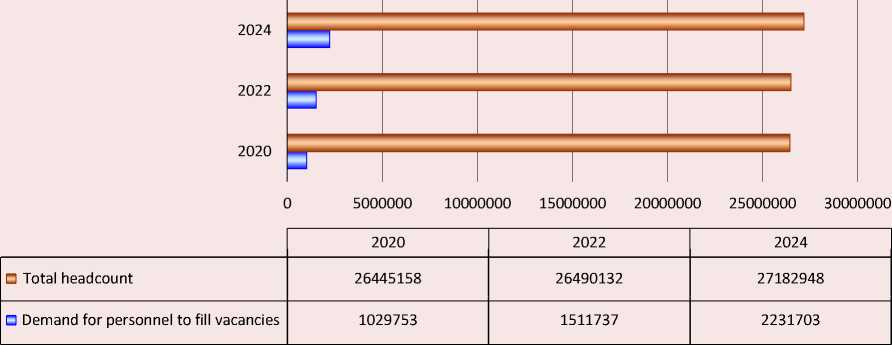
understanding how platforms integrate into the structure of labor relations – as intermediaries at the hiring stage or as direct organizers of the work organizations. According to Rosstat, the absolute number of vacancies reported by employers increased significantly in recent years: from 1.03
process.
million in 2020 to 1.51 million in 2022, reaching
Macroeconomic context and shifting demand. Platform infrastructure growth does not occur in a vacuum but in response to objective changes in the labor market. This growth directly correlates with the consistently rising need for personnel among
2.23 million by 2024 ( Fig. 1 ). Such rapid increase creates critical pressure on traditional recruitment methods, which digital platforms absorb, becoming the primary tool for filling the growing number of vacancies.
In absolute terms, the need for personnel shows steady growth, exceeding 2 million open vacancies by 2024. However, this indicator, dependent on the overall economic scale, has limited value for analyzing structural shifts. Therefore, Table 2 presents more representative data showing the share of personnel needed to the total number of jobs. This excludes the influence of extensive growth and shows the dynamics of labor demand, which is characterized by positive growth during the analyzed period from 3.7% in 2020 to 7.59% in 2024.
It should be emphasized that Rosstat statistics reflect not only the growth in the total number of vacancies but also a qualitative change in the sectoral structure of labor demand. While in
Figure 1. Demand of Russian organizations for personnel to fill vacancies, people
Compiled based on: Rosstat data.
Table 2. Share of demand for personnel to fill vacancies by key personnel categories, % of total jobs
|
Personnel categories |
2020 |
2022 |
2024 |
Absolute change, 2024–2020 |
|
Total specialists (economy-wide) |
3.7 |
5.4 |
7.59 |
+3.89 |
|
Real sector and import substitution |
||||
|
Skilled workers in industry, construction, transport |
4.7 |
7.0 |
10.56 |
+5.86 |
|
Skilled agricultural and forestry workers |
4.8 |
7.2 |
13.03 |
+8.23 |
|
Digital economy and technology |
||||
|
IT specialists |
4.1 |
5.7 |
6.60 |
+2.50 |
|
IT technicians |
3.5 |
4.6 |
10.73 |
+7.23 |
|
Services and mass hiring |
||||
|
Service, trade, security workers |
5.3 |
7.7 |
7.94 |
+2.64 |
|
Salespeople |
6.9 |
9.2 |
7.32 |
+0.42 |
|
Skilled personnel |
||||
|
Highly qualified specialists |
3.3 |
4.3 |
5.98 |
+2.68 |
|
Managers |
2.1 |
2.9 |
4.45 |
+2.35 |
|
Calculated based on: Rosstat data. |
||||
2020–2022 the personnel shortage was largely characteristic of the service sector (where the share of vacancies for certain professions – notably salespeople – reached 6.9–9.2%), by 2024 the priority shifted toward the real sector and high-tech fields.
This structural shift has a pronounced quantitative dimension and allows for several key conclusions:
-
1. Accelerating shortage in the real sector as an indicator of import substitution. The most noticeable increase in personnel demand is shown by activities related to import substitution and growing technological sovereignty. For instance, the share of vacancies in agriculture almost tripled (from 4.8% in 2020 to 13.03% in 2024), and among skilled industrial and construction workers it more than doubled (from 4.7% to 10.56%). These indicators quantitatively confirm the economy’s reorientation toward import substitution and the increased demand for blue-collar professions, which intensifies the burden on platform-based recruitment tools that are effectively becoming a key channel for filling such vacancies.
-
2. Polarization of demand in the digital sector. Demand for mid-level IT specialists grew significantly (from 3.5% to 10.73%), indicating an acute need for maintaining existing digital infrastructure rather than for its development. There is a contradiction: while public discourse focuses on the shortage of highly qualified developers and software architects, Rosstat data show an even more explosive growth in demand for midlevel technical specialists. This means that there are different employment trajectories within the technology cluster, and digital platforms become the infrastructural field where this contradiction is most acute: for the former, they offer a model of high-income but risky project employment (freelance exchanges); for the latter, they often serve
-
3. The service sector paradox. Meanwhile, labor market tension in trade and services remained high (7.32–7.94% in 2024), but the dynamics here are uneven. While overall demand for service workers stabilized, the need for salespeople, after peaking in 2022 (9.2%), declined by 2024 (to 7.32%). Consequently, the decrease in the number of sales vacancies may be linked either to a decline in demand for this profession or to the growth of informal employment and the gig economy, which are often not captured in official statistics. In the latter case, digital platforms play a paradoxical role: on the one hand, they formalize the hiring process; on the other, they reinforce informal labor relations, removing a significant portion of work in trade from legal protection.
as a hiring channel for positions with formal labor relations or, conversely, push them into informal employment.
Thus, Rosstat statistics show that the Russian economy is simultaneously reorienting toward import-substituting industries and becoming more technologically complex. Digital platforms respond to these changes by acting as important tools for addressing personnel needs in both traditional sectors facing shortages (agriculture, construction) and high-tech fields. All these processes together form stable macroeconomic trends, summarized in Figure 2.
The conducted analysis allows us to identify three key characteristics of the current stage of transformation. First, digital platforms have become the dominant infrastructure of the labor market, ensuring massive reach of economic agents. Second, the platform ecosystem is internally differentiated: different types of platforms perform different functions in organizing employment. Third, platforms promptly adapt to structural changes in the economy, reflecting the shift in demand toward the real sector and highly skilled labor.
Figure 2. Main structural changes in the Russian labor market mediated by digital platforms
Expansion of platforms and national ecosystem development

Source: own compilation.
However, even at this stage of examining scale and structure, there are the first signs of contradictions. The quantitative growth of platform infrastructure and its deep differentiation (from digital job boards to transactional platforms) do not automatically imply the formalization of labor relations – on the contrary, different types of platforms create different employment regimes, some of which remain outside labor law. The adaptation of platforms to the structural shift in demand toward the real sector and high technologies, in turn, raises the question of the distribution of new opportunities among different categories of workers and across different territories. Consequently, the described phenomena not only characterize the new face of the Russian labor market but also define the problem area for analyzing its internal contradictions.
Regional differentiation in the efficiency of digital platforms
Digital platforms are positioned as a tool for overcoming spatial barriers, providing universal access to vacancies regardless of a candidate’s place of residence. However, empirical verification of this thesis using Russian data casts doubt on its universality. Analysis of vacancy lifetime on the
The data presented in Figure 3 indicate high variability in vacancy lifetime and allow us to identify several significant paradoxes.
Paradox one – reproduction of structural disparities. Among the Russian regions (group 1), the capital agglomerations, as expected, show minimal hiring times, and platforms operate as highly efficient recruitment tools there. However, the contrast with the outsider region reveals a deep contradiction: in the Amur Region, despite having the same digital infrastructure (Trudvsem. ru, HH.ru), vacancy lifetime peaked at 250 days in 2024, which is four times higher than in Moscow. This creates a paradox of inequality reproduction: in regions where the labor market is initially developed (capitals), platforms develop it even more; in regions where it is underdeveloped (periphery), they cannot compensate for structural problems, and often merely highlight them, reinforcing the territories’ status as outsiders.
Figure 3. Median vacancy lifetime for selected Russian regions, 2020–2024 and Q1–Q3 2025, days
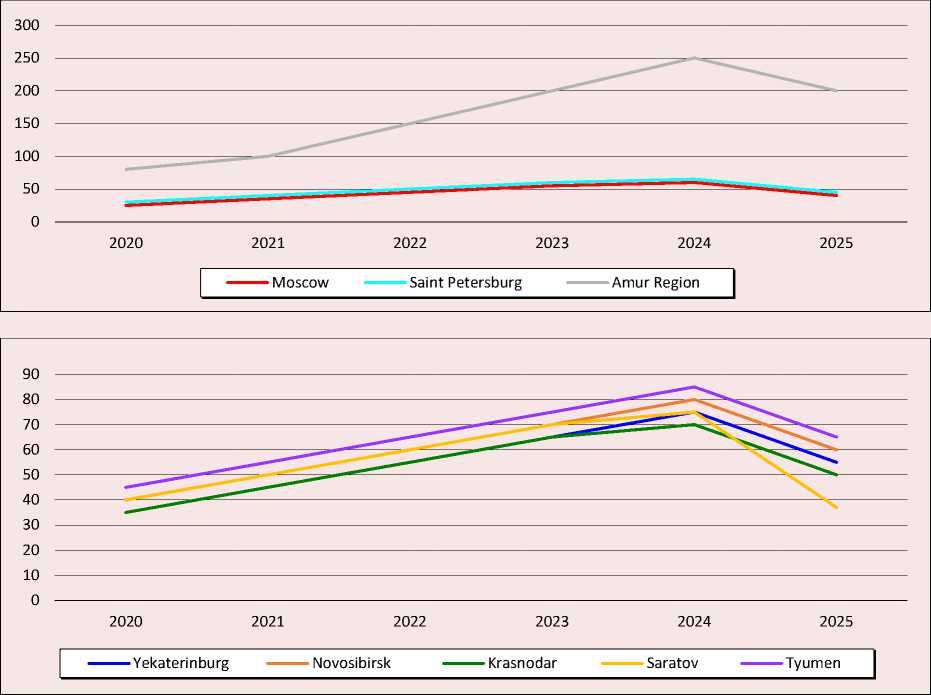
Note: since median vacancy lifetime is published fragmentarily for Russian regions during the period under review, Figure 3 presents an estimate based on samples of mass and IT vacancies.
Paradox two – local outperformance. Analysis of administrative centers (group 2) allows for a more detailed picture, revealing internal heterogeneity among cities traditionally considered successful. The general trend for Yekaterinburg, Novosibirsk, Krasnodar, and Tyumen is similar: a peak shortage in 2024 (65–85 days) and a correction to 50–65 days in 2025. However, in this context, Saratov stands out sharply. Without obvious competitive advantages over other cities in the sample, it demonstrates a record reduction in hiring time – from 75 to 37 days. This creates a paradox: contrary to the logic that leaders should be capitals or million-plus cities with developed economies, Saratov shows the best dynamics. This identified anomaly leaves a choice between two interpretations: either we are witnessing a rare case of successful digital transformation of a local labor market, or – what seems more likely – there is an effect of statistical compression, and high performance is achieved at the cost of low representativeness and quality of hiring.
Paradox three – the illusion of leveling. Public and academic discourse often expresses the expectation that digital platforms will help smooth regional disparities (Gavrilova, 2025)11. However, comparative analysis of hiring time dynamics shows the opposite. While in 2020 the gap between leaders (Moscow) and outsiders (Amur Region) was 55 days, by 2025 it had grown and stabilized at around 160 days. The paradox is that digital platforms, instead of eliminating structural barriers, give regional inequality better stability. The periphery’s lag ceases to be temporary and is reproduced on a technological basis.
Thus, the analysis shows that digital platforms do not have a uniform vector of impact on regional labor markets. Instead, they integrate into the existing territorial stratification, improving the positions of developed regions, highlighting the problems of underdeveloped regions, and creating anomalies where federal-level trends are shaped by local specifics. Consequently, platform infrastructure manifests and reinforces spatial heterogeneity in employment rather than helps overcome it. The overall outcome is not leveling but technological fixation of the existing structure of the labor market, within which platforms become an environment for exacerbating structural contradictions, and their effect is fundamentally mediated by the territorial context.
Institutionalization of informality and income polarization
Beyond quantitative growth trends, data from digital platforms reveal qualitative risks associated with employment transformation, defined in the literature as “digital precarization” (Yanchenko, 2022; Manokhina, Mityaeva, 2022). The analysis demonstrates that the flexibility and accessibility provided by platforms are accompanied by drawbacks, such as increased instability, informality, and the reproduction of labor market segmentation. A key contradiction of digital platforms is the divergence between the technological formalization of the hiring process and the actual legal status of employment. Data indicate a high prevalence of informal relations, with their visibility and scale varying depending on the business model and moderation standards of each platform. The most common Russian websites (HH.ru, Trudvsem.ru, Avito, SuperJob) reflect this phenomenon to varying degrees; however, direct statistical samples on the share of informal vacancies are not published by Rosstat or the platforms themselves for 2024–2025, confirming the informal nature of the phenomenon itself.
Our analysis produced estimated values. The largest classified site Avito shows the highest proportion of postings (up to 70–85% in certain categories) that ignore formal procedures and urge job seekers to contact them using phrases like “Telegram, WhatsApp us” or “call now, cash”. On HH.ru, a similar indicator is significantly lower (10–50% depending on the job), due to stricter moderation and a corporate audience. Notably, informal vacancies are also found on the Trudvsem. ru portal: their share is estimated at 20–35% in 2024–2025, indicating the systemic nature of avoiding formalization even with oversight.
Summary data on the estimated share of informal vacancies in mass categories on Russian digital platforms are presented in Table 3.
Comparison across regions shows considerable differences in the spread of informal practices, correlating with the personnel situation and the degree of formalization of the economy. The highest share of informal postings (up to 50–75% in categories like common laborers and household staff) is found in the Far Eastern and Southern federal districts. In the capital agglomerations –
Table 3. Share of informal vacancies on digital platforms (2024–2025)
|
Personnel categories |
Jobs |
Share of informal vacancies, % (total) |
Distribution by platform (peak values), % |
Typical markers in postings |
|
Skilled workers |
Common laborers, construction workers, loaders |
50–65 |
Avito – up to 55 HH.ru – up to 30 Trudvsem.ru – 15–25 |
“Call now”, “Work by the day”, “Cash payment” |
|
Service workers |
Delivery men |
30–45 |
Avito – up to 35 Trudvsem.ru – 10–20 |
“Via Telegram bot”, “Without registration”, “Side job” |
|
Unskilled workers |
Household staff (babysitters, nannies, cleaners) |
60–75 |
Avito – up to 40 HH.ru – up to 30 Trudvsem.ru – 15–25 |
“WhatsApp us”, “Trial day”, “By arrangement” |
|
Source: own compilation. |
||||
Moscow and Saint Petersburg – values are significantly lower (around 20–35% in comparable categories), which can be explained by stricter moderation on the websites and a greater share of large employers. However, it is important to emphasize: there is no open statistics by region or federal district, so these estimates should be treated as indicating the direction of the regional trend, not as precise quantitative measurements.
As a result, digital platforms in Russia create a fundamental paradox: being a tool for the technological formalization of hiring, they simultaneously become a channel for the institutionalization and normalization of informal practices. This is especially evident on mass-market and local platforms, because instead of smoothing regional differences, they integrate them into the technological infrastructure and reproduce them, expanding the zone of employment that remains largely invisible to the state.
Simultaneously, a pronounced polarization of income is observed, determined not only by skill level but also by the type of platform employment. In the permanent employment segment (HeadHunter, Rabota.ru), there is growth in offered wages, especially for IT specialists and managerial positions. Conversely, in the freelance segment (FL.ru, Profi.ru), earnings are typically projectbased and irregular, while on managed gig platforms
Comparative analysis ( Tab. 4 ) allows detecting this heterogeneity and identifying a key paradox – in high-skilled digital professions (IT, web design), a freelancer’s potential income, even at 50% capacity, can significantly (by 15–30%) exceed the median wages in traditional job postings. High earning potential here, however, is accompanied by risks of underemployment and lack of social guarantees.
In sales or mass services segments, parity is observed between platform employment and traditional hiring, whereas in the low-skilled informal segment (common laborers, household staff on classifieds), income is entirely dependent on verbal agreements and lacks any social guarantees.
This polarization means platforms create two coexisting segments. One is for high-income but risky project work (freelancing), the other is for low-income, completely informal employment, to which managed gig platforms with their algorithmic control and income instability also belong.
The data presented in the table suggest that digital platforms do not form a single labor market but rather two qualitatively different segments, each with its own logic of operation and local peculiarities.
Table 4. Incomes in different segments of the digital labor market: paradoxes of formality, flexibility, and precarization, Q1–Q3 2025, rubles
|
Personnel category |
Job |
HH.ru |
FL.ru and Profi.ru |
Yandex.Taxi and Avito |
Key paradox and conclusion |
|
Median wages |
Median earnings per project |
Average earnings |
|||
|
Segment 1: Freelancing (high qualification, project work) |
|||||
|
Highly qualified specialist |
IТ-specialist, programmer |
Moscow – 225 000 rubles Steady growth of about 5% |
150 000 rubles per project; Growth of about 25%, but continuous workload is not guaranteed. |
- |
Paradox of choice: between stable wages and high but risky freelance income. Conclusion: platforms create illusion of freedom while shifting risks to the worker. |
|
Designer |
Russia – 160 000 rubles Growth of more than 14% |
80 000 per project. Growth of 33% |
- |
Paradox of skill value: project value growth outpaces growth in wages, but monetization requires continuous workload not ensured by the platform. |
|
|
Segment 2: Managed gig platforms and informal hiring (low qualification, algorithmic / direct control) |
|||||
|
Service worker |
Delivery man and driver |
Russia – 45 000 rubles Formal hiring in logistics |
- |
35 000 – 65 000 rubles, depending heavily on the number of shifts and orders |
Paradox of technological archaization: the platform, offering a flexible schedule, de facto reproduces an archaic “work by the day” model characterized by income instability, lack of social guarantees, and worker dependence on algorithmic management and demand fluctuations. |
|
Skilled and unskilled worker |
Common laborer and household staff |
Around 40 000 rubles |
- |
25 000 – 50 000 rubles, often marked “cash” |
Paradox of informal legitimization: the platform (e.g., Avito) technologically legitimizes completely informal hiring, removing it from the legal environment while making it convenient and mass-scale. |
|
Compiled based on: aggregated data from HH.ru, FL.ru, Profi.ru, Avito, industry reviews, and expert estimates. |
|||||
The first segment is freelancing, where high-skilled services are offered through specialized platforms (FL.ru, Profi.ru, etc.). It allows for effective monetization of niche professional skills, with project costs growing at higher rates than wages in traditional employment. However, higher income is accompanied by risks of irregular employment and lack of social protection, so the worker has to choose between financial autonomy and stability, which creates a paradox of choice. Also, this segment is characterized by pronounced regional asymmetry: the most lucrative orders and clients are concentrated in capital agglomerations. Freelancers from other Russian regions are forced to compete for projects in conditions of lower local market solvency, which exacerbates existing territorial disparities.
The second segment combines two types of laborers: those working on gig economy platforms (for example, providing transport or delivery services), and those finding orders through classifieds (e.g., Avito) as common laborers or household staff. Although the technological basis of these models differs (algorithmic management on gig platforms and direct agreements on classifieds), they share a feature: workers in both cases lack autonomy, social guarantees, and stable income. The platform acts as a tool that technologically legitimizes archaic “work by the day” models, removing labor relations from the legal environment. Regionally, this segment dominates in peripheral territories, reinforcing their role as suppliers of low-skilled labor and preserving the existing type of employment.
From the above, it follows that the platform economy does not contribute to leveling but, on the contrary, reinforces and programmatically fixes the bifurcation of the labor market. On the one hand, there is high-paid but risk-prone freelancing, concentrated in large cities. On the other hand, there is a segment of unstable, often informal employment, prevalent in remote regions. This dichotomy is manifested not only in different jobs but also in a clearly expressed geographical aspect, confirming: digital platforms do not erase regional disparities but integrate into them, making them less visible but no less significant.
Reproduction of social vulnerability and regional asymmetry
Considering findings presented in the scientific literature, it is crucial to emphasize that the substitution of labor relations with civil contracts is characterized not only by legal implications but also by pronounced regional features. While previous research (Bobkov, Chernykh, 2020; Yanchenko, 2022) pointed to a general trend toward increasing socio-economic instability under platform development, analysis of regional statistical data allows us to detail this aspect concerning the Russian labor market.
Platforms, optimizing personnel selection through algorithms, implicitly create new barriers for the most vulnerable categories of job seekers. A key indicator here is the share of vacancies requiring resume ( Tab. 5 ). A diverging trend is observed: although the overall share of vacancies requiring resume is decreasing by 10–20% (due to the growth of informal practices with direct contact and automatic selection of candidates through tests), in highly competitive skilled segments, the demand for
Table 5. Paradoxes and contradictions of resume requirements by categories of personnel employed on the platforms (2024–2025)
|
Personnel category* |
Share of vacancies requiring resume, % |
Changes in share, % 2024–2025 |
Paradox, contradiction |
|
Information technology |
90–95 |
Increased by 20–30 |
Contradiction of accessibility: an industry symbolizing digital progress creates a maximum entry barrier through the ideal algorithm-friendly resume, screening out candidates with nonstandard or practical (but not formalized) experience. |
|
Finance and banking |
85–90 |
Increased by 15–25 |
Contradiction of conservatism: high formalization of selection via resume preserves a personnel model favoring candidates with traditional career paths and education, limiting access for specialists from adjacent or new digital fields. |
|
Management (office specialists) |
85–90 |
Increased by 44 |
Paradox of mass formalization: significant growth in resume requirements on mass platforms (Avito.Rabota) indicates technological replication of corporate hiring practices, which does not guarantee improved selection quality but automatically screens out applicants unwilling to comply with such formalization. |
|
Mass professions (delivery men, common laborers) |
20–40 |
Decreased by 10–20 |
Paradox of digital archaism: platforms offering technological hiring tools in this segment legitimize and massify an archaic hiring model with direct contact, minimizing formal procedures and social guarantees. |
* The categories presented are the elements of the broader professional groups used in the study. Source: own compilation.
This trend creates a digital divide in access to good positions. For youth without experience, older individuals13, migrants, and women returning from maternity leave, the requirement for an ideally structured and “algorithm-friendly” resume is a significant hindrance. Their professional experience and competencies, which do not fit into standard systematization framework, are often invisible to automatic initial screening systems. Paradoxically, platforms designed to expand access to the labor market reproduce traditional forms of exclusion, but at a new technological level.
Platformization’s contradictory nature is most evident at the regional level ( Tab. 6 ).
The data presented in Table allow moving from general discussions of inequality to its quantitative assessment. The analysis demonstrates growth (not a decrease) in structural differences between leading regions (Group 1) and the administrative centers of Group 2.
In capital agglomerations (Moscow, Saint Petersburg), the share of vacancies in high-income segments – IT (24–30%), management (20–25%), finance (11–15%) – is not only consistently high but continues to grow. In these particular areas the substitution of labor relations with civil law schemes (freelance, project work) creates an illusion of flexibility while maintaining substantial monetization of skill (Tab. 4). In this case, platform employment acts as an alternative way of organizing labor, without changing the professional profile of the leading regions.
Conversely, the demand structure is qualitatively different. The share of vacancies in blue-collar work (32–48%) and transport/logistics (20–33%) is significantly higher in the administrative centers (Saratov, Tyumen), while the share of IT and management is noticeably lower – only 8–15% of vacancies. In these particular high-demand professional categories the maximum share of informal vacancies (up to 60–85%) and informal hiring practices is recorded. In the case of Group 2 regions the platform (e.g., Avito) paradoxically acts not as a formalization tool but as infrastructure that reinforces the retreat from labor guarantees, which
To sum up, we can state the following: the quantitative growth of platform infrastructure does not lead to equalization of opportunities but technologically reinforces the existing regional hierarchy. Platforms provide a highly competitive skilled labor market for capital agglomerations – though there are elements of precarization in the freelance segment. On the contrary, platform infrastructure of administrative centers and similar territories reproduces a low-skilled, often informal employment model. The paradox is that digital platforms primarily provide the least protected employment for territories with initially less developed labor markets, and quantitative growth (number of vacancies) cannot improve job quality.
This imbalance is a significant driver of migration of the active and skilled part of the workforce to capital agglomerations. Platform websites, providing open information about hundreds of thousands of vacancies across regions (e.g., Avito. Rabota), objectively facilitate migration flows and contribute to the concentration of human capital in growth centers, exacerbating personnel shortages elsewhere. There is a vicious circle: informal and low-paid employment in administrative centers encourages the most active workers to leave, reinforcing the role of these areas as suppliers of cheap labor, while platforms act as infrastructure legitimizing this process. Consequently, platform employment exacerbates and accelerates the institutionalization of regional and professional segmentation, transferring vulnerability into a digital environment through algorithmic filters. Consequently, administrative centers and similar regions concentrate predominantly low-skilled and informal types of employment, while capital agglomerations accumulate more profitable segments of the digital labor market. Technological expansion of platforms does not resolve contradictions; on the contrary, it often intensifies them, creating an illusion of choice and accessibility while simultaneously reproducing structural inequality.
Intensification of algorithmic control and deficit of social protection
While remote work market is expanding (42– 63% in 2023–2025), algorithmic regulation of employment on digital platforms is noticeably intensifying. Rating systems transform into tools of constant monitoring and pressure, setting parameters for worker behavior. According to A.V. Shevchuk, algorithmic management structures interactions, “rewarding and punishing certain user behaviors” (Shevchuk, 2023), creating an “invisible cage” (Rahman, 2021) with unclear and variable criteria for success. Ranking metrics tied to ratings and response speed encourage users to be constantly available, blur the boundaries of the working day, and increase psychological pressure. As a result, platform users have to be always online not to miss offers.
It is important to note that the nature and degree of algorithmic management vary significantly across different platform types. Therefore, it is more correct to identify multiple practices and regulatory regimes rather than a single, uniform mechanism. The key contradiction is caused not by algorithmization itself but by its pronounced differentiation: there are multiple control models across platforms, and two distinct employment regimes are identified.
Regime one – managed gig platforms (total algorithmic control). Algorithmic management is best described using the example of taxi and delivery services: the algorithm performs functions of both a digital dispatcher and a manager. It organizes the entire work cycle – from order assignment
(based on undisclosed rules) to navigation, time and speed measurement, and application of sanctions for mistakes. The worker’s income level is determined by the algorithm, and the scope for independent decisions is sharply limited – opportunities to decline tasks are restricted, and deadlines are strictly set. All this creates a regime of constant and comprehensive control under which the worker is functionally embedded in the digital system.
Regime two – freelance exchanges and service marketplaces (algorithmically mediated competition). On professional service platforms (FL. ru, Profi.ru, YouDo), algorithmic management manifests itself primarily in rating mechanisms, search result ranking, and recommendation systems. Although the contractors are legally and organizationally not tied to a fixed employer and can manage their own time, their real freedom is constrained by dependence on the platform’s demand infrastructure. To secure orders, the freelancer has to maintain metrics important to the algorithms: respond quickly, increase conversion rates, accumulate reviews, and compete for positions in search results; at the initial stage, this often involves working at reduced rates. The result is a softer but quite effective vicious system based on market discipline and opaque success criteria.
However, the autonomy is lost differently under these two regimes. It is completely lost in the case of algorithmic management, whereas it is only limited in the case of platform-based employment as the price of access to the market and orders. Nevertheless, in both cases, a common result is reproduced: the platform is not in charge of the worker, it imposes both entrepreneurial costs and the social consequences of employment instability on them. Thus, digital intermediation modernizes coordination methods but does not guarantee the inclusion of labor relations within legal regulation.
Consequently, algorithmic management not only matches supply and demand but also institutionally supports the lack of social guarantees, leaving workers in conditions of “digital feudalism” (Shevchuk, 2023). In this context, the platform functions acts as a private regulator, defining the rules of access to work and distribution of rewards, without having corresponding obligations to the performers. The paradox of the Russian situation is that the expansion of digital platforms and their involvement in state policy do not lead to consistent formalization of employment: on the contrary, the platform model often reproduces unstable and informal forms of labor. This is confirmed by observations of freelance platforms (FL.ru, YouDo, Profi.ru): due to short turnaround time (several hours or a few days), labor relations often remain episodic, project-based, and do not involve formal employment, social security, or pension contributions.
Conclusion
This research offers a comprehensive examination of the changes in the Russian labor market under the influence of digital platforms. The starting point was the hypothesis that platformization, contrary to expectations, leads not to the prevalence of formalization and the reduction of structural imbalances, but to the institutional entrenchment of informal practices and the intensification of regional differentiation. The empirical results confirmed this assumption. The findings show that the technological expansion of platforms is accompanied by significant social contradictions: while simplifying and formalizing job search procedures, they simultaneously create infrastructure that supports the reproduction of unstable employment, and their stated potential for overcoming spatial barriers is limited by their ability to technologically fix existing territorial stratification.
The development of a holistic analytical model makes the study theoretically significant. Based on this model, the platform transformation of the labor market is interpreted as a complex social phenomenon with multiple levels and internal contradictions, rather than as a linear technological shift. The work proposes and tests for the first time a methodology for quantitatively identifying informal hiring practices based on content analysis of job postings. It allowed for the empirical identification of the divergence between the technological form of platform intermediation and its social content. Additionally, the research develops the conceptual framework by identifying types of algorithmic management and demonstrating its heterogeneous effects across different employment segments – from total control regimes in physical labor to algorithmically mediated competition in intellectual services. Thus, the work contributes to the theory of digital precarization and to explaining the mechanisms of vulnerability reproduction in contemporary economic conditions.
The applied significance stems from its focus on practical issues of labor relations. The research findings expand the evidence base for revising state approaches to regulating digital employment, emphasizing the need to shift priorities from supporting infrastructural solutions to targeted mechanisms for protecting workers’ rights. The results show that uniform regulatory measures are ineffective under conditions of pronounced regional and sectoral asymmetry; this necessitates the development of differentiated approaches that account for the characteristics of different types of platforms and territories. For businesses and HR departments, the work reveals the dual role of platforms as a recruitment tool: the uncontrolled implementation of gig models creates longterm reputational and managerial risks and may potentially reduce the human capital of regions where companies operate.
Thus, the conducted research makes a significant contribution to the development of economic and sociological approaches to the study of labor, offering methodological solutions and a conceptual model for the critical analysis of platform employment. At the same time, the results show that the key factor in employment transformation is not technology itself, but the ability of institutions and society to make it an effective tool in realizing benefits while simultaneously preventing social losses and ensuring the stability and inclusiveness of the labor market.
