
Early Iron Age Ceramics from the Ust-Polui Ritual and Production Center: Aspects of Technology
Journal: Archaeology, Ethnology & Anthropology of Eurasia @journal-aeae-en
Section: The metal ages and medieval period
Article in issue: 2 т.53, 2025.
Free access
This article outlines the findings of a multidisciplinary analysis of pottery from the Early Iron Age ritual and production complex at Ust-Polui, in northwestern Siberia. The raw material used in pottery manufacture was aleuritetype silty ferruginous clay with a small amount of sand. Six recipes for paste preparation are described, the most common of which was adding grus to clay. Both materials were mined nearby. Two types of modeling are identified: base and base-and-body. Both the hollow form and the base were modeled by the coil method. Surface treatment was variable. Eighteen combinations of tools are identifi ed. Two peculiar techniques were employed: shaping the rim by an additional coil, and smoothing with a denticulate tool on the inner surface of the shoulder-body junction. Three pots were painted with ocher. Ceramics were used in foundry as crucibles and possibly ladles for molten metal. Comparison of Ust-Polui ceramic technology with that of Kulaika culture revealed both similarities and differences. Basically, the Ust-Polui ceramics belong to the Kulaika tradition. Their specifi city, however, supports the idea of the Ust-Polui variant, which is not synonymous with the Ust-Polui culture sensu V.N. Chernetsov. People associated with this variant were not isolated; they maintained ties with people living upstream on the Ob as far south as Barsova Gora, resulting in a blend of technological traditions differing from those of the Lower and Surgut stretches of the Ob.
Short address: https://sciup.org/145147494
IDS: 145147494 | DOI: 10.17746/1563-0110.2025.53.2.080-088
Text of the scientific article Early Iron Age Ceramics from the Ust-Polui Ritual and Production Center: Aspects of Technology
The Ust-Polui ritual and production complex is located in the Yamal-Nenets Autonomous Okrug of the Tyumen Region (Western Siberia, Russia). The site occupies a part of the right-side terrace of the Polui River, ca 2 km from its confluence with the Ob River. It was discovered in 1932; V.S. Adrianov excavated the site for the first time in 1935–1936. In 1938, a small-scale excavation was carried out by A.F. Palashenkov. In subsequent years, exploration works were conducted by V.N. Chernetsov, V.I. Moshinskaya, S.G. Parkhimovich, and V.M. Morozov. Large-scale excavations were carried out in 1993–1995 and continued in 2006–2015. A detailed description of the site, history of the research, findings, and chronology have been described in a series of summary works (see, e.g., (Arkheologiya Arktiki, 2012, 2017)). We will focus on the most common finds at this site—pottery fragments. Despite the large size of the collection, ceramics remain the insufficiently studied category of artifacts from Ust-Polui, which fact
Moshinskaya carried out the first analysis of the Ust-Polui ceramic complex and identified three types of vessels based on their ornamentation and shape. She also provided a brief description of the technology. The vessels were modeled through coil technique; the rim in some cases was shaped by folding the edge inward or adding an extra coil.
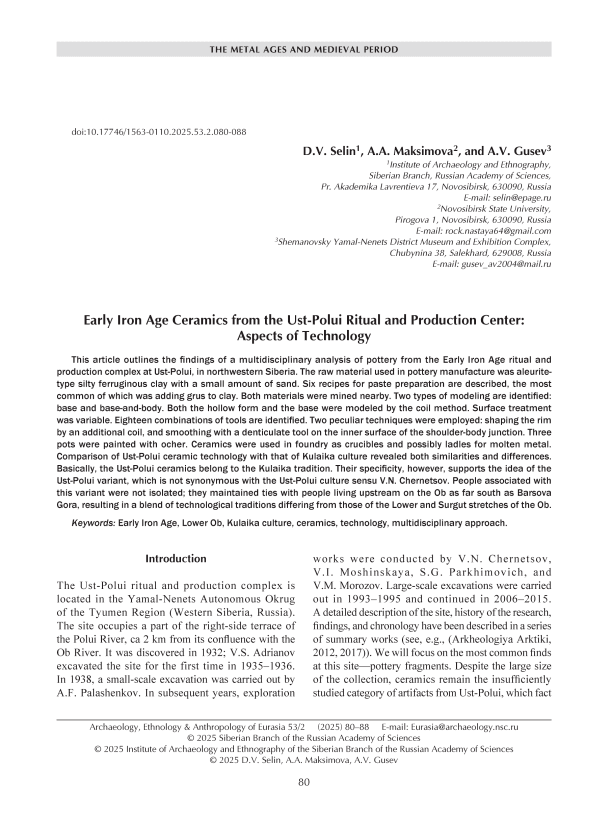
Fig. 1. Ritual and production complex at Ust-Polui on the map of Eurasia ( 1 ) and geological map-scheme ( 2 ).
K1ss – Severo-Sosvinskaya Formation; K1jr – Yarongskaya Formation; PR2?kg – crystalline schist-gneiss strata.
Traces of surface paddling with a spatula were noted. The addition of grus and crushed mica schist to the paste was recorded (Moshinskaya, 1953: 112).
One more research was focused on quantitative and spatial distribution analysis of Ust-Polui ceramics from excavations of different years (Novikova, Rybina, Novikov, 2014). The analysis showed that rims accounted for 45.5 % of the total number of fragments. According to the researchers’ estimates, the total number of vessels at the site was approximately 7000 items. At present, this estimate seems somewhat overstated, since the authors did not take into account that one fragment was not equal to a whole vessel; the rim of one item could be crushed into several pieces; and the fragments could be scattered across the area of the site, as evidenced by experimental results (Glushkov, 1996: 89–91).
Scientific analysis of the technology of pottery manufacture is extremely important (Bobrinsky, 1978; Tsetlin, 2017; and others). To date, pottery from the Beloyarskaya and Kalinkinskaya cultures and the Kulaika tradition from the Novosibirsk, Tomsk-Narym, and Surgut regions of the Ob has been analyzed through a unified methodology (see, e.g., (Selin, 2021; Selin, Chemyakin, 2022a, b; Stepanova, Pletneva, Rybakov, 2021; and others)). The same algorithm was used for the study of the Ust-Polui ceramics, which makes it possible to compare correctly the techniques of the Early Iron Age pottery manufacture, primarily the Kulaika pottery, from various sites in the Ob region.
Ust-Polui is located on the West Siberian platform; its cover is weakly dislocated and composed of Cretaceous sedimentary rocks, the bedrock consisting of Proterozoic formations of the Ural Fold Belt (Zyleva et al., 2014). It is dominated by rocks of the Severo-Sosvinskaya Formation, which is composed of sands and siltstones with interlayers of silty and carbonaceous clays (Gosudarstvennaya geologicheskaya karta...,
2013a). The deposits of the Yarongskaya Formation, consisting of clays with interlayers of sandstones, were also noted. The bedrock of the region contains Proterozoic crystalline schist-gneiss strata, which include paragneisses, crystalline schists, quartzites, metasandstones, and granite gneisses. Late Paleozoic granitoids, including granites, granodiorites, and leucogranites, are also found (Gosudarstvennaya geologicheskaya karta..., 2013b) (Fig. 1).
The aim of the study is to reconstruct the techniques used at certain stages of pottery manufacture and the historical and cultural processes among the Ust-Polui population, which are available for study based on archaeological ceramics.
Methods and materials
The ceramics were subjected to multidisciplinary analyses using various scientific techniques. The pottery was studied by the method proposed by A.A. Bobrinsky (1978). The sample under study included fragments of 125 vessels.
Thin sections were examined using an ADF A1 polarizing microscope. In total, twenty items were subjected to petrographic analysis. The smallness of the sample is due to the fact that the Ust-Polui collection is kept in the Shemanovsky Yamal-Nenets District Museum and Exhibition Complex, and the Museum rules do not permit a larger number of samples to be taken.
X-ray fluorescence (XRF) analysis was performed on the MetExpert device. The chemical composition of clays, paint, and metal drops was established. The detection thresholds of particular elements are: Na, Mg, Al, Si – 0.2 wt%; from P to Mo – 0.02 wt%; from Ag to Am – 0.05 wt%.
The Ust-Polui ceramics have been analyzed using this set of methods for the first time.
Ceramics study results
Selection and preparation of the original ductile raw material. Ferruginous clays with different concentrations of sand and other natural impurities were selected. Four clay subtypes have been identified.
Clay 1 ( n =107) – with a minor admixture of rounded sand (0.1–2.0 mm, up to 7 incl. per 1 cm2). Admixture of brown iron ore was identified in 33 specimens. The size of the inclusions is 0.1– 2.0 mm; the concentration is 1–9 incl. per 1 cm2. In 19 vessels, only rounded fractions were recorded, in 11 only angular ones, in 3 specimens both varieties. The occurrence of angular inclusions suggests the preliminary crushing of raw material.
Clay 2 ( n =14) – the amount of sand admixture is similar to the above. Solitary fragments of plant stems and/or leaves (2–5 mm) were noted in twelve vessels, fragments of mollusk shells (0.5–1.0 mm) in one vessel, and bird down (0.5 mm) in one more vessel. This raw material could have been mined in the immediate vicinity of a reservoir or in a floodplain.
Clay 3 ( n =2) – moderately sandy, with natural inclusions of rounded sand (0.1–1.0 mm; 20 incl. per 1 cm2).
Clay 4 ( n =2) – with high sand-content, with rounded fine (0.1–0.5 mm) and dusty sand.
The vast majority of vessels ( n =121) were made of clay with low sand-content, which suggests the stability of skills in selecting highly ductile raw material. The difference is that some of the clay deposits could have been in floodplains or near water bodies, which led to the occurrence of various natural organic impurities, characteristic of clay 2, in the raw material.
Petrographic analysis also showed differences in the mineral composition of the clays used. Two groups have been distinguished. Group 1 (5 samples) is characterized by an inequigranular psammitic
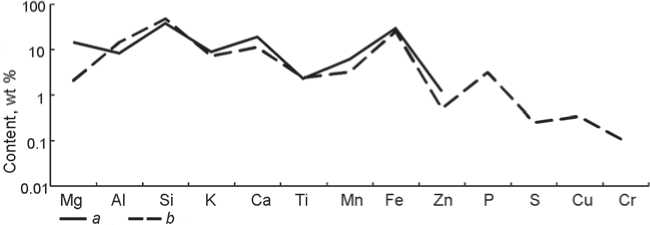
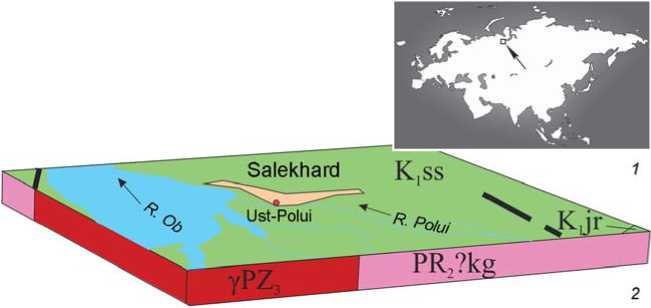
Fig. 2. Contents of chemical elements in ceramic samples. a – average values for group 1; b – same for group 2.
clay texture consisting of 90 % cement and 10 % clastic material. The cement is composed of illite, plagioclases (0.02–0.19 mm), potassium feldspar (0.03–0.19 mm), and amphibole (0.06–0.2 mm). The detrital material consists of unrounded grains of plagioclases (0.24–1.19 mm), granitoids (0.62– 2.47 mm); amphiboles (0.26–0.68 mm) and biotites (0.69–1.01 mm) are less common.
Group 2 (15 samples) is characterized by a silty-pelitic clay texture consisting of 70–90 % cement and 10–30 % clastic material. The cement is composed of illite, quartz (0.02–0.07 mm), plagioclases (0.02– 0.17 mm), potassium feldspars (0.03–0.25 mm), biotites (0.04–0.35 mm), and amphiboles (0.03– 0.23 mm). The detrital material consists of granitoids (0.64–4.41 mm), plagioclases (0.27–2.24 mm), biotites (0.16–1.39 mm), and amphiboles (0.18–1.08 mm).
All the samples were subjected to XRF analysis (Fig. 2). The derived data were compared with the results of petrographic analysis; and two groups were identified. Group 1 shows a high proportion of Mg (average values of 3 wt%). In addition, differences in the contents of Ca, Mn, and Zn were identified: their contents were higher in group 1 (average values of 18.9, 6.1, 1.2 wt%, respectively) than in group 2 (average values of 11.2, 3.2, 0.5 wt%, respectively). The Al content was 2 times higher in group 2. Despite the noted differences in the proportions of chemical elements, the compositions of all the samples are comparable with one another, which suggests a single clay mining region.
Paste preparation. Six recipes were established (Fig. 3, 1–4 ): 1) clay + grus ( n =97); 2) clay + grus + + organic solution ( n =15); 3) clay + grus + grog ( n =10); 4) clay + grus + grog + organic solution ( n =1); 5) clay + grus + organic matter (manure?) ( n =1); 6) clay + grus + animal hair ( n =1).
Grus was found in all the samples under study (Fig. 3, 1–4 ). The petrographic analysis showed that the grus was obtained from disintegrated granitoid granules consisting mainly of quartz, biotite, plagioclase, and amphibole, suggesting their attribution to leukoplagiogranites and leucogranites; granites are less common. The rocks and clay could have been mined near the site. Furthermore, the Ust-Polui area yielded fired pieces of granitoids, which probably served as raw material for grus production.
Grus was not calibrated in the vast majority of cases ( n =117). The fraction size averages 0.1– 4.0 mm; some fragments demonstrated inclusions up to 8 mm. Eight vessels contained grus calibrated by the upper boundary (≤ 2 mm). Two main variations of this impurity concentration were recorded: 1 : 1 to 2 ( n =59) and 1 : 5 to 6 ( n =46).
Grog was revealed in eleven vessels, only in combination with grus (Fig. 3, 4 ). In six cases, it was not calibrated (0.1–4.0 mm); five specimens contained grog calibrated by the upper limit (≤ 2 mm). The main concentrations were 1 : 5 to 6 ( n =3) and 1 : 6 to 9 ( n =7). In nine cases, the concentrations of grog and grus in one vessel were the same. One of the samples shows granitoid grus (0.1–0.5 mm) in grog.
The organic solution was recorded in the form of elongated voids (0.5–4.0 mm) with a glossy substance inside and black shiny drips, sometimes with scraps of plants up to 0.3 mm (Fig. 3, 3 ). In one vessel, fragments of burnt thin plant-stems (1.0–2.5 mm) were identified, presumably the remains of ruminant manure. In one more vessel, an admixture of wool was noted.
A comparative analysis of clay types and paste recipes was made. Four of the six recipes were based on the first two clay types; clay 2 was used in manufacturing 11 % of the total number of vessels, of which 36 % have grog admixture in the paste. The only vessel with wool additive was also made from clay 2. Clay 3 was used in multicomponent recipes with organic solution. In clay 4, only grus was added.
Construction of the bottom, hollow body, and base. The type of modeling was reliably identified in 10 vessels. These were constructed according to two techniques: base ( n =4) and base-and-body ( n =6). The hollow body was built up by coil technique, with
Fig. 3. Microphotographs of ceramic surfaces and fractures.
1 , 3 – grus; 2 – grus and organic solution; 4 – grus and grog; 5 – ocher and carbonized deposits covering ocher stains; 6 – overburning on the exterior surface of potsherd.
an overlay from the interior or exterior surface along the coil (Fig. 4, 1–5 ). The width of the coils varies from 3 to 7 cm; most common width is 4–5 cm. One vessel shows coils applied in double-layer. Traces of paddling the exterior surface with a smooth mallet were noted on two items. In five vessels, the upper edge of the rim was shaped by an additional small coil 0.5–1.8 cm in diameter (Fig. 4, 6 ). Nine bases were
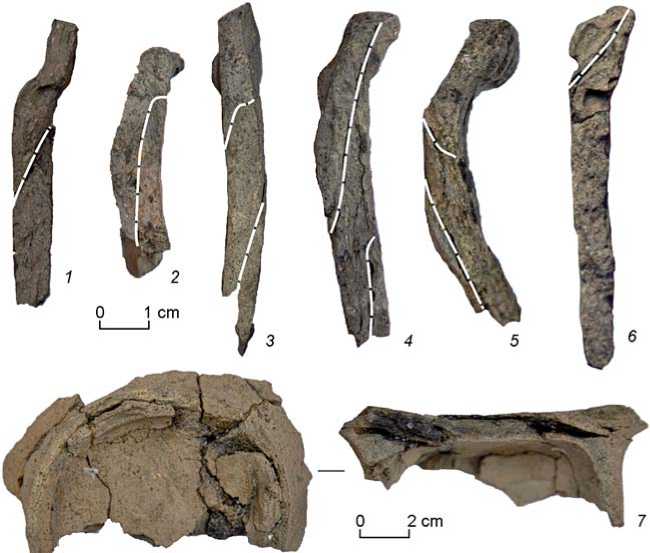
Fig. 4. Traces of construction of hollow body and base.
1 – 5 – fractured vessels showing traces of coil method; 6 – shaping the rim from inside with a small coil; 7 – coil-shaped base.
the substance consisted of Mn (3.649 ± 0.076 wt%), Fe (47.542 ± 0.264 wt%), Mg (13.818 ± ± 4.640 wt%), Zn (0.417 ± ± 0.028 wt%) and can be classified as iron oxide golden ocher. The painted vessels do not differ in shape and ornamentation from the bulk of Ust-Polui ceramics.
Use of vessels in household and in production. Carbonized deposits were noted on 99 vessels. Traces of overburning were recorded on the fragments of four items (see Fig. 3, 6), which was associated with their use in foundry. This is also evidenced by metal drops up to 2 mm in diameter, which were found on the inner surface of one fragment (see Fig. 5, 8). XRF analysis was carried out on a drop along a fresh fracture, at the point of its adjoining the shard’s surface. The following data were derived: Mn – 4.45 wt%, Fe – 90.66, Zn – modeled of coils 3–5 cm wide, which were stuck to the lower part of the vessel from the inside or outside in a circle (Fig. 4, 7). One base was made of two coils with lateral overlapping.
Surface treatment . The vessels were smoothed and polished through various techniques in several combinations. The most common was smoothing both surfaces with a plain tool ( n =68). Several specimens show the exterior surface finished with a plain tool, and the interior surface with fingers ( n =12). A total of 18 combinations were identified. On three vessels, traces of smoothing of the shoulder-body junction with a denticulate tool were recorded.
Making the ceramics solid and water-resistant . The fractures show a variety of one-, two- and three-layer color schemes (from brick-red to black). Baking took place at a temperature above the clay’s incandescence point in the range from 550–650 °C to 900–1100 °C, in a reduction environment.
Surface painting. Three fragments from different vessels were painted (see Fig. 3, 5 ; 5, 1–7 ). On two items, the paint unevenly covers both surfaces; on one item it only covers the inner surface. On one vessel, the paint is covered with carbonized deposits (see Fig. 3, 5 ). XRF analysis was performed on the inner surface of a ceramic fragment (see Fig. 5, 5 ). It showed that
0.42, Ti – 2.83, Co – 0.90, Ni – 0.50, Cu – 0.65 wt%. Most likely, the vessel was used as a crucible.
Discussion
The above-described stages of pottery manufacture show differences in terms of substrate and adaptive skills. Two shaping methods have been identified— base and base-and-body. This stage of manufacture is the most conservative, and its complete change takes the time of working activities of five to six generations of artisans (approx. 150–180 years). Other substrate skills have been recorded in a uniform state. For example, the only discovered method of constructing a hollow body is the coil technique; the shape of vessels was modeled through paddling.
Adaptive skills include selection and processing of raw materials, paste preparation, and surface finishing. These skills change quite quickly, usually during the first few years upon the start of the interaction. Shaping skills occupy an intermediate position; these change during ca 25–30 years (Tsetlin, 2017: 192). The dominant subtype of raw material is clay with low sand-content, possibly pre-crushed. A considerable share of vessels, 86 %, were made from this type of
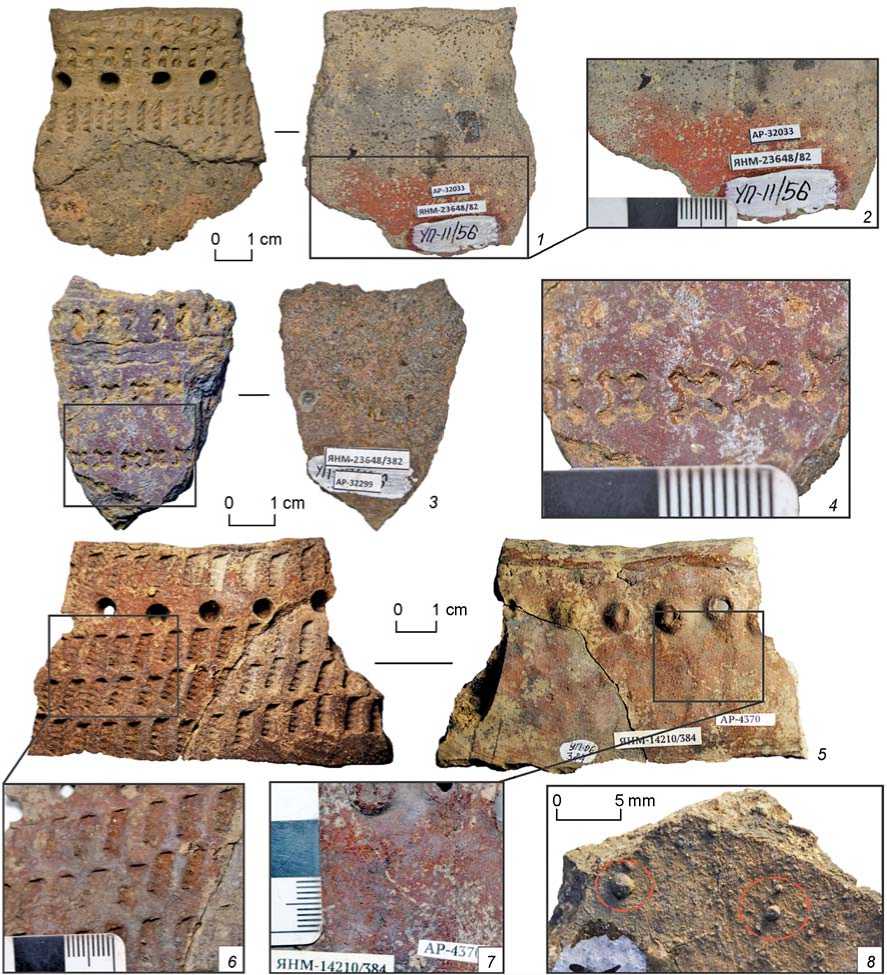
Fig. 5. Vessels painted with ocher, and metal drops on the potsherd interior surface.
1 – vessel 1; 2 – macrophoto of the interior surface of vessel 1; 3 – vessel 2; 4 – macrophoto of the exterior surface of vessel 2; 5 – vessel 3; 6 , 7 – macrophoto of the surfaces of vessel 3; 8 – macrophoto of metal (iron) drops on the interior surface of vessel.
clay. The main mineral additive was grus, which was identified in all the vessels. Grog occurs only together with grus, and its concentration does not exceed 1 : 4 to 6, and most often is 1 : 6 to 9, which indicates almost complete assimilation of this tradition. Various techniques of surface treatment are preserved. Two peculiar technological skills have also been recorded: shaping the rim by an additional coil and smoothing the inner surface of the shoulder-body junction with a denticulate tool.
The revealed features suggest the stability of pottery traditions at the level of adaptive and partly substrate skills. On average, no more than 14 % of the total number of vessels was manufactured of clays 2–4 and mixed recipes with grog and organic impurities, which attests to the almost complete cultural homogeneity of the Ust-Polui population. The use of two modeling types suggests two components in the development of Ust-Polui tradition. Since this stage of technology is the most conservative, this interaction took place at a rather remote time.
Vessels painted with ocher are a unique phenomenon for the Early Iron Age pottery-making in the taiga zone of Western Siberia. Ocher spots were recorded on solitary vessels at Ust-Polui (Arkheologiya Arktiki, 2017: Vol. 1, p. 54). The population used ocher at least in strewing it over the soil and in ceramic painting. Pottery painting was not a widespread phenomenon, since painted ceramics account for only 2.4 % of the entire collection. Vessels of this type were dispersed over the site and did not form any separate cluster.
Ceramic vessels could be brought to the site for ritual purposes, but also could be used in foundry as crucibles, as evidenced by the traces of burning and drops of iron found on them. This partly explains such a large number of ceramic shards in the territory of the site.
The comparison of the Ust-Polui ceramics with the Early Iron Age ware (primarily the Kulaika) from other regions of Western Siberia provides very important information. The pottery of the Surgut variant of the Kulaika culture demonstrates the use of ferruginous clays, which were mined within the boundaries of the Surgut volcanic field, but from several deposits. A wide range of artificial admixtures has been identified. The admixtures show various combinations. For example, at Barsov Gorodok (hereinafter Bg) I/5, nine recipes have been established, and at Bg I/4 eight. Most sites at Barsova Gora show the predominant use of the clay + grus composition, but there are sites (Bg I/4, Bg I/30) where grog was the main admixture. Vessel-bottom modeling was executed through base-and-body technique. The vessels were predominantly constructed by patch technique; however, at certain sites (Bg I/4, I/5, I/7, I/8, I/20, III/6, IV/3, Barsova Gora III/2) the coil method was also recorded. Most often, the number of such vessels does not exceed 5–10 %. Surface treatment was variable. At Bg I/4, up to 39 methods of combining various tools were identified. In addition, at all the analyzed sites of Barsova Gora, peculiar technological skills were recorded: additional decoration of the rim with a coil up to 1 cm in diameter, and inner surface smoothing of the shoulder-body junction with a denticulate tool.
The Surgut ware of the Kulaika tradition shows certain similarities with the Ust-Polui ceramics: the use of ferruginous clays, the choice of grus as the main admixture, and the use of the two technological skills mentioned above. At the same time, no cases of the base-shaping method of bottom modeling have been noted at the sites of the Surgut region of the Ob. Differences were also observed in the techniques of hollow-body construction. At Ust-Polui, the main construction elements were coils, while in the Surgut region of the Ob, patches. However, it is extremely important that at some settlements of Barsova Gora solitary vessels made by coil method have been discovered. This suggests contacts between northern groups having populated the area of modern Salekhard and their southern neighbors. These northern groups penetrated the regions upstream of the Ob River, where they interacted with local population; as a result, production skills atypical of this region, such as coil technique, appeared in the Surgut region of the Ob. Apparently, the tradition of adding grog into the ceramic paste was borrowed by the Ust-Polui people from their southern neighbors.
In the Tomsk-Narym stretches of the Ob, the Kulaika people used at least two ways of paste preparation: with grus and with sand. The first trend refers to the pottery from several sites on the Tom River studied by a team of researchers (Stepanova, Pletneva, Rybakov, 2021). It was manufactured from ductile clays with low or no ferrous content. The most popular was the recipe of clay + grus + organic matter. The second trend is represented at the Sarov fortified settlement and the settlement of Malget-6 (Selin, Chindina, in press). Those pottery-makers selected mainly ferruginous clays with low sand-content. Eight recipes of the paste were identified, with the main one being clay + sand (72 %). The use of the same two above-mentioned peculiar technological methods was recorded. Bottom modeling was made according to the base-and-body pattern; in almost all cases, a hollow body was built up with patches. Notably, two vessels from the Sarov fortified settlement and one from Malget-6 were made by the coil method, which is atypical of both the Tomsk-Narym and the Surgut regions of the Ob. However, the existing significant differences in technology do not provide any ground to consider the Ust-Polui ceramics as a variant of the Kulaika (Sarov) tradition and to link the emergence of the Ust-Polui ceramics directly with human migrations from the Middle Ob region, as was suggested by L.A. Chindina (1984: 156–175). At present, we can state that the inhabitants of the Sarov fortified settlement did not produce a significant influence on the pottery technology of the Ust-Polui population, and the tradition of using coil technique could have penetrated the Tomsk-Narym region of the Ob from Barsova Gora, where this technique is recorded more often than in Kulaika (Sarov). The connections between the populations of the Tomsk-Narym and Surgut regions of the Ob are evidenced by vessels with an artificial sand admixture recorded in a number of Barsova Gora settlements (Selin, Chemyakin, 2022a, b).
The pottery of the Novosibirsk variant of the Kulaika tradition was made mainly from ferruginous clays with medium sand-content. At the Kamenny Mys burial ground, six recipes of paste were identified, the main one being clay + grus (68 %) (Selin, 2021). A similar trend is also typical for other settlement sites (Dubrovinsky Borok-3, -4, Ordynskoye-9). A hollow body was made by patch technique, and no traces of coil method were recorded.
Conclusions
The Ust-Polui pottery-making tradition is characterized by the use of ferruginous silty clays with low sandcontent, possibly after preliminary crushing. Six paste recipes have been identified, of which clay + grus is the dominant one. The granitoid grus was most wide-spread, granite grus was less common. Clay and stone were mined most likely near Ust-Polui. Two types of bottom modeling methods have been established: base and base-and-body. Hollow body and bases were constructed of coils with lateral overlap. Surface treatment is variable. Firing could take place in a reduction or semi-reduction environment. The use of two peculiar technological skills has been recorded: shaping the rim with an additional small coil 0.5–1.8 cm in diameter, and smoothing with a denticulate tool over the inner surface of the shoulder-body junction. Three vessels painted with ocher have been uncovered. Ceramics were used in metalworking as crucibles.
Comparative analysis of the Ust-Polui pottery and the Kulaika ceramics from the Surgut, Tomsk-Narym and Novosibirsk regions of the Ob has shown both common Kulaika pottery traditions and regional specifics. The former include the use of ferruginous clays with low sand-content mined near the sites, the use of base-and-body shaping method, variability in surface treatment, and the use of two peculiar technological skills. These traditions are inherent in the Kulaika pottery throughout the Ob region, including Ust-Polui. At the same time, different regions show specific local features. In the Surgut stretch of the Ob, these are the use of various clay types, a wide range of artificial additives, a variety of paste recipes, and the main method of constructing vessels by patch application. In the Tomsk-Narym region of the Ob, at least two traditions of paste preparation coexisted: with grus and with sand. The typical features of the Ust-Polui pottery are the use of clays with low sand-content, the clay + grus recipe, the use of base and base-and-body shaping method, and coil technique. Ceramics painted with ocher were found.
The common Kulaika pottery traditions recorded in Ust-Polui suggest attribution of their main ceramic complex to the Kulaika culture. The noted specificity of the pottery manufacture technology provides grounds for identifying a special—Ust-Polui—variant within this culture. The term “Lower Ob variant” seems too general, since the Lower Ob region includes a huge understudied territory stretching from the Irtysh River mouth to the Gulf of Ob. In addition, the Ust-Polui variant of the Kulaika tradition is not equivalent to the Ust-Polui culture in the sense that V.N. Chernetsov (1953) put into it. In our opinion, the Ust-Polui culture is a research construct representing the state of study of the Lower Ob region at the time of its identification. The Ust-Polui variant demonstrates both similarities to the general Kulaika tradition and certain specific characteristics. In general, the regional specificity of pottery technology is not a unique phenomenon; it is characteristic of all areas of the Kulaika culture distribution area. The bearers of the Ust-Polui trend did not exist in isolation, but interacted with southern groups upstream of the Ob, up to Barsova Gora. This led to the exchange in technological skills that were not typical of these territories, such as coil technique in the Barsova Gora collections and the addition of grog in Ust-Polui.
Acknowledgement
The study was supported by the Russian Science Foundation, Project No. 23-78-01192.
