
Effects of Planting Systems and Planting Methods on Main Stem Length and Number of Lateral Branches in Sweet Potato
Journal: Bulletin of Science and Practice @bulletennauki
Section: Сельскохозяйственные науки
Article in issue: 9 т.12, 2026.
Free access
This study investigated the effects of different planting systems and planting methods on the vegetative growth characteristics of sweet potato (Ipomoea batatas (L.) Lam.), with particular emphasis on main stem length and the number of lateral branches. Field experiments were conducted over three consecutive growing seasons under both open-field and plastic mulch cultivation, using row spacings of 70 and 90 cm combined with different planting densities. Throughout the growing season, the main stem length and the number of lateral branches were measured at regular intervals. In addition, a strong positive correlation was identified between main stem length and the number of lateral branches (r = 0.979). The results demonstrated that planting systems and planting density significantly influenced both vegetative growth parameters. The highest values were recorded under plastic mulch cultivation, where the main stem length exceeded that of open-field cultivation by 21.0–24.6 cm, while the number of lateral branches increased by 1.8–2.0 per plant. These superior growth characteristics were observed under the 70x30x1 (48,000 plants ha⁻¹) and 90x25x1 (44,000 plants ha⁻¹) planting schemes. The findings indicate that selecting an appropriate planting system and optimum planting density plays a crucial role in promoting vegetative growth and provides a scientific basis for achieving higher sweet potato productivity.
Short address: https://sciup.org/14139044
IDS: 14139044 | UDC: 635.22:631.544:631.527 | DOI: 10.33619/2414-2948/130/48
Влияние систем и способов посадки на длину главного стебля и количество боковых побегов батата
Изучено влияние различных систем и способов посадки на показатели вегетативного роста батата (Ipomoea batatas (L.) Lam.), с особым акцентом на длину главного стебля и количество боковых побегов. Полевые эксперименты проводились в течение трёх последовательных вегетационных сезонов в условиях открытого грунта и под плёночным укрытием с использованием междурядий 70 и 90 см в сочетании с различной густотой посадки растений. В течение всего периода вегетации длину главного стебля и количество боковых побегов измеряли через регулярные интервалы времени. Кроме того, установлена сильная положительная корреляционная связь между длиной главного стебля и количеством боковых побегов (r = 0,979). Результаты исследования показали, что системы посадки и густота стояния растений оказывают статистически значимое влияние на оба показателя вегетативного роста. Наиболее высокие значения были получены при выращивании под плёночным укрытием, где длина главного стебля превышала аналогичный показатель в условиях открытого грунта на 21,0-24,6 см, а количество боковых побегов увеличивалось на 1,8-2,0 побега на растение. Наиболее интенсивное развитие растений отмечено при схемах посадки 70x30x1 (48 тыс. растений/га) и 90x25x1 (44 тыс. растений/га). Полученные результаты свидетельствуют о том, что выбор оптимальной системы посадки и густоты растений играет ключевую роль в стимулировании вегетативного роста и служит научной основой для повышения продуктивности батата.
Text of the scientific article Effects of Planting Systems and Planting Methods on Main Stem Length and Number of Lateral Branches in Sweet Potato
UDC 635.22:631.544:631.527
Ensuring global food security and developing high-yielding, stress-tolerant crops under changing climatic conditions have become major priorities in modern agriculture. Globally, sweet potato is cultivated on approximately 7,5 million hectares, producing nearly 93 million tonnes annually [1].
China accounts for approximately 51,4 million tonnes of global production, with an average yield of about 22 t ha⁻¹, whereas European countries, despite having comparatively smaller cultivation areas, achieve average yields ranging from 25 to 28 t ha⁻¹ [2].
In this context, sweet potato (Ipomoea batatas (L.) Lam.) has attracted considerable attention because of its high yield potential, exceptional nutritional value, and broad adaptability to diverse agroecological conditions [3].
Vegetative growth characteristics of sweet potato, particularly the number and length of lateral branches, are important biological traits that directly influence photosynthetic activity, leaf area development, and storage root yield. Previous studies have demonstrated that both the number and length of lateral branches are strongly affected by the cultivar's genetic characteristics, planting system, planting method, planting time, soil fertility, irrigation regime, and mineral nutrition [4].
An optimum level of lateral branching enhances photosynthetic efficiency and facilitates the effective translocation of assimilates to storage roots [5].
Conversely, excessive vegetative growth may reduce storage root formation under certain conditions [6].
A comprehensive analysis of sweet potato research conducted over the past three decades has identified the relationship between vegetative growth, agronomic practices, and yield as one of the most promising research directions. Furthermore, previous studies have emphasized that planting systems and agronomic management practices exert significant effects on the development of the main stem and lateral branches [7].
Under high-density planting conditions (narrow row and plant spacing), sweet potato plants compete intensively for light resources, resulting in pronounced morphological changes in vegetative development. Such conditions promote elongation of the main stem (enhanced etiolation), reduce the number of lateral branches, and lead to a more compact leaf arrangement with reduced canopy expansion. Studies conducted by Z. C. Somda and S. J. Kays similarly demonstrated that high planting density stimulates predominantly vertical vegetative growth, thereby increasing stem elongation while significantly restricting lateral branching [8].
According to Lebot, wider planting systems (greater row and plant spacing) promote horizontal plant growth and create more favorable agroecological conditions for the formation of lateral branches. Consequently, the photosynthetically active canopy expands, and the duration of the growing season is relatively prolonged. Under these conditions, the main stem remains comparatively shorter, the number of lateral branches increases, and canopy development is enhanced, ultimately improving the overall photosynthetic efficiency of the plant [9].
According to the International Potato Center (CIP), planting method and field configuration significantly influence the vegetative development of sweet potato ( Ipomoea batatas L.). Ridge planting promotes vigorous development of adventitious roots and lateral branches, thereby enhancing lateral vegetative growth. In contrast, plants grown on a flat field exhibit greater stem elongation and reduced branching. These differences are primarily associated with variations in soil aeration and moisture conditions, as changes in the root-zone environment regulate the growth pattern of vegetative organs [10].
Material and research methods
The results of the present study showed that, during the first phenological assessment conducted on 1 May, no substantial differences in main stem length or the number of lateral branches were observed among the experimental treatments.
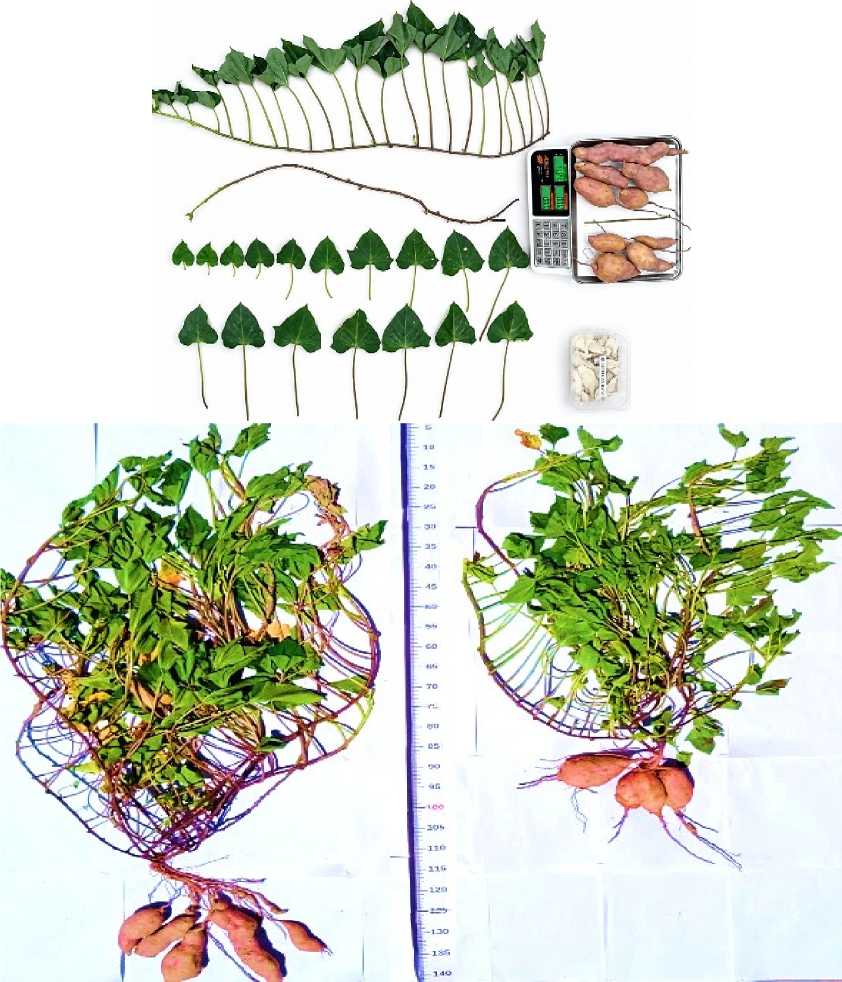
Figure 1. Main stem length and number of lateral branches of sweet potato ( Ipomoea batatas L.)

However, observations recorded on 1 July, corresponding to the critical period of vegetative development in sweet potato, revealed distinct differences among treatments. Under open-field conditions, plants established using the 70x20x1 planting scheme (72,000 plants ha⁻¹; Treatment 1) produced a main stem length of 107.7 cm and 8.7 lateral branches per plant. In Treatment 2, planted at 70x25x1 (58,000 plants ha⁻¹), these values increased to 111,7 cm and 9.1 branches per plant, respectively. Treatment 3, established at 70x30x1 (48,000 plants ha⁻¹), recorded the greatest vegetative growth under open-field conditions, with a main stem length of 126,8 cm and 10,8 lateral branches per plant. In Treatment 4, planted at 70x35x1 (41,000 plants ha⁻¹), the corresponding values were 124,6 cm and 10,6 branches per plant (Figure 1).
Table
EFFECTS OF PLANTING SYSTEMS AND PLANTING METHODS ON MAIN STEM LENGTH AND NUMBER OF LATERAL BRANCHES OF SWEET POTATO (THREE-YEAR MEAN)
Measurement dates and calendar schedule after field transplanting
1 may 1 June 1 July 1 August End of the growing season
|
S Q ■>3 bps |
bo Si Co 5 |
^? § к "° Cl, 2.0 <1 |
bo о Co •S 3 |
^? § к Cl, 2.0 cs <1 |
<5 bo JU о Co ^ 3 |
^? § к "O Cl, 2.0 cs <1 |
iS bo st Co 3 |
"O Cl, 2.0 cs |
sir co ^ K'S S bo к |
|
|
Open field |
||||||||||
|
70x20x1 (72,000) |
19,9 |
1,5 |
61,7 |
4,2 |
107,7 |
8,7 |
132,7 |
10,6 |
142,0 |
11,2 |
|
70x25x1 (58,000) |
20,9 |
1,6 |
64,0 |
4,3 |
111,7 |
9,1 |
137,6 |
11,2 |
147,2 |
11,9 |
|
70x30x1 (48,000) |
22,5 |
1,7 |
68,6 |
4,7 |
126,8 |
10,8 |
156,2 |
13,3 |
167,1 |
14,1 |
|
70x35x1 (41,000) |
23,1 |
1,8 |
70,4 |
4,8 |
124,6 |
10,6 |
153,5 |
13,1 |
164,2 |
13,9 |
|
90x15x1 (74,000) |
21,6 |
1,7 |
62,2 |
4,2 |
108,6 |
8,7 |
133,8 |
10,6 |
143,2 |
11,2 |
|
90x20x1 (56,000) |
22,8 |
1,8 |
64,7 |
4,4 |
113,0 |
9,2 |
139,2 |
11,3 |
148,9 |
12,0 |
|
90x25x1 (44,000) |
24,6 |
1,9 |
69,5 |
4,7 |
127,8 |
10,9 |
157,4 |
13,4 |
168,4 |
14,2 |
|
90x30x1 (37,000) |
25,1 |
1,9 |
71,0 |
4,8 |
126,2 |
10,8 |
155,5 |
13,3 |
166,4 |
14,1 |
|
Under plastic mulch |
||||||||||
|
70x20x1 (72,000) |
21,3 |
1,7 |
65,5 |
4,6 |
117,9 |
9,8 |
149,7 |
12,3 |
165,2 |
13,0 |
|
70x25x1 (58,000) |
22,4 |
1,8 |
68,0 |
4,8 |
122,4 |
10,3 |
155,4 |
13,1 |
171,5 |
13,8 |
|
70x30x1 (48,000) |
24,1 |
1,9 |
72,8 |
5,1 |
134,6 |
11,8 |
170,9 |
15,0 |
188,5 |
15,9 |
|
70x35x1 (41,000) |
24,8 |
2,0 |
74,8 |
5,2 |
132,2 |
11,6 |
167,9 |
14,8 |
185,2 |
15,7 |
|
90x15x1 (74,000) |
23,2 |
1,9 |
66,1 |
4,6 |
119,0 |
9,9 |
151,1 |
12,4 |
166,7 |
13,1 |
|
90x20x1 (56,000) |
24,4 |
2,0 |
68,8 |
4,8 |
123,8 |
10,4 |
157,3 |
13,2 |
173,5 |
14,0 |
|
90x25x1 (44,000) |
26,3 |
2,1 |
73,8 |
5,2 |
135,9 |
12,0 |
172,6 |
15,2 |
190,4 |
16,1 |
|
90x30x1 (37,000) |
26,8 |
2,2 |
75,5 |
5,3 |
134,0 |
11,8 |
170,2 |
15,0 |
187,7 |
15,9 |
A similar trend was observed under plastic mulch cultivation (Treatments 9-12). In Treatment 9 (70x20x1; 72,000 plants ha⁻¹), the main stem length reached 117,9 cm, with 9,8 lateral branches per plant. Treatment 10 (70x25x1; 58,000 plants ha⁻¹) recorded values of 122,4 cm and 10,3 branches per plant, respectively. The highest vegetative growth under plastic mulch was observed in Treatment 11 (70x30x1; 48,000 plants ha⁻¹), where the main stem length reached 134,6 cm and the number of lateral branches averaged 11,8 per plant. In Treatment 12 (70x35x1; 41,000 plants ha⁻¹), the corresponding values were 132,2 cm and 11,6 branches per plant. Compared with the corresponding open-field treatments, plastic mulch cultivation increased main stem length by 10,2, 10,7, 7,8 and 9,6 cm, respectively, while the number of lateral branches increased by 1,1; 1,2; 1,0 and 1,0 branches per plant (Table).
Results and discussion
A similar pattern was observed under the 90 cm row spacing in the open-field planting system. In Treatments 5, 6, 7, and 8, established at planting schemes of 90x15x1 (74,000 plants ha⁻¹), 90x20x1 (56,000 plants ha⁻¹), 90x25x1 (44,000 plants ha⁻¹), and 90x30x1 (37,000 plants ha⁻¹), the main stem length reached 108,6; 113.0; 127.8 and 126.2 cm, respectively, while the corresponding numbers of lateral branches were 8,7; 9.2; 10.9 and 10.8 per plant. Under plastic mulch cultivation, the corresponding Treatments 13, 14, 15, and 16 recorded main stem lengths of 119,0; 123,8; 135,9 and 134.0 cm, respectively, with 9,9; 10,4; 12,0 and 11,8 lateral branches per plant. Compared with the corresponding open-field treatments, plastic mulch cultivation increased the main stem length by 10,4; 10,8; 8,1 and 7,8 cm, respectively, while the number of lateral branches increased by 1,2; 1.2; 1,1 and 1,0 branches per plant (Table 1).
The same trend was consistently observed during the subsequent phenological observation periods, indicating that the effects of planting system and planting density on main stem elongation and lateral branch development remained stable throughout the growing season.
At the end of the growing season, the lowest values were recorded in Treatment 1, established under open-field conditions using the 70x20x1 (72,000 plants ha⁻¹) planting scheme. The main stem length reached 142,0 cm, while the number of lateral branches averaged 11,2 per plant. In contrast, the corresponding Treatment 9, grown under plastic mulch using the same planting scheme, produced a main stem length of 165,2 cm and 13,0 lateral branches per plant, representing increases of 23,2 cm and 1,8 branches per plant, respectively, compared with open-field cultivation.
The highest vegetative growth was recorded in Treatment 15, cultivated under plastic mulch with the 90x25x1 (44,000 plants ha⁻¹) planting scheme. In this treatment, the main stem length reached 190,4 cm, while the number of lateral branches averaged 16,1 per plant. Under the corresponding open-field treatment (Treatment 7), the main stem length and number of lateral branches were 168,4 cm and 14,2 per plant, respectively. Thus, plastic mulch cultivation increased main stem length by 22,0 cm and the number of lateral branches by 1,9 per plant (Figure 2).
These findings demonstrate that plastic mulch cultivation provides favorable conditions for vegetative growth, resulting in significantly greater main stem elongation and lateral branch formation than conventional open-field cultivation.
The study further revealed that the development of main stem length and lateral branching was strongly influenced by planting scheme and plant density. Under a 70 cm row spacing, increasing the within-row spacing to 25-35 cm promoted vegetative growth, whereas under a 90-cm row spacing, the optimum within-row spacing ranged from 20 to 30 cm. The greatest vegetative growth was achieved at 70x30x1 (48,000 plants ha⁻¹) and 90x25x1 (44,000 plants ha⁻¹), which produced the longest main stems and the highest numbers of lateral branches.
The superior vegetative performance observed under plastic mulch cultivation can be attributed to the more favorable microclimatic conditions created by the mulch, including improved soil temperature and moisture regimes, which enhanced plant growth compared with open-field conditions.
Accordingly, the planting schemes of 70x30x1 (48,000 plants ha⁻¹) and 90x25x1 (44,000 plants ha⁻¹) under plastic mulch are considered the most suitable for sweet potato cultivation, as they promote maximum main stem elongation and lateral branch development.
Regression and correlation analyses revealed a strong positive relationship between main stem length and the number of lateral branches, which was best described by the quadratic regression model y=a+bux-cx2. Across all planting systems and planting methods, a very strong positive correlation was observed between these two traits (r = 0,979).
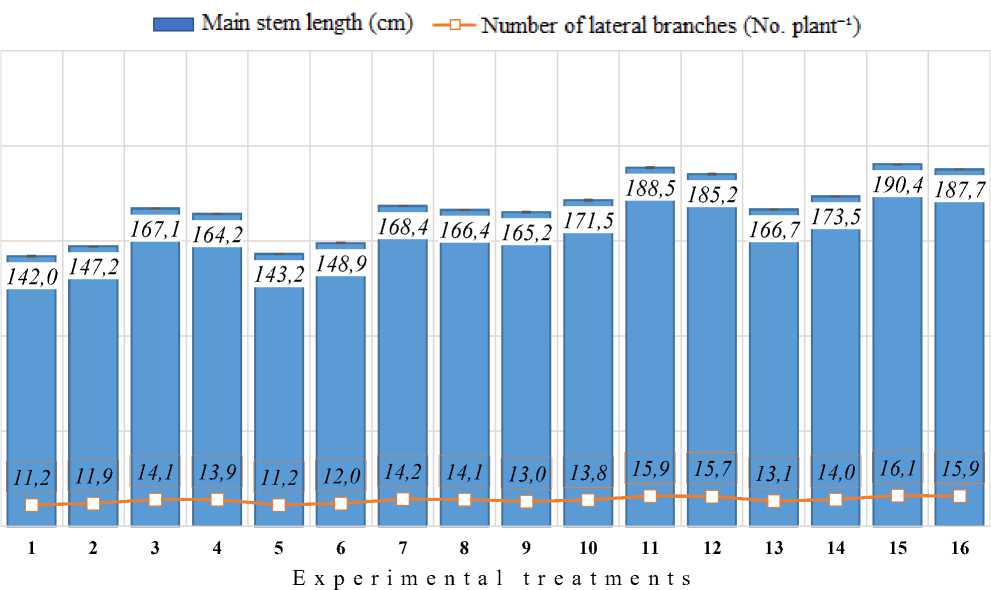
Figure 2. Main stem length and number of lateral branches of sweet potato at the end of the growing season
Under the 70-cm row spacing, changing the planting scheme from 70x20x1 (72,000 plants ha⁻¹) to 70x25x1 (58,000 plants ha⁻¹) increased main stem length by 4,9-5,7 cm and the number of lateral branches by 0,6–0,8 per plant. A further increase in within-row spacing to 70x30x1 (48,000 plants ha⁻¹) resulted in additional increases of 15,5-18,6 cm in main stem length and 1,9-2,1 branches per plant. However, widening the spacing to 70x35x1 (41,000 plants ha⁻¹) reduced main stem length by 2,7-3,0 cm and decreased the number of lateral branches by 0,2-0,3 per plant.
A similar response pattern was observed under the 90-cm row spacing, confirming that vegetative growth was highly dependent on plant density regardless of row spacing.
Overall, the results indicate that maintaining an optimum plant density is essential for maximizing main stem elongation and lateral branch development in sweet potato. Both excessively high and excessively low plant densities adversely affected these growth parameters, emphasizing the importance of selecting appropriate planting schemes and plant densities.
Conclusion
In conclusion, the vegetative growth of sweet potato, as reflected by main stem length and the number of lateral branches, is strongly influenced by both planting scheme and cultivation system. Under a 70-cm row spacing, within-row spacings of 25-35 cm, and under a 90-cm row spacing, within-row spacings of 20-30 cm, promoted vigorous vegetative development. The highest growth performance was consistently achieved with the 70x30x1 (48,000 plants ha⁻¹) and 90x25x1 (44,000 plants ha⁻¹) planting schemes. Furthermore, plastic mulch cultivation increased main stem length by 21,0-24,6 cm and the number of lateral branches by 1,8-2,0 per plant compared with open-field cultivation. These findings indicate that plastic mulch cultivation combined with the above planting schemes provides the most favorable conditions for vegetative growth and represents the optimum agronomic practice for sweet potato production.
