
Evaluating the effectiveness of national project implementation in Russia: Findings from an expert survey
Journal: Economic and Social Changes: Facts, Trends, Forecast @volnc-esc-en
Section: Public administration
Article in issue: 2 т.19, 2026.
Free access
This article addresses the issue of monitoring the implementation of national projects to assess the social impact of project implementation. The article aims to analyze the experience of monitoring the implementation of four national projects based on the results of an expert survey. The methodological basis of the study is the results of fundamental research conducted by the Center for Sociology of Management and Social Technologies of the Institute of Sociology FCTAS RAS. The article substantiates the need to use monitoring as a combination of integrated research methods – a mixed methodology of social assessment – specifically in accordance with the goals and objectives of regional governance. In line with emerging research trends in the analysis of subjective and objective data, this article presents the results of a comparative analysis of an expert survey (a collection of expert assessments from four regions) and official Rosstat statistics. The expert survey findings indicate an emerging positive trend in the consideration of social aspects in regional project decisions. It is noted that government bodies (federal, regional, and local) act both legally and in practice as the primary implementers of projects, while the public is currently relegated to the role of public observer. It is concluded that government assessments (statistical data) and expert opinions are similar – both assess the implementation of projects in the regions as satisfactory. However, greater transparency of government statistical data is needed. The study's results suggest the feasibility of incorporating monitoring of the social impacts of national projects into government monitoring. Based on this approach, it becomes possible to define government monitoring as socially oriented, institutionally structured, and unified.
Similar articles in the section Social processes. Social dynamics
Short address: https://sciup.org/147253862
IDS: 147253862 | UDC: 316.4 | DOI: 10.15838/esc.2026.2.104.3
Text of the scientific article Evaluating the effectiveness of national project implementation in Russia: Findings from an expert survey
Since the national projects initiated by the Presidential Decree of 2018 were launched1, state monitoring of their implementation has been carried out. This monitoring is designed to provide regular feedback on the attainment of program goals by comparing actual values with the planned targets set out in the state programs of the Russian Federation.
Yet this state monitoring falls short of being truly comprehensive, as it is geared mainly toward measuring economic indicators that readily lend themselves to quantification. National projects are intended to deliver not only economic but also social progress, encompassing such areas as improving people’s health and well-being, supporting families, enabling every individual to realize their potential, and providing a comfortable and safe living environment. This is far from an exhaustive list of the social indicators enshrined in state policy, a fact that reflects the intensifying socialization of the economy (Grinberg, Rubinshtein, 2014). Social indicators are difficult to assess and analyze using solely the economic methods applied in state monitoring. This is because, first, such indicators carry a distinctly social component and require their own methods of evaluation. Second, measuring them with economic indicators is problematic, since the final social outcome may diverge from the economic effect achieved (in either a positive or a negative direction). Third, assessing social effects solely through quantitative methods is challenging, which makes it necessary to use qualitative methods as well. It is no coincidence that the 2024 Presidential Decree on the national development goals of the Russian Federation for the period up to 2030 postulates the social responsibility and social orientation of national projects and stipulates the need both to define a list of sociological indicators for measuring the attainment of national goals and to ensure their ongoing monitoring2. Thus, at the state level, a serious objective need has arisen to assess not only the economic but also the social impact of national project implementation, and to investigate the feasibility of comparing the two.
Social indicators are playing an ever more significant role in the evaluation of national projects. A social outcome, however, is less a set of quantitatively measurable results than a series of qualitative changes in the economic and social spheres. Here, the principal difficulty lies in defining the very concept of “social outcome” (social effect). No uniform set of metrics exists for it, which impedes the comparability of evaluation results for similar projects.
In our view, to ensure a comprehensive, allround – and not merely economic – and adequate assessment of the results obtained from implementing national projects, it is necessary to incorporate into state monitoring a scientifically grounded tool for assessing the social consequences of such projects. Accordingly, the aim of the work is to analyze the experience of conducting monitoring linked to a scientifically grounded assessment of the social results of national project implementation, based on an expert survey and the analysis of statistical indicators.
Conceptual framework
A review of the literature reveals various specific features in the organization, direction, and approaches to embedding monitoring in the practice of public administration, particularly during the preparation and execution of state programs and projects (Panina et al., 2022). In this context, foreign authors clearly distinguish between the utilitarian goals of political elites and orientation goals – those that take into account the conditions and needs of different population groups and are pursued through the production and integration of knowledge (theory of change, knowledge management, results-based management) in monitoring state projects and programs. They bring to the fore the need for systemic thinking in order to conceptually link the monitoring and evaluation functions within the framework of state social policy development measures (Hu, 2006; Welfens, Bonjour, 2023; Wotela, 2017). Considerable attention is also paid to the methodological and instrumental components of monitoring, aimed at creating the most effective model for its implementation by state authorities and non-profit organizations – a model conceived as a set of interconnected and complementary elements that influence the execution of strategic projects on both a local (cities, regions) and a national (countries) scale (Janka, 2024; Gea et al., 2025; Kazanskaia, 2025a). Much focus is placed on measurable changes, the combination of logical-structural, reflexive, and constructivist approaches, and the social resources required to support monitoring research on the implementation of strategic planning and management (Mathayo, Kinyina, 2022; Antonie, 2024; Kazanskaia, 2025b).
The growing relevance of monitoring the state of governance systems also merits attention. A number of foreign researchers note that, in addition to monitoring the 242 indicators of the Sustainable Development Goals (SDGs) set for 2030 according to the UN methodology, countries would do well to launch monitoring to assess the effectiveness of their own governance systems as a mechanism for ensuring strategic planning and management, thereby increasing the likelihood of achieving the SDGs by 2030 (Sari et al., 2022).
As for the legitimation and organization of monitoring in the Russian practice of public administration, its increased relevance is associated with the following paradigm shifts in state governance (Stroev et al., 2025): 1) the transition from a directive-administrative model of governance to a program-target model, which embodies such key principles as results-oriented targeting, systemic linkage of measures and resources, measurability based on quantitative indicators, accountability for outcomes, and the monitoring and adjustment of interim results with the possibility of reallocating resources; 2) the gradual introduction of project management and indicative planning into the program-target cycle for developing and implementing state programs and federal projects; 3) the shift from line-item budgeting – based on spending allocated funds by expenditure item – to “results-based budgeting” (RBB), i.e., financing the attainment of specific strategic goals and quantitatively measurable indicators; 4) taking into account the emerging orientation toward clientcentricity in public services and the movement toward configuring an anthropocentric approach based on the principles of social feedback in public administration (Bogdanov, Pochestnev, 2024a), a demand is forming for the creation of a digital ecosystem of social monitoring that would make it possible to establish a multilevel system for assessing the achievement of indicative targets of federal and regional projects, as well as the real social (publicly significant) effects, on the basis of independent social assessment (Bogdanov, Pochestnev, 2024b). This last trend bears a resemblance to the Canadian model of implementing government programs, “Results-Based Management” (Stroev et al., 2025).
For the time being, however, the domestic governance system remains focused primarily on analyzing the monitoring data from two information systems: “Electronic Budget” – the unified state integrated information system for managing public finances of the Russian Federation, and “Upravlenie” (Management) – the state automated information system. Within the first, a special subsystem for managing national projects has been created (Stroev, Kuznetsov, 2023), and the distribution and spending of funds are monitored against planned and actual values of indicators for national, federal, and regional projects. The second system monitors the implementation of strategic planning documents at various levels – from federal to municipal – and also records possible risks of deviations from planned indicators, as well as achieved/unachieved milestones and checkpoints in the execution of national projects (programs) and the national development goals of the Russian Federation. This form of monitoring, based on the two information systems, has evolved from the formulation of principles and procedures for monitoring large-scale projects with state participation to the embedding of the monitoring system as a mandatory element of project activity within a complex, hierarchically structured system of strategic planning for achieving national goals. However, questions arise concerning the quality and transparency of the established monitoring system3, connected to a whole range of negative factors, problems, and barriers that distort and cheapen its KPIs: 1) the persistence of criminogenic and corruption factors in the implementation of the old (Kamchatov, 2023; Grinko, 2025) and the new 20 national projects through 20304; 2) a discernible lack of project management competencies at the implementer level in some regions5; 3) the deliberate inflation of indicator values and the commissioning of facilities that either do not function or operate at partial capacity6; 4) problems with the quality of indicator planning, such that indicators meant to be reached by 2030 have already been achieved; 5) problems in planning budget allocations to meet indicator targets, associated primarily with the need to maintain a balanced budget7; 6) the absence of a workable methodology for attracting extrabudgetary funds, partly owing to the need to finetune development institutions; and 7) weak analytics and miscalculation of the risks of failing to achieve planned indicators (Buryanina, Loginov, 2022).
Some of the listed problems can be attributed to the unwieldy governance and monitoring system, which combines elements of both hierarchical and project-based approaches. Despite the declared transition to a cross-functional (“matrix”) model, a rigid vertical hierarchy between deputy prime ministers and ministries persists in practice.
Also remaining on the periphery of attention are the methods and techniques for assessing the riskiness and effectiveness of national project implementation proposed by scholars from various scientific fields: economics, sociology, law, and political science (Anikina et al., 2022; Borisov, Somenkova, 2023; Kabanova, 2020; Kashirskaya, Zurnadzhyants, 2022; Troshin, 2020; Shabunova, Kozhevnikov, 2020). The experience of individual studies monitoring specific national projects on the ground – in regions and municipalities – may prove valuable (Mekha, 2023; Ponomarev, 2025; Fedotov et al., 2020). A tremendous contribution to assessing the effectiveness of national project implementation has been made by the Vologda Research Center of the Russian Academy of Sciences (VolRC RAS). The research team at VolRC RAS, led by V.A. Ilyin, A.A. Shabunova, and T.V. Uskova, has organized and conducted several waves of monitoring the effectiveness of national project implementation, examining the linkage between the dynamics of the state of Russian society and the formulation and achievement of specific national development objectives, in particular risk factors and potential opportunities for their realization (Effektivnost’..., 2025).
Summarizing the literature review, we can state that no unified system for monitoring the implementation of national projects has emerged to date. The “Upravlenie” and “Electronic Budget” information systems address only the collection of information about budget distribution and certain indicators (Pershina et al., 2023). What remains is an open scientific question, one that L.B. Kogan raised long ago: the need for longitudinal studies of the relationship between local interests and national goals. “In our country, research on urban goals and interests and their interaction with national goals has been practically non-existent until now” (Kogan, 2008, p. 2).
Research design and methodology
The object of the monitoring is people, social groups, institutions, organizations, values, ideas, concepts, and normative acts that influence social change in the regions. The subject area encompasses social processes, managerial decisions, and their perception by the population. The principal aim is to assess the social consequences of the implementation of project decisions. In other words, it is important to ascertain the extent to which government bodies, as the responsible implementers, are coping – or failing to cope – with the execution of measures designed to achieve the planned national goals in the regions. Moreover, the monitoring mode makes it possible, first, to track the dynamics of the assessments obtained and, second, to determine their vector.
The general methodological basis of the research consisted, first, of the concept of the sociocultural modernization of regions developed at the Center for Modernization Studies of the Chinese Academy of Sciences under the direction of He Chuanqi (He Chuanqi, 2011) and adapted for the Russian legal context by the Center for the Study of Sociocultural Changes at the Institute of Philosophy of the Russian Academy of Sciences (Atlas..., 2016); and, second, of the results of fundamental research conducted by the Center for
Sociology of Management and Social Technologies of the Institute of Sociology FCTAS RAS, which identified a close link between the sociocultural and socio-economic levels of development across regions. The methodology we have adapted rests on a system of indicators that makes it possible to capture, in the fullest possible manner, the sensitivity of government and administrative institutions, the local population, and expert groups to the process of implementing national projects in the regions, as well as to the assessment of the results achieved.
We should note separately that the methodology developed ensures strict adherence to the methodological principles of comparability of empirical results obtained through different sociological methods (mixed methodology). Standardized metrics and indicators are used to a certain degree across various research strands (expert survey, mass survey, media content analysis, analysis of government websites, and content analysis of social media communities). The application of a set of sociological methods makes it possible to compare results and to capture assessments of problems from different vantage points. Depending on the specific features of the research and applied tasks at hand, a particular combination of data collection and analysis methods can be employed.
The monitoring instrument presented in this article is a regularly repeated study of the social effects of managerial decisions and the processes triggered by these actions. The monitoring mode enables the identification of the dynamics of an object (phenomenon, process). The use of the monitoring model is driven by the need for the regular collection of sociological data on the state of a social object or process. Its advantage lies in the ability to compile a database for studying the dynamics of specific diagnostic criteria over time.
The construction of the instrumental model for carrying out the monitoring of national project implementation rests on two principles. The first involves incorporating into the structure of the conceptual model the methodological foundations of the sociology of management, which – drawing on a structural-activity approach and rational-cognitive procedures for collecting and analyzing expert information (Dridze, 2000; Russia..., 2017; Tikhonov, 2017) – make it possible to identify and assess dysfunctional consequences of managerial and project decisions. The second ensures a transition from conceptual foundations to the construction of elements of an empirical model, namely, enabling the development of a system of indicators.
The results of three research projects were used to configure and analyze the findings of the monitoring of national project implementation. The first is the Russian Science Foundation grant “Civic Expertise on the Problem of Reforming the Power-Administrative Vertical in the Context of the Processes of Sociocultural Modernization of Regions: From Monitoring Conditions to Prognostic Design”, 2016 (Rossiya..., 2017). The second is the RSF grant “Academic Project: The Governability of the Processes of Social Group Formation in Regions with Different Levels of Sociocultural Modernization and Public Support for the Development Strategy of the Russian Federation through 2024” (Tikhonov et al., 2021). The third is the research report under the state assignment “Remote Social Expertise as a Form of Public Communication in the Implementation of National Projects” (Bogdanov, Pochestnev, 2024b).
The content of the monitoring covered the implementation of four national projects – “Housing and the Urban Environment”, “Safe and High-Quality Roads”, “Education”, and “Healthcare” – which, as our research has shown, carry the greatest significance in the eyes of the public. For each of these projects, indicators were developed to assess the quality of their execution. For “Housing and the Urban Environment”, these were an assessment of the state of affairs with the construction and purchase of housing in the region, as well as an assessment of the implementation of the city (village) development strategy. For “Roads”, it was an assessment of road conditions. For “Education”, indicators were identified for evaluating the work of preschool institutions, schools, and vocational training institutions. For “Healthcare”, the focus was on assessing the work of medical institutions8.
Ultimately, taking into account the designated configuration, the monitoring was based on: 1) expert assessments of the implementation of the specific national project where the survey was conducted9; and 2) official statistical indicators, in particular for conducting a comparative assessment of the effectiveness of national project implementation across the regions. Using statistical data was intended to address the important methodological task of ensuring the comparability of quantitative assessments with qualitative expert assessments. This task was accomplished through a comparative analysis of expert survey data (qualitative assessment) and statistical data from the Federal State Statistics Service of the Russian Federation (quantitative assessment). For this purpose, the Rosstat electronic information base for 2022 was used to analyze statistical data on the implementation of national projects in the selected regions10.
The basis for analyzing the results obtained was provided by the opinions of regional experts from three regions (Vologda Region, Smolensk Region, Sverdlovsk Region) and one national republic (Republic of Bashkortostan). The opinions and assessments were captured through an online expert survey. A total of 600 experts were surveyed – 200 in each of the three studies conducted. The experts invited to participate included employees of state and municipal government bodies, managers and leading specialists from regional enterprises and business structures, as well as members of public organizations and representatives of the academic community. Some of the experts are directly involved in the development and implementation of national projects. Details of the expert selection process and the characteristics of the expert groups can be found in our publications based on the results of the aforementioned studies (Rossiya..., 2017; Bogdanov, Pochestnev, 2022; Bogdanov, Pochestnev, 2024b; Tikhonov et al., 2021).
Given the limited length of this article, we focus on the following monitoring aspects: first, assessing the social effects of national project implementation; second, identifying governance actors involved in implementing national projects and defining their roles; third, assessing the state of interaction between government bodies, as the responsible implementers of national projects, and the population, as their ultimate consumers; and fourth, exploring the feasibility of comparing economic (quantitative) and social (qualitative) indicators of national project implementation.
Research findings
Social effects of national project implementation
The findings of the first two studies (2016 and 2020) lead to the following conclusions. In the early stages of national project implementation (the 2016 study) and during the active implementation phase (the 2020 study), the situation in the regions with respect to the indicators under examination was, on the whole, rated as satisfactory ( Tab. 1 ). Across
Table 1. Assessment of the state of affairs in the areas where national projects are being implemented, 2016 and 2020, % of respondents
|
National project |
Indicator |
2016 |
2020 |
||||
|
Poor |
Satisfactory |
Good |
Poor |
Satisfactory |
Good |
||
|
Housing and the Urban Environment |
Construction and purchase of housing |
35.0 |
44.3 |
20.7 |
31.7 |
49.7 |
18.6 |
|
Implementation of the city development strategy |
25.6 |
50.3 |
24.1 |
22.4 |
46.5 |
31.2 |
|
|
Safe and High-Quality Roads |
Road conditions |
39.5 |
31.2 |
29.3 |
26.1 |
46.2 |
27.6 |
|
Education |
Work of preschool institutions |
11.4 |
54.6 |
34.1 |
6.8 |
33.2 |
60 |
|
Work of schools (secondary education) |
24.7 |
60 |
15.3 |
9.9 |
39.8 |
50.3 |
|
|
Work of vocational training institutions |
28.6 |
57.8 |
13.5 |
11.4 |
38.9 |
49.7 |
|
|
Healthcare |
Healthcare system |
42.2 |
47.1 |
10.8 |
39.8 |
42.3 |
17.9 |
Note: N = 200 per year.
Source: data from the expert surveys of 2016 and 2020.
virtually all of the dimensions assessed, mid-range ratings predominated, and for none of the indicators was a preponderance of either positive or negative assessments recorded. However, an analysis of the dynamics of the assessments obtained made it possible to identify the following trends: a) between 2016 and 2020, the share of negative assessments declined across absolutely all of the indicators (the decline ranged from 3 to 13 percentage points); b) over the same period, the share of positive assessments increased for most indicators (the increase ranged from 10 to 35 percentage points), with the sole exception of the indicators “construction and purchase of housing” and “road conditions”, which showed a slight decline of roughly 3 percentage points; c) the most positive dynamics over the period were demonstrated by the Education project, which by 2020 had broken the general trend in the assessment of the state of affairs in the regions – a predominance of positive assessments is observed. Thus, one can conclude that the implementation of national projects in the regions across the areas examined over the period in question has generally formed a positive trend characterized not only by steady economic growth but also by a discernible strengthening of positive social effects.
At the second stage (the 2023 study), when it was already possible to take stock of interim results, the experts were asked to directly assess the implementation of national projects in the regions. And although no single dominant assessment emerged among respondents, one can state that the experts themselves are, on the whole, satisfied with the progress of national project implementation: for two projects, positive assessments prevail (“Housing and the Urban Environment”, “Safe and High-Quality Roads”); for the other two (“Education”, “Healthcare”), despite the predominance of midrange ratings, positive assessments far outnumber negative ones ( Tab. 2 ).
Thus, summarizing the findings of the studies, one can state that the implementation of national projects in the regions is yielding a positive social effect. And although this trend is not strictly linear (according to the experts, there are still many problems), one can nonetheless speak of the success and effectiveness of this work.
Table 2. Assessment of the results of national project implementation in four regions, 2023, % of respondents
|
National project |
Assessment |
||
|
Poor |
Satisfactory |
Good |
|
|
Housing and the Urban Environment |
11.4 |
40.9 |
47.7 |
|
Safe and High-Quality Roads |
17.9 |
33.3 |
48.7 |
|
Education |
17.4 |
44.1 |
38.5 |
|
Healthcare |
24.1 |
42.1 |
33.8 |
Note: N = 200.
Source: data from the expert survey of 2023.
Assessment of the activities of regional development actors
In the course of conducting the social assessment to diagnose the state of national project implementation, it was also important to identify who the actors involved are and to evaluate their roles.
In order to determine the communicative space that has taken shape in the surveyed regions, an assessment was made of the composition of regional development actors who are directly involved in plans for implementing national projects – first, as the immediate implementers of various measures to carry out the national projects, and second, as participants in monitoring and evaluating the work done in implementing them.
The experts identified a list of regional development actors who are involved in the implementation of national projects in the regions. First and foremost, these are government bodies at various levels – federal, regional, and municipal. This very group of actors proved key in exerting influence not only on the execution of concrete work in carrying out the projects but also on the evaluation of the work performed and the quality of its execution. Within this group, however, there are particular nuances. The greatest responsibility for the execution of concrete work in implementing the national projects is borne primarily by the regional government bodies. Moreover, over the past three years the role of these structures has grown: whereas in 2020, 74% of experts pointed to regional authorities as the principal actor, by 2023 a full 82% assigned them the lead role in the implementation of national projects. They are also assigned the key role in assessing the quality of the work performed and in monitoring its execution (72%; Tab. 3).
This group of actors also includes federal government bodies. Unlike the regional authorities, they are more often assigned the role of curators who monitor the timelines and quality of the
Table 3. Actors of participation and control involved in the implementation of national projects as direct implementers, 2020 and 2023, % of respondents
|
Actor |
Actors of participation |
Actors of control |
||
|
Total |
Total |
|||
|
2020 |
2023 |
2020 |
2023 |
|
|
Federal government bodies |
32.5 |
51.5 |
80.1 |
75.8 |
|
Regional government bodies |
73.5 |
82.0 |
72.2 |
72.7 |
|
Municipal government bodies |
72.8 |
73.0 |
39.7 |
48.0 |
|
Large businesses |
37.7 |
39.5 |
7.9 |
8.6 |
|
Medium and small businesses |
32.5 |
26.0 |
3.3 |
4.0 |
|
Academic and educational communities |
22.5 |
25.0 |
9.3 |
12.1 |
|
Active citizens (the public) |
23.8 |
26.5 |
35.1 |
24.2 |
|
Undecided |
6.0 |
4.0 |
7.3 |
75.8 |
Note: N = 200 per year.
Source: data from the expert surveys of 2020 and 2023.
measures implemented under the projects. They are the leading actor in terms of monitoring the implementation of projects in the regions, and although by 2023 their role had slightly declined (from 80 to 76 p.p.), it remains dominant. The experts mentioned them considerably less often as the responsible implementers.
The municipal level deserves to be singled out separately. According to the experts, local government bodies, like regional ones, are the principal implementers of the national projects (73%); this figure did not change over the period under study. Of particular interest is the growing role of municipal authorities in monitoring the execution of concrete plans and measures in the course of project implementation: an increase in the indicator from 40 to 48 p.p. was recorded.
The remaining regional development actors are assigned a substantially smaller role in the implementation of national projects. Whereas the influence of large businesses and corporations in carrying out specific work was noted by 40% of experts (only 2% less than in 2020), only 8% pointed to them as a monitoring body. Small and mediumsized businesses exert an even smaller impact on the execution of national projects in the regions. Moreover, their role declined over the period under study, from 33 p.p. in 2020 to 26 p.p. in 2023, and only 4% of experts selected them as a monitoring body.
The least involved in the implementation of national projects are academic and educational communities (universities, higher education institutions, research organizations, etc.). Their substantial contribution to project implementation was rated by only 23–25% of experts, and their activity as a monitoring body is rated even lower, although it did increase slightly – from 9 p.p. in 2020 to 12 p.p. in 2023.
The influence of public organizations and active population groups on the implementation of national projects calls for a separate discussion. As might be expected, this group of regional actors is assigned the function of public oversight of the progress of national project implementation. However, over the period in question their influence has declined significantly – from 35 to 24 p.p. The majority of experts do not see public organizations as a real participant in the execution of concrete work: roughly one-quarter point to this function, and this indicator has not undergone significant change over the period – 24% in 2020 and 27% in 2023.
Thus, government bodies at various levels have been and remain the dominant actor in the implementation of national projects: they assume the role of the key player both in carrying out the work and in evaluating and monitoring the progress of its implementation. Public oversight, meanwhile, is beginning to lose its standing; its role is markedly declining. Some cautious optimism may be drawn from the modest but nonetheless discernible increase in the influence of academic and educational organizations on the implementation of projects in the regions.
Means of interaction between the authorities and the public in the framework of national project implementation
In order to assess the social consequences of national project implementation, it is important not only to identify the actors exerting influence on this process but also to establish the specific channels, forms, and means of their communication. Having identified the key actors, we can delineate the circle of persons involved in communicating about emerging problems. In this connection, it was important to identify and analyze the existing methods, means, and channels of interaction between the authorities, as the key player in implementing the national projects, and the region’s population, as their ultimate consumers.
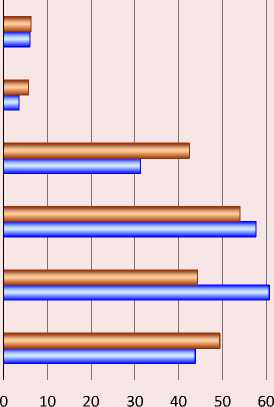
The experts view the authorities’ efforts to organize and maintain communication with the public as both important and appropriate. Only 5.7% of experts believe that such activity is unnecessary because the public, if need be, will
Forms of involving the region’s population in the implementation of national projects, 2020 and 2023, % of respondents
Difficult to answer
No special forms of involvement are required, the public will participate on their own if necessary
Organizing a volunteer movement
Informing the population about the results achieved
Public discussion with public organizations and interested citizens
On the basis of public opinion studies
□ Total 2020
о Total 2023
Note: N = 200 per year.
Source: data from the expert surveys of 2020 and 2023.
take the initiative on its own ( Figure ). The findings of the study indicate that various channels of communication between the authorities and the public exist in the regions and are being actively used. Moreover, these channels have experienced slight growth over the period under study. Most often, the experts singled out methods of informing the public about the progress of national project implementation (in the range of 54–57%).
A significant share of the experts also pointed to public discussions with civil society organizations and concerned citizens about problems associated with the implementation of national projects as an important communication channel. And although their share declined from 61 to 44 p.p. between 2020 and 2023, this form of interaction with the public remains popular. Possible explanations for the decline may include a shift toward interactive methods of communication and circumstances related to the pandemic, as the experts themselves have repeatedly noted. A highly widespread form of interaction in the regions remains the traditional one of public opinion polling. Its use (unlike that of public discussions) grew somewhat over the period under study – from 44 to 49 p.p. A similar trend emerged with respect to the organization of volunteer movements: whereas in 2020, 31% of experts noted this form of interaction, by 2023 a full 43% of experts mentioned it.
The finding that online sources (90% – official government websites, online forums, social media, etc.) represent the optimal channel for providing information about the progress of national project implementation is among other important conclusions that can be drawn from the analysis of expert assessments regarding the means of communication between the authorities and the public. Television is the second most important source of information (62%). Personal experience and observation rank third (41%).
Informal channels for obtaining information about the progress of project implementation in the regions proved to be in much lower demand. For example, such sources of information as conversations with co-workers, inquiries to the administration at one’s workplace, and discussions within the family, with neighbors, or with acquaintances were indicated by only 16% of experts. This fact may indirectly suggest that the public needs more official information about the projects.
According to the experts, despite the observed expansion in the use of structural elements of communicative interaction with the public across the regions (information provision and discussion), these elements on the whole do not yet yield a sufficient result in terms of the targeted and broader involvement of the public in the implementation of national projects. The experts note that at present the public remains insufficiently informed and insufficiently engaged in the implementation of the national projects.
Comparative analysis of economic and social indicators for assessing the implementation of national projects
National projects, by design, represent a statelevel approach to implementing the strategic development goals of the Russian Federation in its regions. First and foremost, they are key mechanisms for technological and socio-economic development. In this connection, it was important to compare the official results of national project implementation – as expressed in state statistical indicators – with the opinions of experts from the regions. This also made it possible to assess the instrumental and substantive capabilities of social assessment.
The assessment of national project implementation in the regions is carried out by the Government of the Russian Federation using a specially developed methodology that encompasses three assessment dimensions. The first evaluates the volume of measures that have been carried out relative to the plan. This dimension examines the tangible indicators of plan implementation. The second assesses the financial expenditures on project implementation and calculates the percentage of funds spent relative to the planned sum. The third assessment dimension involves the analysis of feedback data, which is carried out according to a methodology developed by the government. A special Analytical Center under the Government of the Russian Federation is already monitoring the implementation of national projects using this methodology. However, we were unable to find publicly available data on its portal. We encountered the problem of government bodies being closed off from public scrutiny in the matter of national project implementation. The only accessible indicator turned out to be the level of budget execution for the national projects (the second assessment dimension in the methodology). It is constructed as the percentage of financial resources spent relative to the planned figure. As of October 2023, the following level of budget execution had been achieved in the subjects under consideration ( Tab. 4 ).
Table 4. Assessments of the progress of national project implementation: official and expert versions, 2023, % of respondents, points
National project Indicator RF Sverdlovsk Region Republic of Bashkortostan Vologda Region Smolensk Region Healthcare Official % of budget execution 59.60 66.42 51.56 82.96 43.38 “5” – very high, “4” – high, “3” – medium, “2” – low, “1” – very low Subjective assessment of implementation 3 3 4 3 3 “4” – very successful, “3”– broadly successful, “2” – rather unsuccessful, “1” – unsuccessful Subjective assessment of future implementation 2 3 3 2 2 Education Official % of budget execution 64.09 76.91 70.31 94.57 49.90 “5” – very high, “4” – high, “3” – medium, “2” – low, “1” – very low Subjective assessment of implementation 3 3 4 3 3 “4” – very successful, “3”– broadly successful, “2” – rather unsuccessful, “1” – unsuccessful Subjective assessment of future implementation 2 3 3 3 2 Housing and the Urban Environment Official % of budget execution 56.36 44.21 57.40 53.61 30.78 “5” – very high, “4” – high, “3” – medium, “2” – low, “1” – very low Subjective assessment of implementation 3 4 4 3 4 “4” – very successful, “3”– broadly successful, “2” – rather unsuccessful, “1” – unsuccessful Subjective assessment of future implementation 2 3 3 3 3 Safe and High-Quality Roads Official % of budget execution 77.86 88.95 80.77 85.80 93.22 “5” – very high, “4” – high, “3” – medium, “2” – low, “1” – very low Subjective assessment of implementation 3 4 3 3 4 “4” – very successful, “3”– broadly successful, “2” – rather unsuccessful, “1” – unsuccessful Subjective assessment of future implementation 2 3 3 3 3 Note: N = 200. Sources: Official statistical information on the indicators of socio-economic development of the Russian Federation required for monitoring the achievement of national project indicators. Rosstat. Available at: (accessed: July 25, 2024); Research report under the state assignment «Remote Social Expertise as a Form of Public Communication in the Implementation of National Projects», 2023, expert survey in four constituent entities of the Russian Federation (Vologda, Smolensk, and Sverdlovsk regions, Republic of Bashkortostan), 200 experts surveyed.
It was important to assess just how optimistic the perceptions of the effects of national project implementation are among representatives of government bodies (official statistical data and the opinions of regional experts) and whether they coincide with the assessments of the expert group recorded through the social assessment exercise.
The official percentage of budget execution as of October 2023 for all projects stood at just 68.8%11. In the Smolensk Region and the Republic of Bashkortostan it was the lowest – 64.0 and 65.6%, respectively (see Tab. 4). In the Sverdlovsk and Vologda regions it was somewhat higher – 69.7 and 75.3%.
The Healthcare project had been implemented across Russia as a whole to the extent of 60%. In the Vologda Region the percentage of budget execution is comparable with the indicators of the leading regions (the cities of Moscow and Saint Petersburg) and is far higher than the average percentage of execution across Russia. The experts, however, noted only a medium level of project implementation quality (me = 3). According to the experts’ subjective perceptions, the ultimate effect of the project will be minimal. In the Sverdlovsk Region the percentage of implementation is above the national average but below that of the leaders – 66.4%. The experts likewise rate the quality of project implementation at a medium level (me = 3), but they are confident that the project will be implemented rather successfully (me = 3). In Bashkortostan the percentage of execution is below the national average (51.6%), but the experts note a high level of project implementation (me = 4), and they have hope that it will be completed successfully (me = 3). The implementation of the project in the Smolensk Region is the worst (43.4%); the experts rate it as middling, but they have no confidence in its successful completion (me = 2).
The Education national project has been implemented to the extent of 64% overall. In the Vologda Region it has been implemented almost to the end – 94.6%, a value higher than in the leading regions. The experts rate the level of project implementation as medium and hope that the project will be implemented successfully. In the Sverdlovsk Region and Bashkortostan the percentage of implementation is above the national average and is comparable with the indicators of the leading regions (76.9 and 70.3%). The experts rate the implementation of the national project at a medium level in the Sverdlovsk Region (me = 3) and at a high level in Bashkortostan (me = 4). The experts in both regions are confident of success. In the Smolensk Region the percentage of implementation is below the national average (49.9%). The experts’ assessment of project implementation is satisfactory (me = 3), but they have no confidence in ultimate success (me = 2).
The Housing and Urban Environment national project has been implemented to the extent of 56.4%. In Bashkortostan the percentage is slightly higher – 57.4% – but it falls short of the leaders’ indicators. However, the experts note a high level of project implementation (me = 4) and are confident that it will be completed successfully (me = 3). In the Vologda Region the percentage is below the national average – 53.6%. The experts are satisfied with its implementation at a medium level, but there is hope for success (me = 3). In the Sverdlovsk and Smolensk regions the percentages are low – 44.2% and 30.8% – but the experts rate the implementation of the project highly (me = 4) and are confident of success (me = 3).
The Safe and High-Quality Roads project has been implemented to the extent of 77.9%. In the regions examined, implementation is higher and is comparable with that of the leaders. In the Sverdlovsk and Smolensk regions it stands at 89.0 and 93.2%. The experts give the quality of implementation a high rating (me = 4) and are confident of success (me = 3). In the Vologda Region and Bashkortostan the implementation figures are 85.8% and 80.8%. The experts rate the project at a medium level (me = 3) but are confident it will end successfully (me = 3).
Summing up the comparison of assessments of national project implementation based on the financial criterion and on expert opinions, we can say that the implementation of the projects we have examined is in a satisfactory state. This is evident both from official data and from the expert assessments. However, a partial discrepancy was detected between the assessments based on the financial criterion and the expert opinions: higher assessments from the experts were recorded in the presence of comparatively low official ratings of budget execution. One may hypothesize that the experts place greater value on the quality of the effects obtained from project decisions on the ground than on the quantitative values of financial and economic indicators for individual regions and for the country as a whole.
Conclusions and discussion
The key task of the monitoring of national projects that we conducted was to assess the social consequences arising from the implementation of project decisions. The system of indicators specially developed for this task made it possible, first, to evaluate specific areas (in our case, the assessment of the implementation of four national projects), and second, to capture an emerging trend over a certain period of time. As the findings indicate, a positive trend has now taken shape with respect to the strengthening of the social effect of national project implementation in the regions.
The results of the expert survey lead to the following conclusions. The actions of government bodies at various levels (from municipal to federal) are rated most highly in terms of the nature of their participation (implementation, oversight) and their contribution to the implementation of the national projects. The degree of influence of the remaining actors and the level of approval of the work they have done are rated considerably lower. The dominance of the role of governance structures is, in the experts’ view, largely justified, since their leading role in the implementation of national projects provides an impetus for carrying out the tasks set out in the plans.
The role of the local population as the primary beneficiary (consumer) of the national projects remains, for the time being, confined to public observation and, to some extent, oversight. And although the situation concerning interaction between the authorities and the public and the involvement of the latter in the implementation of national projects is improving, it is still far from ideal. A system for disseminating information about the national projects has been created in the regions, but it differs in the level of development of its forms and scale of coverage and is in need of further development and greater effectiveness.
The comparative analysis of subjective (expert) and objective (financial) indicators of national project implementation has uncovered an important problem – the insufficiency of publicly available data, which generally affects the understanding of how well the social effects of project decisions are being achieved. Given that only one indicator – the level of budget execution for national projects (one of the three assessment dimensions in the Government of the Russian Federation’s evaluation methodology) – is publicly available, it was possible to establish the level of project implementation as satisfactory. However, the resulting snapshot could be of greater value for assessing the consequences of the decisions being implemented, particularly if data on the volume of measures carried out relative to the plan, as well as the feedback data organized by the Government of the Russian Federation, were also available for analysis.
It has been established that an important characteristic of effective (successful) monitoring lies in overcoming the subjectivity of expert assessments, which entails adhering to a valid selection of experts based on the criterion of their involvement in the development and implementation of the national projects and their awareness of the quality with which organizational measures and project decisions are being executed. The quality and significance of monitoring also depend on the regularity with which the social consequences of project decisions are recorded, so as to enable timely and prompt responses. In order to enhance the verification and comprehensive analysis of the data obtained, the results of mass population surveys can also be employed. On the whole, though, the proposed toolkit constitutes an important source of information for the timely adjustment of managerial (project) decisions.
Assessing the social results (consequences and effects) of national project implementation in the regions is no less important than assessing its economic component. In our view, it should become an integral part of state monitoring – more specifically, it should take the form of social assessment, which would make it possible to carry out project measures most effectively in accordance with the national goals set and the public’s expectations. We should note that social assessment is a regularly repeated, comprehensive study (based on a combination of mixed methods) aimed at examining the social effects of the implementation of managerial decisions (social consequences) and the social processes triggered by these actions.
Even today, the pilot testing of social assessment as a basis for the comprehensive studies conducted by the Center for Sociology of Management and Social Technologies of the Institute of Sociology FCTAS RAS points to both the possibilities it opens up and the positive effects it can yield for state monitoring (Bogdanov, Pochestnev, 2024b; Rossiya..., 2017; Tikhonov et al., 2021).
Specifically: first, it becomes possible to draw more substantiated conclusions about the state of, and changes in, the socio-economic situation arising from the implementation of national projects in the regions; and second, it provides grounds for a balanced assessment of the necessary adjustments to be made and the further actions to be planned.
On the whole, social assessment can be viewed as a standardized tool for evaluating the social effects of project and strategic decisions – a tool that has the variability of regions’ socio-economic conditions and resource potential built into its very foundations. In our view, the proposed approach requires legitimation and the conferral of state (institutional) status upon social assessment, as well as the incorporation of its foundations into the state monitoring of national project implementation.
