
From Questions to Inferences: Methodological Principles for the Use of Experimental Archaeology in Rock Art Research
Журнал: Archaeology, Ethnology & Anthropology of Eurasia @journal-aeae-en
Рубрика: Paleoenvironment, the stone age
Статья в выпуске: 3 т.53, 2025 года.
Бесплатный доступ
This article addresses the challenge of employing experimental archaeology in rock art research and proposes a structured framework to guide the design and implementation of experiments in this field. It distinguishes between experimental and experiential archaeology, establishing that proper experiments require solid theoretical foundations and rigorous hypothesis testing. A comprehensive methodological approach is then presented, involving trict control of variables and a sequential strategy of pilot, systematic, and replicative experiments that balances internal and external validity. Building on an illustrative example concerning how paint composition influences the long-term preservation of rock art images, the article demonstrates how experimental procedures can conform to standards of scientific rigor, reproducibility, and archaeological relevance. In this context, it addresses aspects related to the connection between laboratory-controlled conditions and field validation, which are crucial to ensure both analytical robustness and contextual applicability. Furthermore, it discusses the inferential constraints of experimental data, emphasizing that these function as heuristic tools for evaluating hypothesis plausibility rather than providing absolute certainties. Ultimately, the proposed approach can be applied to explore a wide range of research questions concerning the production, preservation, and degradation of rock art, enhancing our capacity to formulate empirically grounded inferences about prehistoric artistic practices.
Короткий адрес: https://sciup.org/145147548
IDS: 145147548 | DOI: 10.17746/1563-0110.2025.53.3.095-106
Текст научной статьи From Questions to Inferences: Methodological Principles for the Use of Experimental Archaeology in Rock Art Research
Experimental archaeology is a research method that enables the testing of hypotheses put forward to explain different processes linked to the formation of the archaeological record and the production and use of material culture in the past through the development of controlled experiments in the present. Although its origins date back to the 19th century, the consolidation of this methodological approach took place from the 1950s onward, driven by the need for verification mechanisms that extended beyond direct observation and the mere documentation of archaeological evidence (Morgado, Baena Preysler, García Gonzalez, 2011). Under these circumstances, experimental archaeology emerged as a promising alternative. Rooted in the principle of uniformitarianism—which assumes that the fundamental natural laws governing past processes remain unchanged, even if their specific rates and manifestations may vary over time (Shea, 1982; Domínguez-Rodrigo, 2008)—it facilitated the construction of inferential bridges between actualistic processes and past phenomena, providing a structured framework for refining theoretical models
and archaeological interpretations (Millson, 2010; Nami, 2011).
Since then, rock art researchers have employed this experimental approach to study paintings and engravings across different chronologies and geographic regions worldwide, with most investigations focusing on identifying the binders used in paint recipes and the techniques and tools employed to produce the images (see, e.g., (Johnson, 1957; Pérez-Seoane, 1988; Clottes, Menu, Walter, 1990; Lorblanchet, 1991; Álvarez, Fiore, 1995; Álvarez et al., 2001; Santos da Rosa, 2012, 2019a; Prinsloo et al., 2013; Santos da Rosa et al., 2014; Santos da Rosa, Fiore, Viñas, 2023, 2024; Vergara, Troncoso, 2015; López-Montalvo et al., 2017; Zotkina, Kovalev, 2019; Zotkina, Davydov, 2022; Landino et al., 2023)). More recently, experimentation has expanded beyond these aspects to include studies on the taphonomic processes affecting the preservation of rock art in diverse environment (see, e.g., (Lacannete et al., 2013; Ozán et al., 2023)), the cognitive abilities of the image-makers (Rivero et al., 2024), and even cultural practices related to the use of sites where these representations are found (Santos da Rosa et al., 2023b, 2025).
However, despite the significant advances achieved through the application of experimental archaeology in rock art research, a critical assessment of the literature on this topic reveals that many investigations still exhibit substantial methodological issues, which undermine the robustness and analytical scope of their findings. More specifically, it is possible to observe that practical experiences are still mistakenly referred to as experiments, and that many experimental programs continue to be conceived without being structured around a solid and testable hypothesis. Furthermore, numerous studies lack a clear definition and strict control of variables, as well as proper consideration of confounding factors that may influence the resulting outcomes. Similarly, many are conducted without an experimental design that ensures methodical data collection, reproducibility, and the structured progression of the research in a logically coherent manner. Finally, there are also cases in which the limits of the inferences drawn from experimental data are significantly overlooked, leading to the construction of biased interpretations regarding archaeological record and the prehistoric artistic practices.
In light of these methodological challenges, this article addresses the differences between experimental and experiential archaeology and proposes a structured framework for the use of experiments in rock art research, emphasizing the principles that should guide their design and implementation. Building on an illustrative example on how the composition of paint recipes influences the long-term preservation of rock art paintings, it outlines the main methodological steps necessary to ensure that both the experimental procedures and the results they generate conform to standards of scientific rigor, reproducibility, and archaeological relevance. Subsequently, it discusses the inferential constraints of experimental data and concludes by highlighting the broader implications of this methodological approach for advancing experimental research in rock art studies.
“ All that glitters is not gold ” : distinguishing experimental from experiential archaeology
Observing a system or process in operation is a fundamental step toward understanding its mechanisms and effects (Montgomery, 2017: 1). Therefore, the best means of investigating the processes involved in, for example, the production of rock art, would be to travel back in time and observe prehistoric people creating images on the walls of caves and shelters. Given the unfortunate impossibility of such a task, analyzing the material outcomes of these processes and attempting to reconstruct them in the present—following a logic of reverse engineering— emerges as the most effective method to investigating their working principles and operational sequences (Santos da Rosa, 2019b). However, just as not everything that appears valuable at first glance actually is—as cautioned by the famous aphorism immortalized by William Shakespeare in The Merchant of Venice (ca 1596–1599)—not all attempts at replication can be considered an experiment. In this sense, a crucial distinction must be made between “experimental archaeology” and “experiential archaeology”, since although both involve a practical engagement with past processes, their epistemological foundations and goals differ in a highly significant way (Outram, 2008; Morgado, Baena Preysler, 2011).
Experimental archaeology follows a structured and scientific approach, aimed at generating knowledge about the past through the rigorous testing of hypotheses via controlled and replicable experiments. Thus, a proper experiment is grounded in a solid theoretical framework, well-defined research questions that drive the investigation, and explicitly stated assumptions and premises that underpin hypothesis formulation (Domínguez-Rodrigo, 2008; Eren et al., 2016). Furthermore, its design allows for the manipulation of relevant variables and the identification of potential relationships between specific outcomes and their causal factors (Lin, Rezek, Dibble, 2018). To ensure reproducibility and independent verification, the entire process is systematically documented in an objective and preferably quantitative manner, with detailed records of all experimental conditions under which the results were obtained (Cuartero, Alcaraz-Castaño, Baena, 2016; Magnani et al., 2019a). Finally, the procedure is carried out with a clear awareness of the inferential limitations of experimental data and the epistemic constraints inherent to their use in the construction of archaeological interpretations (Eren, Meltzer, 2024).
In contrast, experiential archaeology is anchored in a reconstructive, demonstrative, and practice-based perspective, primarily focused on obtaining a material result that closely resembles a given archaeological reference (Reynolds, 1999; Morgado, Baena Preysler, 2011). Consequently, it is not committed to hypothesis testing to generate scientific knowledge, nor does it aim to systematically comprehend and replicate the processes that underpinned material culture production in the past. Furthermore, variable control is typically minimal or entirely absent, as there is no concern with identifying causal relationships between specific factors and their corresponding outcomes. Additionally, when documentation is conducted, it tends to be superficial and predominantly qualitative, which precludes the procedure from being reproduced and independently validated. For this reason, although these activities can be valuable as practical exercises for skill acquisition (e.g., training the gestures required to paint with hair brushes on a rock surface), they do not generate data with the methodological rigor necessary to support inferences about the past or contribute to the advancement of archaeological knowledge (Baena, 1997).
In the field of rock art, this means that the mere act of producing a painting or engraving with technovisual features similar to those of an image found at an archaeological site—regardless of the artist’s level of skill or the degree of fidelity between the replica and the original motif—is not sufficient for such an activity to be classified as experimental archaeology. After all, as stated by Eren et al. (2016: 106), equating this type of experience with scientific experimentation would be like equating the act of pouring chemicals into a beaker with a chemistry experiment.
Research questions, assumptions, premises and hypotheses: the epistemological basis of archaeological experiments
The design and implementation of an archaeological experiment must begin with the formulation of specific research questions and the explicit definition of assumptions and premises that will provide the foundation for the hypotheses to be tested. This is a crucial step, as the validity of experimental results depends not only on the precision of data collection but also on the internal coherence, transparency, and justification of the theoretical framework underpinning the study (Domínguez-Rodrigo, 2008: 68). Clearly articulating these elements ensures that the research remains methodologically rigorous, empirically testable, and analytically robust, preventing biases that could lead to circular reasoning—a logical flaw in which conclusions are drawn based on assumptions that the experiment itself is supposed to test—or to the mere reinforcement of pre-existing interpretations—an issue in which experimental designs and analytical choices inherently favor expected outcomes, thereby limiting the potential to critically evaluate alternative explanations (Lin, Rezek, Dibble, 2018).
In this context, research questions set the direction of the experimental study, shaping its design and defining the scope of inquiry. Accordingly, they should be well-defined and precisely formulated to ensure alignment with the study’s objectives. However, translating these questions into experimental investigation requires a set of underlying assumptions that establish the conditions necessary for obtaining reliable results. Such assumptions function as auxiliary propositions within a broader theoretical framework—they are not directly tested in the context of the experiment, but they are necessary for ensuring the validity of the experimental outcomes and the soundness of the inferences drawn from them (Hempel, 1966: 22–25). These include, for example, suppositions about the accuracy of measurement instruments, the adequacy of experimental conditions, and the validity of conceptual categories used in analysis. Thus, if any of these assumptions prove incorrect or inadequate, the reliability of experimental results may be compromised, leading to misleading conclusions or distorted interpretations.
While assumptions establish the background conditions for conducting experiments, they do not, by themselves, constitute the logical foundation for hypothesis formulation. This role is fulfilled by premises—explicit propositions that support the reasoning behind hypotheses, ensuring logical coherence and empirical relevance (Popper, 1959: 37–38). Therefore, premises link research questions to hypotheses by drawing on prior knowledge to structure testable claims; without them, experiments risk producing results with limited explanatory power and unreliable conclusions (Domínguez-Rodrigo, 2008: 68).
Once defined, premises serve as the basis for formulating hypotheses—specific, testable propositions that can be empirically evaluated through experimentation (Cohen, Nagel, 1934: 200–201). In this sense, while premises establish the rationale for selecting variables and methodologies, hypotheses structure how these variables interact and what outcomes can be expected under controlled conditions. More precisely, hypotheses operationalize premises into testable statements, allowing for the support or rejection of the theoretical expectations they entail. Support, in this context, does not imply that a hypothesis is “true”, but rather that its underlying principles remain usable until rejected and replaced by a more robust explanatory framework (Outram, 2008: 1).
To demonstrate how research questions, assumptions, premises, and hypotheses are articulated within a structured line of reasoning, let us consider an illustrative experimental scenario. In this regard, it is worth noting that, although the example presented below is simplified for explanatory purposes, it draws directly on the methodological principles that underpin a series of experimental programs developed as part of the TaphArt project, funded by the Marie Sklodowska-Curie Actions (MSCA) and aimed at investigating how taphonomic processes affect the preservation of rock art. This approach— including the narrative style adopted—was chosen to facilitate a generalizable and pedagogically oriented presentation of the experimental reasoning discussed herein.
With this in mind, imagine a group of researchers seeking to understand why some prehistoric paintings—created around 2000 years BP in shelters dispersed throughout a mountainous region of southern Africa—exhibit a high level of preservation, while others, found within the same study area, display significant deterioration due to the effects of taphonomic processes such as humidity fluctuations, temperature variation, and ultraviolet radiation (for details on the impact of these taphonomic agents on rock art, see (Chalmin, Hœrlé, Reiche, 2017)). Faced with this scenario, the researchers formulated the following research question: What factors influence the long-term preservation of rock art paintings exposed to the impact of taphonomic processes in the study area? To address this question, they evaluated possible explanations and formulated the following hypothesis: The long-term preservation of rock paintings in the study area is influenced by the composition of the paint recipes used in their production.
This hypothesis relies on a set of underlying assumptions that must hold for it to be meaningfully tested, including—but not limited to—the following:
-
(a) The paintings were produced within a relatively narrow chronological timeframe, ensuring that differences in preservation are not merely the result of age-related degradation;
-
(b) The images were painted following a consistent technical process across the study area, making it possible to consider that variations in preservation are primarily influenced by paint composition rather than differences in paint application techniques, paint layer thickness, or other production-related factors;
-
(c) The taphonomic processes affecting the rock art sites operate in consistent and comparable ways across the study area, allowing observed differences in preservation to be reasonably attributed to the properties of the paint rather than to environmental variability;
-
(d) The rock substrate in all shelters under study is homogeneous in terms of geological and topographic characteristics, thereby reducing the likelihood that variation in the substrate has significantly influenced the degree of preservation of the paintings.
These assumptions are essential to evaluate whether the composition of the paint recipes is indeed the key factor influencing the long-term preservation of the images. However, if any of them prove incorrect— for example, if there is a significant variability in the intensity with which taphonomic processes affect each site—the validity of the hypothesis might by undermined, and alternative explanations must be considered.
Moreover, to justify testing this particular hypothesis over other possible explanations, the researchers relied on the following premise: The long-term preservation of rock art paintings tends to be influenced by the chemical and physical properties of their pigment-binder compositions— which interact differentially with environmental factors over time—as evidenced by studies conducted in other regions (see, e.g., (Chalmin, Hœrlé, Reiche, 2017; Ozán et al., 2023)). This premise, grounded in prior knowledge and empirical observations, connects the research question to the hypothesis and provides a logical foundation for testing whether the composition of the paint recipes plays a significant role in the preservation of the images.
Thus, the research question identified the problem; the assumptions defined the conditions necessary for testing the proposed explanation; the premise provided justification for considering paint composition as a key factor in the preservation of the paintings; and the hypothesis presented a specific, testable proposition. Building on this hypothesis, the researchers considered various approaches to testing it and concluded that the most effective method would be to apply different paint recipes to a rock substrate and subject them to the impact of taphonomic processes under controlled conditions in a climate chamber—a device designed to perform accelerated ageing experiments that simulate the impact of environmental factors such as temperature, humidity, and light exposure through programmable cycles that reproduce weathering in a controlled and repeatable manner (for an overview of the use of climate chambers, see (Jelle, 2012); for an application of this equipment in rock art research, see (Lacanette et al., 2013)). If the hypothesis were supported, certain experimental paintings would exhibit greater long-term preservation. If rejected, experimental paintings would show no significant differences in preservation—suggesting that paint composition is not the primary factor influencing preservation—and a new hypothesis would need to be formulated, following the same structured approach (see Figure ).
Defining experimental variables: a fundamental step for control and valid inference
To operationalize the experiment and rigorously test the formulated hypothesis, the researchers first needed to define the variables that structured the investigation. These included independent variables, which correspond to factors systematically manipulated by the experimenter; dependent variables, which represent the measurable outcomes influenced by these manipulations; and control variables, which are maintained constant throughout the experiment to prevent external factors from distorting the results (Montgomery, 2017: 14–17).
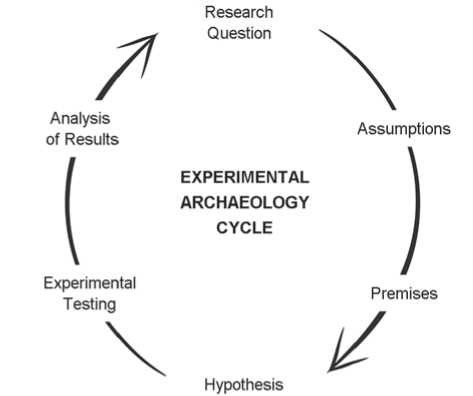
Schematic representation of the Experimental Archaeology Cycle, illustrating the sequential process from proposing a research question to defining assumptions, establishing premises, and formulating a hypothesis, followed by experimental testing and the analysis of results, which refine archaeological interpretations and guide further investigation.
Accordingly, both the independent variables and their range—the set of levels in which they would be manipulated during the experiment—had to be selected based on their relevance to testing the hypothesis and their compatibility with archaeological scenarios (Cuartero, Alcaraz-Castaño, Baena, 2016). Similarly, the dependent variables had to be chosen for their relevance to understanding the process under study. However, their definition also needed to account for their sensitivity to variations in the independent variables, their measurability, their capacity to generate data pertinent to archaeological interpretation, and their potential for replication to support broader scientific validation. In this context, to ensure the reliability of the results, the effects of the independent variables on the dependent variables had to be assessed using adequate measurement protocols, given that a lack of resolution or precision in the control system may obscure subtle variations in the experimental outcomes and limit the ability to discern and evaluate causal relationships.
Within the framework of our illustrative example, the researchers took the study’s premise into account and selected the type of pigment and the type of binder as the independent variables, as these were expected to influence paint preservation and could be systematically manipulated in the experiment. Given the need to explore variability in preservation patterns while maintaining experimental feasibility, they considered that a range composed of three levels for each independent variable would be appropriate. Next, drawing on data from archaeometric analyses conducted on rock art paintings in the study area— along with the need to incorporate materials with distinct chemical and structural properties—the researchers selected iron oxide, manganese oxide, and charcoal as pigments. Likewise, considering ethnographic accounts indicating that native communities who lived in the region centuries ago mixed pigments with water, blood, and egg white, they selected these substances as binders. In this way, it was possible to ensure that the raw materials used were not only representative within the scope of the experiment but also aligned with the archaeological context relevant to the study. On the other hand, considering the relevant parameters for their selection, the researchers defined the degree of reduction in the painted layer thickness, the extent of painted surface loss, the density of cracks in the painted area, and the rate of color fading as dependent variables, which would be measured with precision through micro-photogrammetry and using a portable 3D microscope. Moreover, to minimize interference from external factors, they defined the geologic and topographic features of the rock substrate as control variables, which would be kept constant throughout the experiment.
Bridging the laboratory and the field: a structured approach to conducting experiments
After defining the experimental variables, the researchers needed to determine the strategy that would guide the practical execution of the experiments. To ensure that the data generated would be both reliable and archaeologically meaningful, this strategy had to balance the levels of internal and external validity in the experimental research. Finding this balance is particularly crucial in archaeological experimentation, where achieving high internal validity—ensuring that observed effects are genuinely attributable to the manipulated variables—can sometimes come at the expense of external validity, which refers to the extent to which experimental results can be extrapolated to archaeological contexts (Lycett, Eren, 2013: 525–526; Eren et al., 2016: 106). As noted by A. Mesoudi (2011: 161), tightly controlled experimental conditions enhance internal validity by isolating causal relationships and reducing confounding factors, but they often lack contextual realism. Conversely, increasing external validity by replicating conditions closer to those of the past improves contextual relevance but reduces experimental control, making it more challenging to determine causality with precision.
This methodological trade-off underscores the need for a structured approach that integrates controlled testing with real-world applicability, ensuring both reliability and interpretative depth. Therefore, the researchers decided to employ a strategy based on the sequential execution of pilot, systematic, and replicative experiments, which complement one another by addressing different methodological scales, levels of control, and analytical perspectives.
Pilot experiments. As an initial step in implementing this structured and sequential approach, the researchers adopted an exploratory perspective and conducted a small-scale version of the systematic experiment planned, with the aim of confirming whether the methods chosen for its execution were indeed the most suitable and identifying potential technical and logistical difficulties that could compromise its feasibility. To carry out this procedure, they prepared a set of experimental paintings whose resistance to weathering they intended to test, and subjected them to accelerated ageing, while seeking to determine both the number of ageing cycles and the climate chamber settings that would best replicate the long-term impact of the humidity fluctuations, the temperature variation, and the ultraviolet radiation affecting the archaeological paintings in the study area.
During this pilot experiment, the researchers had the opportunity to practice the technical procedures that would later be systematically performed to test the hypothesis, ensuring that they were both functional and replicable. Simultaneously, they assessed the suitability of the selected raw materials and gained familiarity with their behavior, verifying that these performed consistently under the experimental conditions. Through this procedure, they also verified whether the selected independent, dependent, and control variables were appropriate for understanding the specificities of the phenomenon under investigation and for detecting potential sources of variability that could act as confounding factors. Additionally, the scholars evaluated the efficiency and suitability of the measurement methods and, when necessary, calibrated them to ensure the accuracy and precision of the experimental data. They then analyzed the level of variability in the effects observed on the dependent variables and obtained a preliminary estimate of the experimental error, which allowed them to determine the sample size and the number of replicates required to obtain robust results—from both a qualitative and quantitative perspective.
After completing the pilot experiment, the researchers realized that although this procedure allows for a certain degree of operational flexibility (i.e. it does not need to be conducted in a strictly systematic and highly controlled manner), it should not be mistaken for an experiential archaeology activity, as its development is directly linked to the objectives of the experimental research and the hypothesis under investigation. Confident that the methodological framework had been sufficiently refined, they then decided to advance to the next phase of the study.
Systematic experiments. Unlike pilot experiments, systematic experiments are characterized by a high level of control and a strong emphasis on internal validity and reproducibility. Their fundamental objective is to investigate causal relationships between independent and dependent variables under strictly controlled conditions. Hence, they must be conducted with rigor and methodological precision. Aware of this principle, the researchers in our example decided to employ a full-factorial design, in which each independent variable was systematically manipulated at all its predefined levels, in conjunction with every level of the other independent variables included in the study (Anderson, Whitcomb, 2015). This does not imply that all variables were altered simultaneously in a single instance, but rather that all possible combinations of their levels were tested throughout the experiment. As a result, it became possible to identify not only the main effect of each independent variable but also the effects generated by their interactions, leading to a comprehensive understanding of their influence on the dependent variables.
Following this approach, the researchers carefully combined the three levels of the previously selected independent variables—type of pigment (iron oxide, manganese oxide, charcoal) and type of binder (water, blood, egg white)—to construct a 3 × 3 matrix comprising nine distinct paint recipes. Subsequently, to ensure a precise comparison between samples, each recipe was used to paint three identical 1 × 1 cm² squares on 10 × 10 cm rocky supports. Nevertheless, just as the experimental paintings were about to be placed in the climate chamber, the researchers recalled that, to ensure the reliability of the results and the identification of clear trends in the outcomes, the use of a full-factorial design must be complemented by multiple replicates. Thus, considering the degree of variation in the effects observed in the dependent variables during the pilot experiments, a decision was made to produce a total of 27 samples (three replicates for each paint recipe) and 81 painted squares (see Table).
After detailed documentation of the samples through micro-photogrammetry and 3D digital microscopy, these were subjected to accelerated ageing through 360 six-hour cycles designed to simulate the effect of the taphonomic processes across the four seasons of the year. Although humidity, temperature, and UV radiation varied simultaneously during these cycles, the variation was strictly controlled, repeatable, and uniformly applied to all samples. This ensured that each painted square was exposed to exactly the same environmental conditions, allowing differences in preservation to be confidently attributed to the paint composition rather than to uneven environmental fluctuations. Moreover, to prevent uncontrolled sources of variation from affecting the data, the arrangement of the samples within the chamber was randomized, meaning their placement was determined by chance rather than following a fixed pattern.
Just as before the accelerated ageing, every 30 cycles the dependent variables were assessed following the measurement protocol to determine the extent to which different paint recipes influenced the preservation of the painted squares. Based on the data obtained at the end of the experiment, the researchers developed a statistical model using multivariate regression analysis to evaluate the causal relationship
Experimental matrix corresponding to the full-factorial design applied in the illustrative study
In a subsequent stage, a traceological comparison between the experimental samples and archaeological paintings (rock art images) was carried out. Based on the identification of diagnostic micro- and macroscale degradation patterns associated with the dependent variables, meaningful correspondences were revealed, which reinforced the relevance of the experimental data as a proxy for understanding the causal relationship between paint composition and degradation patterns. However, given the high level of control employed in this systematic experiment, the researchers recognized that the results, while robust under controlled conditions, still required validation in more complex and dynamic environments. For this reason, further experimentation was deemed necessary to evaluate whether the degradation patterns would persist under natural taphonomic conditions and could potentially be extrapolated to the archaeological context.
Replicative experiments. To validate the results obtained through the systematic procedures, the researchers implemented a replicative experiment to assess whether the patterns identified in the laboratory would also be observed when experimental samples were exposed for extended periods to naturally occurring taphonomic processes. Importantly, the research program developed in this illustrative example could not have relied on this type of experiment alone, since replicative experiments are not designed to establish causality but rather to test the robustness of previously identified patterns under less controlled and more variable conditions (Skibo, 1992; Outram, 2008). Any degradation observed solely in natural settings would remain open to multiple interpretations, making it difficult to determine with confidence which factors were responsible for the observed outcomes. Therefore, the systematic phase was not only crucial for testing the hypothesis, but also indispensable for building the analytical baseline necessary for external validation.
In the replicative experiment, the researchers recreated the 3 × 3 matrix of paint recipes, maintaining the same combinations of pigments and binders, with three replicates for each combination. However, instead of painting standardized squares on uniform rocky supports, each paint recipe was used to create three identical rock art motifs on the walls of an experimental shelter—characterized by geological, topographic, and microclimatic conditions similar to those of the rock art sites—where a portable meteorological station was installed to monitor local environmental variables throughout the duration of the experiment. To maintain consistency with the previous phase of the study, the 81 images were randomly distributed across the shelter to minimize potential biases related to microtopographic and microenvironmental variation.
At this stage of the research, a long-term perspective was adopted, with quarterly documentation of the experimental paintings over an initial period of five years, using the same measurement protocol employed in the systematic experiments. Although this timeframe is not directly comparable to the millennia that have passed since the creation of the archaeological images, nor does it allow for the observation of degradation processes on the same scale, it was deemed sufficient to evaluate whether the different paint recipes exhibited consistent preservation patterns under natural taphonomic conditions, particularly in relation to the reduction in painted layer thickness, the extent of painted surface loss, the density of cracks in the painted area, and the rate of color fading.
Over the course of multiple visits to the shelter, micro- and macroscopic analysis revealed that the patterns emerging in the experimental paintings closely mirrored those identified in the systematic experiments, reinforcing the external validity of the findings and supporting their interpretative applicability to the archaeological context. In this sense, the differential transformation of the painted surfaces under real environmental conditions provided compelling evidence that the relationships between paint composition and preservation—originally established in the laboratory— retained their empirical relevance when tested in the field.
From experimentation to interpretation: the inferential limits of experimental results
Building upon the patterns documented through laboratory and field experiments, the researchers proceeded to compare these results with traceological features observed on actual rock art panels, concluding that the evidence supported the hypothesis that the composition of the paint recipes played a key role in the long-term preservation of the paintings in the study area. Despite the significance of this finding, the reader may feel somewhat disappointed by the fact that, even after all the time, effort, and resources invested in designing and conducting the experimental study, the researchers obtained data that supported the hypothesis but did not arrive at a definitive answer that would allow them to prove it in an absolute and indisputable manner. Yet, this very sense of disappointment is not only expected but necessary, as it sets the stage for the discussion of a foundational principle: experimental archaeology does not operate in terms of absolute certainties but rather within a framework of interpretative plausibility and probabilistic reasoning (Nami, 2011: 38).
In this sense, given that any experiment addressing the formation of the archaeological record or the production and use of material culture in the past is designed with a limited number of variables that approximate a controlled and simplified version of reality, the resulting data come with inherent limitations that constrain the scope of the interpretations they can support (Morgado, Baena Preysler, 2011). Thus, instead of providing definitive conclusions, experimental results function as heuristic tools for evaluating the plausibility of hypotheses, refining interpretative models, and delineating the conditions under which certain processes could have occurred.
Moreover, it is essential to acknowledge that, even when experimental data display patterns closely resembling those observed in archaeological sites and materials, such correspondence does not fully eliminate the possibility of equifinality, as unknown alternative processes could have led to similar outcomes (Baena, 1997). For this reason, Eren and Meltzer (2024: 3)
emphasize that one of the greatest mistakes experimental archaeologists can make is being overly confident in the inferential power of their experiments. According to these scholars, we must learn to accept the notion that inferences derived from archaeological experiments, much like those in archaeology more broadly, are inherently constrained and always provisional. After all, beyond the issue of equifinality, no experiment is perfect, truly comprehensive, or ultimately conclusive (Ibid.: 7).
These considerations do not imply a pessimistic or skeptical view of experimental archaeology. On the contrary, recognizing these limitations and exercising caution when making inferences and drawing conclusions is a sign of the methodological maturity the field has developed over the past decades, and reflects its commitment to scientific rigor and the continuous refinement (Eren et al., 2016). Moreover, as underscored by Magnani et al. (2019b: 808), this constructive process of self-criticism is crucial to ensuring that this valuable methodological approach is applied properly and does not risk being reduced to a form of pseudo-scientific practice.
Conclusions
Despite the growing contributions of experimental archaeology to rock art research, its application in this field still faces significant methodological challenges, which hinder its full potential as a tool for testing propositions related to the production of images and the formation of the prehistoric artistic record. In response to these issues, this article proposed a structured framework based on the appropriate articulation of research questions, assumptions, premises, and hypotheses, the rigorous control of variables, and the sequential development of pilot, systematic, and replicative experiments. Although methodologically structured, this model remains versatile and can be applied to a wide range of research questions. In this sense, it is worth emphasizing that the replicative phase does not always require a long-term perspective such as that adopted in the illustrative example, which was specifically designed to address taphonomic processes. Santos da Rosa et al. (2024), for instance, conducted an experimental study aimed at identifying the paint application tools used in the production of Levantine rock art in eastern Spain. In that case, the replicative experiments were conducted over a short period of time and served to validate the results of the systematic experiments by testing whether the tools identified as most efficient for painting simple standardized shapes would also perform effectively when used to produce complex full-scale replicas of Levantine motifs, thereby allowing the researchers to evaluate the technical performance of each tool under conditions resembling the original painting context.
Therefore, this approach helps to ensure that experimental research in rock art achieves the critical balance between internal and external validity, generating data that are analytically robust, replicable, and archaeologically relevant. Moreover, it provides a solid foundation for the development of epistemological bridges between the paintings and engravings that persist in the present and the complex processes through which they were created and transformed in the past, which significantly enhances our capacity to investigate them and to formulate empirically grounded inferences about the prehistoric artistic practices.
Acknowledgements
This study was supported by the European Union under the Horizon Europe Marie Sklodowska-Curie Actions (Grant Agreement No. 101109977 – TaphArt). Views and opinions expressed are however those of the author(s) only and do not necessarily reflect those of the European Union or the European Research Executive Agency. Neither the European Union nor the granting authority can be held responsible for them.
