
Generation Z: myths and realities in the context of cultural studies
Free access
The article explores the cultural and social characteristics of Generation Z (Zoomers), born after 1995, focusing on their values, motivations, and behaviors in the context of education and the workplace. The study, conducted by the Institute of National Projects and GK LANIT, challenges common myths about Zoomers, such as their alleged dependence on technology, lack of responsibility, and fragmented thinking. Through a combination of quantitative and qualitative methods, including surveys, in-depth interviews, and cluster analysis, the research reveals that Zoomers are pragmatic yet hedonistic, valuing both material success and personal satisfaction. They prioritize individualized learning formats, flexibility, and a positive, non-toxic environment. The study also highlights their concern for social and environmental issues, as well as their preference for mentorship and feedback over traditional authority structures. The findings suggest that educational and organizational systems should adapt to Zoomers’ unique traits by offering personalized approaches, flexible learning conditions, and supportive environments. The article concludes that Zoomers represent a diverse and dynamic generation whose values and motivations are shaped by rapid technological advancements and changing social norms.
Similar articles in the section Mathematics. Natural sciences
Short address: https://sciup.org/140313669
IDS: 140313669 | UDC: 5.10.1. | DOI: 10.5281/zenodo.16975167
Поколение Z: мифы и реалии в контексте культурологии
В статье рассматриваются культурные и социальные особенности поколения Z («зумеры»), родившихся после 1995 года, с акцентом на их культуру, ценности, мотивации и поведение в контексте обра- зования и профессиональной реализации. Исследование, проведенное Институтом национальных проектов и ГК ЛАНИТ, опровергает распространенные мифы о зумерах, такие как их якобы зависимость от технологий, отсутствие ответственности и фрагментарное мышление. Благодаря сочетанию количественных и качествен- ных методов, включая опросы, глубинные интервью и кластерный анализ, анализ проведенного исследования показал, что зумеры сочетают в своем поведении прагматизм и гедонизм, ценят как материальный успех, так и личное удовлетворение. Они отдают предпочтение индивидуальному формату обучения, гибкости и позитив- ной, нетоксичной среде. Исследование также подчеркивает их озабоченность социальными и экологическими проблемами, а также их предпочтение наставничества и обратной связи перед традиционными структурами власти. Анализ полученных результатов свидетельствует о том, что образовательные и организационные си- стемы должны адаптироваться к уникальным чертам поколения Z, предлагая персонализированные подходы, гибкие условия обучения и благоприятную среду. В статье делается вывод о том, что зумеры представляют собой разнообразное и динамичное поколение, чьи ценности и мотивы формируются под влиянием быстрого технологического прогресса и меняющихся социальных норм.
Text of the scientific article Generation Z: myths and realities in the context of cultural studies
Generation Z, born after 1995 (sometimes defined as the period from 1996 to 2010), is often described as the most technologically advanced and mysterious generation for previous generations such as millennials (Generation Y) and Generation X. They grew up in an era when the internet and social networks became an integral part of life, and mobile devices became an extension of the hand, providing constant access to information and communication. However, behind these technological attributes lie deeper cultural and social characteristics that significantly influence their values, motivation, behavior, and perception of the world.
This article examines the results of a study conducted by the Institute of National Projects and GK LANIT to understand how myths about Zoomers correspond to reality. We also explore how their unique characteristics can be used for more effective interaction in education, at the workplace, and in social initiatives. Special attention is given to how a cultural studies approach helps understand the unique traits of this generation.
Research Problem
Cultural studies not only examine art and literature but also broader social phenomena that shape and reflect the cultural environment, including the influence of technologies, media, and social changes on the formation of generational values. A generation in this context is not just an age group but a complex cultural phenomenon with its own values, norms, symbols, and unique set of beliefs. Zoomers, like any other generation, are a product of their time, and their characteristics can be compared to fingerprints, unique to each individual but also sharing traits formed by common historical and social events for a specific group.
In actuality, Generation Z, or the «Zoomers», can create a misleading conception of themselves, due mainly to the dominating stereotype perceptions of these groups, thus making an understanding of the actual values, motivations, and the way of acting of the young generation difficult. Such notions as technology reliance in general, also defined as «digital addiction», little ability for sustained concentration, fragmented thinking-a product of exposure to social media’s shortform content and visual content over text-are other concepts being cited frequently.
Besides, these are sometimes thought to have little sense of responsibility, unable to stand up for their leadership figures. Media stories and public discourse helped create such mainstream narratives and beliefs. As a result, the uneducated personnel management models, suboptimal structures of schooling, and interpersonal misunderstandings follow.
These are based mainly on the premise that technological innovation, in all of its forms, tends to provide them with the most appropriate opportunities for development; the majority, however, is now proving such a perception unscientifically true. But far from passive receivers of technological influence, Zoomers actively engage with and reconstruct digital tools in ways that create new forms of communication, selfexpression, and socialization.
It is thus crucial to recognize the agency here, as this will help build a more accurate and comprehensive understanding of this generation as well as more workable policies and practices that reflect the everevolving realities of this generation.
Research Methods
The research deployed an elaborate methodological framework involving values, motivations, and behaviors of Generation Z or Zoomers by combining international and Russian perspectives. A thorough review of 29 Russian and 69 international sources-including scientific articles, analytical reports, and statistical data-was carried out, followed by a cross-examination of prominent international databases, from the World Values Survey to the European Social Survey, so that both common and context-specific traits of Zoomers might be identified against different cultural and economic backgrounds. Research enquired about the role of technology in shaping the values and motivational drivers in this cohort.
In addition to the theoretical basis, a quantitative analysis was conducted through the survey of 4,729 students from 17 universities coming from 51 regions of Russia belonging to Zoomer generation. The intent of the survey was to reflect on their values, motivations, worldviews, and educational preferences. Econometric techniques were then applied for the analysis of the dataset exposing the intergenerational differences that were statistically significant and certain determinants that shaped their behavior patterns.
A parallel qualitative analysis was performed to further explore their subjective experiences and selfconcepts of Zoomers. It comprised in-depth interviews and focus group sessions with cultural studies experts, sociologists, psychologists, and students of the generation being focused on. The findings are based on sharing of personal stories, lived experiences, and opinions about life issues that illuminate the understanding of core values and what motivates the participants.
Cluster and factor analysis was applied to organize the findings into separate motivational and value-based clusters that cleave the Zoomer profile into distinct pieces. These included «pragmatists», «idealists», «hedonists», and «socially oriented» individuals, giving a structured, but still subtly nuanced, understanding of diversity within this cohort of generations. Together, these methodological approaches provided a strong and multidimensional research of Zoomers, in perfect harmony between empirical rigor and human-centered insight.
The study included a wide and geographically different sample of students from different higher education institutions all over Russia in an effort to obtain comprehensive representation of the Zoomer generation. Participants came from Astrakhan State University, Immanuel Kant Baltic Federal University, and Vladimir State University, named after A. G. and N. G. Stoletov: this was done for perspectives from both the European and southern parts of the country.
The students of Saint Petersburg State University of Management and Russian State University of Management brought into the research the voices from leading centers for academic and professional training. The addition of Far Eastern Federal University and Kuban State University gave a wider scope of the geography, capturing opinions from the east and south of Russia.
In addition, a joint study was carried out with the involvement of a number of students from Moscow State Technical University named after N. E. Bauman and Moscow State University named after M. V. Lomonosov, which is undoubtedly one of the better-known higher institutions of this country, at least by virtue of a rather rigid academic atmosphere. Participating in this sample were students joining from National Research Nizhny Novgorod State University named after N. I. Lobachevsky and Nizhny Novgorod State Engineering and Economic University. These two universities represent the Volga region.
Contributions toward western Siberian and Volga basin perspectives came from participants from Omsk State University, so-named after F. M. Dostoevsky, and Saratov National Research State University, which boasts the name of N. G. Chernyshevsky.
Mere addition of the students from the Russian-Armenian University provided that dimension of cross-culturality, while Saint Petersburg State Economic University added the accent of one of the leading economic and financial hubs in Russia. Surgical State University and South Ural State Technical University brought in the representation from the very Urals and western Siberia with distinct socio-economic and cultural characteristics.
This wide representation, spanning from European west to the Far East, metropolitan centers to regional hubs, guarantees that the results correctly depict one detailed and a vast perspective on the Zoomer generation. Such inclusion only adds to the reaffirmation and credibility of the findings, into which premature biases rooted in regional or institutional environments play less of a role; thus, a truly credible and multifaceted portrait of that generation comes to light with respect to values, motivation, and behaviors.
Research Results
These findings show that generational myths about Gen-Z, or Zoomers, have been challenged, since specific cultural attributes of theirs can spur interactions within the learning and work settings. The findings also allude to the fact that such characteristics are not static but dynamic and ever-changing based on larger social transformations, economic conditions, and technological developments (see fig.1).
Zoomers are quite realistic about life; and this, combined with a great desire for self-fulfillment, is their signature trait. Like their predecessors, they continue to value compensation and self-growth, but there is an element of difference in the focus on enjoyment and self-fulfillment through work or studies. They have this aspiration to strike a balance between material satisfaction and internal gratification, abstracting themselves from generations that are usually geared toward tangible needs such as financial stability or climbing the corporate ladder.
For the Zoomer, individualism and hedonism might definitely represent important concepts in determining ‘’who they are’’. A great majority of respondents, 67 % to be precise, expressed a clear tendency towards comfort and personalisation in regard to education, work, and leisure. In other words, they lean towards hedonism: not being irresponsible but rather having a
Generation Z Research Results (%)
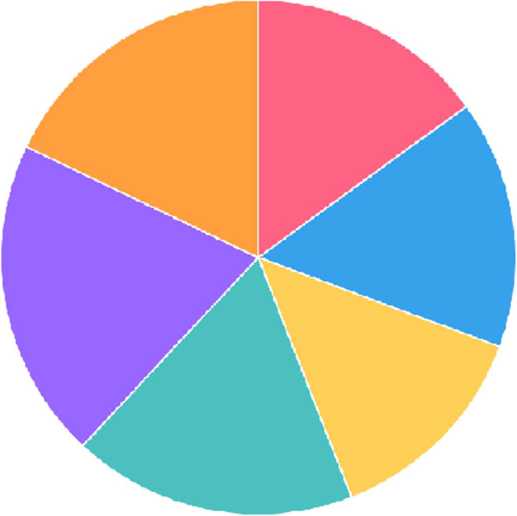
■■ Value Personal Comfort ^^M Realistic with Self-fulfillment
^^M Technology Integration
■^H Prefer Personalized Learning
Fig.1 Generation Z Research Results (%)
conscious and considered appreciation of the better things in life and actively looking to incorporate such things into their lives.
Zoomers also have their own peculiarities in learning and self-development. For them, education is not a passing scene towards diplomas or qualifications but rather a process of polishment, that is to see growth in oneself while living through different ways of learning experiences. The stance is that the preferred ways to learn are flexible, that is, suited to the individual and involve online courses29, seminars, and master classes as they allow people to learn at their own pace. They actively turn to educational platforms like YouTube, Coursera, and Khan Academy to acquire skills and knowledge, thus illustrating their active selfdirected learning process.
Zoomers’ attitude towards responsibility is kind of mixed. They disdain responsibility but are not unwilling to accept it when they consider what they do as sensible and when they are given help and support from their colleagues and leaders. They flourish in teamwork and share a responsibility and appreciate the mentorship of expert peers, which helps them in overcoming problems they have encountered and enables them to grow as individuals.
Another key value for Zoomers is comfort, especially in work-and-learning environments. While they certainly appreciate comfort, they understand it shouldn’t be the only focus. There should be an ongoing balance in creating non-toxic spaces that help them feel confident enough to express themselves freely.
Flexible working hours are also appreciated, as many of them favor remote working options, selfpaced learning, and personalized learning routes. For instance, out of 49 motivators found to be affecting students, eight have to do directly with personalizing the educational process, such as access to personal consultations, seminars, and customized learning paths.
The last attribute explains that Zoomers are more socially and ecologically aware than all previous generations. Besides being proponents for environmental issues and advocates for social equity, they are also concerned with worldwide problems like climate change and inequality.
The balance goes toward personal goals and interests mixed with wider concepts, though, in their efforts to align their actions for and against with further benefit to both society and self. This shows they can manage or bargain for individual development in harmony with the contributions these would entail to society: a whole and optimistic view of the world.
The Zoomers set this off by combining pragmatism and hedonism, attempting to seek a balance between materialistic success and inner satisfaction. When determining a field of practice or study, they search for those offering not only long-standing earnings and career perspectives but also in line with their interested disposition.
They have chosen IT professions in mobile app development or video game creation due to high salaries, flexible conditions, opportunities for selfactualization, and freedom of creativity. They may well choose positions in social media, such as blogging or SMM management, due to their love of communication, content creation, and sharing ideas.
A research study in Russia shows that about 70 % of Zoomer students contended their studies should correlate to their interests, and about 60 % said that it should be enjoyable. Combining utility with hedonisms, they differ from the millennials, who prioritize vertical movement in career and social recognition, and Generation X, who lived with a focus primarily on stability and social security.
Zoomers such as these are most likely to tailor their learning methods toward individualization by preference so that pace and style conform with the unique ways of how they assimilate knowledge. They value flexibility, autonomy, and personalized approaches, often choosing online courses, individual consultations, and digital resources like YouTube, podcasts, and online libraries for support with their learning.
Numerous speculations about Zoomers depends on stereotypes about their prior generations, enforced by Millennial and Generation X groups. Movie stereotypes tend to be a result of the previous generations not understanding the unique worldview and concerns of Zoomers. This feels like it is because the older generations tend to think that Z-ers are spoilt and rash, given that they have been rather fortunate in having an early exposure to fully advanced technology, heaps of information, and a variety of entertainment (see fig 2).
Their different values and approaches towards responsibilities consequently are perceived to flow towards allegations regarding their attitudes towards work or maturity. However, there seems to be a lack of consideration into this peculiarity that comes with the strengths which arise in some ideals of Gen Z.
According to the research, the Zoomers set a different value system based on what is demanded in modern life. To them, flexibility, freedom, and selfexpression come first; all while trying to establish a meaningful and entertaining life. In addition to the fulfillment of personal goals, they pay much attention to the responsibilities of a social nature and environmental awareness; thus, there is balance in individual and collective wellbeing.
In Russia, Zoomers are often seen as individuals unfond of any kind of responsibility. However, they perform at their best when involved in an environment that provides adequate support and opportunities for personal and professional growth. They further emphasize mentorship, constructive feedback, and aligning their academic or professional ambitions with personal interests and core values.
The Zoomers were the ones born in a time of raging technological advance. Their identity reflects an evolution of technology that has been integrated into just about every aspect of the way of life. For socializing, learning, working, or just plain having fun, they do it all with the help of digital instruments and now are the greatest users of social networks, online games, streaming platforms, and many other digital spaces.
By contrast, close to 90 % of Zoomers in Russia use mobile devices for learning and working, which really helps them to be flexible and adapt easily. Besides, since they are always online, they commonly use learning platforms and social networks to learn new skills. And technology is being treated as an aid to real live contact instead of a substitute for it.
To meet the needs of Zoomer students, developments in educational programs should fit their specific characteristics and preferences. Russian universities should offer individualized learning methods through the incorporation of such elements as online courses, gamification, practical training, and internships, while at the same time developing critical thinking skills. Another important point is the need to establish an inclusive and supporting environment that stimulates free expression; these are the most important elements of both their academic and personal growth.
Drawing strength from international best practice, Zoomers flourish in flexible learning environments, which offer remote, flexible schedules, and elective
Life Goals Across Generations
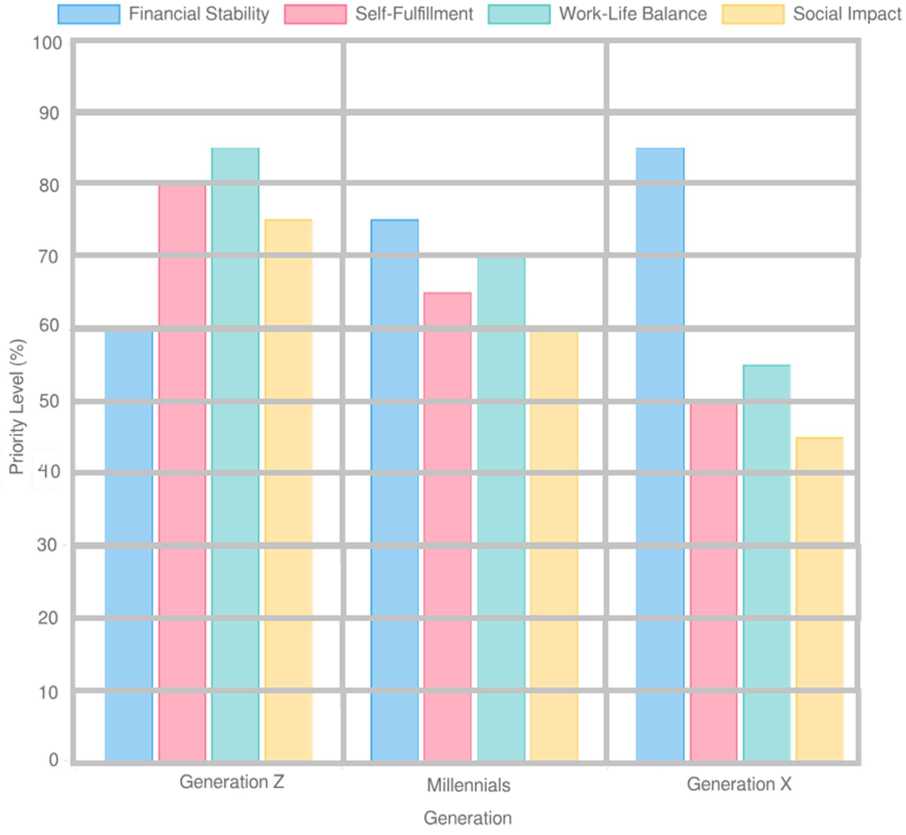
Fig. 2 Life Goals Across Generations
courses pertaining to their interests. They are also receptive in environments that are nurturing, and free of toxicity, where they are empowered to express themselves candidly and authentically.
The research highlights that Zoomer students tend to handle their responsibilities differently. Oftentimes, they favor collective decision-making instead of being solely responsible. They respect professionalism and savoir faire from authority figures instead of just their place in a hierarchy, and they greatly appreciate mentorship and guidance from experienced individuals.
When it comes to the modes of learning, the students of this generation prefer more personalized techniques like seminars, one-on-one consultation, and practical hands-on experience. Of the surveyed students, 80 percent believe that seminars are the best means of learning professional skills and knowledge.
Key motivating elements for Zoomers comprise a positive learning environment, acknowledgement from teachers through feedback, and opportunities for selfexpression. They also value thought-out directives and explanations of criteria for academic accomplishment that can guide them toward achieving their school goals with great confidence and purpose.
Conclusion
The survey research findings reveal that Zoomers exhibit different cultural traits that could add value to interactions in educational and professional spheres.
Instead of calling these barriers, they should be identified as components of culture diversity that drive creativity and innovation.
All these approaches need to be on certain preferences for motivation systems to assure connection with Generation Z, such as personalized contacts, positive climate creation, providing meaningful feedback, and opportunities for self-development, considering regional and professional differences.
The study’s results indicate that Zoomers have a different set of cultural values that may enhance social interaction within teaching and professional spheres. Instead of barriers, they ought to be dubbed quality plains of culture diversity that empower creativity and innovation.
All the approaches need to be centered on firm preferences for motivation systems to assure connectivity with Generation Z: with relevance to open communication, provision of a supportive atmosphere, valuable feedback, and opportunities of individual development concerning historical and domain dimensions.
