
Homo Americanus vs Homo Soveticus: Contemporary Russians’ and Americans’ Social Views on the Cold War Ideological Clichés
Section: Историческая и политическая имагология
Article in issue: 2 т.31, 2026.
Free access
Introduction. For the first time, the article examines the contemporary Russians’ and Americans’ social views on how the Soviet and US Cold War mass culture represented “us” and “them”. Materials and methods. The article is based on an analysis of data from an in-depth interview conducted in the USA and Russia (n = 27, autumn 2023 – spring 2024). To verify the results obtained, projective techniques were employed. Results. The interviewees from both countries demonstrated familiarity with the content of the Cold War ideological clichés; an understanding of the techniques by which these clichés are created; and awareness of the manipulative nature of their use. They identified the features through which mass culture juxtaposed Soviet and American ways of life, as well as the character traits and appearances attributed to Homo Americanus and Homo Soveticus. In general, Russian informants were slightly more knowledgeable about representations of the USSR in US mass culture than American counterparts were about representations of the USA in Soviet culture. The authors conclude that views on the ways of representing “us” and “them” in the Soviet and US Cold War mass culture are stereotypical, being simplified, shared, emotionally coloured and stable, and can be designated as “imagological stereotypes”. These stereotypes serve as a factor that influences Russians and Americans’ mutual perceptions and indirectly affects contemporary international relations.
Short address: https://sciup.org/149151492
IDS: 149151492 | UDC: 327.8 | DOI: 10.15688/jvolsu4.2026.2.14
Homo Americanus vs Homo Soveticus: идеологические клише холодной войны в социальных представлениях россиян и американцев
Введение. В статье впервые исследуются представления современных россиян и американцев о том, как массовая культура СССР и США периода холодной войны репрезентировала «своих» и «чужих». Материалы и метод. Статья основана на анализе данных глубинного интервью, которое проводилось в США и России (n = 27, осень 2023 г. – весна 2024 г.). Для проверки полученных результатов применялись проективные методики. Результаты. Информанты из обеих стран продемонстрировали знание содержания идеологических клише холодной войны, понимание приемов, при помощи которых они создаются, осознание манипулятивного характера их использования. Они отметили характеристики, при помощи которых массовая культура создавала противопоставление двух образов жизни, советского и американского, а также черт характера и внешнего облика Homo Americanus и Homo Soveticus. В целом российские информанты несколько лучше знают о репрезентациях СССР в массовой культуре США, чем американские – о репрезентациях США в советской культуре. Авторы делают вывод, что представления о приемах изображения «своих» и «чужих» в массовой культуре СССР и США носят стереотипный характер, будучи упрощенными, разделяемыми, эмоционально окрашенными и устойчивыми, и могут быть обозначены как «имагологические стереотипы». Эти стереотипы выступают фактором, который оказывает влияние на социальные представления россиян и американцев друг о друге и косвенно –на современные международные отношения.
Text of the scientific article Homo Americanus vs Homo Soveticus: Contemporary Russians’ and Americans’ Social Views on the Cold War Ideological Clichés
DOI:
Цитирование. Рябова Т. Б., Клещенко Л. Л. Homo Americanus vs Homo Soveticus: идеологические клише холодной войны в социальных представлениях россиян и американцев // Вестник Волгоградского государственного университета. Серия 4, История. Регионоведение. Международные отношения. – 2026. – Т. 31, № 2. – С. 165–177. – (На англ. яз.). – DOI:
Introduction. Homo Americanus and Homo Soveticus are terms that became popular in Cold War-era Western Europe [5; 7; 15]. They were designed to highlight both the differences between the two superpowers and European civilisation, as well as their certain similarities, though these comparisons tended to be negative. During the Cold War, in the mass culture of the USSR, the USA and other countries on both sides of the Iron Curtain, a huge number of images of the Soviet man and the American man emerged as typical representatives of two social systems, giving rise to certain ideological clichés. Homo Americanus and Homo Soveticus represent kinds of imaginary Cold War American and Soviet archetypes in mass culture. These ideological clichés occupy a prominent place in social and cultural memory and thus obviously have an impact on contemporary international relations, which explains the great interest of modern scholars in studying their content and their use in the symbolic politics of the Cold War, drawing on material from various forms of popular culture [1; 2; 4; 6; 9–13; 16; 18].
Our research focuses on a different issue – the extent to which contemporary Russians and Americans are familiar with the content of these ideological clichés, Homo Americanus and Homo Soveticus ; how aware they are of the propaganda functions of these images; how aware they are of their manipulative nature; and how they understand the techniques used to create them. The main research questions of the study can be outlined as follows. What are the views of Russians and Americans on how the Soviet and American lifestyles are portrayed in the mass cultures of the two countries? How do they see the appearance and character traits of Homo Americanus and Homo Soveticus ? What do they believe are the techniques used to construct these images? What are the similarities and differences between Russian and American perspectives? To what extent do these perceptions depend on the age and political preferences of the respondents? Finally, to what extent can these perceptions be described as stereotypes – i.e., simplified, shared, stable, and emotionally coloured? These issues are highly relevant as they allow us to assess the influence of the legacy of Cold War mass culture on contemporary public opinion.
The purpose of this article is to explore the perspectives of modern Russians and Americans on how the mass culture of the USSR and the USA during the Cold War portrayed “enemy number one” – Homo Americanus and Homo Soveticus , respectively.
An in-depth interview method was used, with interviews conducted online in the USA and in person in Russia between autumn 2023 and spring 2024 ( n = 27). Two age groups were identified: one comprising individuals over 55 years old (who had their own memories of the confrontation between the superpowers) and another comprising young people under 35 whose knowledge of the period came solely from educational and academic literature or popular culture.
The second selection factor was the political preferences of the informants, as these were likely to influence their interpretation of past political events and thus their attitudes towards “us” and “them”. The political preferences of the respondents were determined based on their self-identification and issue-based questions. We identified respondents in the USA as rather supportive of the Republicans and Democrats and respondents in Russia as rather “loyalists’ and “liberals”. At the same time, we indicated the respondents’ self-identification in terms of their own political identity (LDPR, Yabloko, etc.).
The sample was formed in accordance with the standard procedure. When conducting in-depth interviews, it is sufficient to interview 20 people if the respondents’ opinions are homogeneous. The survey might be stopped once the same answer to a question is received regularly.
Projective techniques were used to verify the data obtained. We employed images from films released in the USSR and the USA (due to the exceptional role of cinema in the “struggle for hearts and minds”), asking to identify whether the characters depicted were Soviet or American. The films were presumably unfamiliar to them and contained no obvious signs of national identity, such as the hammer and sickle or the Stars and Stripes. In addition to frames from six Soviet and six American films containing images typical of visual representations of American and Soviet people in the popular culture of both countries, the informants were also shown one frame each from films that were atypical. The hypothesis was that if the representations are stereotypical, i.e., simplified and stable, they will produce an effect that prevents accurate evaluation of the atypical visual image.
The structure of the article is as follows. In the first part, we briefly outline the Russian and American informants’ views on the Cold War, its nature, its symbols, the role of propaganda in constructing the image of “enemy number one”, and the emotions that inhabitants of the USSR and the USA evoked in each other. The second part analyses the informants’ perceptions of the two lifestyles, Soviet and American, including elements such as interpersonal relations, family relations, the value placed on money, attitudes towards work, etc. The third part is devoted to the analysis of the data obtained through the use of projective techniques applied to visual representations of Homo Americanus and Homo Soveticus .
A brief overview of the Cold War: key events, symbols, and emotions. The logic of the study suggested that the first task was to identify the level of knowledge modern Russians and Americans possess about the specifics of the Cold War and their assessment of the Soviet-American confrontation. It is worth noting that all of our interviewees expressed confidence in discussing the specifics of the Cold War, offering explanations for its name (such as “there was no open armed conflict” or “it was mainly an ideological confrontation”) and identifying the aims of both sides in this war (for instance, “fighting for spheres of influence” or “protecting allies”). Russian and American respondents demonstrated the same level of knowledge about that time; the Cold War associative series, referring to the events, figures, and images from the period (such as the Cuban Missile Crisis, the Iron Curtain, and the space race), was also similar. Differences in responses depended more on the age of the respondents: younger participants relied on historical knowledge, while older individuals drew on personal memories. Political beliefs also played an important role: Russians with a positive view of the Soviet period depicted the USSR’s goals in the Cold War as more peaceful and altruistic than those of the USA. Conversely, American participants who were critical of their own government were convinced that the primary goal of the country was world domination, while the USSR aimed to ease international tensions.
In assessing the specifics of the representations of “us” and “them” in the mass culture of the two countries, most of our respondents noted that these images were largely mirrored, and the images of the enemy were predominantly negative. However, both Russian and American informants noted the ambivalent nature of the propaganda: it contained not only negative but also positive portrayals of the lifestyle on the other side of the Iron Curtain. According to the Russian respondents’ views, the mass culture of the USSR acknowledged the success of the United States in achieving a high standard of living, economic development and scientific progress and called for helping ordinary Americans. Conversely, American informants noted that the US mass culture did not ignore Soviet achievements in the social sphere – such as free education, healthcare, and housing – as well as successes in culture, science, and technology.
Finally, in the context of this article, the respondents’ views on the feelings of the inhabitants of the USSR and the USA are of particular interest. American informants, more than their Russian counterparts, emphasised that mass culture was focused on generating fear as a key emotional component of the Cold War (“I think that you guys were very afraid that we would attack. I think Americans had that same fear” – Alice, 58, dem.). Russians believed that attitudes towards the United States in the USSR were more nuanced: older informants recalled experiencing a mixture of fear, admiration, pity, and envy towards America (only an overwhelming minority mentioned hatred). Some noted that they had negative feelings about the US political system and political elites but not about ordinary Americans (“I clearly understood who was who. Ordinary people – they live their lives, enjoy their lives... For example, I was happy for them that they live better than we do... Another thing is that their state, the elite, tried to interfere in the lives of others!” – Arsen, 55, “loyalist”).
Two ways of life in Soviet and US mass culture. Let us examine the perspectives of contemporary Russians and Americans on how the inhabitants of the USSR and the USA – and the two ways of life they represent – are portrayed in the mass culture of the two countries.
The “Empire of Justice” and the “Empire of Freedom” – these are how the Soviet Union and the United States, respectively, position themselves, according to O.А. Westad [17]. In turn, “enemy number one” in this worldview embodied anti-values. In the Soviet mass culture, America was portrayed as a land of injustice, class inequality, racism, exploitation of colonial peoples, materialism taking precedence over spirituality, the cult of money, and cultural degradation. In the US mass culture, the USSR was portrayed as a society characterised by the omnipotence of the state and the disenfranchisement of the individual, total behavioural control, an inefficient economy due to the suppression of free enterprise, and a culture profoundly alien to America in terms of civilisation.
The interviews reveal that contemporary Russians and Americans are well aware of these ideological clichés. Russian informants tended to contrast selflessness with greed, collectivism with individualism, kindness with cruelty, responsiveness with indifference, and adherence to social norms with disregard for them as typical markers of “Sovietness” and “Americanness” in USSR mass culture. They believe that Americans were portrayed as arrogant, selfish, calculating, concerned only with their own affairs, indifferent to other people’s problems, dishonest, vulgar, and arrogant. The following is a fairly typical opinion regarding the Soviet representations of ‘their mores’.
“[In the USSR] it was shown that... if we have one person as a friend for another, then there [in the USA] everyone is on their own; everyone is ready to step over you. No one there will help you in a difficult situation; on the contrary, they will do everything to rob you as much as possible and get what they can from you – that is the profit” (Anton, 22, “loyalist”, LDPR).
The overwhelming majority of the respondents highlighted racism as a key aspect of representations of the American way of life, contrasting this with the Soviet emphasis on internationalism and friendship among peoples.
For American informants, the main feature of the portrayal of the Soviet way of life in the US mass culture was the absence of freedom. Political freedom was emphasised above all; the absolute disenfranchisement of citizens under a repressive regime was a key focus. Popular themes included “lack of food”, “lack of property”, and “denunciation of neighbours leading to imprisonment”.
“The average Russian, I think, was portrayed as a kind of serf to the state or just as an oppressed individual living a not very decent lifestyle, at least compared to a Westerner” (Tony, 70, dem.).
An important feature of Sovietism for our American interviewees was atheism, which distinguished the USSR from the USA, where, as one informant pointed out, morality could not be separated from religion. Unsurprisingly, Soviet characters in US mass culture were often depicted as immoral, portrayed as murderers, liars, untrustworthy figures, and so on.
Other values that played an important role in the “cultural Cold War” are also associated with key ideologies. Labour, one of the most important values promoted by Soviet ideology, for Russian informants proved significant in distinguishing between “us” and “them”, as they noted that mass culture in the USSR contrasted the Soviet love of work, instilled from childhood, with the American passion for work aimed at rapid enrichment.
“The Soviets work for themselves... That is why we had happy work, but there [in the USA], work was portrayed as the exploitation of man by man” (Irina, 59, “lib”., Yabloko).
At the same time, the Russians’ responses emphasised the different social value attached to work in the two countries, which they felt was reflected, for example, in Hollywood’s lack of interest in the lives of ordinary workers, labourers and peasants (“There are more superheroes... machos... cops... they weren’t hard workers” – Svetlana, 58, “loyalist”). Interestingly, the image of the steelworker Sasha Savchenko in a still from the film Spring on Zarechnaya Street (1956, M. Khutsiev and F. Mironer), shown to the Russian respondents during the use of projective techniques, elicited positive emotions (“one of ours!”, “a working man!”). In contrast, the American informants commented: “He looks like a poor American... a working American” (Kate, 71, dem.). According to the American interviewees, there were generally no differences in the portrayal of residents’ attitudes towards work in the two countries.
Attitudes towards money and personal enrichment represent another important difference between the two systems in the “struggle for hearts and minds”. As Nikita Khrushchev stated in his report to the 21st Congress of the Communist Party of the Soviet Union (1959): “The spirit of individualism, personal greed, thirst for profit, hostility and competition – this is the essence of the morality of bourgeois society” (cit. in: [10, p. 49]). These Soviet representations of “their mores” were reflected in the responses of the Russian participants. Americans were portrayed as prioritising “money first and people second” (Arsen, 55, “loyalist”). The American informants showed awareness of this portrayal, with one commenting, “Soviet propaganda portrayed us [Americans] as greedy” (Joseph, 74, rep.).
As for the representations of the level of well-being in the mass culture and propaganda of the two countries, almost all the American interviewees noted that the narrative of terrible living conditions in the Soviet Union was discussed in the United States – “The idea of sharing a kitchen with another family is so horrifying.” The notion of the absence of private property in the USSR was also prevalent (“You don’t own things; you only receive what the state decides to give you, whether it be clothing or food or housing too, and nothing could be worse than not having private property” – John, 28, dem.).
According to the Russian respondents, the high standard of living in the USA was acknowledged in the USSR, but strong property stratification in American society was emphasised as one of the clear manifestations of its injustice. One interviewee recalled that America was portrayed as a country of contrasts: “And the slums were shown... the poor were black and the rich were white... that is, ‘two worlds, two childhoods’, as we used to say: rich and poor. It is only the rich who have wonderful and good things there, but the poor who have terrible things; unemployed people who don’t know how to live...” (Svetlana, 58, “loyalist”).
An important issue in the “struggle for hearts and minds” was the question of the cultural level of the populations of the two countries, seen as an indicator of which social system – socialist or capitalist – provided the best conditions for the development of human potential. The image of a vulgar and poorly educated “Yankee” with no reverence for high culture was not uncommon in Soviet mass culture. The supposed primitivism of American popular culture and its emphasis on maximum simplification was meant to suggest that bourgeois society was not genuinely interested in human development.
One of the most important components of the images of “us” and “them” are representations of gender relations, canons of masculinity and femininity, and issues of love, marriage, and family [10]. Soviet propaganda portrayed gender inequality in the exploitative system as one of the manifestations of its injustice, while framing the resolution of the women’s question in the USSR as one of the main achievements of socialist society. Conversely, U.S. propaganda, interpreted gender relations in the USSR as a reflection of the perversion of human nature inherent in communism as an ideology.
According to the American interviewees, mass culture in the USA portrayed love in the USSR as deviant: “The Soviet people were portrayed as if they had never loved anyone,” and the relationship of the Soviet people was seen as “only a relationship of patriotism” (Joseph, 74, rep.). According to the Russian informants, the Soviet depiction of male-female relations in the USA was intended to highlight the vices of American society – the cult of money and the commercial nature of interpersonal relations: “Everything is for sale, and everything is bought”; “Love is only for money”; “There is nothing sacred; there is no concept of family.” Relationships between Soviet men and women, on the other hand, were presented as ideal because they were based on true love: “The Americans represented free morals, and in the Soviet Union – sincerity, love, family!..” (Arsen, 55, “loyalist”).
Finally, representations of childhood. In the USSR, images of a happy childhood symbolised the achievements of socialism. Meanwhile, portrayals of childhood in the United States sought to highlight the vices attributed to the American way of life: exploitation, social inequality, pauperism, racial discrimination, militarism, the cult of violence, selfishness, hostility between people, and spiritual poverty. In mass culture, the world of children merged with the world of adults; an American child was seen as being accustomed from an early age to the fierce competition in the world of consumerism and the cult of money, fostering selfishness and egoism [8; 10]. In the U.S. mass culture, the lack of individual freedom and the presence of state control were defining features of the image of Soviet childhood, where total propaganda was seen as turning children into little robots [8, p. 51-60].
During the interview, it became clear that our interviewees’ assessments of the representation of childhood largely coincided with the researchers’ conclusions. According to the American informants, Soviet childhood in U.S. mass culture was portrayed as entirely regulated, with children depicted as overly obedient and indoctrinated. From the perspective of the Russian informants, one young participant characterised the portrayal of childhood as follows:
“[Soviet] children, who had camps, clubs, a slide in winter, skating, skiing, hiking in the mountains, and trips to the sea, were happy. They had activities, something to help them grow.
The child was presented as a person. The US was seen as a place where kids are encouraged to consume a lot but aren’t given much education” (Vladimir, 20, “loyalist”, KPRF).
Thus, the interview results demonstrate that contemporary Russians and Americans are well aware of the system of meanings attributed to “us” and “them” in the “struggle for hearts and minds” by both propaganda and popular culture in each country.
Visual clichés in representations of “us” and “them”. In the Cold War mass culture, images of “us” and “them” functioned not only in an abstract sense but also in personalised forms; visual images of Homo Americanus and Homo Soveticus were particularly important. To explore informants’ views on the visual stereotypes of mass culture, we used projective techniques with film images. The research findings allow us to conclude that the appearance of the characters in the films was generally decoded by the respondents as either Soviet or American without much difficulty. The decoding was based on the informants’ perceptions of how these markers of “us” and “them” were (or could be) used as pictorial elements of the cultural Cold War. These perceptions reflect informants’ understanding of how the mass culture of the two countries depicted the very essence of the differences between the two ways of life.
The still from Ninotchka depicts girls participating in a parade (Fig. 1). The main character, played by Greta Garbo, was identified as a Soviet girl, primarily because all the participants in the parade wear the same clothes and have the same facial expressions. For the American informants, the “militarisation of the image” also contributed to this impression.
“A Soviet [girl], I think so mainly because of the identical dress and the identical presentation of the people in the image” (John, 28, dem.).
All groups of informants agreed that the Soviet Union was portrayed in the United States as a society where diversity was unwelcome and where individual freedom, such as the right to individuality, did not exist.
The depiction of the emotional world of film characters is also connected to the issue of suppressing personality and individuality. Our respondents repeatedly raised the portrayal of Soviet people as robots incapable of feeling (“Soviet people always acted like robotic types” – Joseph, 74, rep.). During the Cold War, the representation of “enemies” as mechanical figures was a common dehumanisation technique [11]. This is why the character of Ivan Drago, the Soviet boxer in the American film Rocky IV (1985, Sylvester Stallone), was described by both groups of informants as a machine created in a laboratory:
“He looks like he was designed in a lab. So I think that’s what signifies the Soviet portrayals – this idea of machine-like, robotic-like things like that” (Sean, 39, non-partisan).
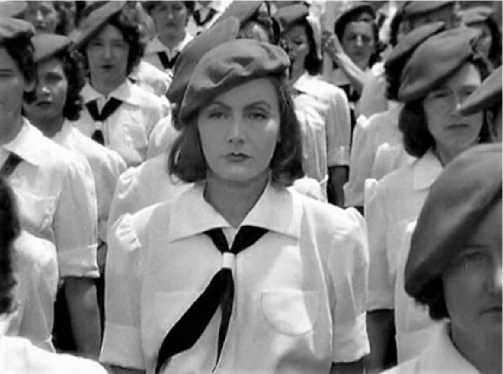
Fig. 1. A still from the film Ninotchka (1939, E. Lubitsch)
Note. The film Ninotchka was released in 1939 but was very actively used in anti-Soviet propaganda during the Cold War [14].
“Something made of stone. [He is] senseless, absolutely senseless, absolutely machine-like” (Olga, 59, “loyalist”).
One of the techniques used to characterise the emotional world of film characters is the use of facial expressions – particularly smiles. Joanne Sharp highlighted that the smile acted as a symbolic border guard, allowing the representatives of the free world to be distinguished from the robotic inhabitants of the “Evil Empire” [12, pp. 117-119; 10]. For our interviewees, the absence of a smile, coupled with the severity and unfriendliness of a Hollywood film character, was also a reason for identifying film characters as Homo Soveticus , for example:
“Unpleasant, frowning for some reason... I think that’s how the Americans imagined us. A frown... a scary mouth, without a smile” (Svetlana, 58, “loyalist”).
“[Soviet people] are stoic; they don’t smile” (Sean, 39, non-partisan).
Russian informants sometimes interpreted the absence of a broad smile in Soviet characters as a sign of modesty rather than grumpiness. For example, the image of the unsmiling Ninotchka at the parade, discussed above, was interpreted by one older informant as the image of a modest Soviet girl (Said, 54, non-partisan).
In turn, the way the Soviet mass culture portrayed the American smile was also perceived by the Russian informants in the context of the Cold War. According to their assessment, the emphasis on the smile was a common way of portraying Americans. Determining the characteristics of smiles in the film frames often became the key feature for identifying the characters’ nationality: “Such an American image, a 33-tooth smile... it’s very wide”, “in all teeth, but at the same time unnatural”, “not only broad, but smug as well”, “the smile is so hypocritical, so ostentatious”, “typical American”, “Hollywood”.
Another visual marker that helps distinguish “us” from “them” is physical characteristics. Researchers have long pointed out that representations of physicality are connected to ideology, symbolic boundaries, and the establishment and maintenance of power and subordination. For example, Susan Bordo demonstrated that an overweight body is often labelled as uncultured, and its owner is deprived of the most important value of modern culture – the ability to be self-disciplined [3]. When describing Hollywood’s use of physicality to create images of Homo Soveticus, the Russian informants noted that Americans often portrayed military figures and officials as overweight, with a massive figure and “pot-bellied” appearances (e.g., “frowning, plump”).
Significantly, some of the Russian respondents identified the main character of Ninotchka as an American, arguing that she was too “elegant” to represent a Soviet woman. Recalling the images of Americans in cartoons (a “bourgeois” figure with a big belly, wearing a tailcoat and a top hat, contrasted with “our own” in the form of a healthy, fit, handsome man), many Russian informants stressed that Soviet film culture also offered another portrayal of Americans: sporty and stylish. However, they also made a reservation: the beauty of Americans was purely external, as it was accompanied by an unattractive moral appearance. One respondent commented:
“Smooth. Well-dressed... pleasant on the outside, but rotten on the inside... not like Soviet heroes. They were portrayed as duplicitous, their behaviour arrogant... showing their superiority over other people. A two-faced smile... ostentatious!” (Svetlana, 58, “loyalist”).
The U.S. respondents’ view of the Soviet hero’s appearance generally aligned with the Russian view described above. However, the most important insights relate to the key function of enemy image – the function of mobilisation, which suggests that this image should evoke a sense of grave danger and generate fear. When discussing the image of Ivan Drago, the American respondents did not doubt his nationality, citing features such as strength, muscular build, height, and ‘aesthetic perfection’. They explained that the enemy should appear as a very serious opponent.
“He’s bigger; he’s stronger. He looks like a bully, yes. And that’s how they would be depicted – as bullies. Bigger and stronger, and we have more ‘fight’, so we can beat them. That’s what they want you to think” (Joseph, 74, rep.).
The clothing worn by film characters could also serve as a symbolic border guard between the Soviet and American worlds. The American informants relied on ideological markers, noting elements of Soviet characters’ clothing, such as a pioneer’s tie or workwear, and associating them with poverty, uniformity, and the militarisation of life in the USSR. The Russian respondents, on the other hand, identified American characters on screen by referring to their clothing style (“a free style of dress” and “more fashionable clothes”) and its high quality. Specific features of clothing or footwear were also seen as indicators of a character’s American identity – for example, a checked shirt, a double-breasted coat, cowboy boots, men’s shorts, or jeans.
Additionally, the respondents were also guided in distinguishing between Soviet and American film characters by their mannerisms. Americans were described as appearing freer, more relaxed, and more imposing (for example, the “feet on the table” pose was often interpreted this way). However, interpretations of such mannerisms varied. What the Russian respondents viewed as swagger was described by their foreign counterparts as ease and informality, qualities that they felt were inherently American.
As an example, we provide a discussion of the nationality of a character from a still from the children’s adventure film Akvalangi na dne ( Scuba Diving on the Seafloor (1965, E. Sherstobitov)) – an American spy played by Gennadi Yukhtin (Fig. 2). None of the interviewees had seen the film. Therefore, the choice of signs to identify the nationality of the character is particularly significant.
The Russian respondents unanimously identified the character as an American, commenting on his “big smile”, “styling”,
“fashionable look”, and “relaxed look”. However, sunglasses were the most frequently cited marker of Americanness. Those American respondents who interpreted this film character as a Soviet man based their views on the conventions used in the mass culture of the USSR to create images of “us” and “them”: “He is happy, tan, and smiling. So if it’s Soviet media, then I’m assuming that they portray Soviet people as happy” (Sean, 39, non-partisan).
Thus, stereotypical representations helped the interviewees to identify the nationality of typical Homo Americanus and Homo Soveticus in the film images and interpret their characteristics in line with these representations. Next, the informants were shown one frame from a Soviet film and one from an American film that did not conform to the usual cognitive framework. In this context, we assumed that the respondents might encounter difficulty in identifying the nationality of the film characters.
One of these frames features the image of Alexei Kolchin, a Soviet sailor from the American film The Russians Are Coming, The Russians Are Coming (1966, N. Jewison), played by John Phillip Law. This film stands alone in the history of the cinematic Cold War [14; 10]. It became one of the most notable examples of the rehumanisation of “enemies”, achieved by endowing Soviet characters with traits such as politeness, friendliness, camaraderie, and a sense of humour. In the frame that the informants were asked to decode, the image of the hero is strikingly different from the images of Homo Soveticus in U.S. cinema discussed above (Fig. 3).

Fig. 2. A still from the film Scuba Diving on the Seafloor , 1965
The reasoning of an elderly Russian woman illustrates how cognitive failure can occur. When trying to determine the nationality of the film character, the interviewee first noted the “simple face”, “kind face”, blue eyes, and blond hair, which she took as evidence that this was a Soviet character. However, upon learning that it was an American film, she changed her conclusion: “I think he’s American; he’s cute. They don’t make ours that sweet. With a good, open view” (Olga, 59, “loyalist”).
American informants – those who had not seen the film – used similar reasoning to convince themselves that the positive hero of the American film was most likely an American. This view was expressed by an informant even when no clear argument came to mind:
“I don’t know who it is, but it looks like an American. Why is that? I don’t know why. He just looks like an American. He’s neat” (Joseph, 74, rep.).
To analyse the atypical image of an American in Soviet cinema, one frame from the film The Headless Horseman (1973, Vladimir Vainshtok) was selected. It features the character of the mustanger Maurice Gerald, played by Oleg Vidov (Fig. 4). It is worth noting that the inclusion of not only negative but also positive American characters was almost mandatory in Soviet cinema throughout the Cold War. The image of the USA in the USSR mass culture was based on the idea of two Americas: a “reactionary” one, which included “exploiters”, and a “progressive” one, which included members of the Communist Party, the working class, peace activists, African Americans, and “ordinary people” [10]. Gerald belongs to the “progressive” part of American society (in particular, the film mentions that he fought against British oppressors for the freedom of Ireland).

Fig. 3. A still from the film The Russians Are Coming, The Russians Are Coming , 1966

Fig. 4. A still from the film The Headless Horseman , 1973
The vast majority of the Russian informants had not seen this film, so they relied on their own ideas of how “us” and “them” were typically portrayed. The identification of the film character as a positive figure led them to believe that it was a Soviet person. At the same time, “foreign clothes” and a “foreign hairstyle” raised some doubts but did not prove decisive. The Russian informants explained their choice in the following way: “Soviet. The look on his face is my guess. And his hair was somehow neatly done up” (Anastasiya, 20, “lib.”, Yabloko). Those respondents who identified the character as an American tried to find in his appearance those connotations that they believed to be negative in Soviet cinema: long hair, “sophistication”, [he is] “a bit feminine”, long eyelashes (“Russians can’t have eyelashes that long or hair like that...”).
As for the assessments of the American informants, many, like the Russians, were confused by the film character’s long hair. In addition, the character’s “not very happy look” served as an identifying marker – neither of which suggested that a Soviet man could be portrayed in a film made in the USSR. However, there were also those who identified the film character as “Russian”. What is interesting is that these respondents also expressed doubts and relied more on their intuition than on shared stereotypes of how Americans and Soviets were typically portrayed – stereotypes that had previously been easily and accurately applied. They looked for additional clues. For example, some found the film character’s expression looked “Russian”, though not all could explain why:
“The blonde hair. Just the look on him. Sometimes the look gives it away. I would think he’s a Russian... One of those piercing looks, like ‘Don’t cross me, or you’ll get yours’” (Joseph, 74, rep.).
Results. In summary, firstly, our respondents demonstrated confidence in identifying the techniques used to represent “us” and “them” in the mass culture of the two countries during the Cold War. They showed familiarity with the markers of difference used and an understanding of how certain characteristics contributed to the hierarchisation of characters, creating either positive or negative images, thereby revealing an awareness of the manipulative potential of these representational techniques. In cases where the respondents lacked clear memories or precise knowledge, they resorted to a kind of deduction, inferring the most plausible characteristics based on their interpretation of the nature of the Soviet-American ideological confrontation.
Secondly, there were no noticeable differences in the understanding of the content and functions of using images of “us” and “them” based on the age and political preferences of the informants. In general, the Russian informants were slightly better at recognising the image of Homo Soveticus in the U.S. mass culture than the American informants were at recognising the image of Homo Americanus in the Soviet culture.
Although the interview focused on the ideological clichés of the Cold War period and did not include the informants’ views on the extent to which these clichés corresponded to reality, the informants took the initiative to express their own position. In this case, the influence of political positions became quite noticeable. For example, Russian supporters of liberal ideology sometimes felt the need to comment on the hypocrisy of Soviet propaganda: “It’s a bit of a nightmare over there in the US, where... blacks are lynched and Indians generally get drunk, but here everyone’s equal” (Irina, 59, “lib.”, Yabloko).
It is worth noting that respondents’ ideas about the role of different specialisation markers varied due to their national and cultural backgrounds. Russian and American informants assessed the potential of these markers in contrasting “us” and “them” in different ways. For example, it did not occur to the U.S. respondents that images of smiles could carry negative connotations, whereas the Russian informants clearly understood this point. Another example is the aestheticisation and glorification of hard physical labour, as depicted in the still from Spring on Zarechnaya Street with the image of steelworker Sasha Savchenko, which was incomprehensible to the American respondents, who saw only harsh working conditions.
Thirdly, because the methods of representing “us” and “them” in the mass culture of the USSR and the USA proved to be separable, simplified, emotionally charged, and stable (as evidenced by their persistence over more than 30 years), they can be defined as stereotypical. A key indication of the influence of these ideas is that they created obstacles for the interviewees in recognising and identifying atypical cases that did not fit into their usual cognitive frameworks. It can therefore be concluded that not only do national stereotypes (about the real inhabitants of one’s own country and other countries) function in society, but also shared, simplified, emotionally coloured, and stable ideas about how “us” and “them” are represented in culture – ideas that are “imagined”. There are some that can be termed “imagological stereotypes”. They include Homo Americanus and Homo Soveticus, which are the focus of this article.
