
Influence of Nitrogen and Carbon Sources on Twitching-Mediated Motility of Lysobacter antibioticus Hz25
Journal: Journal of Stress Physiology and Biochemistry @jspb
Article in issue: 3 т.22, 2026.
Free access
Predatory bacteria of the genus Lysobacter are known to utilize type IV pili for substrate translocation (twitching motility); however, the ecological signals regulating the transition to the motile state in Lysobacter remain insufficiently studied. Using the strain Lysobacter antibioticus Hz25, isolated from the rhizosphere of the Baikal endemic Hedysarum zundukii Peschkova, as a model, we investigated the effects of organic nitrogen content, carbohydrate type, and prey proximity on type IV pili-mediated motility. Motility of Hz25 was observed only in the presence of organic nitrogen: within the range of 1–5 g/L yeast extract, the colony front migration speed increased from 15 to 42 µm/h. On media without organic nitrogen (with NH₄Cl), no motility was induced. At 5 g/L yeast extract, replacement of sucrose (10 g/L) with maltose or trehalose increased the speed to 46–57 µm/h; replacement with fructose reduced it to <10 µm/h. Upon contact with live prey cells (Sinorhizobium sp., Planococcus sp.) in the V-test (5 g/L yeast extract, 10 g/L sucrose), the predator migration speed along the prey imprint reached approximately 420 µm/h. Directed migration of Hz25 toward prey from a distance of 30 mm was demonstrated. The speed in this experiment also depended on the sugar type and was maximal on trehalose- and maltose-containing media. These findings suggest that organic nitrogen acts as a key factor triggering twitching motility in Hz25, while the carbohydrate type may serve as a speed modulator. This indicates a multi-level regulation of predatory motility in Hz25. This work contributes to understanding the ecological regulation of type IV pili-mediated motility in the genus Lysobacter.
Short address: https://sciup.org/143186163
IDS: 143186163
Text of the scientific article Influence of Nitrogen and Carbon Sources on Twitching-Mediated Motility of Lysobacter antibioticus Hz25
The genus Lysobacter was established approximately forty years ago when Christensen and Cook (1978) discovered microorganisms exhibiting predatory activity similar to that of myxobacteria in chitinrich soils near Lake Ontario. Although these bacteria had been described earlier and were frequently assigned to Myxobacteria by previous researchers, Christensen and Cook conclusively demonstrated that these Gram-negative rods with a high G+C content represent a new genus (Kothari et al., 2026).
Members of the genus Lysobacter are facultative predators that employ a feeding strategy analogous to that of myxobacteria: they assemble into "packs" and, upon approaching the prey, destroy it (Martins et al., 2022). To execute this strategy, the micropredator, upon detecting molecules signaling the presence of prey, approaches it (swarming motility) and releases antibacterial and antifungal compounds of diverse nature – volatile organic substances, antibiotics, and lytic enzymes – leading to the lysis of the prey's protective biofilm and subsequent destruction of its cells (Puopolo et al., 2018; Kothari et al., 2026).
Bacteria of the genus Lysobacter can be found in various microbiomes, including the plant rhizosphere. As a component of the bacterial community, the micropredator functions as a controller of other microorganism abundance (Pérez et al., 2016); therefore, Lysobacter may serve as an important factor in maintaining homeostasis in the rhizosphere microecosystem (Gómez Expósito et al., 2015).
Motility plays a crucial role in the micropredatory strategy. Lysobacter cells move by twitching via type IV pili (Kothari et al., 2026): the cell extends pili, attaches to the substrate, and then retracts them through disassembly, pulling itself forward (Mattick, 2002). Mutations in genes encoding the core components of type IV pili lead to the loss of antifungal and antibacterial activity, confirming their key role in the biocontrol mechanism (Kobayashi and uen, 2005; Puopolo et al., 2015).
In recent years, specific molecular signals regulating twitching in Lysobacter have been identified. In L.
enzymogenes , motility is under dual control of the interspecies signal indole and the intraspecies quorumsensing signal LeDSF (13-methyltetradecanoic acid), which regulate the expression of various type IV pili gene clusters through the two-component systems QseC/QseB and RpfC/RpfG, respectively (Han et al., 2015; Feng et al., 2019). Zhao et al. (2023), in a study on the function of the GntR/HutC gene in L. capsici X2-3, demonstrated that a mutation in this gene leads to reduced extracellular polysaccharide (EPS) production, decreased motility, and diminished survival under ultraviolet radiation and high temperatures.
The influence of ecological factors on twitching-mediated motility of Lysobacter has also been described in the literature. Stimulation of motility was observed with pea broth ( L. capsici AZ78; Tomada et al., 2016), on a tomato rhizosphere-mimicking medium ( L. enzymogenes B25; Martínez-Servat et al., 2022), and in the presence of pathogenic nematodes ( L. capsici AZ78; Brescia et al., 2020). However, data on how general ecological signals, such as macronutrient availability, affect twitching-mediated motility are lacking. Furthermore, no studies have investigated factors influencing motility in L. antibioticus .
The subject of this study was the strain L. antibioticus Hz25, isolated from the rhizosphere of the Baikal endemic, a relict of the desert-steppe flora Hedysarum zundukii Peschkova (Fabaceae) (Vasiliev et al., 2023).
The aim of this work was to identify how nitrogen source, carbon source, and prey presence influence twitching-mediated movement in L. antibioticus Hz25.
MATERIALS AND METHODS
STRAIN AND IDENTIFICATION
Lysobacter antibioticus Hz25 was isolated from the rhizosphere of Hedysarum zundukii Peschkova (Fabaceae). Soil sample collection site: 53.38636° N, 107.39124° E; Cape Zunduk, Baikal ecological province, the piedmont and low-mountain district of Olkhon Island and the Olkhon region.
Identification of strain Hz25 was performed based on whole-genome sequencing (hybrid assembly on Oxford Nanopore and Illumina platforms). The taxonomic position was determined by phylogenetic analysis using PhyloPhlAn v. 3.1.68 and calculation of average nucleotide identity (ANI) based on complete genomes. Strain Hz25 was assigned to the species L. antibioticus. The complete genome has been deposited in NCBI GenBank under accession number CP175666. Details of sequencing and assembly are described in Petrushin et al. (2026).
The genome of Hz25 contains two gene clusters encoding structural components of type IV pili (PilA, PilQ), the assembly apparatus (PilM, PilN, PilO, PilP), and ATPases PilB/PilT (Petrushin et al., 2026).
MEDIA AND GROWTH CONDITIONS
For motility testing of Hz25, two basal media with 0.8% agar were used: KAA (starch-ammonium agar) and S M (medium with 10 g/L sucrose and 5 g/L yeast extract).
To study the influence of medium components, the following modifications were made:
-
• Sucrose variations in S M: 2.5, 5, and 7.5 g/L.
-
• Alternative carbohydrates in S M instead of sucrose, at 5 g/L: trehalose (T M), maltose (M M), fructose (F M).
-
• east extract variations in S M: 1–4 g/L.
Strains were cultivated at 25 °C.
MOTILITY ASSESSMENT
To measure surface motility speed, two methods were used:
Colony coalescence test. A cell suspension (10⁶ CFU/mL) was spread over the medium surface. The coalescence of colonies toward the center of the plate was observed, and the speed was calculated as the ratio of the maximum colony displacement (mm) to incubation time (h).
Imprint test for expansion speed. An imprint of the suspension (10⁶ CFU/mL) was applied using the edge of a coverslip. The width of the band was measured daily, and the speed was calculated based on incubation time. DIRECTED MOVEMENT TOWARD PREY BACTERIA
Directed movement toward prey bacteria was tested on KAA, S M, M M, and T M media using two experimental designs:
V-test (Fig. 1A). Suspensions of Hz25 and prey bacteria were imprinted at an angle of ~45° using the edge of a coverslip. Strains from the rhizosphere of H. zundukii — Planococcus sp. Hz47 or Sinorhizobium Hz92 —were used as prey. The migration speed of Hz25 along the prey imprint was calculated from the change in the lysis zone size per hour.
Parallel streak test (Fig. 1B). An imprint of the prey bacterium Sinorhizobium Hz92 (10⁶ CFU/mL) was made along the diameter of a Petri dish using the edge of a coverslip. A microbiological loop was dipped into the Hz25 suspension (10⁶ CFU/mL), and streaks 15 mm in length were made parallel to the prey imprint at distances of 1, 2, and 3 cm.
Observations were performed using an Optika Microscopes stereomicroscope with Optica Proview software (ver. 2022). Microphotographs were taken using a PrimoStar microscope with ZEN 3.1 software (Carl Zeiss, Germany).
STATISTICS
All experiments were performed in three replicates. Data were processed using Statistica v. 14.0 (normality by Shapiro–Wilk test, significance of differences by Kruskal–Wallis test, p ≤ 0.05). The text presents mean values ± standard deviation.
RESULTS
MOTILITY CAPACITY
Hz25 cells evenly distributed over the medium surface formed colonies on S M media, its variants with replacement by maltose (M M), trehalose (T M), fructose (F M), and on KAA medium. During observation, colonies on S M, M M, T M, and F M media exhibited a tendency to move toward each other, resulting in the formation of a mucoid community of many colonies at the center of the solid medium after 3– 4 days (Fig. 2). However, colony coalescence occurred only at yeast extract concentrations of 2 g/L and above. A similar pattern was observed in the imprint test (medium expansion); however, movement was also noted on S M medium with 1 g/L yeast extract (Table 1, Fig. 2). Within the concentration range studied (1–5 g/L), a positive correlation close to linear was observed between speed and yeast extract concentration (Fig. 3).
On KAA medium, no movement was observed in either test.
Variation of sucrose concentration in the medium did not yield statistically significant differences in Hz25 motility speed (Table 1). However, replacement of sucrose with other sugars altered the motility speed in both the colony coalescence test and the expansion test. Maltose or trehalose supplementation increased the speed, while fructose supplementation reduced it.
DIRECTED MOVEMENT TOWARD PREY BACTERIA
V-test : In all experiments, Hz25 attacked the prey exclusively at the closest distance (Fig. 4), with the exception of KAA medium, where no movement was observed. At the contact point between Hz25 and prey, lysis zones were observed, accompanied by directed migration of Hz25 along the prey imprint at a speed of
420.45 ± 94.08 µm/h (n=9).
Observations revealed that the edge morphology of the Hz25 imprint differed depending on the distance from the prey. Finger-like protrusions characteristic of twitching motility were observed at distances up to 30 mm from the prey. At distances greater than 30 mm and on the opposite side, the edge of the imprint was relatively smooth (Fig. 5).
Parallel streak test : Media S M, M M, T M, F M, and KAA were used. No movement was observed on KAA and F M media. On S M, T M, and M M media, movement of the predator front toward the prey was observed for all streaks (Fig. 6). The speed on the media used did not differ statistically from the values previously obtained (Table 1).
Table 1. Speed of Hz25 colony edge movement depending on medium composition.
|
Carbohydrate, g/L |
east extract, g/L |
Expansion, µm/h |
Coalescence, µm/h |
|
Sucrose 10 |
1 |
15.21 ± 5.01a |
0 |
|
Sucrose 10 |
2 |
23.35 ± 6.13a,b |
25.17 ± 7.71 a,b |
|
Sucrose 10 |
3 |
28.15 ± 10.07 a,b |
27.93 ± 6.34 a,b |
|
Sucrose 10 |
4 |
33.73 ± 13.12 a,b |
34.88 ± 5.01 a,b |
|
Sucrose 10 |
5 |
41.80 ± 13.23 b |
44.54 ± 6.08 b |
|
Sucrose 2.5 |
5 |
39.09 ± 9.01 b |
37.15 ± 11.11 b |
|
Sucrose 5 |
5 |
40.22 ± 8.31 b |
42.69 ± 8.34 b |
|
Sucrose 7.5 |
5 |
40.84 ± 10.43 b |
41.84 ± 8.89 b |
|
Trehalose 10 |
5 |
46.45 ± 7.91 c |
50.15 ± 8.45 c |
|
Maltose 10 |
5 |
57.15 ± 5.16 c |
54.88 ± 4.46 c |
|
Fructose 10 |
5 |
10.18 ± 4.55 a |
8.28 ± 3.61 a |
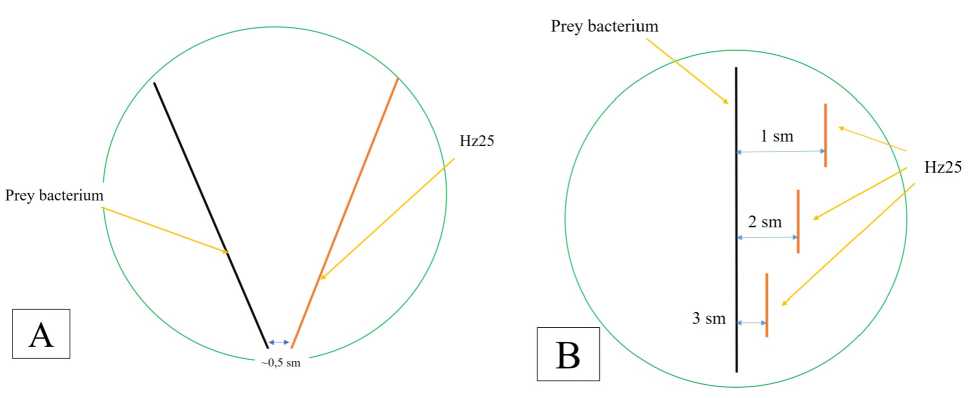
Figure 1. Schematic representation of the inoculation patterns used to assess directed migration of strain Hz25 toward prey bacteria. (A) V-test (B) parallel streak test.
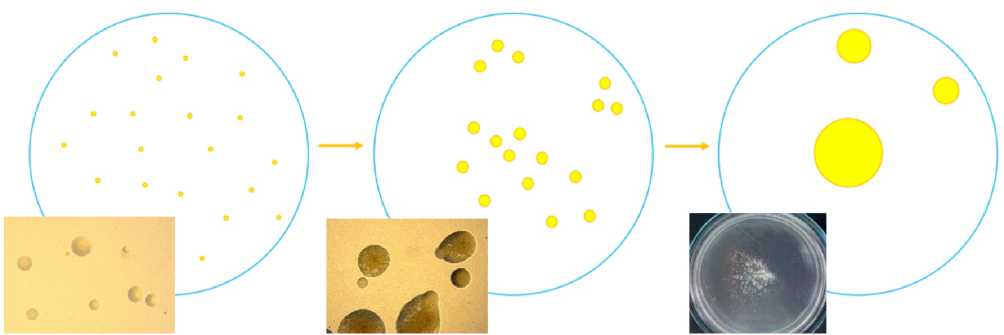
Figure 2. Coalescence of Hz25 colonies mediated by twitching motility uniformly distributed over the medium surface, observed over 4–7 days (2 g/L yeast extract, 10 g/L sucrose).
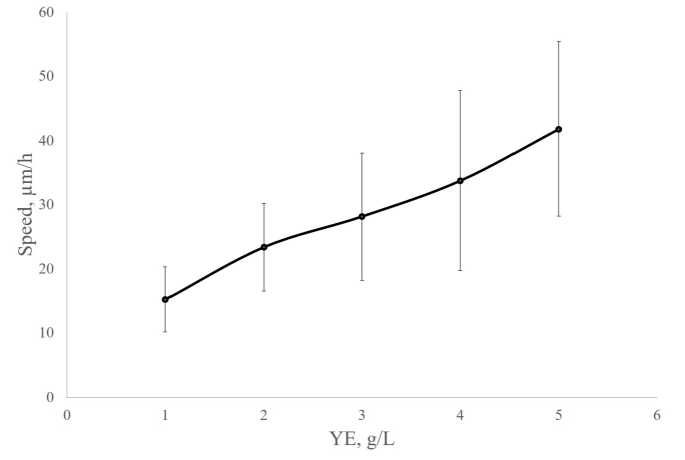
Figure 3. Dependence of Hz25 motility speed on yeast extract concentration (imprint test for expansion speed). Correlation coefficient: 0.99.
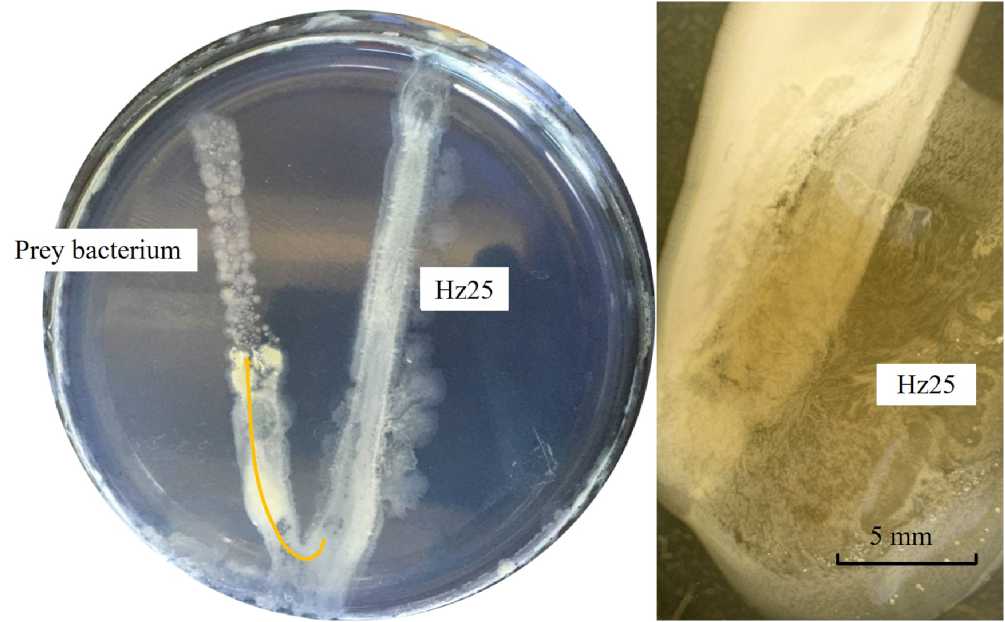
Figure 4. V-test. Hz25 attacks Sinorhizobium Hz92. A: migration of Hz25 along the prey bacterium imprint; B: lysis of prey bacteria by strain Hz25 at the attack site.
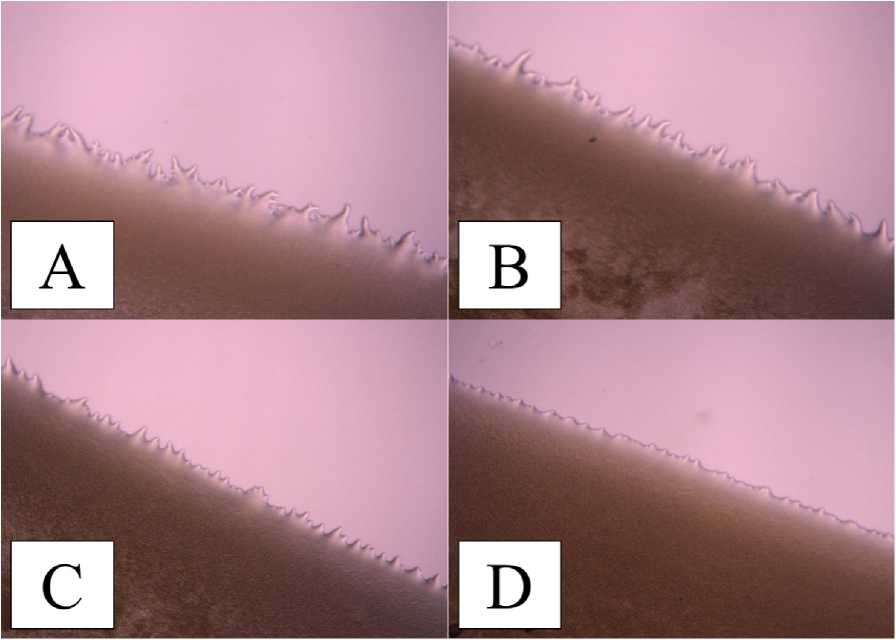
Figure 5. Finger-like structures at the edge of Hz25. V-test. A–C: edge of Hz25 suspension imprint at distances of 10, 20, and 30 mm from the prey microorganism Sinorhizobium Hz92; D: edge of Hz25 suspension imprint on the side opposite the prey. Scale bar: 1 mm.
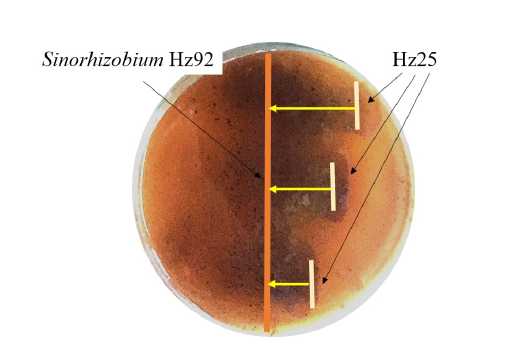
Figure 6. Parallel streak test. Hz25 front moves toward the prey imprint from distances of 10, 20, and 30 mm. M M medium.
DISCUSSION
This study examined the influence of macronutrient content in the medium on colony coalescence mediated by twitching motility, medium expansion, and directed migration toward prey in L. antibioticus Hz25.
MOTILITY CAPACITY
When describing collective movement toward prey in Lysobacter , the term "swarming" is used (Kothari et al., 2026). However, in this study, L. antibioticus Hz25 colonies were also found to undergo directed coalescence without stimulation by micropredatory behavior through detection of prey metabolites. Since the term "swarming" is not appropriate for this phenomenon, we use the term "colony coalescence mediated by twitching motility" (briefly: "colony coalescence").
The absence of movement on KAA medium (with inorganic nitrogen) in motility tests related to colony coalescence or expansion, as well as the absence of movement on medium with 1 g/L yeast extract in the coalescence test, indicated that the presence of organic nitrogen in the medium was apparently an important factor for stimulating twitching motility in Hz25 (Table 1, Fig. 2). This observation may be related to the putative role of amino acids from yeast extract as organic nitrogen sources, serving both as substrates for pilus synthesis and as signaling molecules conveying information about food proximity. As noted above, in other Lysobacter species, motility regulation via interspecies signals (indole) and quorum sensing (LeDSF) has been described (Han et al., 2015; Feng et al., 2019). It is possible that in natural conditions these signals act together with nutrient sensing.
Unlike the yeast extract content, changes in sucrose concentration did not significantly affect Hz25 motility; however, replacement of sucrose with maltose or trehalose increased the predator's speed, while replacement with fructose reduced it (Table 1). The observed effects may be related to differences in carbohydrate utilization rates or their influence on the metabolic status of the cell.
This observation indicates that for Hz25, the carbohydrate type may be important as a modulator of metabolism or speed. However, more precise determination of the role of sugars requires substrate preference experiments.
It is noteworthy that the first described Lysobacter strains were known primarily as antagonists of cyanobacteria—microorganisms that store starch (Reichenbach, 2006). In this context, maltose, a product of starch degradation, may serve an additional signaling function in Lysobacter indicating the proximity of cyanobacterial cells. Notably, according to the literature, many known Lysobacter strains are capable of utilizing maltose, and growth on this carbohydrate can be extremely intensive (Zhang et al., 2024). Trehalose is a storage sugar of fungi and is a component of the body fluid of nematodes—organisms against which Lysobacter exhibits antagonistic activity (Kothari et al., 2026). However, whether these carbohydrates are direct signaling molecules or whether their effect is mediated by metabolic changes requires further experiments (e.g., using non-metabolizable sugar analogs).
DIRECTED MOVEMENT TOWARD PREY BACTERIA
The V-test was used to determine the distance at which Hz25 can sense prey metabolites. The distance was assumed to be the maximum distance between the Hz25 and prey imprints at which directed movement of the predator front would occur. However, multiple repetitions of this test showed that Hz25 attacked the prey exclusively at the closest distance between imprints of 5 mm (Fig. 4).
Thus, at first glance, one could conclude that Hz25 detects prey metabolites at a distance of no more than 5 mm.
However, the edge morphology of the Hz25 imprint was found to be heterogeneous. Relatively smooth on the side opposite the prey, it exhibited finger-like protrusions characteristic of twitching motility at distances up to 30 mm from the prey (Fig. 5). This suggested that Hz25 might be capable of detecting the prey at distances greater than 5 mm, although further attack development did not occur.
This phenomenon can be explained as follows. Apparently, movement toward the prey, activated by its metabolites, began along the entire front at distances up to 30 mm (as evidenced by the finger-like morphology of the edge). The cells closest to the prey reached it first. The products of prey lysis that appeared following the attack diffused along the Hz25 imprint and blocked the development of attack in other areas. This may indicate that prey breakdown products could serve as a signal hierarchically higher than the signal from living prey. Such a mechanism could provide substantial resource savings for the micropredator by limiting attack to the shortest distance from the prey. However, this hypothesis requires further investigation.
To test the hypothesis that Hz25 is capable of detecting prey metabolites at a distance of 30 mm, the parallel streak test was applied. The test showed that on S M, T M, and M M media, directed movement of the Hz25 front occurred from a distance of 30 mm. Thus, directed migration of the predator toward the prey and subsequent lysis were observed even at an initial distance of 30 mm between inoculations, confirming the aforementioned hypothesis of successful detection of prey metabolites in the V-test at distances greater than 5 mm.
In a recent study by Song et al. (2025) on L. enzymogenes , a two-stage prey localization mechanism (phPLUS) was described, in which the first stage (secretion of peptidoglycan hydrolase LssL) occurs upon physical contact with the prey, and the second stage, involving perception of released glycine through the RltB/RltA system, activates directed movement and T6SS-1 expression. In contrast to this contactdependent model, the present study demonstrated that L. antibioticus Hz25 is capable of detecting prey presence without prior contact. This indicates the presence of a long-range chemotactic reception mechanism in Hz25, supported by genomic data, namely the presence of two chemotaxis clusters containing the MCP (methyl-accepting chemotaxis protein) gene (Petrushin et al., 2026).
CONCLUSIONS
Summarizing the obtained data, it can be concluded that despite different types of movement (colony coalescence, medium expansion, collective movement toward prey), no statistically significant differences in speed on identical media were found for Hz25. An important factor affecting twitching-mediated motility was the organic nitrogen content in the medium; on KAA medium, no movement was observed in any test. Sucrose concentration within the tested range did not significantly affect motility, whereas the nature of the sugar proved to be a significant factor, reducing (fructose) or increasing (maltose, trehalose) the speed compared to the original sucrose. Strain Hz25 was found to be capable of directed movement toward prey from a distance of 30 mm. The obtained results provide a basis for understanding the hierarchical regulation of predatory motility in Lysobacter antibioticus, in which organic nitrogen acts as a permissive signal, while carbohydrates and prey signals serve as modulators of direction and speed.
CONFLICTS OF INTEREST
All authors declare that they have no conflicts of interest.
