
Articles. Рубрика в журнале - Trends in Intellectual Property Research
Статья научная
This study highlights the present situation of enforcement of Intellectual Property Rights (IPRs) and its improvement as an impact of implementation of integrated IP management system in Pakistan. The key initiatives taken by the national government and the organization to achieve the target have been discussed in this study. The major steps include centralized IP administration, new IP legislation, up-gradation of IP Laws, introduction of special IP courts as IP tribunal, capacity building of IP personnel, digitization & automation, cooperation & interaction between law and enforcement agencies & departments, accession to international treaties and IP awareness across the country etc. The aforesaid actions made positive image of the country in IPRs situation by improvement in global IPR ranking index.
Бесплатно
Indian Perspective of Intellectual Property for AI-Created Works
Статья научная
The frame around every canvas does not restrict the artist but defines the space where creativity can flourish. Without it, the canvas can lose form and the paint may run, rendering the work incomplete. Intellectual property (IP) functions similarly-it protects rather than stifles innovation. However, as the AI era unfolds, this protective frame is weakening. Data used for training AI models doesn’t emerge from nowhere, and not all companies secure valid licenses before using copyrighted content. For instance, Getty Images’ suit against Stability AI, the creator of Stable Diffusion, alleged unauthorized scraping of millions of copyrighted photos. Similar concerns have been raised against Google. These companies often defend their actions as "transformative use," while shifting the burden onto artists to opt out rather than requiring explicit consent. This is especially alarming in a world where intangible assets now constitute 90% of the S&P 500’s total value, compared to just 17% in 1975. AI, contributing much to world economies, especially the £3.7 billion to the UK economy, complicates the matter further. Globally, there is no consensus on AI authorship or liability. In India, laws such as the Copyright Act and Patents and Designs Act provide no clear answers, as illustrated by the recent RAGHAV case. This research begins by situating IP as a structural safeguard for creativity in the digital era. The second section critically examines the legal uncertainty surrounding AI-generated works, focusing on authorship, licensing, and liability under Indian IP law. It draws on Parliamentary Standing Committee Report No. 161, which recommends a separate category for AI-based inventions-an encouraging step. The paper concludes by evaluating international models-particularly New Zealand’s risk-based, light-touch regulatory approach-and argues that India must adopt a similar framework to ensure transparency, provenance tracking, and fair contractual practices between AI developers and users. Only then can we preserve creativity while encouraging responsible technological growth.
Бесплатно
Intellectual Property Rights, TRIPS and SDGs in Bangladesh
Статья научная
Intellectual property rights (IPRs), when strategically designed and implemented, can support poverty reduction, promote sustainable industrialization, and protect cultural heritage. For Bangladesh, which is set to graduate from the LDC category in 2026, the transition poses a critical moment to align its evolving IP framework with its national SDG commitments. But there’s lots of room for growth and innovation through smart exploitation of IP. This study explores the linkage between IP policies and SDGs by analysing the implications of these policies on different sectors such as technology, health, agriculture and environmental. By examining Bangladeshi legal and institutional structures for IP, and highlighting the system's shortcomings, modifications are recommended to bring IP practices in line with the global sustainable development objective. The research features the potentials and challenges of balancing between public access to necessities and the protection of their IP, particularly in food security, affordable health and clean energy, which play an important role in facilitating the SDGs. A smart, pro-development IP governance based on TRIPS flexibilities, promotion of geographical indications (GIs), support to creative industries and green technology diffusion can materially advance Bangladesh’s 2030 commitments while cushioning post-LDC transition risks.
Бесплатно
Intellectual Property and Personal Data in AI Datasets Under India's DPDP Act 2023
Статья научная
The rapid expansion of generative AI has challenged India’s fragmented legal regime governing AI training data, spanning the Copyright Act, 1957, trade secret protection, and the Digital Personal Data Protection Act, 2023 (DPDPA). This study explores the doctrinal incompatibility between India’s purpose-specific fair dealing framework under Section 52 and the industrial-scale reproduction intrinsic to AI training, which fails the jurisdictional “purpose test” articulated in Super Cassettes Industries Ltd v. Hamar Television Network (2011). The study exposes the structural inadequacy of trade secret law in protecting the “composited value” of large-scale aggregated datasets, which lack the identifiability and durability required for conventional protection. The DPDPA’s consent-centric architecture is functionally unworkable in billion-token training corpora characterized by attenuated data-principal relationships. Concrete doctrinal fault lines, including uncertainty surrounding “reproduction in material form” under Section 14(a)(i), transparency-trade secret conflicts identified in the DPIIT Working Paper on Generative AI and Copyright, and cross-border transfer constraints under Section 17 of the DPDPA have been mapped. Legal uncertainty will undermine both AI innovation and stakeholder protection in India if an integrated statutory framework for permissible training practices and rights allocation is not opted.
Бесплатно
Статья научная
The abrupt advancement of generative artificial intelligence (AI) has created notable challenges for the traditional intellectual property (IP) frameworks. Traditional legal concepts, particularly related to copyright, patent, and trademark law, are based on the notion of human authorship and invention. Generative AI systems, which can generate literary, artistic, and technological outputs merely by giving instructions or prompts are erasing the boundaries between human and machine creativity. Current study explores the core components of IP law, the history and background of generative AI technology and the interlinkage between these two. It also discusses the issues pertaining to AI and IP from legal perspective, highlighting international agreements such as Berne Convention and the TRIPS Agreement, and the US and EU jurisprudence on these issues. It also looks into the innovation, its protection and policy gaps to endure that IP laws are effective in the age of AI. To make sure that IP laws foster creativity in the era of AI, this study recommends to create a global legal framework that supports innovation advanced by AI that ensures equity and fairness.
Бесплатно
Статья научная
Argania spinose yields Argan oil that is culturally, economically, and ecologically significant product endemic in southwestern Morocco. As a Moroccan geographical indication (GI) product since 25 January 2010, Argan oil symbolizes Moroccan history, rural development, and biodiversity preservation. This study explores Argan oil GI recognition, the socioeconomic context of the oil and the legal systems for GI protection band the role played by women's cooperatives. Although GI designation has led to improved quality control and access to global markets, over-commercialization, climate vulnerability, and enforcement challenges persist. This study through case studies, legal analysis, and policy frameworks suggests importance of GI protection for sustainable development and cultural preservation in Morocco.
Бесплатно
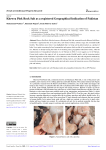
Khewra Pink Rock Salt as a registered Geographical Indication of Pakistan
Статья научная
Khewra Pink Rock Salt also known as Himalayan Pink Salt, extracted from the Khewra Salt Mines, in Pakistan is appreciated due to its pink color, rich mineral content, culinary usage and associated health benefits. The problem arose when it was highlighted that it is being sold in global markets as a product of India. It was quite concerning for local communities and regions which are hub of its production since centuries. Pakistan is already bearing the brunt of not claiming many geographical indications timely. After the implementation of Geographical Indications Act of Pakistan in 2020, it’s now tagged as a GI of Pakistan. Current study explores the origin of salt, its economic potential, health benefits, and the increasing market demand. Registration of this Pink Salt as a GI of Pakistan is also discussed, that will safeguard its authenticity a Pakistani product. Suitable branding, sustainable mining practices, and value-added products are necessary to meet the increasing demand for high-quality pink salt and to ensure the long-term success of the Himalayan pink salt industry.
Бесплатно
Legal Challenges for the use of AI in Trademarks
Статья научная
IP landscape is being influenced by AI which has nearly taken over design, search and litigation aspects of trademarks. AI tools are more efficient, quick and accurate throughout trademark life cycle .AI is bringing new ideas and concepts in creation and design of trademark logos, in searching trademark repositories before and during registrations, due diligence during maintenance, enforcement and revocation. Current research analyses AI footprints in transforming trademark domain evaluating its legal impact especially regarding improved clearance search and expedited trademark examination. The evolving concept of trademark originality, distinctiveness, algorithmic consumer likelihood of confusion evaluation, algorithmic transparency in decision by IP office and fixing liability in AI-made errors. Trademark legal structure needs to be overhauled for harmonization of generative AI-trademarks governance.
Бесплатно
Legal Challenges of Intellectual Property Rights for Quantum Computing
Статья научная
Quantum computing is a very multidisciplinary field, a blend of materials science, electronics, electromagnetism, thermodynamics, quantum physics and the corresponding mathematical framework. The study aimed to evaluate the existing scenario of the choice of the intellectual property rights (IPRs) protection mechanisms for quantum computing, choice of best applicable type, and suggesting some key alternative innovation protection mechanisms. The methodology used in this research consists of general scientific and specific legal (historical-legal, formal-legal) methods besides law interpretation and legal modelling. We critically analyzed the norms for IPR protection of quantum computing from the viewpoint of obtaining protection of inventions and increasing the innovation activity in quantum computing. One of the regulatory mechanisms for every disruptive technology is offering it IP protection. Currently quantum computing hardware is protected by patents while software is mostly protected as copyright besides protection by industrial design and trade secret exist as complementary mechanisms for this revolutionary technology. All available approaches were considered, and amendments are suggested in current IPR legislation to correspond to the reality. This interdisciplinary research revealed the uncertain nature of quantum computing and the difficulty in selecting one type of IPR as the best choice. The best way to establish a sufficient IPR mechanism is to acknowledge quantum computing as an emerging technological cocktail, and to sustain the innovation cycle of this technology. The conclusions of this study can be used to overcome the lacunas in existing IPR system for the quantum computing. This research can be used as torchbearer when preparing proposals for making revisions and additions to the existing legislation.
Бесплатно
Legal Framework of Geographical Indications in Saudi Arabia and UAE
Статья научная
Current study explores the specific legal architectures and institutional arrangements of Geographical Indications (GIs) in Saudi Arabia and UAE. The comparative analysis reveals two fundamentally different highly effective models for adapting the global legal instrument of GIs. Both countries share the fundamental idea that the creation of economic value in the 21st century stems not only from oil wells or high-tech laboratories but also from the collective memory and craftsmanship of their respective territories. By transforming this knowledge into protected and exploitable economic assets through GI protection, they are entering innovative domain. Both countries can face challenge of maintaining delicate balance between commercialization and preservation.
Бесплатно
Legal Protection of Industrial Drawings, Models and Designs in Yemen
Статья научная
Industrial revolution contributed to the emergence of industrial property rights and the accompanying inventions. Technological development and the expansion of the use of electronic technologies in various industrial fields contributed to increasing competition between economic entities, regarding their ownership of the elements of industrial property rights. These rights distinguish their products from others, besides their role in increasing the economic growth rates of countries that possess patents or technical knowledge, which supports their economy. National laws and international agreements have been designed to protect industrial property rights as patents, designs and trademarks. Work on imposing specific controls to protect their owners and creators of those rights from a legal perspective, as well as establishing an economic balance between the owners of those rights and those with the right to monopolize them on the one hand and the general public on the other hand to provide the appropriate environment to achieve more innovation and creativity to maximize their economic return. This research aims to study the legal protection of industrial drawings and models, and to investigate the problems that arise regarding them. The researcher used the descriptive approach based on describing the legal texts included in Yemeni law, and analyzing them to reach useful results on the subject. The research reached the most important results, which is that the law provided protection for industrial models and drawings. The researcher recommends keeping pace with technical developments and updating legislation to include technical drawings and models as well.
Бесплатно
Legal and Historical Perspective of Plant Breeders Rights Act of Pakistan
Статья научная
Pakistan is an agricultural country and numerous plant varieties have been developed indigenously by local scientists. There was a long felt need to introduce any sort of protection mechanism for these novel plant varieties to protect the research and development (R&D). Being a World Trade Organization (WTO) member, Pakistan acceded to the Trade-Related Aspects of Intellectual Property Rights (TRIPS) agreement in 1995, and since then, legislation was due to protect the rights of breeders of new plant varieties. In 2016, the Government of Pakistan passed the Plant Breeder’s Rights Act (PBRA), in alignment with the International Union for the Protection of New Varieties of Plants Convention of 1991 (UPOV), balancing the interests of biotechnology companies and traditional plant breeders. The current study highlights Pakistan's strengths and areas that still require improvement to meet the nation's demands for plant variety protection.
Бесплатно
Статья научная
This study comprehensively analyses the legal and regulatory frameworks governing intellectual property rights (IPRs) in Sri Lanka, with a particular focus on the Sri Lankan Intellectual Property Act, No. 36 of 2003. This Act is the primary legislation governing the acquisition, management and enforcement of intellectual property. The analysis elucidates the foundational elements of this Act, including its alignment with international conventions such as the Agreement on Trade-Related Aspects of Intellectual Property Rights (TRIPS). Previous studies identify several critical deficiencies within the current legal landscape, especially when compared to the more dynamic intellectual property regimes of developed nations. These shortcomings encompass challenges in enforcement, ambiguities in patentability standards, and an urgent need for adaptation to address the complexities introduced by emerging technologies, notably artificial intelligence-generated content. The discussion underscores that the Act, while robust for its time, faces increasing pressure to evolve to remain effective in a rapidly changing global technological environment. This study proposes necessary amendments and strategic adjustments to enhance the safeguarding of intellectual property rights against infringement and intellectual theft, ensuring Sri Lanka's framework remains relevant and equitable in the digital era.
Бесплатно
On patent searching: the case of 3D-bioprinting
Статья научная
This study offers a commentary on the retrieval of patents related to 3D bioprinting. Patents contain technical information that can’t be retried from other sources. However, it is challenging to obtain this information precisely and comprehensively. A patent search strategy that focuses exclusively on the title and abstract may yield incomplete results, as patent documents possess a distinct intrinsic nature that differentiates them from those found in academic publications. A patent search, limited to the title and abstract, whether in isolation or in combination, may offer only a preliminary, general perspective on a technology and its underlying inventions. For a comprehensive understanding, it is imperative to consider additional elements, such as bibliographic data, including patent classification codes, and claims. The classification symbols are independent of the language used and have the capacity to enhance a patent landscape or patent prior art to a considerable degree.
Бесплатно
Статья научная
This research analyses the effect of patent regime on ChatGPT and proposes possible explanations to avoid these concerns. Intellectual property rights in general and patents in particular are very importance in the innovation ecosystem. Since ChatGPT is being increasingly used in patent perspectives suggesting various solutions, naturally there should be mechanisms to cope with its implications. At a broader level, ChatGPT can accelerate preparation of patent application, prior art search, and patent examination slashing costs and time while minimizing the system mistakes. ChatGPT can assist patent attorneys work more professionally and make more precise diagnoses, thus improving their productivity. It, however, is also raising concerns in stakeholders regarding various legal issues. New legal tools are needed to understand the development, regulation, and implementation of ChatGPT in patent regime to harness the tremendous possibilities of transformation for the better. Legislators and technical experts should join hands to formulate policies that balance the innovation and protect the rights of inventors.
Бесплатно
Patent Spectrum of Human Digital Twins
Статья научная
Although no "absolute" definition exists, a human digital twin (HDT) may be defined as a virtual physiological copy or counterpart in digital world of a real person existing in the physical world having active connection between the human and his corresponding twin in metaverse. The current study aims to explore the intellectual property rights (IPR) challenges of HDTs. Previously discussions on HDT have mostly focused their potential use in health system for predictions of diseases nearly ignoring the patent associated with them. Current study highlights patent landscape analysis of HDT indicating current trends in HDT patents and future scenario of this technology.
Бесплатно
Plant Patent Systems for Equity and Sustainability
Статья научная
One domain of innovation in agriculture is patents for uniquely produced plants by plant breeding tools. Sometimes the researchers don’t go for patents, missing the opportunity of earning profit from their novel innovative research. A pressing issue for the small-scale breeders is the financial and legal challenges during the patenting process. Hence, small breeders cannot compete in the international global seed markets while big giants are grabbing the capital and make trends with their own will and for their own benefits. Buyers should purchase from the original researchers and the researchers must be acknowledged by the international community to provide rights to the original researchers. The availability of better plant breeds will promote sustainable agriculture, secure biodiversity and improve the health and wellbeing of the people.
Бесплатно
Статья научная
The global patent system operates under assumptions that have not been seriously revisited since the industrial age. Chief among them is the conviction that patents reliably measure innovation, that temporary monopolies incentivize disclosure, and that the inventor behind every filing is a human being acting with creative intent. This article challenges each of these assumptions by examining three structural failures of the contemporary patent regime. The first is the weaponization of patents by non-practicing entities and dominant technology corporations, which has transformed intellectual property from a shield for genuine invention into a strategic instrument of market control, litigation, and competitive exclusion. The second failure concerns the inability of existing legal frameworks to accommodate inventions generated by artificial intelligence systems, a problem made visible by the DABUS patent applications and their rejection across the United States, the European Union, the United Kingdom, and Australia. The third failure is the persistence of pharmaceutical monopolies that restrict access to life-saving treatments through evergreening strategies, excessive pricing, and aggressive enforcement of patent rights in developing countries. Drawing on historical analysis, comparative jurisdictional review, and a critical evaluation of emerging reform proposals, the article argues that these dysfunctions are not isolated malfunctions but predictable consequences of a legal architecture designed for a world that no longer exists. The article evaluates five structural reform proposals: sector-specific patent terms calibrated to the pace of technological change, layered rights contingent on demonstrated utility rather than mere filing, blockchain-based registries for transparent priority verification, dynamic licensing models that adjust exclusivity based on public interest considerations, and a sui generis category of protection for machine-generated inventions. The article concludes that incremental procedural adjustments are insufficient and that the patent system requires foundational restructuring to restore the balance between private reward and collective benefit that originally justified its existence.
Бесплатно
Sattar Buksh Cafe vs Starbucks Coffee Trademark Dispute of Pakistan
Статья научная
This study examines the trademark dispute between global coffee chain Starbucks and the Pakistani café Sattar Buksh. The matter, resolved without formal litigation, highlights the intricate relationship between trademark law, the concepts of dilution and parody, and the tension between brand protection and cultural expression. By adopting a parody-based strategy in its name and visual branding, Sattar Buksh attracted local market attention, ultimately prompting legal action from Starbucks. This research explores the positions of both parties, the applicable provisions of Pakistan’s Trademarks Ordinance, 2001, and the wider implications of such disputes for intellectual property rights in emerging economies.
Бесплатно
Статья научная
Although the digital media ecosystem has changed creation and sharing of content, existing copyright management systems suffer from inefficiencies, such as slow payment of royalties, a lack of transparency about how much an artist is owed, high administrative costs and difficulties in tracking cross-border use. One of the most promising methods for addressing these shortcomings is the use of smart contracts, which are self-executing applications that work off a public distributed ledger called a blockchain to automatically pay royalties at the time of use, based on preconfigured conditions that are based on a predetermined number of streams, downloads or views. Current study explores the technological architecture, relevant legal issues and practical implications for automated payment of royalties to content creators through the use of smart contracts in the context of music services, audiovisual works and digital publishing. The smart contracts allow peer-to-peer transactions without a third party, based on elements of the blockchain, like the principles of decentralized consensus and immutability (integrity). The legal issues related to smart contracts using code as a contract include whether smart contracts will be legally enforceable across different jurisdictions, whether a smart contract's code can be considered enforceable with moral rights, and concentration on complying with different data privacy laws, e.g., the General Data Protection Regulation (GDPR) in countries where blockchain is essentially immutable. While smart contracts can address a number of the core pain points associated with these areas (i.e., transparency gaps, fragmented ownership data, transactional friction), they must overcome various challenges to achieve broad acceptance. These challenges include scalability; the reliability of oracles for off-chain data; interoperability across disparate blockchains; regulatory uncertainty related to anti-money laundering/know-your-customer regulations, and taxation; and a lack of statutory recognition of smart contracts, standardized metadata for ownership rights, on/off-chain hybrid models, and international harmonization via treaties.
Бесплатно
