
Изучение культуры Кумоси в археологии Китая
Журнал: Вестник Новосибирского государственного университета. Серия: История, филология @historyphilology
Рубрика: Археология Китая
Статья в выпуске: 4 т.25, 2026 года.
Бесплатный доступ
Рассматривается современное состояние изучения культуры кумоси (си) в археологии Китая. Собрана информация по важнейшим археологическим памятникам, которые китайские исследователи связывают с данной этнокультурной и этнополитической общностью. К их числу относятся городища Цяньнаньгоу и Гучэнчуань в городском округе Чэндэ пров. Хэбэй, погребение Сяо Сяочжуна в городском округе Хулудао пров. Ляонин, клад, найденный в волости Ханьцзядянь в округе Чэндэ. Атрибуция других поселенческих и погребальных комплексов периода Средневековья, открытых на территории пров. Хэбэй и г. Пекин, которые ряд китайских исследователей связывает с культурой кумоси (си), не представляется в достаточной мере обоснованной. Недостаток археологических материалов и их слабая изученность не позволяют в настоящее время выделить археологические маркеры культуры кумоси (си). Перспективы дальнейших исследований связаны с поиском новых памятников на севере пров. Хэбэй, в юго-западной части пров. Ляонин и на юге городского округа Чифэн Автономного района Внутренняя Монголия, а также с продолжением полевых и кабинетных исследований материалов уже известных средневековых памятников этого района. Новую информацию о культуре кумоси может дать также анализ эпиграфических и изобразительных материалов эпохи Ляо.
Похожие статьи в разделе Kультурные остатки исторических времен
Короткий адрес: https://sciup.org/147254123
IDS: 147254123 | УДК: 904(510) | DOI: 10.25205/1818-7919-2026-25-4-146-158
Study of Kumoxi culture in Chinese archaeology
The article examines the current state of research on the Kumoxi (Xi) culture in Chinese archaeology. The Kumosi or Xi (Tatabi in ancient Turkic sources) are a medieval people who settled in the territory of modern northeast China, in the Liaoxi region (southeast of the Inner Mongolia Autonomous Region, western part of Liaoning Province, northern Hebei Province), and played a significant role in the history of East and Central Asia. The article provides information on the most important archaeological sites that Chinese researchers associate with this ethnocultural and ethnopolitical community. These include the Qiannangou and Guchengchuan fortified settlements in Chengde, Hebei Province, the tomb of Xiao Xiaozhong (1090) in Huludao, Liaoning Province, and a hoard found in Hanjiadian Township, Chengde. The attribution of other medieval settlements and burial complexes discovered in Hebei Province and Beijing, which some Chinese researchers associate with the Kumoxi (Xi) culture, does not appear to be sufficiently substantiated. The main results of the study of the material traces of the Kumoxi culture are summarized in the monograph by Bi Deguang, as well as in a number of articles devoted primarily to the Kumoxi (Xi) archaeological complexes in the territory of the Chengde, Hebei Province. The lack of archaeological materials and their poor study currently preclude the identification of archaeological markers of the Kumoxi (Xi) culture. Future research prospects include the search for new sites in northern Hebei Province, southwestern Liaoning Province, and southern Chifeng City in the Inner Mongolia Autonomous Region, as well as continued field and desk research on discovered medieval sites in this region. Analysis of epigraphic and pictorial materials from the Liao epoch may also yield new information about the Kumoxi (Xi) culture.
Текст научной статьи Изучение культуры Кумоси в археологии Китая
,
,
Acknowledgements
The study was supported by a grant from the Russian Science Foundation № 22-78-10121-П “Connections between the cultures of Siberia and Northern China in the Antiquity and Early Middle Ages (based on the archaeological data)”, П/.
The author expresses her sincere gratitude to Dr. Li Yunhe, a lecturer at the School of Archaeology and Museology at Peking University, for his assistance in finding hard-to-find publications on the research topic and for consultations on translation from classical Chinese.
Кумоси, или си (татабы в древнетюркских источниках), – средневековый народ, расселявшийся на территории современного северо-востока КНР, в регионе Ляоси (юго-восток автономного района Внутренняя Монголия, западная часть пров. Ляонин, север пров. Хэбэй), и сыгравший значительную роль в истории Восточной и Центральной Азии. Впервые кумоси появляются на страницах «Истории Вэй» («Вэй шу»), составленной историком Вэй Шоу в 551–554 гг. при дворе Северной Ци. Наиболее ранние упоминания кумоси связаны с их поражением от сяньбэйских вождей – основателя Ранней Янь Мужун Юаньчжэня (297–348) и основателя Северной Вэй Тоба Гуя (371–409), предпринявшего против них карательный поход в 388 г. На протяжении нескольких столетий кумоси являются активной действующей силой в межкультурных контактах и международных отношениях в восточноазиатском регионе. В 1123 г. вождь си Сяо Вань даже основал собственное государство Великое Си (Да Си го 大奚国 ), просуществовавшее несколько месяцев. После покорения чжурчжэнями в XII в. кумоси постепенно ассимилируются и окончательно сходят с исторической арены.
В источниках, освещающих историю периода Северных и Южных династий, данный этнос упоминается под именем кумоси 库莫奚 , а начиная с «Истории Суй» название сокращается до си 奚 . Кроме того, в «Новой истории Тан» («Синь Тан шу») встречается еще одно наименование – кучжэньси 库真奚 , представляющее, по-видимому, разнопись от кумоси. Культура кумоси как предмет специального научного изучения почти не привлекала внимания исследователей за пределами Китая. В качестве исключений можно назвать дипломную работу выпускника НГУ А. Е. Лаврова 1, а также докторскую диссертацию З. С. Херши [Hershey, 2021]. Цель данной статьи – обобщить и представить основные результаты изучения культуры кумоси в археологии Китая, достигнутые к настоящему времени.
Источники не сообщают ничего определенного относительно происхождения кумоси. Ряд сочинений («Вэй шу», «Цзю Тан шу», «Записи по истории Пяти династий») связывает их генезис с южными сюнну и родственными им юйвэнями, в других же («Суй шу», «Чжоу шу»,
«Синь Тан шу») говорится о принадлежности предков кумоси к дунху и сяньбэй. В некоторых хрониках («Цзю Тан шу», «Синь Тан шу») отмечается сходство обычаев кумоси и тюрок, что объясняется включением кумоси в сферу политического влияния тюрок и даже их вхождением в состав Восточно-тюркского каганата в начале VIII в. В «Старой истории Тан» («Цзю Тан шу») отмечается также общность происхождения и чрезвычайная близость (в том числе наличие общего языка) кумоси и киданей, не исключавшие, впрочем, почти непрерывных военных конфликтов между двумя этими общностями. Таким образом, происхождение и этническая история кумоси остаются довольно запутанными. Согласно анализу В. С. Таскина, ранние кумоси входили в число сяньбэйских племен, находившихся под управлением рода Юйвэнь, и, следовательно, принадлежали к протомонгольской общности дунху [Материалы., 1984, с. 51-52].
Письменные источники сохранили мало информации о хозяйстве, материальной и духовной культуре кумоси. Как и в случае с другими кочевыми народами, известными в Китае, говорится, что они «пасут скот, переходя с места на место в поисках воды и травы, не имея постоянного местожительства». Кумоси разводили лошадей, крупный и мелкий рогатый скот, свиней, выращивали просо, славились как искусные охотники и стрелки из лука. В дар императорам Северной Вэй они подносили «знаменитых лошадей и полосатые шкуры» («Вэй шу», цит. по: [Материалы., 1984, с. 142]). В горах добывали мускус и женьшень («Записи по истории Пяти династий»). В более поздние времена, при Тан, Сун и Ляо, кумоси (си) были известны своими повозками, которые они подносили в том числе в дар императорам Ляо. Сведения об этом сохранились в «Истории Ляо» («Ляо ши») и множестве других источников (см.: [Би Дэгуан, 2016, с. 173-189]).
Кумоси жили в войлочных палатках, в пищу употребляли жидкую просяную кашу, которую варили в глиняных треножниках. Одежду украшали каймой из красной кожи. Женщины кумоси носили медные браслеты, на одежду нашивали маленькие медные колокольчики («Цзю Тан шу», см. [Материалы., 1984, с. 367, примеч. 2]). Согласно данным «Суй шу» и «Чжоу шу», ранние кумоси практиковали обряд воздушного погребения: «трупы умерших обертывают тростником и вешают на деревья» (цит. по: [Материалы..., 1984, с. 143-144]). Впоследствии, по-видимому, в эпоху Тан, вероятно, под влиянием китайской и / или кидань-ской культуры, погребальный ритуал элиты кумоси претерпел определенные трансформации. Так, в «Записях по истории Пяти династий» Оуян Сю говорится, что второй правитель империи Ляо, Тай-цзун (Елюй Яогу, китайское имя - Елюй Дэгуан) (902-947, прав. 926-947), в 936 г. приказал раскопать могилы вождя западных си Саола и киданьского перебежчика Чжубулу, растолочь их кости и развеять прах по ветру [Материалы., 1984, с. 153], что свидетельствует о совершении похорон по обряду ингумации.
Сведения о культуре кумоси могли бы быть дополнены данными археологии, однако выделение археологических материалов, связанных с этой этнической общностью, проблематично по ряду причин. Будучи кочевниками, кумоси практически не оставили следов стационарных поселений, а специфический погребальный обряд ранних кумоси, известный по письменным источникам, затрудняет поиск и атрибуцию их погребальных комплексов. Таким образом, перспективы выявления археологических объектов связаны в основном с поздним периодом истории кумоси - не ранее эпохи Тан. Кроме того, пестрота этнокультурной ситуации на северо-востоке Китая в период раннего Средневековья и отсутствие четких археологических маркеров этнокультурной принадлежности не позволяют уверенно разграничивать памятники материальной культуры, оставленные представителями разных этнокультурных и / или этнополитических образований. В связи с этим изучение истории и культуры кумоси в первую очередь строилось на данных письменных источников. Тем не менее, в последние десятилетия китайскими археологами был выделен ряд памятников, которые могут быть предварительно отнесены к этой общности на основании их расположения в районах, которые, согласно сведениям письменных источников, принадлежали к территории расселения кумоси (си) (рис. 1). Основные результаты изучения материальных следов культуры ку- моси обобщены в монографии Би Дэгуана, подготовленной автором на основе его докторской диссертации, защищенной в Народном университете Китая (г. Пекин) в 2009 г., а также в ряде статей, посвященных, преимущественно, памятникам кумоси (си) на территории городского округа Чэндэ пров. Хэбэй [Би Дэгуан, 2016].
К числу важнейших поселенческих памятников кумоси, известных на данный момент, принадлежит городище Цяньнаньгоу 铅南沟 , находящееся на территории пос. Яншулин в уезде Пинцюань городского округа Чэндэ пров. Хэбэй. Памятник был открыт и обследован в 2000 г., повторные обследования были предприняты в 2004–2007 гг., раскопки не проводились. Изучение памятника показало, что комплекс состоит из двух частей – остатки крепости на севере и городище в южной части, общая протяженность объекта с севера на юг составляет ок. 1 300 м, с запада на восток – ок. 500 м. На поверхности фиксируются следы построек, найдены различные архитектурные элементы – каменные блоки, базы колонн, каменная статуя льва, кирпичи, черепица, черепичные концевые диски с узорами в виде морды фантастического зверя, глазурованные украшения коньков крыш чивэнь («клюв совы»). Находки каменных строительных элементов сосредоточены главным образом в северной части памятника. Кроме того, собраны фрагменты керамических и фарфоровых сосудов, каменные жернова и ступки, бронзовые гири, большое количество медных монет, время выпуска которых охватывает период от Тан (618–907) до Юань (1271–1368). В юго-восточной части памятника обнаружены следы производства свинца: шлак и множественные фрагменты тиглей.
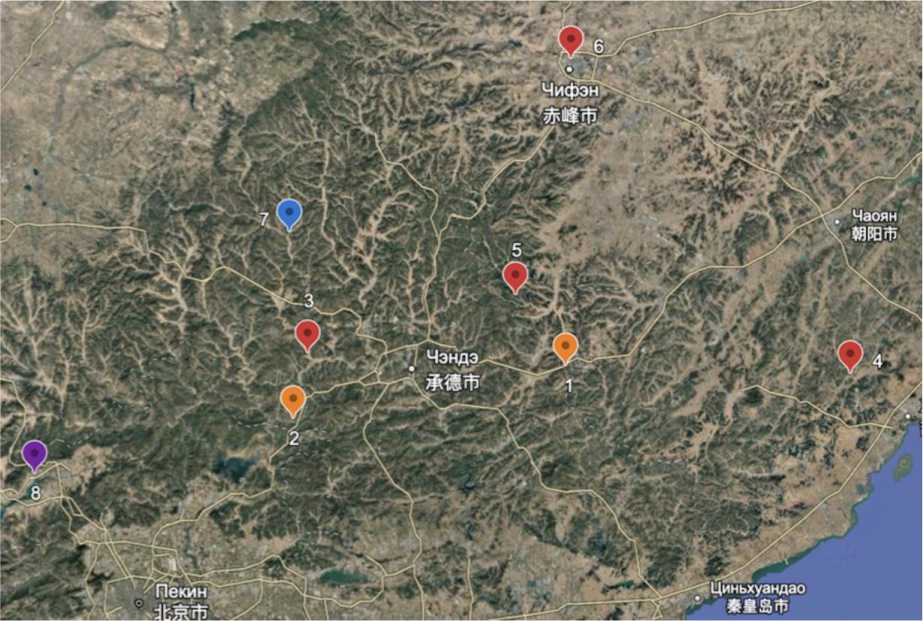
Рис. 1 . Карта-схема расположения основных археологических памятников, относимых к кумоси:
1 – городище Цяньнаньгоу; 2 – городище Гучэнчуань; 3 – погребения у деревень Сяочэнцзы и Цинцзыгоу; 4 – погребение Сяо Сяочжуна; 5 – элитные погребения си у горы Маюйшань; 6 – погребения эпохи Ляо в окрестностях Чифэна; 7 – клад из Ханьцзядянь; 8 – пещерные постройки Гуяцзюй в Яньцине
Fig. 1 . Schematic map showing the locations of the main archaeological sites classified as Kumoxi:
1 – Qiannangou fortified settlement; 2 – Guchengchuan fortified settlement; 3 – tombs near the villages of Xiaochengzi and Qingzigou; 4 – Xiao Xiaozhong's tomb; 5 – elite Xi tombs near Mount Mayushan; 6 – Liao tombs near Chifeng; 7 – Hanjiadian hoard; 8 – Guyaju cave site in Yanqing
Судя по находкам, памятник функционировал в периоды существования государств Ляо, Цзинь и Юань, т. е. в X–XIV вв. [Хуан Синь и др., 2008, с. 12–13; Чжан Сюфу и др., 2008, с. 260–261]. Все исследователи городища сходятся в его атрибуции как памятника, связанного с правителем (ваном) кумоси, при этом большинство специалистов отождествляют его с летней резиденцией [Чжан Сюфу и др., 2008, с. 263–264; Шэнь Цзюньшань и др., 2020, с. 40], в то время как Би Дэгуан полагает, что это могла быть основная резиденция правителя си в позднеляоский период [Би Дэгуан, 2016, с. 77–78].
Еще один памятник, который исследователи соотносят с деятельностью поздних кумоси (си) – городище Гучэнчуань 古城川 , расположенное к востоку от д. Ситайцзыцунь пос. Ба-кэшиин в уезде Луаньпин городского округа Чэндэ. В ходе разведочных археологических работ 1982 г. здесь были обнаружены руины крепостной стены, сооруженной из земли и камней. Сохранилось два участка стены, каждый протяженностью ок. 60 м. Сохранившаяся ширина сооружений составляет на разных отрезках от 3 до 6 м, высота – ок. 2 м. Кроме того, сохранились остатки еще двух строений, предположительно, дозорных вышек, где были обнаружены фрагменты кирпичей и черепицы, детали доспехов и пр. Повторное обследование памятника в 2011 г. подтвердило, что данные сооружения представляют собой укрепленные стены. Непосредственно на территории памятника, а также в ближайших его окрестностях собраны фрагменты керамики и белого фарфора из мастерских Динчжоу, железные наконечники стрел, детали доспехов, железный чеснок. На основании находок, памятник был датирован эпохой Ляо (907–1125) и идентифицирован как упомянутая в письменных источниках застава си [Тянь Шухуа, 1997, с. 86–87; Би Дэгуан, 2016, с. 89]. Кроме того, на территории городского округа Чэндэ известно еще несколько городищ периодов Ляо и Цзинь, которые, по мнению отдельных исследователей, могут быть связаны с деятельностью си (см.: [Тянь Шухуа, 1997, с. 87–90; Би Дэгуан, 2016, с. 89–93; Шэнь Цзюньшань и др., 2020, с. 40–41]), но подтвердить или опровергнуть эти предположения невозможно до проведения археологических работ на памятниках.
В 1970-е гг. поблизости от деревень Сяочэнцзы и Цинцзыгоу в уезде Луаньпин городского округа Чэндэ было обнаружено 20 частично разрушенных погребений, семь из них были раскопаны. В 1976 г. исследованы четыре могилы к северо-западу от д. Сяочэнцзы. Это были погребения в грунтовых ямах неправильной формы, с каменными ящиками, внутрь которых помещались деревянные гробы. На поверхности сохранились земляные насыпи. Захоронения одиночные, по вторичному обряду. В раскопанных погребениях найден лишь один плоскодонный неорнаментированный керамический горшок. Схожий сосуд найден неподалеку (по-видимому, он находился в одной из разрушенных могил) вместе с монетами у-чжу эпохи Суй (581–618). Еще одно погребение было раскопано в том же году же близ д. Цинцзыгоу. В могильной яме также имелись каменный ящик и остатки деревянного гроба (древесный тлен и железные гвозди). Обнаружены скелеты двух человек в скорченном положении. В 1978 г. раскопано еще два погребения в каменных ящиках у д. Цинцзыгоу. В них найдены кремированные останки в керамических сосудах (по 3–4 урны в каждой могиле). Сопроводительный инвентарь представлен восточноханьскими монетами у-чжу и бронзовыми украшениями с лотосовым орнаментом. Некоторые исследователи датируют эти комплексы периодом Суй и соотносят их с переходным этапом в развитии погребального обряда кумоси – от воздушного погребения к ингумации [Тянь Шухуа, 1997, с. 88–89; Шэнь Цзюньшань и др., 2020, с. 37–38]. Однако, на наш взгляд, достаточные основания для атрибуции этих памятников как принадлежащих кумоси отсутствуют.
Для эпохи Ляо Би Дэгуан выделил 11 погребений на разных могильниках в юго-восточной части Внутренней Монголии, на севере пров. Хэбэй и юго-западе пров. Ляонин, которые, на его взгляд, могли бы принадлежать кумоси [Би Дэгуан, 2016, с. 112–128]. Основанием в большинстве случаев служат некоторые особенности, отличающие эти комплексы от синхронных захоронений ханьцев и киданей: ориентация костяка, состав сопроводительного инвентаря, сочетание внутри одного комплекса захоронений по обряду ингумации и кремации.
Причем эти 11 погребений также различаются между собой и по ориентации конструкций, и по погребальному обряду (присутствуют первичные и вторичные захоронения, трупополо-жения и кремации). Кроме того, на наш взгляд, вариации отдельных параметров не обязательно определяются этнической принадлежностью погребенных, а могут отражать их социальный, имущественный статус и т. д. И даже если принять в качестве объяснения существующих отличий версию иной этнокультурной атрибуции данных комплексов, то все равно нет никаких доказательств их принадлежности именно кумоси (си), а не представителям других этнических групп (например, бохайцев). Среди этих комплексов есть лишь один, на чью принадлежность к си указывают эпиграфические материалы – это могила Сяо Сяоч-жуна.
Данное погребение находилось близ д. Сигушаньцунь в уезде Цзиньси (в настоящее время это территория пос. Гантунь района Ляньшань городского округа Хулудао пров. Ляонин). Могила была разрушена в годы японской оккупации. В 1951 г. местные жители обнаружили здесь каменные плиты с эпитафией и керамическую вазу, покрытую желтой глазурью. В 1954 г. плиты с эпитафией были переданы в Музей пров. Ляоси. В ноябре 1957 г. памятник был обследован сотрудниками Северо-восточного музея, а в мае 1958 г. проведены раскопки. Могила представляет собой однокамерный кирпичный склеп, сооруженный внутри грунтовой ямы, длина которой составляла 6,5 м, ширина – 6 м, глубина – от 4 до 6 м. С юга в яму вел наклонный дромос длиной 6 м, шириной 1,6 м. Погребальная камера сложена из кирпича, округлой в плане формы, диаметр – 3,6 см, высота – 3,4 м. Пол также выложен кирпичом. Внутри помещалось погребальное ложе полукруглой формы, собранное из трех каменных плит и занимавшее почти половину общей площади погребальной камеры. Кроме того, вдоль стен и на ложе были обнаружены следы древесного тлена – по-видимому, остатки неких погребальных конструкций. В могиле найдены каменные плиты с эпитафией, фрагменты медной проволоки, серебряных украшений, шелковой ткани, керамические шашки (43 черных и 33 белых) с цветочным орнаментом, керамические глазурованные вазы, кувшины, блюдца с пионовым узором и блюдо с узором в виде рыб и цветов, пара железных стремян. Плиты с эпитафией вытесаны из песчаника, в форме квадрата со стороной 67 см, толщиной 7,5 см. Верхняя плита с внешней стороны украшена растительным орнаментом, на внутренней стороне вырезана надпись на китайском языке, состоящая из 12 строк (рис. 2, 1 ). На нижней плите выгравирована надпись, выполненная большим киданьским письмом (18 строк) (рис. 2, 2 ) [Лю Цянь, 1956; Янь Юй, 1960; Янь Ваньчжан, 1957]. Из текста эпитафии известно имя погребенного – Сяо Сяочжуна 萧孝忠 , главнокомандующего ( тайши ) военного округа Цяньнин 2, генерал-губернатора ( цзедуши ) военного округа Цзинцзян 3 , и дата похорон – 25-й день 12-го месяца пятого года правления под девизом даань (т. е. 8 января 1090 г.), а кроме того говорится, что он принадлежал к кочевью Салиби, его дед служил под началом восточного главнокомандующего- тайши при ставке сиского вана, отец был офицером кавалерии [Лю Фэнчжу, 2010, с. 31]. Как отмечает Би Дэгуан, в «Истории Ляо» («Ляо ши») указано, что шиле 4 Салиби было одним из трех шиле кочевья Яоли – важнейшего из пяти племен кумоси в эпоху Ляо, находившегося под непосредственным управлением вана си [Би Дэгуан, 2016, с. 134].
Таким образом, вероятно, погребенный происходил из си, причем из его главного кочевья Яоли, носил ту же фамилию Сяо 萧 , что и род ванов си 5. Однако в конструкции могилы,

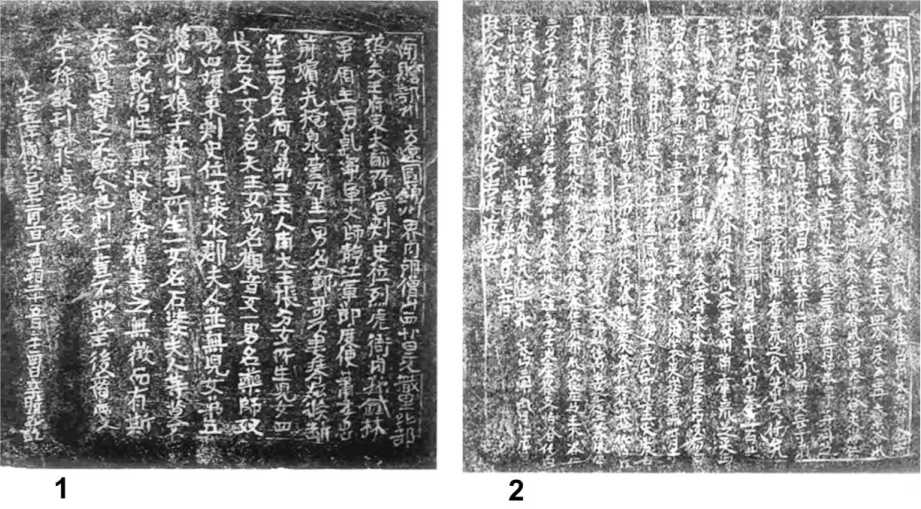
Рис. 2 . Эпитафия Сяо Сяочжуна:
1 – надпись на китайском языке; 2 – надпись, выполненная киданьским большим письмом. По: [Лю Фэнчжу, 2010, с. 45–46]
Fig. 2 . Epitaph of Xiao Xiaozhong:
1 – inscription in Chinese; 2 – inscription in Khitan large script.
As per: [Liu Fengzhu, 2010, pp. 45–46]
сохранившихся следах погребального обряда и сопроводительного инвентаря не наблюдается каких-либо специфических черт, которые отличали бы этот памятник от синхронных ему погребений киданей и ханьцев. Данные эпитафии также свидетельствуют о высокой степени ассимиляции представителей элиты кумоси в китайско-киданьской среде. Покойный носил китайскую фамилию Сяо и имя Сяочжун, отражающее конфуцианские идеалы и дословно означающее «сыновняя почтительность и верность». Из пяти его жен одна имела китайское (ханьское) происхождение, еще две – киданьское, из рода Елюй. По-видимому, Сяо Сяочжун был приверженцем буддизма. Место его происхождения обозначено как «кочевье Салиби, находящееся в двадцати ли к западу от горы Хусэншань 6, в пределах области Цзиньчжоу 7 Великого государства Ляо на земле Джамбудвипы 8». Его дети от третьей жены получили буддийские имена: двух дочерей звали Тяньваннюй 天王女 («дочь Небесного царя») и Гу-аньиньнюй 观音女 («дочь Гуаньинь»), сына – Яошину 药师奴 («раб Будды медицины») [Лю Фэнчжу, 2010, с. 31, 36–43]. Буддийские образы (изображения цветков лотоса) прослеживаются и в декоре верхней плиты с эпитафией.
Кроме того, на юго-западном склоне горы Маюйшань в северной части городского уезда Пинцюань городского округа Чэндэ пров. Хэбэй в разное время были найдены каменные плиты с эпитафиями, происходившие из нескольких погребений знатных си – Сяо Фуяня (ум. 1070), Сяо Яньнина, Сяо Шаоцзуна и др. Поблизости также обнаружены погребения эпохи Ляо. По-видимому, здесь находилось родовое кладбище аристократии си [Шэнь Цзюньшань и др., 2020, с. 41–42]. Сян Чуньсун предварительно отнес к культуре си 18 погребений эпохи Ляо на 15 памятниках в окрестностях г. Чифэн во Внутренней Монголии на основании их расположения, оговариваясь при этом, что в данном районе помимо си проживали также кидани, ханьцы, когурёские мигранты и представители иных этнических групп, а археологические маркеры кумоси (си) пока не выделены [Сян Чуньсун, 1991].
В 1978 г. в волости Ханьцзядянь уезда Лунхуа городского округа Чэндэ был найден клад (возможно, разрушенное погребение), в составе которого обнаружены медная чаша, бронзовые колокольчики (комплект из 10 экз. 3,5 см высотой и два более крупных – 6,5 см высотой), плоские бронзовые бляшки в форме колокольчиков, а также бляшки других форм (круглые, сердцевидные и др.), иные бронзовые и железные украшения, бронзовый перстень с бриллиантом, агатовые и коралловые бусины, монеты у-чжу суйского времени [Тянь Шухуа, 1997, с. 89; Шэнь Цзюньшань и др., 2020, с. 38]. Учитывая сообщение «Старой истории Тан» («Цзю Тан шу») о том, что женщины кумоси украшали одежду маленькими медными колокольчиками, логичным представляется отнести клад из Ханьцзядянь к памятникам культуры кумоси.
Би Дэгуан относит к археологическим памятникам кумоси цепь почтовых станций на ляо-ском почтовом тракте, соединявшем Южную и Среднюю столицы Ляо [Би Дэгуан, 2016, с. 68–75]. По письменным источникам известно, что управление станциями и их обслуживание было поручено кумоси, поскольку данный участок тракта проходил через их земли. Рядом со станциями располагались поселения кумоси, занимавшихся земледелием, что подтверждается находками ляоских керамики и фарфора, а также железных сельскохозяйственных орудий. Однако нельзя исключать, что вдоль этого важного транспортного коридора могли селиться также ханьцы, кидани, переселенцы из Бохая и представители иных этнических групп.
Еще один вид памятников, который некоторые исследователи связывают с жизнедеятельностью поздних кумоси, – пещерные постройки в окрестностях Пекина, известные под общим наименованием Гуяцзюй ( 古崖居 – «древние скальные жилища»). Объекты располагаются на территории районов Яньцин и Миюнь Пекина и уезда Хуайлай городского округа Чжанцзякоу пров. Хэбэй, наибольшее их скопление наблюдается на территории пос. Чжан-шаньин в северо-западной части района Яньцин, где известно несколько местонахождений, включающих не менее 174 пещер [Цзэн Цзян, 2012]. Пещерные постройки в Яньцине были обнаружены в 1984 г., в 1991 и 1997 гг. проводились обследования и раскопки наиболее крупного комплекса близ д. Дунмэньин.
Здесь известно ок. 120 пещер, общая площадь памятника составляет ок. 10 тыс. кв. м. Пещеры вырезаны в отвесной гранитной скале, состоят из одного или нескольких помещений. Площадь пещер варьирует от 3 до 44,4 кв. м, высота от пола до потолка – в пределах 1,60– 2,46 м. В некоторых помещениях есть окна, стенные ниши, грунтовые платформы, имеются различные теплотехнические устройства: очаги, дымоходы, отапливаемые лежанки (каны) и т. д. Археологические находки представлены в основном горшками (некоторые из них с крышками) и мисками из серой керамики, обнаружено небольшое количество глазурованных керамических сосудов, а также узорные кирпичи. В настоящее время проблемы датировки, культурной принадлежности и функционального назначения этих рукотворных пещер до сих пор не решены, при этом выдвигаемые исследователями гипотезы весьма разнообразны.
Так, по мнению, археолога и историка архитектуры, советника ЮНЕСКО профессора Ян Хунсюня, памятник представляет собой руины сигнальной башни эпохи Хань (см.: [Ван Хайянь и др., 2006]). Согласно версии Цзун Чуньци, журналиста, специализирующегося на исторической и литературной тематике, в Гуяцзюй сохранились следы сигнальной башни и крепости минского времени [Цзун Чуньци, 2019; 2025]. Литературовед Хуан Чжэньюнь полагал, что памятник представляет собой скальные захоронения, принадлежавшие кидань- ской элите, возможно, младшему брату императора Дао-цзуна (Елюй Хунцзи) – Елюй Хун-дао [Хуан Чжэньюнь, 2007]. Однако ни в одной из пещер не было обнаружено антропологического материала, погребальной утвари или типичного для киданьских погребений сопроводительного инвентаря, кроме того, привлеченные письменные источники недостаточно репрезентативны, поэтому данная трактовка встретила резкую критику со стороны специалистов-археологов [Цзин Ай, Вэнь Сяоминь, 2018, с. 190–191]. Высказывалась также версия, согласно которой пещеры были вырезаны в скалах в эпоху Тан как казенное зернохранилище для нужд местного военного гарнизона 9.
Предположение о том, что пещеры Гуяцзюй могли быть созданы западными си в 1-й половине Х в. впервые было выдвинуто крупным специалистом по средневековой археологии Северного Китая, бывшим директором Столичного музея (Пекин) Чжао Цичаном [2002]. Впоследствии эту версию развивали Би Дэгуан и Ван Цэ, предположившие что именно здесь находилась ставка вождя западных си [Би Дэгуан, 2016, с 78–88; Би Дэгуан, Ван Цэ, 2017]. Однако все вышеперечисленные гипотезы опираются преимущественно на данные исторических и географических сочинений. Обнаруженные находки настолько скудны, что не позволяют методами археологии решить проблему датирования памятника и определения его функционального назначения. В связи с этим попытки атрибуции и сопоставления с данными письменных источников, на наш взгляд, представляются преждевременными. Вероятно, новые данные для решения этой проблемы могут быть получены лишь в случае возобновления полевых исследований комплекса Гуяцзюй.
Таким образом, к настоящему времени не выделено ни одного археологического памятника, связь которого с культурой кумоси (си) была бы надежно обоснована. Общепризнанной в китайской археологии считается идентификация городища Цяньнаньгоу в качестве поселения кумоси, однако на этом памятнике раскопки не проводились, что не позволяет подтвердить данное предположение. Погребение Сяо Сяочжуна (если согласиться с его атрибуцией как памятника си) не демонстрирует каких-либо отличий от других погребений эпохи государства Ляо, принадлежавших киданям или китайцам (ханьцам), что говорит о высокой степени ассимиляции поздних си. Кроме того, могила была разрушена, что также не позволяет в полной мере оценить особенности погребального обряда и сопроводительного инвентаря. В связи с этим пока не представляется возможным выделение на археологических материалах этнокультурных маркеров, характерных для общности кумоси. Перспективы дальнейших исследований связаны в первую очередь с детальным изучением материалов средневековых памятников с территории городского округа Чэндэ в пров. Хэбэй, городского округа Хулудао в пров. Ляонин и южной части городского округа Чифэн во Внутренней Монголии, а также с поиском новых памятников в этих районах. Кроме того, плодотворным может быть дальнейшее изучение эпиграфических материалов, связанных с кумоси (си), в сопоставлении с данными письменных исторических источников и привлечение для анализа изобразительных источников – настенных росписей из погребальных комплексов эпохи Ляо.
