
Экономическая конкурентоспособность Федеративной Республики Нигерия: императив международной торговли
Журнал: Экономика и бизнес: теория и практика @economyandbusiness
Статья в выпуске: 10 (128), 2025 года.
Бесплатный доступ
Настоящее исследование посвящено комплексному анализу роли международной торговли товарами в формировании долгосрочной экономической конкурентоспособности Федеративной Республики Нигерия. Исходный тезис статьи говорит о том, что критическая монозависимость нигерийской экспортной номенклатуры от сырьевого комплекса, преимущественно углеводородов, выступает ключевым ограничением ее глобальной конкурентной позиции. Этот фактор сохраняет свое доминирование, несмотря на наличие таких объективных преимуществ, как внушительный объем внутреннего потребительского рынка и благоприятная демографическая структура. Эмпирико-методологическая база исследования включает методы структурно-логической декомпозиции, историко-сравнительного анализа, а также расчет индикаторов товарной концентрации и волатильности торгового баланса. Экономическая история Республики Нигерия представляет собой сложную динамику, где периоды быстрого роста, обусловленного экспортными доходами от углеводородов, прерываются системными кризисами. Изучение ключевых поворотных моментов в развитии этого африканского государства (реперные точки, триггерные точки и точки бифуркации) позволяет определить критические факторы, сформировавшие его современную макроэкономическую структуру.
Похожие статьи в разделе Внешняя торговля. Международная торговля. Внешнеторговая политика. Таможенные пошлины
Короткий адрес: https://sciup.org/170212050
IDS: 170212050 | DOI: 10.24412/2411-0450-2025-10-170-176
Economic competitiveness of the Federal Republic of Nigeria: the imperative of international trade
This research is devoted to a comprehensive analysis of the role of international trade in goods in shaping the long-term economic competitiveness of the Federal Republic of Nigeria. The initial premise of the paper is the thesis that the critical monodependence of the Nigerian export nomenclature on the raw materials sector, predominantly hydrocarbons, acts as a key constraint on its global competitive position. This factor maintains its dominance despite the presence of such objective advantages as a substantial domestic consumer market and a favourable demographic structure. The empirical and methodological framework of the study includes methods of structural-logical decomposition, historical-comparative analysis, as well as the calculation of commodity concentration indicators and trade balance volatility. The economic history of the Republic of Nigeria presents a complex dynamic, where periods of rapid growth driven by export revenues from hydrocarbons are interrupted by systemic crises. The study of key turning points in the development of this African state allows us to identify critical factors that have shaped its modern macroeconomic structure. The research employs a multidisciplinary approach, combining quantitative and qualitative methods to provide a holistic understanding of Nigeria’s trade dynamics and its impact on long-term competitiveness. Particular attention is paid to the analysis of commodity concentration indices and trade balance volatility, which are crucial for assessing the sustainability of Nigeria’s export-oriented economy. The findings contribute to a deeper understanding of the challenges and opportunities facing Nigeria (reference points, trigger points, and bifurcation points) in its quest for diversified and resilient economic growth.
Текст научной статьи Экономическая конкурентоспособность Федеративной Республики Нигерия: императив международной торговли
Современный глобальный экономический ландшафт характеризуется непрерывным усложнением производственно-сбытовых цепочек, что вынуждает национальные правительства фокусировать усилия на формировании устойчивого уровня экономической конкурентоспособности. Для развивающихся государств, особенно для африканских стран с богатым ресурсным потенциалом, международная торговля представляет собой двойственный механизм, способный как генерировать благосостояние, так и приводить к структурным дисбалансам. Нигерия, являясь крупнейшей по ВВП и демографическому потенциалу экономикой континента, служит показательным примером сочетания противоположных экономический явлений.
Парадоксальное сочетание статуса африканского лидера по нефтедобыче с систематически низкими позициями в рейтингах глобальной конкурентоспособности (например, в оценках IMD) указывает на наличие фундаментальных дефектов в механизме конверта- ции ресурсного богатства в общенациональное процветание [1]. Эта диспропорция, по мнению ряда исследователей, основывается в моноспециализации экспорта товаров, что препятствует полноценному использованию внешней торговли как инструмента структурной трансформации и защиты от внешних финансовых шоков [2]. Таким образом, актуальность настоящего исследования обусловлена острой необходимостью разработки научно обоснованных подходов к оптимизации внешнеторговой структуры Нигерии, что критически важно для перехода от ресурсной зависимости к диверсифицированной экономической модели.
Для достижения поставленной цели требуется последовательное решение следующих задач: осуществить сравнительный анализ теоретико-методологических концепций, описывающих влияние внешнеторговых операций на конкурентные преимущества страны, с особым акцентом на феномен «ресурсного проклятия»; выявить ключевые дисбалансы и проследить динамику изменений в структуре товарного импорта и экспорта Нигерии в ретроспективе с 1970 по 2023 г.; произвести оценку конкурентоспособности республики Нигерия на основе исторических данных, выявить реперные, триггерные точки и точки бифуркации.
Методологической основой для оценки влияния международной торговли на благосостояние нации традиционно служат классические постулаты сравнительных преимуществ (А. Смит (англ. Adam Smith) , Д. Рикардо (англ. David Ricardo) ) и неоклассические модели распределения факторов производства (Хекшер–Олин). Эти теории говорят о том, что оптимальная специализация способствует общему экономическому росту. Однако применительно к развивающимся странам, включая Нигерию, данные модели ограниченны и требуют дополнения концепциями, учитывающими неценовую конкуренцию и институциональные дефекты [3].
Множество экспертов утверждают, что в условиях XXI века устойчивость конкурентной позиции государства определяется не столько его первичной ресурсной базой, сколько потенциалом к инновационной активности и диверсификации производственной структуры [4]. Конкурентоспособность, согласно основополагающим работам М.Ю. Портера (англ. M.E. Porter) , должна измеряться способностью национальной экономики генерировать продукцию с более высокой добавленной стоимостью [5].
Ключевой объяснительной моделью для анализа экономических проблем Нигерии служит теория «ресурсного проклятия» (или «парадокса изобилия»), детально разработанная Дж.Д. Саксом (англ. Jeffrey David Sachs) и другими исследователями, а также обсуждаемая в работах отечественных экономистов. Эта концепция объясняет причину, по которой страны, обладающие обширными природными ресурсами, нередко демонстрируют замедленные темпы развития и низкое качество государственного управления в сравнении с государствами, лишенными такого богатства [6], [7].
Основной механизм «проклятия» включает:
Проявление «Голландской болезни» (эффект Кордена ( англ. Warner Max
Corden) ): массовый приток иностранной валюты, обусловленный экспортом сырья, приводит к укреплению национальной валюты (ревальвации). Это, в свою очередь, снижает ценовую конкурентоспособность несырьевых секторов (агропромышленного комплекса, обрабатывающей индустрии) на внешних рынках, сдерживая их развитие.
Искажение капитальных потоков: инвестиции концентрируются в рентообразующем добывающем секторе, минимизируя вложения в производственную диверсификацию.
Институциональная эрозия: доступность сырьевой ренты ослабляет стимулы к построению эффективных, прозрачных и подотчетных государственных институтов.
В нигерийском контексте данный эффект приобретает критическое значение, поскольку удельный вес сырой нефти и газа в совокупном товарном экспорте постоянно превышает 85–90%, что является источником хронической структурной уязвимости [8].
Исследовательский инструментарий, использованный в работе, представляет собой синтез общенаучных методов и специфических эконометрических расчетов, что обеспечивает комплексность оценки.
Индекс концентрации экспорта служит для количественной оценки зависимости экспортных доходов от узкого перечня товарных позиций. Коэффициент волатильности экспортной выручки отражает степень финансового риска, ассоциированного с колебаниями мировых цен на ключевые экспортные товары. Динамический анализ торгового баланса демонстрирует соотношение экспортно-импортных потоков и их влияния на валютнорезервную позицию и макрофинансовую стабильность.
Для адекватной интерпретации нигерийских экономических трансформаций применяется интегративный подход, сочетающий постулаты новой институциональной экономики с принципами теории неравновесной динамики. Основываясь на работах Д. Норта (англ. Douglass Cecil North) , мы исходим из того, что функциональность хозяйственного комплекса напрямую зависит от качества формальных и неформальных институтов [9]. Несовершенство государственных механизмов и широкое распространение рентоориентированного поведения (по Г. Таллоку (англ.
Gordon Tullock) ) рассматриваются как первопричины низкой эффективности экономической политики. Использование категорий точек бифуркации, реперных и триггерных точек позволяет выявлять моменты, когда внутренние или внешние шоки инициировали качественное изменение траектории развития [10].
Период 1980-х годов стал первой реперной точкой , зафиксировавшей глубокий системный кризис в экономике. Обвальное падение мировых цен на нефть выявило структурную диспропорцию – почти полную зависимость бюджетных доходов и экспортной выручки от сырьевого сектора. Эта уязвимость была усугублена дисфункцией государственной структуры, препятствующей эффективному антикризисному управлению.
Реакцией на этот кризис стало принятие в 1986 году Программы структурной адаптации (SAP), ставшей триггерной точкой либерализации и приватизации под давлением международных финансовых организаций. Тем не менее, бифуркационная фаза 1990-х годов, отмеченная политической нестабильностью и чередой военных режимов, существенно нивелировала ожидаемые результаты реформ. В условиях политической неопределенности и отсутствия прочной правовой базы, процессы приватизации часто приобретали характер неэффективного перераспределения активов, что блокировало приток долгосрочных инвестиций.
Возвращение к демократическим основам в 1999 году послужило мощным триггером для постепенного улучшения макроэкономической среды. На фоне благоприятной нефтяной конъюнктуры страна смогла стабилизировать финансовое положение и начать процессы, которые привели к реперной точке 2014 года. Пересчёт ВВП в этом году подчеркнул значительный рост непроизводственных отраслей, обозначающий начало диверсификации хозяйственного комплекса.
Однако внешняя конъюнктура вновь продемонстрировала критическую уязвимость Нигерии. Обвал цен на нефть в 2016 году стал очередным триггером, погрузившим страну в рецессию. Это событие выступило второй точкой бифуркации, которая обусловила необходимость кардинального пересмотра экономической стратегии. Подобные шоки предоставляют шанс для перехода к устойчивой модели развития, основанной на несырьевом экспорте [11]. Актуализированная стратегия после 2016 года фокусируется на стимулировании сельскохозяйственного производства, развитии инфраструктуры и поддержке индустриализации как ключевых механизмов снижения рентной зависимости (рис.).
Анализ экономических трансформаций Нигерии свидетельствует о том, что устойчивый, инклюзивный рост не может быть достигнут исключительно за счёт благоприятной ценовой конъюнктуры. Фундаментальный вывод заключается в приоритете институционального фактора над ресурсным: неэффективные политические и правовые институты (бифуркация 1990-х) систематически нейтрализуют положительные эффекты макроэкономических реформ.
Индуцированная макроэкономическая нестабильность.
Высокая товарная концентрированность экспортных потоков устанавливает прямую корреляционную связь между темпами прироста национального ВВП и колебания глобальных цен на углеводороды. Периоды ценового спада (наблюдавшиеся в 2014-2016 гг. и в 2020 г.) неизбежно приводят экономику Нигерии к рецессии. Резкое сокращение валютной выручки инициирует девальвацию национальной валюты (найры), усиливает инфляционное давление и сокращает возможности бюджетного маневрирования. Количественный анализ, проведенный на основе данных МВФ, показывает, что коэффициент волатильности экспортных доходов Нигерии в среднем на 40% превышает аналогичный показатель для африканских государств с более диверсифицированной несырьевой экономикой [13].
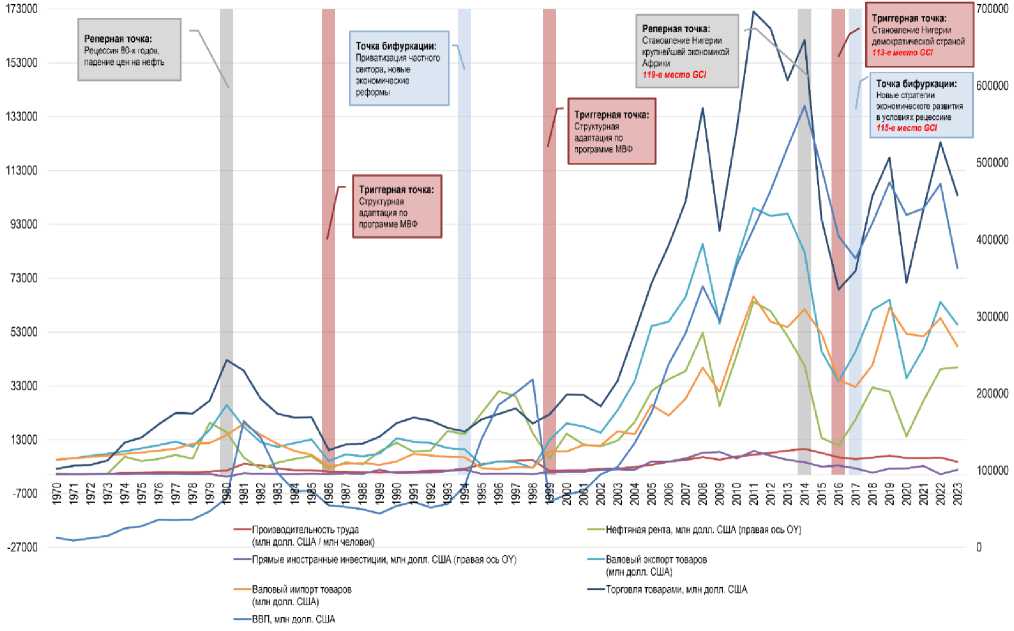
Рис. Динамика показателей Нигерии с важными событиями, повлиявшими на экономику страны в период с 1970-2023 гг. [12]
Закрепление низкой добавленной стоимости.
Доминирование сырьевых ресурсов в экспорте обусловливает минимальный уровень добавленной стоимости экспортируемой продукции. Это сдерживает развитие высокотехнологичных секторов – обрабатывающей промышленности и сферы услуг, которые традиционно выступают ключевыми драйверами роста производительности труда и технологической модернизации. Конкурентоспособность Нигерии на международном рынке фактически сводится к способности добывать и продавать нефть, а не потенциалу всей экономической системы.
Анализ импортной номенклатуры показывает парадоксальную зависимость от ввоза высокопереработанной продукции, что сводит на нет усилия по развитию внутреннего производства. Ключевые импортируемые позиции включают: оборудование, машины и транспортные средства, составляющие до 35% совокупного импорта (по данным ВТО); продовольственные товары (15-20%), что парадоксально для страны, располагающей обширными сельскохозяйственными землями; продукты нефтепереработки (дизельное топ- ливо, бензин), импорт которых является прямым следствием устаревшего оборудования и низкой эффективности национальных нефтеперерабатывающих заводов (НПЗ), несмотря на статус крупного экспортера сырой нефти [14].
Хроническая необходимость импорта нефтепродуктов, занимающего существенную долю в платежном балансе, прямо свидетельствует о дефектах государственной инвестиционной политики в стратегически важном секторе. По оценке авторов, указанный дисбаланс ежегодно приводит к неэффективным расходам валютной выручки, достигающим 5 млрд долл. США. Профицит торгового баланса, формируемый исключительно за счет нефтяной ренты, является неустойчивым и скрывает глубокий структурный дефицит в несырьевых товарных группах [15].
На эффективность реализации внешнеторгового потенциала Нигерии решающее влияние оказывает качество внутренней институциональной среды.
Ключевые барьеры:
Институциональная деградация. Несовершенство правового поля, высокий уровень коррупционных рисков и низкая эффектив- ность работы государственного аппарата (что подтверждается низкими позициями Нигерии в индексе восприятия коррупции Transparency International за 2023 год) значительно увеличивают транзакционные издержки. Длительность и непредсказуемость таможенных и регуляторных процедур создают неблагоприятные условия для инвесторов, нацеленных на развитие производств несырьевой направленности [16].
Инфраструктурный дефицит. Хронический дефицит мощностей в энергетическом секторе и недостаточное развитие транспортнологистической сети, в особенности портовой инфраструктуры (Порты Лагоса, Порт-Харкорта), выступают в роли основных нетарифных барьеров. По оценкам Всемирного экономического форума (ВЭФ), Нигерия систематически показывает низкие результаты по качеству инфраструктуры, что приводит к высоким логистическим издержкам. Эти издержки, в свою очередь, критически снижают ценовую конкурентоспособность продукции несырьевого экспорта даже при наличии потенциальных сравнительных преимуществ (например, в аграрном секторе) [17].
Анализ позиций Нигерии в ключевых международных рейтингах подтверждает ее структурную слабость, прямо коррелирующую с торговой монозависимостью:
-
1. Индекс глобальной конкурентоспособности ВЭФ (GCIHH). Страна находится в нижнем квартиле рейтинга, демонстрируя провал по таким интегральным показателям, как «Институты», «Инфраструктура» и «Эффективность рынка товаров».
-
2. Рейтинг IMD World Competitiveness Ranking. Позиции остаются низкими. Данные рейтинги отражают неспособность государства к оперативной адаптации перед лицом глобальных технологических и торговых вы-
- зовов, поскольку они построены на мультипликативном эффекте диверсифицированных экономик.
-
3. Монополия в сфере экспорта. Превышение доли сырьевых товаров в экспорте отметки 88% определяет высокую корреляцию ВВП с мировыми ценами на нефть и скрывает структурный дефицит в несырьевом секторе. Это придает неустойчивость конкурентоспособности Нигерии [18].
-
4. Эффект «Проклятия изобилия». Продолжительное действие «голландской болезни», которое тормозит развитие агропромышленного комплекса и обрабатывающей промышленности, ухудшается за счет институциональных дефектов и постоянным использованием рентных доходов.
-
5. Неразвитая портовая и энергетическая инфраструктура является ключевым нетарифным барьером, сглаживая ценовую конкурентоспособность потенциальных несырьевых экспортеров.
Таким образом, международная торговля товарами в Нигерии, несмотря на генерирование значительных валютных поступлений (нефтяная рента), одновременно является первопричиной структурной слабости и низкого уровня конкурентоспособности вследствие подавления развития отраслей с высокой добавленной стоимостью.
Комплексный анализ подтвердил центральный тезис исследования: структура внешнеторгового оборота Нигерии, характеризующаяся экстремальной концентрацией экспорта в сырьевом сегменте и критической зависимостью от импорта конечной продукции, выступает доминирующим фактором, ограничивающий формирование устойчивого уровня экономической конкурентоспособности.
