
Nitric oxide (II) as a modulator of aldehyde dehydrogenase activity in human erythrocytes
Journal: Journal of Stress Physiology and Biochemistry @jspb
Article in issue: 2 т.22, 2026.
Free access
The aim of this work is estimation of effects and its mechanisms of gaseous nitric oxide and dinitrosyl iron complexes (DNIC) on catalytic activity of aldehyde dehydrogenase. We estimated the influence of different doses of free (NO concentration in gas flow – 20, 50, 100 and 800 ppm) and bounded (3 mM of DNIC) nitric oxide on aldehyde dehydrogenase activity and erythrocyte level of malone aldehyde in vitro. It was observed that blood processing with gaseous nitric oxide from different NO-generators caused the moderate inhibition of aldehyde dehydrogenase activity and minimal levation of malonic dialdehyde level. Use of DNIC low doses (lesser than 0,3 mcmol) led to dose-dependent stimulation of enzyme catalytic. Increasing of DNIC dose activated aldehyde dehydrogenase lesser clear, than its low doses. It was stated that erythrocyte aldehyde dehydrogenase is very sensitive to exogenic nitric oxide in gaseous phase and DNIC water solutions. We fixed that modification of aldehyde dehydrogenase activity by nitric oxide is dose dependent.
Short address: https://sciup.org/143186136
IDS: 143186136
Text of the scientific article Nitric oxide (II) as a modulator of aldehyde dehydrogenase activity in human erythrocytes
Despite the numerous works published in recent decades on the nature of the action of nitroglycerin and other organic nitrates in the treatment of various cardiovascular pathologies (more than 15,000 by 2008 [Golikov et al., 2000]) associated with the release of nitric oxide from them (Fung, 2004; Chen et al., 2005; Mayer, Beretta, 2008), the molecular mechanisms of this effect have not been fully disclosed. In this regard, the data obtained mainly by foreign researchers for the processes of bioactivation and biotransformation of nitrovasodilators are important (Fung, 2004; Chen et al., 2005; Wenzl et al., 2011; Lang et al., 2012). In particular, it was found that aldehyde dehydrogenase (AlDH) is directly involved in the release of the nitrogen monoxide molecule from the latter, primarily its 2 fraction (mitochondrial) [de la Lande et al., 204; Mayer, Beretta, 2008; Wenzl et al., 2011; Lang et al., 2012]. At the same time, there is practically no information about the specific effects of the product of this reaction (NO) on the kinetic and catalytic properties of this enzyme. A few similar studies describe only the inhibitory effect of the compound on the purified enzyme (Sabo et al., 1994; Demaster et al., 1997), and its "behavior" in a heterogeneous biological system remains unknown. Thus, the studies of E.G. DeMaster et al. (1997) showed that for purified AlDH isolated from Saccharomyces cerevisiae, gaseous NO exhibits a pronounced inhibitory effect, which depends on the exposure time and concentration of the physical agent. At the same time, the presence of oxygen in the reaction medium significantly reduces this effect, which indicates that the latter directly belongs to nitrogen oxide, and not to nitrate and/or nitrite ions that occur during its oxidation. The authors also demonstrated that the effect of NO is due to the modification (oxidation) of Cys-302 of the active site of the enzyme. According to S. Dimmler et al. (1992), this occurs as a result of nitric oxide stimulation of ADP-ribose-dependent cysteine automodification. It should be noted that a similar effect is observed with respect to glyceraldehyde-3-phosphate dehydrogenase, but, unlike AlDH, in this case, this process is NAD-dependent (Dimmler et al. 1992; McDonald, Moss, (1993). It is important that these data are obtained exclusively on purified enzymes, whereas there is no information available for real biological systems.
In addition, a separate problem is to clarify the nature of the interaction of AlDH and the natural depot of nitric oxide in humans and animals – dinitrosyl iron complexes (DNIC) (Vanin, 2000; Vanin et al. , 2009; Martusevich et al. , 2013]. In this regard, the aim of the work was to evaluate the effect and clarify the mechanisms of the effects of gaseous nitric oxide and DNIC on the catalytic activity of AlDH.
MATERIALS AND METHODS
The experiments were conducted on samples of preserved human blood obtained from healthy donors (aged 20-40 years) without chronic pathology and persistent infections. Two experiments were conducted. In the first series, the effect of gaseous nitric oxide in a wide range of concentrations on the activity of red blood cell AlDH (n=10) was studied. To do this, the blood was divided into 5 portions, the first of which was bubbled with air (volume – 100 ml; control sample), the second, third and fourth with a NO–containing gas stream (concentration of NO – 20, 50 and 100 ppm, respectively; the volume is similar to the control one), the fifth is with NO-containing cold plasma (NO concentration is 800 ppm, 100 ml). The NO-containing gas stream was created using an experimental generator developed at the Russian Federal Nuclear Center, the All-Russian Research Institute of Experimental Physics (Sarov), and cold plasma with nitrogen oxide was created using the Plason apparatus.
In the second series of experiments, the effect of DNIC as a deposited form of NO on the kinetic and catalytic properties of erythrocyte AlDH was evaluated. For this purpose, 0; 0.05; 0.1 or 0.2 ml of DNIC-containing 0.9% aqueous sodium chloride solution (the concentration of the compound, determined spectrophotometrically by molecular extinctions at wavelengths of 310 and 360 nm, was 3 mmol/l) was added to the preserved blood samples (n= 10). DNIC was synthesized immediately before the experiment according to the method of A.F. Vanin (2009). The exposure after exposure in both series was 3 minutes.
The activity of aldehyde dehydrogenase (AlDH) was determined spectrophotometrically in donated blood using the method of B.M. Kershengolts and E.V. Serkina (1981). The protein content was determined using the Lowry method. The level of malonic dialdehyde (MDA) in erythrocytes was determined using a test kit (AGAT CJSC, Russia).
The results were processed using the Statistica 6.0 program. The normality of the distribution of parameter values was evaluated using the Shapiro-Wilk criterion. Taking into account the nature of the distribution of the trait, the Kraskal-Wallace H-test was used to assess the statistical significance of the differences. The data was presented in the M±m format. The differences were considered significant at a significance level of p<0.05. The true level of statistical significance of the differences in the average values of the indicators was calculated.
RESULTS
The experiments made it possible to establish that different blood treatment options have a different effect on the activity of erythrocyte AlDH (Fig. 1). In particular, the introduction of nitric oxide in free gaseous form into biological fluid samples leads to a moderate inhibition of the catalytic properties of the enzyme (by 10-15% relative to the level of native blood; p<0.05 for all cases) moreover, this trend does not depend on the dose of the acting agent. Interestingly, this effect is also observed regardless of the characteristics of the nitric oxide generator. It is noted both in the case of using the Plason apparatus, which creates high concentrations of NO in combination with reactive oxygen species (Martusevich et al. , 2013a, 2013b, 2013c), and when using an experimental generator that generates a NOcontaining air stream without impurities with significantly lower (by 1-2 orders of magnitude) concentrations of the compound under study.
In our opinion, this is due to the nonspecific inhibition of the catalytic properties of the enzyme when the biological fluid is saturated with the reaction product, nitrogen monoxide. The presence of a dose-dependent response, which is not traceable when assessing the overall activity of AlDH, can be revealed by analyzing the kinetic characteristics of the enzyme.
Effects opposite to those described above were found for deposited forms of nitric oxide – dinitrosyl iron complexes, which serve as natural depots of the latter (Fig. 1). When human blood samples were exposed to solutions of DNIC at all concentrations of the compound used, AlDH activation was observed, but the severity of this effect varies (from 10 to 53% of the level, characteristic of an intact biological fluid sample) and non-linearly depends on the amount of the introduced source of nitric oxide. Thus, with the introduction of 0.150.3 mmol of DNIC, a dose-dependent stimulation of the catalytic properties of the enzyme was recorded, which, in our opinion, is associated with the need to utilize the exogenous substrate. It can be assumed that this is further facilitated by the potential similarity of organic nitrates as the main substrates of the enzyme and exogenous nitrosyl iron complexes, the destruction of which in the body can also partially be ensured by the functioning of AlDH.
In our opinion, a special discussion should be devoted to reducing the activating effect of DNIC on the catalytic activity of AlDH with a further increase in the amount of the injected source of nitric oxide. This trend can be explained by the summation of two dependent processes.: a pronounced "compensatory" stimulation of the enzyme's functioning upon the intake of a significant amount of substrate and, consequently, the rapid accumulation of the reaction product (NO), which inhibits the activity of AlDH by a feedback mechanism similar to the shifts observed during the treatment of blood samples with gaseous nitric oxide.
We also evaluated the level of malondialdehyde in erythrocytes and its dynamics under the studied effects (Fig. 2). This metabolite, which simultaneously marks the intensity of lipoperoxidation processes and the severity of endogenous intoxication (Golikov et al., 2000; Tsou et al., 2011; Koppaka et al., 2012), serving as one of the substrates of AlDH, allows us to supplement the understanding of metabolic shifts that occur during the treatment of blood with nitric oxide in free and a related form. It was found that in all cases there is a moderate increase in the level of MDA, and this trend was most significant when exposed to the NO-containing stream from the Plason apparatus, for which we had previously shown negative effects (Martusevich et al., 2013b, 2013c, 2013d), as well as when the maximum dose of DNIC was administered (0.6 mmol). In these experiments, an increase in the level of MDA was recorded by 33 and 39% relative to the values characteristic of the control sample, respectively (p<0.05 for both cases).
The use of low concentrations of gaseous nitric oxide (20-100 ppm), which corresponds to 0.06, 0.16 and 0.33 micromoles of the compound, minimally (up to 20% of the initial values) increases the concentration of MDA in red blood cells. At the same time, no dose-dependent effect was detected in the considered range. In our opinion, this indirectly confirms the advantages of this option of direct treatment with nitrogen oxide before using the Plason device.
On the contrary, the introduction of various amounts of DNIC into blood samples demonstrates a clear dose dependence of the erythrocyte level of MDA (Fig. 2), and the effect of the maximum applied dose of the compound (0.6 mmol) already leads to a significant increase in the indicator under consideration (up to 40% relative to the control values; p<0.01). Such dynamics indicates the preference of lower doses of DNIC for the biological system. In our opinion, this negative effect may be due to the simultaneous release of a large volume of nitric oxide, which leads to the formation of peroxynitrite, which in turn causes the stimulation of lipoperoxidation. It should be emphasized that these data fully confirm the trends found for AlDH and indicate an excess of 0.6 mmol of DNIC into the biological fluid.
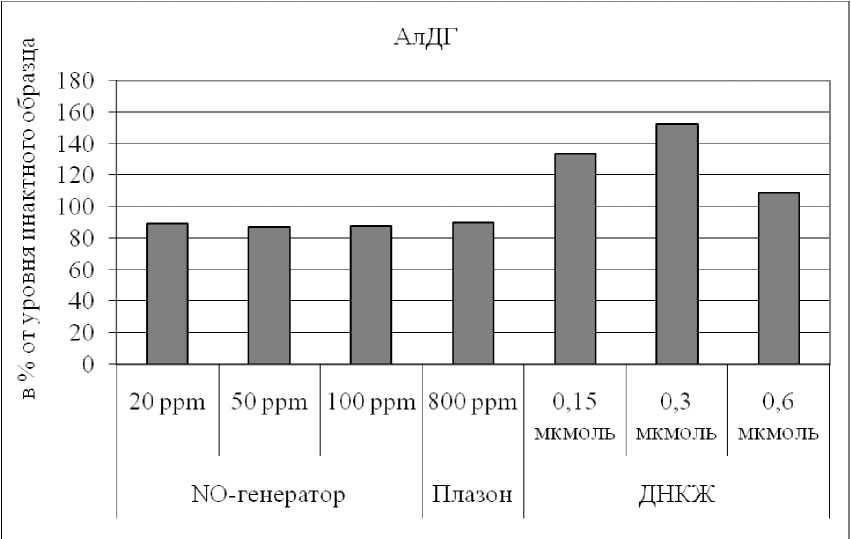
Figure 1. Activity of aldehyde dehydrogenase of erythrocytes under the action of free and deposited nitric oxide
\
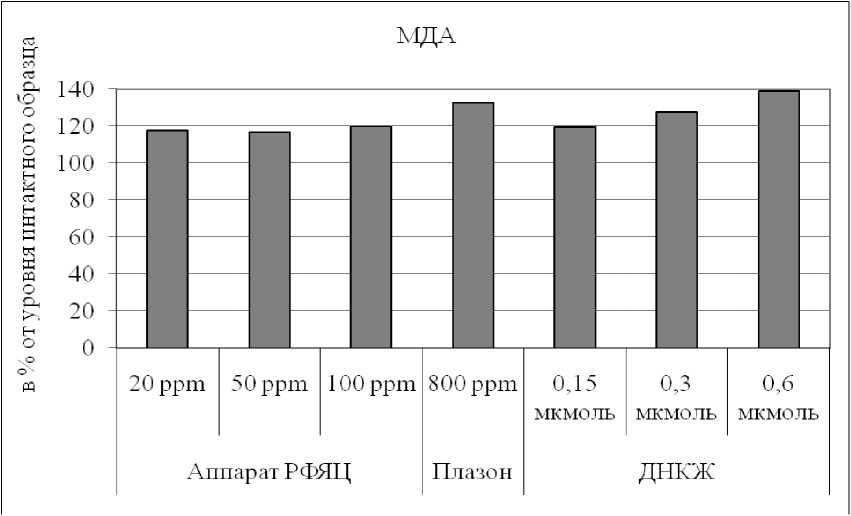
Figure 2. The level of malondialdehyde in red blood cells in various variants of blood treatment with nitric oxide
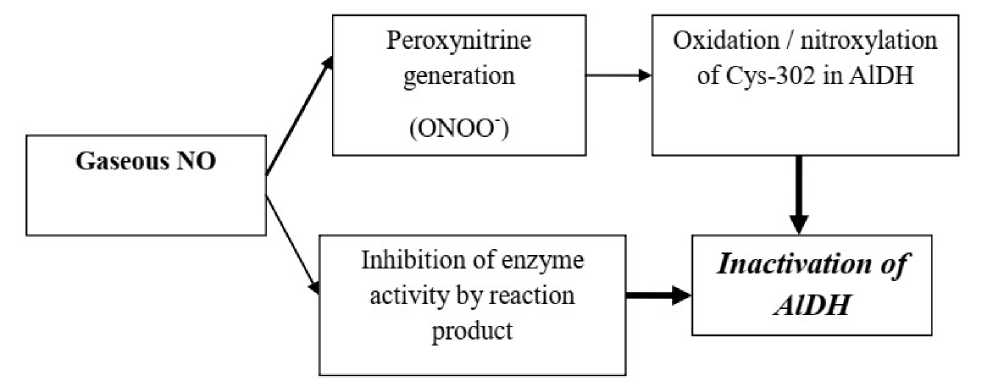
Figure 3. The potential mechanism of action of gaseous nitric oxide on the activity of aldehyde dehydrogenase
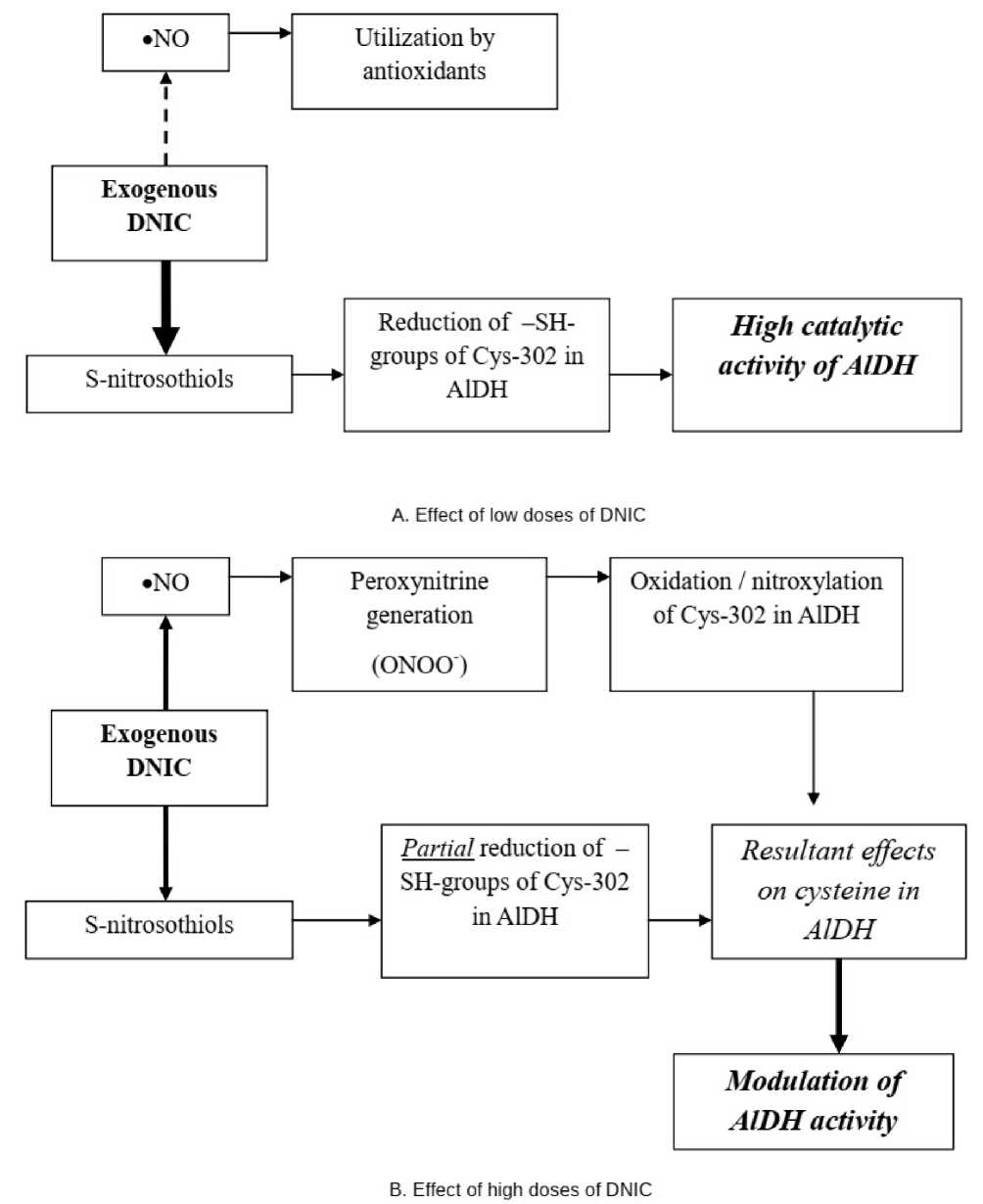
Figure 4. Potential mechanisms of action of exogenous dinitrosyl iron complexes on aldehyde dehydrogenase activity
DISCUSION
The results of the conducted studies, as well as a critical analysis of the thematic literature, suggested potential mechanisms of action of nitric oxide on AlDH activity in the biological system. In particular, according to our ideas, high active concentrations ("excess") of NO can form peroxynitrite (ONOO–) in the presence of oxygen and its active forms (primarily superoxide anion radicals), leading to oxidation and/or nitroxylation of the SH-group of cysteine, the active center of the enzyme (Fig. 3). In addition, a mechanism based on the allosteric inhibition of the catalytic activity of AlDH by its reaction product, the nitric oxide molecule, is also possible. At the same time, small concentrations of gaseous NO (up to 100 ppm, which is 1.5 mM/l of blood), exhibiting a predominantly antioxidant effect and contributing to the stimulation of erythrocyte energy metabolism [19], are rapidly utilized by GSNO-reductase (thioredoxin system), catalase, deoxyhemoglobin, cytochrome C, and other molecules (Godoy et al., 2006).
With respect to DNIC, which showed a nonlinear dependence of the activity of the enzyme under study on the amount of the compound administered, we assume a more complex mechanism of action. Thus, small amounts of DNIC, which spontaneously degrade only to a minimal extent in the biological environment, replace the ligand from the initial carrier (glutathione) to protein macromolecules containing amino acids with –SH groups, gradually replenishing the pool of plasma S-nitrosiothiols released upon the destruction of the initial DNIC (Fig. 4a). In turn, an increase in the level of this antioxidant agent contributes to maintaining the restored state of the cysteine of the active center of AlDH, thereby ensuring an increase in its catalytic activity and modification of kinetic properties.
In our opinion, two opposite processes take place when large concentrations of DNIC are created in biological fluid (Fig. 4b). Thus, a significant amount of DNIC, without having time to interact with plasma protein molecules (primarily albumin), degrade to free NO, which instantly forms peroxynitrite in an oxygen– containing environment, followed by oxidative inactivation of the active site of AlDH. At the same time, the process of S-nitrosiothiol release described above also proceeds in this case, preventing the oxidative modification of cysteine. In our opinion, the resulting reaction results in a less pronounced activation of the catalytic properties of the enzyme with the introduction of 0.6 mmol of DNIC compared with 0.3 mmol of the compound. With this in mind, we assume that 0.3 mmol (1.5 mM/l of blood) is the maximum possible amount of
DNIC, which makes it possible to realize the positive effect of the compound.
CONCLUSIONS
In general, the conducted studies have provided interesting data that the "threshold" concentrations for free (gaseous) and deposited nitric oxide in the composition of DNIC are the same and amount to 1.5 mM/l of blood, however, the threshold range is wider for the latter. This is indirectly evidenced by the fact that even a two-fold excess of the threshold dose of the agent only causes a decrease in the severity of its positive effect. The nature and molecular mechanisms of a single biological "threshold" for the studied forms of NO have yet to be established, because In our opinion, it is directly related to the metabolic adaptation of biological systems, including blood, to one of the main chemical bioregulators of the body's functioning – nitric oxide and the problem of the emergence and overcoming of tolerance to nitrovasodilators
CONFLICTS OF INTEREST
All authors declare that they have no conflicts of interest.
