
Отсроченные эстетические результаты реконструкции молочной железы и влияние осложнений на итоговый эстетический результат: сравнительный анализ в проспективно-ретроспективном когортном исследовании
Журнал: Вестник Российского научного центра рентгенорадиологии Минздрава России @vestnik-rncrr
Рубрика: Маммология
Статья в выпуске: 1 т.26, 2026 года.
Бесплатный доступ
Цель: оценить отсроченные эстетические результаты реконструктивных операций с эндопротезированием, выполненных по поводу рака молочной железы в зависимости от хирургической тактики и определить влияние клинико-терапевтических факторов риска в рамках проспективно- ретроспективного когортного исследования.
Похожие статьи в разделе Гинекология. Акушерство
Короткий адрес: https://sciup.org/149151025
IDS: 149151025 | УДК: 618.19-006-089.844 | DOI: 10.24412/1999-7264-2026-1-41-54
Delayed aesthetic outcomes of breast reconstruction and the impact of complications on the final aesthetic outcome: A comparative analysis in a prospective-retrospective cohort study
Objective: To evaluate the long-term aesthetic outcomes of breast reconstruction using implants in breastcancer patients, according to surgical strategies, and to determine the impact of key clinical risk factors in a prospective- retrospective cohort study.Materials and methods. The study included 160 patients who were treated at the P.A. Hertsen Moscow Oncology Research Institute between 2013 and 2020. Three groups were analyzed: immediate reconstruction without additional implant coverage (n=40), immediate reconstruction with additional implant cover (acellular dermal matrix, mesh, or latissimus dorsi flaps; n=50) and two-stage expansion-implantation reconstruction (n =70). Risk factors included radiation therapy, smoking, obesity, age and comorbidity. Aesthetic outcomes were evaluated using the standardized Russian ROOM questionnaire ("Assessment of cosmetic results and psychological criteria after breast conservation surgery, oncoplasty resections, and reconstructive plastic procedures in breast cancer patients") and independent expert assessment. Median follow-up period was 7.9 years. Statistical analysis included chi-square test, Fisher exact test, Spearman's correlation coefficient, odds ratio with 95% confidence interval, and significance level set at pResults. The best long-term aesthetic outcomes were achieved in the immediate reconstruction group with additional implant coverage. Radiotherapy was associated with an increased risk of severe capsular contracture (OR=3.4). Smoking and obesity showed a trend towards higher rates of early and late complications, respectively (OR = 2.4; 95% CI: 1.0 - 5.6, and OR = 2,2; 95 % CI: 0.9 - 4.8) Conclusion. Reconstructive strategy should be individualized based on oncologic status, soft tissue characteristics, and risk profile. Additional implant coverage provides a more stable long term aesthetic outcome.
Текст научной статьи Отсроченные эстетические результаты реконструкции молочной железы и влияние осложнений на итоговый эстетический результат: сравнительный анализ в проспективно-ретроспективном когортном исследовании
Рак молочной железы остаётся самым распространённым видом злокачественных опухолей среди женщин, занимая лидирующие позиции как по заболеваемости, так и по уровню смертности [1]. Мастэктомия, несмотря на свою эффективность в борьбе с раком, может привести к серьёзным эстетическим проблемам и значительным психоэмоциональным переживаниям у пациенток. Реконструкция молочной железы становится важнейшим этапом реабилитации, значительно улучшая внешний вид, качество жизни и психологическое состояние женщин [2]. Одним из наиболее популярных методов реконструкции является эндопротезирование, которое отличается относительной простотой, коротким временем операции и быстрым восстановлением [3]. Однако, несмотря на все преимущества эндопротезирования, вопросы, касающиеся долгосрочных эстетических результатов, рисков поздних осложнений и стабильности формы молочной железы, остаются актуальными.
В крупном исследовании, которое включало 2284 пациентки и 3489 реконструкций, а также длительные наблюдения до 12 лет, было выявлено, что эстетические результаты и частота образования капсулярной контрактуры после двухэтапной реконструкции оставались стабильными. Более того, удовлетворенность пациенток, измеренная с помощью опросника BREAST-Q Reconstruction Module, имела тенденцию к увеличению [4]. Однако было установлено, что лучевая терапия ассоциировалась с более низкими эстетическими оценками и более высокой частотой образования контрактур.
В реконструктивной хирургии молочной железы качество мягкотканного покрытия эндопротеза является одним из ключевых факторов успеха. При недостатке собственных тканей становится актуальным использование комбинированных методик, таких как применение синтетических сеток, ацеллюлярных дермальных матриц, твердо-мозговых оболочек или торако-дорсального лоскута (ТДЛ) для дополнительного укрытия импланта. Эти решения не заменяют имплантационную реконструкцию, но способствуют улучшению формы молочной железы, снижению риска капсулярной контрактуры и повышению стабильности эстетических результатов, особенно у пациенток, получающих лучевую терапию. Многочисленные клинические наблюдения подтверждают, что усиление мягкотканного покрытия импланта дополнительными материалами и тканями не только улучшает эстетический вид, но и уменьшает частоту поздних осложнений, имеющих значимое влияние на восприятие результата. Таким образом, выбор метода реконструкции должен основываться на индивидуальной оценке состояния тканей, факторов риска и особенностей планируемого лечения [5–7]. Несмотря на накопленный опыт, остается недостаточно данных о сравнении трех ключевых подходов реконструкции молочной железы — одномоментной реконструкции имплантом, одномоментной реконструкции с дополнительным укрытием импланта (ADM/сеткой/ТДЛ) и двухэтапной экспандер-имплантной методики — особенно в части отсроченных эстетических результатов. Факторы риска (лучевая терапия, курение, ожирение, коморбидность) оказывают существенное влияние на итоговый эстетический результат, но степень этого влияния варьирует по данным разных исследований [8,9].
Цель исследования: проведение сравнительного анализа отсроченных эстетических результатов трех методик реконструкции молочной железы с использованием имплантов, а также определение факторов риска, влияющих на качество долгосрочного эстетического исхода.
Материалы и методы
Проведено проспективно-ретроспективное когортное исследование на базе МНИОИ им. П.А. Герцена (НМИЦ радиологии) с включением 160 пациенток, перенесших реконструктивно- пластические операции с применением силиконовых имплантатов в рамках лечения рака молочной железы в 2013–2020 гг. Исследование одобрено локальным этическим комитетом (протокол №56899 от 05.06.2025). Критериями включения являлись одномоментные и отсроченные реконструкции с имплантатами; реконструкции аутологичными лоскутами исключались. Пациентки возрастом 25–65 лет (средний возраст 45 лет) были распределены на три группы: одномоментная реконструкция после подкожной/кожесохраняющей мастэктомии (n=40), одномоментная реконструкция с использованием армирующих материалов (торако-дорсального лоскута (ТДЛ), ацеллюлярной дермальной матрицы (ADM) или синтетической сетки; n=50) и двухэтапная реконструкция с использованием тканевого экспандера (n=70).
Клинические стадии I–IIA составляли 65% выборки, IIIA–C — 15%; значимых межгрупповых различий не выявлено. Сопутствующее лечение включало неоадъювантную химиотерапию у 30% пациенток, адъювантную — у 55%, таргетную терапию — у 20%, гормонотерапию — у 60%, лучевую терапию — у 68,8% пациенток. Дистанционная лучевая терапия (ДЛТ) проводилась в стандартном режиме фракционирования: разовая очаговая доза (РОД) 2 Гр, 5 фракций в неделю, суммарная очаговая доза (СОД) 50 Гр. Различия между группами по частоте проведения системного и лучевого лечения отсутствовали (p>0,05). Симметризирующие операции выполнены у 37,5% пациенток (мастопексия, аугментация или редукция), преимущественно в группах 2 и 3, без статистически значимых различий (p>0,05). Использовались текстурированные (63%) и полиуретановые (37%) имплантаты; тип поверхности между группами не различался, тогда как субпекторальное размещение было чаще во 2-й и 3-й группах (p<0,05). Для оценки влияния ДЛТ на итоговый эстетический результат у облученных пациенток анализ выполнялся по временным интервалам после завершения лучевой терапии: 6–12 месяцев, 12–24 месяца, 24–36 месяцев и более 36 месяцев; далее проводилась ежегодная оценка в рамках длительного наблюдения.
Факторы риска (лучевая терапия, курение, индекс массы тела, возраст, коморбидный статус) были заранее определены как отдельный блок анализа в протоколе исследования. ИМТ рассчитывали по формуле масса тела/рост 2 (кг/м 2 ) на предоперационном этапе, через 12, 24 и 36 месяцев, а также при финальном контрольном визите. В описательном анализе использовали категории ВОЗ (нормальная масса тела, избыточная масса тела, ожирение), для основного сравнительного анализа применяли дихотомизацию по порогу ожирения ( < 30 и > 30 кг/м2). Дополнительно в динамике фиксировали изменение массы тела как потенциальный предиктор поздней асимметрии и контурных деформаций. Курение учитывали как активное при продолжении курения на момент операции и в раннем послеоперационном периоде. Возраст анализировали как непрерывный показатель и дополнительно по клиническим подгруппам.
Для категориальных признаков применяли критерий χ 2 или точный критерий Фишера; рассчитывали отношение шансов (OR) и 95% доверительный интервал. Связь поздних осложнений с удовлетворенностью оценивали с помощью корреляционного анализа Спирмена. Уровень статистической значимости принимали равным p < 0 , 05. Статистическую обработку выполняли в программе IBM SPSS Statistics 26.0 (IBM Corp., Armonk, NY, USA). Оценка отдаленных косметических результатов проведена с применением стандартизированного опросника «Оценка косметических результатов, психологических критериев после органосохраняющих операций, онкопластических резекций, реконструктивно-пластических операций у больных раком молочной железы», утвержденного Российским обществом онкомаммологов (РООМ) в рамках VIII Всероссийского конгресса онкомаммологов (10.09.2021). Наблюдение составило 4,5–11,5 лет (в среднем 7,9 года). Такой продолжительный период наблюдения обеспечил возможность всесторонне изучить отдаленные результаты реконструктивных вмешательств, проследить сохранность эстетических показателей, а также выявить поздние осложнения и определить факторы, повышающие риск их развития.
Результаты
Ранние хирургические осложнения встретились у 25 (15,6%) пациенток. Частота ранних осложнений была выше в группе III – 20,0% против 15,0% и 10,0% в группах I и II соответственно. Серомы возникали у 3 (7,5%), 3 (6,0%) и 5 (7,1%) пациенток в группах I–III; инфекции – у 2 (5,0%), 0 и 4 (5,7%); гематомы – у 1 (2,5%), 1 (2,0%) и 3 (4,3%) соответственно. В группе I преобладали серомы (7,5%) и инфекции (5,0%), в группе II – серомы (6,0%) (по 2% – гематома и ротация имплантата), в группе III – комбинация осложнений: серомы 7,1%, инфекции 5,7%, гематомы и ротации по 4,3%. Поздние хирургические осложнения наблюдались у 48 (30,9%) пациенток. Наиболее часто встречалась тяжелая капсулярная контрактура по классификации Baker III–IV: 6 (15,0%), 6 (12,0%) и 10 (14,3%) случаев в группах I–III. Поздние серомы выявлены у 2 (5,0%), 2 (4,0%) и 4 (5,7%) пациенток; инфекции – у 1 (2,5%), 2 (4,0%) и 4 (5,7%); ротации имплантата – у 1 (2,5%), 2 (4,0%) и 3 (4,3%). Протрузии эндопротеза отмечены у 1 (2,5%), 0 и 3 (4,3%) пациенток; проблемы в донорской зоне (ТДЛ) – у 0, 0 и 3 (4,3%). В группе I суммарная доля поздних осложнений достигла 35,0% (преимущественно контрактура 15,0% и серомы 5,0%); в группе II – 24,0% (контрактура 12,0%); в группе III – 31,4% (контрактура 14,3%, серомы 5,7%). Таким образом, группа II показала наименьшую суммарную частоту ранних (10,0%) и поздних (24,0%) осложнений, тогда как двухэтапная группа III и группа I без укрытия имели соответственно более высокие показатели осложнений (ранних/поздних: 20,0%/31,4% и 15,0%/35,0%).
Анализ влияния лучевой терапии показал ассоциацию с повышением риска тяжелой капсулярной контрактуры у облученных пациенток: частота контрактуры III–IV ст. при ЛТ составила 4/28 (15%) против 1/12 (5%) без ЛТ в группе I, 4/34 (12%) vs 0/16 (0%) в группе II и 7/48 (14,3%) vs 1/22 (4,5%) в группе III. В целом у облученных пациенток суммарная доля поздних осложнений (29,1%) была выше, чем у не облученных (16,7%), а тяжелая контрактура встречалась в 15% случаев против 5% (OR=3,4). По временной динамике первые клинически значимые признаки лучевого фиброза и деформации чаще фиксировались в интервале 6–12 месяцев после ДЛТ, тогда как выраженная капсулярная контрактура (Baker III–IV) преимущественно регистрировалась после 12-го месяца наблюдения, наиболее часто в окне 18– 36 месяцев.
Отсроченные эстетические дефекты (асимметрия, риплинг, миграция имплантата, деформация сосково-ареолярного комплекса (САК), анатомические деформации, выраженные рубцы) были проанализированы по группам. Существенных межгрупповых различий по общей частоте эстетических осложнений не выявлено (Группа I – 30,0%, II – 20,0%, III – 31,4%; p>0,05). Чаще всего отмечались асимметрия (Гр. 1: 12,5%; Гр. 2: 6,0%; Гр. 3: 11,4%) и контурные деформации (rippling) (Гр. 1: 7,5%; Гр. 2: 4,0%; Гр. 3: 7,1%). Другие эстетические деформации (миграция имплантата, изменения САК, анатомические дефекты, выраженные рубцы) встречались реже (каждый 0–5,7%) и статистически не отличались между группами. Оценка эстетических исходов по опроснику РООМ во времени показала снижение показателей «эстетичности». Врачебная оценка (5-балльная шкала) через ≥ 5 лет составила 3,55±0,25 (Гр. 1), 4,05±0,18 (Гр. 2) и 3,60±0,23 (Гр. 3); средний балл во II группе был достоверно выше, чем в I и III (p<0,001). Самооценка пациенток также снизилась: медианные баллы «удовлетворенности» по воспоминаниям первого года ( R 0 ) были 4,10±0,20; 4,40±0,10; 4,06±0,20 (Гр. 1–Гр. 3), а при опросе через 7,9 года – 3,70±0,28; 4,10±0,17; 3,68±0,26 (p<0,05 для внутригрупповой динамики).
В отдаленном периоде группа II статистически превосходила группы I и III по удовлетворенности (p<0,001). Доля пациенток, выставивших оценку ≥ 4, снизилась во всех группах (с 76,5→58,8% в Гр.1, с 94,1→82,4% в Гр.2, с 70,6→47,1% в Гр.3; p<0,05). Данная динамика указывает на то, что ранний эстетический результат реконструкции не гарантирует его сохранения в отдаленные сроки: в части пациенток происходит выраженное снижение качества эстетического вида. Эти особенности следует учитывать как при выборе методики операции, так и при формировании реалистичных ожиданий пациенток. Наличие хотя бы одного позднего осложнения значительно коррелировало с падением удовлетворенности (r=0,62; p<0,001). Интегральный показатель «успеха» (отсутствие серьезных осложнений и врачебный балл ≥ 4) достигнут у 38% пациенток группы I, 62% – группы II и 44% – группы III (p=0,006 при сравнении I vs II; p=0,013 при II vs III). По данным стандартизированного отечественного опросника РООМ, состояние качества жизни пациенток в отдаленном периоде оставалось высоким. Во всех группах не отмечено значимых различий в уровнях психосоциального, сексуального и физического благополучия (p>0,05). Таким образом, реконструктивные операции способствовали высокому уровню реабилитации, не снижая субъективного качества жизни. Согласно заранее запланированному анализу факторов риска (см. раздел «Материалы и методы»), выявлены клинически значимые тенденции: курение и ожирение были связаны с увеличением частоты осложнений. У курящих пациенток (29/160) ранние осложнения развились в 8 (27,6%) случаях против 18 (13,7%) среди некурящих (OR=2,4; 95% ДИ 1,0–5,6). У больных с ожирением (30/160) поздние осложнения отмечались у 12 (40,0%) vs 30 из 130 (23,3%) при нормальном или избыточном весе (OR=2,2; 95% ДИ 1,0–
-
4 ,8). Эти результаты следует интерпретировать как пограничные по статистической значимости и требующие подтверждения на большей выборке.
Клинические примеры
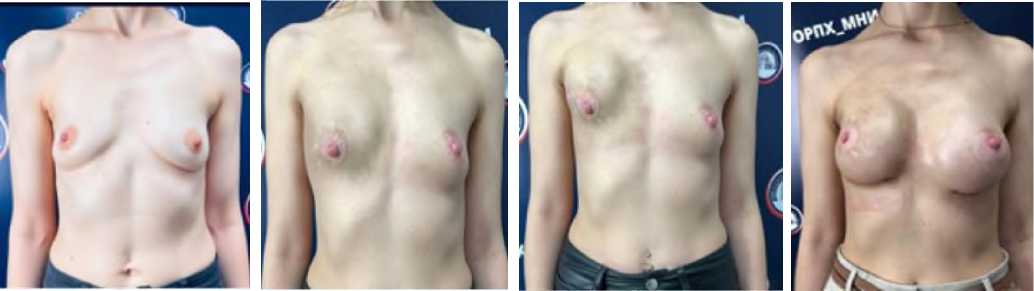
Пример 1. Пациентка 39 лет, диагноз: рак правой молочной железы cT2N1M0 (клиническая стадия IIB), биологический подтип Luminal B (HER2-негативный). С учетом узлового образования и планируемой адъювантной лучевой терапии выполнена кожесохранная мастэктомия справа с одномоментной реконструкцией эндопротезом без дополнительного укрытия импланта (группа I исследования). В раннем послеоперационном периоде осложнений не отмечено, эстетический результат оценивался как удовлетворительный (Рис. 1а). Через 6 месяцев после завершения ДЛТ появились ранние признаки радиационно-индуцированных изменений: уплотнение покровных тканей, латерализация комплекса «сосок–ареола» и уменьшение проекции нижнего полюса (Рис. 1б). Спустя 12 месяцев после ЛТ отмечено прогрессирование фиброзных изменений с выраженной деформацией контуров, ретракцией тканей и формированием эстетического дефекта, характерного для капсулярной контрактуры II–III степени (Рис. 1в). В дальнейшем пациентке была выполнена повторная операция с симметризирующей маммопластикой, что позволило частично восстановить объем и форму реконструированной молочной железы (Рис. 1г). Представленная динамика демонстрирует влияние выбранного объема лечения в клинической ситуации с показаниями к ДЛТ и соответствует выявленному в исследовании повышению риска тяжелой контрактуры у облученных пациенток.
(а) (б) (в) (г)
Рис. 1а–г. Эстетические осложнения после лучевой терапии: а — ранний послеоперационный период; б— через 6 месяцев после ДЛТ; в — через 12 месяцев после ДЛТ; г — после симметризирующей коррекции. Figure 1a–d. Aesthetic complications after radiotherapy: a — early postoperative period; b — 6 months after radiotherapy; c — 12 months after radiotherapy; d — after symmetrizing correction.
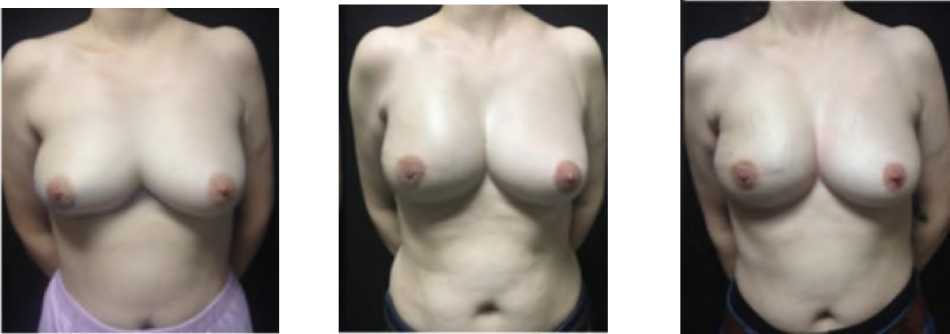
Пример 2. Пациентка 52 лет, диагноз: рак левой молочной железы cT1cN0M0 (клиническая стадия IA), биологический подтип Luminal A. Выполнена подкожная мастэктомия с одномоментной реконструкцией эндопротезом без дополнительного укрытия (группа I); по итогам морфологического исследования (pT1N0) показаний к адъювантной лучевой терапии не было. На момент операции ИМТ соответствовал ожирению I степени. В раннем послеоперационном периоде отмечался удовлетворительный эстетический результат без осложнений (Рис. 2а). Через 2 года наблюдения (2018 год) появились начальные признаки деформации: умеренная латерализация имплантата, сглаживание верхнего полюса и формирование контурных неровностей (Рис. 2б). В отдаленном периоде (2025 год) выявлено прогрессирование изменений с выраженной асимметрией, рипплингом и перерастяжением тканей нижнего полюса (Рис. 2в, 2г). Данный случай иллюстрирует клиническую ситуацию без ДЛТ, где ключевым фактором ухудшения эстетики выступили исходно повышенный ИМТ и дальнейшее увеличение массы тела.
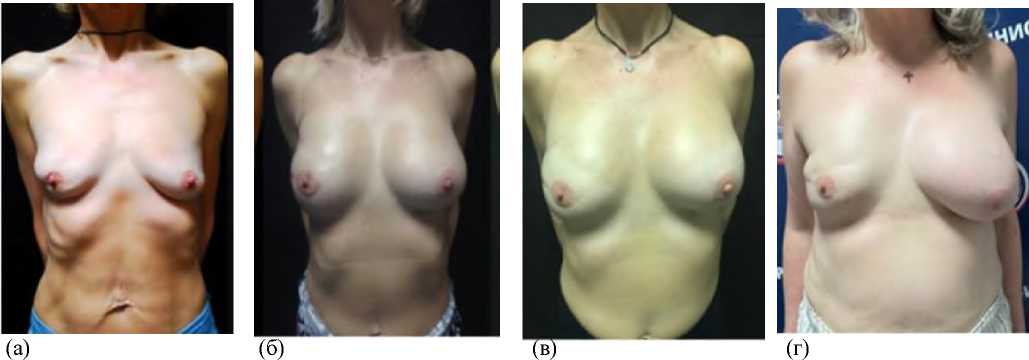
Рис. 2а–г. Динамика изменений эстетического результата реконструкции молочной железы у пациентки в связи с повышенным ИМТ: а — 2016 г.; б — 2018 г.; в — 2025 г.; г — дополнительная контрольная фотография в отдаленном периоде. Figure 2a–d. Long-term aesthetic changes after breast reconstruction in a patient with elevated BMI: a — 2016; b — 2018; c — 2025; d — additional late follow-up image.
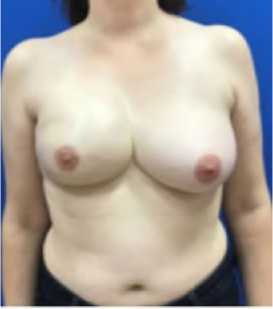
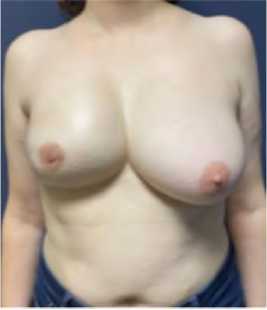
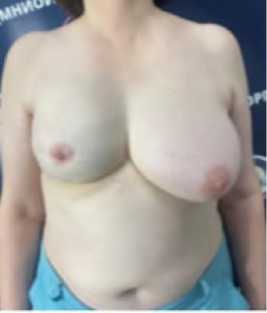
Пример 3. Пациентка 43 лет, диагноз: рак правой молочной железы cT2N0M0 (клиническая стадия IIA), биологический подтип Luminal B (HER2-негативный). С учетом локального статуса и необходимости получить более стабильное мягкотканное покрытие выполнена подкожная мастэктомия справа с одномоментной реконструкцией эндопротезом и укрытием синтетической сеткой (группа II). Послеоперационная морфология (pT2N0) не требовала проведения ДЛТ. В раннем периоде и спустя несколько лет сохранялась хорошая симметрия без признаков капсулярной контрактуры (Рис. 3а, 3б). Через 9 лет реконструированная молочная железа сохранила форму и проекцию, тогда как контралатеральная молочная железа увеличилась в объеме и подверглась возрастному птозу на фоне увеличения массы тела (Рис. 3в–3е). Асимметрия развилась не вследствие осложнений реконструкции, а из-за естественных изменений на контралатеральной стороне. Случай показывает, что в клинической ситуации без показаний к ЛТ и при использовании укрытия импланта долгосрочный эстетический результат может оставаться стабильным.
(а) (б) (в)
(г)
(д)
(е)
Рис. 3а–е. Эстетический результат реконструкции молочной железы в динамике: а–в — ранний и промежуточный периоды; г–е — отдаленный период наблюдения. Figure 3a–f. Dynamic aesthetic outcome of breast reconstruction: a–c, early and intermediate follow-up; d–f, long-term follow-up.
Дополнительные результаты
Возраст пациенток и другие факторы, связанные с их состоянием, не оказали существенного влияния на результаты исследования. Однако было отмечено, что лучевая терапия повышает риск развития тяжелой контрактуры (OR = 3,4). Онкологические исходы были благоприятными. За весь период наблюдения, который составил в среднем 7,9 года, было зафиксировано лишь четыре локальных рецидива, что соответствует 2,5% от общего количества пациентов (160). Пятилетняя и десятилетняя безрецидивная выживаемость составила 97,5% (95% доверительный интервал (ДИ) 93,7–99,3%), а общая выживаемость достигла 100% (все пациентки на данный момент живы). Таким образом, ни одномоментная, ни отсроченная имплантационная реконструкция не ухудшали онкологический прогноз при условии соблюдения онкохирургических принципов.
Обсуждение
Сравнительный анализ показал, что одномоментная реконструкция с использованием сетки, АДМ или ТДЛ обеспечивает наилучшие отдаленные эстетические результаты. Эта методика позволяет сохранить стабильность формы молочной железы, снижает риск капсулярной контрактуры и уменьшает потребность в повторных корректирующих операциях по сравнению с одномоментной реконструкцией без укрытия или двухэтапной техникой [10,11]. Лучевая терапия, напротив, значительно ухудшает эстетический результат, увеличивая риск контрактур до 40–50% [12,13]. Даже при использовании укрывающих материалов у облученных пациенток сохраняется повышенный риск деформаций и необходимости повторных вмешательств. Крупное ретроспективное исследование, проведенное Vinsensia с соавторами в 2024 году, показало, что у 22,9% облученных пациенток развились контрактуры III–IV степени [12].
В целом, облучение после реконструкции значительно увеличивает риск возникновения грубой фиброзной деформации капсулы. Наши результаты подтверждают данные других исследований. Кроме того, мы обнаружили, что лучевая терапия значительно снижает уровень удовлетворенности пациенток. Подобные тенденции были отмечены в исследовании Dominici и др. (2021), где более 350 пациенток оценили состояние своей молочной железы с помощью опросника BREAST-Q Reconstruction Module. Результаты показали, что в группе, получавшей облучение, уровень удовлетворенности был значительно ниже [14]. Метаанализ Zheng и др. (2022) также подтвердил, что женщины, прошедшие реконструкцию с последующим облучением, имеют более низкую самооценку эстетики и удовлетворенность [15]. Kim с соавторами (2021) также пришли к выводу о снижении удовлетворенности эстетическим результатом после комбинированной реконструкции (с использованием широчайшей мышцы спины и импланта) у пациенток, прошедших лучевую терапию [16]. Эти результаты подтверждают устойчивость выявленной тенденции и свидетельствуют о негативном влиянии лучевой терапии на отдаленные эстетические результаты имплантационной реконструкции.
Индекс массы тела (ИМТ) и колебания веса играют важную роль в симметрии и эстетике в долгосрочной перспективе. При повышенном ИМТ риск осложнений и асимметрии возрастает, особенно при односторонней реконструкции [17].
Следует помнить, что хороший ранний результат не является гарантией его сохранения через 5–10 лет. Возрастные изменения, птоз, контрактуры и колебания веса могут снижать эстетическую оценку и требовать коррекции.. Таким образом, при выборе метода реконструкции необходимо учитывать не только анатомические особенности и запланированную лучевую терапию, но и факторы, которые могут повлиять на долгосрочную стабильность результатов. К таким факторам относятся накопленная коморбидность и вредные привычки. Одномоментные реконструкции с укрытием импланта могут быть оптимальным вариантом в определенных клинических условиях.
Заключение
Результаты проведенного исследования с медианой наблюдения 7,9 лет демонстрируют, что долгосрочная стабильность эстетического результата реконструкции молочной железы напрямую зависит от выбранной хирургической тактики и наличия отягчающих факторов. Проведенный анализ показал, что одномоментная реконструкция с использованием дополнительного укрытия импланта (сеткой, ADM или торако-дорсальным лоскутом) достоверно превосходит другие методы по уровню удовлетворенности пациенток и демонстрирует меньшую частоту отдаленных осложнений по сравнению с одномоментной имплантацией без укрытия и двухэтапной реконструкцией. Формирование дополнительного покрытия способствует нивелированию рисков контурных деформаций и обеспечивает более естественный птоз реконструированной железы в отдаленном периоде.
Ключевым предиктором неудовлетворительных эстетических исходов выступает адъювантная лучевая терапия, многократно повышающая вероятность развития капсулярной контрактуры III–IV степени. Также подтверждена значимость модифицируемых факторов риска: курение ассоциировано с ростом частоты ранних хирургических осложнений, тогда как повышенный индекс массы тела коррелирует с развитием поздней асимметрии и птоза. Важно отметить, что все изученные методы продемонстрировали сопоставимую онкологическую безопасность. Резюмируя, выбор тактики реконструкции требует строго индивидуального подхода. При планировании операции необходимо комплексно оценивать не только анатомические параметры, но и планируемый объем адъювантного лечения, а также коморбидный статус. Одномоментная реконструкция с использованием армирующих материалов представляется оптимальной стратегией для достижения стабильного эстетического результата, однако пациентки должны быть информированы о неизбежной эволюции формы молочной железы с течением времени и рисках, обусловленных образом жизни.
Вклад авторов. У.Х. Хомиди — перевод, анализ литературы, написание текста статьи; Э.К. Сарибекян, А.Д. Зикиряходжаев — научное редактирование; Г.М. Запиров, Н.В. Аблицова, Ф.С. Хугаева, И.С. Дуадзе, Д.Ш. Джабраилова - сбор и обработка клинических данных; Д.Б. Кодзоева — оформление библиографии; А.Д. Каприн — разработка концепции, утверждение окончательного варианта статьи. Все авторы прочитали и согласились с версией рукописи, представленной для публикации.
Финансирование. Исследование не имело спонсорской поддержки.
Соблюдение прав пациентов и правил биоэтики. Исследование одобрено локальным этическим комитетом (протокол №56899 от 05.06.2025) и соответствовало принципам Хельсинкской декларации. От всех пациенток было получено информированное согласие на лечение и использование обезличенных клинических данных и изображений в научных целях.
Заявление об информированном согласии. Информированное согласие было получено от всех субъектов, участвующих в исследовании.
