
Paintings from Russian private and the Imperial collections at Rudolph Lepke’s auction house, Berlin, 1928–1929
Journal: Society. Environment. Development (Terra Humana) @terra-humana
Section: Культурное наследие
Article in issue: 4 (77), 2025.
Free access
The article examines the sale of works of art from private and imperial collections of the Russian Empire at the Rudolph Lepke auction house in Berlin during 1928–1929. It analyzes the historical contexts preceding these auctions. The study focuses on nine works of art identified in museum collections worldwide as well as on the contemporary art market of Europe and America: it addresses issues of provenance, changes of ownership, and current location.
Similar articles in the section Painting
Short address: https://sciup.org/140313988
IDS: 140313988 | UDC: 75:7.074 | DOI: 10.53115/19975996_2025_04_142_153
Картины из частных российских и императорских коллекций на аукционе Рудольфа Лепке в Берлине, 1928–1929 годы.
Рассматриваются распродажи произведений искусства из частных и императорских коллекций Российской империи на аукционе Rudolph Lepke в Берлине в 1928–1929 годах. Анализируются исторические обстоятельства, предшествовавшие этим торгам. В поле исследования автора – судьба девяти произведений искусств, выявленных в музейных собраниях мира и на современном художественном рынке Европы и Америки: освещаются вопросы их провенанса, смена владельцев, текущее местоположение.
Text of the scientific article Paintings from Russian private and the Imperial collections at Rudolph Lepke’s auction house, Berlin, 1928–1929
Общество. Среда. Развитие № 4’2025
1921–1927: the Beginning. Statistics of theFirst Berlin Sales at Rudolph Lepke's Auction House
The Commission for the Acquisition of Antiquarian and Artistic Values for the Sale Abroad 1 was formed on June 1, 1921. This followed the nationalization of private property, which began immediately after the October Revolution of 1917. The authorities recognized the risk of losing control over the movement of valuables and their looting. In June 1918, therefore, they established the Department for Museums and the Protection of Monuments of Art and Antiquities of the People's Commissariat of Education, followed by the Commission for the Protection and Registration of Monuments of Art and Antiquities. In the same year, the first decrees prohibited private ownership of mansions, palaces, and factories, and restricted the export of objects of special artistic value.
On October 5, 1918, another decree introduced the Registration and Preservation of Monuments of Art and Antiquities in the possession of individuals, societies, and institutions . In January 1919, the State Museum Reserve of the People's Commissariat of Education of the Russian Soviet Federative Socialist Republic (RSFSR) was created. Until November 1927, this institution oversaw the selection and redistribution of nationalized items; by then, 1,375 private collections had been registered from 1918 to 1927.
Following Lenin’s orders, the Romanoffs’ jewels and regalia, previously stored in the Winter Palace’s Diamond Room, were sold abroad: in London (October 1922), Amsterdam (November 1922, April 1923), Stockholm (April 1923), and Paris (March 1924).
According to the report by Mark Filosofov on the inventory of 2 April 1929, the Hermitage received 5,480 paintings between 1917 and 1925 [3, p. 309].
In 1925 the State Import-Export Trading Office of the Russian Soviet Federative Socialist Republic (Gostorg) was established under Narkomtorg. In 1928, it was reorganized as Antikvariat , which was granted exclusive rights to conduct import and export trade. By 1 June 1929, when the Leningrad branch of the State Museum Fund ( Gosmuseifond ) was closed, 51,271 items had been transferred to its main office and Antikvariat .
At the end of 1927, the 15th Congress of the All-Union Communist Party adopted the First-Year Plan, which included the export of antiquities. In February 1928, the first selections of museum objects for export were initiated. A secret protocol of the Council of Labor and Defense (STO) confirmed that Antikvariat would be responsible for preparing and selling works of art and antiquities abroad [8, p. 235].
In March 1929, the Subcommittee under the Government Commission led by L.M. Kh-inchuk, People’s Commissar of Domestic Trade, assumed responsibility for selecting works for export. Initially, 2,200 paintings were chosen [2, p. 17]. By June 1929, 1,950 paintings had been moved to Antikvariat’s warehouses [4, p. 160].
* This work was completed as part of the research grant from the Staatliche Museen zu Berlin in 2016. 50.06.01 (старый код - 17.00.04 Изобразительное, декоративно-прикладное искусство и архитектура).
1 TheList of organizations that sold nationalized cultural property after 1917 is provided at the end of this article.
According to archival research by Julia Kantor, the State Hermitage Museum received 2,880 paintings, of which 350 were of considerable artistic value and 59 were classified as masterpieces of world significance. Eleven of these masterpieces were never sold and eventually returned to the Hermitage [7, pp. 68– 69]. Between 1931 and 1936, more than 1,726 paintings were restored to the museum’s collection [27, p. 126; 22, pp. 22, 475–492].
Works that were not selected by Antikvari-at for export were transferred to the State Import-Export Trading Office of the RSFSR for domestic trade or distribution among Soviet museums. In 1919, the newspaper Iskusstvo Kommuny ( Art of the Commune ) introduced the slogan “Rembrandts for tractors” [6, p. 2] 1 . By 1920, the idea had gained wide public resonance and was supported by leading cultural figures, including Maxim Gorky, who served from 1919 to 1921 as chairman of the Petrograd Expert Commission for the formation of the Export Valuables Fund.
Subsequent decrees and resolutions created new institutions responsible for the valuation, distribution, and export of artworks. This episode illustrates the development of a comprehensive state program to sell cultural heritage in order to replenish the Soviet Union’s currency reserves.
On 16 June 1922, the Soviet-German agreement on the restoration of diplomatic, trade, and economic relations was signed at Rapallo, providing momentum for the sale of antiquities stored in Gokhran (the State Depository of Valuables). In October 1923, the Soviet government concluded an agreement with the Berlin auction house Kunstauktionshaus Rudolph Lepke , which granted the USSR 7.5% of the company’s value and 25% of its sales profits. The terms were attractive to Soviet officials, since Lepke’s undertook to advance half of the purchase sums and to manage packing and transportation.
Diplomatic trade relations with other countries followed later: with Great Britain and France in 1924.
The year 1926 marked a turning point, as the policy of industrialization began to affect both ordinary citizens and state institutions. Early that year, property from the former royal suburban residences was earmarked for export. All Soviet museums received instructions to sell “unnecessary” or deteriorating objects, and by the end of the year, palace-museums were required to offer property for export.
In 1927, the People’s Commissariat of Enlightenment ( Narkompros ), the institution responsible for cultural affairs (roughly equivalent to a modern Ministry of Culture), set an export plan for antiques valued at 500,000 rubles. Detailed statistics on the expansion of these plans have been provided by Osokina [8, p. 245].
For 1927–1928, the Sovnarkom set a target of 8 million rubles; in practice, only 700,000 rubles were realized (or, according to other sources, 500,000 rubles). For 1928–1929, the plan was raised to 11 million rubles. In reality, between 1929 and 1935, The People’s Commissariat for Foreign Trade ( Narkomvneshtorg ) received about 25 million gold rubles.
In the autumn of 1927, Lepke’s auction house confirmed its readiness to begin sales of property from suburban palace-museums. At that time, 139,615 items had been transferred to the Commission of the State Muse- um Fund (Gosmuseifond). This signaled that not only royal regalia and church valuables from Gokhran and private collections, but also museum exhibits and storage holdings, would be put under the hammer.
In Moscow, the Commission on the Selection of Items for Sale Abroad was created, including representatives of the Armory Chamber, Gostorg , and the State Historical Museum. This stage of requisition, carried out mainly between 1920 and 1923, has been described in detail by Natalia Semenova [25].
Until 1928, the sale of antiquarian and cultural valuables remained largely a behind-the-scenes enterprise of the Soviet government. Small lots were sold discreetly, often to wealthy buyers through diplomatic arrangements.
This changed with the Berlin auction at Rudolph Lepke’s on 6–7 November 1928, where items from the Mikhailovsky Palace, Gatchina, and the Hermitage were sold. The tactics of the Soviet state could no longer remain hidden, and the scale of disposals became clear to the international art market.
Antikvariat , in practice a subsidiary of the People’s Commissariat for Foreign Trade, exerted considerable influence over Narkompros .
On 4–5 June 1929, Lepke’s organized the second auction of works from Russian collections. The sale included items remaining from the State Import-Export Trading Office, notably works from the Mikhailovsky Palace and the Sheremetev, Stroganov, and Menshikov palaces. Only paintings that fetched “average” prices found buyers, including Maria with Child (attributed to Titian), Venetian Landscape by F. Guardi, and Portrait of Prince Elector Frederick the Wise of Saxony by L. Cranach. Several important works remained unsold: a bust by
Общество
Houdon, two portraits by D. Levitsky, paintings by C.J. Vernet, Jesus Christ (attributed to Rembrandt), St. Jerome by Titian, and The Entombment by P.P. Rubens.
During the pre-auction period, Antikvariat required that certain museum works – sometimes even those taken directly from exhibitions – be officially reclassified as “not of museum significance” or as “state holdings of non-museum value”. Under this designation, the objects were shipped by sea to Stettin (then part of Germany, now Szczecin, Poland) and from there transported by rail to Berlin, where they were transferred at customs to representatives of the collector Calouste Gulbenkian.
Общество. Среда. Развитие № 4’2025
According to the statistics of the People’s Commissariat for Foreign Trade (known as Narkomvneshtorg or Vneshtorg ), compiled from documents dated 1918–1940 (‘Foreign Trade in USSR for 1918–1940’ ( Moscow , 1960)) approximately 187,000 “paintings and other art objects” were allocated for export by various organizations. At the same time, Antikvariat was responsible for the sale of nearly one thousand paintings abroad. Historian Yurii Zhukov, who studied the history of Soviet art sales, gives a different figure – 1,450 [5, p. 324] – but according to the published lists of paintings that were returned to the State Hermitage Museum between 1931 and 1937, this number should be revised downward [2; 4].
It is also worth noting that members of the Russian émigré community, who witnessed the auctions in Germany and other European countries between 1928 and 1935, actively filed lawsuits during the early years of these sales. Elena Solomakha, Deputy Head of the Scientific Archive of Manuscripts and Documentary Fund of the State Hermitage Museum, notes that following the November 1928 auction, nine emigrants initiated legal actions, among them Prince D. Obolensky, Princess O. Paley, Countess Kochubey, Countess Shuvalova, Prince Yusupov, A. Polovtsov, Countess Stroganova (Shcherbatova), and Prince A. Dobisha-Kostromanits [9, p. 44].
Subsequently, many artworks of Russian provenance sold at auctions and acquired by Jewish collectors were later confiscated by the National Socialist government. The legal history surrounding these works has been examined in detail by Konstantin Akinsha, who writes: «At Lepke sales, leading European collectors of Jewish origin acquired pieces that came from Soviet museums, and these works of art were later confiscated. Provenance that includes a sale at the Lepke auction house between 1927 and 1932 indicates that a serious examination of the artwork’s origin is needed» [28, p. 134].
In the context of Soviet-German relations, the late 1920s and early 1930s may be regarded as a period of active military and trade cooperation. However, the sale of cultural property, undertaken to replenish the state budget and support industrialization, also led Soviet authorities to systematic and concrete measures. According to Solomakha, relations with Lepke’s, which began in 1923, reached their peak in February 1928, when «the representative of Hans Karl Krüger, together with the commissioner of Gostorg S.J. Rappoport, began preparations for the first Berlin auction» [2, pp. 43–44].
The next part of this study examines these high-profile auctions in greater detail, along with examples of the artworks they included.
Sales at Rudolph Lepke’s Auction House on November, 6-7, 1928
The present study takes the Lepke auction of November, 6–7, 1928 as the starting point for examining the Soviet sales of art abroad. The 2000th auction of Rudolph Lepke’s house attracted the leading figures of the international art and antiques market. The catalogue, issued a few days before the sale, was accompanied by essays from two of Germany’s most distinguished art historians, Otto von Falke and Wilhelm Bode. A total of 447 lots were presented to the public. The paintings – lots № 350–447, or 97 in all – were offered on the second day. Although the title page of the catalogue stated that the works of painting, decorative art, and applied art came from the collections of the Hermitage, the Mikhailovsky Palace, and the royal residence in Gatchina, in fact many originated from private aristocratic collections, including those of Yusupov, Sollogub, Polovtsov, Dolgorukov, Enden, Chernyshev-Bezobrazov, Dabischa-Kotromanych, Brandt, Obolensky, Princess Olga Paley, Skoropadsky, and Stroganov. Sixty-one items were withdrawn from the sale following claims by former owners. Newspapers such as Berliner Montagspost , Paris-Midi , Le Matin , and Le Figaro reported the initiation of legal proceedings; however, it is not possible to confirm that these works were ever returned, as most articles covered the progress of the trials rather than their outcomes. The auction, which generated an exceptional press response – approximately 460 articles in the German and European press – was perhaps the most significant among all subsequent sales organized by the Soviet government in cooperation with Rudolph Lepke’s and other auction houses in Germany, Austria, Sweden, Czechoslovakia, and England.
At the first auction from the Russian nationalized collections, 122 items were sold. Although comprehensive statistics is lacking, Vladimir Levinson-Lessing – a part-time expert for Narkompros at the All-Union Association Antikvariat and a staff member of the Hermitage’s Western European Department – reported that, among the paintings, only 16 of the 36 lots remaining after withdrawals prompted by former owners’ claims actually found buyers. Nevertheless, in his report “Report on the auction of November, 6–7, in Berlin” Levinson-Lessing characterized the results as “a success” [2, pp. 21, 74–80].
Levinson-Lessing emphasized the auction’s strong financial outcome: against an estimate of 1,700,000 marks, the sale realized 2,056,000, and he noted that the total would have been higher had numerous lots not been withdrawn. Visual records of the sold paintings can be consulted in the catalogue: Kunst-werke aus den Best ä nden Leningrader Museen und Schl ö sser: Eremitage, Palais Michailoff, Gatschina u. a. (Versteigerung: 6. Nov. u. 7. Nov. 1928)1 .
Since the principal aim of this study is to trace the post-auction trajectories of these paintings in today’s museums and on the art market, the analysis now proceeds auction by auction through the German sales of 1928– 1935, the primary venue for the dispersal of Russian cultural property in this period.
In the course of tracing the present locations of the paintings sold at this auction, the whereabouts of three works – by Cima da Conegliano, Canaletto, and Greuze – were established.
-
1. Cima da Conegliano, Madonna with Child. Oil on wood, 71 × 61 cm, 1495–1499. Lot 364. North Carolina Museum of Art (fig. 1).
-
2. Antonio Canaletto, Venetian Court . Oil on canvas, 126 × 93 cm. Lot 3624 (fig. 2).
-
3. Jean-Baptiste Greuze. Portrait of a Blond Boy. Bust turned to the right. Oil on canvas, 41 × 33 cm. Lot 38267 (fig. 3).
According to Levinson-Lessing, it was bought by one of the largest English firms [2, p. 62]. Information from the Zeri Foundation’s database indicates that the painting is now held in the state of North Carolina 2. Its dimensions correspond closely to those listed in the Lepke catalogue for the auction of 6–7 November 1928 (71 × 61 cm) and to the measurements published by the American Museum (71.1 × 62.8 cm), distin- guishing it from another autograph variant of smaller format (69.2 × 57.2 cm) in the National Gallery, London3. A comparison of the three versions – the image from the Lepke’s catalogue (Table 16) and the works in the London and North Carolina collections – shows that the land- scape features in the auctioned painting and in the North Carolina version are identical (fig. 1). This version also exhibits greater delicacy in the rendering of Madonna’s face.
This painting reappeared at Christie’s in London in 1964. Information from the Federi- co Zeri Foundation database confirms its sale at that auction5. It had previously been exhibited on 28–29 November 1930 (lot 29) by its buyer, C. Castiglioni of Vienna, at the Ball-Graupe auction in Berlin, and subsequently passed through several other sales, including in the United States. The work was sold at Sotheby’s, New York, on 3 December 1942 (lot 33), and later again – catalogued as Canaletto (?) – at Christie’s, London, on 20 March 1964 (lot 31). A comparison of the images reproduced in the Lepke’s catalogue of 1928 (left) and the Christie’s catalogue of 1964 reveals minor differences in the composition.
The Russian émigré newspaper Vozrozhdenie ( Renaissance ), published in Berlin, reported that this painting represents a family portrait of Count Stroganov as a child [1, p. 1]. The present location of the work has been clarified in this study: it appeared at the Sotheby’s sale Important Old Master Paintings and Sculpture (New York, 31 January – 1 February 2013)8.
Общество
After comparing all known versions of Bernardo Bellotto’s painting Market of Pirna. View of the Market Square of Pirna with Numerous Cavalry and Citizens (oil on canvas, 59 × 85 cm; lot 354)1, it may be assumed with some confidence that, should a similar work reappear on the art market, its provenance could be traced back to Russian collections sold at the Lepke auction of November, 6–7, 1928.
Between 1747 and 1756, Bellotto executed twenty-nine detailed views of Dresden and its surroundings and subsequently produced a number of reduced versions, listed in the catalogue with commentaries by E. Camesas-ca, Lopera completa del Bellotto (Milan, 1974) [18, p. 100]2. The author documented ten paintings featuring the Pirna Market motif, at least four of which are small-format works: one disappeared during World War II from the Kaiser Friedrich Museum in Berlin (46 × 78 cm); one was through the Galerie Charpentier in Paris (47.5 × 78.5 cm); one is in a private Austrian collection (47.5 × 62.5 cm); and one is in the Museum of Fine Arts, Houston (48 × 80 cm).
Large-format versions of the painting are held in the Pushkin State Museum of Fine Arts, Moscow (136 × 249 cm)3, the Gemäldegalerie Alte Meister, Dresden (134 × 238 cm)4, and the National Museum, Warsaw [18, p. 100]5.
Общество. Среда. Развитие № 4’2025
Drawing on an extensive body of scholarship on Bellotto’s oeuvre, the most closely related variants of this composition can be identified [11–14], each exhibiting minor differences:
-
1. The Marketplace at Pirna , c. 1764. Oil on canvas, 48.3 × 79.7 cm. The Museum of Fine Arts, Houston. From the Samuel H. Kress Collection (gift of the Samuel H. Kress Foundation, 1951). Inv. no. 61.71.
However, its dimensions (48.3 × 79.7 cm) do not correspond to those of the work sold at Lepke (59 × 85 cm) (fig. 4, left). According to the museum’s website, which cites S. Kozak-iewicz [20] , the presumed provenance of the painting traces to the Hermitage collection, and earlier to the collection of Frederick II of Prussia (probably the Royal Collections, Niederländisches Palais, Berlin). The catalogue Paintings and Sculpture from the Kress Collection (1953) comments that the painting was presented by Catherine II from the Prussian royal collection and “remained until the 1919 revolution, when it was sold to Moser.” It was subsequently in the collection of the Duke of Anhalt-Dessau, and from 1930 in the Caspari family collection (Munich). The catalogue Paintings and Sculpture from the Kress Collection further notes that another version of the painting was in the collection of Knoedler & Co., which will be discussed below [23; 24, p. 483].
The website of the Museum of Fine Arts, Houston, also reports that a similar painting was once in the collection of Karl Haberstock (Berlin), which included two versions: one acquired through the Galerie Caspari (Munich) and the other purchased by Arthur Tooth in London in 1939. In 1941, Haberstock sent both works to a depository in Tegernsee, Germany. According to the museum’s website, citing a research article by the Kress Foundation, these paintings were transported to the Netherlands in 1946 and subsequently appeared in the collection of the antiquarian Hugo Moser. The same source notes that the provenance of the two works remains unclear. One of them – whose present location is unknown - was owned by Karl Haberstock between 1939 and 1941. Thus, both paintings, one of which is now in the collection of the Museum of Fine Arts, Houston6, share the same provenance: Arthur Tooth (until 1939), Karl Haberstock (until 1941), and Hugo Moser (after 1946) [23].
-
1. The Market Square at Pirna . Oil on canvas, 47 × 78.7 cm. Presented at the Christie’s sale Important Old Master Paintings (New York, 2003), lot 1631. The catalogue description (Italian Paintings, XVI–XVIII Century, from the Samuel H. Kress Collection, 1973) indicates that the painting was formerly in the collection of Knoedler & Co. [18, p. 165-166; 1, p. 1], and was possibly sold at an anonymous auction at the Galerie Charpentier, Paris (24–25 May 1935, lot 47, pl. XIII) [21]2. It subsequently entered the collection of Mrs. J. F. McGuire, New York, and by 1940 had been acquired by the present owner from Arturo Grassi, New York, circa 1950.
-
2. The Marketplace at Pirna . Oil on canvas, 46 × 78 cm. Inv. no. 503b. Formerly in the collection of the Kaiser-Friedrich-Museum (Bode-Museum), Berlin.
According to the Lost Art Database, which documents cultural assets lost between 1933 and 1945 ( lostart.de )3, the painting entered the museum in 1878 and disappeared after 1945 from the Flakbunker in Friedrichshain (Berlin), where it had been stored since 1941–1942. The work from the Kaiser-Frie-drich-Museum (Bode-Museum) is compositionally similar to the painting sold at Lepke but includes additional standing figures. It also differs in size: 46 × 78 cm, whereas the version from the Russian collection measures 59 × 85 cm4.
The state apparatus was set in motion on 19 April 1929, when a meeting of the Subcommission for the Verification of Antiquarian Valuables was held at the Hermitage under the chairmanship of L. M. Khinchuk (who, since 1927, had served as Deputy People’s Commissar of Internal Trade of the USSR). The year 1929 marked the period of the most extensive extractions from the Hermitage, which had become the principal repository of the nation’s nationalized art treasures. In an urgent operation, the museum was required to transfer more than 2,200 paintings to Gostorg.
The Sales at Rudolph Lepke’s Auction House on June, 4–5 and November, 26, 1929
The second auction at Rudolph Lepke’s, held on June, 4–5, 1929, was less successful than the previous sale. The total amount realized was 1,075 Deutschmarks.
According to Solomakha, public reaction to the event was markedly lukewarm, although the works offered in June 1929 were of higher quality than those exhibited in November 1928 [9, p. 43].
Even before the bidding began, the Soviet side withdrew seventeen lots owing to disagreements over the reserve prices estimated by Lepke’s staff. Based on the detailed catalogue descriptions, it can be established with certainty that twenty-five paintings were returned to Soviet museums through Antikvariat (which, in 1929, had been reorganized into the All-Union State Firm for Export). Most of these works remained unsold. The data for this auction are preserved in the catalogue Kunst-Auctionshaus Rudolph Lepke (Berlin): Kunstwerke aus den Best ä nden Leningrader Museen und Schl ö sser 5.
Four paintings from the Hermitage were included in the sale: Hercules in the Garden of the Hesperides by Paris Bordone; Portrait of Prince- Elector Frederick the Wise of Saxony by Lucas Cranach; Madonna and Child (attributed to Titian); and Portrait of a Married Couple by Lorenzo Lotto. The latter lot had a particularly obscure history: its starting price of 310,000 Deutschmarks was considered prohibitively high for foreign collectors, as noted by Yurii Zhukov in Stalin: Operation ‘Hermitage’ [5, p. 185].
Three additional paintings – Cephalus and Procris by Luca Giordano, Young Apollo by Giovanni Contarini, and Saint Jerome by Titian – originated from another imperial residence, the Gatchina Palace.
Seventeen paintings came from the imperial collection of the Pavlovsk Palace, including works by Pieter van Bloemen, Simon Johannes van Douw, Anna Dorothea Therbusch-Liszewska, Jan Baptist Lambrechts, Simon de Vlieger, Abraham van Cuylenburgh, Barend Gael, Adriaen van de Velde, and Hubert Robert (some of these lots are discussed below).
Of the 109 lots of paintings presented (out of a total of 352 lots, which also included furniture, applied art, sculpture, porcelain, and textiles), just over thirty were sold.
Общество
Seventy-three paintings were reproduced in the auction catalogue, the images of which have since made it possible to trace and identify a number of works that have reappeared on the art market or entered museum collections
Общество. Среда. Развитие № 4’2025
through gifts and acquisitions.
According to the newspaper Die Kunstauktion [16, p. 7], this section of the sale yielded the highest proceeds – 1.255 million Deutschmarks. This source, along with other German press reports, confirmed the sale of the auction’s most notable lot, Portrait of a Married Couple by Lorenzo Lotto, which ultimately entered the Hermitage collection. The painting had appeared in the Hermitage catalogue as early as 1859, was later transferred to the Gatchina Palace, and returned to the Hermitage in 1924. The buyer – identified only as a Paris gallery dealing in Old Masters – most likely refers to one of the firms Seligmann, Aucoc, Metzger, or Popow. However, the painting was returned by Antikvariat to the Hermitage in December 1931 [2, p. 429].
A review of the press from that period allows us to clarify not only the financial results of the sales ( Die Kunstauktion provides data on the highest prices, while additional information about the buyers is found in Der Tag [15]), but also the overall market reception.
This auction, like the previous one, was intended to attract the leading antiquarian firms, and the buyers were offered some of the most significant works from the Hermitage: masterpieces from the imperial collections by the most renowned painters.
Among the artists represented were Titian (two paintings), Paris Bordone, Luca Giordano, Jacopo Bassano, and numerous others known as “Old Masters” or their close contemporaries. Many of these works were recognized as “doublets” – replicas or studio versions of compositions by the same artists. The list included Jan van Cleve, Willem van Mieris, Cornelis Saftleven, Jan Asselyn, Simon de Vlieger, Peter Paul Rubens, Giovanni Battista Moroni, Cornelis Janssens van Ceulen, Pieter van der Werff, Simon van Douw, Abraham van Cuylenburgh, Jan Ekels, Francesco Guardi, Canaletto, François Boucher, Hubert Robert, Claude-Joseph Vernet, and others.
Pictures Sold at the Lepke Auction of June, 4–5, 1929 and Now Held in Museums
-
1. Rembrandt. Christ. Oil on oak panel, 25 × 23 cm. c. 1668. Lot 85 (fig. 5).
-
2. Anna Dorothea Therbusch-Lisiewska. Vanity. Young woman in a lace-trimmed shirt with flowers in her hair, looking left into a mirror before her. Oil on canvas, 55 × 46 cm. 1768. Lot 22 (fig. 6) .
The provenance of this painting, formerly held in the Pavlovsk Palace collection, is well documented in the academic literature. According to Die Kunstauktion [16, p. 6], the work was purchased by a French collector for 130,000 Deutschmarks. The website of the Detroit Institute of Arts (Michigan, USA) records that the painting was sold by the J. Goudstik-ker Gallery to the Founders Society of the Detroit Institute of Arts in 19301. The museum has since reconfirmed the painting’s attribution as an authentic work by Rembrandt.
Now is in the collection of the State Palace Museum Pavlovsk2. The museum’s website notes that in 1799 the painting was dispatched by Emperor Paul I to the Pavlovsk Palace, where it remained until its inclusion in the 1929 auction. Since 2014, the Pavlovsk Museum has been implementing the program Returning to Pavlovsk , dedicated to repatriating cultural valuables lost during the twentieth century. This painting by Therbusch-Lisiewska was repurchased with the support of VTB Bank.
The canvas was originally acquired in Paris in 1768 by the Russian ambassador Dmitry Alekseyevich Golitsyn, through Denis Diderot, who had promoted the artist. Since 1799, the painting had been kept at the Pavlovsk Palace and subsequently entered the collection of Grand Duke Konstantin Pavlovich (see: note 23) .
According to recent research, the Pavlovsk Palace collection contained five paintings by Therbusch-Lisiewska that were also sold at the Lepke auction on 4–5 June 1929: Cleopatra (lot 18), Artemisia (lot 19), The Shepherd Boy (lot 20), and Bacchante (lot 21).
The following information emerged in the course of this research: Vanity was sold at the Millon auction (Paris, Hôtel Drouot, 17 December 20133), where it was presented under the title The Young Lady’s Toilet and attributed to Johann Ernst Heinsius.
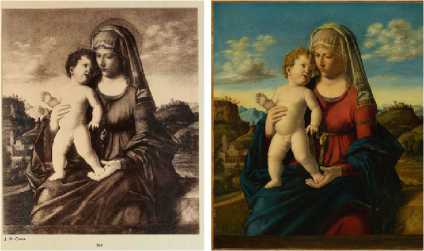
Fig. 1. Cima de Conegliano, Madonna with child, c. 1495-1499, oil on wood, 71,1 x 62,9 cm, North Carolina Museum of Art, inv. 52.9.152. Photo left: from the Rudolph Lepke’s auction catalog №2000, 1928.
Photo right: © North Carolina Museum of Art, Raleigh. Purchased with funds from the State of North Carolina
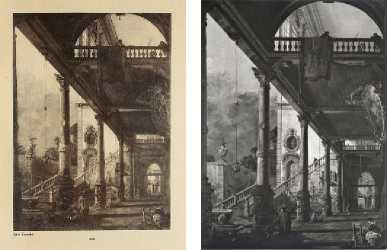
Fig. 2. Antonio Canaletto, Venetian Court, c. 1765–1768, oil on canvas, 126 x 93 cm, private collection.
Photo left: from the Rudolph Lepke’s auction catalog №2000, 1928
Photo right: © Zeri Foundation, licensed under CCo
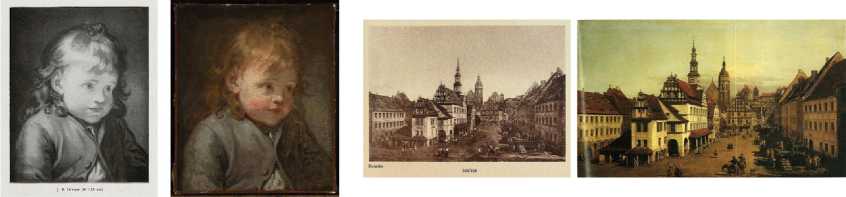
Fig. 4. Bernardo Bellotto, Market of Pirna.
View of the market square of Pirna with numerous cavalry and citizens, c. 1750-1760-s, oil on canvas, 47 x 78.7cm, presumably in a private collection.
Photo left: from the Rudolph Lepke’s auction catalogue №2000, 1928.
Photo right: © 2003 Christie’s Images Limited
Fig. 3. Jean-Baptiste Greuze, Portrait of the blond boy, c. 1770-s, oil on canvas, 41x33 cm, private collection.
Photo left: from the Rudolph Lepke’s auction catalogue №2000, 1928 Photo right: © Sotheby’s
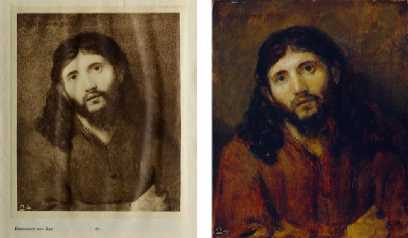
Fig. 5. Rembrandt Harmensz van Rijn, Christ, c. between 1648 and 1650, oil on oak panel, 25х23 cm, Detroit Institute of Arts, inv. no. 30.370. Photo left: from the Rudolph Lepke’s auction catalogue №2013, 1929.
Photo right: © Detroit Institute of Arts, Founders Society Purchase, 30.370
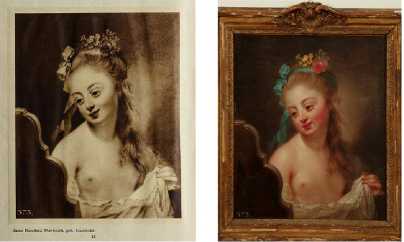
Fig. 6. A.D. Therbusch-Lisiewska, Vanity, 1768, oil on canvas, 55x46 cm. The State Palace-Museum Pavlovsk.
Photo left: from the Rudolph Lepke’s auction catalogue №2013, 1929 Photo right: © 2013Millon
Общество
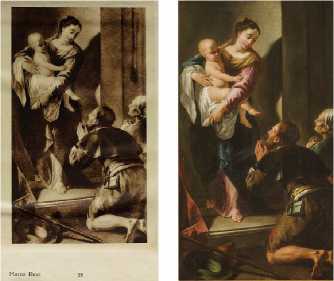
Fig. 7. Marco Ricci, nee Belluno, The Madonna of Loreto, first half of 18th C., сanvas, oil, 108x61 cm, private collection. Photo left: from the Rudolph Lepke’s auction catalogue №2013, 1929 Photo right: © Wannenes Auction House, Dr. Gesino, Margherita Calabrò
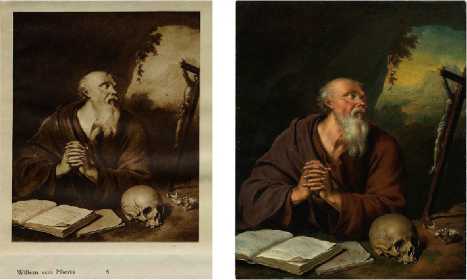
Fig. 8. Willem van Mieris, St. Jerome, 1719, wood in oil, 17.2x13.7 cm, private collection. Photo left: from the Rudolph Lepke’s auction catalogue №2013, 1929
Photo right: © 2010 Christie’s Images Limited
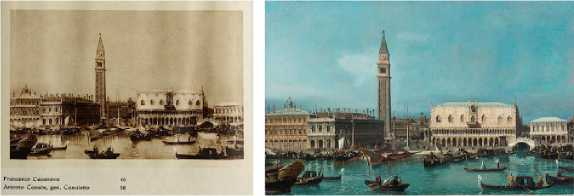
Fig. 9. Canaletto. Venice. View of the Doge's Palace. 1st half of the 18th, oil on canvas, 60x95 cm, private collection.
Photo left: from the Rudolph Lepke’s auction catalogue №2013, 1929 Photo right: © Sotheby’s
Общество. Среда. Развитие № 4’2025
Through comparison of the principal data and characteristics of several paintings – visual resemblance, technique, and dimensions – the following three works have also been identified on the current art market:
-
1. Marco Ricci. The Madonna of Loreto. Oil on canvas, 108 × 61 cm. Lot 28 (fig. 7)1.
-
2. Willem van Mieris. St. Jerome in the Desert. Oil on wood, 17.2 × 13.7 cm, 1719. Lot 8 (fig. 8)2.
-
3. Canaletto. Venice: View of the Doge’s Palace, Piazzetta, Campanile, and Adjacent Palaces from the Canal, with Numerous Gondolas. First half of the 18th century. Oil on canvas, 60 × 95 cm. Lot 50 (fig. 9)4.
This composition is a copy after Caravaggio’s Pilgrim’s Madonna (Madonna di Loreto), painted for the Basilica of Sant’Agostino in Campo Marzio, Rome, in 1604–1606. The work by the late Baroque master was sold at the Genoa branch of the Wannenes auction house on 18 June 2024 (lot 166) and catalogued as a painting by Francesco Palazzo (Venice, 1683– 1753)2. According to the Zeri Foundation data- base, The Madonna of Loreto had been held in the Paris gallery D’Atri until 1975, after which it entered Italian private collections3.
On 8 July 1993, the painting was sold at the London auction house Phillips, attributed to Giovanni Battista Cignaroli (lot 62). Since then, the work has passed through several further auctions. On 3 December 2019, it was sold by Galleria Caretto (Turin), listed as “attributed to Sebastiano Ricci,” during the Wannenes Old Master and 19th- Century Paintings sale. Provenance records also indicate that the painting had previously been in the collections of Contini Bonacossi (Florence) and Scarpa (Venice)1.
The painting is known to have been sold for the second time at Bukowskis, Stockholm (April 15–18, 1970, lot 165), and it reappeared at Christie’s, London, on April 30, 2010 (lot 37)3.
The painting reappeared at Sotheby’s, New York, on January 30, 2015 (lot 499), where it was listed as Attributed to Bernardo Bellotto under the title View of the Molo from the Bacino di San Marco5 . The lot description noted that the work most likely derived from a Russian collection – specifically, from the painting sold at the Lepke auction of June 4–6, 1929. The Sotheby’s catalogue also mentioned that a similar version is held in the San Diego Museum of Art, where it is attributed to Canaletto.
General information on the buyers of the thirteen paintings sold at the Lepke auction of June, 4–5, 1929, is preserved in the publication Die Kunstauktion [16, p. 4]. This article allows for a partial reconstruction of the chronology of events and offers today’s researchers a panorama of the leading figures in the European art market of that period. According to the article, the auction participants included Parisian collectors Jacques Arnold Seligmann, Kleinberger, Founès, Fabre, Popoff, Rofil, and Birtschasky; the London collector Goodrich; and Földes of Budapest. The Scandinavian art trade was represented by Sjoerstrand and Svenonius (Stockholm), Feinsilber (Oslo), and Bruhn, Hinkels, and Magnussen (Norway). Museum representatives were also active at the sale: from the Berlin museums came Prof. Friedländer and Prof. H. Voss (Kaiser-Friedrich-Museum); Prof.
Rob. Schmidt and Prof. Schnorr von Carols-feld (Schloss-Museum); Prof. Swarzenski, general director of the museums in Frankfurt am Main; and Prof. Graul (Leipzig Museum). The same article recorded the final hammer prices for each painting [4, p. 8].
The auction results proved deeply disappointing for the Soviet government. Moreover, the Soviet side remained indebted to the Rudolph Lepke auction house for an advance payment that had been issued earlier in anticipation of profits from the forthcoming sales. Seventeen of the 197 lots at the third “Russian Sale” held by Rudolph Lepke on November 26, 1929, originated from the Hermitage collection.
Predominant among the paintings were works of the German school of the nineteenth century, including those by B. Vautier (lot 85), A. Achenbach (lot 133 or 139), A. Melbye (lot 149c, from the collection of the Anichkov Palace), T. Weber (lot 186, also from the Anichkov Palace), A. Calame (lot 142b), H. Koekkoek (lot 1), E. Fris (lot 34), J. Carman (lot 142e, from the collection of Ferzen, which entered the Hermitage in 1919), and F. Krüger (lots 183, 184, from the collection of Obolenskiy). The plates with illustrations at the end of the catalogue allow one to visualize many of these works.
The compilers of the State Hermitage publication Museum Sales: Archival Documents. 1929. Part 2 note that handwritten annotations in the catalogues preserved in the Hermitage Museum’s Research Library make it possible to trace the provenance of these paintings today. These annotations also record the estimated and final sale prices. In her introduction to this volume, Elena Solomakha observes that the final prices, ranging from 100 to 600 Deutschmarks, were significantly lower than the preliminary estimates.
Conclusion
The sale of Russian cultural heritage nationalized by the Soviet authorities in 1918 continued until 1935, when Russian-German collaboration was interrupted.
Major sales of “Russian” paintings following the Lepke’s auctions of 1928–1929 were held not only at Rudolph Lepke’s in Berlin, but also at the Internationales Kunst- und Auktions-Haus (no. 50, Berlin, 1931), Hermann Ball & Graupe (no. 19, Berlin, 1932; no. 137, Berlin), Lempertz (no. 321, Cologne, 1931; no. 349, Cologne, 1933), and Hugo Helbing (no. 34, Frankfurt am Main, 1932). These auctions marked the final phase of the “Russian sales.” The culmination of this series was the so-called Stroganoff Auction , held on 11–12 May 1931 at the Lepke’s auction house in Berlin.
Общество
Общество. Среда. Развитие № 4’2025
Owing to the detailed descriptions contained in the German catalogues of most of Lepke’s auctions – listing dimensions, technique, date of execution, authorized signatures, and other characteristics – it is now possible to identify many of these paintings in today’s art market and museum collections. The analysis of auction statistics, in turn, makes it possible to trace the subsequent history of both major and lesser works once held by the Russian imperial family, nobility, and merchant class.
Dissatisfied with the export results of 1928– 1929, Soviet officials established new objectives for the liquidation of state reserves in 1930. Recognizing the inefficiency of foreign auction sales, the bureaucratic apparatus of Soviet foreign trade shifted its focus to direct transactions with private collectors and prominent dealers. Between 1931 and 1932, outstanding Hermitage masterpieces – forming part of its “golden fund” – passed into the hands of collectors such as C. Gulbenkian and A. Mellon. This sorrowful chapter in Russia’s cultural history has been the subject of numerous studies by both Western and Russian scholars [25–28].
The corpus of works from pre-revolutionary Russian collections that have reemerged on the modern art market or entered public collections remains relatively small. Continued research in this area not only enables a more detailed scholarly reconstruction of provenance but also contributes to greater transparency within the art trade. The author plans a series of future publications devoted to other works of art sold from Russian collections in the years preceding World War II, primarily between 1930 and 1935. These studies will also address works bearing significant similarities to “lost” pieces and the necessity of establishing their provenance.
List of Organizations Involved in the Sale of Nationalized Cultural Property after 1917
Antikvariat – The Central Office for the Purchase and Realization of Antique Objects. From 1928 it operated under Gostorg and was reorganized in 1929 under Vneshtorg as the All-Union State Export Company.
Commission on the Selection of Items for Sale Abroad – Established in Moscow in April 1928.
Petrograd Expert Commission for the Formation of the Export Valuables Fund – Active in the late 1920s.
Commission for the Acquisition of Antiquarian and Artistic Values – Established on 1 June 1921.
Glavnauka – The Main Scientific Administration under the People’s Commissariat of Enlightenment ( Narkompros ).
Gokhran – The State Depository of Valuables.
Gosmuseifond – The State Museum Fund ( Gosmuzeifond ) under Glavnauka and the People’s Commissariat of Enlightenment ( Narkompros ).
Gostorg – The State Import-Export Trading Office of the RSFSR, created in 1925 as a department of Narkomtorg (the People’s Commissariat of Trade). In 1928 it was transformed into the main office Gostorg–Antikvariat . Antikvariat became the organization to which works of art were transferred, along with other museums of the USSR, including objects formerly held by the Gosmuseifond , which was liquidated in 1929.
Narkompros – The People’s Commissariat of Enlightenment, roughly equivalent to a Ministry of Culture.
Narkomtorg – The People’s Commissariat of Trade, equivalent to a Ministry of Trade.
Narkomvneshtorg – The People’s Commissariat for Foreign Trade (active until 1926 and again from November 1930; from 1926–1930 it functioned as the People’s Commissariat for Foreign and Domestic Trade, also known as Vnesh-torg ) . Equivalent to a Ministry of Foreign Trade.
STO – The Council of Labor and Defense.
The State Museum Fund of the General Science Department of the People’s Commissariat of Education of the RSFSR – Established in January 1919. Its function was to manage the selection and redistribution of confiscated valuables until November 1927. The Leningrad Department of the Gosmuseifond was liquidated on 1 June 1929. In 1927 the Moscow and Leningrad reserve depositories of the Gosmuseifond were also closed.
Vneshtorg – The Commissariat for Foreign Trade ( Narodny komissariat vneshney tor-govli , NKVT).
Acknowledgements
The author would like to express deep gratitude to the Staatliche Museen zu Berlin for awarding a research grant in 2016, and in particular to Dr. Jörg Völlnagel, Dr. Joachim Brand, Dr. Britta Bommert, and Ms. Dorothee Wagner, as well as to the librarians of the Kun-stbibliothek, whose generous assistance provided new material within the framework of the large-scale project German Sales, 1901–1945.
This study would not have been possible without the support of many colleagues from various museums and auction houses: Ms. Vivian Nguyen (Museum of Fine Arts, Houston); Ms. Clara Ruffin (Detroit Institute of Arts, Michigan); Ms. Sean Livingstone (North Carolina Museum of Art, Raleigh, NC); the curators at Sotheby’s, New York – Mr. Issy Maxwell and Mr. Giorgio Bowler – and the curator at Christie’s, New York, Mr. Camille Marchini. The research was further assisted by Mr. Claude Corrado (Millon Drouot, Paris), Dr. Gesino and Ms. Margherita Calabrò (Wannenes, Genoa).
Special thanks are due to Mr. Luigi Caretto, owner of the Galleria Luigi Caretto in Turin, for his help in tracing the copy of Caravaggio’s Madonna di Loreto by an eighteenth-century Italian painter on the current art market. Information concerning the Canaletto painting was kindly provided by Ms. Marcella Culatti of the Fondazione Federico Zeri, Bologna.
The author also gratefully acknowledges the encouragement and assistance of friends – Dmitry Ivanov (Bristol), Maria Parkhomenko (Gothenburg), Anastasia Milovidova (Versailles), and Elizabeth Timofeeva (Forlì, Italy) – whose confidence in this research helped in locating new data on the present whereabouts of works from pre-revolutionary Russian art collections.
Sincere thanks are also extended to Dr. Anna Petrakova (State Hermitage Museum, St. Petersburg) for her informational support, and to Deputy Director Rifat Gafifullin (State PalaceMuseum Pavlovsk, St. Petersburg) for his kind assistance and for providing access to the latest research on the painting by A.D. Therbusch-Liszewska. Finally, the author would like to thank her teacher, Ilya Doronchenkov, for his guidance and for encouraging a deeper examination of all known versions of Bellotto’s painting.
