
Semiquantum theory of glass transition of fluids
Journal: Вестник Бурятского государственного университета. Философия @vestnik-bsu
Section: Физика
Article in issue: 3, 2010.
Free access
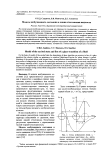
Semiquantum interpretation of the glass transition of liquids is proposed as a process of "winterkill" of characteristic acoustic frequencies associated with molecular mobility of excited kinetic units - linear quantum oscillators. There is a correlation between the quantum energy of elementary excitations and the temperature of the glass-transition, which is proportional to the characteristic temperature of Einstein. By the analogy with Einstein quantum theory of heat capacity of solids temperature interval of the concentration of excited atoms in amorphous medium is divided into two areas: high-temperature, where the temperature dependence is linear, and low-temperature, where the concentration of excited atoms decreases exponentially and reaches minimal limit (about 3%), in which the viscosity increases to a critical value (~1012 Pas) corresponding to the glass transition temperature -the temperature of freezing of the mobility of excited kinetic units. Temperature dependence of free activation energy of viscous flow in the range of glass determined temperature dependence of the relative number of excited atoms.
Similar articles in the section Fluid mechanics in general. Mechanics of liquids (hydromechanics)
Short address: https://sciup.org/148179483
IDS: 148179483 | UDC: 532.2
