
Preferential Regime for the Russian Arctic Zone: Contribution to the Socio-Economic Development of the Regions
Journal: Arctic and North @arctic-and-north
Section: Social and economic development
Article in issue: 63, 2026.
Free access
In accordance with the Federal Law “On State Support for Entrepreneurial Activity in the Arctic Zone of the Russian Federation”, a preferential regime has been established in the Arctic regions, making the Arctic Zone the largest special economic zone in Russia and the world. The preferential regime in the Arctic zone should promote economic development of the territories, stimulate investment and entrepreneurial activity. The aim of the study is to identify the features and problems that have arisen during the implementation of this project, based on an analysis of the practice of establishing and developing the preferential regime of the Arctic Zone, as well as the implementation of the set tasks for economic development and the revitalization of investment and entrepreneurial activity in the Arctic territories, and, on this basis, to formulate the author’s vision of the areas of activity on which efforts should be concentrated to successfully achieve the set objectives. The analysis showed that the predominant share of declared investments and jobs falls on the European part of the Arctic Zone of the Russian Federation. However, many of the participants are at the initial stage of investment, and the actual amount invested is comparatively lower than declared. The reason for this may be the repeated change in the vision of the development of the Arctic zone, the underdevelopment of infrastructure and economic instability, which create high risks for investors and force them to adopt a cautious approach. Large-scale business continues to dominate in the Arctic regions. At the same time, the development of small and medium-sized enterprises in the Arctic zone is of great importance for the creation of new industries and production facilities, that is, for the restructuring of the economy and the comprehensive socio-economic development of the region. Proposals for the implementation of the tasks set in the law have been developed. In particular, it was proposed to use not only economic, but also social and environmental indicators when developing a methodology for assessing the effectiveness of the special economic zone of the Russian Arctic.
Short address: https://sciup.org/148333997
IDS: 148333997 | UDC: 332.12(985)(045) | DOI: 10.37482/issn2221-2698.2026.63.103
Text of the scientific article Preferential Regime for the Russian Arctic Zone: Contribution to the Socio-Economic Development of the Regions
DOI:
In recent decades, various types of preferential regimes have been actively created in Russia, namely, territories with a special legal regime for carrying out economic activity. Preferential regime is a legal regime that establishes a preferential procedure for the implementation of the rights and obligations of economic entities. Preferential regime provides economic entities with either specific tax or benefits, or a whole range of benefits aimed at simplifying business operations in general (Podolskiy, 2019). Such preferential regimes include special economic zones, territories of advanced socio-economic development, etc. The purposes of creating zones with a special legal regime for carrying out economic activity may vary and depend both on the level of socio-economic development of the country and on the strategic priorities of state policy. Such zones are created to address foreign trade, general economic, social, regional, and scientific and technical challenges.
Preferential regimes were also applied in the Arctic Zone of the Russian Federation (hereinafter referred to as the AZRF), for example, through the creation of support zones, special economic zones, and territories of advanced socio-economic development. However, this was insufficient for the comprehensive development of the AZRF; individual zones did not create the necessary impetus for the balanced socio-economic development of the entire Arctic zone. A new stage in the development of this territory is associated with the adoption of Federal Law No. 193-FZ “On State Support for Entrepreneurial Activity in the Arctic Zone of the Russian Federation” dated July 13, 2020. According to this law, a single preferential regime applies to the entire AZRF. Essentially, the Arctic zone becomes the largest special economic zone in Russia and the world.
The aim of the study is to identify the features and problems that have arisen during the implementation of this project, based on an analysis of the practice of establishing and developing the preferential regime of the Arctic Zone, as well as the implementation of the set tasks for economic development and the revitalization of investment and entrepreneurial activity in the Arctic territories, and, on this basis, to formulate the author’s vision of the areas of activity on which efforts should be concentrated to successfully achieve the set objectives.
Materials and methods
The theoretical basis of this study consists of works by Russian and foreign scientists. The problems of sustainable development of the Arctic zone are presented in the works of international authors (Moe, 2020; Nilsson, Larsen, 2020). Modern approaches to managing the integrated economic development of the regions of the Russian Arctic have been studied in the works of a number of researchers, including (Skufina, Baranov, Samarina, 2022; Samarina, Skufina, 2024; Sukhorukov, Gladkiy, Kulik, 2021). A large number of studies are devoted to optimization and increasing the efficiency of preferential regimes (Podolskiy, 2019; Shatalova, Likhopud, 2023). The issues of improving the preferential regime of the Arctic Zone of the Russian Federation are addressed in the works (Roslyakova, Volkov, 2024; Volkov, Tishkov, Nikitina, 2022).
The following research methods were used in the course of the study: economic-statistical, comparative-analytical, expert assessments. The empirical and informational base included official statistical data of the Federal State Statistics Service, reports on the activities of the Far East and Arctic Development Corporation, as well as analytical materials of the Audit Chamber of the Russian Federation. As one of the authors of the article is a Roscongress expert at the St. Petersburg International Economic Forum, data from public statements by individuals determining the current and future development of the Arctic and the Northern Sea Route were also used.
Research results
The preferential regime under consideration is intended to facilitate the economic development of the Arctic zone territories, to stimulate investment and entrepreneurial activity, to create a foundation for accelerated social development, and to improve the quality of life in the AZRF. The preferential regime applies fully or partially to the territories of ten regions comprising the Arctic Zone of the Russian Federation: the Murmansk Oblast, the Republic of Karelia, the Arkhangelsk Oblast, the Nenets Autonomous Okrug, the Komi Republic, the Yamalo-Nenets Autonomous Okrug, the Khanty-Mansi Autonomous Okrug (Yugra), the Krasnoyarsk Krai, the Sakha Republic (Yakutia), and the Chukotka Autonomous Okrug. At the same time, the boundaries of the AZRF as a special economic zone are expanding: in March 2024, two districts of the Khanty-Mansi Autonomous Okrug (Yugra) were partially included into the Arctic Zone. Consequently, favorable conditions for their development will be created through tools supporting entrepreneurship in the Arctic Zone. The basis for including new areas in the AZRF, in addition to their physical and geographical location in the Arctic zone, is the presence of investment potential in key sectors, such as the extractive and manufacturing industries, energy, and others.
A resident of the AZRF may be an individual entrepreneur or a legal entity that is a commercial organization registered in the Arctic Zone of the Russian Federation in accordance with the established procedure (with the exception of state and municipal unitary enterprises) and having concluded an agreement on the implementation of investment activities in the Arctic Zone 1.As of February 2025, 909 residents were registered in the AZRF, with declared investments of 1,024 billion rubles and projects designed to create 28,827 jobs 2. The dynamics of changes in the number of residents for 2020–2023 by region are presented in Table 1 (here and below, data are provided excluding the Khanty-Mansi Autonomous Okrug).
Number of AZRF residents (units) 3
|
Russian Federation constituent entity |
2020 |
2021 |
2022 |
2023 |
|
|
total |
including: |
||||
|
comissioned |
|||||
|
Murmansk Oblast |
14 |
105 |
181 |
221 |
33 |
|
Nenets Autonomous Okrug |
- |
2 |
7 |
11 |
3 |
|
Chukotka Autonomous Okrug |
1 |
7 |
15 |
23 |
4 |
|
Yamalo-Nenets Autonomous Okrug |
2 |
25 |
66 |
100 |
12 |
|
Republic of Karelia |
10 |
34 |
62 |
70 |
8 |
|
Komi Republic |
2 |
14 |
25 |
34 |
9 |
|
Sakha Republic (Yakutia) |
2 |
6 |
13 |
16 |
5 |
|
Krasnoyarsk Krai |
1 |
9 |
23 |
30 |
6 |
|
Arkhangelsk Oblast |
5 |
93 |
154 |
202 |
81 |
|
Total |
37 |
295 |
546 |
707 |
161 |
Table 1 presents cumulative data on the number of registered AZRF residents from 2020 to 2023, as well as data on the number of AZRF resident projects commissioned by the end of 2023. The largest number of registered residents is in the Murmansk and Arkhangelsk Oblasts. In 2022, the number of registered residents increased by 85% compared to the previous year, but investor interest subsequently declined. This may be due to both unfavorable socio-economic factors and the “wait-and-see” approach of some investors. As practice shows, a rapid influx of investors in the first few years after the introduction of a preferential regime tends to occur in areas with existing infrastructure. Investors in the AZRF may be significantly more cautious due to the fact that plans for the development of the Arctic regions have changed repeatedly, as well as because most infrastructure facilities are under construction and have not yet been commissioned. The infrastructure of the AZRF includes buildings and facilities relating to transport, energy, utilities, engineering, social and innovation infrastructure, seaport infrastructure, etc.
After the launch of a number of key infrastructure projects ensuring the connectivity of Arctic regions, a further wave of new residents can be expected. Undoubtedly, this will be facilitated by the Plan for the Development of the Northern Sea Route until 2035, adopted in 2022 4 (hereinafter referred to as the Plan). The main objective of the Plan is to supply people living in these areas with cargo and essential goods, as well as to create favorable conditions for the implementation of investment projects. According to the Plan, the Northern Sea Route is to become a key element in the development not only of the Arctic but of the entire Russian economy, in strengthening Russia’s position in the global market, and in enhancing defense and security.
The increase in cargo traffic along the Northern Sea Route is divided into several stages, with each stage corresponding to a planned growth in transport volumes (Table 2).
Projected cargo transport volumes along the Northern Sea Route (million tons) 5
|
Year |
Cargo transport volume |
|
2024 |
80 |
|
2030 |
150 |
|
2035 |
220 |
It is envisaged that shipping operations will be year-round. For this purpose, it is planned to attract not only state funds, but also other sources for the development of the icebreaker fleet. It is expected that by 2030, approximately 19.5 trillion rubles will be invested in Arctic projects related to the NSR 6, with the majority of the funds coming from private investors. Such investment projects attract large anchor investors to the AZRF, followed by small and medium-sized businesses with a wide range of specializations.
However, the current specialization of the AZRF residents is quite typical, and promising economic specializations are not identified as a separate development area for the Arctic Zone of the Russian Federation. Residents are implementing projects in such sectors as consumer services, mining, trade, agriculture, hunting, fishing, and others. Large-scale business continues to dominate in the Arctic regions, while small businesses have a distinct social significance, are unique, and are most often represented by micro-forms of economic activity. V.N. Myakshin proposes identifying the types of economic activity that have a priority impact on employment growth in the regions. The expert notes that the employment structure by regional specialization in the Arctic regions is similar, but not identical, suggesting the possibility of identifying priority industries at the regional level (Myakshin, 2024). This direction of the AZRF development should contribute to the creation of a favorable living environment, which is essential for attracting skilled workers and specialists, and reducing the outflow of local residents.
The federal executive body responsible for developing state policy and legal regulation in the AZRF is the Ministry for the Development of the Russian Far East. The Far East and Arctic Development Corporation is responsible for working with entrepreneurs ready to begin investment activities in the Arctic zone 7. The Audit Chamber of the Russian Federation notes the unprofitability of management companies as a drawback of preferential regimes. Experts point out that this indicates a lack of demand for management company services. However, the activities of a management company cannot be judged solely on the basis of absolute indicators over a short period of time and without taking into account social, multiplier and delayed effects, as well as the particular complexity of operating in the harsh conditions of the Arctic. This is a complex issue that requires research specific to the conditions of the Arctic Zone of the Russian Federation.
The services provided by the management company in the AZRF include project structuring and preparation, processing of applications for resident status, legal support, facilitating the use of the free customs zone procedure, assistance in financing, inter-departmental support, staffing support for companies (job fairs, recruitment days, career festivals), and consulting. The management company in the AZRF also initiates and implements social programs for human capital development.
Funding for the construction of infrastructure facilities is provided from both budgetary (allocations) and extra-budgetary sources. Expenditure on the organization and operation of the preferential regime in the AZRF is defined by the state program “Socio-Economic Development of the Arctic Zone of the Russian Federation” 8. These costs include contributions to the authorized capital of the management company, subsidies, and inter-budgetary transfers to constituent entities of the Russian Federation. The volumes of investment by residents in the AZRF are presented in Table 3.
Table 3
Volumes of investment by residents in the AZRF (billion rubles) 9
|
Russian Federation constituent entity |
2020 |
2021 |
2022 |
2023 |
|
|
plan |
including: |
||||
|
fact |
|||||
|
Murmansk Oblast |
47.2 |
142.2 |
151 |
180.1 |
39.3 |
|
Nenets Autonomous Okrug |
- |
0.2 |
204.9 |
205.2 |
3.7 |
|
Chukotka Autonomous Okrug |
2.6 |
2.8 |
167 |
171 |
32.4 |
|
Yamalo-Nenets Autonomous Okrug |
0.04 |
16.1 |
25.3 |
29 |
3.2 |
|
Republic of Karelia |
87.6 |
96.4 |
97.6 |
98 |
17.9 |
|
Komi Republic |
0.5 |
1.7 |
2 |
2 |
0.5 |
|
Sakha Republic (Yakutia) |
0.3 |
0.9 |
5.5 |
5.5 |
1.6 |
|
Krasnoyarsk Krai |
39.2 |
35.0 |
37.1 |
37.6 |
21.3 |
|
Arkhangelsk Oblast |
1.1 |
37.4 |
128 |
119 |
22.8 |
|
Total |
178.5 |
332.6 |
818.8 |
848 |
143 |
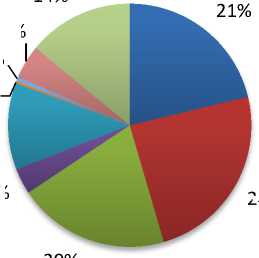
Table 3 presents cumulative figures from 2020 to 2023 of planned (declared) investments by AZRF residents, as well as data on actual investments by AZRF residents since the beginning of their operations as of the end of 2023. As can be seen from Table 3, the actual amount invested by the end of 2023 is comparatively lower than the declared one. Overall, AZRF residents have actually invested approximately 17% of the declared investment volumes. This suggests that many investors are in the initial stages of investing. The largest volumes of planned investments by residents in 2023 are in the Nenets Autonomous Okrug (205.2 billion rubles), the Murmansk Oblast (180.1 billion rubles) and the Chukotka Autonomous Okrug (171 billion rubles). The structure of planned investments by AZRF residents by region in 2023 is shown in Fig. 1. The data illustrates that more than 50% of planned investments are accounted for by the European part of the Arctic Zone.
1%
14%
5%
0%
12%
3%
24%
20%
-
■ Murmansk Oblast
-
■ Nenets Autonomous Okrug
-
■ Yamalo-Nenets Autonomous Okrug
-
■ Republic of Komi
-
■ Krasnoyarsk Krai
-
-
■ Chukotka Autonomous Okrug
-
■ Republic of Karelia
-
■ Republic of Sakha (Yakutia)
-
■ Arkhangelsk Oblast
Fig. 1. Structure of investments by AZRF residents by region in 2023 (planned, billion rubles) 10 .
However, returning to Table 3, it is noteworthy that the volumes of actual investments are significantly lower than planned ones. For example, in the Nenets Autonomous Okrug, 3.7 billion rubles were actually invested, in the Murmansk Oblast — 39.3 billion rubles, and in the Chukotka Autonomous Okrug — 32.4 billion rubles. However, the Nenets Autonomous Okrug ranks last in terms of the number of residents. A comparison of resident numbers and investment volumes suggests that the preferential regime has not served as a catalyst for economic diversification and the development of small and medium-sized enterprises in all Arctic regions. For some Arctic regions, large-scale business remains the driver of development. However, this is offset by the creation of a large number of jobs, which in the long term may influence the development of the regions in this direction.
Data on the number of jobs declared to be created in the AZRF are presented in Table 4.
Table 4
Number of jobs created in the AZRF (units) 11
|
Russian Federation constituent entity |
2020 |
2021 |
2022 |
2023 |
|
|
plan |
including: |
||||
|
fact |
|||||
|
Murmansk Oblast |
970 |
4 636 |
6 426 |
7 453 |
2 734 |
|
Nenets Autonomous Okrug |
- |
26 |
1 751 |
1 765 |
51 |
|
Chukotka Autonomous Okrug |
37 |
375 |
2 150 |
2 625 |
1 285 |
|
Yamalo-Nenets Autonomous Okrug |
35 |
473 |
1 633 |
2 377 |
734 |
|
Republic of Karelia |
898 |
1 412 |
1 979 |
2 430 |
931 |
|
Komi Republic |
78 |
566 |
706 |
852 |
257 |
|
Sakha Republic (Yakutia) |
78 |
219 |
682 |
658 |
267 |
|
Krasnoyarsk Krai |
2 084 |
1 387 |
1 670 |
1 749 |
181 |
10 Source: compiled by the authors based on data from the Annual Reports on the Activities of the Far East and Arctic Development Corporation. URL: (accessed 15 February 2025).
11 Ibid.
|
Arkhangelsk Oblast |
202 |
2 481 |
6 632 |
6 656 |
3 237 |
|
Total |
4 382 |
11 474 |
23 629 |
26 565 |
9 675 |
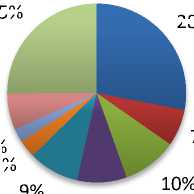
Table 4 presents cumulative figures from 2020 to 2023 showing the planned (declared by residents) number of jobs, as well as the number of jobs actually created by AZRF residents as of the end of 2023. The Arkhangelsk and Murmansk Oblasts lead in the number of jobs declared for creation, and the actual volumes of jobs created in these regions for 2023 are also comparatively high — 49% and 37% of the declared number, respectively. The structure of jobs declared for crea- tion in 2023 is presented in Fig. 2.
25%
7%
2%
3%
28%
7%
9%
-
■ Murmansk Oblast
-
■ Nenets Autonomous Okrug
-
■ Yamalo-Nenets Autonomous Okrug
-
■ Republic of Komi
-
■ Krasnoyarsk Krai
-
-
■ Chukotka Autonomous Okrug
-
■ Republic of Karelia
-
■ Republic of Sakha (Yakutia)
-
■ Arkhangelsk Oblast
Fig. 2. Structure of jobs to be created by AZRF residents by region in 2023 (planned, billion rubles) 12.
The distribution of jobs planned for creation in 2023 also shows that over 50% of the planned jobs are in the European part of the AZRF.
When assessing these indicators, it should be kept in mind that in some territories within the AZRF, special economic zones (SEZs) had already been established, and infrastructure projects are being implemented to attract investors on a general basis. For example, the figures for the Chukotka Autonomous Okrug should be considered taking into account that the “Chukotka” SEZ operates separately within the Okrug; in the Murmansk Oblast — the “Capital of the Arctic” SEZ, in the Arkhangelsk Oblast — the “Capital of the North” SEZ. Competition between investment sites affects the demand among investors for a single preferential regime for the AZRF.
Discussion
When discussing large-scale business in the Arctic, it is important to understand that these are primarily resource-extracting companies. A distinctive feature of their operations is that, as deposits are depleted, companies leave the area and relocate their activities to other sites in different regions. Therefore, even now, during a period of growing and peak extraction of non-renewable natural resources, it is necessary to focus on the future sustainable development of the
Arctic regions and on the comprehensive socio-economic development of these territories. This will ensure successful development of the Arctic regions both during periods of decline and during periods of complete depletion of non-renewable natural resources. For this purpose, it is important to create services and industries unrelated to extractive resources, which means restructuring the economy. The restructuring of the Arctic regions’ economy entails the emergence of new specialized industries within the existing resource base, the development of knowledgeintensive and high-tech manufacturing, and the expansion of services, including tourism, transportation, information technology, communications, etc. (Larchenko, 2008). In this regard, the development of small and medium-sized businesses in the Arctic zone is of great importance for the creation of new industries and production facilities, the comprehensive socio-economic development of the region, and, thus, the creation of a foundation for the sustainable development of Arctic regions in the future. As noted above, large-scale investment projects are capable of attracting anchor investors who are interested in long-term operations in the region and who create complex value chains, which, in turn, stimulates the development of small and medium-sized enterprises in the region.
As for the development of transport infrastructure in the Arctic Zone of the Russian Federation, it should be noted that new opportunities have emerged in this area in recent years. Against the backdrop of melting Arctic ice and the country’s commitment to large-scale development of the Northern Sea Route in the Arctic zone, new transport and logistics links are being created, opening access to the northern seas and creating opportunities for the development of alternative transit corridors serving both domestic Russian trade markets and new global trade routes.
However, repeated changes in the vision for the development of the ARZF, attempts to create similar zones in other regions, and general socio-economic instability pose high risks for investors and force them to adopt a cautious approach.
In addition, regional and municipal tax incentives are established separately for each region, applying in particular to income tax, land tax, property tax, unified social tax and mineral extraction tax. Depending on the region, the amount of the benefit, its duration, and the list of economic activities to which it applies may vary.
It should be noted that the economic mechanisms of the law, expressed in various incentives, were subject to serious criticism among practitioners even during the discussion of the draft bill, since it is intended to stimulate only new investments. This places economic entities in unequal market conditions. Thus, M.A. Zhukov, Scientific Secretary of the Scientific Council of the ANO “Scientific Coordination Center for Problems of the North, the Arctic and the Livelihoods of Indigenous Peoples of the North” (ANO NCC “Sever”), notes that there is a need to reorient the mechanisms of the law to create conditions for ensuring the profitability of production activities in the Arctic for all economic entities as a whole 14, and support measures should be developed taking into account their priority (Zhukov, Soldatkin, 2019). However, we would like to object, as the aim of this law is to create favorable conditions for attracting new domestic and foreign investors. Although, undoubtedly, support for businesses already operating in the Arctic is necessary, and this is also stipulated in the law.
Unfortunately, statistical information on the preferential regime in the Arctic Zone of the Russian Federation presented in public sources is contradictory and not always comparable. Information is published more promptly on the AZRF investment portal website, so the data may not correspond to official records, which complicates the assessment of the AZRF’s contribution to the region’s socio-economic development.
In its report on the results of the expert-analytical event “Analysis of the Mechanism for Establishing and Operating Preferential Regimes as a Tool for Socio-Economic Development and For-
SOCIAL AND ECONOMIC DEVELOPMENT
Lyubov V. Larchenko, Valeria B. Gulyaeva. Preferential Regime for the Russian Arctic Zone … eign Economic Policy” 15, the Audit Chamber of the Russian Federation identified the following shortcomings in the operation of preferential regimes in Russia, including the AZRF:
-
• the approved methodologies for assessing effectiveness and the indicators used do not allow for a full assessment of the effectiveness of the functioning of preferential regimes. Furthermore, no methodology has been developed to assess the effectiveness of the functioning of the AZRF;
-
• the regulatory framework for the establishment and operation of preferential regimes contains provisions that create administrative barriers to attracting investors;
-
• there is no alignment between the objectives of the preferential regimes and the strategic development goals of the Russian Federation, nor with the current socio-economic situation of the constituent entities of the Russian Federation and macro-regions 16 ;
-
• low revenue or losses from the core activities of management companies, resulting in the need to optimize their operations in terms of the services provided ;
-
• preferential regimes are aimed at developing the socio-economic potential of the regions where they operate, while environmental objectives are not fully taken into account.
Let us examine some of these points in detail.
The report of the Audit Chamber of the Russian Federation on the contribution of preferential regimes to the development of the Russian economy as a whole and of the constituent entities of the Russian Federation in particular notes that no correlation has been identified between the operation of preferential regimes and socio-economic indicators at the federal level, whereas at the regional and resident enterprise levels, a correlation is observed with certain socioeconomic development indicators or indicators characterizing the activities of resident enterprises 17. This is due to the large number of factors influencing the development of the entire Arctic Zone of the Russian Federation. It is quite difficult to determine such a correlation, given that other types of preferential regimes are also established in the same territory. For resident enterprises, the effect is manifested in increased revenue and faster growth in the workforce.
A comparison of the data reveals that the AZRF’s contribution to the socio-economic development of the regions is ambiguous. For example, there are regions characterized by high entrepreneurial activity, such as the Arkhangelsk and Murmansk Oblasts, where the contribution of preferential regimes to their development is comparatively small. At the same time, the contribution of the preferential regime to the Nenets Autonomous Okrug is quite significant.
Audit Chamber of the Russian Federation. 2022; 2 (291).
p.
URL:
ru/77144597/?ysclid=m74uafo442632074128
(accessed 15 February 2025).
Ibid.
Ibid.
No methodology has been established for assessing the effectiveness of the AZRF preferential regime; consequently, no performance evaluation has been carried out to date. It should be noted that, in our opinion, a proper assessment of the effectiveness of any preferential regime should be conducted in at least five years after its creation, when all necessary infrastructure has been launched and the first residents’ facilities have been commissioned. The effectiveness of preferential regimes, such as special economic zones, is assessed using absolute and relative indicators. Absolute indicators include, for example, the number of residents, the volume of investment, the volume of revenue, etc. Relative indicators for assessing effectiveness generally involve a comparison of actual and planned figures 18. However, this approach does not allow for a full assessment of the effects of preferential regimes. The impact of preferential regimes is not limited to accelerating the growth of economic indicators, but also applies to the cost, quality and availability of education, medical services, the state of infrastructure, etc. It seems advisable to take into account not only economic, but also social and environmental indicators when assessing effectiveness, which will allow for a comprehensive view of the impact of preferential regimes. For a proper analysis, it would be possible to assess the ratio of costs to results achieved, or to evaluate the contribution of the preferential regime to the growth of socio-economic indicators in a region or district, as well as to assess the contribution of the preferential regime to the achievement of the targets (indicators) of the government programs within which they were established, and/or in achieving sustainable development goals. Thus, A.D. Volkov, N.A. Roslyakova and a group of experts propose assessing the effectiveness of the AZRF preferential regime by taking into account regional specifics, the intensity of implementation in the regions and the impact on economic processes, as well as on the financial indicators of residents (Zhukov, Soldatkin, 2019). O.V. Kuznetsova also suggests considering the differentiation of Arctic municipalities and assessing the demand for investor support measures, thereby supporting municipalities that are insufficiently involved in the operation of preferential regimes (Kuznetsova, 2024).
The impact of the AZRF preferential regime on the implementation of sustainable development goals is also not assessed. In order to improve the effectiveness of state policy and regulatory frameworks for the development of the Arctic Zone, the Arctic Council was established. It monitors interactions between residents and indigenous minorities living in the Arctic Zone, develops proposals for the Ministry for the Development of the Russian Far East to improve the efficiency of activities in the Arctic Zone, and participates in the development of environmental protection measures. In some cases, executive authorities provide information on the impact of the preferential regime on specific aspects of sustainable development, or resident enterprises publish information about their activities on official websites. This mainly concerns the impact on economic development indicators: economic diversification, reduction in unemployment, growth in aver- age wages, and the development of social infrastructure. It should be noted that this information may simply not be published. For example, the management company’s 2020 report states that project documentation should include a section titled “List of environmental protection measures”.
In the social sphere, five joint programs with leading Russian universities were launched in 2021 alone. In this case, it would be interesting to receive information on the number of students trained with the support of the management company and their subsequent employment or opening of their own businesses, etc. The management company’s operations are also undergoing active digitalization, particularly in terms of supporting employment in the Arctic regions.
An objective assessment of the effectiveness of preferential regimes should certainly include a comprehensive assessment of the current and potential impact of preferential regimes on the social, environmental, and economic development of the regions in which they are implemented. For example, an assessment should be carried out using the following indicators: the number of residents; the proportion of enterprises engaged in innovative activities; the number of jobs created; the number of jobs created for the local population; the volume of innovative goods produced, works performed and services provided; the volume of investment; the volume of investment by sector, etc.
Taking into account that the territories within the Arctic Zone of the Russian Federation are heterogeneous in terms of infrastructure, resources, and climate, it is advisable to provide for some differentiation in indicators depending on the region. Disparities in the socio-economic development of the Arctic regions, which impact the effectiveness of the preferential regime, should also be taken into account (Kuznetsova, 2024).
Conclusion
Summarizing the above, the following conclusions can be drawn. Large-scale business continues to predominate in the Arctic Zone of the Russian Federation, while small businesses have a pronounced social significance, are unique, and are most often represented by micro-forms of economic activity. The extension of the preferential regime to the AZRF has created additional opportunities for both large and small- and medium-sized businesses to take advantage of various sets of benefits, but investors are adopting a wait-and-see approach. For the AZRF preferential regime to be effective, it is necessary to ensure its stability and competitiveness by developing a unique set of incentives and services. It should also be noted that, since population decline, uneven distribution of settlement and economic activity cannot be overcome in the near future, a reasonable balance should be found between the intensification of economic activity in growth centers and the sustainable development of other territories. Currently, the overwhelming majority of declared investments and jobs are generated in the European part of the AZRF.
In order to achieve the objectives set out in the law more effectively, it is necessary to:
-
• develop a methodology for assessing the effectiveness of the AZRF preferential regime,
SOCIAL AND ECONOMIC DEVELOPMENT
Lyubov V. Larchenko, Valeria B. Gulyaeva. Preferential Regime for the Russian Arctic Zone … including not only economic but also social and environmental indicators;
-
• identify the specializations of the districts within the AZRF preferential zone as part of the list of promising specializations;
-
• require large residents to make their non-financial reporting publicly available;
-
• expand the range of services provided by the AZRF management company by specializing in certain services that are not provided by other management companies.
