
Prerequisites for the creation of an agrobiotechnology park as an element of innovation infrastructure
Journal: Economic and Social Changes: Facts, Trends, Forecast @volnc-esc-en
Section: Branch-wise economy
Article in issue: 6 т.18, 2025.
Free access
In the context of the technological transformation of the agro-industrial complex, agrobiotechnology parks are becoming a key tool for integrating science and production. High import dependence, limited adoption of biotechnologies, and insufficient processing infrastructure hinder the industry's development, necessitating the formation of innovative agro-industrial clusters to enhance the competitiveness and technological independence of agriculture. This study substantiates the feasibility of establishing the "Subtropics of Russia" agrobiotechnology park in Sochi, Krasnodar Territory, as a key element for the technological modernization of the agro-industrial complex and the formation of an export-oriented model of subtropical crop cultivation. The methodological framework of the research includes theories of cluster and spatial development, the triple helix concept, principles of noonomy, as well as tools of statistical, comparative, and spatial-economic analysis. These tools allow for the integration of natural-climatic, agroecological, logistical, and institutional parameters into a unified assessment of regional potential. The study relies on a dialectical approach, which facilitates the identification of interrelationships between agroclimatic characteristics, the dynamics of agricultural production, institutional constraints, and the tasks of technological modernization. The obtained results demonstrate that the region possesses a unique combination of agroclimatic, soil-ecological, and logistical advantages, providing a sustainable foundation for the concentration of high-tech production in subtropical crop cultivation. The developed conceptual model of the agrobiotechnology park reflects its potential to reduce import dependence, establish a system for the reproduction of virus-free planting material, develop breeding and genetic materials, implement digital agrotechnologies, and enhance the competitiveness of the agricultural sector. The scientific novelty of the research lies in the formation of a spatial-economic rationale for the location of an agrobiotechnology park, taking into account natural-resource, institutional, and logistical factors, as well as in the development of a territorially adapted model of a high-tech agro-industrial cluster focused on the development of subtropical crop cultivation. Its practical significance lies in the scientific and methodological substantiation for the creation of agrobiotechnology parks as a tool for achieving technological sovereignty and enhancing food security. Prospects for further research are associated with assessing the economic efficiency of such technopark structures and developing models of institutional support for their development.
Similar articles in the section Production and services according to economic sectors

Short address: https://sciup.org/147252996
IDS: 147252996 | UDC: 338.43 | DOI: 10.15838/esc.2025.6.102.6
Text of the scientific article Prerequisites for the creation of an agrobiotechnology park as an element of innovation infrastructure
In modern conditions, the development of the agro-industrial complex (AIC) is driven by the need to enhance technological competitiveness, reduce resource losses, and use innovative economic models, which necessitates strategic restructuring of state regulation mechanisms, investment support, and the transfer of scientific developments to the real sector. One of the main strategic directions for AIC development is achieving key targets within the framework of the Food Security Doctrine, approved by Presidential Decree 20, dated January 21, 20201 (hereinafter referred to as the Doctrine).
The implementation of the Doctrine’s provisions in 2024 demonstrated the resilience of the AIC to macroeconomic challenges, evidenced by increased domestic production volumes, reduced import dependence, and strengthened export potential. However, ensuring long-term food independence requires not only expanding production capacities but also actively introducing innovative technologies. The necessity for innovative development of the AIC and intensifying its technological modernization processes is noted by many researchers (Al-Baydani, 2021; Ahmetshin, 2021; Ushachev et al., 2022; Glazunova, Sukharev, 2024). Works (Nechaev, Semenov, 2022; Nechaev, 2023; Nechaev et al., 2023) emphasize that innovative development and technological modernization of the AIC are key conditions for achieving its technological sovereignty. Overall, the changes in 2022–2024 were the following: reduced imports of seeds for major agricultural crops, increased production costs due to disrupted logistics chains, growing technological risks, and structural renewal of the agri-food market. These changes have intensified the role of spatially integrated innovative structures as a mechanism for bridging the technological gap.
Furthermore, starting from 2025, within the Food Security Strategy, the implementation of the national project “Technological Support for Food Security”2 is planned, aimed at achieving 75% selfsufficiency in seeds of key crops by 20303 through the introduction of biotechnologies that accelerate plant breeding and enhance the adaptive potential of agroecosystems. In this regard, a collective work (Timakova et al., 2021) highlights the need for integrating biotechnological methods at all stages of the agro-production cycle, from raw material cultivation to processing and storage.
Current trends in scientific and technological development in agriculture necessitate the integration of innovative solutions into agroproduction processes, leading to the increasing role of agrobiotechnology parks as structural platforms for transforming the agricultural sector. Their functioning aims to establish high-tech infrastructure that ensures the introduction of advanced bioengineering developments, digitalization of production processes, improved efficiency in the use of natural and technogenic resources, and the implementation of sustainable development strategies for the AIC. These structural entities, building an end-to-end chain of “research – development – production – commercialization”, are designed to ensure the resilience of the agricultural sector to increasing external and internal risk factors. Under current conditions, traditional models of agricultural system reproduction demonstrate limited adaptability, especially in segments requiring a high concentration of scientific expertise, biotechnological solutions, and specialized experimental facilities.
According to research (Urasova et al., 2023), agrobiotechnology parks are a primary tool for implementing the tasks of technological independence and ensuring Russia’s food security. V.V. Budyukin assigns them the role of an instrument for enhancing regional innovation activity, integrating science, education, and production. However, he also emphasizes that the effectiveness of these technology park structures is conditioned by their inclusion in a system of comprehensive measures for transforming agricultural infrastructure (Budyukin, 2025). A similar approach is shared by A.T. Stadnik and V.V. Vasil’ev: analyzing the experience of the Novosibirsk Region, they view an agrobiotechnology park as an infrastructural platform for accelerated technology transfer, the effectiveness of which depends on multi-level coordination among science, education, business, and authorities (Stadnik, Vasil’ev, 2024).
Despite the intensive development of the agrobiotechnology park concept in contemporary scientific thought, it should be noted that existing approaches are predominantly limited to infrastructural models without territorial justification for creating these technology parks and do not account for the industrial, agroclimatic, and logistical characteristics of specific regions. The works of V.V. Budyukin, A.T. Stadnik, A.A. Urasova, Yu.L. Blokhin, V.V. Maslakov, L.V. Glezman, S.S. Fedoseeva, V.V. Vasil’ev, A.S. Slepokurov, and other scientists focus on researching the essential aspects and role of technology parks as platforms for innovation transfer; however, spatial-economic analysis of their development and functioning is not conducted in these works. Currently, there is a lack of scientifically motivated spatial-economic approaches to locating agrobiotechnology parks, as well as sufficient methodological justification for criteria in selecting regions as sites for high-tech agro-industrial structures. The dominant models in scientific literature are universalized infrastructural schemes that do not consider agroecological differentiation, institutional fragmentation of regional space, climatic limitations, and the logistical specifics of locating biotechnological clusters. We believe that the absence of spatial analysis in creating agrobiotechnology parks may contribute to reduced economic effectiveness. Such analysis also allows for identifying and accounting for a set of regional factors, which is particularly relevant in areas such as subtropical crop cultivation. Without analyzing regional aspects, it is not possible to ensure the efficiency of performance, specialization, and reproduction of the technology park model in the agrarian economy.
Thus, in determining the role of agrobiotechnology parks in transforming the AIC, territorial differentiation considering agroclimatic, soil-ecological, logistical, and scientific-educational factors remains the least researched.
The Krasnodar Territory, possessing unique agroclimatic characteristics, a developed transport system, and a high concentration of scientific institutes, is a justifiably promising territory for locating an agro-industrial technology park with subtropical specialization. However, these listed advantages require precise integration into an analytical model developed using methods of spatial economics, cluster analysis, and the “triple helix” concept. Based on the identified contradictions, the hypothesis is formulated that the city of Sochi meets the requirements for locating an agrobiotechnology park, and the combination of natural-climatic, logistical, and scientific-innovative factors is a stable basis for creating an export-oriented agricultural ecosystem.
The research aim is the scientific substantiation of the territorial feasibility of locating the “Subtropics of Russia” agrobiotechnology park and the development of a model for its institutional functioning as an element of regional innovation infrastructure.
To achieve this aim, the following objectives were set:
– analyze scientific approaches to creating agrobiotechnology parks, their conceptual models, and role in AIC development;
– develop a methodological basis for spatial analysis;
– assess competitive advantages of the Krasnodar Territory for creating an agro-industrial technology park and developing subtropical crop cultivation;
– determine the agrobiotechnology parks role in the regional AIC development, including based on an analysis of foreign experience.
Research methodology
The methodological basis of the research is built on integrating theoretical approaches that allow viewing an agribiotechnology park as a territorially anchored high-tech system, the functioning of which is determined by a combination of agroclimatic conditions, soil-ecological characteristics, infrastructure accessibility, and the developed scientific-educational potential.
The research relies on analytical tools that reveal the spatial dependence of technology parks and their reproduction mechanisms in the regional economy. The theoretical foundation includes cluster theory, concepts of spatial development and institutional analysis, which allow defining agro-industrial technology parks as an integrated high-tech cluster, the effectiveness of which is determined by horizontal links density, knowledge exchange intensity, and the degree of involvement of the scientific core in production. In the context of increasing external pressure, including in the technological sphere, the increase in scientific and technological sovereignty is of particular importance, serving as a methodological basis for defining the technology park model as a tool for developing resilience and transformative potential of the regional AIC.
The empirical basis of the research is systematized data from the Federal State Statistics Service, materials from regional AIC management bodies, and information from specialized research institutions. To identify territorial differences, spatial analysis was used, including comparing agroclimatic parameters, indices of soil-substantiated fluctuations in hydrothermal regimes, which allows assessing a region’s suitability for cultivating specialized subtropical crops. The applied analytical approach supplements climatic characteristics with an assessment of soil-resource potential and landscape-ecological limitations influencing production specialization.
For assessing the region’s logistics capacity, a system of indicators is used, reflecting multimodal hubs accessibility, infrastructure density, rail and sea freight traffic, transport routes stability, and their seasonal capacity range. This approach allows determining the degree of a region’s readiness to create an export-oriented agro-cluster aimed at subtropical agricultural products, which require strict adherence to delivery timelines and temperature regimes during transportation and storage. The internal logic of the research for establishing connections between agro-production dynamics, the institutional environment, investment activity, and natural-climatic features relies on the dialectical method. The statistical method is used to identify production trends and structural shifts in demand, technology, and logistics.
Theoretical analysis is also based on an abstract-logical approach, allowing for the identification of structural characteristics of technology parks and revealing the role of science in ensuring their functional integrity.
Theoretical foundations of the research
Agrobiotechnology parks creation is a strategic mechanism for AIC technological transformation, ensuring comprehensive integration of scientific achievements, innovations, and production capacities into a unified ecosystem. In the scientific community, agrobiotechnology parks are considered within various conceptual models. For instance, in the work (Kotvyts’ka, 2022), the author characterizes them as fundamental catalysts for innovative transformation of the agri-food system, emphasizing the role of these structures in accelerating technological exchange and introducing progressive agricultural production methods. O.Yu. Antsiferova, V.V. Budyukin, O.V. Nikolaev, N.V. Kochkina, L. Ling, X. Chen, Y. Wu, S. Li, J. Wei, Q. Zhou define agrobiotechnology parks as an innovative object for developing the agricultural sector (Nikolaev, Kochkina, 2006; Antsiferova, Budyukin, 2024; Ling et al., 2023). Some researchers highlight the production aspect as the key direction of agrobiotechnology parks activity but emphasize that they serve as a strategic tool for integrating science and production, accelerating the “research – development – implementation” cycle and facilitating the commercialization of scientific achievements (Krygiel, Niec, 2008; Zianko, Nechyporenko, 2023; Popova, Strikh, 2023).
Also expressed in scientific literature is the view that such technology parks are institutionally formalized scientific-production clusters focused on diversifying agro-industrial production, digital transformation of agriculture, and commercializing scientific developments (Hasanov, Akbulaev, 2020). Some scientists consider agrobiotechnology parks as a tool for eliminating structural disproportions in the AIC caused by reduced technological modernization, low profitability, and insufficient adaptability of scientific developments (Andryushchenko, 2019; Melikhov et al., 2021), while others interpret them through the “triple helix” concept, where innovations arise at the intersection of universities, business, and the state (Etzkowitz, Leydesdorff, 2000). E.N. Tazin shares a similar approach and defines agrobiotechnology parks as territorially integrated systems comprising research and development, technological, and production enterprises focused on utilizing the intellectual, production, and venture capabilities of residents (Tazin, 2017).
Another idea is that the structural organization of technology parks is oriented toward creating vertically integrated value chains, including crop farming, animal husbandry, agro-processing, and sales, which allows minimizing transaction costs and increasing agribusiness operational efficiency (Prasetyo, 2023). The dual function of technology parks is noted: they contribute to the development of small innovative businesses and provide institutional conditions for innovation growth at the macro level (Rashedi, 2020).
Agro-industrial technology parks perform cultural, environmental, and social functions, ensuring preservation of traditional land use forms in the context of urbanization. This societal significance is complemented by the essential role of these structures as a mechanism for territorial management aimed at protecting agricultural production from displacement due to urbanization pressure, ensuring land use stability through integrating the agro-industrial sector into spatial planning systems (Toth, Supuka, 2013).
An important aspect of agrobiotechnology park development is their environmental component. In this context, it is necessary to focus on issues such as the rational use of bioclimatic resources, introduction of water-saving technologies, and environmental safety of agricultural territories. Creation of sustainable agricultural technologies becomes one of the priority tasks, determining the necessity for developing specialized strategies for the functioning of agrobiotechnology parks.
P.M. Pershukevich notes that the accelerated technological development of the AIC is accompanied not only by production capacity growth but also by significant environmental risks. In his view, industry sustainability requires rethinking existing production models with an emphasis on resource-saving technologies that contribute to reducing human impact, restoring agro-landscapes, and increasing soil bioproductivity. Implementing closed production cycles, biotechnological platforms, and adaptive mechanisms for regulating agro-ecosystems within agro-industrial technology parks will balance technological progress and sustainability principles (Pershukevich, 2017). P. La Panga, K. Ekasari, A. Kasirang, A.L. Dewi, F. Sasmita also note the importance of the ecological aspect in developing agro-industrial technology park structures (La Panga et al., 2024).
V.V. Maslakov and co-authors view agrobiotechnology parks through the lens of their infrastructural capabilities, highlighting specialized research centers, laboratories, and engineering companies as fundamental elements for their successful functioning. According to this approach, it is scientific developments, transformed into production technologies, that form the basis of the competitive advantages of these structures (Maslakov et al., 2017).
We emphasize the multifaceted nature of agrobiotechnology parks, their role not only in the innovative development of the agricultural sector but also in creating new organizational and economic mechanisms for managing agriculture (Pyankova, Makarenko, 2024). Also, foreign experience shows that agrobiotechnology parks have significant potential (Makarenko, 2023). However, it should be accompanied by deep analytical work that considers the specifics of the domestic AIC.
Thus, agro-industrial technology parks are spatially organized innovation centers where research organizations, experimental production sites, engineering centers, educational structures, and high-tech agricultural enterprises are concentrated, ensuring the effective “on-site” implementation of scientific achievements into practice. This format of organizing innovative activity allows minimizing the gap between advanced technologies development and their transition into agricultural production, which is crucial for overcoming the technological lag of Russia’s agriculture and enhancing its resilience in conditions of growing competition in global food markets. Given the high degree of spatial heterogeneity of agricultural territories, spatial analysis becomes a necessary condition for justifying the creation and functional specialization of such technology parks.
Model of the agro-industrial unit “Subtropics of Russia”
The development of the “Subtropics of Russia” agrobiotechnology park is aimed at creating a high-tech research and production platform ensuring the comprehensive development of subtropical crop cultivation, genetic plant-breeding technologies, and high-level processing of products. It is a multifunctional research and production complex oriented toward the development and implementation of advanced technologies in agriculture, biotechnology, genetics, digital agrosystems, and agro-industrial production. Its primary operational goal is technological modernization of the industry through introduction of advanced methods of molecular genetics, bioengineering, and digital monitoring of agro-ecosystems, which will enhance subtropical agriculture productivity, minimize import dependence, and increase food sovereignty. Creating innovative infrastructure – biotechnological laboratories, experimental agro-plots, and processing enterprises – will not only increase the level of domestic agricultural production but also form export-oriented clusters with high added value, ensuring diversification of the agricultural sector and its long-term competitiveness in the global food system.
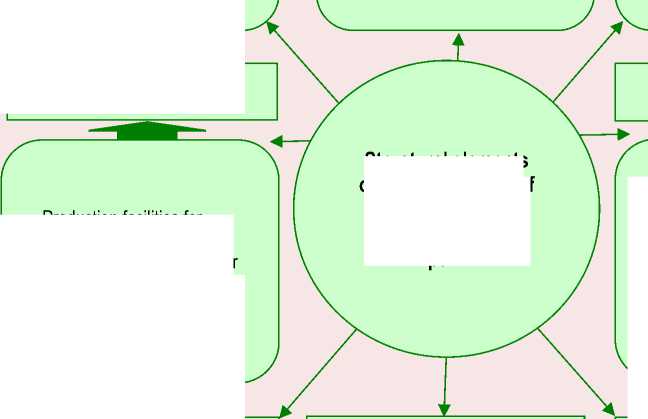
To explore the functioning of the “Subtropics of Russia” agro-industrial technology park, it should be noted that the activities of this unit are wide-ranged, which is conventionally represented in Figure 1.
It should be noted that the functioning of a subtropical-oriented agrobiotechnology park should be considered as the activity of a complex spatial-institutional system within which scientific, production, technological, and managerial elements are connected by stable flows of knowledge, technology transfer, efficient resource distribution, and coordinated work of regulating institutions. Unlike simplified models representing a technology park as a formal association of residents, the proposed model aims to identify mechanisms of internal interaction, establish a functional hierarchy, densify horizontal links and the core structure, ensuring continuity and sustainability of innovative reproduction in the regional economy.
The structural core of the agrobiotechnology park is formed by the research block, including genetic plant-breeding centers, bioengineering laboratories, synthesis units, and specialized research institutes that ensure the development and primary testing of technological systems. This component acts as a source of innovative activity, creating new genotypes, breeding developments, biomaterials, and protocols for reproducing virus-free planting material, thereby defining the parameters of future production cycles. The research core is the backbone of the system, it regulates the transfer of knowledge and technologies
Figure 1. Structural elements of the “Subtropics of Russia” agrobiotechnology park
Research complex
Genetic plant-breeding center
Agro-industrial plots
– Molecular genetics laboratory
– Biotechnology laboratory
– Soil fertility analysis center
– Plant genetic bank
– Hybridization and breeding sector for new varieties
– Laboratory of clonal micropropagation
– Testing plots
– Quarantine nursery
– Automated greenhouse complexes
– Digital yield control platform
– Robotic crop cultivation systems
Biotechnological cluster
Digital management platform
Processing complex
Education center for innovations
– Production facilities for biopreparations
– Enterprises for organo-mineral fertilizer production
Structural elements of the “Subtropics of Russia” agrobiotechnology park
– Agro-ecosystem monitoring and management system – Artificial intelligence for optimizing agricultural production
– Automated logistics management system
Logistics center
|
– Dual education programs, |
– Subtropical product |
– Storage and transportation |
||
|
seminars |
processing workshops |
system |
||
|
– Professional development |
– Production lines for tea, |
– Integration with transport |
||
|
courses for agriculturists |
essential oils, juices |
terminals |
||
|
– Incubation programs for |
– Technologies for extending |
– Cold chains for subtropical |
||
|
agro-innovation startups |
product shelf life |
products |
Source: own compilation.
to production units, creating a closed loop of sustainable innovative reproduction within the technology park model.
The second functional level of the agrobiotechnology park is represented by the production and technology block, including economic entities with the potential to integrate research findings into applied agricultural processes. This block comprises high-tech farming structures, seedgrowing complexes, nurseries, specialized farms for cultivating subtropical crops, as well as enterprises for primary processing of agricultural raw materials. The interaction between the production and technology block and the research core ensures the continuity of the technological cycle, within which the research findings go through large-scale testing, adaptation to the regional agro-ecological context, and finally, integration into the agricultural process. At this level, the effectiveness of developed innovative solutions is evaluated, confirming their production efficiency and economic feasibility for application in the agricultural reproduction system.
The backbone of the agrobiotechnology park model is the management unit, ensuring integration of all interaction levels – from research and production to institutions and government. Its functions are technology transfer coordination, institutional support for residents, formal approval of legal operating conditions, investment policy implementation, and biological safety compliance monitoring. The management unit ensures model integrity, coordinating interaction between the research core, the production block, and state institutions. This structural element eliminates internal fragmentation, minimizes transaction costs, and ensures the coherence of all elements of the technology park system.
In our opinion, the agrobiotechnology park should be implemented as a cluster model. It is created based on the interaction between enterprises with high-level processing of subtropical raw materials, export-oriented logistics operators, special service groups, and a digital platform ensuring biotechnological management. Unlike traditional models where the digital environment is considered a separate element, in this concept it functions as an end-to-end tool, ensuring data synchronization, production parameters monitoring, risk management, and creation of digital twins.
The institutional conditions for the agrobiotechnology park’s functioning are determined by the participation of state bodies, educational organizations, AIC management bodies, financial institutions, and infrastructure operators. These entities ensure access to state support instruments, develop personnel and investment potential, and create the material and logistical basis for their enterprise. Their coordinated actions set the macroeconomic frame for the agrobiotechnology park’s operation and ensures its integration into regional and national systems of agrarian development.
Thus, the conceptual model of the agrobiotechnology park is a multi-level, institutionally and technologically interconnected system, in which research, production, management, and infrastructure are within a unified mechanism of end-to-end exchange of knowledge, technologies, and resources. Its formation in the subtropical area is not a set of isolated competitive advantages, but the result of targeted systemic design ensuring innovation cycle continuity – from development and testing of scientific solutions to their industrial implementation, particularly in the context of the spatial and agro-ecological specifics of Russia’s southern territories. Given the high dependence of subtropical agricultural production on agroclimatic, soil characteristics, and logistics, the territorial aspect of implementing the agrobiotechnology park is of the top priority.
Agro-industrial capacity of the Krasnodar Territory
The Krasnodar Territory is one of the key agroindustrial regions of Russia, it accounts for 7% of the Russia’s total agricultural output and its share in the AIC structure of the Southern Federal District is 39.8%. In the context of macroeconomic instability, rising production costs, changing export structure, and adaptation to new climatic conditions, the region demonstrates its production resilience, ensuring growth in a number of key indicators. Considering these factors, this region is one of the promising territorial objects for AIC development, including for siting agro-industrial technology parks.
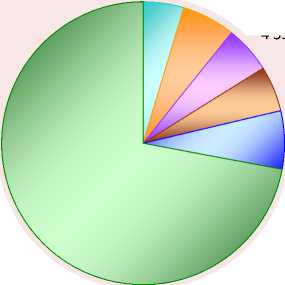
For example, the Krasnodar Territory is leading in Russia in gross grain harvest and sugar production. The region ranks second in milk production and third in oilseed crop cultivation. Based on 2023 results, the total sown area of the territory ranks fifth among all regions ( Fig. 2 ), and its share is 4.64% of the Russia’s total sown area ( Tab. 1 ).
Figure 2. Russia’s sown area by regions, 2023, thousand ha
4 960.2

3 765.9
58 512.4
4 356.6
4 219.1
5 388.8
-
□ Krasnodar Territory □ Rostov Region □ Orenburg Region
-
□ Saratov Region □ Altai Territory □ Other regions
Source: Sown areas of the Russian Federation in 2023. Federal State Statistics Service. Available at: https://www. w14Uhdfy9-sN7nXbN_MoUFQ
Table 1. Ranking of regions by sown area
|
Region |
All categories of farms, 2023, thousand ha |
Share in total area, % |
|
Total for Russia |
81 202.8 |
100.00 |
|
Altai Territory |
5 388.8 |
6.64 |
|
Rostov Region |
4 960.2 |
6.11 |
|
Orenburg Region |
4 356.6 |
5.37 |
|
Saratov Region |
4 219.1 |
5.20 |
|
Krasnodar Region |
3 765.9 |
4.64 |
|
Other regions |
58 512.4 |
72.06 |
|
Compiled based on: Rosstat. |
||
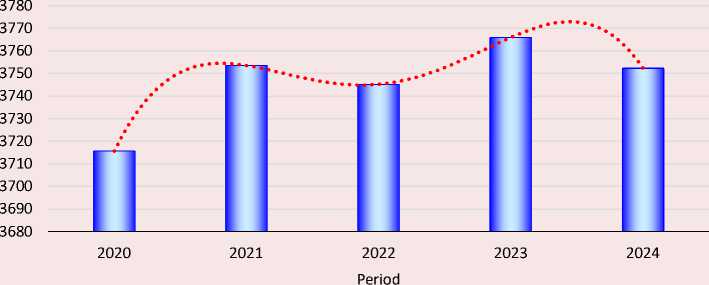
In general, the dynamics of the total sown area in the Krasnodar Territory for all categories of farms in 2020–2024 are presented in Figure 3.
Furthermore, based on 2023 results, total agricultural production in the region was 584.8 billion rubles, which is 4.2% lower than the 2022 level. The share of this indicator as of 2023 amounted to 6.9% of Russia’s total agricultural production. Within the Southern Federal District, its share is 39.0%. However, in January-July 2024, production reached 299.8 billion rubles4, corresponding to 104.9% of the same period in
2023. Moreover, in 2024 overall for the AIC, turnover in current prices grew by 16.5%, including in agriculture – by 21.2% compared to the same period in 20235. The dynamics of key AIC indicators for Krasnodar Territory in 2021–2024 are presented in Table 2.
The region’s export revenue based on 2023 results amounted to 3.0 billion US dollars, equivalent to 7% of Russia’s total AIC product exports. Export deliveries cover 107 countries, ensuring diversification of foreign trade flows and reducing dependency on individual regional
Figure 3. Dynamics of total sown area in Krasnodar Territory, 2020–2024, thousand ha
Source: Rosstat.
Table 2. Dynamics of key AIC indicators of the Krasnodar Territory, 2021–2024
|
Indicator |
2021 |
2022 |
2023 |
2024 (as of 01.08.2024) |
|
Total agricultural production, billion rubles |
590.2 |
610.4 |
584.8 |
299.8 |
|
Turnover of large and medium AIC organizations, billion rubles |
480.5 |
500.2 |
530.1 |
518.4 |
|
Grain production, million tons |
10.50 |
10.82 |
10.32 |
11.88 |
|
Oilseed crop production, million tons |
1.40 |
1.45 |
1.41 |
1.50 |
|
Milk production, million tons |
1.18 |
1.22 |
1.23 |
1.03 |
|
Livestock and poultry slaughter weight, thousand tons |
415.0 |
420.1 |
440.0 |
308.2 |
|
Gross harvest and yield of fruits and berries, million tons |
0.57 |
0.60 |
0.61 |
0.64* |
|
* Preliminary data for 2024. Compiled based on: data from the Territorial Body of the Federal State Statistics Service in Krasnodar Territory. |
||||
4 Available at:
5 Available at:
markets. The dynamics of export capacity demonstrate an average annual growth rate of 5% for 2019–2023, confirming the stability of foreign economic activity in the region’s agro-industrial sector, with the region entering the top three leaders in AIC product export based on 2023 results.
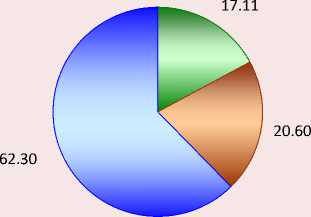
Also, the Krasnodar Territory is one of the leaders in fruit and berry harvest. In particular, based on 2024 results, it ranked second among regions for this indicator ( Fig. 4 ).
Moreover, an increase in this indicator is observed compared to the same period in 2023 by 5.71%. The dynamics of fruit and berry harvest in 2023–2024 are presented in Table 3.
The climatic conditions of the Krasnodar Territory provide one of Russia’s most productive agro-landscapes, determining its strategic role in the national agro-industrial complex. The geographical location of the region in a mixed zone with temperate continental climate typical for most of the territory, semi-arid Mediterranean climate in the area from Anapa to Tuapse, and a subtropical climate in the area south of Tuapse, favorable heat and moisture balance, as well as high natural soil fertility create conditions for year-round agriculture with high profitability and low costs. The average annual temperatures are 12–14 °C, from 0 to +4 °C in winter and from +20 to +24 °C in summer, which provides a long growing season, allowing for several crop cultivation cycles per year, increasing the aggregate productivity of the agricultural sector. The long frost-free period (8–10 months) allows cultivating heat-loving crops, including grapes, figs, citrus, and tea, as well as harvesting twice a year,
Figure 4. Fruit and berry harvest by regions, 2024, %
I □ Krasnodar Territory □ Kabardino-Balkarian Republic
□ Other regions
Source: Rosstat.
Table 3. Dynamics of fruit and berry harvest in 2023–2024
The region’s agroclimatic potential is amplified by high levels of solar radiation, which promotes intense photosynthesis and supports consistently high crop yields. However, it should be noted that average annual precipitation in the Krasnodar Territory ranges from 400–500 mm in the north to 2000 mm in the mountainous and coastal zones, leading to significant differences in agricultural practices across the territory. The summer moisture deficit typical of central and western areas necessitates the active adoption of irrigation systems and water-saving technologies. In contrast, the southern and coastal areas receive between 700 and 2000 mm of annual precipitation, with a soil moisture coefficient of 1.0–1.5, ensuring stable water supply and favorable crop-growing conditions. Despite the region’s heterogeneous hydrothermal regime, the coastal areas, in particular, exhibit high drought resilience. This allows for agricultural production with minimal investment in artificial irrigation.
Overall, the Krasnodar Territory can be divided into four agro-economic zones based on crop categories ( Fig. 5 ).
The soil and ecological conditions of the Krasnodar Territory are a key factor determining its strategic agro-industrial specialization and the formation of a sustainable agricultural base. The high agro-ecological diversity of the soil cover results from the complex terrain, hydrothermal features, and natural climatic gradients, creating opportunities for spatial variability in farming systems and adaptive agriculture. For instance, carbonate and leached chernozems (black soils) dominate the steppe and forest-steppe zones, forming the fundamental soil base for intensive crop production. The region’s chernozem complex
Figure 5. Agro-economic zones of the Krasnodar Territory
|
Northern and Central areas |
|
|
Western area |
|
|
Southern foothills |
|
|
Anapa – Black Sea area |
|
|
Source: own compilation.
allows for the stable cultivation of grains (wheat, barley, corn), oilseeds (sunflower, rapeseed), industrial crops (sugar beet), and forage crops without significant investment in corrective agrochemical measures.
Brown mountain-forest soils are formed in the foothills and are characterized by a sod-carbonate or gray humus horizon. Their agro-ecological capacity is based on good structure and sufficient macro- and micronutrient content; however, limited profile depth and high stoniness restrict their use in intensive agricultural rotation. These zones are widely used for perennial plantations, including vineyards and orchards, which require adaptive cultivation technologies.
Yellow soils, located on ancient marine terraces in the Black Sea coastal areas, including Sochi, have a specific granulometric composition and high mineralization of the humus horizon. This enables specialized farming focused on subtropical crops and vineyards. Subtropical fruit plantations, including citrus, persimmon, pomegranate, fig, quince, and some olive varieties, are well-adapted to these soils due to their high moisture-storage capacity, slightly alkaline or acidic pH, and specific mineral composition. Furthermore, these soil types are particularly valuable for viticulture, as their composition affects vine metabolism, which in turn shapes the grapes’ unique chemical profile.
Thus, the combined soil conditions of the Krasnodar Territory provide a foundation for intensive and diversified agriculture. Key aspects for the sustainable development of the agroindustrial sector include adaptive soil resource management, differentiated agrochemical policies, soil conservation technologies, and the integration of innovative farming methods.
Discussion of results
A spatial-economic analysis of the conditions for siting the “Subtropics of Russia” agro-industrial technology park reveals pronounced territorial differentiation in natural, climatic, logistical, and institutional parameters. This makes territorial analysis a key factor for the technology park’s sustainable development.
Unlike temperate zones, where technological cycles face seasonal limitations, the subtropics of the Krasnodar Territory enable year-round growing seasons. This is confirmed by high accumulated active temperatures exceeding 4000–4500°C and even precipitation distribution, creating favorable conditions for perennial crops. Territorial analysis indicates that the humid subtropics represent Russia’s only agro-climatic zone suitable for the commercial cultivation of tea, citrus, kiwi, feijoa, persimmon, and other subtropical crops.
Moreover, the soil and climatic conditions of the Sochi area provide a stable agro-ecological foundation for a subtropical biotechnology park. The prevalence of brown and red soils with high moisture-storage capacity and neutral acidity ensures optimal nutrition and water supply for root systems, a crucial condition for stable subtropical crop cultivation. This, in turn, reduces the economic burden on enterprises by eliminating the need for irrigation systems. The area’s climatic stability characterized by the absence of critical temperature fluctuations, high relative humidity, and stable hydrothermal conditions creates a natural adaptive environment. This negates the need for capital-intensive engineering infrastructure related to climate control and crop protection, significantly lowering overall costs for organizing agrobiotechnological production while maintaining technological efficiency. The region’s natural and climatic advantages translate into a factor of spatial concentration for research activity, objectively justifying the choice of this location for siting genetic plant-breeding centers, micropropagation laboratories, and biotechnological complexes focused on cultivating and preserving subtropical varieties.
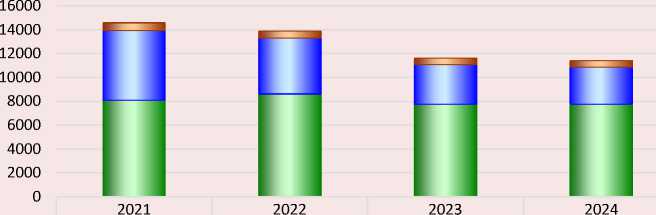
Overall, agricultural production in Sochi is a multifaceted process shaped by adaptation to changing climatic, economic, and technological conditions. An analysis of statistical data for 2021–2024 shows fluctuations in the output of key agricultural products.
The majority of crop production comes from small-scale farms – household plots, peasant farms, and individual entrepreneurs (Tab. 4). In 2024, fruits and berries accounted for 94% of total plant agricultural output. The total number of these entities in 2024 was 23651, representing 99.93% of all agricultural producers and 60.51% of registered small and medium-sized businesses. Accordingly, small business plays a significant role in Sochi’s agricultural development. However, the lack of change in indicators from 2022 to 2024 points to institutional stagnation in the region’s agricultural sector. This stability without growth reflects low entrepreneurial activity and limited stimulating mechanisms at the municipal level.
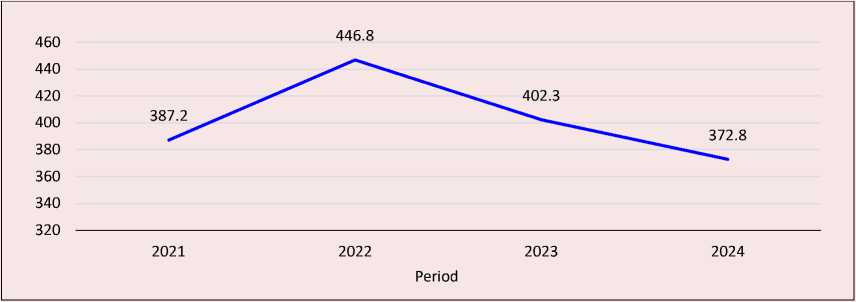
Analysis of agricultural production in the region reveals a growing imbalance between the territory’s potential and actual output. Tea production, traditionally a key segment of the agricultural sector, amounted to 372.8 tons in 2024, 7% lower than in 2023. A downward trend in green leaf tea production was also observed in 2023 compared to 2022. The corresponding dynamics for 2021–2024 are shown in Figure 6 . The reasons include degradation of existing plantations, shortage of adapted planting material, and reduction of agricultural land due to urbanization and conversion to non-agricultural use. At the same time, consumer sector trends show growing demand for subtropical crop products, necessitating an active import substitution policy and the restoration of lost regional agricultural capacity.
Table 4. Structure of entities engaged in agriculture, 2022–2024
|
Indicator |
2022 |
2023 |
2024 |
|
Number of active agricultural enterprises, units |
16 |
16 |
16 |
|
Number of active farms, units |
60 |
60 |
60 |
|
Number of household plots, units |
23 591 |
23 591 |
23 591 |
|
Compiled based on: Sochi Administration data. |
|||
Figure 6. Dynamics of tea leaf production in the Krasnodar Territory, 2021–2024, tons
Compiled based on: Krasnodar Region reduced tea leaf harvest by 10% in 2023. Available at: business/938155; In Sochi, 373 tons of tea were harvested in 2024, which is 7% less than a year before. Available at: ; Tea production in the Krasnodar Territory increased by 15%. Available at:
The main category of cultivated crops is fruits and berries, including subtropical fruits. As noted, Sochi’s agro-climatic potential underpins its strategic importance for developing subtropical agriculture in Russia. Preliminary 2024 data indicate a subtropical fruit harvest of 197.9 tons, a 1% increase from 2023. The area of agricultural land with exotic orchards in 2024 was 92 hectares. Furthermore, according to agricultural enterprises, 2023 production included 94.2 tons of stone fruits (plum, cherry plum, peach) from 62.1 hectares, 141.1 tons of nut crops (hazelnut) from 12.41 hectares, 185.2 tons of subtropical fruits (fig, persimmon, feijoa, kiwi) from 112.3 hectares. Additionally, 5.83 tons of berries (raspberry, blackberry, blueberry) were harvested from 6.3 hectares, and 3.6 tons of citrus (mandarins, lemons) from 1.85 hectares. Production dynamics for 2021– 2024 are presented in Figure 7.
Analysis of sown areas shows that fruit and berry plantations constitute the largest share. The structure of Sochi’s sown areas in 2024 is presented in Figure 8.
Thus, subtropical agriculture has traditionally been concentrated in the Krasnodar Territory, yet its share in the regional agro-industrial complex remains small. The potential area for cultivating subtropical crops in the region exceeds 12 thousand hectares, offering opportunities for production expansion and the formation of a specialized agro-industrial cluster. In turn, the region’s coastal territories, particularly Sochi, are suited for successful cultivation of subtropical crops and tea leaves, which, with proper management of agrophysical parameters, can be of very high quality. Consequently, establishing an agrobiotechnology park in Sochi would enable significant increases in the production of subtropical crops – including
Figure 7. Crop production, 2021–2024, tons
Grapes 655 566 526 540
Vegetables 5825 4690 3352 3100
Fruits, berries 8097 8614 7738 7770.6
Period
□ Fruits and berries □ Vegetables □ Grapes
Source: Passport of socio-economic development for 2023. Available at: pasport-goroda-sochi/
Figure 8. Structure of Sochi’s sown areas, 2024, %
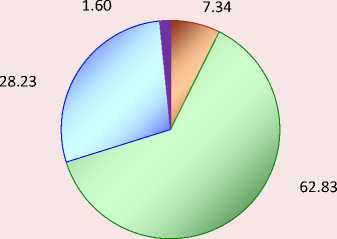
□ vegetables □ fruits and berries
□tea (area suitable for growing tea) ■ grapes
Source: Passport of socio-economic development for 2023. Available at: pasport-goroda-sochi/ citrus, tea, pomegranate, kiwi, fig, feijoa, bay leaf, persimmon, and olives – thereby reducing import dependence for these products.
In our view, the logistical aspect of siting the agrobiotechnology park in Sochi is a key element of the project’s territorial rationale. The city is a federal-level multimodal transport hub, integrating sea, rail, and air connections into a unified infrastructure system. This can ensure stable supply of agricultural raw materials, uninterrupted operation of processing facilities, and diversified export flows. Modern port infrastructure with terminals for storing and transporting refrigerated products minimizes loss risks during logistics operations, which is crucial for perishable goods. Employing multimodal logistics solutions and modern supply chain management systems reduces time and financial costs, increasing economic profitability and enhancing the competitiveness of domestic agricultural products in the international market.
A processing cluster within the technology park’s structure will optimize logistics flows by concentrating production near export corridors, reducing time and cost for transporting high-value-added products. Utilizing multimodal (sea, rail, and air) transport will ensure the resilience of an export-oriented agro-industrial model and reduce vulnerability to fluctuations in the transport and logistics sector.
The region’s comprehensive logistical accessibility makes Sochi an optimal site for a high-tech agrobiotechnology park capable of integrating into international trade networks, minimizing costs, and ensuring the long-term competitiveness of domestic agro-industrial production. Its implementation will create a cluster-based model encompassing not only raw material production but also processing, packaging, storage, and distribution to external markets, thereby increasing product value added.
The scientific and educational potential is also of considerable importance in forming the agroindustrial technology park structure, as it is the basis for the innovative development of the agroindustrial complex and a key element in ensuring technological sovereignty in subtropical agriculture.
Accordingly, the concentration of specialized research institutes in the region is vital. They can provide scientific support for modernizing the industry and implementing genetic plant-breeding technologies aimed at developing adaptive crop varieties. The fundamental scientific institution in Sochi, providing methodological and technological support for the project, is the ANO “Academy for Subtropical Agriculture Development”, along with the Subtropical Research Center of the Russian Academy of Sciences. The latter specializes in developing new subtropical plant varieties, molecular breeding, bioengineering, and adaptive crop production. The implementation of the technology park’s research and production project is planned with the participation of the “Agropishcheprom” Research and Production Center and the Institute of Agriculture of Abkhazia, forming the basis for a large-scale scientific and technological transformation of subtropical crop production in Russia. So, this technology park structure will have an international level due to the involvement of research centers from the Republic of Abkhazia.
Residents will include high-tech enterprises specializing in advanced molecular genetics, biotechnology, microbiology, agrochemistry, breeding, and industrial production of planting material. Their goal is to increase agricultural productivity, reduce import dependency, and integrate into global food chains. Their comprehensive activities will ensure the development of genetically improved crop varieties, production of biological plant protection products, innovative agrochemicals, and enriched nutrient complexes and feed additives. This will enhance the efficiency of agro-industrial production and help form an export-oriented model for subtropical agriculture.
For example, the “Agropishcheprom” Research and Production Center plans to implement a program for a genetic bank of subtropical crops. This includes developing new varieties and hybrids based on molecular breeding, genome editing, and cellular technologies, enabling the accelerated reproduction of high-yielding, stressresistant plants. This innovative platform will be integrated with a system for developing new functional food products, including specialized infant and sports nutrition enriched with vitamins and micronutrients. Implementing targeted plant genome editing technologies will adapt subtropical crops to changing climates, increase their yield, and create an industrial base for deep processing of agricultural raw materials.
The developed system of higher agricultural education and the presence of specialized research institutes and scientific centers in the Krasnodar Territory form human assets for the technological modernization of subtropical agriculture. They ensure the training of specialists in molecular genetics, biotechnology, breeding, automated agro-industrial process management, and digital farming. Developing the “Subtropics of Russia” agrobiotechnology park requires comprehensive personnel training with competencies in molecular genetics, agro-biotechnology, and automated process management. Educational programs of the “Sirius” center, focused on genetic engineering breeding methods, cell biology, and plant bioengineering, are essential in this regard. These areas form the basis for nurturing scientific and engineering personnel capable of integrating advanced biotechnologies into agricultural production.
Furthermore, incorporation of educational programs developed in partnership with leading regional and national agricultural universities
(particularly KubSAU) into the technology park’s structure will create an institutional base for training personnel with competencies in genome editing, biological plant protection product development, robotic greenhouse control, and agro-ecosystem analytics. To this end, an agreement on training scientific and teaching staff in this field was signed on February 7, 2023, between the Subtropical Research Center of RAS and the Agricultural Municipal Unitary Enterprise “Russia” (Sirius). Additionally, the collaboration includes seminars, master classes, training, and roundtables organized by the Subtropical Research Center of RAS together with educational institutions. This will facilitate practical specialist training, farmer upskilling, and knowledge exchange in innovative agricultural production.
Interaction with specialized educational institutions will stimulate the organization of master’s and postgraduate programs, professional development courses, internships, and student involvement in research projects and dual education programs. This will accelerate the implementation of scientific developments into production and minimize the time gap between research and innovation commercialization. The development of human resources combined with the concentration of scientific expertise at the technology park will form the basis for an export-oriented subtropical agriculture cluster. This will ensure the long-term resilience of the national food system and reduce import dependency for strategically important food items.
Given that the current employment structure in subtropical agriculture is characterized by a high share of unskilled labor and low digitalization of agricultural processes, an educational cluster within the technology park, in our view, will ensure a qualitative restructuring of the labor market in this segment.
The project’s economic indicators demonstrate the region’s ability to sustain and scale the technology park model in accordance with the parameters and requirements established by current regulations governing such entities. The structure of the “Subtropics of Russia” agrobiotechnology park envisions attracting up to 50 residents and creating 850 to 1500 jobs, meeting established employment requirements for such structures. Additional economic justification comes from the inclusion of targeted objectives in Sochi’s municipal strategic development, aiming for vegetable production of 3 thousand tons and fruit production of 8 thousand tons by 2030. This implies structural expansion of the agro-industrial base and the introduction of high-tech capacities combined with a biotechnological production. In our opinion, these targets can only be achieved through an integrated system including research, production, and infrastructure units.
The economic attractiveness of Sochi as a site for the “Subtropics of Russia” agrobiotechnology park is also justified by domestic demand parameters and Russia’s pronounced dependence on imports of subtropical products. According to analytical data presented at a roundtable on January 23, 2025, the total imported subtropical crops market exceeds 1 trillion rubles. These estimates are supported by materials from the “Economic Prerequisites” project, which states that annual imports of subtropical products consistently exceed 1 trillion rubles, with mandarin imports in 2024 amounting to 738.3 thousand tons. This structural dependence of the Russian market on external supplies, coupled with the absence of a national production base in this segment, proves the objective necessity of creating specialized high-tech infrastructure capable of reproducing a competitive range of subtropical crops within the national agro-industrial complex.
This technology park project will ensure the reproduction of virus-free planting material through clonal micropropagation technologies, enabling the production of up to 100 million plants per year, including fig, nut crops, olives, persimmon, citrus, and tea. Breeding research conducted in genetic laboratories will develop new varieties adapted to changing climatic conditions with high productivity. Biotechnological micropropagation methods will accelerate the introduction of new varieties into commercial production, shorten adaptation cycles to regional conditions, and reduce dependence on foreign supplies. Scientific developments integrated into the production process will minimize the impact of genetic erosion, increase plant resistance to biotic and abiotic stressors, and establish a closed-cycle breeding reproduction system.
Furthermore, the region’s agro-climatic profile allows for year-round agricultural production with minimal expenditure on supplementary irrigation, increasing the profitability of agro-industrial projects and reducing land maintenance costs. A steady trend of rising average annual temperatures in the region is observed, creating preconditions for expanding subtropical agro-landscapes and intensifying production. Forecasts predict that by 2035, subtropical crop production in the region will increase by 910%, and tea cultivation by 250%, partially replacing imports of similar products.
The project’s investment model suggests that 4 billion rubles are invested: 500 million rubles for establishing management infrastructure and 3.5 billion rubles as private investment from technology park residents. Project implementation plans include creating 1500 new jobs in agriculture, biotechnology, and agricultural processing, contributing to reduced unemployment and increased tax revenues across budget levels. Additionally, the project integrates into rural development and agritourism programs, enhancing regional investment appeal and increasing incomes for small business.
International experience with agro-industrial technology parks demonstrates their high efficiency, achieved through an institutionally embedded, scientifically grounded, and spatially integrated system where research, implementation, testing, and industrial production are interconnected and function as a single process. The Chinese model, yielding positive results in creating agrobiotechnology parks, serves as an example. Modern rural development strategy in China focuses on deep technological modernization of the agricultural sector, strengthening the research and innovation base, and transforming rural regions into centers of sustainable growth. National Modern Agricultural Industrial Parks (NMAIPs) are central to this strategy, serving as key platforms and catalysts for stimulating high-quality agricultural development through the integration of innovative scientific and technological elements. This system includes over three hundred facilities, with 269 certified by the PRC Ministry of Science and Technology, reflecting the level of state support and institutional stability.
In their institutional nature, Chinese NMAIPs are analogous to Russian agrobiotechnology parks, as their core comprises research centers, applied biotechnology laboratories, and scientific institutes ensuring continuous research and innovation. Strategic interaction between research institutes, universities, and production units forms a sustainable innovation reproduction model, eliminating the gap between research and application of results. Moreover, the effective development of NMAIPs stimulates national GDP growth. Statistical data from 2000 to 2020 show that NMAIPs construction significantly improved economic development in the counties where they were established: real GDP increased by 3.8%, and real GDP per capita by 4.5%.
Thus, establishing the “Subtropics of Russia” agro-industrial technology park in Sochi is an economically justified and strategic decision. It will ensure the revitalization of subtropical agriculture, development of high-tech agro-industrial production, implementation of import substitution policies, and formation of a competitive agricultural cluster. The region’s unique climatic conditions, transport and logistics capacity, scientific base, and projected economic impact make this project a key element of the long-term strategy for ensuring Russia’s food security.
Conclusion
The conducted analysis shows that the environmental assets and institutional characteristics of Sochi’s humid subtropics create a combination of conditions for the effective functioning of an agrobiotechnology park. The stability of thermal and hydrothermal regimes, combined with soil-ecological features and the natural adaptation of perennial subtropical crops, forms an environment capable of supporting their year-round reproduction. An assessment of production and innovation capacity confirms that Sochi has not only appropriate bioclimatic conditions but also the institutional and technological structure to provide a full cycle of developing, testing, and implementing innovative approaches to agro-production processes. This substantially distinguishes it from most Russian regions and justifies the choice of this territory for forming a specialized agro-industrial technological complex.
The region’s strategic importance is defined by a high degree of logistical integration, ensured by a deep-water port, year-round air service, and railway infrastructure. This creates stable export-oriented channels and reduces transaction costs for transporting time-sensitive (perishable) products. The region’s institutional density, manifested in the concentration of specialized scientific institutions, cell selection laboratories, genetic banks, and relevant educational organizations, forms a resilient research environment. This environment can sustain continuous innovation generation and ensure the implementation of biotechnological developments in the agro-industrial complex.
Furthermore, given the structural demand of the Russian market for import substitution of subtropical products, it is necessary to form and develop a subtropical agro-industrial technology park. Establishing an agrobiotechnology park in Sochi is viewed in this context as a tool for increasing technological sovereignty, expanding the reproductive potential of the genetic plant-breeding base, and strengthening national food security in the field of subtropical agriculture.
The technology park’s operation will contribute to transforming the regional agro-economy, forming an export-oriented economic model, and integrating Russian agro-enterprises into global food chains.
The conducted research confirms the necessity of considering spatial-economic factors when creating agrobiotechnology parks and proves that their efficiency directly depends on regional specificity, agro-climatic conditions, the level of research and education, and logistics. The applied contribution of the study lies in forming a system of criteria for siting an agrobiotechnology park considering regional characteristics, which can be used in territorial planning and program-targeted management for agro-industrial complex development. The identified patterns form a scientific basis for further research on methods for assessing the economic efficiency of technology parks, analyzing the resilience of their institutional system, and developing tools for state support. These will ensure innovation development and implementation, strengthen export potential, and enhance the competitiveness of the regional agroindustrial complex.
