
Preserving Family Ties of Prisoners as a Condition for Successful Resocialization: Legal Regulation, Social Effects, and Development Priorities in the Republic of Kazakhstan
Журнал: Бюллетень науки и практики @bulletennauki
Рубрика: Социальные и гуманитарные науки
Статья в выпуске: 10 т.12, 2026 года.
Бесплатный доступ
The preservation of family ties during imprisonment is an essential component of the resocialization and subsequent social reintegration of convicted persons. Imprisonment restricts an individual’s physical freedom and substantially transforms family relationships; however, it should not result in unnecessary social isolation or the destruction of lawful and socially valuable connections. The present article examines family contact as both a human-rights guarantee and a practical resource for reducing the social consequences of imprisonment. Particular attention is paid to the legislation and penal policy of the Republic of Kazakhstan, the United Nations Standard Minimum Rules for the Treatment of Prisoners (the Nelson Mandela Rules), the United Nations Rules for the Treatment of Women Prisoners and Non-custodial Measures for Women Offenders (the Bangkok Rules), and contemporary empirical research on prison visitation and post-release outcomes. The study identifies the principal channels through which family relationships contribute to resocialization: emotional support, preservation of socially responsible roles, maintenance of parental identity, assistance with housing and employment, informal social control, and preparation for release. At the same time, the article emphasizes that family contact is not automatically beneficial. Relationships may be conflictual, abusive, criminogenic, or emotionally harmful, and the interests of children and victims must remain paramount. A differentiated and risk-sensitive approach is therefore required. The article analyzes legal, geographical, financial, organizational, technological, and psychological barriers that limit prisoners’ contact with their families. It proposes a family-oriented model of correctional work that combines regular visits, telephone and video communication, family counseling, child-friendly visiting facilities, individualized sentence planning, preparation for family reunification, and post-release social support. The study concludes that the preservation of constructive family ties should be treated not as an optional privilege but as a cross-cutting element of correctional policy, subject to necessary, proportionate, and individualized security restrictions.
Короткий адрес: https://sciup.org/14139285
IDS: 14139285 | УДК: 343.81:316.62 | DOI: 10.33619/2414-2948/131/54
Сохранение семейных связей заключенных как условие успешной ресоциализации: правовое регулирование, социальные последствия и приоритеты развития в Республике Казахстан
Сохранение семейных связей в период отбывания наказания в виде лишения свободы является неотъемлемой составляющей процесса ресоциализации и последующей социальной реинтеграции осужденных. Лишение свободы ограничивает физическую свободу человека и существенно трансформирует семейные отношения, однако оно не должно приводить к неоправданной социальной изоляции или разрушению правомерных и социально значимых связей. В статье рассматриваются контакты с семьей как гарантия соблюдения прав человека и как практический ресурс для смягчения социальных последствий лишения свободы. Особое внимание уделяется законодательству и пенитенциарной политике Республики Казахстан, Стандартным минимальным правилам ООН в отношении обращения с заключенными (Правилам Нельсона Манделы), Правилам ООН, касающимся обращения с женщинами-заключенными и мер наказания для женщин-правонарушителей, не связанных с лишением свободы (Бангкокским правилам), а также современным эмпирическим исследованиям, посвященным свиданиям в местах лишения свободы и последствиям освобождения. В работе выделены основные каналы, посредством которых семейные отношения способствуют ресоциализации: эмоциональная поддержка, сохранение социально ответственных ролей, поддержание родительской идентичности, помощь в решении вопросов жилья и трудоустройства, неформальный социальный контроль и подготовка к освобождению. Вместе с тем в статье подчеркивается, что контакты с семьей не всегда приносят пользу. Отношения могут носить конфликтный, насильственный или криминогенный характер либо наносить эмоциональный вред; при этом интересы детей и потерпевших должны оставаться приоритетными. В связи с этим необходим дифференцированный подход, учитывающий факторы риска. В статье анализируются правовые, географические, финансовые, организационные, технологические и психологические барьеры, ограничивающие контакты заключенных с семьями. Предлагается семейно-ориентированная модель исправительной работы, сочетающая регулярные свидания, телефонную и видеосвязь, семейное консультирование, создание условий для свиданий, учитывающих потребности детей, индивидуальное планирование отбывания наказания, подготовку к воссоединению семьи и социальную поддержку после освобождения. Делается вывод о том, что сохранение конструктивных семейных связей следует рассматривать не как факультативную привилегию, а как сквозной элемент исправительной политики, подлежащий необходимым, соразмерным и индивидуализированным ограничениям в целях обеспечения безопасности.
Текст научной статьи Preserving Family Ties of Prisoners as a Condition for Successful Resocialization: Legal Regulation, Social Effects, and Development Priorities in the Republic of Kazakhstan
Бюллетень науки и практики / Bulletin of Science and Practice
UDC 343.81:316.62
The execution of a sentence of imprisonment inevitably separates a convicted person from their usual social environment. Such separation affects not only the prisoner but also spouses, partners, parents, children, and other relatives. Families may experience psychological stress, loss of income, social stigma, additional childcare responsibilities, transportation costs, and uncertainty concerning their future relationship with the imprisoned family member. Although imprisonment restricts liberty, it does not deprive the convicted person of human dignity or all other fundamental rights. The legitimate content of punishment should be distinguished from additional and unnecessary suffering caused by the destruction of family relationships. International standards therefore require prison administrations to facilitate regular communication between prisoners and their families and, where possible, to place prisoners in institutions located close to their homes [1].
The relevance of this issue is particularly evident in the context of resocialization. A person released from prison must return to society, obtain housing, find lawful employment, restore documents, receive medical or psychological assistance, comply with legal requirements, and rebuild everyday routines. State services and probation authorities perform important functions in this process, but they cannot fully replace informal social support. In many cases, the family is the first institution that provides accommodation, food, emotional reassurance, information, transportation, financial assistance, and assistance in finding employment. At the same time, an idealized understanding of family support should be avoided. Not every family relationship is positive. Some prisoners have experienced domestic violence, neglect, exploitation, or involvement in criminal activity within their families. Some relatives do not wish to maintain contact. In cases involving domestic or sexual violence, forced family reunification may threaten the safety and autonomy of victims. Accordingly, family-oriented correctional policy must be voluntary, individualized, childsensitive, and based on a professional assessment of risks and needs. The purpose of this article is to examine the preservation of prisoners’ family ties as a condition for successful resocialization, analyze national and international legal standards, identify practical barriers, and formulate recommendations for the development of family-oriented correctional policy in the Republic of Kazakhstan.
The following research objectives are pursued: 1. To clarify the relationship between family contact, resocialization, and social reintegration; 2. To examine the national and international legal foundations of prisoners’ family contact; 3. To identify the principal mechanisms through which constructive family ties may support lawful post-release adaptation; 4. To analyze barriers limiting family communication during imprisonment; 5. To consider the special needs of women, children, foreign prisoners, and other vulnerable groups; 6. To propose legal, organizational, technological, and social measures for strengthening constructive family relationships.
Materials and Methods
The research is based on an interdisciplinary approach combining legal analysis with findings from criminology, sociology, psychology, and correctional social work.
The normative sources include the Constitution of the Republic of Kazakhstan, the Penal Enforcement Code of the Republic of Kazakhstan, the Convention on the Rights of the Child, the International Covenant on Civil and Political Rights, the Nelson Mandela Rules, and the Bangkok Rules.
The following methods were applied: formal legal analysis, used to examine prisoners’ rights to visits, correspondence, telephone communication, and protection of family life; systemic analysis, through which family contact was studied as part of the broader correctional and post-release support system; comparative legal analysis, used to compare kazakhstan’s national regulation with international standards; content analysis, applied to international guidelines and empirical studies concerning family visitation and recidivism; structural and functional analysis, used to identify the functions performed by families before, during, and after release; risk-and-needs analysis, used to distinguish supportive relationships from harmful, abusive, or criminogenic relationships.
The article does not present original statistical data from correctional institutions in Kazakhstan. Its conclusions are based on normative analysis and the synthesis of international empirical evidence. Consequently, findings from other jurisdictions should not be transferred mechanically to Kazakhstan without further national research.
Theoretical Understanding of Resocialization. Resocialization may be understood as a structured process through which a convicted person develops or restores lawful values, behavioral patterns, social skills, and socially responsible roles necessary for life in the community. It includes more than formal compliance with prison rules. A person may demonstrate institutional conformity while remaining unprepared to solve ordinary problems after release. Social reintegration refers to the practical process of returning to society and participating in family, employment, educational, civic, and community life. The two concepts are closely related but not identical. Resocialization concerns changes in values, roles, capacities, and behavior, whereas reintegration emphasizes actual inclusion in social institutions and relationships.
Table 1 SUCCESSFUL REINTEGRATION COMMONLY REQUIRES
SEVERAL INTERCONNECTED RESOURCES
|
Area |
Typical post-release need |
Possible contribution of a constructive family |
|
Housing |
A safe and lawful place to live |
Temporary or long-term accommodation |
|
Employment |
Job search and workplace adaptation |
Information, recommendations, transport, childcare |
|
Financial stability |
Food, clothing, communication, documents |
Short-term material support and budgeting assistance |
|
Emotional well-being |
Coping with stress, stigma, and uncertainty |
Emotional reassurance and a sense of belonging |
|
Health |
Access to medical and psychological services |
Appointment assistance and treatment supervision |
|
Lawful behavior |
Avoidance of former criminal networks |
Informal social control and positive expectations |
|
Parenting |
Restoration of parental responsibilities |
Gradual reunification and shared caregiving |
|
Administrative adaptation |
Registration, identification, benefits |
Help dealing with public institutions |
|
Community participation |
Restoration of social identity |
Reintroduction to relatives and community networks |
The family may therefore operate as a form of social capital. It gives the person access to relationships, information, resources, and expectations that may support a law-abiding life. However, the quality of the relationship is more important than the mere existence of formal kinship. A highly conflictual or criminogenic relationship cannot be treated as a resocialization resource simply because it involves relatives.
Legal Foundations of Prisoners’ Family Contact. The Constitution of the Republic of Kazakhstan recognizes the human being, human life, rights, and freedoms as the highest values of the state. It also protects personal and family privacy and the confidentiality of correspondence and communications, subject to restrictions established by law [2].
Article 23 of the International Covenant on Civil and Political Rights recognizes the family as the natural and fundamental group unit of society entitled to protection by society and the state. Article 10 requires all persons deprived of liberty to be treated with humanity and respect for their inherent dignity [3].
These principles do not create an absolute right to unrestricted family contact in prison. Security screening, supervision, scheduling, and limitations based on individual risk may be legitimate. Nevertheless, restrictions should have a clear legal basis, pursue a legitimate objective, and remain necessary and proportionate. Restrictions must not transform the sentence into total social exclusion.
The Convention on the Rights of the Child requires the best interests of the child to be a primary consideration in decisions affecting children. A child separated from one or both parents has the right to maintain personal relations and direct contact with them regularly, unless such contact is contrary to the child’s best interests [4].
This principle is especially important because the imprisonment of a parent should not result in the child being treated as an indirect subject of punishment. The Nelson Mandela Rules establish several principles directly relevant to family relationships. Rule 58 provides that prisoners should be allowed, under necessary supervision, to communicate with family members and friends at regular intervals through correspondence, available telecommunications, and visits. Rule 59 states that prisoners should, as far as possible, be allocated to institutions close to their homes or places of social rehabilitation. The Rules also recognize contact with the outside world as part of preparation for release. Prison treatment should emphasize the prisoner’s continuing membership in society rather than exclusion from it. Cooperation with family members and community institutions should therefore be encouraged when it serves the prisoner’s best interests and supports rehabilitation [1].
Rule 43 is also important because it prohibits disciplinary sanctions that include the prohibition of family contact. Restrictions may be permitted only for a limited period and only where strictly required for maintaining security and order. Thus, family communication should not be routinely used as an instrument of punishment or behavioral pressure. Women prisoners frequently face distinct barriers to maintaining family relationships. Women’s prisons are generally fewer in number, which may result in women being placed far from their homes. Women are also more likely to have been primary caregivers before imprisonment. Their incarceration can therefore have particularly serious consequences for children. Rule 4 of the Bangkok Rules provides that women prisoners should, as far as possible, be allocated to institutions close to their homes or places of social rehabilitation, taking into account caregiving responsibilities and individual preferences. Rule 26 requires that women prisoners’ contact with their families, including their children, be encouraged and facilitated by all reasonable means [5].
The Bangkok Rules further provide that disciplinary sanctions for women prisoners must not include prohibition of family contact, especially contact with children. Visits involving children should take place in an environment conducive to a positive visiting experience and should permit appropriate physical contact where security conditions allow [5].
The Penal Enforcement Code of the Republic of Kazakhstan regulates the legal status of convicted persons and provides for their contact with relatives through visits, correspondence, receipt and dispatch of parcels, and telephone communication. Article 106 governs visits, while Article 109 regulates prisoners’ telephone conversations [6].
These legal mechanisms create a formal foundation for maintaining family relationships. Nevertheless, the practical value of legal entitlements depends on the accessibility, frequency, affordability, privacy, and quality of communication. A nominal right to contact cannot fully perform a resocializing function if relatives live far away, travel is unaffordable, communication is excessively brief, or the visiting environment is intimidating for children. The preservation of family relationships should therefore be assessed not only from the perspective of formal compliance but also from the perspective of actual accessibility.
How Family Ties Support Resocialization. Family contact affects resocialization through several mutually reinforcing mechanisms.
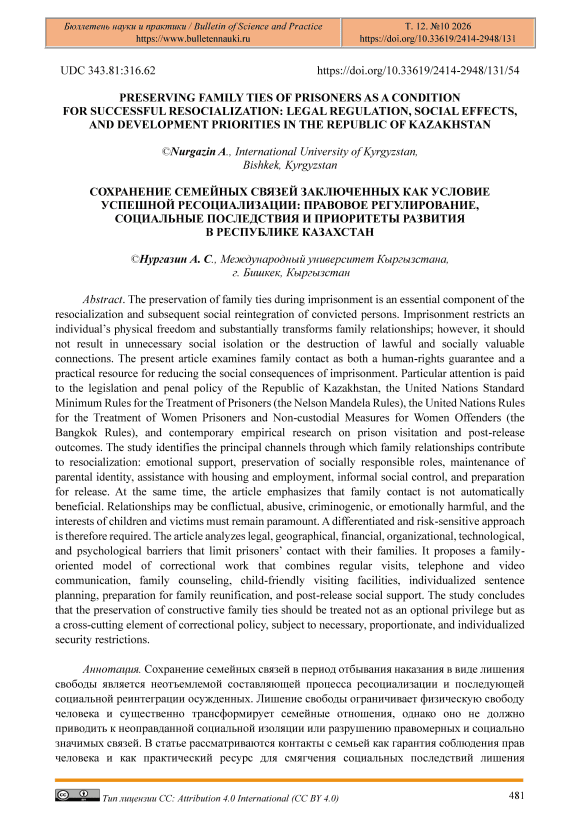
Imprisonment may produce loneliness, shame, anxiety, depression, and uncertainty. Regular communication with supportive relatives can reduce the subjective experience of isolation and preserve a sense of belonging. A prisoner who continues to be recognized as a parent, spouse, child, sibling, or responsible family member retains an identity broader than the institutional label of “offender.” Emotional support can also increase motivation to participate in education, treatment, vocational training, and release planning. The expectation of returning to meaningful relationships gives practical significance to behavioral change. However, emotional support should not be confused with unconditional approval. Constructive support may include clear expectations, encouragement of responsibility, and refusal to facilitate illegal behavior. Resocialization requires more than avoiding crime; it involves the development of a positive social identity. Family roles may provide a foundation for such identity. A person may begin to view themselves as a caring parent, a reliable partner, a supportive adult child, or a contributing household member.
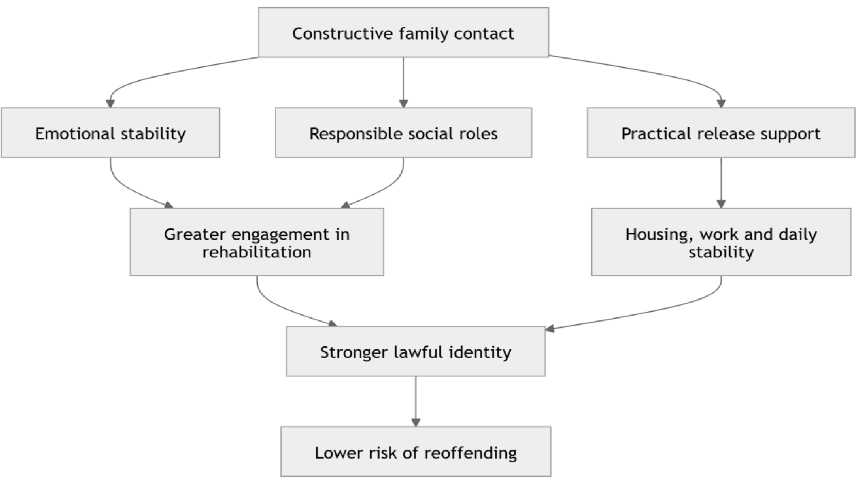
Figure 1. Conceptual pathway between constructive family contact and post-release resocialization
This identity-based mechanism is important because long-term imprisonment can strengthen institutional dependency. If a person’s only stable role is that of a prisoner, adaptation after release becomes more difficult. Continued participation in family decisions — within lawful and realistic limits — helps preserve autonomy and social responsibility. Family members may exercise informal social control through moral expectations, daily routines, assistance with decision-making, and disapproval of criminal behavior. Unlike formal supervision, such control is relational rather than coercive. It operates because the individual values the relationship and does not wish to lose trust.
The effectiveness of informal control depends on relationship quality. Families involved in criminal activity, substance abuse, coercion, or violence may increase rather than decrease the risk of reoffending. Correctional assessments must therefore identify whether a relationship constitutes a protective factor, a neutral factor, or a source of risk.
The first weeks and months after release are often characterized by multiple simultaneous challenges. The person may lack identification documents, housing, employment, income, communication tools, transport, and access to healthcare. Even motivated individuals may become overwhelmed by these practical demands. A supportive family can reduce this transition shock by providing temporary housing, meals, clothing, assistance with registration, transportation to appointments, and information about vacancies. Such assistance does not replace state responsibility but may increase the effectiveness of state and probation services. For prisoners who are parents, maintaining a responsible relationship with children can strengthen motivation for behavioral change. Appropriate contact allows parents to remain informed about their children’s lives and, where possible, participate in emotional and educational support.
At the same time, the child’s welfare must remain central. Contact should never be arranged solely to rehabilitate the parent while disregarding the child’s emotional safety. The child must be prepared for visits, given age-appropriate information, and protected from conflict, manipulation, and exposure to frightening institutional practices. Families often possess information relevant to release planning: available accommodation, household composition, employment opportunities, healthcare needs, caregiving responsibilities, and possible interpersonal conflicts. With the prisoner’s consent, correctional specialists may involve relatives in developing a realistic release plan. Such participation helps prevent a common problem: prison-based plans that appear formally complete but are disconnected from the actual conditions awaiting the person after release.
Empirical Evidence on Family Contact and Reoffending. A substantial body of research indicates an association between prison visitation, social support, and more favorable post-release outcomes. A study of 16,420 persons released from Minnesota prisons found that prisoners who received visits had a 13 percent lower risk of recidivism than those who did not receive visits. More frequent visits, a greater number of individual visitors, and visits closer to the release date were also associated with reduced reconviction risk [7].
Duwe and Clark’s analysis similarly concluded that prison visitation was associated with lower recidivism and that the identity of the visitor mattered. Visits from certain relatives and members of prosocial networks appeared to have stronger protective effects than casual or unstable contacts [8].
A broader review of family contact during imprisonment found evidence that communication with relatives may be associated with lower recidivism, improved institutional behavior, better mental health, and stronger post-release relationships [9].
Longitudinal research has also emphasized that attachment to family may affect employment and reentry outcomes, although the effects vary according to the quality and stability of the relationship [10].
These findings must be interpreted cautiously. Prisoners who receive visits may differ from non-visited prisoners in ways that also influence recidivism. They may have more stable pre-prison relationships, shorter travel distances, greater financial resources, or lower levels of prior social disorganization. Consequently, observational associations do not always prove that visitation alone caused the reduction in reoffending. Nevertheless, the consistency of findings across different studies supports the conclusion that constructive social relationships should be considered an important element of correctional policy rather than a peripheral welfare issue.
Barriers to Maintaining Family Relationships. Placement far from the prisoner’s home is one of the most serious barriers to visitation. Long distances increase transportation costs, require relatives to take time away from work, and create particular difficulties for families with young children, disabilities, or limited income. Geographical distance may disproportionately affect women prisoners because fewer women’s correctional institutions are available. It can also isolate foreign nationals and prisoners whose families live in remote regions. Whenever security, classification, and capacity permit, allocation decisions should take account of proximity to the prisoner’s family and expected place of reintegration. The costs of travel, accommodation, food, document preparation, telephone communication, and sending parcels may be substantial. The family effectively bears part of the social cost of imprisonment despite not being responsible for the offence. Low-income families may gradually reduce contact, not because they reject the prisoner, but because maintaining communication becomes financially unsustainable. This creates inequality: prisoners from financially secure families can maintain stronger connections than those from poor or remote households.
Visitor registration, background checks, limited visiting schedules, long waiting periods, dress restrictions, searches, and unpredictable cancellations may discourage relatives from visiting. Some procedures are necessary for security, but they should be clear, respectful, and proportionate.
Visitors should receive accessible information in advance regarding required documents, permitted items, schedules, transportation, and complaint procedures. Unexplained cancellation of visits undermines trust and may have a particularly negative impact on children.
Бюллетень науки и практики / Bulletin of Science and Practice Т. 12. №10 2026
A visiting space dominated by barriers, noise, surveillance equipment, and intimidating security procedures may prevent meaningful communication. Young children may associate contact with their parent with fear or shame.
Child-friendly rooms do not require luxurious facilities. Basic improvements may include appropriate furniture, books, toys, drawing materials, neutral colors, sanitary facilities, and trained staff. Where risk assessment permits, visits should allow natural communication and appropriate physical contact.
Imprisonment can intensify pre-existing conflicts concerning trust, finances, parenting, substance misuse, infidelity, or violence. Relatives may experience exhaustion from providing longterm support. The prisoner may also have unrealistic expectations about reunification after release. Maintaining contact without addressing these tensions may postpone rather than solve conflict. Family counseling, mediation, parenting education, and structured release planning are therefore important. Telephone and video communication can supplement physical visits, especially when families live far away. Nevertheless, digital communication creates its own barriers: cost, limited duration, lack of privacy, poor technical quality, digital illiteracy, and unequal access. Video calls should not become a justification for eliminating in-person visits. They are most useful as a complementary method, particularly for maintaining frequent contact between physical visits [11].
Children of Incarcerated Parents. Children may experience parental incarceration as loss, rejection, shame, or uncertainty. Some are not told the truth about the parent’s location; others receive information they cannot understand. Changes in caregiving arrangements, school performance, behavior, and mental health may follow. Research shows that contact with an imprisoned parent is not uniformly beneficial or harmful. Outcomes depend on the quality of the parent–child relationship before imprisonment, the nature of the offence, the child’s age, the behavior of the imprisoned parent, the attitude of the caregiver, and the conditions under which contact takes place [12].
A child-sensitive approach should be based on several principles: 1. The best interests of the child must take priority over institutional convenience and the prisoner’s rehabilitative objectives; 2. Contact should be voluntary and developmentally appropriate; 3. The child should receive age-appropriate preparation before the visit; 4. Visiting procedures should minimize fear, stigma, and unnecessary waiting; 5. The caregiver’s views and practical needs should be considered; 6. Contact must not be used to pressure a victim, witness, or family member; 7. The parent should receive guidance on communicating responsibly with the child; 8. Post-visit emotional support should be available where necessary.

Figure 2. Child-sensitive decision-making cycle for prison contact
Parenting programs should help prisoners understand child development, communicate without manipulation, accept the limits established by caregivers, and prepare for gradual rather than immediate restoration of parental authority after release.
Gender-Sensitive Considerations. Women’s incarceration often produces a particularly severe disruption of family life. Many imprisoned women were primary caregivers before their imprisonment. Their children may be placed with grandparents, other relatives, or institutional care providers. Distance from home can make regular visits exceptionally difficult. Women may also have histories of domestic violence and coercive relationships. In such circumstances, “family preservation” must not mean restoration of contact with abusive partners. Correctional professionals should identify safe and supportive relationships rather than assuming that all intimate relationships should be maintained.
For imprisoned mothers, priority measures include: Placement as close as possible to children and lawful caregivers; Extended and child-friendly visits; Affordable telephone and video communication; Parenting programs adapted to children’s ages; Assistance in maintaining contact with child-protection authorities; Family counseling before release; Gradual reunification plans; Protection from pressure by abusive relatives; Non-custodial measures where legally appropriate, especially for primary caregivers and persons convicted of non-violent offences.
The same principle applies to imprisoned fathers: maintaining parental contact should involve responsibility rather than symbolic communication. Parenting interventions should encourage financial, emotional, and educational responsibility within the limits imposed by imprisonment.
Family Contact as Part of Individual Sentence Planning. Family relationships should be assessed at the beginning of imprisonment and reviewed throughout the sentence. A family-contact assessment may include: 1. The composition of the prisoner’s family and support network; 2. The previous quality of relationships; 3. The presence of children and caregiving responsibilities; 4. The family’s location and capacity to visit; 5. Risks of domestic violence, coercion, or criminal influence; 6. The prisoner’s communication needs; 7. Expected accommodation after release; 8. The willingness of relatives to participate in planning; 9. The need for counseling, mediation, or child-protection involvement.
Table 2
BASED ON THIS ASSESSMENT, AN INDIVIDUALIZED FAMILY-CONTACT PLAN MAY BE DEVELOPED
|
Stage |
Recommended action |
Expected resocialization effect |
|
Admission |
Identify relatives, children, support persons, and risks |
Prevent abrupt and unnecessary loss of contact |
|
Early sentence |
Establish lawful communication and explain visiting procedures |
Stabilize relationships and reduce uncertainty |
|
Main sentence period |
Provide visits, calls, counseling, and parenting programs |
Preserve responsible roles and address conflict |
|
Pre-release period |
Conduct family conferences and develop housing and employment plans |
Align release expectations with actual conditions |
|
Release |
Transfer information to probation and social services with consent |
Ensure continuity of support |
|
Post-release period |
Monitor adjustment and provide mediation or referrals |
Prevent family overload and relationship breakdown |
The plan should be voluntary and subject to confidentiality rules. Family members are not correctional personnel and should not be forced to supervise the prisoner or accept responsibility for risks they cannot manage.
A Family-Oriented Model of Resocialization. A comprehensive model should combine rights protection, correctional treatment, family support, and post-release services.
Level 1: Basic communication guarantees. Every prisoner should have reasonable access to correspondence, telephone calls, visits, and, where available, secure video communication. Information on contact procedures should be understandable and accessible.
Level 2: Relationship assessment. Specialists should assess whether particular relationships are supportive, conflictual, abusive, exploitative, or criminogenic. Contact restrictions should be individualized rather than automatic.
Бюллетень науки и практики / Bulletin of Science and Practice Т. 12. №10 2026
Бюллетень науки и практики / Bulletin of Science and Practice Т. 12. №10 2026
Level 3: Family-strengthening interventions. Where appropriate, correctional institutions should offer parenting education, family counseling, conflict management, relationship skills, and preparation for reunification.
Level 4: Release planning. Family members may participate, with the prisoner’s consent, in planning accommodation, employment, treatment, financial responsibilities, and childcare. Expectations should be realistic and recorded.
Level 5: Post-release continuity. Probation, employment services, healthcare providers, social workers, and local authorities should coordinate support. Families should know where to seek assistance if conflict, relapse, unemployment, or housing instability develops.
Figure 3. Differentiated family-oriented resocialization model
Digital Communication and Family Contact. Digital technology can reduce the effects of geographical distance. Secure video calls may allow prisoners to participate in important family events, communicate with children, and maintain contact with elderly or disabled relatives unable to travel. However, digital contact must meet minimum standards: Calls should be reasonably affordable; Scheduling should reflect school and working hours; Technical quality should permit meaningful communication; Prisoners and relatives should receive basic instructions; Personal data and recordings should be protected; Monitoring should be based on law and legitimate security needs; Persons with disabilities should receive appropriate accommodations; Video contact should supplement rather than replace physical visits.
Digital tools can also support family counseling and pre-release conferences involving prison specialists, probation officers, relatives, and social-service representatives.
Risks and Ethical Limitations. Family-oriented policy should not presume that reunification is always desirable. Several circumstances require special caution: The prisoner was convicted of an offence against a family member; A protection order or contact prohibition is in force; The relationship involves domestic violence or coercive control; Relatives are involved in criminal activity; Contact destabilizes the prisoner’s treatment or recovery; The child does not wish to maintain contact; The caregiver considers contact harmful to the child; The prisoner uses communication to intimidate witnesses or victims.
In such cases, restrictions may be legitimate and necessary. Decisions should be individualized, documented, periodically reviewed, and open to lawful appeal. Where family contact is unsafe, correctional institutions should help develop alternative prosocial networks through mentors, social workers, faith communities, civil society organizations, and peer-support programs. A prisoner without a supportive biological family should not be excluded from resocialization opportunities. The broader concept of a support network may include lawful and stable non-family relationships.
Recommendations for the Republic of Kazakhstan. The following measures are proposed. The Penal Enforcement Code should more explicitly recognize the preservation of constructive family relationships as an element of resocialization and preparation for release. Restrictions on family contact should meet the requirements of legality, necessity, proportionality, and individual assessment. Family contact should not ordinarily be used as a disciplinary sanction. Any temporary restriction required by an immediate security concern should be reasoned, time-limited, and subject to review. When assigning a prisoner to a correctional institution, authorities should consider proximity to the family and the expected place of post-release residence, alongside security classification, medical needs, and institutional capacity. Requests for transfer based on significant family circumstances should receive individualized consideration.
Correctional institutions should publish clear information on visiting schedules, required documents, permitted items, transportation, and complaint procedures. Cancellations should be limited to objectively justified cases, and alternative dates should be offered promptly.
Institutions should create visiting spaces adapted to children. Staff interacting with child visitors should receive training on child-sensitive communication, trauma awareness, and respectful search procedures. Telephone and video communication should be reasonably priced. Additional contact may be considered for prisoners whose families live far away, persons with serious health conditions, foreign prisoners, and parents of minor children. Psychologists and social workers should provide voluntary family counseling, parenting programs, conflict-resolution services, and preparation for reunification. Civil society organizations and universities may participate under appropriate confidentiality and professional standards. Before release, a structured conference may be organized with the prisoner, consenting relatives, probation officers, social workers, and relevant service providers. The conference should address housing, employment, treatment, finances, household rules, parenting expectations, and possible sources of conflict.
Families should receive information about available legal, psychological, social, and employment services. They should not be expected to assume unlimited responsibility for the released person. Support for the family itself is necessary to prevent exhaustion and relationship breakdown.
The effectiveness of family-contact policy should be evaluated through indicators such as: Percentage of prisoners receiving visits; Frequency and duration of different forms of contact; Distance between the institution and the prisoner’s home; Number of prisoners participating in family programs; Proportion of prisoners with verified accommodation before release; Family satisfaction with visiting procedures; Complaints concerning access to contact; Disciplinary incidents and program participation; Employment, housing, and recidivism outcomes after release.
Data should be disaggregated by gender, age, disability, parental status, nationality, institution type, and geographical location while respecting personal-data protections.
Discussion
The analysis demonstrates that family contact performs a dual function. First, it is an element of the prisoner’s right to humane treatment and respect for family life. Second, it is a practical correctional resource capable of supporting psychological stability, responsible identity, institutional adjustment, and post-release adaptation.
These two functions should not be placed in opposition. A rights-based approach does not prevent correctional institutions from considering rehabilitative outcomes. Conversely, anticipated benefits for resocialization cannot justify coercing family members into contact or disregarding the interests of victims and children.
The central policy question is therefore not whether family contact should be allowed in the abstract, but how constructive contact can be made accessible, safe, meaningful, and consistent with legitimate security requirements.
International evidence suggests that visitation is associated with lower recidivism, but this relationship is not mechanically causal. The existence of a supportive family before imprisonment may partly explain both the likelihood of receiving visits and better outcomes after release. Moreover, the quantity of contact cannot substitute for its quality. Frequent communication characterized by conflict, manipulation, or criminal influence may be harmful.
Accordingly, a family-oriented policy should combine universal minimum guarantees with individualized interventions. All prisoners should have access to lawful communication, while intensive family programs should be based on assessed needs, risks, and willingness to participate.
For Kazakhstan, further empirical research is necessary. National studies should examine the geographical distribution of prisoners and their families, the accessibility and cost of visits, the use of telephone and video communication, differences between male and female prisoners, the experiences of children, and the relationship between family contact and post-release outcomes.
Conclusion
Preserving constructive family ties is an important condition for successful resocialization, although it is neither the only condition nor an automatic guarantee of lawful behavior. Family relationships can provide emotional support, preserve socially responsible roles, strengthen motivation for change, and offer practical assistance with housing, employment, healthcare, and everyday adaptation after release. The legal framework of Kazakhstan provides prisoners with opportunities for visits, correspondence, and telephone communication. International standards further require regular family contact, proximity to the prisoner’s home where possible, and special protection for women and children. The practical realization of these principles, however, requires attention to geographical distance, financial costs, institutional procedures, digital access, relationship quality, and child safety. A modern correctional system should regard the prisoner as a future member of the community from the beginning of the sentence. Constructive relationships with family and other prosocial support persons should therefore be integrated into assessment, sentence planning, rehabilitation, preparation for release, and post-release supervision. The most effective approach is differentiated: supportive relationships should be strengthened; damaged but potentially constructive relationships should receive professional assistance; abusive or criminogenic relationships should be restricted; and prisoners without family support should be helped to develop alternative lawful networks. In this form, family contact becomes more than communication across prison walls. It becomes a bridge between institutional life and responsible participation in society.
