
Problems and Importance of Tourism Development in the Arctic
Журнал: Arctic and North @arctic-and-north
Рубрика: Northern and arctic societies
Статья в выпуске: 64, 2026 года.
Бесплатный доступ
In the current conditions, the development of Arctic tourism is becoming strategically important for the socio-economic growth of the northern territories. This study focuses on analyzing the potential and prospects for the development of tourism activities in the Arctic region, taking into account international experience and Russian specifics. The article discusses the key areas of development of Arctic tourism: cultural, educational, gastronomic, event and environmental. Particular attention is paid to the institutional environment and legal regulation of tourism activities in the Arctic territories of Russia in comparison with international practices. Based on a comprehensive analysis, the main challenges and barriers to the development of Arctic tourism have been identified, including insufficient infrastructure development, seasonality, transport accessibility and the need to preserve fragile ecosystems. An assessment of the tourism potential of the Arctic territories has been carried out, considering the natural and climatic features, the cultural heritage of indigenous peoples, and the unique natural sites. As a result of the research, specific recommendations have been proposed for government agencies and business structures on the formation of an effective system for the development of Arctic tourism. Special emphasis is placed on the need to introduce innovative approaches to the organization of tourism activities, the creation of modern infrastructure, and the development of unique tourism products that meet international standards of quality and safety. The research materials can be used in the formulation of tourism development programs in the Arctic regions of Russia.
Короткий адрес: https://sciup.org/148334394
IDS: 148334394 | УДК: 379.85(985)(045) | DOI: 10.37482/issn2221-2698.2026.64.314
Текст научной статьи Problems and Importance of Tourism Development in the Arctic
DOI:
The research was supported by the Russian Science Foundation grant No. 24-28-00092,
Arctic tourism is acquiring strategic importance for the development of the northern territories of Russia and other northern states. Unique natural landscapes, rich cultural heritage of the indigenous peoples of the North, as well as growing interest in ecological and educational tourism create significant potential for the development of the tourism industry in the Arctic zone. Current trends in the tourism industry demonstrate a steady increase in interest in the Arctic territories from both Russian and foreign travelers. Natural phenomena, such as the Northern Lights, polar days and nights, unique flora and fauna, attract tourists from all over the world. At the same time,
-
∗ © Morozov A.A., 2026
This work is licensed under a CC BY-SA License the border location of many Arctic regions creates additional opportunities for international cooperation in the field of tourism (Ubonova, 2024).
The specifics of the Arctic territories determine the need for a special approach to organizing tourism activities. Harsh climatic conditions, distance from large populated areas, special requirements for transport and tourism infrastructure form a set of challenges that require a systematic solution. Arctic tourism can become a driver of socio-economic development of the northern regions.
The relevance of the study is due to the need for scientific understanding of the potential of Arctic tourism as a tool for the development of economically depressed northern regions. Analysis of international experience, assessment of Russian practice and formulation of recommendations for the development of this sector are of significant interest both to the scientific community and to practitioners in the tourism industry.
In the context of modern geopolitical challenges, the significance of domestic tourism in Russia’s Arctic regions is particularly noteworthy. According to estimates from the Eastern Center for State Planning, the share of tourist flows to the Arctic regions in 2023 did not exceed 5% of the national total, which amounts to 4.3 million trips. Forming a high-quality tourism product, creating comfortable conditions for travelers and promoting the unique features of the northern territories are becoming priority tasks for all participants in the tourism market (Akisheva, 2025).
A comprehensive study of the prospects for the development of Arctic tourism makes it possible to identify key areas of work, assess existing potential and formulate practical recommendations for its effective use. This is especially important in the context of the implementation of state policy for the development of the Arctic zone of the Russian Federation.
The academic community is showing a growing interest in Arctic tourism, as evidenced by a significant increase in the number of publications over the past decade. Current studies focus on several key areas of tourism development in the Arctic region.
Fundamental research in recent years has highlighted the transformation of tourism demand in Arctic territories. Analysis of consumer preferences reveals a growing interest in ecological and ethnographic tourism, as well as formation of new routes based on the natural and cultural heritage of the indigenous peoples of the North.
Researchers pay special attention to the issues of sustainable development of tourism infrastructure in harsh climates. Recent academic work has focused on finding a balance between the development of tourism potential and the preservation of fragile Arctic ecosystems (Mesablishvili, 2023).
A trend towards a comprehensive analysis of the tourism potential of Arctic territories can be observed in contemporary academic literature. Scientists emphasize the need to take into account climatic, logistics, and socio-economic factors when planning the development of the tourism industry (Sekushina, 2021).
Academic publications demonstrate a growing interest in the study of international cooperation in the field of Arctic tourism. Particular attention is paid to the analysis of successful practices in the development of tourism infrastructure in circumpolar regions and the creation of cross-border tourist routes (Morozov, 2024).
Modern research focuses on the digitalization of tourism services in the Arctic. Scientific work in recent years has revealed the potential of digital technologies to improve the accessibility and safety of Arctic tourism, as well as to develop booking systems and information support for tourists (Julianti, Pinpak, 2024).
Analysis of publications shows growing attention to the issues of training qualified personnel for Arctic tourism. Researchers emphasize the need to develop specialized educational programs that take into account the specific nature of working in the Far North (Bitter, Nyurenberger, Petrenko et al., 2025).
The theoretical framework for Arctic tourism is based on several fundamental concepts that shape the contemporary understanding of this phenomenon. The spatial organization of tourism activities in the Arctic is based on the theory of polarization development, adapted to the specifics of northern territories.
The conceptual analysis demonstrates the evolution of approaches to the study of Arctic tourism (Table 1).
Table 1
Evolution of scientific approaches to the study of Arctic tourism (2014–2024)1
|
Period |
Scientific approach |
Key characteristics |
|
2014–2016 |
Resource |
Assessment of natural and cultural potential |
|
2017–2019 |
Systemic |
Comprehensive development of tourism infrastructure |
|
2020–2022 |
Sustainable development |
Balancing economic and environmental interests |
|
2023–2024 |
Digital transformation |
Integration of modern technologies |
The methodological basis for contemporary research into Arctic tourism includes a geosys-temic approach, which allows tourist destinations to be viewed as complex natural and social systems. This approach facilitates an understanding of the interrelationships between natural conditions, infrastructure development and socio-economic factors.
The territorial-cluster concept of Arctic tourism emphasizes the formation of tourist clusters, taking into account the natural and climatic characteristics and transport accessibility of the regions. This approach involves the creation of “growth points” for tourism activity based on unique natural and cultural sites (Kuzmina, 2024).
The concept of sustainable tourism, as applied to Arctic territories, is being transformed into a model of responsible nature management. The scientific community emphasizes the need to maintain ecological balance when developing tourism infrastructure in fragile Arctic ecosystems.
-
1 Compiled by the author.
The integration of digital technologies into the development of Arctic tourism is forming a new area of scientific research — the digital transformation of the tourism space. Modern concepts focus on the creation of digital platforms for the promotion of Arctic tourism products.
Contemporary scientific thought in the field of Arctic tourism is represented by the work of scholars who have formulated fundamental approaches to the development of tourism activities in polar regions. Recent scientific research reveals the multifaceted nature of approaches to organizing tourism in the Arctic.
Advanced investigations are focused on developing a methodology for assessing the tourism potential of Arctic territories. The academic community emphasizes the need for a comprehensive approach that takes into account the natural and climatic characteristics, transport accessibility and ethno-cultural distinctiveness of the regions (Timoshenko, 2021).
A separate area of research is devoted to examining the mechanisms of state support for Arctic tourism. Tools for stimulating entrepreneurial activity in the tourism sector and the formation of special economic regimes for the development of tourism infrastructure are subjected to detailed analysis.
The environmental aspect of Arctic tourism is reflected in the work of specialists in natural resource management. Scientific research explores mechanisms for minimizing anthropogenic impacts on Arctic ecosystems when organizing tourism activities.
Studies in the field of ethno-tourism have made a significant contribution to the development of the theory of Arctic tourism. Academic works explore the potential for integrating the traditional culture of the indigenous peoples of the North into modern tourism products, and for creating unique tourist routes based on ethno-cultural heritage (Masuku, 2025). Since 2020, the development of domestic tourism has intensified, particularly in the European part of the Russian Federation. One of the main types of tourism in the Arctic and northern territories is ethnocultural and educational tourism (Morozova, Belaya, Kozyreva et al., 2024).
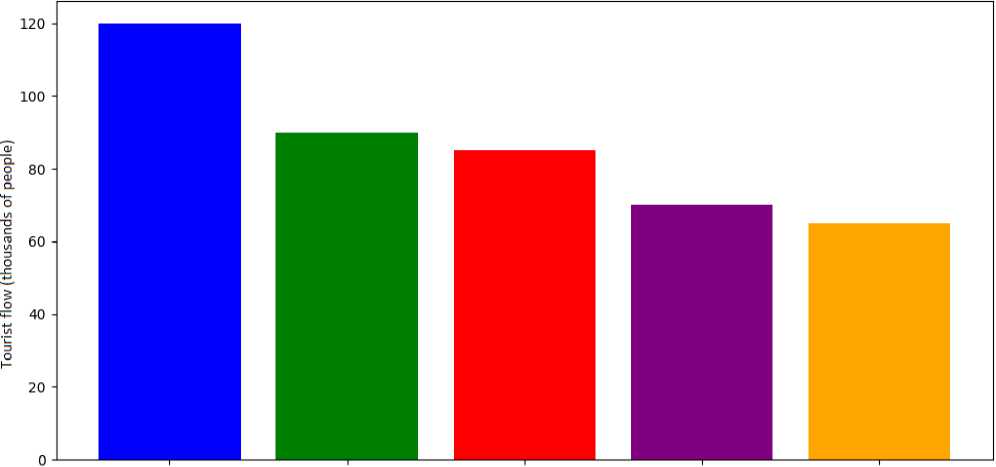
Recent scientific research focuses on the digital transformation of Arctic tourism. Developments in information technology are opening up new opportunities for promoting Arctic tourist destinations and improving the quality of service for tourists in the extreme conditions of the North. The global Arctic tourism industry is demonstrating significant achievements in organizing travel to polar regions. Norway has elaborated a unique model for the development of Arctic tourism based on the principles of sustainable development and the preservation of natural heritage. Norwegian experience demonstrates the effectiveness of creating tourism clusters around natural attractions such as fjords and glaciers (Tømmervik, Thuestad, Stien et al., 2025). Iceland has successfully implemented programs to develop geothermal tourism, integrating natural hot springs into its tourism infrastructure. The country has created a network of modern spa complexes, built in accordance with environmental requirements and the traditions of the local population. Finland has developed an attractive tourism product based on Sami culture and Arctic natural phenomena. Lapland has become a popular destination due to its comprehensive approach to organizing winter recreation, including viewing the Northern Lights, dog sledding and learning about the way of life of indigenous peoples (Fig. 1).
Norway Iceland Finland Canada Greenland
Fig. 1. Tourist flows to Arctic regions of the world (Orlova, 2021).
An analysis of statistical data demonstrates a steady increase in tourist flows to Arctic regions. Norway occupies the leading position, attracting travelers with its diverse natural landscapes and well-developed infrastructure. Iceland and Finland offer unique tourist attractions that combine natural and cultural sights.
Canada is developing Arctic tourism through the creation of national parks and nature reserves. Particular attention is paid to preserving Inuit culture and involving the Inuit community in tourism activities. Canadian experience demonstrates the effectiveness of public-private partnerships in developing tourism infrastructure (Tsyrenov, 2024).
Greenland is successfully promoting cruise tourism by organizing expedition routes along the coast. Local authorities have introduced strict environmental standards for cruise operators, ensuring a balance between tourism development and environmental protection (Karlsdóttir, 2024).
A comparison of practices in the development of Arctic tourism in Russia and other countries reveals significant differences in approaches to organizing tourism activities in polar regions. An analysis of statistical indicators points to a substantial gap in tourist numbers (Table 2).
Table 2
Comparative indicators of Arctic tourism development, 2019–2024 (Tkachenko A.A., 2023)
|
Indicator |
Russia |
Norway |
Finland |
Iceland |
|
Number of tourist routes |
45 |
120 |
85 |
95 |
|
Average length of stay |
5 |
8 |
7 |
9 |
|
Share of local residents in the tourism industry (%) |
15 |
45 |
40 |
35 |
An overview of the regulatory framework identifies various approaches to the regulation of tourism. The Scandinavian countries have developed a comprehensive system for the protection of natural areas while simultaneously ensuring their accessibility to visitors. In Russia, the legal framework for Arctic tourism is currently undergoing active development.
The experience of the northern countries in creating tourism infrastructure deserves particular attention. Finland and Norway have implemented the concept of “distributed hotels”, integrated into local communities. This approach minimizes environmental impact and maximizes local involvement in tourism activities (Korvenkangas, 2024).
Transport accessibility in Arctic territories also demonstrates differences in approaches. Foreign countries have developed an effective system of small aviation and maritime transport. In Russia, it is characterized by a predominance of seasonal routes and dependence on weather conditions.
An analysis of marketing strategies reveals the advantage of Scandinavian countries in promoting Arctic tourism products on the international market. Their experience is based on the creation of recognizable brands and the active use of digital technologies in promotion.
The system for training personnel in Arctic tourism in other countries includes specialized programs with compulsory practical work in polar regions. The Russian education system is only beginning to develop similar training programs.
International practices offer a wide range of opportunities for adapting successful models to the Russian context. The development of eco-tourism in the Arctic region is a particularly promising area. Scandinavian countries have elaborated effective mechanisms to control human impact on natural areas by implementing a system of visitor quotas and seasonal regulation of tourist flows.
Iceland’s experience in promoting geothermal tourism is particularly relevant to Russian practice. The creation of modern complexes based on natural hot springs, using energy-efficient technologies, will provide a unique offering for tourists in the Russian Arctic (Pilyasov, 2021).
Finland’s experience in ethno-cultural tourism demonstrates the effectiveness of integrating the traditional lifestyle of indigenous peoples into the modern tourism industry. The creation of cultural centers, the organization of master classes on traditional crafts, and the inclusion of elements of national cuisine in the tourism product form the basis for the development of sustainable tourism. The Norwegian model of cruise tourism offers solutions for the creation of coastal routes in the Russian Arctic. The introduction of environmental standards for shipping companies and the development of coastal infrastructure will facilitate the expansion of marine tourism. The Canadian approach to organizing scientific tourism opens up opportunities for creating specialized tours with an educational component. The incorporation of research stations and nature observatories into tourist routes contributes to the development of educational tourism (Badarchi, Sevek, Sereezhikpey, 2022).
The advancement of digital technologies in Arctic tourism, which has been successfully implemented in Sweden, will improve access to information about tourism opportunities in the Rus- sian Arctic. The creation of interactive maps, virtual tours, and mobile apps will expand the possibilities for travel planning.
An analysis of the current state of Arctic tourism in Russia demonstrates a steady upward trend in tourist flow to the country’s northern regions. From 2019 to 2023, the number of tourists visiting Russia’s Arctic territories increased by 45%. Popular destinations include the Franz Josef Land archipelago, Novaya Zemlya, the Taimyr Peninsula, and Chukotka. The growth dynamics of Arctic tourism are confirmed by statistical data (Fig. 2) (Zhelyuzina, Sizova, 2024).
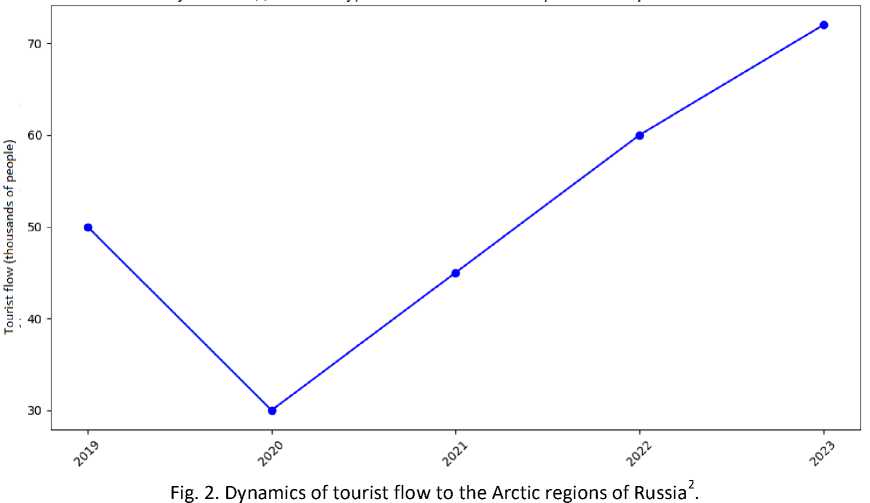
Tourist flow to these regions grew by an average of 5% per year from 2014 to 2019, but declined by a third during the COVID-19 pandemic. In 2021, tourist flow to the Arctic regions fully recovered and began to grow. Analysis of the presented data shows that after a decline in 2020 caused by the COVID-19 pandemic, tourist flow to Russia’s Arctic regions is demonstrating steady growth. This is facilitated by the development of transport infrastructure, including the modernization of airports in Murmansk, Arkhangelsk, and Naryan-Mar.
The uniqueness of Arctic tourism is determined by seasonality and specific infrastructure requirements. Summer is characterized by increased demand for cruise routes along the Northern Sea Route, while winter attracts tourists with the opportunity to observe the Northern Lights and to participate in ethnographic tours (Chkhotua, 2022).
The regulatory framework for Arctic tourism in Russia has been formed gradually, reflecting the government’s growing attention to the development of northern territories (Table 3). The Federal Law “On the Fundamentals of Tourism Activity in the Russian Federation” has been supplemented with specific provisions for the development of Arctic tourism. The Strategy for Developing the Russian Arctic Zone until 2035 has identified tourism as a priority area for the diversification of the economies of the northern regions. The modernization of existing tourist infrastruc-
-
2 Compiled by the author on the basis of Rosstat data.
ture and the creation of new facilities are taking place within the framework of federal and regional development programs (Davyborets, Vladimirova, Radikov, 2022).
-
Table 3
Key regulatory acts related to Arctic tourism in Russia3
|
Year |
Document |
Main provisions |
|
2014 |
State Program “Socio-Economic Development of the Arctic Zone of the Russian Federation” |
Development of tourism infrastructure |
|
2020 |
Strategy for Developing the Russian Arctic Zone until 2035 |
Formation of tourism clusters |
|
2022 |
National Project “Tourism and Hospitality Industry” |
Support for Arctic tourism projects |
|
2023 |
Cruise Tourism Development Program |
Modernization of port infrastructure |
The institutional framework for Arctic tourism management involves federal and regional authorities and specialized development institutions. The State Commission for Arctic Development coordinates inter-ministerial cooperation. The Far East and Arctic Development Corporation implements support mechanisms for investment projects through the Advanced Special Economic Zone (ASEZ) regime.
Regional tourism development programs in the Arctic regions of the Russian Federation include tax incentives, loan interest rate subsidies, and partial reimbursement of costs for the creation of tourism infrastructure. Particular attention is paid to supporting ethnographic tourism projects and preserving the cultural heritage of the indigenous peoples of the North.
A comparison of the Russian institutional framework with international experience reveals similar approaches to protecting the natural environment and cultural heritage. At the same time, foreign countries are more actively implementing public-private partnership mechanisms in tourism infrastructure development and applying more flexible investment attraction tools. The effectiveness of this institutional framework is confirmed by the growth of private investment in tourism projects in the Arctic regions. Between 2020 and 2023, investment volume increased 2.5-fold, more than 30 new tourist routes were launched, and 5 visitor centers were created in national parks (Gusevskaya, Taskaeva, 2023).
An assessment of the tourism infrastructure in Russia’s Arctic regions reveals an uneven distribution of accommodation and tourist service facilities. Spatial analysis has enabled the identification of several key clusters of tourism infrastructure (Table 4).
-
Table 4
Distribution of tourism infrastructure facilities in the Arctic zone of the Russian Federation4
|
Region |
Number of accommodation facilities |
Number of catering facilities |
Transport accessibility |
|
Murmansk Oblast |
35 |
42 |
high |
|
Arkhangelsk Oblast |
28 |
35 |
medium |
|
Nenets AO |
12 |
15 |
low |
3 Compiled by the author.
4 Compiled by the author based on data from Rosstat, the “Arctic in Figures” collection, and regional ministerial reports, 2022–2023.
|
Yamalo-Nenets AO |
25 |
30 |
medium |
|
Taimyr District |
8 |
12 |
low |
|
Chukotka AO |
15 |
18 |
low |
An analysis of Arctic tourism infrastructure has identified differences between regions in terms of their level of development. The western part of the Russian Arctic has a higher concentration of accommodation and service facilities. The Murmansk Oblast leads in the number of ho- tels and catering enterprises, due to its well-developed transport network and proximity to major cities of the European part of Russia.
Transport accessibility determines the specific nature of tourism infrastructure development. Regions with year-round land transport links offer comprehensive tourism products, including various types of activities. Areas with limited transportation accessibility focus on seasonal tourism, developing specialized accommodation facilities such as glamping sites, ethnic villages, and modular hotels.
Existing infrastructure is being modernized with consideration for environmental requirements and the Arctic’s climatic conditions. Energy-efficient technologies and autonomous life support systems are being implemented, and environmentally friendly building materials are being used. Particular attention is paid to the creation of visitor centers in specially protected natural areas, as well as the development of ecological trails and observation platforms (Nurmatova, 2021). The quality of accommodation is characterized by a predominance of economy-class facilities, accounting for 65% of the total. Four- and five-star hotels account for no more than 10% of the total number of rooms and are concentrated in regional administrative centers. Alternative forms of accommodation are developing, including Arctic capsule houses and modular hotels, which allow tourists to observe the Northern Lights in comfortable conditions5.
The eco-tourism infrastructure comprises a network of visitor centers, nature trails, and observation points in the “Russian Arctic” and “Beringia” national parks, the “Great Arctic” stare nature reserve, and others. The development of eco-tourism routes takes into account the need to minimize impacts on fragile Arctic ecosystems.
The preservation and promotion of the Arctic’s cultural heritage is a strategic priority for the development of the region’s tourism industry. This priority is centered on unique archaeological sites, ethnographic complexes, historic settlements, and the traditional crafts of the indigenous peoples of the North (Gusevskaya, Taskaeva, 2023).
Ancient rock art sites, such as the Kanozero petroglyphs, the Belomor petroglyphs, and the rock paintings of the Rybachy Peninsula, occupy a central place in Arctic cultural tourism. These sites attract both Russian and international tourists who want to experience the millennia-old history of northern exploration.
The ethnographic potential of Arctic tourism is revealed through an introduction to the distinctive cultures of indigenous peoples — the Sami, the Nenets, the Chukchi, and the Evenks. Tourist routes include visits to traditional settlements and an opportunity to learn about the rituals, crafts and way of life of the northern ethnic groups. In the Murmansk Oblast, the “Sami Village” and “Snow Village” ethno-villages offer visitors the opportunity to immerse themselves in the atmosphere of traditional life.
The historical and cultural landscapes of villages and towns form a unique category of tourist attractions. The wooden architecture of the Russian North, represented by churches, chapels, and residential buildings, creates the unique architectural character of the Arctic territories.
Traditional crafts — bone carving, birch bark weaving, embroidery, and weaving — are forming the basis for the development of creative industries and souvenir production. Master classes on traditional crafts are included in tourist programs, allowing visitors not only to observe, but also to learn ancient techniques for working with natural materials.
The cultural heritage of the Arctic provides a stable foundation for the creation of a unique tourism product that combines informative, educational and creative elements. This sector contributes to the preservation of the tangible and intangible heritage of the northern territories, creating conditions for intercultural dialogue and the sustainable development of Arctic communities (Valkova, Glemeyda, 2023).
The Arctic’s culinary traditions offer unique tourism potential, based on distinctive recipes and methods for preparing northern foods. The region’s gastronomic offerings include dishes made from northern fish, wild plants, reindeer meat and seafood, which are becoming central elements of tourist programs.
Arctic cuisine attracts attention due to its organic ingredients and unique food preparation methods. Northern cuisine festivals held in Murmansk, Arkhangelsk, Kem, and Salekhard demonstrate the richness of local culinary traditions. Tourists have the opportunity to taste nelma stroganina (slices of frozen fish), smoked reindeer, cloudberry desserts, and other regional delicacies.
A promising area of development is the organization of gastronomic tours that include visits to traditional fishing cooperatives, reindeer herding farms, and wild plant gathering sites. Tourists are immersed in the process of harvesting and processing local products, and learn about ancient methods of storing and preparing food in the North.
The Arctic restaurant industry is actively developing the concept of “new northern cuisine”, reinterpreting traditional recipes in a modern style. Chefs create signature dishes based on local ingredients, combining centuries-old traditions with innovative culinary techniques.
Master classes on preparing traditional dishes of the indigenous peoples of the North complement the gastronomic programs. Tourists learn to cook Sami fish soup, Nenets pies with reindeer meat, and Chukchi seafood dishes, discovering the secrets of Arctic cuisine.
The integration of the gastronomic element into other forms of tourism — ethnographic, ecological, and cruise tourism — expands the possibilities for creating a comprehensive tourism product. Tasting programs, culinary schools, and farm tours are shaping new directions for Arctic tourism development.
The Arctic festival movement is forming a unique calendar of tourist events, attracting guests from all over the world. The “Teriberka” international festival in the Murmansk Oblast combines contemporary art and traditional culture in the Arctic. The program includes musical performances, art installations, and gastronomic master classes with unique natural landscapes as a backdrop (Morozov, 2019).
Sports events generate additional tourist traffic to the Arctic region. The “Beringia” dog sled races in Kamchatka, northern multi-sport competitions, and international winter sports tournaments attract both professional athletes and spectators.
Traditional festivals of the indigenous peoples of the North reveal the richness of the region’s cultural heritage. The Reindeer Herders’ Day, the Polar Day Festival, and the First Fish Festival allow tourists to experience the atmosphere of authentic celebrations and to learn about the rituals and traditions of northern ethnic groups (table 5).
-
Table 5 Promising projects for the development of event tourism in the Arctic 2024–2030 (Vladimirova, Davyborets, Radikov, 2022)
Direction
Projects
Expected tourist flow
Festivals
Arctic Film Festival, Northern Lights Festival
15 000
Sports events
Arctic Games, Arctic Circle Marathon
12 000
Ethno-cultural events
Festival of the Peoples of the North, White Nights Festival
8 000
Business events
Arctic Economic Forum, Polar Explorers Congress
5 000
Scientific conferences and business forums are expanding the geography of event tourism. The St. Petersburg International Economic Forum and the Arctic Forum in St. Petersburg are becoming platforms for discussing the region’s development prospects, attracting representatives from business, science, and government.
The Arctic Light Festival and the Northern Lights Festival are opening up new dimensions of event tourism. Light shows, multimedia installations, and observations of natural phenomena create a unique tourism product that highlights the region’s distinctive natural features.
Modernization of the Arctic’s transport infrastructure includes the development of a network of small aircraft airports, seaports, and highways. In the Murmansk Oblast, a project to reconstruct Khibiny Airport is underway, creating conditions for increasing tourist flow to the Khibiny Mountains. Modernization of port infrastructure in Arkhangelsk and Murmansk is opening up new opportunities for the development of cruise tourism.
The creation of tourism and leisure clusters is forming points of attraction for tourist flows. The Bolshoy Vudyavr (BigWood) ski resort in Kirovsk and the Teriberka tourist complex on the Bar- ents Sea coast demonstrate successful examples of integrated tourism infrastructure development. The construction of visitor centers, glamping sites, and ethno-cultural complexes expands the range of services for various categories of tourists (Barinova, Zemtsov, Mikhailov et al., 2022).
The engineering infrastructure of Arctic territories is being improved in line with environmental requirements. The introduction of autonomous power supply systems based on renewable energy sources, modern water treatment and waste disposal technologies ensures the sustainable operation of tourist facilities in the Far North.
The digitalization of tourism infrastructure involves the creation of a unified booking information system, virtual tours, and mobile applications for navigation and obtaining information about tourist attractions. The development of telecommunications networks increases the accessibility and comfort of Arctic tourism.
Particular attention is being paid to creating a barrier-free environment for people with limited mobility. Adapting accommodation facilities, transport infrastructure, and tourist routes to the needs of people with disabilities expands the social focus of Arctic tourism.
Conclusion
Research into the development of Arctic tourism has made it possible to formulate a number of key principles and elaborate practical recommendations. The priority area is the transformation of the tourism sector in the Arctic region, taking into account current trends and challenges. An analysis of Russian and international experience demonstrates the need for a comprehensive approach to the formation of tourism products.
The improvement of regions with low socio-economic development facilitates the creation of conditions for investment, business expansion, and the increase of a territory’s potential. Practical interaction is already underway and influences socio-economic development within the context of institutional and geopolitical factors. However, indicators reflecting the potential for cooperation are not always of great interest due to the need to realize this potential, which can be hampered by institutional and geopolitical factors.
This study confirms the significant potential of Arctic territories for the development of various types of tourism. Cultural, educational, ethnographic, and ecological routes are particularly promising. The creation of unique tourism products based on the natural and cultural heritage of the indigenous peoples of the North is becoming increasingly important.
For the effective development of Arctic tourism, it is advisable to focus efforts on the following areas:
-
• creating a comfortable tourist environment through the modernization of transport and engineering infrastructure;
-
• developing a system of benefits and preferences for investors in the tourism sector;
-
• creating a unified information platform for Arctic tourism;
-
• developing public-private partnerships in the implementation of tourism projects.
Government authorities are recommended to:
-
• improve the regulatory framework for Arctic tourism;
-
• develop mechanisms to support small and medium-sized businesses in the tourism industry;
-
• implement a system of environmental monitoring of tourism activities;
-
• ensure the training of qualified personnel for the tourism industry.
Business community is advised to:
-
• focus investment activities on the creation of modern accommodation facilities;
-
• develop interregional cooperation in the creation of integrated tourist routes;
-
• introduce innovative technologies in tourist services;
-
• expand the range of additional services, taking into account the specific features of the Arctic territories.
The practical implementation of the proposed recommendations will enable the creation of a competitive tourism product that contributes to the sustainable development of Arctic territories. A key factor for success is achieving a balance between the economic efficiency of tourism activities and the conservation of the Arctic’s unique natural environment. The formation of a modern Arctic tourism model should be based on the principles of sustainable territorial development, combining economic interests with environmental safety and social responsibility. This approach guarantees long-term prospects for the development of the tourism industry in the Arctic zone.
As part of RSF Project No. 24-28-00092, a group of researchers, including the author of this article, carried out work to collect empirical data on the development of Arctic tourism. The data is currently being analyzed and processed and will be presented in the form of research articles, analytical reports, and other information. As part of the project, proposals are being developed on cooperation, partnerships, digitalization and other aspects of the development of Arctic tourism.
