
Проектная деятельность творческого коллектива «Jugendstadt»: технологии популяризации историко-культурного наследия немцев Поволжья
Журнал: Бахтинский вестник @bakhtiniada
Рубрика: Культурная память
Статья в выпуске: 1 т.8, 2026 года.
Бесплатный доступ
Введение. Актуализация историко-культурного наследия народов России, включая немцев Поволжья, требует поиска эффективных форм презентации прошлого современной аудитории. В этой связи особую значимость приобретает анализ проектной деятельности творческих коллективов, работающих на локальном материале. В статье осуществляется культурологический анализ проектной деятельности творческого коллектива «Jugendstadt» (г. Маркс, Саратовская область). Цель исследования – выявить на данном примере спектр технологий популяризации историко-культурного наследия как народов России в целом, так и немцев Поволжья в частности, а также оценить степень их эффективности. Материалы и методы. Материалом исследования послужили театрализованные представления, созданные коллективом «Jugendstadt»: «Великая! С любовью, Екатерина», «Дерево жизни», «Переселение колонистов в Екатериненштадт» (автор сценариев и режиссер – Д. Жукоцкая (Рафф)); костюмированный Екатерининский бал, видеоролики «Свадьба с немецким колоритом»; иммерсивная экскурсия по г. Марксу. Методологическую базу составляют: постнеклассическая теории наций Б. Андерсона, семиотический метод, концепция карнавальной культуры М. М. Бахтина, дискурс-анализ. Результаты исследования и их обсуждение. В статье обосновываются теоретическая необходимость и практическая значимость поиска эффективных технологий популяризации историко-культурного наследия народов России, в частности немцев Поволжья. Характеризуются следующие технологии проектной деятельности творческого коллектива «Jugendstadt»: имитация как способ создания символического мира исторического прошлого; реконструкция как конструирование культурного пространства через «локальный колорит»; иммерсивность как погружение в реконструированную аутентичную среду, стирающее границу между зрителем и участником. Выявляются способы определения эффективности применения данных технологий в процессе сохранения исчезающей культуры локального этноса. Заключение. Результаты исследования представляют интерес для специалистов в области культурологии, истории, искусствоведения и философии. Практическая значимость работы определяется возможностью интеграции полученных данных в научно-исследовательскую и педагогическую деятельность, а также в проектную работу центров национальной культуры, общественных организаций и творческих коллективов.
Похожие статьи в разделе Всеобщая история
Короткий адрес: https://sciup.org/147253855
IDS: 147253855 | УДК: 94:394.21(470.4) | DOI: 10.15507/2658-5480.08.202601.085-098
The Project Activity by Creative Team “Jugendshtadt”: Technologies of Popularizing Historical-Cultural Volga Germans’ Heritage
Introduction. The actualization of the historical and cultural heritage of the peoples of Russia, including the Volga Germans, requires the search for effective forms of presenting the past to a modern audience. In this regard, the analysis of the project activities of creative teams working on local materials is of particular importance. The article provides a cultural analysis of the project activities of the creative team “Jugendstadt” (Marx, Saratov Region). The aim of the study is to identify, using this example, the range of technologies for popularizing the historical and cultural heritage of both the peoples of Russia in general and the Volga Germans in particular, and to evaluate their effectiveness. Materials and Methods. Research material: theatrical performances created by the team “Jugendstadt”: “The Great One! With Love, Catherine”, “Tree of Life”, “Resettlement of Colonists to Yekaterinenstadt” (scriptwriter and director – D. Zhukotskaya (Raff)); the costumed Catherine’s Ball, the videos “Wedding with German Flavor”; an immersive tour of Marx. The author uses the following methods: B. Anderson’s post-non-classical theory of nations; the semiotic method; M. M. Bakhtin’s concept of carnival culture; discourse analysis. Results and Discussion. The article substantiates the theoretical necessity and practical significance of searching for effective technologies for popularizing the historical and cultural heritage of the peoples of Russia, in particular, the Volga Germans. The following technologies of the project activities of the creative collective “Jugendstadt” are characterized: imitation as a way of creating a symbolic world of the historical past; reconstruction as the construction of cultural space through “local flavor”; immersiveness as immersion in a reconstructed authentic environment, erasing the boundary between viewer and participant. Methods for determining the effectiveness of applying these technologies in the process of preserving the disappearing culture of a local ethnic group are identified. Based on the analysis of the creative projects of the “Jugendstadt” collective, the author comes to the conclusion that these technologies are quite effective in solving the stated problem. Conclusion. The results of the study may be of interest to theorists: cultural scientists, historians, philosophers. The practical significance of this work lies in the potential for implementing the obtained results in research and teaching, as well as in the project activities of national cultural centers, public organizations, and creative groups.
Текст научной статьи Проектная деятельность творческого коллектива «Jugendstadt»: технологии популяризации историко-культурного наследия немцев Поволжья
Оригинальная статья / Original article
EDN:
260-летний рубеж истории поволжского города Маркса (2025 г.) актуализирует задачу не только изучения его исторического прошлого [1–3], но и анализа современного культурного ландшафта. Особый интерес представляет тот факт, что «немецкое» наследие проявляется в Марксе на метафизическом уровне практически во всех городских локациях. Наглядными свидетельствами этого служат лютеранская кирха и памятник Екатерине II в центре, функционирование Российско-немецкого дома, сохранность здания бывшей табачной фабрики Штафф, а также таблички с немецкими фамилиями бывших владельцев на некоторых сохранившихся исторических зданиях. Историко-культурное наследие долгое время формировалось предками поволжских немцев, в наши дни оно сохраняется и поддерживается потомками локального этноса [4].
В научном дискурсе существует точка зрения, согласно которой российские немцы Поволжья квалифицируются как «фантомный этнос». Данная характеристика обосновывается совокупностью факторов: отсутствием компактной территории проживания вследствие депортации и последующих миграционных процессов, утратой этнического немецкого языка, а также длительным институциональным запретом на воспроизводство национальной культуры. Несмотря на развивающиеся реэмиграционные процессы, связанные, в том числе, с возвращением уехавших в 1990-е гг. немцев в Россию, приходится признать: по сути мы имеем дело с исчезающей культурой. В этой связи актуальным представляется не только теоретическое осмысление необходимости популяризации историко-культурного наследия немцев Поволжья в целом, но и признание ее практической значимости в частности, на примере деятельности общественных организаций, центров национальной культуры и творческих коллективов. В г. Маркс Саратовской области таким коллективом является Jugendstadt (в пер. с нем. «Город молодежи»), о миссии которого идет речь в настоящей статье. Объект исследования – проектная деятельность, предмет – технологии популяризации историко-культурного наследия немцев Поволжья. Цель исследования – провести культурологический анализ проектной деятельности Jugendstadt , выявив актуализируемые творческим коллективом технологии популяризации историко-культурного наследия немцев Поволжья.
RUSSIAN JOURNAL OF BAKHTIN STUDIES . Vol. 8, no. 1. 2026
Обзор литературы
Существует немалое количество научных работ, в которых анализируется широкий спектр проблем, связанный с немцами Поволжья (национальный язык [5], история и этнография1, социология [6] религия [7]). Из 325 диссертаций по указанной проблематике, защищенных в период 1962–2009 гг., большая часть посвящена диалектологии. С 1992 по 2009 гг. защищено 214 диссертаций по историческим наукам, 28 – по филологическим наукам, 4 – по культурологии2. В 2024 г. состоялась защита докторской диссертации, в которой представлено комплексное исследование культуры немцев Поволжья.
Несмотря на то, что за последние 15 лет научная литература не испытывает дефицита в работах, посвященных изучению разных аспектов жизни немцев Поволжья, в тоже время крайне мало публикаций, в которых освещается состояние культуры на современном этапе существования локального этноса. Отметим, по большей части внимание исследователей сконцентрировано на мониторинге процессов, связанных с сохранением и реконструкцией памятников религиозной архитектуры немцев Поволжья в Саратовской области, а также на изучении технологий популяризации материальных объектов историко-культурного наследия с целью развития туристической отрасли в регионе. Хронология восстановления евангелическо-лютеранского храма в селе Зоркино (бывшее Цюрих) Марксовского района Саратовской области детально рассмотрена в статье И. О. Чернухиной и В. В. Кирюшкиной [8]. Данный объект культурного наследия народов РФ регионального значения, отреставрированный в 2013–2015 гг., представляет собой единственный из десяти разрушенных культовых сооружений Поволжья, который удалось полностью воссоздать.
Большая просветительская работа по привлечению внимания к необходимости реконструкции другого объекта – католической церкви Святой Марии бывшей колонии Мариенталь, а ныне в поселке Советское Советского района Саратовской области ведется волонтерами и представителями инициативной группы жителей этого населенного пункта. На официальном портале Правительства Саратовской области в новостной ленте анонсировано участие и органов региональной власти в восстановлении данного объекта: «В настоящее время планируется восстановление кирхи в рабочем поселке Советское, поскольку в настоящий момент уже успехом увенчались реставрации храмов в городе Марксе и селе Зоркино. Наблюдается устойчивая положительная тенденция восстановления объектов культурного и исторического наследия, которая в перспективе может послужить базисом для роста заинтересованности в посещении Саратовской области российскими и иностранными туристами»3. В контексте сказанного особую значимость приобретает исследование А. А. Масленниковой, в котором автор, обращаясь к исторической ретроспективе, отмечает: «Переселение немецких колонистов в Саратовское Поволжье привело к появлению здесь очагов католицизма. Одним из крупнейших
RUSSIAN JOURNAL OF BAKHTIN STUDIES . Vol. 8, no. 1. 2026
сельских приходов Римско-католической церкви в России стала колония Мариенталь (Тонкошуровка)» [7, с. 83].
В 2025 г. внимание общественности было приковано еще к одному памятнику религиозной культуры немцев Поволжья – к разрушенной лютеранской кирхе бывшего поселения Шефер (ныне с. Липовка Энгельсского района): здесь была организована выставка «Тени». В сообществе ВК очевидцы мероприятия разместили свои отзывы, приведем один из них: «Сегодня мы открываем дверь в пространство, где тень становится проводником, а звук – откровением. Выставка “Тени” в стенах кирхи – это не просто проект, а диалог между прошлым и настоящим, тишиной и шумом, светом и тьмой. Кирха – это не просто площадка, а полноправный участник выставки. Ее своды хранят шепот молитв и гул истории. Прислушайтесь к шепоту стен, всмотритесь в танец теней – и вы услышите эхо вечности»4. Кирха бывшего поселения Шефер также требует скорейшего восстановления, ну, или, хотя бы, консервирования разрушающихся стен.
О возможности и перспективах воссоздания виртуальной исторической среды пишут авторы И. Р. Плеве и Е. А. Арндт, подразумевая использование нейронных сетей и технологий виртуальной реальности (VR) с целью визуализации поселений немцев Поволжья конца XIX – начала XX вв. Исследователи убеждены: интеграция передовых технологий открывает перспективы для воссоздания исторической среды, отображения культурных аспектов и создания иммерсивного опыта, который может способствовать развитию исторических исследований и образования5. Современному состоянию идентичности, языка и культуры немцев Поволжья посвящена обзорная работа автора Т. Б. Смирновой, в которой систематизируются ключевые тенденции в данной области6.
Таким образом, фокус внимания исследователей сосредоточен, прежде всего, на состоянии материальных объектов – памятниках религиозной культуры немцев. В то же время на периферии остается рассмотрение нематериального историко-культурного наследия, и связанная с ним проблема поиска адекватных, и, следовательно, эффективных технологий его сохранения и популяризации на современном этапе существования локального этноса. В этой связи целесообразным и актуальным представляется изучение специфики проектной деятельности творческого коллектива Jugendstadt . Данное исследование призвано внести вклад в разработку означенной проблематики и частично восполнить существующий пробел, обусловленный недостатком научных работ, посвященных анализу технологий популяризации историко-культурного наследия немцев Поволжья, актуализируемых в деятельности творческих коллективов.
Материалы и методы
Материалом для анализа послужили театрализованные представления, созданные коллективом Jugendstadt («Великая! С любовью… Екатерина», «Дере во жизни», «Переселение колонистов в Екатериненштадт» (автор сценариев

RUSSIAN JOURNAL OF BAKHTIN STUDIES . Vol. 8, no. 1. 2026
и режиссер – Д. Жукоцкая (Рафф)); костюмированный Екатерининский бал, видеоролики «Свадьба с немецким колоритом»; иммерсивная экскурсия по г. Марксу).
Исследование выполнено в рамках постнеклассической теории наций Б. Андерсона, согласно которой они определяются как «воображаемые сообщества». В определенном смысле таким «воображаемым сообществом» стали немцы Поволжья: локальный этнос, трансформировавшийся в этнокультурное сообщество, имеющее вид экстерриториальной дисперсной структуры.
Семиотический метод (информационно-семиотическая концепция культуры Ю. М. Лотмана) позволил выявить визуальные компоненты на примере деталей интерьера, полотна теней, костюмов. Перечисленные материальные объекты маркируют исторические события и репрезентируют культуру немцев Поволжья: таким образом реконструируется символический мир их исторического прошлого с возможностью полной или частичной иммерсии.
Оптика концепции карнавальной культуры М. М. Бахтина [9] способствует рассмотрению иммерсивной экскурсии и костюмированного Екатерининского бала Jugendstadt как вариации средневекового карнавала – события, когда «отменяется» повседневность, а конкретная локация превращается в единое праздничное пространство (хронотоп карнавала).
В рамках дискурс-анализа рассматриваются коммуникативные практики, актуализированные в проектах Jugendstadt .
Результаты исследования и их обсуждение
Творческий коллектив Jugendstadt был основан в г. Марксе на базе молодежного клуба «Тотал» при Российско-немецком доме и по сей день реализует креативные проекты с целью популяризации истории и культуры немцев Поволжья не только на региональном и федеральном, но и на международном уровнях. Коллектив создавался при непосредственном участии Е. К. Гейдт – председателя местной национально-культурной автономии немцев Марксовского района Саратовской области, и Н. А. Мейдт – ее заместителя (которая является руководителем Jugendstadt ). В 2010–2015 гг. коллектив реализовал целый ряд проектов, в частности: работа в этнокультурных лагерях; онлайн встречи, посвященные биографиям культурных деятелей из числа российских немцев (Т. И. Пельтцер, Г. А. Штиль); участие во Всероссийском показе национальных костюмов; проведение конкурса репродукций и вебинаров по актерскому мастерству.
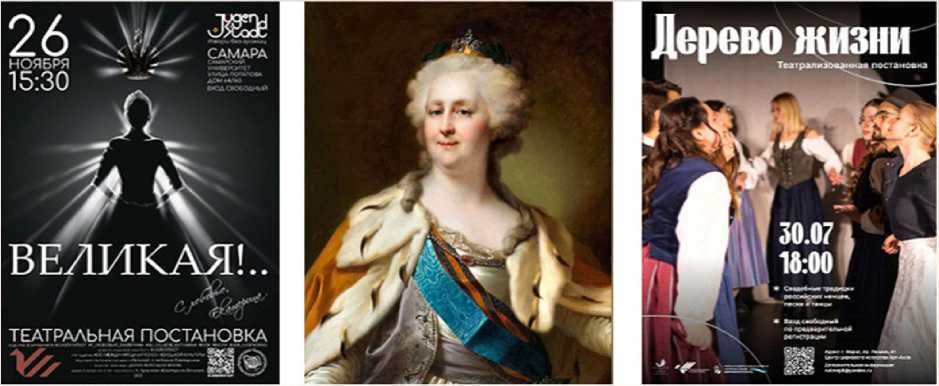
Отдельно следует выделить постановку спектаклей; представляется, что это наиболее полюбившийся участникам и зрителям формат работы Jugendstadt . Из 10 постановочных работ наибольшим успехом пользовался спектакль в формате костюмированного бала с использованием теневого полотна к 290-летию Екатерины II – «Великая! ... С любовью, Екатерина» (рис. 1, слева) (1 часть – 2019 г.; 2 часть – 2023 г.). Сюжетная линия спектакля – это детство и взросление будущей императрицы: знакомство с Петром Ульрихом, встреча с королем Пруссии, письмо от императрицы Елизаветы и многое другое, что повлияет впоследствии на формирование характера Екатерины. Бал как вторая часть спектакля проходил в Саратове в канун лютеранского Рождества (что тоже весьма символично): участники Jugendstadt продемонстрировали не только знание немецкого языка, но и отработанные навыки придворного (в том числе танцевального) этикета.

RUSSIAN JOURNAL OF BAKHTIN STUDIES . Vol. 8, no. 1. 2026
Дерево жизни
ВЕЛИКАЯ!..
ТЕАТРАЛЬНАЯ ПОСТАНОВКА
^ '--де as®
26 :УХ
НОЯБРЯ ' -
15:30 ~
Ж
САМАРА ■ MSaVVK*
Р и с. 1. Афиши спектаклей «Великая! С любовью … Екатерина» (слева) и «Дерево жизни» (справа) с портретом императрицы Екатерины II (в центре) F i g. 1. Poster of the performances “The Great One! With love… Catherine” (left), “Tree of Life” (right), “Portrait of Cathrine II” (the center)
Источник: здесь и далее в статье все рисунки взяты из Telegram-канала JUGENDSTADT: https://t.me/jugendstadt
Source: hereinafter in the article, all photos was taken from the website https://t.me/ jugendstadt
Спектакль «Дерево жизни» (автор сценария и режиссер – Д. Жукоцкая (Рафф)) – это художественная интерпретация «летописи» жизни переселенцев. Театрализованная постановка репрезентирует наиболее драматичный период в истории этноса – события депортации. Как это часто бывает у Jugendstadt , трагические вехи исторического прошлого немцев Поволжья врачуются творческой атмосферой исторического настоящего. «Мы – творческое объединение российских немцев Поволжья и Юго-Запада России. Мы рассказываем через сценическое пространство о культуре российских немцев, о том, что было, о том, что есть, а будущее создаем сами» – признается идейный лидер коллектива Д. Жукоцкая (Рафф)7. Вслед за ней высказывается и ее коллега, педагог по образованию С. Власова: «Культура и искусство не живут без новых форм. И мы эти новые формы воплощаем в жизнь»8.
«Переселение колонистов в Екатериненштадт» – так называется новый спектакль (рис. 2), в котором повествуется о перипетиях переселения немцев в Россию. «Не только у простого народа были трудности, но и на высших эшелонах была борьба, политические игры и прочие хитросплетения»9.
Один из участников коллектива так высказывается о герое спектакля – «вызы-вателе» колонистов из германских земель бароне де Кано де Борегарде, который «действительно выполнял свои обязательства, но, как это часто бывает, делал это со своими “хитрыми моментами” и, возможно, не всегда идеально»10. Нужно пояснить, что в 2023 г. в свет вышла книга А. Идта и Г. Раушенбаха «Вызывате-ли. Авантюристы Просвещения в колонизационном проекте Екатерины II» [10].

RUSSIAN JOURNAL OF BAKHTIN STUDIES . Vol. 8, no. 1. 2026
Это единственная за последние годы монография, авторы которой опубликовали результаты генеалогического поиска своих предков – знаменитой немецкой фамилии Раушенбах; коснулись они и «портрета» барона. «Среди тех иностранцев, с которыми Канцелярия заключила «вызывательские» контракты, выделяется барон де Борегард. Он приступил к набору последним, но сумел отправить в Россию примерно столько же семей, сколько все остальные вызыватели, вместе взятые. И он оказался единственным, кому удалось избежать ответственности за неблаговидные поступки, включая присвоение казенных денег»11.
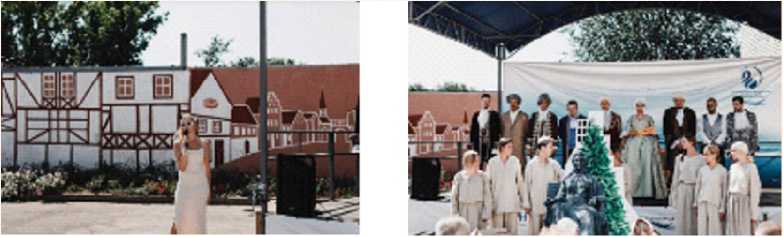
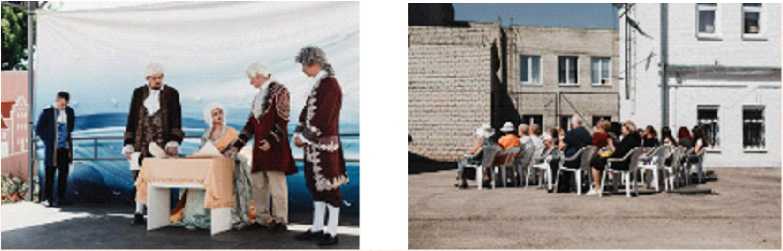
Р и с. 2. Сцены из спектакля «Переселение колонистов в Екатериненштадт» F i g. 2. Performance «Resettlement of Colonists in Ekaterinenshtadt»
Кульминацией спектакля становится символический акт благодарности: «колонисты» собирают средства на памятник в честь Екатерины II. Согласно архивным документам, первые переселенцы прибыли на место своей будущей колонии Екатериненштадт 24 июня 1767 г. Первым старостой (форштегером; нем. Vorsteher ) поселения был выбран Шпренгер – парикмахер родом из Дармштадта. Но, вопреки сложившейся традиции называть немецкие колонии именами своих первых фор-штегеров, гессенский парикмахер Шпренгер такой почести не удостоился. Екатериненштадт был назван в честь императрицы Екатерины II, величественный памятник которой до сих пор украшает центр города.
С 24 по 29 сентября 2025 г. Jugendstadt работал над созданием художественного фильма «Свадьба с немецким колоритом» (автор сценария и режиссер – Д. Жукоц-кая (Рафф)) (рис. 3). За полтора месяца был написан текст сценария, утверждены актеры, выбраны локация и реквизит, «чтобы создать волшебную осеннюю картину и мурашки от просмотра» – вспоминает помощница режиссера С. Власова12; в итоге: «Результат проекта – не только создание коротких видеороликов о свадебных традициях, но и полноценный “гайд” по организации современной свадьбы
RUSSIAN JOURNAL OF BAKHTIN STUDIES . Vol. 8, no. 1. 2026
с национальным колоритом. А пока – будущий дом “Катя и Карл” превращается в съемочную площадку для фильма творческой лаборатории Jugendstadt !»13.
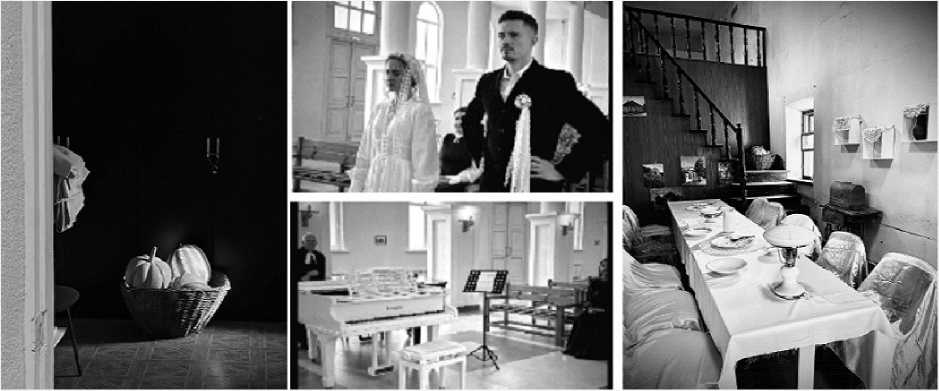
Р и с. 3. Сцены из художественного фильма «Свадьба с немецким колоритом» F i g. 3. Scenes from a feature film «Wedding with German Flavor»
Осенью 2025 г. Jugendstadt запустил иммерсивную экскурсию по своему родному городу Маркс. Автор проекта и режиссер Д. Жукоцкая (Рафф) поясняет: «Иммерсивная экскурсия – формат, где участники становятся активными персонажами, а не просто наблюдателями»14. Цель формата – полное погружение в историю, культуру или сюжет, создание эффекта присутствия, что позволяет пережить события так, будто участник является их частью.
Экскурсия была задумана как своеобразный «пролог» к спектаклю «Переселение колонистов в Екатериненштадт» и начиналась недалеко от Российско-немецкого дома (маршрут был разработан в соответствии с локациями и идеями сцен театрализованного представления). «В процессе придумывания сразу стало ясно, что нужны будут немецкоговорящие туристы. Благо, у нас много тех, кто обладает возможностями беседы на иностранном языке (а еще с непоколебимым видом “непонимания” русской речи)», – делится воспоминаниями участница Jugendstadt Н. Сапрыкина (Гертер)15.
Итак, «туристы» понадобились, чтобы воссоздать атмосферу переселения. Экскурсия начиналась на пристани – там была встреча с немцем, отсюда начинался «путь немцев Поволжья длиною в 250 лет», как напишет этнограф К. Штумпп. С вымышленным туристом была сопровождающая, которая переводила все на русский язык участникам и на немецкий – туристу. Далее по сюжету в импровизированной колонии появился «заболевший человек». Из записок поселенцев известно, что по началу колонисты на осваиваемых землях переносили тяжелые болезни, что порой заканчивалось смертью. «Их никто не мог вылечить и помочь, – рассуждает Н. Сапрыкина (Гертер), – поэтому наш актер показывал не просто болеющего, а того, кому отказали в поликлинике в лечении (было сработано на 100%, люди обходили Эвелину и боялись, что она, действительно, может заразить)»16. Не все приживались на новых землях, многие хотели уехать и даже
RUSSIAN JOURNAL OF BAKHTIN STUDIES . Vol. 8, no. 1. 2026
пытались это сделать – так возникла идея сыграть «сцену прощания брата с сестрой». Не осталась без внимания даже местная кирха – Jugendstadt «реконструировал» в этой локации «воскресную школу»: немецкий педагог обучает детей рисованию. Завершилась иммерсивная экскурсия около памятника Екатерине II: в честь 260-летия города любой желающий мог подойти и сфотографироваться с самой Императрицей. Фотосессию впоследствии превратили в «сетевую акцию»: фотографии участников экскурсии были оперативно размещены на официальном канале коллектива в Telegram.
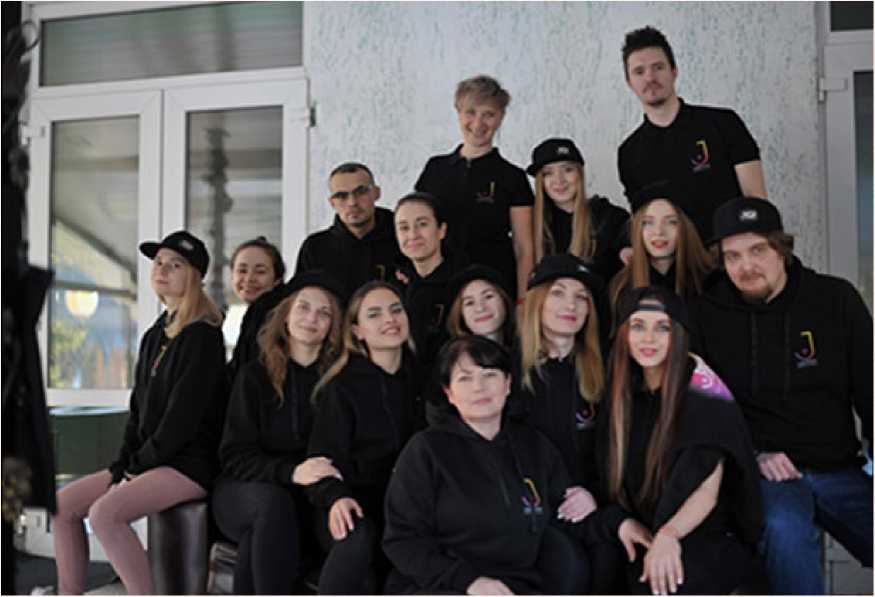
Р и с. 4. Коллектив Jugendstadt
F i g. 4. The creative team Jugendshtadt
О первом опыте иммерсивной экскурсии впоследствии написала участница коллектива Jugendstadt Н. Сапрыкина (Гертер): «Получилось лучше, чем мы рассчитывали. Изначально у нас был страх, что, во-первых, люди просто не заметят эти иммерсивные сценки. Был и второй страх: что актеры не справятся или мы не справимся, и будет слишком очевидно, что это театр. С одной стороны, если люди не заметят – это плохо, а если заметят слишком сильно – тоже плохо. Нужно было найти такую золотую середину. И надо сказать, что мы очень удивлены тем, что все, в общем-то, получилось. Люди реально поверили, что происходящее – это часть реальности. Изначально они даже начали думать, что обещанная театрализация не произошла. Но на самом деле она была, они просто об этом не подозревали. Это и был тот эффект, к которому мы стремились»17.
Приведем комментарии и посетителей иммерсивной экскурсии. Своими впечатлениями от проекта делится горожанка Е. Бойко: «Я была не нескольких экскурсиях по нашему городу, слушала от наших краеведов историю, спрашивала многое. Но все люди разные, и невозможно одинаково рассказать об одном. Экскурсия
RUSSIAN JOURNAL OF BAKHTIN STUDIES . Vol. 8, no. 1. 2026
с элементами театрализации была своеобразной. О том, что актеры изначально были «в штатском» не понял никто, как мне кажется. “Настоящий немец” Дмитрий с переводчиком были самые убедительные, остальные же, действительно, стали хорошими элементами антуража. Задумка простая, но оригинальная, это было свежо»18. Или мнение С. Пантюгова из Москвы: «Маршрут оказался продуманным – не просто идешь за гидом, а видишь четко спланированную цепочку точек. В каждом важном месте останавливались, рассказывали про значимость зданий, улиц. Преимущество в том, что маршрут был недолгим – никакой рутины, все динамично и захватывающе»19.
Итак, можно ли считать технологии популяризации нематериального историко-культурного наследия в проектной деятельности творческого коллектива Jugendstadt эффективными? Отчасти на этот вопрос ответили посетители подготовленных и проведенных им мероприятий: лента с комментариями содержит положительные отзывы. Об эффективности деятельности Jugendstadt свидетельствует и срок существования коллектива – 13 лет, а также тот факт, что за это время «клуб по интересам» трансформировался в полноценный творческий коллектив с расширенным и разнородным национальным составом – в него вошли молодые люди, которые не имеют немецких корней, но проявляют живой, неподдельный интерес к истории и культуре этого локального этноса. Несмотря на крайне сложную геополитическую обстановку вокруг темы «русские немцы» Jugendstadt остается «на плаву», в то время как многие официальные общественные организации прекратили свое существование (например, «Культурный немецкий центр» г. Саратова), другие переживают сложные времена и вынуждены отходить от чисто просветительской работы, связанной с популяризацией историко-культурного наследия немцев Поволжья (например, Немецкий читальный зал г. Саратова).
В процессе исследования объектов проектной деятельности коллектива Jugenstadt были выявлены следующие технологии популяризации историко-культурного наследия немцев Поволжья.
Имитация как технология создания символического мира исторического прошлого немцев Поволжья. В театрализованных представлениях актеры играют роли, репрезентируя реальных исторических лиц (Екатерина II (маленькая Фике), Петр Ульрих, король Пруссии Фридрих I, барон де Кано де Борегард). Дискурс-анализ позволяет говорить о коммуникативных практиках: герои говорят на немецком языке, используя конструкции, соответствующие придворному этикету. Реквизит, костюмы, детали интерьера, декорации спектаклей не являются аутентично «немецкими», но в целом их художественное оформление имитирует историко-культурные реалии придворной жизни эпохи Екатерины II. Многие сюжеты носят вымышленный характер, в них имеется немалая доля импровизации (например, в проект экскурсии включены иммерсивные сценки: «Туристы», «Больной человек», «Прощание брата с сестрой», «Урок рисования в воскресной школе»).
Реконструкция как технология конструирования культурного пространства немцев Поволжья через «локальный колорит». В проекте «Свадьба с немецким колоритом» через видео-контент реконструируются традиции и создается полноценный «гайд» по проведению свадьбы с национальным немецким колоритом. Иммерсивная экскурсия была организована по маршруту исключительно «немецких» локаций: пристань, на которую высаживались первые переселенцы, кирха г. Марк са, памятник Екатерине II и др. Ситуативные и коммуникативные
RUSSIAN JOURNAL OF BAKHTIN STUDIES . Vol. 8, no. 1. 2026
практики реконструируются на основе аутентичных записок прибывших в Поволжье переселенцев (спектакль «Переселение колонистов в Екатериненштадт»).
Иммерсивность как технология погружения в реконструированную аутентичную среду немцев Поволжья. Проведение экскурсии актуализирует технологию погружения, стирая границу между зрителем и участником, что позволяет рассматривать проект через призму концепции карнавальной культуры М. М. Бахтина. Иммерсивная экскурсия, подобно средневековому карнавалу, на время «отменяет» привычную иерархию повседневности, превращая город Маркс в аутентичную среду немцев Поволжья, в которой каждый становится активным действующим лицом, а не пассивным наблюдателем. Аналогичный эффект достигается в процессе проведения костюмированного Екатерининского бала. Усиливает иммер-сивность проекта использование театра теневого полотна.
Таким образом, тезис «Искусство и культура не живут без новых форм» может рассматриваться как креативная стратегия коллектива Jugendstadt , одновременно выступая ориентиром для дальнейшей деятельности по сохранению этнических традиций и развитию культурной преемственности немцев Поволжья на протяжении их более чем 260-летней истории в регионе.
Заключение
В процессе исследования объектов проектной деятельности творческого коллектива Jugendstadt на материале спектаклей «Великая! С любовью… Екатерина», «Дерево жизни», «Переселение колонистов в Екатериненштадт», костюмированного Екатерининский бала, художественного фильма «Свадьба с немецким колоритом», иммерсивной экскурсии по г. Марксу выявлены три технологии популяризации историко-культурного наследия немцев Поволжья. Это: имитация как технология создания символического мира исторического прошлого, реконструкция как технология конструирования культурного пространства через «локальный колорит», иммерсивность как технология погружения в реконструированную аутентичную среду. На примерах отзывов пользователей социальных сетей и мессенджеров, а также оценки опыта деятельности коллектива на протяжении 13 лет и увеличения численного и национального состава его участников, сделан вывод о том, что технологии, актуализируемые Jugendstadt , являются эффективными и имеют важное практическое значение для сохранения и популяризации историко-культурного наследия немцев Поволжья. Таким образом, цель исследования, заявленная в представленной статье, достигнута.
Полученные результаты открывают перспективы изучения технологий популяризации как нематериальных, так и материальных объектов историко-культурного наследия на примере проектной деятельности центров национальной культуры, общественных организаций, этнокультурных сообществ. Выводы, полученные в результате исследования, могут быть использованы и в преподавательской деятельности: в чтении лекций по дисциплинам «Этнография», «Культурная антропология», «Этнология», а также послужить теоретической основой для разработки специализированных авторских курсов.
