
Разработка и характеристика антимикробной активной упаковки, обогащённой эфирным маслом тимьяна, на основе крахмала
Журнал: Вестник Воронежского государственного университета инженерных технологий @vestnik-vsuet
Рубрика: Пищевые системы
Статья в выпуске: 2 (108) т.88, 2026 года.
Бесплатный доступ
Цель данной статьи — найти решение проблемы загрязнения окружающей среды, вызванной отходами синтетической упаковки, путем улучшения функциональных характеристик крахмальных пленок с антимикробными свойствами. В этом исследовании были разработаны и охарактеризованы структурные, механические и антимикробные свойства биоразлагаемых пленок на основе крахмала, пропитанных эфирным маслом тимьяна. Для производства упаковочных материалов, пригодных для применения в пищевой промышленности, использовалась технология литья из раствора. Вакуумная дегазация значительно улучшила однородность толщины пленки, однородность поверхности и общую целостность по сравнению с ультразвуковой гомогенизацией. Измерения краевого угла смачивания показали увеличение гидрофобности поверхности с 38° (контроль) до 56° при добавлении масла тимьяна, что указывает на улучшение влагозащитных свойств. Механические испытания показали, что более высокие концентрации масла снижают прочность на разрыв (с 1,63 до 0,68 МПа), одновременно увеличивая гибкость (с 31,70% до 53,87%). Антимикробные анализы продемонстрировали зависимое от концентрации ингибирование против Bacillus subtilis, Escherichia coli и Candida albicans. B. subtilis показала полное подавление в контрольных образцах и в пленках с 1% маслом, при этом зоны ингибирования увеличились до 1,5 мм (2%) и 16 мм (3%). E. coli показала прогрессирующую чувствительность, достигнув 5 мм при 3% концентрации масла, в то время как C. albicans показала умеренное подавление до 2,25 мм. В целом, данное исследование представляет собой масштабное и экологически чистое решение для биоразлагаемой упаковки, сочетающее структурную универсальность с антимикробной защитой.
Короткий адрес: https://sciup.org/140315818
IDS: 140315818 | УДК: 640 | DOI: 10.20914/2310-1202-2026-2-284-290
Development and characterization of antimicrobial active packaging enriched with thyme essential oil based on starch
This article aims to find solution to the problem of environmental pollution caused by synthetic packaging waste by improving the functional specifications of starch films with antimicrobial properties. In this study, starch-based biodegradable films infused with thyme essential oil were developed and characterized for their structural, mechanical, and antimicrobial properties. The processing technique—solution casting—was employed to produce packaging materials suitable for food applications. Vacuum degassing significantly improved film thickness consistency, surface homogeneity, and overall integrity compared to ultrasonic homogenization. Contact angle measurements showed increased surface hydrophobicity from 38° (control) to 56° with thyme oil addition, indicating enhanced moisture barrier properties. Mechanical testing revealed that higher oil concentrations reduced tensile strength (from 1.63 to 0.68 MPa) while increasing flexibility (from 31.70% to 53.87%). Antimicrobial assays demonstrated concentration-dependent inhibition against Bacillus subtilis, Escherichia coli, and Candida albicans. B. subtilis showed complete suppression in control and 1% oil films, with inhibition zones increasing to 1.5 mm (2%) and 16 mm (3%). E. coli exhibited progressive sensitivity, reaching 5 mm at 3% oil concentration, while C. albicans showed modest inhibition up to 2.25 mm. Overall, this research presents a scalable and eco-friendly solution for biodegradable packaging, combining structural versatility with antimicrobial protection.
Текст научной статьи Разработка и характеристика антимикробной активной упаковки, обогащённой эфирным маслом тимьяна, на основе крахмала
The widespread use of synthetic polymers in food packaging has raised significant concerns regarding environmental sustainability, food safety, and waste management [1, 2]. Although plasticbased materials are highly effective in preserving food quality, their persistence in the environment contributes to long-term pollution and resource depletion [3, 4]. These challenges have intensified the demand for biodegradable alternatives that combine structural integrity with antimicrobial functionality, ensuring safe food storage while minimizing ecological impact [5].
Among various biodegradable candidates, starch-based polymers have attracted considerable attention due to their renewability, biodegradability, and versatility in food packaging applications [6]. However, their practical implementation remains limited by inherent drawbacks such as moisture sensitivity, mechanical weakness, and vulnerability to microbial contamination. To address these limitations, active packaging technologies have emerged, incorporating natural antimicrobial agents into polymer matrices to enhance food preservation without compromising environmental sustainability [7].
Recent studies have introduced a variety of strategies to enhance the performance of starchbased films. Kumar et al. (2024) developed starch films embedded with green-synthesized ZnО nanoparticles, which exhibited strong antimicrobial activity and improved biodegradability [8]. Ali et al. (2022) enhanced starch films using medicinal plant extracts such as Thymus serpyllum, resulting in notable antioxidant and barrier properties [9]. Likewise, Ocak (2020) incorporated thyme essential oil into collagen hydrolysate films, improving their elongation and light protection but reducing tensile strength [10]. Alkhair A. and others (2023) found that samples of packaging film based on starch with clove essential oil have antimicrobial activity against E. coli, B. subtilis, C. albicans, A. niger and reduce the number of microorganism colonies on the surface of the food product [11]. These approaches reflect the diversity of bioactive incorporation methods and their varying effects on film functionality.
This is an open access article distributed under the terms of the Creative Commons Attribution 4.0 International License
Building on this foundation, the present study explores the development of starch-based active packaging films infused with thyme essential oil, with a focus on improving antimicrobial efficacy, structural stability, and mechanical durability. Through the refinement of processing techniques and optimization of formulation parameters, the research aims to advance the performance and applicability of biodegradable packaging materials.
Future work will address the feasibility of large-scale production, comprehensive microbial resistance testing, and collaboration with industry stakeholders to support the integration of this technology into commercial food packaging systems.
Materials and Methods
For the development of biodegradable active packaging films, the following materials were utilized:
Corn starch – (Restoria, Skyfood LLC – 141304, Russia, Moscow Region, Sergiyev Posad, Krasnoy Armiya Avenue, 4а, 3rd floor, office No. 7, GOST 32159–2013).
Glycerin – Plasticizer to improve flexibility and mechanical properties. (Glycerin Solution LLC – 141270, Russia, Moscow Region, Pushino, Sofrino, working settlement, GOST 6824–96).
Acetic Acid – Enhances film solubility and stability. (BASTION LLC – 18835, Russia, Leningrad Region, Gatchina District, Kobrinskoye Settlement, Central Street, 18, TU 10.84.11–015–46896390–2005).
Distilled water – Solvent for homogenization.
Thyme Essential Oil – Active antimicrobial component. (AESTHETICS LABORATORY, IP Rumyantsev MA, Izhevsk, 45 Severny Lane).
Microbes – (Bacillus subtilis ATCC 6633, Escherichia coli М17, Candida albicans and Aspergillus niger F-894).
Ultrasonic processing unit (Cryamide – GU-20–1500).
The PM 50 tensile machine is used to determine the physical and mechanical properties of polymer materials.
An installation for vacuuming – Model: VFD004L21В, MADE IN CHINA.
Antimicrobial Activity of Thyme Essential Oil. Evaluation of antimicrobial activity and fungicidal effect of thyme oil Antimicrobial and fungicidal activity of thyme oil for Bacillus subtilis, Escherichia coli, Candida albicans, Aspergillus niger was evaluated using method in accordance with MUK 4.2.1890–044.
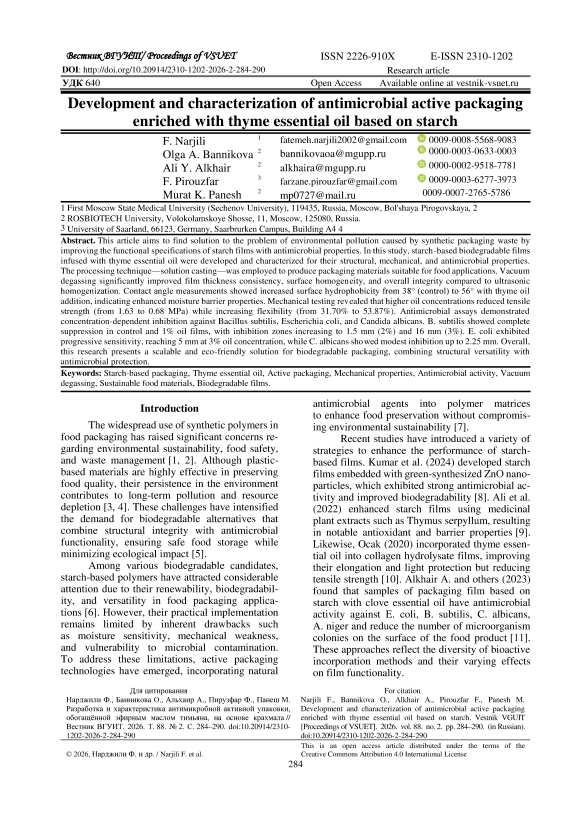
Sterile paper discs impregnated with thyme essential oil were placed on the inoculated agar surfaces. The plates were incubated at 37 °C for 24 hours under aerobic conditions. Following incubation, the plates were examined for zones of inhibition around the discs (figurе1).
Preparation of Starch-Based Films Containing Thyme Essential Oil. Three formulations of starch-based biodegradable films were prepared using varying
Film Composition. Each film-forming solution was prepared by dissolving 5 g of corn starch in 50 mL of distilled water. To this, 2.5 mL of glacial acetic acid and 5 mL of glycerol were added as a solvent and plasticizer, respectively. Thyme essential oil was incorporated at concentrations of 1 %, 2 %, and 3 % (v/v) for samples A, B, and C, respectively.
Homogenization and Gelatinization. The mixtures were initially homogenized using an ultrasonic processor for 20 seconds to ensure uniform dispersion of the essential oil. Subsequently, the solutions were transferred to a water bath at 98 °C and stirred continuously for 5 minutes to facilitate starch gelatinization and emulsion stabilization. After heating, the mixtures were again subjected to ultrasonic treatment for 20 seconds.
Film Casting and Drying. The resulting film-forming solutions were poured onto leveled glass plates and allowed to dry at ambient temperature (25 °C) for 48 hours. The dried films were then carefully peeled off and conditioned at room temperature prior to further analysis (figure 2).
Antimicrobial Activity Assay. The antimicrobial activity of the prepared films was evaluated against Bacillus subtilis ATCC 6633, Escherichia coli М17, Candida albicans and Aspergillus niger F-894 using the disc diffusion method. Circular discs of each film formulation were placed on nutrient agar plates previously inoculated with Bacillus subtilis, Escherichia coli, Candida albicans and Aspergillus niger. The plates of bacteria incubated at 37˚C and the plates of fungus incubated at 29˚C for 24h, and the diameter of the inhibition zones was measured (table 1), (figure 3).
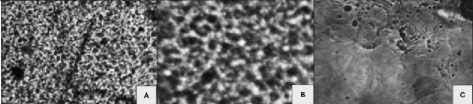
Microscopic Analysis. All film samples were examined under a light microscope to assess their surface morphology and structural uniformity. Observations focused on the dispersion of the essential oil within the starch matrix and any visible phase separation or aggregation (figure 4).
Mechanical Properties – Tensile Strength and Elongation at Break. To evaluate the mechanical behavior of the starch-based films, tensile tests were performed using a universal testing machine. All samples were prepared with 20 seconds of ultrasonic homogenization and contained varying concentrations of thyme essential oil (1 %, 2 %, and 3 % v/v) and control sample. The relative elongation at break (%) was measured for each formulation across three replicates (table 2,3).
Optimization of Film Homogenization Techniques. To enhance the homogeneity and structural integrity of the starch-based film-forming solutions, four different processing methods were evaluated:
– Sample A: Ultrasonic homogenization only
– Sample B: Vacuum degassing only
– Sample C: Ultrasonic followed by vacuum – Sample D: Vacuum followed by ultrasonic
Each method was applied to identical formulations containing starch, glycerol, acetic acid, distilled water, and thyme essential oil. The objective was to assess the influence of processing sequence on film uniformity, thickness, and visual quality (figure 5).
Contact Angle of the Bio-composite Film. The surface wettability of starch-based bio-composite films was evaluated through contact angle analysis to assess their hydrophilic or hydrophobic behavior, which is critical for food packaging applications [12]. Two film samples were prepared: one control film without thyme essential oil, and one film containing 1 % (v/v) thyme essential oil. Both samples were processed under identical conditions.
A droplet of distilled water was manually applied to the surface of each film using a laboratory dropper. The contact angle formed between the droplet and the film surface was measured using a mobile goniometer application by capturing a side-view image of the droplet (figure 6).
Results
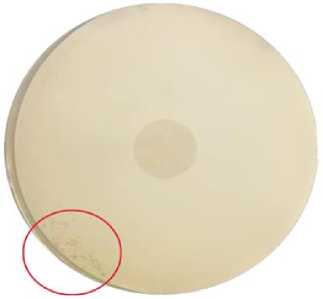
Figure 1. Results of antimicrobial test of thyme essential oil microorganism. Inhibition zones were measured after incubation, indicating microbial sensitivity to the active packaging films. Clear halos around the discs represent areas of growth suppression. The diameter of inhibition zones increased with oil concentration, particularly for E. coli (up to 5 mm) and C. albicans (up to 2.25 mm), while B. subtilis showed complete inhibition at 3 % (16 mm).
Bacillus subtilis
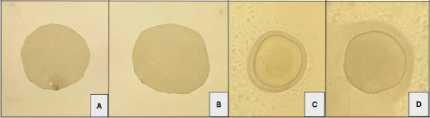
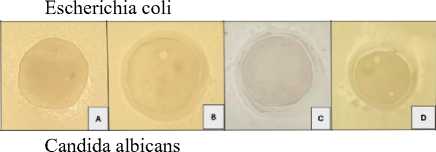
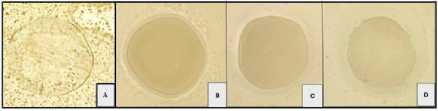
Figure 3. Antimicrobial test with Bacillus subtilis ATCC 6633, Escherichia coli М17, and Candida albicans. Films with A (control), B (1 %), C (2 %), and D (3 %) (v/v) concentration of thyme essential oil
Table 1.
The results indicated a strong inhibitory effect of the thyme essential oil against B. subtilis (figure 1). No visible bacterial growth was observed across the majority of the agar surface, with only minimal growth detected at the peripheral edge of the plate. This suggests that thyme essential oil possesses potent antibacterial properties, likely attributable to its high content of phenolic compounds such as thymol and carvacrol [13, 14].
Control films:
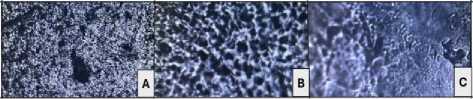
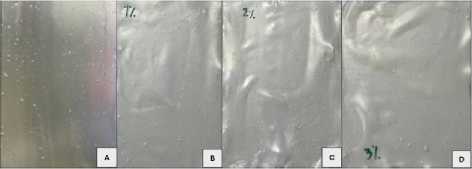
Figure 2. Dried films – control (A) 1 % (B), 2 % (C), and 3 % (D) (v/v) concentration of thyme essential oil
Films with 1 % thyme oil:
Films with 2 % thyme oil:
Concentrations of thyme essential oil against Bacillus subtilis, Escherichia coli, and Candida albicans. Disc diffusion assay was performed by placing circular film samples (control, 1 %, 2 %, and 3 % thyme oil) on agar plates inoculated with each
Films with 3 % thyme oil:
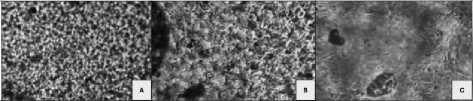
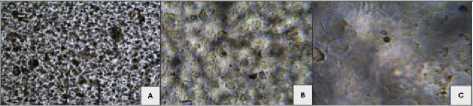
Figure 4. Observing films with – 0 % (control), 1 %, 2 %, and 3 % (v/v) concentration of thyme essential oil by microscope in order from left to right with 4× (A), 10× (B), 40× (C) magnifications
Measured zones of inhibition (mm)
|
Microorganisms |
A (control) |
B (1 %) |
C (2 %) |
D (3 %) |
|
B. subtilis |
0 |
0 |
1.5 |
16 |
|
E. coli |
0 |
2.75 |
3.5 |
5 |
|
C. albicans |
0 |
1 |
1.75 |
2.25 |
Results indicated: Higher thyme oil concentrations correlated with reduced bubble formation, enhancing film homogeneity.
1,8
1,6
1,4
s s 1,2
Л 1
M Й
I 0,8
0,6
0,4
0,2
control 1% 2% 3% concentration of thyme oil, %
I 40
_o ад о 30
control 1% 2% 3% concentration of thyme oil, %
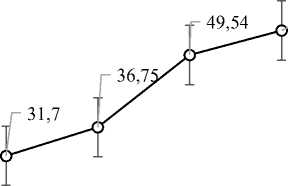
Figure 5. Relative elongation of polymeric materials based on starch with the addition of thyme essential oil (%)
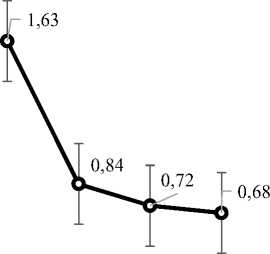
The mechanical behavior of starch-based polymeric films was strongly influenced by the incorporation of thyme essential oil. As presented in Figure 2 and 3, tensile strength showed a decreasing trend with increasing concentrations of the essential oil, while relative elongation at break exhibited an opposite pattern.
The control sample (0 % thyme oil) demonstrated the highest tensile strength (1.63 МРа) and lowest elongation (31.70 %), indicating a more rigid and less flexible matrix. In contrast, the film containing 3 % thyme oil showed the lowest tensile strength (0.68 МРа) and the highest elongation (47.20 %), suggesting greater molecular mobility and flexibility.
This inverse relationship can be attributed to the plasticizing effect of thyme essential oil, which likely disrupts the intermolecular hydrogen bonding within the starch matrix, thereby reducing stiffness and enhancing extensibility. While reduced tensile strength may limit mechanical durability, the increased elongation can benefit film performance in applications requiring flexibility and conformability.
These results align with prior studies that report essential oils can compromise mechanical integrity but improve functional adaptability in active packaging systems.
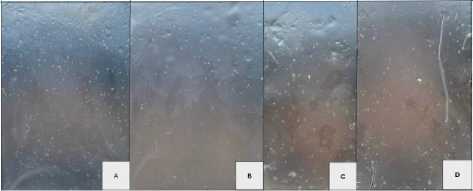
Figure 6. Results of samples prepared by Ultrasonic (A), Vacuum (B), Ultrasonic followed by vacuum (C), Vacuum followed by ultrasonic (D)
Among the four approaches, Sample B (vacuum degassing only) demonstrated the most favorable outcomes. The resulting films exhibited:
– Improved thickness consistency, likely due to the elimination of entrapped air during casting
– Enhanced homogeneity, with visibly smoother surfaces and fewer microbubbles
– Better film integrity, as confirmed by visual inspection and handling properties
Although ultrasonic treatment is commonly used to promote dispersion of hydrophobic compounds, in this case, it did not significantly improve the film structure and was associated with a slight reduction in film thickness. In contrast, vacuum degassing effectively removed air bubbles and stabilized the film matrix, leading to a more uniform and robust final product.
These findings suggest that vacuum treatment alone is a highly effective and practical method for improving the physical quality of starch-based films containing essential oils.
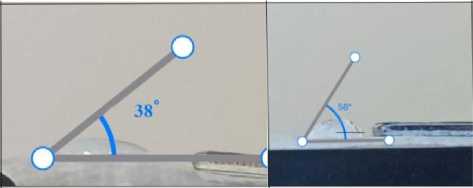
Figure 7. Contact angle comparison between control film (38˚) and film with 1 % thyme oil (58˚)
The control film exhibited a contact angle of 38°, indicating a highly hydrophilic surface. In contrast, the film containing 1 % thyme essential oil showed a contact angle of 56°, suggesting a moderately hydrophilic surface. This increase in contact angle implies that the incorporation of thyme essential oil alters the surface energy of the film, potentially enhancing its moisture resistance and barrier properties [15,16].
Conclusion
This study successfully demonstrated the potential of starch-based bio-composite materials enriched with thyme essential oil as functional components in sustainable food packaging. Through solution casting approaches, the materials exhibited enhanced antimicrobial activity, improved film uniformity, and acceptable mechanical performance.
Vacuum-assisted processing notably increased structural homogeneity and thickness consistency, outperforming ultrasonic methods. Contact angle analysis revealed a shift toward
Mechanically, thyme oil acted as a plasticizing agent – reducing tensile strength but increasing relative elongation – thus tailoring the flexibility of the films for specific packaging needs.
Antimicrobial evaluation revealed concentration-dependent inhibition against Bacillus subtilis, Escherichia coli, and Candida albicans. B. subtilis showed complete suppression in control and 1 % oil films, with inhibition zones increasing to 1.5 mm (2 %) and 16 mm (3 %). E. coli responded progressively, with inhibition zones reaching 5 mm at 3 % oil concentration. C. albicans exhibited modest sensitivity, with inhibition zones ranging from 1 mm (1 %) to 2.25 mm (3 %).
Collectively, this research presents thyme-infused starch bio-composites as promising candidates for biodegradable, antimicrobial food packaging. The findings contribute to advancing eco-friendly materials and encourage further exploration of scalability, migration behavior, and real-world application within commercial food industries.
