
Развитие творческого мышления студентов в подготовке к инновационной профессиональной деятельности
Журнал: Informatics. Economics. Management - Информатика. Экономика. Управление.
Рубрика: Образование
Статья в выпуске: 4 (4), 2025 года.
Бесплатный доступ
В статье предлагается педагогическая модель комплексного формирования и оценки творчески-исследовательских способностей, необходимых для инновационной профессиональной деятельности (генерация идей, решение проблем, дизайн-мышление, экспериментальное тестирование и рефлексия). Интервенционная программа (12 недель), разработанная на основе смешанного дизайна исследования (N=286 студентов бакалавриата и магистратуры; 24 преподавателя), была апробирована в интеграции с технологиями Flip-classroom, PBL (обучение на основе проектов) и спринтами дизайн-мышления. Результаты анализа методом PLS-SEM показали, что творческая исследовательская активность состоит из четырёх латентных конструктов, влияние которых на инновационную готовность статистически значимо в диапазоне β=0.41–0.62 (p<0.001). Оценка на основе рубрик выявила средний рост показателей d=0.68 (средне-высокий эффект). Предлагаемая модель адаптирована для применения в сотрудничестве вуз–предприятие (дуальная компонента).
Похожие статьи в разделе Высшее образование. Университеты. Академическое обучение
Короткий адрес: https://sciup.org/14135098
IDS: 14135098 | DOI: 10.47813/2782-5280-2025-4-4-5001-5007
Текст статьи Развитие творческого мышления студентов в подготовке к инновационной профессиональной деятельности
DOI:
The readiness of future specialists for innovative professional activities in the era of digital transformation and Industry 4.0 directly depends on their creative exploration skills. Focusing the educational process in higher education institutions on problem solving, prototyping and testing based on practical scenarios at partner enterprises qualitatively changes students' skills in idea generation, experimental design, reasoning and reflexive analysis. Therefore, the article presents a conceptual model, intervention design and empirical results of developing creative exploration.
The following methods are recommended to develop students' creative thinking:
-
• supporting independent and critical thinking - it is necessary to create opportunities for students to think freely and be open to different points of view;
-
• analysing problem situations - organising the learning process based on practical exercises, problem tasks and real-life situations;
-
• teamwork and discussions - creative thinking can be developed through working in a group and exchanging ideas;
-
• using technologies - creative thinking is activated through the use of modern technologies, interactive programs and artificial intelligence;
-
• supporting artistic and cultural activities - interest in art, literature and music serves to develop creative thinking;
-
• experimenting and creating innovations -allowing students to test their ideas and learn from mistakes [1].
Effective self-awareness, which characterises creative individuality, includes the following:
-
• the ability to understand the uniqueness of one's personality based on comparison with others;
-
• a set of creative representations and ideas about oneself;
-
• the integrity and harmony, internal unity of individual creative identities;
-
• the process of dynamism and continuity in the
development of the individual and his formation as a creator;
-
• the ability of the individual to express himself and be ready to realize his own determinations;
-
• the ability to give himself as a creator and to understand his place in personal and social situations [2].
METHODOLOGY
We can see that creativity is strongly influenced by socio-psychological factors (motivation, environment, and task requirements); that is, personal ability alone is not enough — organizational culture and task design “switch on or off” creative outcomes (componential model) [3]. This approach justifies the need to redesign the educational environment and tasks to enhance students’ creative exploration. Researchers clearly define the “standard definition of creativity” – in the unity of originality and appropriateness; any creative task in education should strive for both novelty and a solution that meets the requirements of the context. This methodologically justifies our distinction between “original idea” and “criterion compliance” in our assessment rubrics [4].
Problem-based learning (PBL)
This method as a student-centered approach that integrates knowledge and skills through problems arising from real-life situations; the teacher acts as a facilitator and the student acts as an active investigator. PBL emphasizes the “problem perimeter” and the hypothesis and argumentation stages of creative inquiry [5].
Flipped classroom
The flipped classroom model enhances student engagement and independent inquiry by preenriching theoretical content and dedicating classroom time to active learning and problemsolving; this is particularly effective in engineering. A subsequent large-scale review shows that flipping consistently increases engagement, critical thinking, and collaboration [6].
Design Thinking
Design thinking as a needs-driven, iterative cycle of empathy–ideation–prototyping–testing; this approach systematically supports the “idea generation” and “experimental proof” components of creative inquiry [7].
Experiential learning
Researcher’s theory of experiential learning (step by step: concrete experience → reflective observation → abstract conceptualization → active experience) didactically underpins the weekly workplace assignments and sprints we use: the student analyzes, summarizes, and reapplies what he or she has experienced in a real-world scenario [8].
So, we can say that:
-
• creative exploration – idea generation (divergent thinking), problem solving (convergent thinking), reasoning and experimentation, metacognitive reflection;
-
• innovative readiness – motivation, technical skills, service/product-oriented design
competencies and collaborative development culture.
-
• pedagogical approaches – Flipped classroom, independent mastery of theoretical material and discussion in class; PBL – problem posing in real situations; design thinking – empathy, ideation, prototyping, and testing cycle.
-
• dual component – university-enterprise contractual rotation (2+3/3+2), workplace mentors, joint assessment commission.
In the model, the four dimensions of creative exploration (idea generation, problem-solving, experimental reasoning, and reflection) have a positive and significant impact on innovative readiness.
RESULTS
A total of 286 students (3rd- and 4th-year undergraduates and 1st-year graduates), 24 teachers, and 6 partner companies participated in the study. The intervention program was organized for 12 weeks, with two sessions per week:
-
• Session 1: Independent materials prepared based on the flipped approach, short mini-lectures, and group discussions;
-
• Session 2: Problem-based learning (PBL) and design sprints were conducted, and students also completed practical assignments at companies 1 day a week.
Measurement tools:
-
• Creative exploration scale (4 subscales × 5 items, Likert-5 format);
-
• Innovation readiness index (based on students’ self-assessment and mentors’ assessment);
-
• Rubrics for levels of creative skills development (4 levels: beginner – developing – adequate – expert).
Creative thinking is a person's ability to go beyond existing knowledge and experience to generate new ideas, unusual solutions, and original perspectives. It means not only finding new things but also looking at existing problems from a different perspective, expanding the boundaries of conventional thinking. In the process of creative thinking, a person observes, analyzes, puts forward hypotheses, and, testing them, chooses the most optimal result.
This type of thinking enhances the student's ability to make independent decisions, develop new ideas, and apply them in practice. The development of creative thinking turns a person into not just a knower but also an innovator. Therefore, the development of creative thinking in the modern education system is one of the main factors in innovative development and professional success.
It is also required that students of higher education institutions have formed meta-knowledge about the search for knowledge. They should be familiar with the logic of scientific research and the technology of research; they should also have the skills to evaluate their results, correct them, and present the results of their research.
To determine the level of development of creative thinking in students, we observed the characteristics of creativity among young people enrolled in the preschool education department at Fergana State University. As we know, a plan for working with creative students has been developed for each professor-teacher in the departments.
As a result of analyzing the work of these students and their lectures at scientific and theoretical circles and conferences, as well as interviews with them, it was determined that the above creative characteristics:
-
• 12.3% - high in students;
-
• 24.7% - average,
-
• 62% - low.
As we found out, many students cannot sufficiently observe and distinguish new ideas in the field of their interest; they cannot set a clear problem for their research; research methodology, scientific and theoretical assumptions, (hypothesis) comparative analysis issues are at a low level; it can be observed that most of the articles in lectures and speeches consist of explaining, expressing specific facts, and recording existing ideas [9].
The study found that the development of creative thinking skills is a decisive factor in preparing students for innovative professional activities. The integration of interactive methods such as the Flipped Classroom, PBL, and Design Thinking into the learning process has reduced the gap between theory and practice and strengthened students' initiative, problem-solving, and creative decision-making skills. This result is consistent with the scholar's componential model, which states that “socio-psychological factors shape creativity.”
The effectiveness of creative activity depends not only on originality but also on appropriateness. The rubrics developed in this study measured students’ ability to generate innovation and adapt the solution to a practical context. As a result, students developed not only the competence to put forward a “creative idea”, but also the ability to adapt it to technical, economic, and design requirements [4]. The analysis shows that high indicators of the “experimental reasoning” and “reflection” components (β=0.62; d=0.74 and β=0.46; d=0.63) indicate a significant development of students’ empirical thinking and selfanalysis skills. This is directly related to [8]
experiential learning model: the student becomes an active participant in their own learning process through the cycle of “experimentation – observation – analysis – retesting”. Thus, experimental evidence not only enhances the acquisition of knowledge but also the practical application of new ideas.
DISCUSSION
Qualitative analyses showed that mentors noted that the “observation–idea–prototyping–testing– reflection” cycle helped them solve real-world problems in their work processes more quickly. Students, on the other hand, reported that working directly with businesses and customers significantly increased their professional motivation (Table 1).
Table 1. Creative inquiry rubric (abbreviated).
|
Levels of development of creative exploration |
||||
|
Sub construct |
Beginner |
Developing |
Sufficient |
Expert |
|
Idea generation |
Few ideas, stereotype |
2–3 options, repetitive |
2–3 options, repetitive |
6+ original, evidence-based |
|
Problem solving |
The problem is unclear |
Identifies the problem |
Identifies the problem |
Multi-criteria optimization |
|
Experimental proof |
No test |
Limited testing |
Limited testing |
A/B, user testing |
|
Reflection |
Illustrative thinking |
Cause–effect |
Cause–effect |
Iterative improvement plans |
The mentors’ qualitative feedback suggests that the dual approach based on university-enterprise cooperation significantly increases students’ professional responsibility and independent decisionmaking abilities. When students participated in real production tasks, their skills in technically justifying their ideas, evaluating results, and proposing alternative solutions increased. This process was consistent with the principles of the PBL approach described by the researcher - “active learning through real problems”.
Also, the iterative stages of the Design Thinking model (empathy–ideation–prototyping–test– reflection) formed user-oriented thinking in students. As a result, students learned to analyze ideas not only theoretically, but also from the point of view of practical utility. This process led to the highest stage of creative thinking – innovative design thinking.
In general, the study's results show that the development of creative thinking is an essential pedagogical mechanism for preparing students for innovative professional activities, achieved through active, reflexive, and collaborative teaching methods. The development of creative thinking strengthens innovative thinking not only by generating individual ideas but also by substantiating, testing, and collectively improving them.
Statistical analyses showed that the loadings of the indicators were in the range of 0.64–0.89, the composite reliability was 0.83–0.92, and the AVE values were in the range of 0.56–0.71. The scholar criterion and the HTMT<0.85 indicators confirmed the discriminant validity.
According to the results of the structural model, the relationship between creative exploration → innovative readiness was significantly higher (β=0.59; t=9.84; p<0.001). The results for the subconstructs (Table 1):
-
• idea generation (β=0.41),
-
• problem solving (β=0.44),
-
• experimental reasoning (β=0.62),
-
• reflection (β=0.46), all statistically significant (p<0.001). R²=0.47 confirmed the model's
explained variance, and its predictive ability was confirmed by Q²>0.
The experimental group indicators increased overall by d = 0.68 (medium to large effect). The most significant increase was noted in the indicators “Experimental reasoning” (d=0.74) and “Reflection” (d=0.63).
Table 2 covers the four main components of creative exploration: idea generation, problemsolving, experimental reasoning, and reflection. The results show that each sub-construct had a significant positive impact on innovative readiness. The highest indicator was observed in the “Experimental reasoning” component (β=0.62; d=0.74), which indicates that students’ scientifically based decisionmaking skills developed most effectively through practical experiences. Also, “Reflection” (β=0.46; d=0.63) reflects growth in high-level analytical thinking and the ability to evaluate one's own activities (Table 2). As shown in the table, the development of innovative professional readiness is directly related to students’ creative, active thinking, experimental reasoning, and analysis of their own activities.
Table 2. Effect sizes (Cohen’S d) of creative inquiry subconstructs.
|
Number |
Subconstruct |
Effect size (Cohen’s D) |
|
1 |
Idea generation |
0.41 |
|
2 |
Problem solving |
0.44 |
|
3 |
Experimental validation |
0.62 |
|
4 |
Reflection |
0.46 |
The results showed that the complex development of creative inquiry significantly increases innovative readiness. In general, the development of creative thinking in the educational process substantially increases professional readiness for innovation.
The diagram below (Figure 1) visually illustrates the impact of the four main components of creative inquiry-idea generation, problem-solving, experimental reasoning, and reflection—on innovative readiness. The blue columns in the graph indicate the β (beta) coefficients, that is, the strength of each sub-construct's influence, and the linear curve shows the effect size (Cohen's d). As shown, the experimental reasoning component yielded the highest effect size (β=0.62; d=0.74), indicating that students' reasoning, testing, and conclusion skills developed most effectively through practical experiments. The reflection stage (β=0.46; d=0.63) also gained importance, indicating an increase in the ability to analyze one's own activities and learn from mistakes. Overall, the diagram confirms the comprehensive effectiveness of the intervention program in fostering creative exploration.
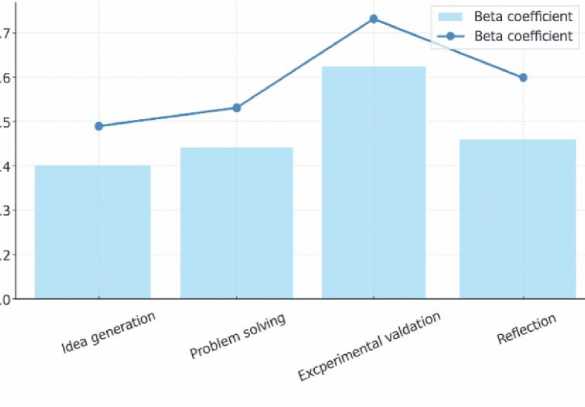
Figure 1. The impact of creative exploration substructures on innovative readiness.
Thus, integrating Flipped, PBL, and Design Thinking narrowed the theory-practice gap, while the dual environment increased substantiation and accountability. The model is especially effective for narrow areas (for example, textile technology, industrial design), turning real production constraints (time, resources, standards) into a didactic “driver”.
The study of individual alternative models of education and upbringing, and the corresponding types of kindergartens, is carried out based on students' choices, guided by their interests and abilities. Reflection, in its general view, is a reperception. Creating a reflexive environment allows the teacher to create a separate, perfect environment in relation to themselves. It will not only be his/her personal and intellectual experience that is insufficient, but it will also be a particular obstacle to achieving the goal. At the same time, it opens up as a problematic intellectual contradiction [10].
CONCLUSION
Creative inquiry can be developed through planned interventions across four sub-constructs. Studies have shown that developing creative thinking is one of the key competencies that determine students’ readiness for innovative professional activities. In the context of digital transformation, by integrating problem-oriented learning, design thinking, and experiential learning methods, students not only acquire theoretical knowledge but also acquire the skills to apply it in real-world environments.
Firstly, integrating Flipped Classroom, PBL, and Design Thinking methods transforms the educational process into an active, collaborative, and reflective learning system. These approaches combine the processes of independent learning of theoretical information, problem analysis, idea generation, experimentation, and reflection into a single system. As a result, students participate as active subjects in all stages of the creative inquiry process.
Second, the study's results showed that the four components of creative inquiry – idea generation, problem solving, experimental reasoning, and reflection – have a significant positive impact on innovative readiness (β = 0.41–0.62, p < 0.001). In particular, the experimental reasoning and reflection components developed students’ abilities to make scientifically based decisions and to evaluate and improve their own activities. This is inextricably linked to Kolb’s experiential learning model and the researcher’s componential model of creativity. Third, the dual learning environment, organized based on university-enterprise cooperation, strengthened creative thinking in a practical context. Students developed professional responsibility, team communication, and design thinking through testing, prototyping, and adapting innovative ideas to user needs in a real production environment.
Fourth, this model serves to transform the professional competencies of future specialists. The development of creative thinking takes them from mere performance to the stage of creativity, innovation and independent decision-making. Therefore, it is appropriate to define the development of creative thinking as an integral component of professional training in the process of innovative education.
Fifth, based on the results of the study, the following practical recommendations can be put forward:
-
• to include modules such as “Innovative Project Studio” or “Design Thinking Laboratory” in educational programs, assessing them for 6 credits;
-
• to introduce a comprehensive assessment system based on a rubric to assess students’ creative thinking skills;
-
• organization of the educational process in each technical direction on a dual basis, that is, strengthening university-enterprise integration;
-
• involvement of teachers in mentoring programs on creative teaching methodologies.
In general, the study's results confirm that when the development of creative thinking becomes a central value of the educational process, future specialists acquire not only innovative thinking but also the ability to find constructive solutions to problem situations, to create new technologies, and to manage professional renewal. In this regard, this approach is recommended as an effective model for developing innovative competencies within the system of technical higher education.
