
Regulation of Unmanned Aerial Systems Market Development in the Arctic Region of the Russian Federation: Economic and Legal Aspects
Journal: Arctic and North @arctic-and-north
Section: Social and economic development
Article in issue: 63, 2026.
Free access
At the present stage, there is an intersection of interests and objectives among various departmental programs, leading to a “duplication” or overlap of the functions they perform. This becomes particularly relevant in the context of using information resources and systems that lack a unified management system and the capacity for real-time information exchange. The authors believe that existing resources and tools can be synchronized through the implementation of unmanned aerial systems (UAS), which will accelerate the development of regional markets and enhance the effectiveness of management decisions by operating within a unified framework. The article analyses the regulatory and legal acts related to the development of UAS in the Arctic zone of the Russian Federation. A number of problems have been identified, such as the lack of a systematic approach to the development of the unmanned aerial vehicle industry in the Arctic; the lack of correlation between regulatory acts, as well as between the bodies implementing these acts; the lack of expertise regarding the use of UAS in Arctic regions; the lack of a methodology for assessing the economic efficiency of UAS implementation; the lack of case studies on the implementation and use of UAS in harsh climatic conditions, which requires decisions to be taken in these areas. At the same time taking into account the peculiarities of the Arctic zone such as low population density, off-road conditions, and the high cost of transporting food, the authors consider it possible and economically feasible to use UAS. Economic efficiency can be achieved through a number of measures (reducing the cost of a flight hour, unifying digital material obtained using UAS, etc.), the assessment of which should be carried out on the basis of a unified methodology. The authors also propose establishing Arctic centers for the implementation and use of UAS, which will ensure the cost-effective use of drones.
Short address: https://sciup.org/148333994
IDS: 148333994 | UDC: [332.146.2+623.746](985)(045) | DOI: 10.37482/issn2221-2698.2026.63.47
Text of the scientific article Regulation of Unmanned Aerial Systems Market Development in the Arctic Region of the Russian Federation: Economic and Legal Aspects
DOI:
One of the most important projects currently being implemented in Russia is the national project “Unmanned Aerial Systems” (UAS)1, which encompasses the design, production, and implementation of UAS, as well as the training of qualified specialists in this field. This project has the potential to secure Russia a leading position in the deployment of drones and in the interpretation
-
∗ © Markin V.V., Zhura S.E., Zamkovoi A.A., 2026
This work is licensed under a CC BY-SA License of data from information systems obtained through their use. Priority in implementing the project is given to the regions. At the same time, the regions face a number of obvious problems related to the regulatory framework (complex registration and certification procedures, lack of clear rules for autonomous UASs, flight restrictions, insufficient data protection), production factors (dependence on imports for key components, small-scale production that fails to meet demand for the required quantity and cost of finished products), financial factors (difficulties in obtaining funds for government civil procurement, volatility of the ruble exchange rate against foreign currencies, limited support measures for the development of the UAS industry), and personnel issues (shortage of qualified UAS specialists, lack of a well-established training system).
Less obvious issues are addressed on a residual basis, despite the fact that they are not considered secondary. These issues include matters of funding. Currently, increased attention is being paid to the design and manufacture of drones, rather than to their implementation based on economic criteria. There is a lack of a methodology for assessing the effectiveness of UAS use, which reduces the economic efficiency of public investment. This becomes particularly relevant in the context of rising bank interest rates and a decline in the investment attractiveness of projects for businesses. Issues regarding the inclusion of UAS operating costs in regional tariffs are not being considered; the drafting of municipal service specifications for the use of drones has not been properly addressed; and there is no direct link between the national project and the regional budget. Insufficient attention is paid to ensuring the development of ground infrastructure. There is a lack of expertise and case studies related to UAS use. Overall, it can be noted that a systematic approach to the development of the drone industry has not been developed, and there is a lack of correlation between national projects in the regions, leading to a “duplication” of operations and a decrease in the effectiveness of drone use.
It should be noted that the consequences of implementing the national UAS project are more acute in the Arctic region. However, the authors believe that the effectiveness of UAS use and the pace of their implementation may be higher in the Arctic compared to the central regions of the Russian Federation. This is due to the region’s unique conditions, which increase the demand for unmanned aerial vehicles (UAVs) due to the remoteness of settlements, the virtual absence of a good transportation system, the need to rely on northern supplies to provide the population with essential goods, and the specific nature of regional challenges requiring innovative approaches.
On this basis, attention should be paid to the Arctic region as an area where UAVs can be actively used in the aviation, maritime and road transport sectors. The authors believe that, in the context of ensuring Arctic security, the potential for using UAVs is particularly relevant and costeffective, which is the focus of this study.
Research object and methods
The object of this study is an unmanned aerial system (UAS) and its effectiveness in the challenging Arctic climate. The aim of the study is to assess the regulatory framework for UAS development and to identify challenges and areas for regional development based on the introduction of unmanned systems. The study is based on legislative and regulatory acts and scientific literature, which enabled the authors to develop a set of proposals for the development of the UAS market in the Arctic region. Research methods used include monitoring unmanned system development trends, analyzing and synthesizing information, and systematizing UAS market development challenges based on an empirical approach.
Literature review
Despite the significant interest in the development of unmanned systems in recent years, it should be noted that UAS have received insufficient attention from the perspective of the economic efficiency of system implementation, taking into account a regional approach. We agree with I.T. Salakhutdinov that the models currently used in Russia to assess the feasibility of innovative projects have problems related to the lack of mechanisms for evaluating their appropriateness and effectiveness, as well as the insufficiency of regulatory, legal, and scientific-methodological foundations for decision-making (Salakhutdinov, 2023).
A number of scientists note that the spread of unmanned aerial vehicles is contributing to the revolutionary development of many industries, but their further development is only possible through integration with global information systems operating within an improved regulatory framework (Kobka, Chemeris, 2024). In his work, S.V. Matyukha examines the size and structure of the global drone market and its regional segments, which highlights the priority and potential of drone applications, whilst also emphasizing the need for state involvement in economic processes aimed at developing UAS markets (Matyukha, 2023).
Drones are being introduced into various sectors of the economy, which is confirmed by a number of studies (Sgura, Markin, Kokorev et al., 2024). In particular, Zh.V. Kochelaba reveals the possibilities of using UAS for regional development (Kochelaba, 2024), A.I. Kleshchevnikov explores the prospects for using unmanned vehicles in agricultural navigation systems (Kleshchevni-kov, 2022), and E.A. Myasnikova examines issues of land improvement in the context of implementing wheeled unmanned logistics systems (Myasnikova, 2021). Projects aimed at utilising positive experience are being actively implemented in various types of economic activity across regions, including the Arctic. A. Fedotovskikh forecasts the potential for using autonomous vehicles for the effective development of northern territories (Fedotovskikh, Fedotovskikh, 2021), D.P. Blyakharskiy proposes a method for modelling glacial surfaces using data from unmanned aerial photography (Blyakharskiy, 2021).
International research also focuses on the integration of drones into the economy. In particular, a number of researchers believe it is feasible to use drones for freight delivery, as this method is faster and cheaper (Miranda, Rezende, Rocha et al., 2021), which is particularly relevant for northern regions. Innovative solutions are being proposed to monitor deforestation and report its location in order to assess the legality of such activities (Badea, Frigioescu, Dombrovschi et al., 2024). The opinion of scientists regarding the need for automated flight planning (task allocation) and real-time re-planning is noteworthy, as these are very useful for increasing the vehicle’s autonomy and reducing the operator’s workload (Ramirez-Atencia, Camacho, 2018).
At the same time, a number of issues hindering the development of UAS systems should be highlighted (Sgura, Markin, Fomenko et al., 2024; Zamkovoi, 2024) and require management decisions aimed at calculating the economic impact of UAS implementation in the regions.
Research results
The Arctic zone of Russia is a geostrategic territory. This assertion is based on the region’s importance for ensuring the state’s economic, military, and environmental interests. Decree of the President of the Russian Federation dated May 2, 2014, No. 296 “On the Land Territories of the Arctic Zone of the Russian Federation” 2 defines the land territories of the Arctic zone of the Russian Federation. Currently, the Arctic zone of the Russian Federation includes 10 regions, of which 4 constituent entities of the Russian Federation are fully included in the Arctic Zone of the Russian Federation: Chukotka Autonomous Okrug, Yamalo-Nenets Autonomous Okrug, Nenets Autonomous Okrug, and Murmansk Oblast; 47 municipalities of 6 constituent entities of the Russian Federation: Republic of Karelia, Komi Republic, Arkhangelsk Oblast, Krasnoyarsk Krai, Republic of Sakha (Yakutia), and Khanty-Mansi Autonomous Okrug.
The status of the Arctic as a geostrategic territory is enshrined in state documents, in particular, in Decree of the President of the Russian Federation dated March 5, 2020, No. 164 “On the Fundamentals of the State Policy of the Russian Federation in the Arctic until 2035” 3. In accordance with legislation, a geostrategic territory of the Russian Federation is defined as a territory within the boundaries of one or more constituent entities of the Russian Federation that is of significant importance for ensuring territorial integrity and national security, the development of which requires additional resources due to the specific conditions of life and economic activity 4. Another relevant document is Decree of the President of the Russian Federation dated October 26, 2020, No. 645 "Strategy for Developing the Russian Arctic Zone and Ensuring National Security until 2035” 5. This strategic planning document defines measures for the development of the Arctic zone and ensuring national security, as well as the stages and expected results of implementing these measures. This document contains a number of important aspects, including those related to supporting the development programs of federal universities and other higher education institutions, their integration with research organizations and enterprises, and addressing the negative environmental impacts of economic and other human activities, as well as the risks of harm to public health caused by climate change.
Particular attention should be paid to the potential use of UAS in the AZRF, which can be applied to various tasks, including logistics, exploration and production of natural resources, science, and tourism.
The areas of UAS application in the Arctic are quite diverse (Fig. 1):
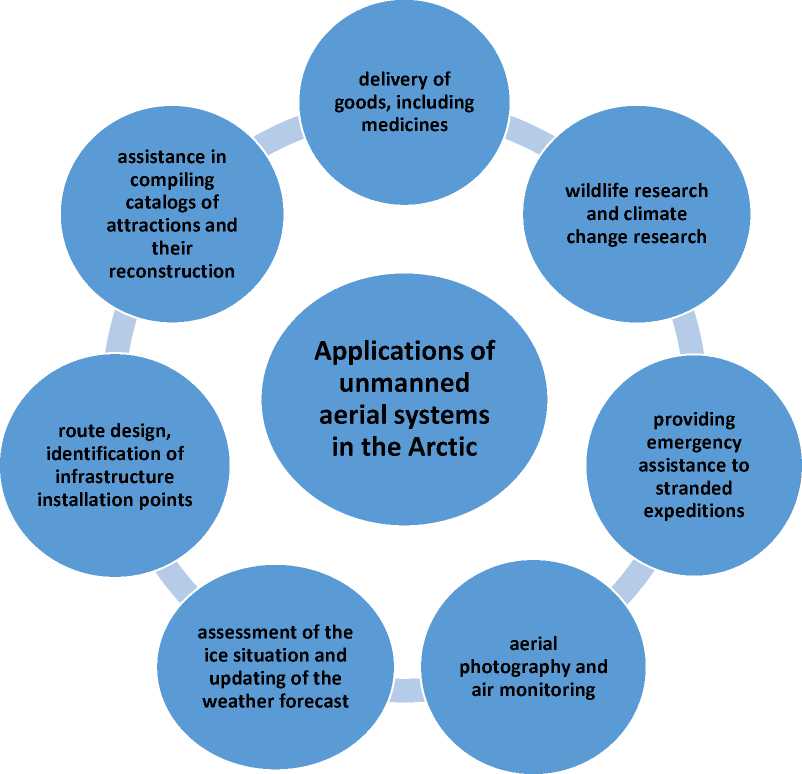
Fig. 1. Areas of UAS application in the Arctic 6.
UASs in the Arctic zone can be used to deliver essential supplies, including emergency medical supplies to expeditions and indigenous communities, significantly accelerating their travel speeds in off-road conditions. Drones are traditionally widely used for aerial photography and monitoring, including for studying natural resources, wildlife, and climate change research. Drones can be used to assess ice conditions and refine weather forecasts, to obtain information for route planning, and to identify infrastructure installation sites for work. In our view, an important area is the potential for using UAS in the tourism sector. They can be used to compile catalogs of attractions and identify sites requiring reconstruction. There are other areas of application for UASs, and these will develop in the coming years.
We are examining the regulatory and legal acts governing the development of the Arctic zone of the Russian Federation from the perspective of the potential for using UASs.
Decree of the President of the Russian Federation dated March 5, 2020, No. 164 “On the Fundamentals of the State Policy of the Russian Federation in the Arctic until 2035” identifies a number of threats to national security in the Arctic, including the underdevelopment of transport and information and communications infrastructure, the slow pace of development of ground vehicles and aviation equipment designed to operate in the Arctic’s natural and climatic conditions, as well as the unpreparedness of the environmental monitoring system for environmental challenges 7. According to the authors, eliminating these threats is possible through the use of UAS, which, in turn, will accelerate the economic development of the territories of the Arctic zone of the Russian Federation and increase their contribution to the country’s economic growth.
A review of Decree of the Russian Government dated April 15, 2021, No. 996-r, “On Approval of a Unified Action Plan for the Implementation of the Fundamentals of State Policy of the Russian Federation in the Arctic until 2035 and the Strategy for Developing the Russian Arctic Zone and Ensuring National Security until 2035” 8, highlights a set of development measures where UAS use is possible.
The “Social Development of the Arctic” section highlights initiatives that could be developed using UAVs as air transport for medical organizations, including the delivery of medications to residents of remote areas and the transportation of biological materials for research.
The “Economic Development of the Arctic Zone” section outlines measures to develop a financial mechanism for supporting the socio-economic development of the Arctic zone through tax revenues from new investment projects, as well as additional government support measures for geological exploration funded by private investment, geological surveys, and the exploration and production of hard-to-recover hydrocarbon reserves and solid minerals. The measures propose developing a mechanism for reimbursing Russian leasing companies for their expenses under financial lease agreements. These agreements could be concluded with Arctic zone residents under preferential terms designed for the implementation of investment projects. Drones may be used in developing an action plan to prevent the illegal extraction and sale of marine bioresources in the Arctic zone, as well as measures to develop an aerial forest fire protection system in the Arctic zone 9.
The “Arctic Zone Infrastructure Development” section presents measures for the elaboration and implementation of a strategy for the development of seaports, airports, and railway infrastructure in the Arctic zone until 2030 with a forecast to 2035. These measures include the integration of transport and logistics services provided in the Northern Sea Route using a digital platform designed for paperless processing of multimodal passenger and cargo transportation, as well as the creation and implementation of a unified platform for digital services provided in the Northern Sea Route. The use of digital platforms should be facilitated by UAS. It is planned to create an effective system for the prevention and response (minimization) of oil and petroleum product spills along the entire Northern Sea Route and other maritime transport corridors in the Arctic zone 10. This measure can be implemented using drones, which can monitor transport routes quickly and effectively.
The “Development of Science and Technology for Arctic Advancement” section provides for comprehensive expeditionary research in the Arctic Ocean and coastal zone, hydrometeorological, hydrographic, and geophysical studies to ensure navigation safety, as well as long-term hydrometeorological and hydrographic studies, including deep-sea studies, for the purpose of studying the underwater environment 11. The use of unmanned aerial vehicles is possible when conducting these studies.
The “Environmental Protection and Ensuring Ecological Safety” section proposes elaborating recommendations for the development of a state environmental monitoring system, including state environmental monitoring in the Arctic zone using modern information and telecommunications technologies and communication systems, as well as increasing the density of the observation network and the technical equipment of environmental monitoring systems based on recommendations of the World Meteorological Organization 12. In our view, UAS should be actively used in this area.
The use of drones is feasible for conducting regular assessments of the environmental and socio-economic consequences of human impact on the Arctic environment, as well as regular assessments of the impact of nuclear facilities located in the Arctic on the environment and the population 13.
Resolution of the Government of the Russian Federation dated March 30, 2021, No. 484 (as amended on December 30, 2022) “On Approval of the State Program of the Russian Federation ‘Socio-Economic Development of the Arctic Zone of the Russian Federation’” 14 sets out a development goal of increasing the level of socio-economic development in the Arctic zone of the Russian Federation by creating jobs and attracting extra-budgetary investment, increasing the territory’s visibility internationally, and reducing the net migration rate of the AZRF to 0 by 2030.
This program provides for the development of preferential mechanisms for residents of the Arctic Zone of the Russian Federation, the provision of state support to legal entities for the creation of infrastructure facilities as part of investment projects, and the implementation of measures and social development plans for economic growth centers in the constituent entities of the Russian Federation that are part of the AZRF 15.
Decree of the Government of the Russian Federation dated December 28, 2024, No. 4146-r “On Approval of the Spatial Development Strategy of the Russian Federation until 2030 with a Forecast to 2036” 16 outlines spatial priorities that include key development areas for the Arctic zone of the Russian Federation, taking into account the specifics, new challenges, and opportunities for their development.
This document highlights several territories that make a significant contribution to the Russian economy and are leaders in its growth, including Yamalo-Nenets Autonomous Okrug, Khanty-Mansi Autonomous Okrug and Krasnoyarsk Krai. These territories are centers of innovative development, implementation of new technologies, and generate demand for other regions. The document emphasizes the negative migration balance observed in many constituent entities of the Russian Federation. The Decree notes that climate change creates the preconditions for an increased impact of natural processes on the socio-economic development of regions, contributing to the expansion of permafrost degradation zones and the manifestation of associated hazardous processes primarily in the Arctic zone of the Russian Federation 17.
The main directions and objectives of the spatial development of the Russian Federation are to ensure the accelerated expansion of infrastructure (including transport and energy infrastructure) in key settlements where new investment projects are being implemented that have a significant impact on the local economy.
In December 2023, the Government of the Russian Federation identified 16 key Arctic settlements where master plans for development until 2035 are being formulated.
List of agglomerations:
-
• Kemsko-Belomorskaya (Karelia);
-
• Vorkuta agglomeration (Komi);
-
• Tiksi-Naiba (Yakutia);
-
• Norilsk-Dudinka, Dikson, and Igarka (Krasnoyarsk Krai);
-
• Arkhangelsk (Arkhangelsk Oblast);
-
• Murmansk, Kirov-Apatity, and Monchegorsk (Murmansk Oblast);
-
• Naryan-Mar agglomeration (Nenets Autonomous Okrug);
-
• Pevek and Anadyr agglomerations (Chukotka Autonomous Okrug);
-
• Novy Urengoy, Noyabrsk, and Salekhard-Labytnangi agglomerations (Yamalo-Nenets Autonomous Okrug) 18.
Priority support for the development of key settlements is provided on the basis of a unified list of such settlements. The main objectives are the accelerated development of transport and energy infrastructure, and the application of regional development tools, including for the purpose of supporting the development of high-tech industries and the implementation of investment projects. Support measures are provided to key settlements on a priority basis, taking into account their main development objectives 19.
The priorities for the spatial development of the Russian Federation that can be addressed through the use of the UAS system are as follows in the field of transport sector:
-
• reducing transport costs by lowering the net cost of transportation and optimizing routes 20;
in the field of ecology and environmental management:
-
• developing the mineral resource base, including by increasing the volume of geological exploration of the subsoil and mineral exploration, primarily in the Arctic zone of the Russian Federation 21;
-
• implementing measures to restore soil fertility and increase crop yields;
-
• implementing measures to introduce warning systems to prevent natural disasters and forecast hydrometeorological events;
-
• establishing a qualified regional procurement body, and introducing the latest technologies into the economy based on research, development, and technological work.
The authors believe that the development of the UAS system requires the creation of a unified digital platform. The implementation of the Strategy also provides for the creation of a digital platform, which will enable a range of measures to be taken for the development of the Arctic (Fig. 2).

-monitoring and determining the mechanisms of federal support for the constituent entities of the Russian Federation;
-
- monitoring of the socio-economic development of territories, including the systematization of data on existing and planned infrastructure and major investment projects;
-
- assessment of infrastructure provision, taking into account demographic forecasts, planned investment projects and other factors;
-
- systematization of data on the ecological state and economic use of marine areas in order to ensure marine spatial planning;
V I ' . . • ■ ' I I ‘ ■ .../'• ■ .• ■ -•..•. ■■■■■■■■
-
- providing access to educational programs for municipal employees;
-
- feedback from the public and businesses.
Fig. 2. Digital platform activities for the implementation of the Spatial Development Strategy of the Russian Federation 22.
The Strategy’s activities include identifying and refining key population centers, monitoring the socio-economic development of territories, defining mechanisms and instruments for federal support for regions, developing infrastructure based on demographic forecasts, monitoring the environmental status and economic use of marine areas, generating feedback from the population and businesses, etc.
The Maritime Doctrine reflects the development of the Arctic zone of the Russian Federation as a strategic resource base and its rational use, including the full-scale development of the continental shelf of the Russian Federation beyond the 200-mile exclusive economic zone after establishing its outer boundary in accordance with Article 76 of the United Nations Convention on the Law of the Sea of December 10, 1982 (hereinafter referred to as the UN Convention on the Law of the Sea) 23.
A review of Rosatom’s Arctic strategy reveals its focus on developing the Northern Sea Route (NSR) as a transport artery and creating conditions for investment projects in AZRF. Rosatom’s Arctic projects will create 6,000 jobs by 2030 24. Rosatom’s own investments in Arctic development through ongoing projects will exceed 700 billion rubles by 2030. Rosatom serves as the NSR infrastructure operator, and its strategy encompasses several areas of activity, projects, and initiatives, as well as international cooperation.
Main areas of activity:
-
• ensuring safe cargo transport to support the development of investment projects in the Arctic and to supply remote settlements, as well as the export, import and transit of goods as part of Russian companies’ trading operations;
-
• infrastructure modernization, as Rosatom is involved in the creation of new port infrastructure and the modernization of existing facilities, installing navigation equipment and introducing an automated shipping management system;
-
• icebreaker fleet construction, as the state corporation is building icebreakers to escort vessels along the NSR and plans to renew and extend the service life of existing icebreakers;
-
• preservation of the Arctic region’s ecosystem, as Rosatom conducts environmental monitoring of the NSR waters, monitors route safety, and prevents negative environmental impacts.
The federal project “Development of the Northern Sea Route” is part of the national project “Efficient Transport System” 25. It envisages the creation of a unified economic, transport, and logistics space from Russian ports on the Baltic Sea to Primorskiy Krai. The implementation of this concept should result in the creation of a trans-Arctic transport corridor, ensuring connectivity between the North-West and the Far East.
Currently, there are numerous restrictions regarding unmanned aerial vehicles (UAVs), as legislation has not yet been updated to meet current requirements. The Russian Ministry of Economic Development, together with Rosatom, is implementing an experimental legal regime for the use of drones in the waters of the Northern Sea Route and on land in the Arctic. The aim of the project is to create a unified information and logistics network that will bring remote settlements out of transport isolation and improve communications in the harshest climatic conditions.
In 2023, the Russian Government adopted Decree dated June 21, 2023, No. 1630-r “On Approval of the Strategy for the Development of Unmanned Aviation in the Russian Federation until 2030 with a Forecast to 2035, and the Action Plan for its Implementation” 26. The strategy sets out objectives aimed at realizing the priorities of the Russian Federation and includes measures for the technological, human resources, scientific and manufacturing support of unmanned aviation development. It envisages the formation of new market segments, which will include new ranges of UAS products; ensuring product and technological sovereignty in the field of UAS; the establishment of a certification system for unmanned aerial vehicles based on a riskbased approach; and the development of a comprehensive UAS security system based on the monitoring and control of systems, including artificial intelligence systems.
In the Arctic zone of the Russian Federation, the Ministry of Emergency Situations of Russia is actively creating a security system for the population and territories. One of these areas is equipping the system with unmanned aerial vehicle systems. Order No. 447 of the Ministry of Emergency Situations of Russia dated May 10, 2023, approves the standards for providing unmanned aircraft systems to territorial bodies of the Ministry of Emergency Situations of Russia and rescue military units of the Ministry of Emergency Situations of Russia 27.
The Russian government has approved a procedure for funding the purchase and lease of drones for environmental monitoring of areas, including landfills. The drones will be purchased by the Russian Environmental Operator 28. According to the document, drones with specialized equipment should monitor the condition of solid municipal waste sites, as well as be used to create a digital terrain model indicating the locations of landfills and determining their key characteristics.
The authors present a comprehensive analysis of the regulatory acts governing the development of the Arctic zone of the Russian Federation in terms of UAS use (Table 1). This analysis reveals the lack of a systematic approach to the development of the drone industry, insufficient correlation between regulations, and between the agencies implementing these regulations. This leads to “duplication” of operations, overlapping budgetary resources, and reduction in the effi- ciency of UAS use.
Table 1
Summary table of regulatory acts governing the development of the Arctic zone of the Russian Federation in terms of UAS use 29
|
Regulatory legal act |
Areas of implementation |
|||||
|
ф -С ° £ — .2 о Ф ф > -О го аг ф о |
ф 4—> О С ф Е ш CL ос ф (У) |
ф 4—> ‘о ф Е ° £ Ф м 1 < О о ш |
о ф Е о CD ГЧ -О < CD Ф 4—> ГО |
ф ею и о и ф ^ го Е CD |
го го ф с < О ф CD — ею ш |
|
|
Decree of the President of the Russian Federation dated May 2, 2014, No. 296 (as amended on March 5, 2023) “On the Land Territories of the Arctic Zone of the Russian Federation” |
+ |
|||||
|
Decree of the President of the Russian Federation dated March 5, 2020, No. 164 “On the Fundamentals of the State Policy of the Russian Federation in the Arctic until 2035” |
+ |
|||||
|
Decree of the President of the Russian Federation dated October 26, 2020, No. 645 (as amended on February 27, 2023) "On the Strategy for Developing the Russian Arctic Zone and Ensuring National Security until 2035” |
+ |
|||||
|
Decree of the Russian Government dated April 15, 2021, No. 996-r, “On Approval of a Unified Action Plan for the Implementation of the Fundamentals of State Policy of the Russian Federation in the Arctic until 2035 and the Strategy for Developing the Russian Arctic Zone and Ensuring National Security until 2035” |
+ |
+ |
+ |
+ |
+ |
|
|
Resolution of the Government of the Russian Federation dated March 30, 2021, No. 484 “On Approval of the State Program of the Russian Federation ‘Socio-Economic Development of the Arctic Zone of the Russian Federation’” (with amendments and additions) |
+ |
|||||
|
Decree of the Government of the Russian Federation dated December 28, 2024, No. 4146-r “On Approval of the Spatial Development Strategy of the Russian Federation until 2030 with a Forecast to 2036” |
+ |
+ |
+ |
|||
|
Maritime Doctrine of the Russian Federation, approved by Decree of the President of the Russian Federation dated July 31, 2022, No. 512 |
+ |
|||||
|
Decree of the Government of the Russian Federation dated August 1, 2022, No. 2115-r “On Approval of the Northern Sea Route Development Plan until 2035” (the federal project “Development of the Great Northern Sea Route” (GNSR) is part of the national project “Efficient Transport System”) |
+ |
|||||
|
Decree of the Government of the Russian Federation dated June 21, 2023, No. 1630-r “On Approval of the Strategy for the Development of Unmanned Aviation in the Russian Federation until 2030 with a Forecast to 2035, and the Action Plan for its Implementation” |
+ |
|||||
|
Order of the Ministry of Emergency Situations of Russia dated May 10, 2023, No. 447 “On Approval of Standards for Providing Territorial Bodies of the Ministry of Emer- |
+ |
|||||
-
29 Source: compiled by the authors based on an analysis of regulatory legal acts.
gency Situations of Russia and Rescue Military Units of the Ministry of Emergency Situations of Russia with Unmanned Aerial Systems”
Resolution of the Government of the Russian Federation dated January 20, 2024, No. 32, “On Approval of the Rules for the Provision of a Subsidy from the Federal Budget in the Form of a Property Contribution to the Public-Law Company for the Formation of an Integrated Solid Municipal Waste Management System, the Russian Ecological Operator, to Ensure the Achievement of Certain Results of the Federal Project ‘Stimulating Demand for Domestic Unmanned Aircraft Systems’ of the National Project ‘Unmanned Aircraft Systems’”
+
+
Conclusion
Despite the set of documents adopted on Arctic development and UAS implementation, it should be noted that there are a number of issues that require resolution.
-
1. The lack of a systematic approach to the development of the UAS industry in the Arctic, manifested in the gap between scientific research and the production of UAS for Arctic zones; the lack of practical experience in using UAS by operators due to the lack of economic justification for selecting UAS equipment and using payloads with specific parameters to perform the required tasks; the lack of standard UAS models approved for year-round operation in the Arctic; the technical difficulties associated with using UAS at high latitudes.
-
2. The lack of coordination between regulatory acts governing the introduction of UAS systems in the Arctic, as well as between the bodies responsible for implementing these acts. This leads to duplication of resources and fragmented decision-making, which slows down the introduction of unmanned technologies.
-
3. The lack of a methodology for assessing the cost-effectiveness of UAS implementation, which would enable well-founded management decisions on the use of UAS and UAS services; this is particularly relevant given the reduced investment attractiveness of projects in the context of high key bank rates.
-
4. The lack of case studies on the implementation and use of UAS in harsh climatic conditions, which would make the use of UAS more economically viable for operators.
The authors believe that the strategies developed by various bodies are aimed at eliminating microeconomic barriers (high costs of entry into the industry, difficulties in accessing key technologies, a complex licensing system, etc.), but are often positioned by developers as key ones. However, there are also macroeconomic barriers (underdeveloped markets for goods and services, declining efficiency of economic entities, etc.), which require systemic solutions. Considerable attention should be paid to training personnel in the UAS system, not only in the technical, but also in the economic sphere. Economists should link micro- and macro-indicators and pay more attention to economic analysis when formulating regional strategies for Arctic regions.
Thus, the Arctic has been declared a priority development zone, but its priority status, in the authors’ view, should be secured through innovative technologies, including UAS, and the consolidation of data digitization projects. The introduction of drones in the AZRF could serve as a model for other regions of Russia, accelerating their transition to new technologies and improving the effectiveness of management decisions.
The example of Arctic regions in project implementation clearly demonstrates the inconsistency of various regulations and programs, which should be synchronized to enhance economic impact. This involves not only improving the efficiency of unmanned aerial vehicle operations, but also the effective use of funds from budgets at various levels and from the national project.
A new methodological framework needs to be developed to enable regions, in the absence of specific expertise, to accurately calculate both economically viable scenarios for the use of UAS and the expected benefits for market participants, including regional budgets.
The proposal is to establish Arctic Centers for the implementation and use of UAS in the Arctic zone of the Russian Federation, ensuring the cost-effective use of drones and the services they provide, based on maximizing flight hours and operational workload. These centers could encompass areas specific to the functions they perform (e.g., up to 500 km for logistics and up to 1,000 km for monitoring). The creation of Arctic Centers will enable the symmetrical and synchronous development of Arctic regions, eliminating the potential for growth errors associated with the development of the UAS industry along key regional logistics routes.
Taking into account the existing difficulties in the development of the Arctic, including sparse road network, low population density, high costs of transportation by land and water, large areas for monitoring tasks, difficulties in providing services to the indigenous population and shift workers, the implementation of UAS is considered to be economically feasible. At the same time, it should be noted that the use of UAS in the Arctic has its own characteristics associated with extreme natural and climatic conditions, remoteness and vulnerability of the region’s ecosystem. Drones should meet increased requirements for resistance to low temperatures, wind and icing. Economic efficiency will be achieved through coordination between the bodies responsible for UAS operation, improving the competencies of managers in the implementation of UAS in the regions, eliminating “duplication” in the performance of work and reducing the cost per flight hour; the development and implementation of standards that have a positive impact on economic performance; the unification of digital data obtained using drones; the universality of software for processing the information received; the exchange of reliable data within a coordinate system, which requires further research in this area.
