
Relationships, interactions and communication in the global business-to-business market: a conceptual framework
Journal: Ekonomski signali @esignali
Article in issue: 1 vol.21, 2026.
Free access
The contemporary business-to-business (B2B) environment is gaining increasing prominence within global economic flows, necessitated by its inherently inter-organizational nature, global orientation, extensive dimensionality, and its predominant role within the real and sustainable economic sectors. Despite its significance, the field remains characterized by deficient, dispersed, and incoherent research. This underscores the imperative for a more consistent and comprehensive examination and conceptualization of relationships, interactions, and communication within the global B2B marketplace. The objective of this paper is to identify, synthesize, and formulate the pivotal aspects and elements of modern inter-organizational relations through an appropriate conceptual framework. Such a framework significantly contributes to the establishment of an appropriate platform for the development of effective marketing and diverse competitive strategies and processes in this field. The synergistic inte-gration of relationships, interactions, and communication represents an efficient approach to identifying customer needs, aligning organizational activities with customer satisfaction, and maintaining continuous dialogue and cooperation with both customers and other relevant stakeholders within the broader market environment. For the purposes of this study, particular emphasis is placed on examining the relevance and sustainability of fundamental conceptual models of interorganizational relationships and their communication and interaction dimensions, as well as their effective integration with contemporary research trends in the global B2B environment.
Short address: https://sciup.org/170213257
IDS: 170213257 | UDC: 005.346 | DOI: 10.5937/ekonsig2601053D
Odnosi, interakcije i komunikacija na globalnom poslovnom tržištu: konceptualni okvir
Savremeno poslovno (businesstobusiness, B2B) okruženje dobija sve veći značaj u globalnim ekonomskim tokovima, što je uslovljeno njegovom inherentnom interorganizacionom prirodom, globalnom orijentacijom, izraženom dimenzionalnošću i dominantnom ulogom u realnim i održivim ekonomskim sektorima. Međutim, ovu oblast i dalje karakterišu deficitarna, disperzirana i nekoherentna istraživanja. To ukazuje na potrebu za konzistentnijim i komprehenzivnijim ispitivanjem i konceptualizacijom odnosa, interakcija i komunikacije na globalnom B2B tržištu. Cilj rada je da identifikuje, sintetizuje i formuliše ključne aspekte i elemente savremenih interorganizacionih odnosa kroz odgovarajući konceptualni okvir. Takav okvir značajno doprinosi uspostavljanju adekvatne platforme za razvoj efektivnih marketinških i raznovrsnih konkurentskih strategija i procesa u ovoj oblasti. Sinergijska integracija odnosa, interakcija i komunikacije predstavlja efikasan pristup identifikovanju potreba kupaca, usklađivanju organizacionih aktivnosti sa satisfakcijom kupaca i održavanju kontinuiranog dijaloga i saradnje kako sa kupcima, tako i sa drugim relevantnim stejkholderima u širem tržišnom okruženju. Za potrebe ove studije, poseban naglasak stavljen je na ispitivanje relevantnosti i održivosti fundamentalnih konceptualnih modela interorganizacionih odnosa i njihovih komunikacionih i interaktivnih dimenzija, kao i na njihovu efektivnu integraciju sa savremenim istraživačkim trendovima u globalnom B2B okruženju.
Text of the scientific article Relationships, interactions and communication in the global business-to-business market: a conceptual framework
, , 3 ,
Introduction and Methodology
Fragmented analyses of inter-organizational relationships (IOR) have contributed to a certain marginalization of comprehensive and systemic approaches to this phenomenon within the framework of relationship marketing in the business-to-business (B2B) market. It is noticeable that research in this field has predominantly focused on individual behavioural and value-based aspects of inter-organizational relations - such as trust, customer loyalty, and various business benefits, which are more accurately categorized as relational outcomes. In contrast, the process mechanisms of inter-organizational integration - primarily communication processes and interactions, as well as relationships themselves as their key structural and functional dimension - have remained insufficiently theorized and systematically examined.
Under contemporary conditions of globalization, an intensive diversification of relational structures within the B2B market is occurring, accompanied by the continuous reshaping of organizational roles as key actors in interactive processes. In this context, integrated relational approaches and strategies are gaining increasing significance, as they facilitate the coordinated deployment of resources toward the establishment and intensification of customer relationships (Mlađeno-vić, 2025).
The convergence of relational, interactive, and communicative processes is founded on a common foundational premise - the development of long-term relationships with customers and other stakeholders, underpinned by the establishment of effective communication mechanisms as the basis for their integration. Consequently, the integration of relationships, interactions, and communication provides a functional framework for understanding customer needs, aligning organizational activities with market demands, and fostering continuous dialogue and partnership ties across various levels of inter-organizational constellations within the broader B2B environment (Dašić, 2024). Bearing in mind the aforementioned, the subject of this study paper is focused on the analysis and conceptualization of relationships, interactions, and communication as integrated dimensions of inter-organizational connectivity(Dašić, et al, 2024). The objective is to highlight their significance in shaping contemporary relational strategies within the global B2B market.
This analytical approach, utilizing qualitative-descriptive, analytical-synthetic, deductive, and comparative methods, intends to explore relevant conceptual frameworks of inter-organizational relationships and its key elements, which coincide with modern trends in business practice in this field of expertise. For the purposes of this research, particular emphasis is placed on analysing the individual adequacy and sustainability of fundamental conceptual principles and models of inter-organizational relationships deriving from doctrinal and relevant schools of the relational paradigm, in correlation with contemporary research frontiers in the global B2B environment. This study accentuates three crucial factors of the inter-organizational concept that have differentiated themselves in global practice: relationships, interactions, and communication, examined through their integrated synthesis and application in the B2B market. Accordingly, a tailored two-phase analytical procedure was conducted: (1) an analysis of the developmental, structural-procedural, and functional aspects of each relational component were performed in accordance with the strategic hierarchy and the reference theoretical framework as a platform for further elaboration and comparative rese- arch; (2) a subsequent comparison and synthesis of data with contemporary global and technological trends were performed, based on which general conclusions and recommendations were homogenized and formulated.
The Global Dimension of the Inter-organizational Environment
The relevance of examining the relational concept within the busi-ness-to-business (B2B) market is particularly instigated by, and directly linked to, the processes of globalization, technological development, and the increasing complexity of market structures, causing necessity for a comprehensive scholarly approach.
Therefore, global orientation is widely present in inter-organizational practice, particularly within high-growth sectors characterized by accelerating demand, such as information technology, telecommunications, electronics, digital systems, and energy, as well as in economies offering favourable institutional and investment climates for attracting foreign direct investment. This also applies to the exchange of scarce resources, a process driven by the interdependence of global flows of production goods and services, which are indispensable factors for the functional continuity and development of numerous industrial branches.
However, cooperative relationships manifested through various partnership arrangements and alliances are increasingly becoming the decisive factors for business internationalization and market entry. The benefits of such inter-organizational cooperation are multiple: on one hand, they facilitate smooth market expansion, while on the other, they promote the technological and conceptual evolution of the partner organizations' business practices. This is further evidenced by the fact that within the broader international domain, according to the EPRG framework, the majority of business entities exhibit polycentric, regiocentric, or geocentric orientations, whereas ethnocentric focus is primarily reserved for smaller enterprises. Polycentric organizations are export-oriented toward one or more specific countries, tailoring their export marketing strategies to each individual market. A regiocentric market focus targets specific regional economic group. A geocentric orientation is predicated on the standardization of marketing instruments, supplemented by necessary socio-cultural adaptations (Dević et al., 2014).
Conceptualization of Inter-organizational Relationships in the Global Business-to-Bu-siness Market
The business-to-business market, characterized by an extensive spectrum of heterogeneous and interconnected organizational relationships, is considered the point of origin for the relational perspective in modern marketing. In contrast to consumer markets, which are dominated by discrete transactions, the global B2B environment is defined by long-term interactions, a high degree of actor interdependence, and the significant role of trust and cooperation in value creation. Consequently, the focus of marketing theory and practice has shifted from individual exchanges toward the management of relationships and networks as primary sources of competitive advantage.
In this context, this phenomenon requires an analysis from several complementary perspectives: (1) developmental, tracing the evolution of the relational approach and its theoretical foundations; (2) conceptual, involving the definition of key principles, relationships, and models within the relational paradigm; and (3) structural-procedural, referring to the manners of organization, management, and dynamics of interactions among market participants. Such a multidimensional perspective facilitates a deeper understanding of the complex mechanisms shaping contemporary inter-organizational relations (Dević, 2012, 34-38).
Initial Determinants of the Inter-organizational Relationship Paradigm The scientific origins of the relational paradigm are most frequently associated with the research conducted by the Scandinavian Industrial Marketing and Purchasing Group (IMP), which commenced in the mid-1970s (Ford, 1980, as cited in Baker, 2003). This group advocated for a network or interaction approach to industrial marketing (a termed used for this filed in the past), starting from the fact that relationships in this market are shaped by numerous interactions encompassing complex flows of goods and services, as well as financial and social exchanges between buyers and suppliers.
The emergence of this new paradigm is interpreted as a response to the need for formulating adequate marketing approaches during the transition from mass production to customized modes of market placement, particularly when the object of exchange is an organizational buyer. In this context, interactions are not necessarily initiated solely by the seller, nor are they constrained by time; rather, they evolve over an extended period through two characteristic phases. The first phase comprises shortterm exchange episodes involving goods and services, information, and financial or social content. The second, long-term phase leads to the gradual adaptation and institutionalization of roles and responsibilities (Grönroos, 2000, as cited in Egan, 2004). This two-stage process can be interpreted as a transition from short-term, transaction-oriented activities and bureaucratically structured organizational forms toward more flexible partnerships, alliances, and networks within the business-to-bu-siness market (Webster, 1992, as cited in Egan, 2004). Simultaneously, the management of these relationships transcends the boundaries of the marketing function, involving a broader spectrum of organizational actors and interest groups. Furthermore, research indicates that cooperation can develop in domains that do not generate immediate profit, such as research and development, industrial design, and data exchange.
The key contributions of this school of thought lie in its emphasis on the significance of inter-organizational relationships within the B2B market, its recognition of the reciprocal roles of suppliers and buyers in shaping and developing mutual relations, and its interpretation of these connections as networked and innovative configurations that simultaneously influence both market and hierarchical structures.
Formulating the Concept of Inter-organizational Relationships
In recent decades, there has been a growing interest in observing this field, emphasizing the necessity for the conceptual and methodological profiling of inter-organizational relationships. However, despite numerous attempts to formulate a new concept of inter-organizational relationships, its incoherent character remains evident, primarily due to the predominantly segregated observation of individual segments of the relational concept.
The majority of relevant works in this field place various benefits, distin- ctive potentials, and outcomes offered by inter-organizational partnerships and collaborations under contemporary market conditions at the epicentre of their research. For instance, Milagres and Burcharth (2022), Browder et al. (2022), Dzhengiz (2020), and Seo and Park (2022) observe partnerships oriented toward the process of inter-organizational learning, which naturally represents a necessary value determinant. Pennec and Raufflet (2018), Holm and Kringelum (2022), Picazo-Vela et al. (2022), and Brzustewicz et al. (2021) deal with models of value creation within partnerships through various forms of knowledge and resource transfer between organizations; Eng et al. (2020), Dhillon (2015), and Zia et al. (2022) highlight, from various perspectives, the role of social capital as a vital construct in forming partnerships that enable individuals and organizations to achieve common goals through effective cooperation and innovative capacities. Furthermore, Tavares et al. (2025) elaborate that, under modern conditions of rapid technological development, intellectual capital emerges as an essential strategic resource through inter-organizational collaboration in processes of adaptation, innovation, and securing sustainable competitive advantage. Finally, Ungureanu et al. (2018) analyse how processes of collective identity formation interact with collaborative practices in inter-organizational partnerships. These works, among others covering diverse segments of this field, affirm the significance of inter-organizational relationships and point to the structures, processes, and support mechanisms for building efficiency in partnerships and creating new business values and results at various organizational levels.
Despite this research progression, certain theoretical and empirical gaps in understanding the relational process within this research domain persist. This is particularly true regarding the consistent identification and conceptualization of input relational, interactive, and communicative factors and parameters for the purposeful generation, formation, and development of inter-organizational, aimed at the continuous creation of functional and sustainable solutions and strategies for new and effective relational processes and ventures.
One of the early and more influential comprehensive conceptualizations of the relational paradigm relevant to B2B marketing was developed by Gu-mmesson and representatives of the Scandinavian School. Seeking to integrate various theoretical approaches, Gummesson (2002) introduced an expanded conceptual framework in which interactions, relationships, and networks constitute three fundamental dimensions of relationship marketing. Within this framework, these forms of connectivity are analytically distinct yet viewed as mutually contingent in the process of building relationships between sellers and buyers. Interactions are interpreted as a continuous series of temporally distributed contacts and activities that gradually constitute relationships, while developed relationships further transform into more stable forms of cooperation, namely, broader and more pronounced marketing relations. These processes do not occur in isolation; rather, they permeate and condition one another, thereby shaping a dynamic relational context. In further elaboration, the author pays particular attention to issues of customer retention, value creation through interactions, the alignment of relationships with organizational structure and management, as well as the typology of various relationship forms.
Parallel to this, there is an intensification of research focused on developing comprehensive approaches to network management, which transcend the boundaries of traditional marketing relations to encompass complex flows of information-technological exchange, financial transactions, and public and interpersonal relations with various stakeholders. Nevertheless, the relationships between customers and suppliers as the primary agents of inter-organizational cooperation remains at the core of this approach. Building upon these premises, Anderson et al. (1994) formulated a dyadic model of network relationships, based on the perspective of a focal organization and its partner, interconnected by complex, multilayered, and dynamic relations.
Figure 1. The Dyadic Network Model of Business Relationships (adapted from Anderson et al., 1994, p. 3)
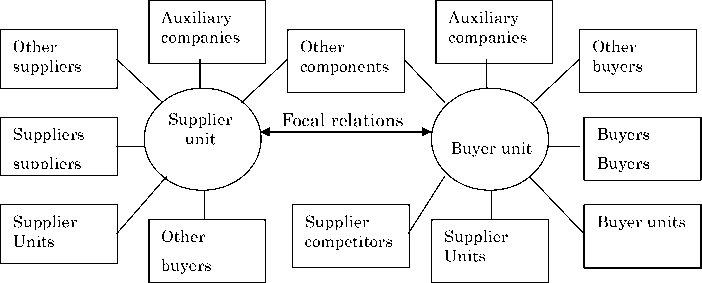
In the elaboration of the proposed model, the authors particularly emphasize its comprehensive and adaptive dimensions. Beyond the central relations between primary actors, the model encompasses a broader spectrum of relationships with other relevant participants in the economic environment, thereby underscoring its networked nature. The foundational premise is that, under real-world business conditions, simplified, isolated "one-on-one" dyads do not exist; such dyads fail to adequately reflect the complexity and dynamics of interactions, nor can they be analysed independently of the broader market context.
Consequently, relationships are viewed as integral components of a wider, interconnected structure, where fluctuations or transitions within one segment of the network inevitably exert an influence upon its other constituent elements. It is precisely the empirical robustness and the high degree of transferability of this network model that provide a reliable foundation for the creation, development, and management of various forms of complex inter-organizational collaborations within the B2B marketplace (Anderson et al., 1994, 1-15).
Structure and Process of Inter-organizational Relationships
In examining the fundamental foundations of inter-organizational relationships, approaches that focus on the structural-processual elaboration of the network concept across various levels of analysis are of particular importance. These frameworks facilitate a comprehensive understanding of the mechanisms through which organizational relationships are shaped, developed, and sustained within complex market networks. In this context, the structural perspective is oriented toward identifying key elements of the network configuration, such as actors, resources, and activities, as well as analysing their interdependence and positioning within the network. Within this framework, it is essential to provide two fundamental explanations regarding network dimensions and the degree of organizational participation in network structures (Dević, 2012, 37-38).
Firstly, the network approach can be understood as an essentially two-dimensional model: on one hand, it encompasses vertical relationships between producers and distribution channels, i.e. organizational buyers, while on the other, it includes horizontal relationships between partners or competitors.
Furthermore, depending on the degree of influence and involvement in network configurations, several distinct forms of integration can be differentiated: (1) cooperative associations, based on the voluntary acceptance of collaborative terms; (2) strategic alliances, characteristic of larger, more complex organizations that enter into contractual agreements to mitigate risks in technological and market development; (3) joint ventures, which involve more tightly controlled partnerships aimed at shared risk and responsibility; (4) strategic alliances, as more advanced forms of network integration that transcend the individual interests of partners and are characterized by significant mutual influence.
Within the network approach, Perks and Easton (2000) analyse various forms of inter-organizational relationships, ranking them from simple transactions to complex strategic alliances, depending on the source, scope, and dimensions of exchange, as well as its value-generating effects. In this regard, the authors propose a tripartite classification: (1) transactional exchange, as the simplest form based on discrete business transactions; (2) relational exchange, characterized by long-term and intensive partnerships; and (3) strategic alliances, aimed at developing close cooperation through the exchange and co-creation of resources, including various forms of alliances and joint ventures.
Heath and Isbell (2017) suggest three key successive models of inter-organizational connections: cooperation (an informal structure based on the principle of reciprocity), coordination (a more formal relationship based on specific agreements), and collaboration (a distinct structural model requiring formalized decision-making on partnerships, responsibilities, and competencies to optimally capitalize on creative ideas and organizational solutions).
Agostini and Nosella (2017) conducted an extensive analysis to develop a framework that systematizes various contributions in the field and identifies new directions for future research. Such a framework provides an opportunity for a multi-perspective and more comprehensive examination and interpretation of the subject matter. Their research framework for inter-organizational relationship (IOR) development, viewed as a multi-phase and multi-dimensional process, comprises: (1) antecedents, (2) process mechanisms, and (3) outcomes.
Figure 2. Organizing Research on Marketing IORs (adapted from Agostini & Nosella, 2017)
1. ANTECEDENTS
-
2. MARKETING IOR DEVELOMENT PROCESS

1A) Partner attributes Previous experience
Capabilities Learning orientation Cultural sensitivity
Reputation
IB) Relationship attributes Partner compatibility
Interdependence Proximity Experience about lORs IC) Environmental conditions Market uncertainty Economic conditions
Technology development Competition
2A) Organizational and managerial dimensions Partner selection Goal definition Governance mechanisms Resource allocation
Leadership Communication and coordination mechanisms
-
2B) Soft dimensions Trust and reliance Commitment Closeness
ЗА) IOR outcomes Economic Emotional Operational Strategic
3B) Firm outcomes Economic Strategic
-
(1) The starting point of the research framework consists of antecedents, which encompass three key groups of factors: partner attributes, relationship attributes, and environmental conditions. Partner attributes, such as experience, capabilities, learning orientation, cultural sensitivity, and reputation, define the initial potential for cooperation. Relationship attributes, such as partner compatibility, interdependence, proximity, and prior experience, influence the quality and intensity of future interactions. Moreover, environmental conditions, which comprise market uncertainty, econo-
- mic conditions, technological advancement, and competition, represent the broader context in which relationships are formed and developed.
-
(2) Process mechanisms represent the core of the analytical framework, referring to the developmental process of inter-organizational relationships and incorporating both “hard” and “soft” dimensions. Organizational and managerial factors include partner selection, goal definition, governance mechanisms, resource allocation, leadership, as well as communication and coordination mechanisms. In this segment, process mechanisms
- particularly communication and interaction - play a central role in connecting partners and enabling relationship development. In parallel, “soft” dimensions such as trust, reliability, commitment, and closeness form the relational foundation that enables the stabilization and deepening of relationships.
-
(3) Final outcomes manifest at two levels. On the one hand, inter-organizational relationship outcomes include economic, emotional, operational, and strategic effects, indicating the multidimensional nature of value generated through relationships. On the other hand, these effects are also reflected at the level of individual organizations, primarily in economic and strategic terms. Importantly, the research model implies a feedback loop, that is, the possibility that realized outcomes influence future configurations of relationships and the processes of their development.
The aforementioned developmental trends of the relational paradigm on a global scale, which are not exclusively limited to the B2B market, indicate a progressive tendency driven by contemporary marketing demands, technological shifts, and changes in market participant behavior. The shift in focus from product-centric value to value derived from customer relationships has established inter-organizational relationships as a dominant paradigm of the modern business environment, necessitating more intensive research in this field in the coming period.
Key Aspects of Interaction between Business Sellers and Buyers
In recent decades, interactions between buyers and sellers have become a focal point of marketing analysis within the B2B market. This shift has led to the formulation of various re- search approaches and models that move the emphasis away from a unilateral treatment of the purchasing process and organizational buying behaviour toward a holistic consideration of interactive links in business relationships. Within the interactive process between organizations, the boundaries between existing organizational entities gradually dissolve, giving rise to the so-called "extended organization."
Drawing from scientific studies aimed at identifying and interpreting the diverse aspects of the highly complex and heterogeneous interactive landscape in the business-to-business market, systematic attempts at conceptual articulation can be observed. In this regard, particular attention is devoted to efforts aimed at more precisely defining: first, the nature of interactions; then, the processes through which relationships are developed and maintained; subsequently, the key components, i.e., the so-called relational connectors; and finally, the overarching relational norms that regulate the behavior of participants (Dević, 2012, 64-68).
Nature and Process of Buyer-Seller Interaction
In academic literature, inter-organizational relationships are examined through multiple perspectives, with analytical focus frequently directed toward interpersonal interactions between organizations. Within the framework of the Nordic School (Håka-nsson, 1982), which emphasizes interactive benefits within integrated supply chains in industrial markets, several key principles are identified as critical to understanding these processes. First, interactions between buyers and sellers in the B2B market constitute the primary unit of analysis. Second, the effects of interaction evolve from discrete interactive episodes toward more stable relationships within complex inter-organizational networks. Third, each party in the relationship involves individuals and groups whose actions are determined by organizational structure, strategy, technology, attitudes, experience and other factors. Fourth, the development of interaction is significantly influenced by various aspects of the macro-environment, as well as by the relationship atmosphere, that is, the degree of closeness or distance between partners.
Simultaneously, it is essential to concisely distinguish between the concepts of "relationships" and "interactive episodes." While relationships represent long-term and relatively stable relational structures, interactions refer to short-term, dynamic activities associ- ated with the processes of exchange and adaptation between organizations. This exchange may encompass economic, informational, and social content, which contribute to the construction and transformation of the relationship through repeated interaction.
Relational Connectors at the BuyerSeller Level
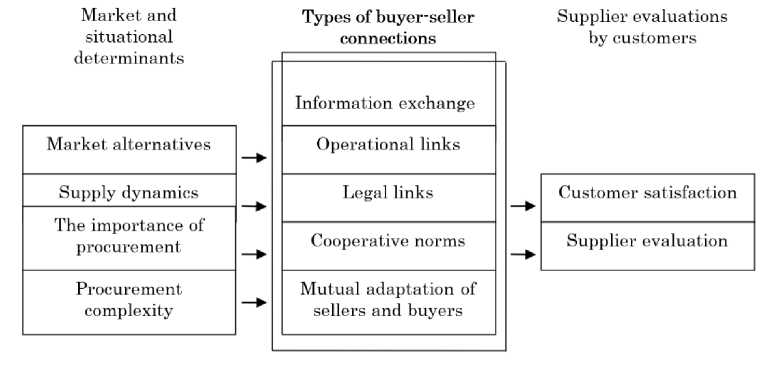
Cannon and Perreault (1999, 439– 460), utilizing cluster analysis, developed an interactive model that integrates key economic, legal, sociological, and psychological dimensions, thus providing a broader insight into the mechanisms through which business buyers and sellers interact and execute commercial exchange. Within the so-called "interactive zone," positioned between external and experiential factors, their taxonomy identifies five fundamental relational connectors: (1) Information Exchange defined as the mutual sharing of internal data and proprietary information; (2) Operational Linkages referring to the technical alignment of production processes; (3) Legal Bonds based on detailed and structured contractual frameworks; (4) Cooperative Norms reflected in a high degree of collaboration and mutual solidarity; (5) Buyer and Seller Adaptation encompassing communication, procedural, and production-related adjustments.
Figure 3 . Schematic representation of key buyer-seller relationship connectors (adapted from Cannon & Perreault, 1999, 442)
Behavioural Norms of Buyer-Seller Interaction
The observation of interactive dynamics within the business-to business market necessitates further insight into the various behavioural patterns manifest within buyer-seller relationships. Given the socio-psychological nature of business relationships, a broad spectrum of mutual norms determines overall relational performance. Nevertheless, the following can be identified as the most significant behavioural norms or prerequisites of interpersonal interaction: (1) Mutual Trust, as a crucial relational factor characterized by the expectation that a specific person or organization will fully honour their obligations or act in the best interest of their partner. (2) Commitment to Mutual Benefit that implies the perceived im- portance of current or potential relationships to the partners and their explicit intention to sustain them in the future. and (3) Open and Two-Way Communication process as an indispensable prerequisite for relationship building, which has frequently been marginalized in earlier research.
Connelli et al. (2018) emphasize that trust between business partners also serves as a critical economic factor for managing transaction costs within inter-organizational interactions and relationships. Furthermore, trust does not arise solely from a partner’s competence (i.e., technical skills, experience, and reliability); it is also contingent upon the perception of their integrity (i.e., motives, honesty, and character). This distinction carries significant managerial and marke- ting implications for the effective tic shifts in buyer-seller interactions, governance of mutual interactions. necessitating a re-evaluation and
The findings of the study (Liu et al., 2017) confirm that a strong customer orientation contributes to the enhancement of relationship quality, which in turn leads to increased loyalty. The research also underscores the importance of B2B supplier management understanding clients’ needs and responses. The results further indicate that customer orientation, relationship quality, and commitment serve as key determinants of loyalty, both directly and indirectly, through interconnected relational mechanisms.
Lee et al. (2021) provide insights into how the synergy of communication content, media, and processes influences trust, open communication, and information exchange in both successful and unsuccessful collaborations. The strategic integration of multiple communication channels and content types with formalized communication processes can promote successful cooperative relationships, while simultaneously serving as a signalling mechanism for potential issues in failing interactions.
New Perspectives in Buyer-Seller Interaction
The rapid advancement of information technology has precipitated dras- adaptation of traditional postulates to the contemporary circumstances in this sphere (Stanković, 2023).
Ahearne et al. (2022, 22-45) identify two primary categories of change and their strategic implications. Firstly, advancements in information transparency have significantly mitigated information asymmetry between buyers and sellers. Today, buyers frequently possess high levels of product knowledge, pricing insights, and awareness of available alternatives prior to initiating formal contact with a seller. Simultaneously, accelerated technological development is reflected in the gradual transition from traditional face-to-face interactions to remote communication facilitated by sophisticated technological interfaces. This has led to the increasing adoption of hybrid interaction models that synthesize tra-ditonal and digital communication forms to deliver personalized and automated experiences.
In such an environment, the role of the sales is being redefined. Sellers no longer function merely as information conduits; instead, they act as value creators who generate personalized solutions, foster trust, and manage complex customer relationships. Consequently, two key perspectives emerge. From the buyer’s perspective, the focus lies on novel methods of technological utilization, managing information overload, and optimizing decision-making processes in a landscape of reduced information asymmetry. From the seller’s perspective, the emphasis is on behavioural adaptation to new technological conditions and the cultivation of trust within hybrid interactions that integrate human and technological elements.
Despite the evident need to redefine traditional conceptual models, including the classic buyer-seller dyad, Ahearne et al. (2022, 41) emphasize that interpersonal communication remains a cornerstone of B2B interactions. This is due to the primary importance of establishing long-term relational bonds with organizational buyers.
The Relational Function of Market Communications in the Global Inter-organizational Market
Although communication serves as a pivotal component of business relationships, it has historically occupied a secondary role in research concerning interactive processes. Nevertheless, its function in establishing and maintaining inter-organizational links is fundamental. In this context, communication can be defined as a continuous formal and informal exchange of information between organizations, aimed at coordinating activities and resolving shared issues throughout various stages of relationship development. Mature communication processes foster dialogue and cooperation, prevent conflicts, and contribute to the cultivation of mutual trust, while simultaneously facilitating a clearer definition of roles and bilateral participation in decision-making processes. This implies abandoning the traditional view of the customer as a passive recipient of information and shifting toward an interactive communication model in which all actors actively participate in the creation of relationships, which in turn requires an appropriate relational articulation of communication processes (Dević, 2012, 90-96).
A significant contribution to the relational profiling of communication was provided by Grönroos (2004, 99-113), a leading representative of the Nordic School of relationship marketing. He conceptualizes the relational continuum as a functional composition of four components: (1) communication, (2) interaction, (3) dialogue, and (4) value. His framework treats interactions as the core, planned communication processes as the support for establishing and expanding relationships, and dialogue as both a suppor- ting and a focal component. All these elements are strategically oriented toward customer value generation, which is the primary objective of relationship marketing. A distinct aspect of market communication within a relational context is the creation of a multidisciplinary communication process that encompasses all efforts and factors aimed at sustaining business bonds. This process integrates both personal and non-personal communications, as well as immediate feedback loops, including data on interactions involving organizational buyers.
Building upon these theoretical foundations, further elaboration of the communication process within a relational context introduces a trimodal conceptualization of relational communication, applicable to service, inter-organizational, and similar markets. This concept consists of three communication modalities or successive levels of interaction: (1) planned communication; (2) contact creation and (3) connection.
Figure 4. Trimodal conceptualization of relational communication (adapted from Lindberg-Repo, 2001)
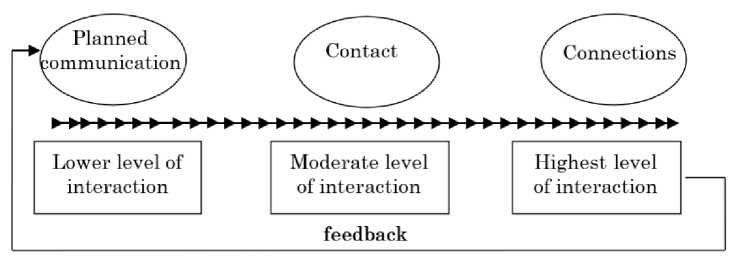
customers and other stakeholders
(1) Planned Communications encom-
Recent scholarly approaches conceptualize inter-organizational communication as a broad and integrative field encompassing various organizational forms, such as alliances, networks, and partnerships, as well as coordinating activities including collaboration, information sharing, and joint problem solving (Shumate et al., 2017). Within this perspective, inter-organizational communication is understood through the structures, forms, and processes generated by message exchange and the co-crea-tion of meaning among organizations and their stakeholders. In this context, several key research streams can be distinguished. The first focuses on the structures, forms, and processes of inter-organizational relationships, where structures include information and communication technologies (ICT), boundary-spanning roles, and network linkages; forms range from informal communities of practice to formal alliance arrangements; and processes encompass partner identification, message creation, relationship maintenance, intellectual property management, and potential transformation or dissolution of relationships. The second stream examines message exchange not only between organizational representatives but also between organizations and their stakeholders, as well as across technological systems, emphasizing challenges such as information protection, semantic differences, and infrastructural incompatibilities. The third stream explores the co-creation of meaning, highlighting how inter-organizational relationships are socially constructed and interpreted by organizational actors and their broader publics. Finally, the fourth stream emphasizes the role of stakeholders whose interests and actions may facilitate or constrain the development of inter-organiza-
Dević, Ž., Spasojević, B., Đelošević, I. Relationships, interactions andcommunication in the globalbusiness-to-business market: a conceptual framework tional relationships (Shumate et al.,
Within the contemporary technological achievements in global inter-organizational landscape, the Internet stands out as the core technological platform that has fundamentally transformed business practices and redefined the marketing function, especially in domain of communication with organized buyers. As an integrative communication medium, the Internet enables the direction and coordination of marketing and promotional activities, as well as the efficient exchange of information between business partners, thus directly shaping the interactions and development of inter-organizational relationship, which represents a significant prerequisite for development of relational strategies on B2B market and the implementation of Customer Relationship Management (CRM) concepts.
This implementation is further enhanced through integration with systems such as Intranets, Extranets, and Electronic Data Interchange (EDI). These technologies facilitate standardized, secure, and rapid data transmission, thereby optimizing activity coordination, supply chain efficiency and database integration between organizations. Moreover, interactive nature of the Internet techno- logy enables its double function - as a means of Internet communication and as an external channel for development and maintenance of relations with the buyers. In the absence of continuous and technologically supported information exchange with organizational buyers founded on adequate data base and developed communication infrastructure, companies face the acute risk of market marginalization. Thus, transitioning from traditional communication approaches to integrated, digitally-driven solutions representing a key infrastructural foundation of contemporary relational and network concepts is an imperative in global B2B environment (Dević et al., 2015).
Mantrala and Albers (2022) highlight the transformation of B2B sales under the impact of the Internet, noting a shift from traditional transactional selling approach toward models rooted in relationship management and value co-creation. While the Internet has automated routine tasks, it has not eliminated the sales role; rather, it has prompted a functional reorientation from traditional sale toward a consultative communication approach and solution finding in cooperation with the buyers. In this context, the hybrid sales model gains prominence, where the Internet has more complement rather than substitute role. The successful organizations integrate digital channels in their selling processes, using web platforms for information sharing and standardized transactions, while simultaneously maintaining the role of a seller and managing complex relations and implementing consultative sales.
In the contemporary circumstances of information technology development and globalization on the B2B market, communication processes manifest through diverse forms, while each one of them offer a specific contribution to the relation development. Mass communications have a supporting role in creating awareness and positive attitudes in the wider environment, interpersonal communication (personal selling), as a targeted communication, enables the building of trust, commitment and social interaction, while digital (direct) channels contribute to the expediency, adaptability and rationalization of information exchange. In the inter-organizational context, feedback mechanisms are of particular importance, as they enable a better understanding of the needs and expectations of partners and contribute to transparency and the improvement of the quality of decisions. In this sense, communication becomes a supporting element of interaction, mediating between struc- tural conditions and the final outcomes of relationships. The effectiveness of inter-organizational communication is conditioned by the ability of organizations to integrate these different forms into a single and coordinated communication system. Thus, the inter-organizational communication is a dynamic and multidimensional process that integrates different forms of exchange, enables coordination and adaptation of activities, and remains the decisive factor in building stabile and sustainable relationships in the global B2B marketplace.
Conclusion
It can be concluded that relational-communication convergence represents a significant advancement in the integration of marketing strategies and interactions aimed at establishing and sustaining sustainable competitive advantages within contemporary, dynamic market conditions. The intensification of linkages between business entities and their internal and external environments expands the opportunities for more efficient activity coordination, knowledge exchange, and value co-creation - elements increasingly recognized as key performance indicators in the global business-to-business (B2B) envi- ronment. Simultaneously, the globalization of the inter-organizational market, coupled with the advancement of information technologies, facilitates various modes of integration with organizational buyers, carrying significant potential for building and deepening customer loyalty. Longterm customer retention is contingent upon their active involvement in the value chain, which necessitates high-quality products and services alongside developed forms of multidimensional communication.
Despite a certain degree of research discontinuity, driven by rapid shifts and the continuous emergence of new practical challenges that refocus research attention, this very context underscores the importance of further theoretical and empirical depth in relational issues. The accelerated development of innovative solutions and heightened competitive dynamics necessitate a constant re-evaluation and refinement of existing conceptual frameworks. In this regard, the strengthening, precise configuration, and optimization of relational concepts within an inter-organizational context constitute an essential foundation for understanding and managing complex market relationships, particularly under the pressures of globalization.
This paper aims to reaffirm and further theoretically articulate the key postulates of the relational approach in the global B2B market, linking them to contemporary trends and practical requirements. Starting from the conceptual framework of inter-organizational relationships as a strategic intent and target projection, it enables the appropriate positioning of relational, interactive, and communication processes as central elements of modern business-to-busi-ness marketing. In this context, the relational process is viewed as an integrative and holistic continuum in which relationships, interactions, and communication are mutually interwoven and interdependent.
A specific contribution of this study lies in emphasizing the significance of the communication component, which is often insufficiently addressed within the relational approach. Communication, shaped and supported by modern information technology, is positioned here as an indispensable cohesive mechanism that enables the establishment, maintenance, and development of inter-organizational relationships, thereby transcending its previously reduced role in theoretical discourse.
Given the complexities and challenges of modern business practice, future research should devote greater attention to the further integration of communicative, interactive, and rela- tional aspects, as well as their empirical verification across various inter-organizational contexts. Such efforts would contribute to the development of a more comprehensive and adaptive theoretical and applied framework for managing effective relationships in the global business-to-busi-ness marketplace.
