
Сакральное пространство слободских удмуртов: святилище Имма/Иммала
Журнал: Финно-угорский мир @csfu-mrsu
Рубрика: История, этнография, археология
Статья в выпуске: 1 т.18, 2026 года.
Бесплатный доступ
Введение. Усилившийся в конце 1990-х–2000-е гг. рост интереса к удмуртской традиционной религии открыл новую веху в развитии исследований дохристианских культовых памятников. Это способствовало организации дополнительных этнографических, религиоведческих и археологических экспедиций для изучения обрядовых практик. Статья посвящена наиболее известному старинному святилищу удмуртов Слободского района Кировской области – Иммала. Несмотря на высокую сакральную значимость данного объекта для локальной группы удмуртов и наличие упоминаний о нем в литературе, комплексный анализ динамики обрядовых практик на святилище Иммала во второй половине XX – начале XXI в. до сих пор не проводился. Цель исследования – проанализировать полученные в ходе экспедиций материалы, связанные с местом Иммала, выявить эволюцию обрядовых практик и ввести в научный оборот новые данные. Материалы и методы. Базой исследования выступили материалы Научного архива Удмуртского института, истории, языка и литературы Удмуртского федерального исследовательского центра с 1971 г. по настоящее время. Основной корпус источников составили авторские полевые материалы, собранные в ходе этнографической экспедиции 2024 г. в Слободском районе Кировской области. Методологическая основа работы базируется на принципах историзма и системности. Историко-генетический метод позволил проследить временные изменения в религиозных представлениях слободских удмуртов. С его помощью были изучены причины трансформации культа (от коллективных родовых молений к индивидуальным посещениям и последующему угасанию практики), а также установлена зависимость этих изменений от социально-экономических факторов (депопуляция деревень). Результаты исследования и их обсуждение. Святилище Иммала является общим для всех слободских удмуртов сакральным местом. Обряд «хождения/путешествия на небесную землю» (Иммала ветлон/веттон) символизирует собой паломничество к святому месту с целью принесения жертвы и обращения с просьбами к Имма-вожшуду о даровании здоровья и благополучия. Материалы экспедиции 2024 г. свидетельствуют о том, что обрядовые церемонии, совершаемые в святилище Иммала вплоть до начала XXI в., уходят из жизни современников. Это связано с опустением деревень в результате миграции населения, старением и убылью сельских жителей, основных носителей аутентичной культуры. Заключение. Сформулированные автором выводы вносят вклад в развитие этнологического исследования традиционных религиозных практик удмуртов. Материалы могут быть полезны при описании мифологических представлений этноса, систематизации священных ландшафтов и культурных памятников финно-угорских народов России.
Похожие статьи в разделе Фольклор в узком смысле
Короткий адрес: https://sciup.org/147253485
IDS: 147253485 | УДК: 398.32(470.51) | DOI: 10.15507/2076-2577.018.2026.01.092-104
The Sacred Space of the Sloboda Udmurts: The Imma/Immala Sanctuary
Introduction. The surge of scholarly interest in Udmurt traditional religion that intensified during the late 1990s and 2000s marked a new phase in the study of pre-Christian ritual sites. This development stimulated the organisation of additional ethnographic, religious studies, and archaeological expeditions aimed at investigating ritual practices. The present article focuses on Immala, the most renowned ancient sanctuary of the Udmurt people, located in the Slobodskoy District of the Kirov Region. Despite the site’s profound sacred significance for the local Udmurt group and its occasional mentions in academic literature, a comprehensive analysis of the evolution of ritual practices at the Immala sanctuary during the second half of the 20th and early 21st centuries has yet to be undertaken. The aim of this study is to analyse materials obtained during expeditions to the Immala site, to trace the transformations in ritual practices over time, and to introduce new data into scholarly circulation. Materials and Methods. The research is based on materials from the Scientific Archive of the Udmurt Institute of History, Language, and Literature, Udmurt Federal Research Centre, spanning from 1971 to the present. The core body of sources comprises the author’s original field data, collected during a 2024 ethnographic expedition to the Slobodskoy District of Kirov Oblast. The methodological framework rests on the principles of historicism and systematic analysis. The historical-genetic method was employed to trace diachronic transformations in the religious beliefs of the Slobodskoy Udmurts. This approach facilitated the examination of the factors driving the evolution of their cultic practices – from collective clan prayers to individual offerings and the subsequent decline of these rites – while also establishing the correlation between these changes and socio-economic processes, particularly rural depopulation. Results and Discussion. The Immala sanctuary constitutes a shared sacred site for all Sloboda Udmurts. The ritual of “journeying to the celestial land” (Im mala vetlon/vetton) symbolises a pilgrimage to this holy place, performed to offer sacrifice and to direct supplications to Imma-vozhshud for the bestowal of health and well-being. Data from the 2024 expedition indicate that the ceremonial rites conducted at the Immala sanctuary, which persisted until the early 21st century, are now fading from contemporary practice. This decline is attributable to the depopulation of villages due to migration, alongside the ageing and demographic attrition of the rural population, who are the primary bearers of this authentic cultural tradition. Conclusion. The conclusions formulated by the author contribute to the development of ethnological research on traditional Udmurt religious practices. The materials may prove useful for describing the mythological worldview of the ethnic group, as well as for systematizing the sacred landscapes and cultural heritage sites of the Finno-Ugric peoples of Russia.
Текст научной статьи Сакральное пространство слободских удмуртов: святилище Имма/Иммала
Уральского отделения РАН, г. Ижевск, Российская Федерация,
of the Russian Academy of Sciences, Izhevsk, Russian Federation,
В основе формирования этнокультурного пространства региона лежит тесная связь этничности и ландшафта. Этнос, населяющий конкретную местность, воплощает в ней материальные и духовные особенности своей территориальной группы. Актуальность изучения сакральных пространств удмуртов определяется тем, что они, являясь культурными и историческими объектами, отражают религиозно-мифологические представления народа, его мировоззрение и традиции. Подтверждает это произошедший в последние десятилетия рост интереса к национальной культуре, духовным корням. Важным представляется проведение этнографических и религиоведческих исследований обрядовых практик.
Структурно удмуртский этнос принято делить на северных и южных удмуртов. Их развитие долгое время протекало в отрыве друг от друга в неодинаковых исторических и политико-административных условиях. Северная часть удмуртов, к которой относятся и слободские, в 1489 г. была присоединена к России в составе Вятской губернии, а южная вплоть до середины XVI в. находилась под владычеством Казанского ханства1. Наряду с обозначенными группами можно выделить еще несколько локальных групп, заселенных за пределами современной Удмуртской Республики.
Автохтонным населением выбранной для исследования территории считаются представители нижнечепецкой группы удмуртов, в которой, как правило, выделяют две подгруппы: косинскую и слободскую. Косинские удмурты сосредоточены на р. Коса, притоке Чепцы, и расселены на территории Унинского, Зуевского, Богородского, Фаленского районов Кировской области. К слободской, соответственно, относятся удмурты, проживающие в современном Слободском районе Кировской области.
В статье рассматривается сакральное пространство слободских удмуртов Иммала, тайное место, имевшее объединяющее начало для всего населения данной локальной территории. Сам обряд известен как Иммала веттон/ветлон (‘хождение/путешествие на небесную землю’), когда в Петров день, на Покров и в начале ноября, до замерзания речки, паломники шли к месту моления, к священной березе и роднику. Также предметом особого интереса в исследовании является отражение существующих воззрений о выбранном объекте сакрального ландшафта у современных удмуртов.
Цель исследования – зафиксировать сведения информантов о совершении религиозных практик слободскими удмуртами в священном месте Имма/Иммала, описать культовое пространство и связанные с ним запреты, объединить имеющиеся о нем данные в научной литературе и полевом архиве автора.
Обзор литературы
Изучение святилища Иммала прежде всего связано с именем лингвиста М. Г. Атаманова. Ученый неоднократно выезжал в экспедиции в места компактного проживания удмуртов Кировской области, в том числе и в Слободской район. Основные результаты исследований были опубликованы в статьях и монографиях по происхождению удмуртских воршудов2, истории этнолингвистических групп удмуртов3.
В комплексном (этноархеологическом) исследовании впервые представлен опыт систематизации имеющихся материалов по дохристианским святилищам древнеудмуртских племен и удмуртов XVI–XX вв. (одиночные мольбища или комплексы сакральных мест). В работе нашли отражение материалы археолого-этнографических экспедиций 1993–1999 гг. Подробно рассмотрено место моления Имма/Иммала с описанием жертвоприношения и последующей трапезы, совершаемой уже дома4.
Семантический анализ слова «Имма» позволяет выявить дихотомическое, двухчастное по вертикали строение мира: небесная ( ин / инма / имма / инму – букв. ‘небо / небесная земля’) и земная ( ма / му / музъем ) сферы воспринимаются как аналогичные. Отсюда и Иммала веттон/ветлон автор переводит как ‘Хождение/путешествие на небесную землю’ [1], т. е. в священное место, для того, чтобы попросить сокровенное и заручиться поддержкой богов.
В рамках изучения межэтнического взаимодействия и вопросов конфессиональной идентичности нижнечепецких удмуртов в 2017 г. автором опубликовано исследование, в котором содержится описание посещения информантами святилища Иммала [2].
Итак, опираясь на имеющиеся научные наработки по обозначенной теме, можем утверждать, что изучением сакрального пространства слободских удмуртов Иммала занимались ученые различных областей гуманитарной науки.
Святилище ‒ не единственный объект исторической и культурной памяти удмуртов. Изучению общественной святыни северных (глазовских) удмуртов Губервӧсь (Гербервӧсь), где проходили крупные аграрные моления, посвящена статья Н. И. Шутовой [3], она же описала крупный культовый центр, жертвенное место Чумойтло X–XIII вв. (ныне Можгинский р-н Удмуртской Республики) [4] и другие объекты. Р. Р. Садиковым на основе полевых материалов реконструирован цикл зимних молений у закамских удмуртов, показаны современные формы бытования этих ритуалов [5].
Г. Ю. Устьянцевым, Д. Ю. Ефремовой, Т. Л. Серебренниковой исследованы организованные пространства мольбищ марийцев (например, роща для всемарийских молений в Советском районе со священными деревьями онапу ), неорганизованные сакральные пространства (у восточных марийцев деревья, стоящие во дворах домов, у которых молятся родовым покровителям ‒ кереметам ), символические захоронения героев (меморативные объекты, посвященные марийским героям: Полтышу, Акпа-тыру и др.) [6]. Раскрытию происхождения и характера кереметов и их культа как природных духов и родовых божеств у мари и некоторых других народов Башкортостана (мордвы, чувашей, удмуртов) посвящено исследование А. С. Иликаева. Автор приходит к выводу, что источником слова «керемет» («киреметь») стало чувашское понятие «киремет», обозначающее духа и священную рощу, в которой этот дух обитает. Ему в жертву приносились домашние животные [7].
Подробное описание моления Ӱчӱк (‘полевое жертвоприношение’) некрещеных чувашей Республики Башкортостан содержится в исследовании В. В. Медведева [8]. Смысл моления заключается в благополучном проведении летних сельхозработ, получении хорошего урожая, приплода скота, в даровании людям здоровья, мира. Определению характера, форм и причин трансформации обряда Ӱчӱк в современный период в различных регионах проживания некрещеных чувашей посвящена статья Е. А Ягафо-вой и И. Г. Петрова. Результаты исследования показали существенную трансформацию (редукцию, фестивизацию, меморизацию) обряда за последние 20 лет [9].
Описание видов общественных молений мордвы Казанской губернии, проводимых на берегу реки, на лужайке под березой, на выгоне для скота и в других местах, содержится в научной статье Е. Н. Бикейкина, Т. М. Гусевой, Г. А. Куршевой. Исследование проведено на основе экспедиционных материалов, собранных исследователями XVIII–XIX вв. [10].
Роли жертвенных и почитаемых деревьев посвящено исследование А. П. Конкка. В карельских деревнях во второй половине XIX в. верили, что от состояния жертвенных елей зависели благополучие, здоровье и жизнь членов семьи и рода. Поэтому карелы жертвовали (относили к корням) частицу всего съестного, что появлялось в доме. Помимо елей, в регионе были известны жертвенные сосны, березы, рябины, можжевельники [11].
Объектом исследования В. А. Егорова стали сакральные места (священные рощи) народов России, в том числе мари. В ходе исследования автор приходит к выводу, что современное российское язычество ‒ одно из многих религиозных направлений в пространстве России, которое поддается классификации, но не является чем-то единым, институционально однородным [12].
Таким образом, интерес к изучению святилищ и культовых мест народов Урало-Поволжья сохраняется, поскольку они выступают ключом к пониманию древних верований и мифологических представлений этносов, дают возможность проанализировать трансформацию обрядов и их локальных проявлений.
Материалы и методы
При определении сущности сакрального пространства автор опирается на методологические подходы, предложенные в современных этнологических исследованиях. Концепция А. В. Головнева и Т. С. Киссер акцентирует внимание на этнокультурном наследии как базовом компоненте идентичности [13]. Идеи С. В. Березницкого позволяют рассматривать сакральные ландшафты, музеи под открытым небом и другие этнокультурные институты в качестве хранилищ коллективной исторической памяти и источников знаний о развитии общества [14]. Как отмечает автор, «ландшафтно-этническая идентичность позволяет человеку проецировать на себя качества представителя конкретной местности, для которой характерны свой диалект языка, свои нравы, обычаи, менталитет, этническая картина мира, мифология» [15, с. 215].
Исследование базируется на материалах Научного архива Удмуртского института истории, языка и литературы Удмуртского федерального исследовательского центра (далее – УдмФИЦ). Были изучены отчеты об этнографических экспедициях в Слободской район (с 1971 г. по настоящее время), просмотрены дневниковые записи участников экспедиции, рабочие тетради и другие документы5.
Предпринятая в 2024 г. комплексная лингвистическая и фольклорно-этнографическая экспедиция в населенные пункты компактного проживания удмуртов (Слободской район Кировской области) ставила целью исследование современного состояния удмуртского языка, фиксацию сохранившихся элементов традиционной духовной культуры, обращение к историко-этнографическим особенностям слободских удмуртов, однако изучить сакральные пространства не предполагалось.
Интервью носили полуструктурированный характер, освещали вопросы функционирования удмуртского языка, бытования традиционных календарных и семейных обрядов, социальную жизнь общества. Информантами выступили жители сельской местности от 1932 до 1964 года рождения (60‒92 года). Все респонденты были проинформированы об участии в исследовании.
В ходе экспедиции собран уникальный этнографический материал, касающийся верований и культовых памятников данного ареала. Результатами экспедиции стали записи образцов речи, устных бесед с коренными жителями, аудиоматериалы о традиционно-обрядовой сфере жизни местных удмуртов, об истории и современном состоянии населенных пунктов.
Используемый метод полевых исследований предполагает погружение в традиционную культуру изучаемых народов, установление контактов с носителями данной культуры, сбор материала, фото-, аудио- и видеофиксацию фольклорноэтнографических предметов и сюжетов. Также применялись: описательный метод для описания изложенных рассказов/нарративов; семантический анализ понятий, когда на языковом материале выявляется смысл названий; историко-генетический метод, позволивший проследить историю развития и функционирования святилища, прежде всего на фольклорном материале.
Результаты исследования и их обсуждение
Согласно данным лингвиста Т. И. Тепляшиной, исследовавшей нижнечепецкие говоры северноудмуртского наречия в 1960-е гг. XX в., удмурты проживали в 27 населенных пунктах, относившихся к четырем сельским советам: Кругловскому, Будин-скому, Омсинскому, Каринскому6. Часть этих деревень опустела в связи с миграцией населения, другая часть была признана «неперспективной».
Священное место удмуртов Иммала находится на территории Светозаревского сельского поселения, ранее входившего в Кругловский сельский совет, в восточной части Слободского района Кировской области. Деревня Светозарево (удм. Гырдор ) удалена от районного центра на 16 км, от областного – на 53 км. В 2024 г. на территории поселения проживало 436 чел., из них 278 – в д. Светозарево. Этнический состав однородный, подавляющее большинство – удмурты (339 чел.), русские (80 чел.), другие этносы представлены в незначительном количестве. В настоящее время в поселении числится 17 деревень, из них обитаемы круглогодично – 117.
Большая часть материалов, записанных в населенных пунктах от информантов старшего и среднего возраста, представляет собой сказы и рассказы этнографического, топонимического, производственного и бытового содержания. В ходе бесед с жителями было установлено, что традиционные моления, активно проводимые еще в конце XX в. слободскими удмуртами, в настоящее время забываются. Однако остались информанты, которые участвовали в священных ритуалах или помнят рассказы старожилов. Таким образом, в ходе экспедиции был набран достаточный объем информации о святилище Иммала/Иммала веттон , который ранее не был введен в научный оборот.
А. Г. Кайсина, заведующая удмуртским национально-культурным центром в д. Све-тозарево, считает, что удмурты в этих краях проживают очень давно. Первое упоминание об удмуртских деревнях имеется в переписи населения 1615 г. в составе Каринского стана Хлыновского уезда. Основаны они были переселенцами из племенного объединения ватка . По сохранившимся преданиям, удмурты появились здесь после сожжения новгородцами великого удмуртского святилища, находившегося на месте современного г. Кирова ( Кылно – удмуртское название г. Хлынова, предшественника г. Кирова)8. Согласно бытующим легендам, на территории современного города раньше было поселение удмуртов с общественной куалой 9. Русские разрушили и сожгли ее. В это время оттуда вылетел голубь (удм. дыдык ) и издох. Голубь отождествлялся с племенным покровителем Инма/ Инма-вожшудом 10, иногда его называли Дыдык-вожшуд 11. После этого удмурты, «собрав с места сожженной куалы пепел, ушли к устью Чепцы и основали новое племенное моление в честь Имма-вожшуда, новые родовые деревни: Чола (рус. Круглово), Чабъя (Омсино), Бигра (Сизево), Сюра (Бурино), Поска (Паскино) и др.»12.
-
Н. И. Шутовой зафиксированы сведения о том, что удмурты уходили из Хлынова в сторону современного Глазова, а впереди себя пустили красного быка ( горд ошпи ). Бычок остановился на пригорке возле селения Карино, где его и принесли в жертву. На это место и перенесли золу с прежнего мольбища Имма-вожшуда13.
Позже святыню еще несколько раз переносили. Со слов информантов, по разным причинам: из-за строительства тракта в сторону Глазова, из-за сбора жителями д. Карино (удм. Бигер ) из жертвенного места серебряных монет, которые оставляли удмурты, когда ходили на Иммала. Удмурты оберегали святое для них место от осквернения людьми другой веры и переносили его в труднодоступные места. Сейчас оно находится в лесу возле д. Омсино (удм. Чабъя ).
Помимо сакрального места моления Иммала, являющегося общим для всех слободских удмуртов, где совершались приношения божеству Инме/Иммале , функционировали семейные святилища «в виде небольших углублений в углу огородов ( куала инты/ гоп , сион поттонни ), они могли быть огорожены (дд. Красногорье, Верхнее и Нижнее Мочагино); сооружений в виде бревенчатого сруба без крыши размером 3×3 м (д. Нижнее Мочагино); в виде бревенчатых строений с крышей ‒ Малая куала (Почи куала) (д. Омсино). Туда лили масло ( вӧй кисьто ), бросали еду»14. Также могло быть несколько родовых святилищ (куала) в зависимости от того, сколько в деревне проживало родов.
М. Г. Атаманов, побывавший в 1971 г. на древнем молении, пишет, что каждая воршудная группа вначале останавливалась на месте родового святилища (к тому времени зданий уже не сохранилось), здесь они зажигали небольшой костер из березовых сучьев, с тайной молитвой в огонь выливали сливочное масло, бросали кусочки пищи, жертвовали монеты. Жители д. Красногорье для пожертвований заходили в свою деревенскую Дурга-Побъя куалу , далее совершали моление у Чипья-вожшуд куалы жителей д. Новый Погост. После приходили на место племенного моления. В святилище Иммала в жертву приносили уток, в костер из березовых сучьев бросали кусочки пресных лепешек куарнянь15 , лили масло. Три раза по движению солнца обходили костер, кланялись березе и навешивали на нее чук – ленточки из разноцветной материи, а из родника под горой брали воду, умывали лицо, руки, в родник бросали серебряные копейки16.
Согласно данным, полученным от информантов во время экспедиции, место святилища Иммала находится в лесу примерно в 1 км от д. Омсино, где проходит Глазовский тракт. Посреди леса есть поляна, где росли липы, ели, а также находилась священная береза. Через эту поляну шли на кладбище в д. Круглово. Раньше недалеко от этого места находились покосы жителей д. Подгорное (Полевые материалы автора (далее – ПМА). Кайсина Л. Н., 1958 г. р., д. Светозарево, запись 2024 г.). Тут же бежит маленькая речка и есть родник, впадающий в нее (ПМА. Калинина Н. И., 1954 г. р., д. Светозарево, запись 2024 г.).
На поляне располагается кострище ( тылскон места ), над которым происходило заклание утки или гуся. Внутренности, перья сжигали на костре, а костер обходили три раза. Раньше могли разводить несколько кострищ, и берез для приношений было несколько. На крупные моления резали даже овец. К священной березе привязывали чук – лоскутки ткани, платки, полотенца (рис. 1). В ручей и под березы бросали монетки, непременно «белые», трогать которые было нельзя (рис. 2). В роднике промывали птицу, заворачивали в белый лоскут ткани и несли домой (ПМА. Калинина Н. И., 1954 г. р., д. Светозарево, запись 2024 г.).
Также респонденты передают рассказы старожилов о том, что в святилище Иммала раньше была широкая тропа, ездили даже на лошадях. Со всех сторон сюда тянулись маленькие тропинки из близлежащих деревень. Если желающие посетить Иммала веттон по каким-то причинам не находили его, тогда говорили: «Не вовремя идете. Нужно ходить на Петров или на Покров день» (ПМА. Кайсина Г. Д., 1964 г. р., д. Све-тозарево, запись 2024 г.).
Пожертвования в святилище Иммала совершали, когда просили здоровья и благополучия конкретному человеку, например больному члену семьи или призванному в армию солдату. Информант А. Н. Болтачева, 1932 г. р., д. Нижнее Мочагино, вспоминает, что была там с матерью и сыном, когда необходимо было попросить здоровья больному корью сыну. С собой взяли хлеб, яйца, деньги, топленое масло, домашнюю утку. Прежде
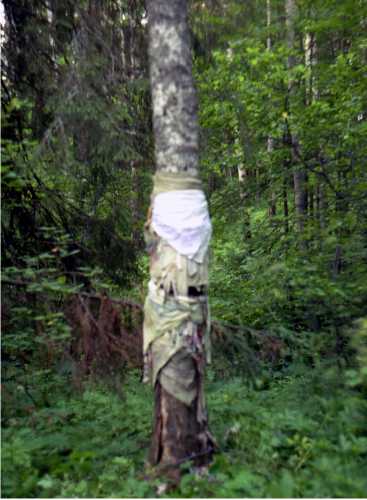
Р и с. 1. Святилище Иммала. Священная береза
F i g. 1. The Immala Sanctuary. The Sacred Birch
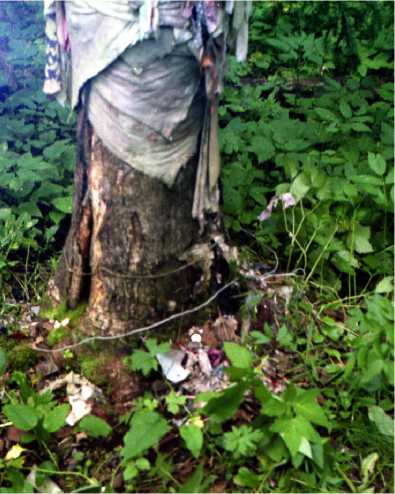
Р и с. 2. Святилище Иммала. Обетные и жертвенные монеты у священной березы
F i g. 2. The Immala Sanctuary: Votive and Sacrificial Coins at the Sacred Birch
Источник: рисунки 1‒2 взяты из: НА УИИЯЛ УдмФИЦ УрО РАН. Коллекция электронных фотодокументов. Автор изображения И. Л. Поздееев, 2005 г.
Source: Figures 1‒2 are taken from: Scientific Archive, Udmurt Institute of History, Language and Literature, Udmurt Federal Research Center of the Ural Branch of the Russian Academy of Sciences. Collection of electronic photo documents. Image by I. L. Pozdeev, 2005.
чем идти к священному месту Иммала, нужно было посетить родовые святилища в дд. Круглово (удм. Чола ) и Новый Погост (удм . Выльгурт ). Последней уже нет. На местах этих родовых святилищ разжигали костер из щепок, оставляли в дар выпечку, просили здоровья и благополучия.
Далее, как вспоминает А. Н. Болтачева, «продолжили путь и, не доходя до д. Омсино, свернули направо и ушли в лес примерно на 1 километр. На месте разожгли большой костер, над которым произошло заклание утки. Крови дали стечь в костер, птицу ощипали, пух сожгли на костре. В протекающий рядом ручей бросили белые монетки (желтые нельзя). После обратились к Имма-вожшуду с просьбой принять наши гостинцы, не гневаться, если что не так, попросили счастья, здоровья сыну и родным. Будучи молодой, я не знала, как читать молитву, а мама долго и тихо что-то просила. Затем постелили скатерть, поели. Из еды еще оставались табани 17 и яйца. Тушку утки, помыв и почистив, забрали домой. На обратном пути в Нижнем Мочагине зашли в свое священное место, оставили выпечку, иначе зачета, пользы не будет. Сейчас это место Ужоговица/Ожоговица вожшуд (по названию протекающей реки) распахано, а молодежь и не знает о нем»18.
Как вспоминает Н. И. Калинина, часто ходили на место Иммала, когда молодой человек получал повестку в армию. Тогда бабушки обещали дать жертву богам ( сӥзьыны , сӥзиськон – обет), чтобы служба была легкой. Их семья поступила так же перед уходом племянника на службу, попросила благополучия, чтобы здоровый вернулся домой и не попал в Чечню (в то время там шли военные действия). Всегда
® ФИННО-УГОРСКИЙ МИР. Том 18, № 1. 2026 »»fcw»»^ перед обращением произносили: «“ Ӧстэ Инмаре! ” (Господи, Боже!) и заканчивали просьбы теми же словами. Женщины должны были быть непременно в платках, мужчинам можно было и без головного убора. Здесь закалывали гуся или утку, непременно птица должна быть водоплавающей, нельзя курицу, она назад гребет (удм. Берлань ӵабъя ). Перья и внутренности сжигались на костре. Промытую птицу заворачивали в белый лоскут ткани и несли домой, где ее отваривали и съедали в кругу родных и друзей. В святилище ходили на Петров день и Покров обычно. Помню, что и в ноябре ходили до замерзания речки» (ПМА. Калинина Н. И., 1954 г. р., д. Свето-зарево, запись 2024 г.).
Иногда шли на место Иммала веттон после завершения службы в армии. «Когда мой будущий супруг был призван в армию, его бабушка обещала при условии успешного завершения службы сходить на Иммала, принести в жертву утку. Вскоре ее не стало, но долг остался. Свекровь сама провела обряд, ходили вместе с мужем. После сварили кашу с утиным мясом. Ни одной косточки от этой утки нельзя выбрасывать. Все кости собирают, потом сушат, а через год в том же самом месте сжигают на костре. Остатки утки, ее кости не должны попасть собаке или кошке. Все кости, даже самые мелкие, собираются в одно место. Птицу нужно съесть всю» (ПМА. Кайси-на Г. Д., 1964 г. р., д. Светозарево, запись 2024 г.).
При головных болях, мигренях рекомендовали надеть новый платок, поносить его какое-то время, затем сходить на святилище Иммала, попросить выздоровления от недуга. Приведем описание одной из собеседниц, которая участвовала в подобном ритуале: « Муми косӥз монэ выль ӵуӵкон йырам керттыса веттыны коркатим. Сэре со ӵуӵконэным мон кӧлӥ и со ӵуӵконэз нуим отцы Иммала. ми мынӥм тоже табанен, вӧйын нэ. Не ӵӧж, не ӟазег ӧм нуэ. Тылытским. Табаньзэ но, вӧйзэ но ми тылаз но кисьтӥм, кызьпу улэ но кисьтӥм. Кызьпуаз мон со ӵушконме керттӥ. Уксё кельтӥм ми кызьпу улэ но. Сэре отын ышна вал печи нэ ошмес и печи нэ шур отысь. Со шу-рысьтыз ву ваим ми басьтыса. И со шураз кедьы уксё ещё понӥм. И собере коть оскы, коть эн, тьфу-тьфу, мынам йыр висёнъёсы ӧй ни вал » («Мама попросила меня надеть новый платок и ходить в нем дома. Я и спала в платке. Затем этот платок мы отнесли на Иммала. Пошли мы туда с табанями, сливочным маслом. Ни утку, ни гуся не взяли. Развели костер. Табани бросили в костер, туда же вылили часть масла. Другую часть вылили под березу. На березу я повязала платок, под березу бросили монетки. Там был маленький родник и ручеек. Оттуда набрали воды. В ручеек бросили белые монетки. С тех пор, хоть верьте, хоть не верьте, тьфу-тьфу-тьфу, таких головных болей у меня уже не было») (ПМА. Кайсина Г. Д., 1964 г. р., д. Светозарево, запись 2024 г.).
Интересно описание случая, рассказанного информантом: «У нас болела мама, и мы сходили на Иммала с гусем. В сам момент заклания над костром гусь открыл рот и крикнул, что считается недобрым предзнаменованием. А ведь мама нас заранее предупредила, чтобы клюв и голову придерживали. После этого мы так переживали, волновались, ой, что же будет, что же будет. Вернувшись, рассказали матери, она встревожилась, ой, не к добру это, говорит. Через какое-то время мама скончалась» (ПМА. Богданова Е. И., 1959 г. р., д. Светозарево, запись 2024 г.).
Со слов другой собеседницы, на святилище Иммала ходили семьями по несколько человек. Чаще всего посещали место в октябре-ноябре, когда в хозяйствах подрастала домашняя птица. У кого ее не было, специально покупали. « Басьтоно ке но ӟазег, сразу соин мыноно ӧвӧл, ӧжытак коркад возёно. Пыр маялляно сое. Маке-маке ве-раськоно соин, ӟазеген. Кияд басьтоно » («Если приобретали гуся, сразу с ним нельзя идти [в святилище], нужно немного подержать дома. Его нужно постоянно гладить, разговаривать с ним, брать на руки») (ПМА. Калинина Н. И., 1954 г. р., д. Светоза-рево, запись 2024 г.).
В момент отчаяния народ искал поддержки в своих традиционных верованиях. «У меня сосед заболел. Смотрю, его семья купила гусей, хотя никогда птиц не держали. Собирались сходить на Иммала, попросить за родного человека, но не успели. Он скоропостижно скончался», – вспоминает респондент (ПМА. Кайсина Л. Н., 1958 г. р., д. Светозарево, запись 2024 г.).
В ноябрьские праздники, в дополнительные выходные дни, из многих удмуртских деревень семьями шли к священному месту. Иногда ходили повторно. Например, в случае, если приснился сон, указывающий на то, что жертву не приняли. (ПМА. Калинина Н. И., 1954 г. р., д. Светозарево, запись 2024 г.).
По мнению информантов, место Иммала имеет свою энергетику. Говорят, когда в этом лесу собираешь грибы, ягоды, обязательно заблудишься. Из сообщения Н. И. Калининой: «Мы с мужем ездили как-то за грибами в этот лес. Заблудились, выйти не можем. Долго искали дорогу, я уже отчаялась, плачу. Потом в какой-то момент услышали звуки машин и вышли к тракту. Оказывается, совсем недалеко были от дороги, что-то нас водило кругами».
По воспоминаниям старожилов, с детства родители предостерегали детей от игр вблизи сакральных мест, таких как Иммала и родовые святилища куала в деревнях Круглово, Новый Погост, Паскино (удм. Поска ) (ПМА. Кайсина В. А., 1955 г. р., д. Светозарево, запись 2024 г.).
Удмурты всегда соблюдали правило не показывать чужим людям свои священные места. Окружающие народы, русские и татары, не должны были знать о них. По устному сообщению участника экспедиции, в 1999 г. их, сотрудников Удмуртского института истории, языка и литературы УрО РАН, этнических удмуртов, проводили к святилищу, а русский краевед получил отказ. Став достоянием посторонних, место Иммала несколько раз переносилось.
По сообщениям информантов, удмурты и сами в последние годы перестали посещать святилище («посещали ближе к 2000 годам, наверно, в 1997 или в 1998 году», «были примерно в 2007 или в 2008 году», «ни разу не приходилось бывать», «говорят, в прошлом году ходили, но места не нашли»).
Поскольку экспедиция состоялась в марте 2024 г., возможности добраться до места проведения моления, находящегося в лесу, не было. Краевед Г. Д. Кайсина несколько лет назад со знатоком этих мест нашли очень похожий на святилище участок поляны, но священная береза, по которой место было хорошо узнаваемо, не нашлась. Место костра тоже было сложно идентифицировать. «Значит, сейчас уже не посещают это место, а береза могла упасть и сгнить» (ПМА. Кайсина Г. Д., 1964 г. р., д. Светозарево, запись 2024 г.).
В настоящее время святилище оказалось заброшенным, что связано с миграцией населения в более крупные населенные пункты; продолжающимся активным переселением молодежи в города; старением и уходом из жизни пожилого населения, являющегося носителем аутентичной культуры и традиционных верований. Категория населения среднего возраста знакома с культовым памятником, но в ритуале никогда не принимала участия. Современная молодежь знает о святилище из краеведческих материалов, органично вписанных в школьные курсы истории и географии, но никогда там не бывала.
Заключение
Святилище Инма/Иммала – священное место для всех удмуртов близлежащих деревень Слободского района Кировской области. В связи с относительно ранней христианизацией края, по сравнению с другими подгруппами удмуртов, свидетельств о проведении крупных языческих молений группой деревень на данной территории не сохранилось. Однако удмурты, являясь приверженцами православной религии лишь формально, одновременно сохраняли свои традиционные воззрения и обряды проводили тайно, веря в то, что в противном случае могут быть наказаны своими богами. Представителям духовенства православной церкви не были известны культовые места удмуртов. Деятельность миссионеров сводились скорее к наблюдению за тем, не уклоняются ли новокрещеные от выполнения требований христианской религии [16].
Иммала веттон/ветлон – старинная обрядовая церемония, тайное общеудмуртское моление и сакральное место слободских удмуртов. В данном контексте святилище является «этнокультурным институтом», центром, объединяющим локальную группу через общую духовную и историческую связь. Информанты сохранили воспоминания о посещении святилища Иммала, участии в ритуале и по сей день верят в действенную и исцеляющую силу сакрального памятника.
Моление Иммала ветлон – старинная обрядовая церемония, воспринимаемая слободскими удмуртами как общеудмуртское моление. Из рассказов предшествующих поколений информанты помнят, что раньше здесь жертвовали домашних животных (овец, телок, бычков), позже на молении стали резать только водоплавающих птиц – уток и гусей. Позже произошла трансформация в сторону упрощения обряда.
Члены экспедиции застали обряд на стадии угасания, когда стали уходить из жизни носители традиции, знатоки местных природных объектов и ландшафтов. К тому же из-за естественного изменения лесной экосистемы даже побывавшие когда-то на месте Иммала затрудняются его идентифицировать.
Сформулированные автором выводы вносят вклад в развитие этнографического исследования религиозных практик удмуртов Слободского района Кировской области. Материалы могут быть использованы при описании традиционных ритуальных практик, изучении взаимодействия человека и природы в рамках ритуальных действий, выявлении трансформационных процессов, происходящих в религиозном самосознании народа.
