
Study of the Degree of Resistance of Stone Fruit Ovary to Late Spring Frosts and Its Mechanisms
Journal: Journal of Stress Physiology and Biochemistry @jspb
Article in issue: 3 т.22, 2026.
Free access
Late spring frosts often cause complete yield losses in stone fruit crops, reducing the profitability of orchards in the Lower Volga and Central Russia. The aim of this research is to identify sources of high resistance of stone fruit genotypes to late spring frosts at the ovary stage for use in breeding, as well as to identify possible mechanisms of resistance of reproductive organs to low temperatures. In the field, after two recurrent spring frosts with temperatures of -2°C and -4°C, ovary resistance was studied in 10 cherry, 17 sweet cherry, 10 plum, 10 plum-sloe hybrids, 43 apricot, and 27 peach varieties. Genotypes with the highest resistance to late spring frosts were identified. Hormonal and water balance characteristics of developing ovaries were studied in peach genotypes with contrasting frost resistance and apricot varieties with contrasting winter hardiness. The main criteria for selecting genotypes with resistance to recurrent spring frosts and areas of research into potential resistance mechanisms are outlined.
Short address: https://sciup.org/143186161
IDS: 143186161
Text of the scientific article Study of the Degree of Resistance of Stone Fruit Ovary to Late Spring Frosts and Its Mechanisms
The death of generative structures at various stages of development from winter-spring frosts and freezes is one of the main reasons for irregular fruiting in most stone fruit crops, especially apricot, almond, cherry, and peach. While there are numerous studies on the resistance of generative buds during deep and forced dormancy (Gunes, 2006; Ozhereleva and Gulyaeva, 2015; Szymajda M. and Żurawicz E., 2016; Saplev and Korzin, 2022), there are significantly fewer reports on the resistance of ovary to frost (Neuner et al., 2013; Milatović et al., 2013; Dumanoglu et al., 2019). The mechanisms of ovary tolerance to low temperatures are even less well understood (Kaya et al., 2021). One of the main priorities of apricot breeding programs in the mid-1990s was the development of varieties resistant to late spring frosts (Layne et al., 1996; Bassi & Sansavini, 1988). However, unlike almond breeding (Vargas & Romero, 2001), this goal was not successful (Demirtas et al., 2010). The main reason for the failure of wild apricot and germplasm collections was the lack of genotypes exhibiting resistance to late spring frosts. Research in the Orenburg region showed that a significant drawback of local apricots is the weak (not below –2°C) frost resistance of flowers (Avdeev, 2014). Research in Crimea showed (Apricot, 1989) that a night frost of -3°C during the fruit-set stage can significantly damage the yield of most apricot varieties. Only five varieties showed less than 50% damage to young ovaries: Pretendent (Orpheus) (15%), Mestny iz Tabriz (34%), Volshebny (45%), Apricot Aus Caub (47%), and Kerarpare de Semnan (50%). Relative resistance of young ovaries to spring frosts was also shown by the varieties Leala (LE-352, Czech Republic) (Krška, et al., 2013), Naryadny (Moskalenko, Halina, 1990), Hargrand (Richard et al., 1995; Szalay, 2001), Henderson (Smykov et al., 1986; Moskalenko, Halina, 1990). A study of frost resistance in reproductive tissues of high-altitude plants at various developmental stages (Neuner et al., 2013) revealed that initial damage (LT10) in the most susceptible reproductive structures typically occurred between temperatures of -2 and -4°C. Regardless of the reproductive stage, the mean survival temperature of 50% of fruiting structures (LT50) ranged from -3.4°C to -3.7°C and corresponded to the mean ice nucleation temperature (-3.7 ± 1.4°C). The ovule and placenta were typically the most frost-resistant structures. The receptacle was less frost-resistant than the pistils (Kaya et al., 2021). One of the mechanisms of resistance to ice crystal formation in the cells of reproductive organs is the state of supercooling, which was first discovered in woody fruit plants (Carter et al., 2001; Workmaster et al., 1999; Ashworth, 1984). The state of supercooling depends on the presence of ice crystallization centers (Gross et al., 1988, Andrews et al., 1986), water content (Ishikawa and Sakai, 1981), cooling rates (Pramsohler et al., 2012; Ishikawa and Sakai, 1981), and other factors (Wisniewski et al., 2013).
Another mechanism for plant tissue stability is a change in the state of water, its availability for ice crystal formation. Where water molecules cannot form all four hydrogen bonds, a structural reorganization must occur. Water that is unable to form four hydrogen bonds with its neighbors will freeze at lower temperatures than bulk water—"bulk" water. Water that changes its structure near a boundary or due to interaction with another substance — "bound" water — has higher mobility than free water at temperatures below 0°C, a fact fully supported by experimental data (Aksyonov, 2004). An important factor is the location of ice crystal formation (Ashworth et al ., 1989). While ice crystal formation in intercellular spaces does not cause significant damage to plant tissue, intracellular crystal formation leads to cell death (Ristic and Ashworth, 1993). Plant genotypes that are able to quickly release excess "free" water from cells during cold stress have a better chance of preventing intracellular ice crystal formation, since ice formation often begins in the water-saturated conducting elements of vascular tissue and spreads rapidly (Levitt, 1980). The endogenous growth regulator abscisic acid (ABA) increases frost resistance in plants (Chen and Gusta, 1983; Zhang and Dami, 2012; Dami et al ., 2015). At least two mechanisms of ABA influence on frost resistance are known: induction of cold shock proteins (Robertson et al ., 1987; Mantyla et al ., 1995) and influence on membrane permeability (Lebedev, 1988). ABA increases membrane permeability to water, while kinetin has the opposite effect.
It is believed (Physiology..., 2014) that the ability to harden off in woody and overwintering herbaceous plants of northern latitudes, which experience significant temperature drops in winter, is absent during the summer growing season and only manifests itself during the onset of autumn low temperatures. To acquire the ability to harden off, plants must complete their growth processes. Different plant organs have different hardening abilities; for example, the leaves of deciduous trees (apple, pear, and cherry) do not have this ability; flower buds are less able to harden off than leaf buds. Growing and unfinished plant organs are easily killed by frost. Plant tolerance to low temperatures during this period is insignificant. The cells of some plants synthesize high-molecular compounds that inhibit the nucleation and growth of ice crystals. These compounds are known as biological antifreezes. Their biosynthesis and excretion into the intercellular space are tissue- and organ-specific. Antifreezes can be isolated by extraction from the apoplast. There is no information on antifreeze activity within cells, so it is believed that they prevent extracellular ice formation, especially in those organs and tissues whose cells must retain the maximum amount of water and remain supercooled. In overwintering plants, antifreeze activity has been detected in the cell walls of all organs. It varies depending on the season and increases as plants acclimatize to subzero temperatures. Antifreezes of protein, glycoprotein, and polysaccharide origin are known. (Physiology..., 2014). Each crop and genotype has its own set of defense mechanisms, inherited and acquired during development and hardening. Peach blossoms are more resilient than those of many other crops. Under favorable conditions, they have been known to withstand frosts as low as -5.5°C (Chandler, 1935). Apricot ovary tolerance ranges from -2 to -3.8°C (Moustafa and Cross, 2019).
MATERIALS AND METHODS
The study was conducted at the stone fruit collection and breeding stock of the Golubev Breeding Nursery. During the fruit setting stage, nighttime temperatures dropped to -2°C on May 4-5, 2024, and to -4°C and below on May 9-10. Radiation frosts to a height of at least 6 meters were observed due to the advection of cold Arctic air masses. Spring in 2024 was early, and April was unusually hot. Apricot blossomed early, beginning on April 15, 2024. By the time the frosts returned, apricot and other plum fruit ovaries were well developed. For each genotype, the total number of ovaries formed and the number of undamaged ones were counted. Separation and determination of indolyl-3-acetic acid (IAA) and ABA were performed using an HPLC system (LicArt 62 chromatograph, DAD-62 diode array detector with an operating range of 190 - 800 nm, four-channel gradient pump with a QP-62d degasser) on a Waters XBridge BEH C18 5 μm 2.0 x 200 mm column with a C18 guard column. ABA was detected at 236 nm with a retention time of 9.05 min in the MeCN + 0.1% formic acid system at a temperature of 40 °C. Quantitative analysis was performed using cis-trans-ABA (Sigma) as a standard. The amount of bound water in apricot and peach ovaries was determined using the Okuntsov-Marinchuk method (Baslavskaya and Trubetskova, 1964), based on the ability of 30 and 60% sucrose solutions to remove water from the tissues, followed by measuring the sucrose concentration using a refractometer. The amount of total water was determined by drying the ovaries to constant weight. Two stages of ovary development were analyzed with five replicates per variant. All data were statistically processed using AGROS software, version 2.09.
RESULTS AND DISCUSSION
In 2024, a unique situation developed: April was warm and dry, typical of summer, triggering intensive fruit development among apricots, cherries, sour cherries, plums, and peaches. The traditional frosts of the first ten days of May no longer affected blossoms, but rather the ovaries and young fruits. Cherry varieties including Leningradskaya Chernaya, Revna, Iput, Lena, Lyubimitsa Astakhova, Annushka, Drogana Zheltaya, Naslazhdenie, Krasavitsa, Tyutchevka, Bryanochka, Podarok Stepanovu, Gronkavaya (Belarus), Sweetheart (Canada), Summit (Canada), Sylvia (Canada), and Stocato (Canada) completely lost their crops to frosts of -4°C. Of the cherry-sweet cherry hybrids (Dukes) – Ivanovna, Ksenia, Nochka, Fesanna, and Chudo Vishnya – only 1.72% of the Ivanovna variety's fruit survived frostbite. Among the true cherries, four varieties — Ujfehértóy Fjurtós (Hungary) (11.16%), Zhukovskaya (5%), Turgenevskaya (0.5%), and Shokoladnitsa (0.1%) — remained partially fruited. The Molodezhnaya variety lost its entire crop.
Plums – Souvenir Vostoka, Bogatyrskaya, Imperial (Russia), Natasha (Belarus), Sweet (Hungary), D’Ente (France), Čačakska rannyaya (Yugoslavia), Burbank (USA), Ozark Premier (USA), Blue Byron Gold (USA) – lost their harvest completely; data on the remaining genotypes are given in Table 1.
The following genotypes demonstrated the highest frost resistance of the ovary: almond Posrednik (98.76%) and complex sloe-plum hybrids – Toka x Tern-83 (83.80%), (Pchelka x Tern) x (Toka x Tern 16-9) (76.08%), Toka x Tern 16-9 (73.00), apricot Black Prince (71.19%), CK 9-61 (60.94%). These genotypes should be more widely used in crossings as genetic sources of high frost resistance and in studies of resistance mechanisms. The following apricot genotypes turned out to be completely unstable to freezing at -4°C: Big red, Lenova, Hargrand, Henderson, Gonsi Magiar kaiszi, Tsunami, Fardao, Cegledi Bibor kajszi, Adriana, LE – 10816, Novichok Yugo-Vostoka, Prosto Tsar, Krymskiy Amur, Kievskiy Krasen, Zhigulevskiy Souvenir, Poleskiy krupnoplodny, Iskorka Tavridy, Zavodskoy № 1, Bratsk № 3, Sibirskiy № 1, Merkuryeva № 3, Sladkiy Tyoma, Deltoplanchik, Shalakha seedling № 1, Lakomka, Ranee chudo, SR x Harlayne 3, 2-23, II-12-2, LXVI-09-1, LXIII-09-3, LXIII-09-11, XXV-08-6, KV 17-1, RK-17-6, 21-16-1F2, 19-16-3. These genotypes, which differ in flowering time, rate of flower bud development, wood frost resistance, and flower bud winter hardiness, suffered 100% yield losses due to frost, despite abundant flowering, successful pollination, and absence of monilial blight. It can be concluded that most of the endogenous mechanisms that protect fruit buds and the plant as a whole are inactive during the winter-spring period during the ovary growth phase. In this phase, long-term endogenous dormancy (as in the varieties Saratovsky Rubin, Henderson, Zavodskoy No. 1) (Golubev et al. , 2021; Herrera et al ., 2022), slow rates of development of flower buds and late flowering (Tsunami, Lenova, Iskorka Tavridy, SR x Harlayne 3, LXIII-09-4)
(Gorina, 2015; Golubev et al. , 2024), the presence of phenolic inhibitors in wintering buds (Novichok Yugo-Vostoka, SR x Harlayne 3) (Golubev et al ., 2022; Golubev et al ., 2021), high frost resistance of wood (Saratovsky Rubin, LXIII-09-4, Bratsk No. 3, Sibirsky No. 1, Merkuryeva) do not help. No. 3, LXVI-09-1) (Golubev et al ., 2024) and high winter hardiness of flower buds (Saratovsky Rubin, LXIII-09-4, Novichok Yugo-Vostoka, LXVI-09-1, Shchedry, 2-23) (Golubev et al ., 2024). Such a heat-loving crop as peach turned out to be more resistant to recurrent frosts than apricot (Table 2).
The ovaries of such varieties and forms as Vardeni, Gartvis, Donetsk White, Manon, Royal Gold, Saturn, Sweet Cup, and SKR 19-2 were 100% damaged. Many factors can influence ovary resistance to recurrent frosts, including: genotype flowering time, ovary development rate, tissue moisture, the balance of growth stimulants and inhibitors, and others. To study the possible reasons for the different resistance of ovaries to low temperatures, two late-flowering peaches were selected – Adriatica, Saratovsky-33-2 and two with medium flowering periods - Collins, Early Kyiv (Figure 2).
Data on the increase in the mass and volume of peach ovaries show that in genotypes that are less resistant to frost, these processes occur more intensively (Figure 3).
The predominance of the rate of increase in the volume of the ovary over its weight on May 28 indicates a looser tissue structure of less resistant genotypes -Collins and Kyiv ranniy. From the apricot collection, two of the most winter-hardy varieties were selected for the study: Saratov Rubin and LXIII-09-4 (Lyubimka), with mid- and late flowering and ripening periods, respectively. Two non-winter-hardy early-to-mid-ripening varieties were included for comparison: Gonci Magyar Kajszi and Big Red, with early and very early flowering periods, respectively (Figure 4).
The rate and nature of fruit growth depend on the biological characteristics of a particular variety. Each variety has its own specific fruit size at a particular stage of development, but the growth pattern and dynamics follow common patterns (Petrov et al., 2022). Apricot fruits undergo three growth periods (Gasymov, 2005). Ovaries grow most rapidly in volume during the month following flowering (April). Fruit weight gradually increases. From early May, the proportion of seeds and stones in the total fruit weight begins to decrease, and fruit growth becomes more moderate (Petrov et al., 2022). Fruit weight gain continues until full maturity, while volume growth ceases shortly before ripening (Molchanov, 2017). An important factor influencing the frost resistance of tissues is their relative water content and its availability for ice crystal formation. Studies of cherry ovary growth before flowering have shown that increasing the relative water content from 45 to 70% results in a loss of frost resistance of approximately 20°C (Hillmann et al., 2021). The distribution of water forms in the tissues of the studied peach varieties is shown in Figure 5.
The figure shows that the proportion of bound water is very small compared to the total tissue water content. No significant difference in total and bound water content was found between genotypes, but a slight trend toward higher tissue water content was observed in less resistant genotypes. It was found that in the early stages, as the ovary grows, the amount of bulk water in peach increases, while the amount of bound water tends to decrease. Apparently, this is one of the reasons why less developed ovaries better withstand spring frosts, since there is a positive correlation between the water content in the tissues and frost resistance (Golubev et al ., 2021). Of all the stone fruit crops tested for frost resistance, apricot is the first to bloom. When apricot samples were taken on May 11, 2025, the ovaries were already quite large and at a later stage of development, which reversed the direction of development compared to peach ovaries (Figure 6).
Apricot showed the opposite trend: as ovaries increased in diameter to 3-3.5 cm (Figure 7), the amount of volumetric (free) water decreased on May 20, 2025. No statistically significant differences in free and bound water content were found between genotypes on either date. Overall, apricot ovary water content was higher than that of peach, which may explain the lower frost resistance of apricot ovaries compared to peach.
Ovary growth and development are controlled by many growth regulators, including phytohormones. There is evidence (Elmanova, 2005) that indole-3-acetic acid (IAA) is the predominant form of auxin in the spring. Growth inhibitors such as ABA induce the biosynthesis of storage proteins in the ovary, including proteins of late embryogenesis, which include dehydrins that bind free water (Azarkovic, 2020; Rorat, 2006). Studies on Arabidopsis fhaliana plants mutant for ABA genes showed (Mantyla et al., 1995) that the development of frost resistance requires processes controlled by ABA, in addition to factors independent of ABA. We studied the dynamics of two phytohormones: indole-3-acetic acid, a cell elongation stimulator, and abscisic acid, a growth inhibitor (Table 3). The results showed that, as ovary growth progresses, most genotypes show a tendency toward increasing levels of both auxins and abscisic acid. However, late-flowering peach genotypes, which are more frost-resistant, show reduced accumulation rates (Saratovsky 33-2) or a tendency toward decreased levels (Adriatica). In frost-resistant genotypes, the IAA/ABA ratio remained unchanged over time as ovary growth progressed, whereas in frost-sensitive varieties, the rate of IAA accumulation predominates, while ABA concentrations increase by almost 3-4 times.
A similar trend is observed in the apricot ovary as in the peach ovary: as the ovary develops, the content of IAA and ABA increases, especially in the poorly winterhardy variety Big Red (Table 4).
All apricot varieties exhibit IAA/ABA ratios far from unity. The rate of IAA accumulation exceeds the rate of ABA concentration growth by 3-39 times. It should also be noted that the initial ABA level in frost-resistant peach varieties (Adriatica, Saratovsky 33-2) was 3-6 times higher than that of the most winter-hardy apricot varieties (Saratovsky Rubin, LXIII-09-4). Although the Saratovsky Rubin®, Novichok Yugo-Vostoka®, and Lyubimka® (LXIII-09-4) varieties in the Lower Volga region are the most reliable varieties with almost annual fruiting, only a few fruits remain after frosts. Each unfavorable year is unique, with its own critical impact on plants, and each genotype that withstands this test brings us closer to creating a variety with stable productivity. So far, the most reliable sources of frost resistance in our collection are the almond ‘Posrednik’ and plum-sloe hybrids. Understanding the processes occurring in the developing ovary will help develop a strategy for protecting against spring frosts. Currently, to prevent damage from spring frosts, breeding programs often utilize selection parameters such as increased flower bud set by genotypes, a long flowering period, and late flowering (Byrne, 1986). These approaches have not yet exhausted all the potential for improving frost resistance, both in intraspecific and distant hybridization. Promising approaches include the development of ABA superproducers and genotypes with constitutive expression of genes encoding cold shock proteins (Golubev et al., 1994).
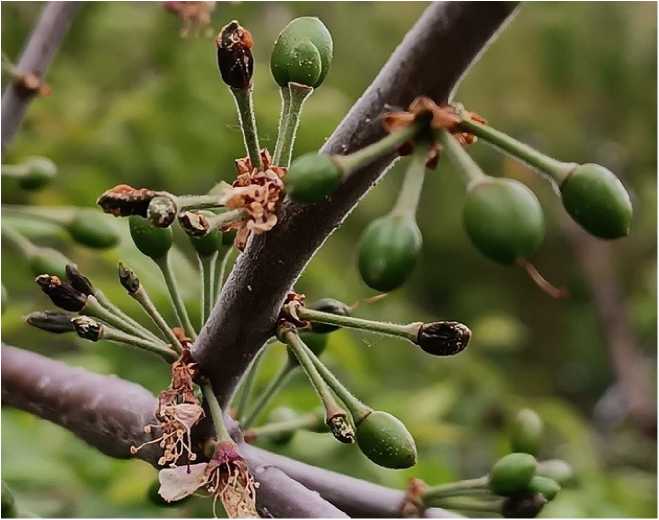
Figure 1. Damage to the ovaries of the plum-sloe hybrid ‘Toka x Tern 16-9’ by frost at -4 ℃ .
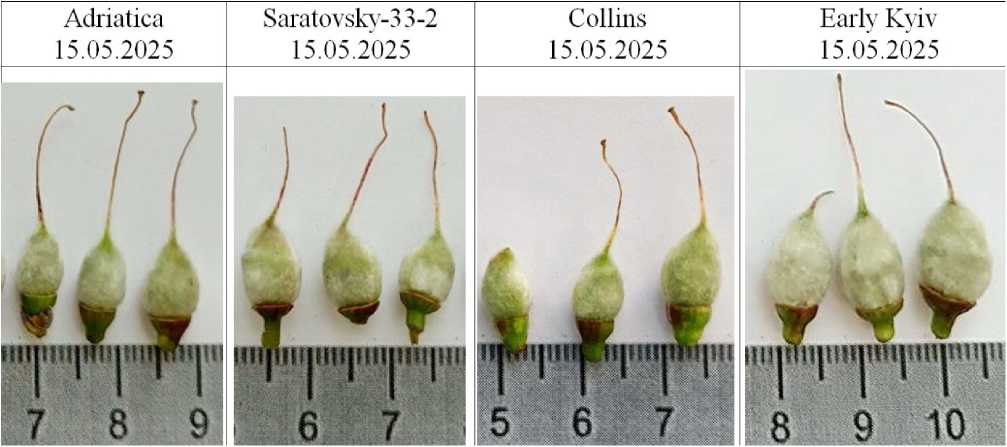
Figure 2. Ovary size of peach genotypes on May 15.
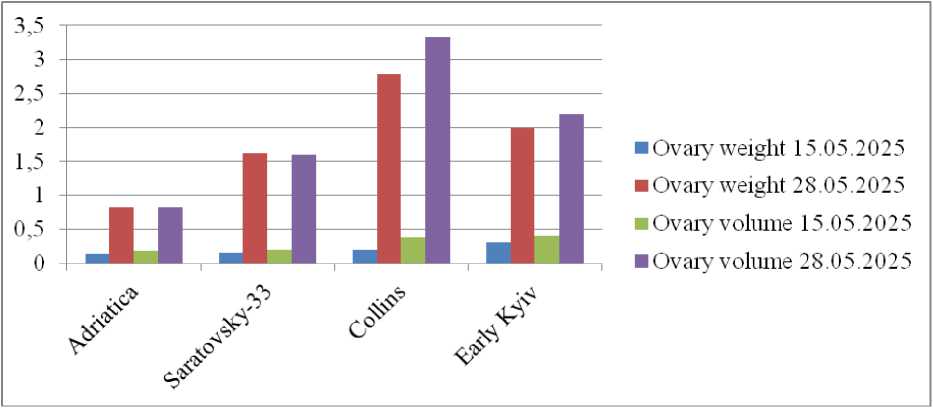
Figure 3. Rates of increase in ovary weight and volume of peach varieties
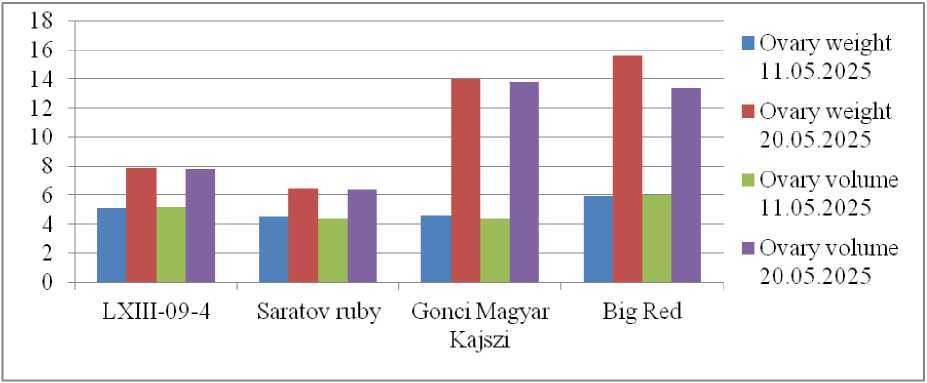
Figure 4. Rates of increase in ovary weight and volume of apricot varieties
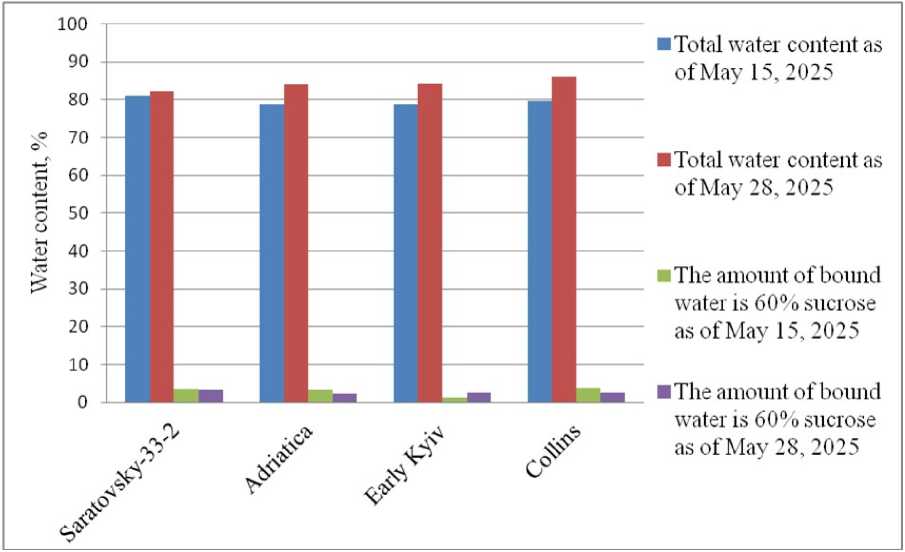
Figure 5. Total and bound water content in peach ovaries
Table 1. Resistance of ovaries of some stone fruit crops to freezing at -4°C
|
Genotype |
Total quantity, pcs. |
Number of dead ovaries |
Number of live ovaries, pcs. |
Percentage of viable ovaries |
|
Michurin's Mediator Almond |
1200 |
15 |
1185 |
98,76 |
|
Toka x Blackthorn-83 |
317 |
50 |
267 |
83,80 |
|
(Bee x Blackthorn) x (Toka x Blackthorn 16-9) |
595 |
149 |
446 |
76,08 |
|
Toka x Blackthorn 16-9, 2n = 32 |
232 |
61 |
171 |
73,00 |
|
Black Prince Apricot |
354 |
102 |
252 |
71,19 |
|
CK 9-61 |
203 |
75 |
128 |
60,94 |
|
Svetlana Plum |
163 |
93 |
70 |
44,96 |
|
Zarechnaya Early Plum |
34 |
20 |
14 |
41,18 |
|
Apricot Blackthorn, F2 |
344 |
228 |
116 |
32,26 |
|
TSG, 4x from Khabarovsk |
379 |
301 |
78 |
23,48 |
|
No. 6 (apr. Blackthorn F2 x apr.. 4x 587) |
125 |
99 |
26 |
21,30 |
|
Blackthorn Plum X-17 |
57 |
46 |
11 |
20,80 |
|
K-M GES 22-254 |
121 |
102 |
19 |
16,58 |
|
Apricot X-1 |
56 |
48 |
8 |
14,29 |
|
Special Cherry Plum |
91 |
79 |
11 |
11,56 |
|
Vision Plum |
36 |
32 |
4 |
11,11 |
|
Apricot Bratsk No. 4 |
261 |
260 |
1 |
0,38 |
|
LXIII-09-4 |
655 |
653 |
2 |
0,31 |
|
Saratov Ruby |
1470 |
1467 |
3 |
0,20 |
|
Generous |
1387 |
1386 |
1 |
0,07 |
Table 2. The degree of resistance of ovaries of some varieties and forms of peach to recurrent freezing at -4°C
|
Genotype |
Total quantity |
Number of dead ovaries |
Number of live ovaries |
Percentage of live ovaries |
|
Saratov-33 |
117 |
80 |
37 |
31,62 |
|
Kazakhstan |
31 |
23 |
8 |
25,81 |
|
Adriatic |
26 |
20 |
6 |
23,08 |
|
Saratov 33-2 |
145 |
119 |
25 |
17,24 |
|
Late Saratov |
86 |
80 |
6 |
6,98 |
|
Victors |
116 |
109 |
7 |
6,03 |
|
Stable |
120 |
114 |
6 |
5,00 |
|
Saratov 33-9 |
479 |
456 |
23 |
4,80 |
|
Saratov 33-10 |
446 |
425 |
21 |
4,71 |
|
Anika-2 |
127 |
122 |
5 |
3,94 |
|
Manchurian No. 1 x SK 19-1 |
53 |
51 |
2 |
3,77 |
|
33-8 |
496 |
481 |
15 |
3,02 |
|
Collins |
87 |
85 |
2 |
2,30 |
|
Red Diamond |
93 |
91 |
2 |
2,15 |
|
Ranny Kiev |
96 |
94 |
2 |
2,08 |
|
Saratov 33-1 |
153 |
150 |
3 |
1,96 |
|
Fidelia |
94 |
93 |
1 |
1,06 |
|
UFO-3 |
197 |
195 |
2 |
1,02 |
|
Autumn Surprise |
105 |
104 |
1 |
0,95 |
Table 3. Study of the dynamics of IAA and ABA content in peach ovaries
|
Variety |
Contents of IAA |
The degree of increase in IAA content |
Contents of ABA |
The degree of increase in ABA content |
||
|
15.05.25 |
28.05.25 |
15.05.25 |
28.05.25 |
|||
|
Adriatica |
21,93d |
20,84a |
0,95 |
23,75c |
22,55a |
0,95 |
|
Saratovsky 33-2 |
11,98c |
22,75a |
1,9 |
12,55b |
24,55ab |
1,96 |
|
Collins |
4,50b |
36,30c |
8,07 |
12,13b |
24,63b |
2,03 |
|
Early Kyiv |
0,9a |
29,06b |
32,29 |
2,52a |
31,60c |
12,54 |
|
LSD 05 |
2,154 |
2,035 |
- |
2,45 |
2,041 |
- |
Table 4. Dynamics of IAA and ABA content in apricot ovaries
|
Variety |
IAA content 10 -5 mg/1 g of fruit |
The degree of increase in IAA content |
ABA content 10 -5 mg/1 g of fruit |
The degree of increase in the content of ABA |
||
|
11.05.25 |
20.05.25 |
11.05.25 |
20.05.25 |
|||
|
Saratov Ruby |
2,91 c |
99,68 b |
34,25 |
5,65 bc |
63,82 b |
11,30 |
|
LXIII-09-4 |
0,25 a |
13,22 a |
52,88 |
3,76 a |
5,05 a |
1,34 |
|
Gonsi Magiyar Kaisi |
0,53 a |
3,68 a |
6,94 |
3,35 a |
3,66 a |
1,09 |
|
Big Red |
2,63 bc |
222,61 c |
84,64 |
7,03 c |
147,14 c |
20,93 |
|
LSD 05 |
0,309 |
19,949 |
- |
1.463 |
15,545 |
- |
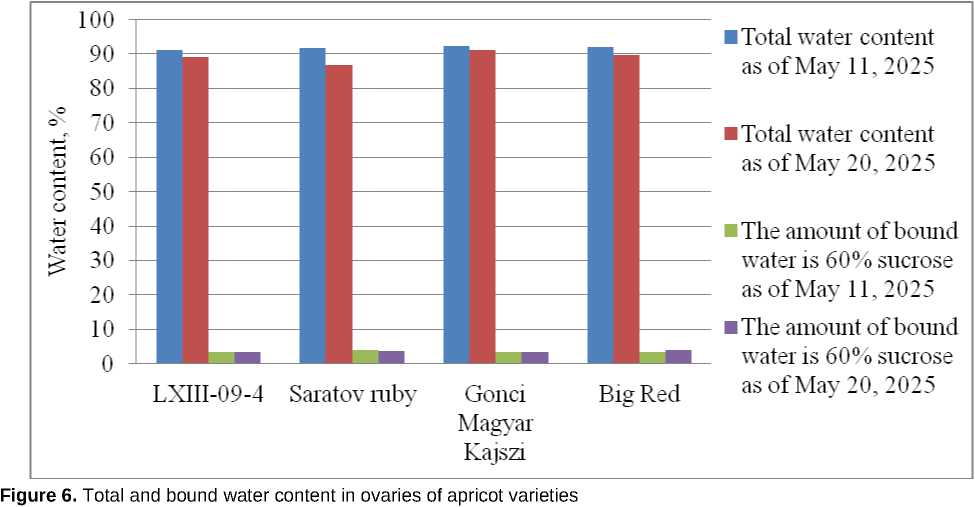
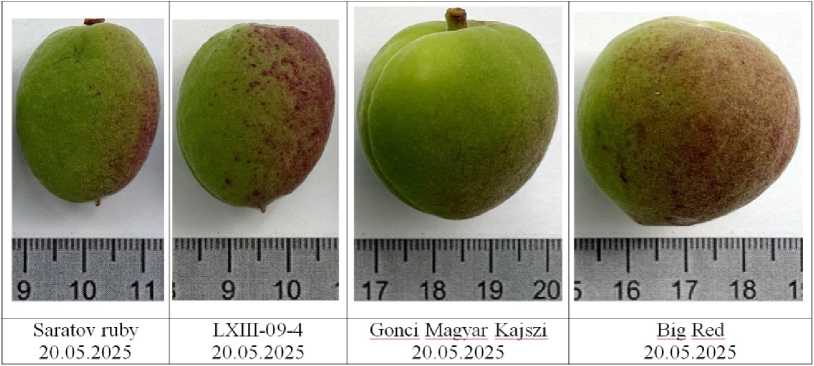
Figure 7. Young apricot fruits as of May 20, 2025
CONCLUSIONS
Based on the data obtained, it can be concluded that late flowering reduces the likelihood of damage from late spring frosts (Adriatica and Saratovsky 33-2 peaches). However, this is not the only resistance mechanism, and not all late-flowering genotypes are frost-resistant, for example, the late-flowering apricot varieties Lyubimka and Novichok Yugo-Vostoka. Greater frost resistance of peach ovaries compared to apricot may be due to the following reasons: 1. Later flowering of the Adriatic and Saratovsky-33-2 varieties; 2. Slower rate of IAA accumulation, which inhibits cell elongation and hydration; 3. Slower rate of peach ovary growth; 4. Less water saturation of peach ovaries; 5. Higher initial level of ABA in peach ovaries, which affects active defense mechanisms.
CONFLICTS OF INTEREST
All authors declare that they have no conflicts of interest.
