
The Chinese path of ideological and political teaching reform in science and engineering: concepts, practices and future
Article in issue: 1, 2026.
Free access
As global tech competition heats up, countries need to develop fast. Because of this, China’s engineering schools have a very important job: cultivating a new generation that can promote national rejuvenation. Traditional science and engineer-ing education usually focuses on technological rationality and knowledge transfer. But it has long had problems: weak value guidance, and a gap between professional training and ideological and political education (IPE). To solve this, China’s higher education field has carried out extensive reforms in recent years. It has gradually built a unique “Chinese path” for IPE in science and engineering. This path is not just about implementing policies or copying methods. Instead, it is a systematic innovation based on Chinese educational traditions. It meets the needs of the present and has distinct local features. This article looks back at the theoretical basis, background, core concepts, practical models and theoretical explorations of this reform. It also looks forward to future development trends.
Similar articles in the section Education
Short address: https://sciup.org/148333309
IDS: 148333309 | UDC: 37.035.4(510) | DOI: 10.18101/2307-3330-2026-1-3-12
Китайский путь реформы идеологического и политического обучения в области науки и техники: концепции, практики и перспективы
По мере усиления глобальной технологической конкуренции возрастает потребность государств в ускоренном развитии. В этих условиях система инженерного образования Китая играет ключевую роль в подготовке нового поколения, способного содействовать национальному возрождению. Традиционно образование в области науки и техники было сосредоточено на технологической рациональности и передаче знаний. Однако на протяжении длительного времени оно сталкивалось с рядом существенных проблем, включая недостаточную ценностную направленность и разрыв между профессиональной подготовкой и идеологическим и политическим образованием (ИПО). Для решения этих задач система высшего образования Китая в последние годы осуществила масштабные реформы, постепенно сформировав своеобразный китайский путь интеграции ИПО в научно-техническое образование. Данный подход выходит за рамки простого внедрения политик или заимствования методов и представляет собой системную инновацию, основанную на китайских образовательных традициях, отвечающую современным требованиям и обладающую выраженной национальной спецификой. В статье рассматриваются теоретические основы, предпосылки, ключевые концепции, практические модели и научные разработки данной реформы, а также обозначаются перспективы ее дальнейшего развития.
Text of the scientific article The Chinese path of ideological and political teaching reform in science and engineering: concepts, practices and future
Li Xiaolin, Song Xiaoyu, Li Menglong. The Chinese path of ideological and political teaching reform in science and engineering: concepts, practices and future. Bulletin of Buryat State University. Education, Personality. Society. 2026; 1: 3–12.
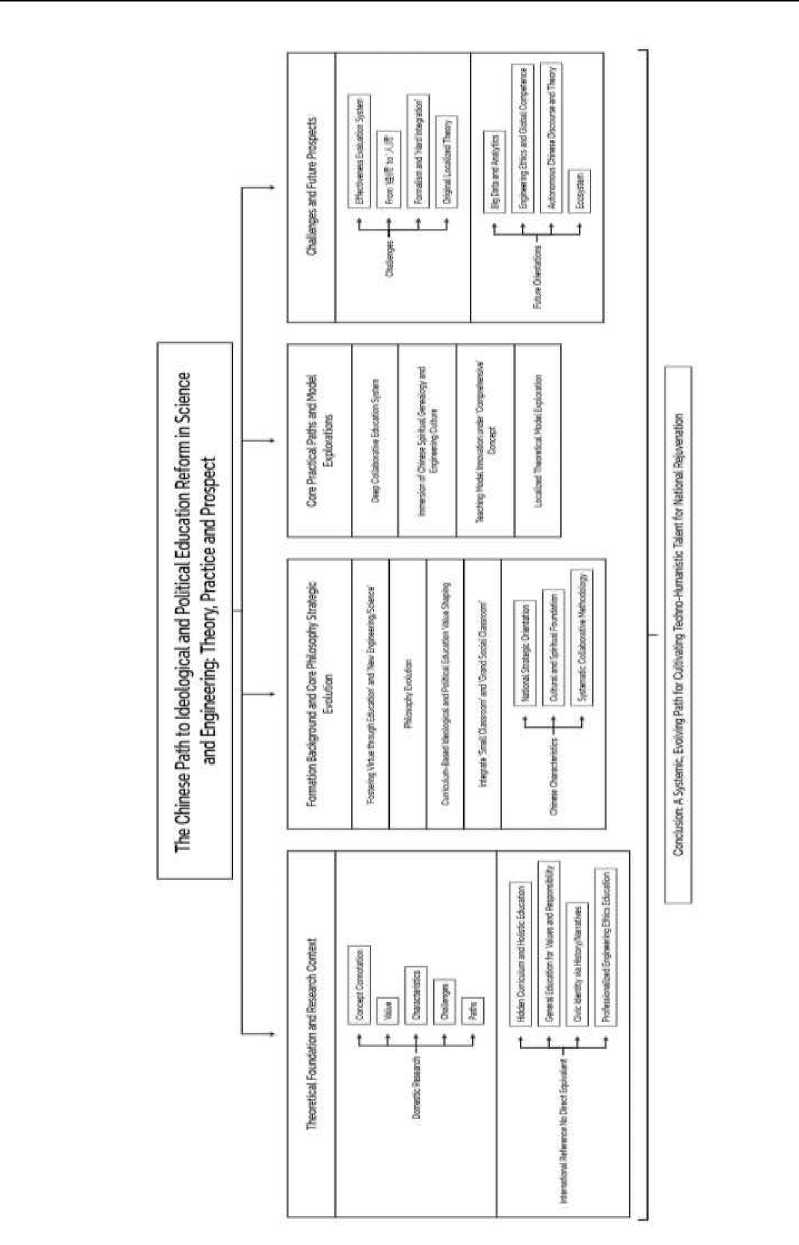
I. Theoretical Basis and Research Context: A Review of Domestic and International Research
Higher education institutions are the main places for talent development. They are responsible for cultivating socialist builders with ideals, morality and culture.
In May 2020, the Ministry of Education released guidelines. These guidelines clearly state that “moral education and character building” (Li De Shu Ren) is the basic standard for evaluating university work. The goal is to combine value shaping, knowledge transfer and ability cultivation.
“Curriculum IPE” is the key way to achieve this task. It does not mean adding new courses. Instead, it aims to build a comprehensive educational system that involves all staff and all processes. This includes finding IPE resources in different courses. While teaching knowledge, it subtly guides students' worldviews and values.
For science and engineering fields, Curriculum IPE is especially important. It aims to foster patriotism, scientific spirit, engineering ethics and craftsmanship, along with professional skills. The academic community has discussed this a lot, laying a solid foundation for this study.
Domestic Research Status and Core Issues. The domestic academic community has carried out systematic research on Curriculum IPE, especially in the science and engineering field. Researchers have explored it from many aspects, such as conceptual connotation, value function, basic characteristics, practical dilemmas and practical paths, and now there is a relatively rich research result.
Research has put forward different but complementary views, which together deepen the understanding of the essence of Curriculum IPE. The main views can be summarized into three categories. The first is the “educational practice activity theory” which emphasizes its operational attributes. It holds that Curriculum IPE is an educational practice that uses all courses as carriers and classroom teaching as the main channel [1]. The second is the “education and teaching concept theory” which focuses on ideological guidance. It defines Curriculum IPE as a new educational concept for carrying out the fundamental task of establishing morality and cultivating people [2]. The third is the “realization of educational function theory” which focuses on the educational process. It points out that Curriculum IPE is a process where professional teachers imperceptibly integrate ideological and political education elements into all teaching links to achieve value guidance [3]. These explanations together show that Curriculum IPE has a comprehensive attribute, pursuing the deep integration of knowledge transmission, ability cultivation and value shaping.
Research generally recognizes its strategic significance from both practical and theoretical levels. At the practical level, Curriculum IPE is regarded as a key method and systematic solution. It breaks the long-term “isolated island” effect of ideological and political work in universities, helps realize “Three-Wide Education” (comprehensive education), and aims to combine the “two skins” of professional education and IPE into “one skin” of education [4]. At the theoretical level, this is especially true for science and engineering education. Its value lies in introducing Marxist positions, viewpoints and methods, which effectively makes up for the limitation of traditional science and engineering education that pays too much attention to instrumental rationality and objective laws. It also promotes the return of value rationality and realizes the organic balance between scientific spirit and humanistic spirit [5].
Scholars have reached several consensuses. Curriculum IPE has clear value guidance, and its main feature is to serve the cultivation of talents for the country and the party, focusing on cultivating students' correct values [6]. At the same time, it shows obvious collaborative integration, emphasizing coordinated development with professional courses in the education system and focusing on exploring elements and finding accurate entry points for imperceptible guidance in educational methods [7]. Also, it covers a lot of ground. It teaches lessons without being obvious and uses many different, flexible ways to do it [8].
As the reform goes deeper, a series of deep-seated challenges have become more and more obvious. Teachers often struggle with guiding students on values and finding ways to teach them. It is hard for them to shift from just giving facts to actually shaping character. [9]. Also, the school systems are not fully ready yet. We still lack good incentives, fair ways to evaluate teaching, and enough resources to keep this going long-term [6]. In terms of teaching practice operation, there are tendencies of simplification and formalism such as “rigid grafting” and “labeling”, which affect the depth and credibility of educational effects.
To solve the above dilemmas, the academic community has put forward multi-level construction ideas in terms of practical paths. The first is the path of curriculum system reconstruction, which advocates systematic design in the science and engineering professional curriculum chain to accurately explore and organically integrate IPE elements [10]. Second, we need to help teachers improve. The main goal is to make them better at teaching these values. We can do this through training and research [11]. The third is the path of institutional ecology construction, which emphasizes the need to build a complete support and guarantee ecosystem involving top-level design, departmental coordination, resource integration and dynamic evaluation [12].
International Related Practices and Research References. Although Western higher education does not directly use the term “Curriculum Ideological and Political Education” its moral education practices offer a comparative perspective. First, Western universities generally attach great importance to “implicit curriculum” and “whole-person education”. They spread values through the campus environment and culture. Second, “General Education” serves as a carrier for values. It aims to develop students' critical thinking and social responsibility. The interdisciplinary integration methods used in General Education are methodologically similar to those of Curriculum IPE. Third, many Western countries strengthen citizens' sense of identity through history education and national stories. Fourth, in the science and engineering field, “Engineering Ethics” education has become a specialized area. It uses case teaching to explore professional responsibilities and social impacts, which provides a reference for China to integrate engineering ethics education into its own system.
In summary, domestic research has outlined a framework for Curriculum IPE in science and engineering. However, there is still a lack of systematic and patterned research that focuses on the “Chinese Path”. Moreover, in-depth exploration of deep-seated issues — such as integration mechanisms and effectiveness evaluation — still needs to be strengthened. International practices give us inspiration: value education requires organic integration and should focus on inspiration, but it must undergo creative transformation based on China's actual national conditions. This not only leaves room for this study but also points out the direction for exploring a more integrated and leading “Chinese Path”.
Formation Background and Core Concepts: Strategic Evolution from “Curriculum IPE” to “Big IPE Course”. The top-level design for ideological and political education reform in China's science and engineering programs is both deeply rooted in the fundamental task of “establishing morality and cultivating people” and closely linked to the macro-strategic layout of “New Engineering” and “New Liberal Arts” construction. This reform did not appear suddenly; its core concept has gone through a clear and profound evolutionary process. Basically, the idea has grown. It started with just “Curriculum IPE” and has now become the broader “Big Ideological and Political Course.” This isn't just about sharing facts. It means every class must help shape students' values. The goal is to mix teaching knowledge, building skills, and guiding values all together. When we look specifically at science and engineering, the focus of practice is on systematically exploring ideological and political education resources. These resources include scientific spirit, engineering ethics, patriotism, and humanistic literacy, which are inherent in professional course content and teaching methods.
As reform practices continue to deepen, the concept of “Big IPE Course” emerged to further expand the educational pattern. This concept breaks through the physical and conceptual boundaries of traditional classrooms. It emphasizes making good use of the “social grand classroom”, “building” resource grand platforms, “and constructing” “grand teaching teams”. It promotes the deep integration of the small IPE classroom and the large social classroom, with the goal of building a three-dimensional educational pattern that involves all staff, the whole process, and all aspects. This conceptual evolution marks a strategic shift in the focus of reform. In the past, the focus was on finding specific teaching moments within regular classes. Now, we are shifting to building a whole system that is open and connected.
The “Chinese style” characteristics of this path have three distinct identifiers. First, it is reflected in its strong national strategy orientation. It directly aligns with the strategic needs of building a technological power and a manufacturing power. Its fundamental goal is to cultivate excellent engineering and technological talents. These talents should have firm ideals and beliefs, deep patriotism, excellent innovation capabilities, and a strong sense of mission. Second, it is reflected in its unique cultural foundation and spiritual nourishment. The reform pays special attention to integrating relevant elements into the entire process of talent cultivation. These elements comprise the patriotic ethos embodied in China's scientific en-deavors-exemplified by the “Two Bombs, One Satellite” and Manned Spaceflight spirits. The integration should be organic and vivid. Finally, it is reflected in its systematic collaborative methodology. It goes beyond the scope of reform for a single course or teaching method. Instead, it focuses on promoting substantive synergy between IPE teachers and professional teachers, deep synergy between classroom teaching and social practice, and effective synergy between online resources and offline teaching. This fully embodies the institutional advantage of the Chinese education system-being able to concentrate efforts to accomplish major tasks and advance major reforms in a systematic way.
The main directions of the practical activities and different model. According the concepts of “Curriculum IPE” and “Big IPE Course”, universities in whole country have carried out rich and diverse practical explorations. They combined their own disciplinary characteristics and educational traditions, gradually forming several core paths and typical models worthy of reference.
First is the construction of a deep collaborative education system, which is the key mechanism to break the “two skins” phenomenon. This synergy is reflected at multiple 6
levels. At the curriculum level, it involves systematically sorting out the IPE mapping points of science and engineering professional courses to form systematic integration strategies. For example, integrating the urgent narrative of technological self-reliance into chip design courses, permeating the concept of ecological civilization in environmental engineering courses, and interpreting the spirit of craftsmanship in mechanical principles courses. At the faculty level, universities widely establish a “IPE teacher — Professional teacher” paired teaching research mechanism.
Second is the immersive integration of the Chinese characteristic spiritual lineage and engineering culture. The goal is to turn abstract spiritual values into perceptible teaching experiences and cultural atmospheres. In practice, three main methods are adopted. One is narrative transformation: developing the deeds of the “Two Bombs, One Satellite” founders and the stories of “pillars of a great power” development into teaching resources such as case libraries and documentaries, making ideal and belief education more concrete.
The second strategy is to create scenario-based learning experiences. This is achieved by utilizing physical venues, such as national key laboratories and engineering culture museums, and by integrating the cultivation of engineering ethics throughout the entire process of internships and graduation designs. A practical example of this approach is the practice implemented at the University of Shanghai for Science and Technology, which contributes to building immersive teaching scenarios. Third, use ceremonies. Important events like the first day of school or graduation are good times to teach students to serve their country with science and to always do their best.
Third is promoting systematic innovation of teaching models from the perspective of “Big IPE Course” to build a multi-dimensional educational field. This includes three aspects. First, we need to change how we teach. We can take students out of the classroom. Letting them visit big engineering projects or rural areas helps them understand the country and their own responsibilities. (for example, Changzhou University maps an “education resource genealogy” to integrate practical resources). Second, promoting technological empowerment: using technologies like artificial intelligence and virtual reality to build smart IPE platforms, realizing learning situation analysis and teaching scenario innovation (Beijing University of Posts and Telecommunications is a representative in this aspect). Third, building a “Grand Faculty” system: hiring academicians, “Great Pillars of the Nation” craftsmen, and outstanding alumni as moral education mentors. These mentors enrich educational perspectives with their personal experiences and enhance the appeal and persuasiveness of educational discourse.
Fourth is the preliminary exploration of localized theoretical models. The academic community has begun to try building Sinicized theoretical frameworks with explanatory power and guidance. For example, some studies, from the perspective of combining technology philosophy with Chinese culture, proposed a “Five-Dimensional Model” — this model aims to cultivate students' “historical view, sense of reality, view of time, sensibility, and sense of meaning”. Other practices, starting from systems theory, constructed a coherent system covering three dimensions: “educational subjects, educational processes, and resource integration”. These theoretical extractions based on Chinese practice collectively point to a new landscape of science and engineering education. This approach combines values, knowledge, skills, and character all together. It is a big step forward. It shows that China’s methods have moved from just trying things out to really understanding the theory behind them.
Challenges Faced and Future Outlook. We have made big strides in science and engineering education by focusing on the “Big IPE Course.” We have even created a unique Chinese approach. However, we must be honest: this whole education project still faces some serious, deep-rooted challenges. These challenges urgently need to be solved as the reform moves into the new stage of pursuing high-quality development. Looking ahead, the reform needs to identify problems accurately and continue to deepen and expand in multiple key directions.
The primary challenge currently facing the reform is the relatively slow progress in building scientific evaluation systems. How to go beyond superficial assessment of the form and quantity of teaching activities, and establish an indicator system that can scientifically and effectively measure the long-term effects and implicit impacts of value shaping-this has not yet reached a broad consensus. This largely limits the in-depth assessment and continuous improvement of educational quality. Second, the endogenous motivation and capacity building of teachers still have a lot of room for improvement. Some science and engineering professional teachers only see IPE as an “extra addition”; their conscious awareness of value guidance, ability to mine IPE elements, and skills in organic integration all need substantial enhancement. How to build a long-term incentive and professional development support system, and motivate most teachers to complete the profound transformation from “classic teachers” (who transmit knowledge) to “mentors” (who shape souls) — this is the key to determining how deep the reform can go. Finally, at the theoretical level, the construction of original localized theories is still insufficient. Existing research often stops at summarizing practical experiences or applying general educational theories. An independent knowledge system and theoretical paradigm are still scarce-one that is based on the unique cultural context of Chinese science and engineering education and can engage in dialogue with the international academic community. This limits the sublimation and widespread dissemination of Chinese experience.
Facing the above challenges, the future direction of ideological and political teaching reform in science and engineering should focus on four strategic dimensions. First, promote educational work towards precision and intelligence. The use of information will help shift from “flood irrigation” to “precision drip irrigation”, provide personalized and early-warning ideological guidance, and enhance the foresight and pertinence of educational work. Second, deepen the integrated cultivation of engineering ethics education and global competence. Facing the reality of globalized technological ethical controversies and growing common human issues, engineering ethics education must be systematically integrated into the entire talent cultivation chain. At the same time, efforts should be made to cultivate students' international vision, sense of responsibility, and cross-cultural cooperation capabilities — so that they can adhere to Chinese stance while using technology to solve global problems. Third, focus on building an independent Chinese engineering education discourse and theoretical system. Future reforms need to further draw wisdom from excellent traditional Chinese culture, the spiritual lineage of Chinese patriotism, and China’s magnificent contemporary technological practices. Extract identifying concepts to build a theoretical paradigm and discourse system-one that can both deeply explain and guide Chinese practice, and contribute Chinese solutions to global engineering education. Fourth, build a system that can last. To keep improving, we need clearer policies, more long-term funding, and better ways for people to work together. (including inter-school, school-enterprise, and school-local cooperation) as guarantees.
This will lay a solid institutional and cultural foundation for the steady and long-term development of this Chinese path.
Conclusion
The Chinese path of ideological and political teaching reform in science and engineering is a profound educational practice. It responds to the questions of the times and takes root on the vast land of China. Starting from initial local explorations, it has gradually developed into a systematic project-one with clear concepts, diverse paths, and a large scale.
Its core essence lies in adhering to the fundamental task of establishing morality and cultivating people. Through high-level synergy, deep integration, technological innovation, and theoretical self-consciousness, it explores an effective path. This path aims to organically integrate value shaping into the entire process of cultivating excellent engineering and technical talents. This path is not only about improving the quality of talent cultivation. It also concerns how Chinese higher education can uphold its original educational aspiration and demonstrate its local characteristics in the technological age.
Moving forward, this approach must be deeper to meet emerging challenges, and foster greater self-awareness in theoretical development. Ultimately, this will cultivate a new generation of outstanding engineering and technological talent — in individuals who not only possess superb skills but also the “warmth of soul”.
Such talent will contribute to the great rejuvenation of the Chinese nation and the advancement of human civilization.
