
The influence of pH on the formation of microstructure and electrochemical characteristics of solid electrolytes 5 YSZ
Journal: Siberian Aerospace Journal @vestnik-sibsau-en
Section: Technological processes and material science
Article in issue: 2 vol.27, 2026.
Free access
This paper examines how precipitation pH affects the phase stability, microstructure, and electrochemical characteristics of solid electrolytes based on zirconia stabilized with 5 mol.% yttria (5 YSZ), which we synthesized by chemical coprecipitation. We obtained precursors under three pH conditions (acidic pH < 2, near-neutral pH = 3–7, and alkaline pH - 10) using nitrate salts and NH4OH as a precipitant. We characterized the products by SEM, X-ray diffraction, Raman, and IR spectroscopy, as well as DC conductivity measurements. The results demonstrate that precipitation pH critically determines the homogeneity of Y3+ ion distribution in the precursor. Acidic conditions hinder yttrium coprecipitation, resulting in pronounced segregation of the elements and a high content of the monoclinic phase after calcination and milling. Alkaline conditions ensure quantitative precipitation but cause partial compositional fluctuations and severe agglomeration, so they necessitate intensive milling, which induces lattice deformations and phase transformations. Near-neutral conditions (pH 5–6) promote homogeneous coprecipitation of Zr4+ and Y3+ ions, forming precursors with a uniform element distribution and weakly agglomerated particles. This homogeneity ensures the complete removal of coordinated hydroxyl groups during heat treatment, maintaining a high concentration of oxygen vacancies and the stability of the tetragonal phase. Ceramics that we sintered from powder obtained under neutral conditions achieve relative density (98.7%) and ionic conductivity (36.4 mS/cm at 850 °C). Solid oxide electrolytes based on stabilized zirconium dioxide function widely as materials for parameter control sensors (oxygen sensors in propulsion systems) and also serve as the basis for the creation of solid oxide fuel cells.
Short address: https://sciup.org/148333989
IDS: 148333989 | UDC: 661.883.1 | DOI: 10.31772/2712-8970-2026-27-2-354-372
Text of the scientific article The influence of pH on the formation of microstructure and electrochemical characteristics of solid electrolytes 5 YSZ
Solid oxide electrolytes (SOE) based on stabilized zirconium dioxide (for example, ZrO2-Y2O3) are key components in high temperature fuel cells (SOFCs) due to the high ionic conductivity of oxygen. They are in demand in the aerospace industry to create reliable, energy-efficient power sources for drones and rocket technology, providing high power with low weight [1; 2]. These materials are widely used to create parameter monitoring sensors (oxygen sensors in propulsion systems), as well as to manufacture heat-resistant coatings for rocket and space technology and jet engines [3; 4]. Ceramics based on zirconium dioxide (ZrO 2 ) are used in the production of refractories, grinding balls, grinding cups, cutting materials, and are widely used in dental practice due to their good bioinertivity.
In its pure form, the monoclinic crystalline modification of ZrO2 is most stable under normal conditions. Its practical application is limited due to strong volume changes as a result of the martensitic phase transformation of t-ZrO2 → m-ZrO2 upon cooling. They are caused by a ~5% difference in the densities of the monoclinic and tetragonal phases (5.85 and 6.16 g/cm3, respectively), leading to significant cracking of ceramics during sintering [5]. At the same time, the polymorphism of zirconium dioxide underlies transformational hardening, which ensures a high fracture toughness of the resulting cracks. The larger specific volume of the monoclinic phase slows down the advance of the crack front. Models are presented in detail in the literature and the mechanisms of the m↔t transition are described [6].
Zirconium dioxide ceramics used in the final products must be stabilized in tetragonal/cubic phases, which provides a set of required performance characteristics. The stabilization process consists in the aliovalent substitution of zirconium (Zr4+) in the crystal lattice with cations of lower valence (usually Y3+, Ca2+, Mg2+, as well as some REE) with a close ionic radius. To preserve electroneutrality, such substitution is accompanied by the formation of vacancies in the oxygen sublattice, which is a key factor in suppressing the martensitic transition and stabilizing high-temperature phases at room temperature [7]. Yttrium oxide (Y2O3) is the most widely used stabilizer.
In addition to stabilizing phases, aluminum oxide (AL2O3) additives are used to increase the density and lower the sintering temperature, preventing excessive grain growth [8]. MgO supplements have also shown high efficacy as grain growth inhibitors [9]. In addition to phase stability (the need to completely suppress the t → m transformation) and controlled microstructure, the low thermal conductivity achieved by a given porosity value is important for the stability of thermal barrier coatings (TBPS) to thermal cycling [10]. The co-alloying of zirconium dioxide with several rare earth elements (lanthanum, gadolinium, ytterbium, and yttrium) significantly increases the performance characteristics of products by preventing stabilizer segregation during steam exposure at high temperatures and suppressing the formation of a monoclinic structure [11].
The formation and stability of solid solutions in systems of triple oxides or preformed binary systems with respect to additives of third oxides remains an important issue in the materials science of zirconium dioxide. The sequence of structural transformations in ZrO2-based systems for various additives (CaO, Y2O3, Yb2O3, etc.) is not of the same type and depends on many factors: the method of preparation, the amount of the additive, the firing temperature, the size of the reacting particles, etc. Thus, solid-phase synthesis technology is characterized by high temperatures (1300-1500 °C) and long duration. This is caused by the slow processes of ion-atomic transport of reacting components during diffusion in a solid. In such conditions, there is also a diffusion of components from the lining of the thermal unit, causing contamination of materials.
For the formation of solid solutions under less extreme conditions, methods for the preparation of starting powders with increased reactivity are necessary, among which chemical coprecipitation of components in the form of hydroxides stands out. This method allows you to control the granulometric composition of powders and achieve better reproducibility, since the synthesis conditions (pH, precipitation order) are more tightly controlled compared to sol-gel technology. Also, the chemical codeposition method is technologically simple, requires available reagents (chlorides, nitrates, sulfates) and is more scalable than hydrothermal synthesis due to the use of standard equipment.
However, the homogeneous distribution of stabilizing additives for the subsequent formation of solid solutions, especially in multicomponent systems, requires special research. The problem arises if the co-precipitated components have a difference in the deposition pH. Thus, when a precipitator is introduced into a salt solution (direct precipitation), zirconium hydroxide almost completely precipitates from the solution at a pH value of ≈ 5. At the same time, for yttrium hydroxide, the pH value should be more than 8.5, for more rational use of reagents [12]. Fine-tuning of technological factors together determines the mode of the deposition process. These include the composition and concentration of the reagents used, the order and intensity of mixing, temperature, aging conditions, etc. The intermediate product obtained in this process, a gel of co–precipitated hydroxides, can be represented as a polymer solid solution. In it, the atoms of the base components and the dissolved component are connected into a single disordered texture, which generally contains areas of concentration heterogeneity. It is the properties of the product formed at this stage that largely determine the subsequent characteristics of ceramics.
Thus, the purpose of this study was, under controlled technical parameters of the deposition process, to stabilize the deposition medium at three different pH levels, to characterize the distribution of elements, phase composition and morphology of synthesized products. Additionally, it was necessary to consider the mechanistic effect of pH on the formation of phase structures during deposition and their subsequent properties.
Materials and research methods
The powder of stabilized zirconium dioxide was obtained using the following initial reagents: zirconium nitric acid chem.pure Zr(NO 3 ) 2 ·2H 2 O, yttrium nitric acid chem.pure Y(NO 3 ) 3 ·6H 2 O. To achieve the required component ratio (obtaining 5 mol.% YSZ – yttrium-stabilized zirconium dioxide), salt solutions were prepared in deionized water at the following concentrations: C Zr = 0.95 mol/l for Zr 4+ and C Y = 0.10 mol/l for Y 3+. The precipitator was an aqueous solution (2 M) of NH4 OH ammonia of the HP brand. The co-precipitation reaction was carried out by simultaneous addition, in which a mixture of zirconium oxynitrate and yttrium nitrate was continuously fed at a fixed flow rate, and the flow rate of the NH4OH solution was adjusted to control the pH during precipitation. The deposition conditions were maintained acidic, close to neutral, and alkaline. The amount of the mixture of zirconium oxynitrate and yttrium nitrate, as well as the precipitator, remained constant throughout the experiment. Before the experiment, 1 liter of deionized water was added to the reaction vessel (RBG2 reactor) as the base solution. The reaction was maintained at a constant temperature of 30 °C using thermostating (RCC-4008SH).
After the reaction was completed, the suspension was filtered and the precipitate was washed with deionized water until the conductivity of the rinsing water fell below 20 µS/cm (M300F-A multiparameter analyzer). The filtered precipitate was then dried in a dryer with forced air circulation at 100 °C for 24 hours, after which it was calcined at 1000 ° C for 2 hours to obtain 5 mol.% YSZ.
Calcined oxides were crushed using a high-energy planetary mill. Grinding balls and grinding cups made of ZrO 2 were used to prevent the ingress of impurities. The mill operated at a rotational speed of 500 r/min. After grinding, the resulting suspension was transferred to a crucible and dried in a drying cabinet at 100 °C for 48 hours.
Trace amounts of cations in the mother liquor are analyzed by inductively coupled plasma atomic emission spectroscopy. The phase structure of the YSZ samples is analyzed using the method of X-ray powder diffraction (Bruker D8 with a linear detector of VANTEC). The scanning range of the sample is set from 2θ = 10° to 90°, with a scanning step of 0.014° using CuKα radiation. X-ray diffraction data is analyzed using the Rietveld method using the HighScore Plus 5.1 and Powder Cell 2.4 software, which makes it possible to determine phase concentrations, grain sizes, and crystal lattice deformations of powder samples.
The Raman spectra were recorded in the backscattering configuration and the subtractive dispersion mode on a T64000 triple spectrometer (HORIBA Jobin Yvon, France). The spectral resolution of the Raman spectra was 2 cm–1 (532 nm laser, 1800 l/mm diffraction grid, 100 µm slits). The aim was to further distinguish the phase structures and degree of order in powder materials, complementing X-ray diffraction analysis.
In this study, Fourier transform IR spectroscopy (Bruker Vertex 80V) is used to study differences in the functional groups present in the precursor at different pH levels, as well as changes in these functional groups during subsequent heat treatment and grinding.
The surface morphology, particle size, and distribution of YSZ powder and ceramics were studied using a Phenom XL G2 desktop scanning microscope (ThermoFisher Scientific, USA) with an energy dispersion spectrometer (EDS) for elemental analysis. The powder size was estimated using laser diffraction on a Bettersizer S3 particle size and shape analyzer (Bettersize Instruments Ltd, China). The density of the YSZ ceramic samples was determined by hydrostatic weighing (Vibra HT124RCE scales). The electrical conductivity of YSZ ceramics was measured on a Techmize TH1991A measuring source using a four-probe direct current method.
Results and discussion
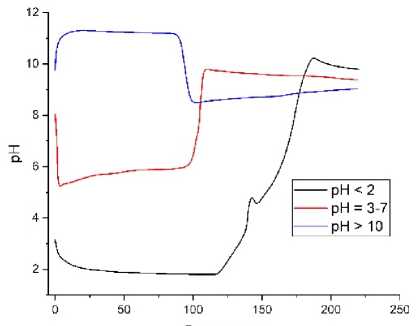
Figure 1 shows the dynamics of pH changes during precipitation. In an acidic environment, the pH value remains below 2 throughout the process and does not reach the threshold for precipitation of Zr4+ and Y3+ ions. 100 minutes after the complete addition of a mixture of zirconium and yttrium salt solutions, an additional precipitator is introduced, which initiates a gradual increase in pH. Upon completion of the addition of the precipitator, the pH value exceeds 10. Subsequently, as reactions take place between the remaining Zr4+, Y3+ ions in the suspension and the precipitator, after a certain period of exposure, a slight decrease in the pH level is observed.
Time, min
Рис. 1. Изменение pH во времени при различных начальных условиях реакции
Fig. 1. Change in pH over time under different initial reaction conditions
Under conditions close to neutral, the pH after short fluctuations stabilizes in the range from 5 to 6. This range exceeds the pH value required for complete precipitation of Zr4+, but is below the precipitation threshold of Y3+. It is assumed that at this stage, Zr4+ precipitates completely, while Y3+ remains in solution. The addition of a 5 % solution of the YSZ precursor is completed after ~ 100 minutes, and then the precipitator is introduced at an increasing rate. At the same time, a sharp and intense increase in the pH value is recorded, which after the end of the introduction of the precipitator is set above 10. Then, due to the completion of the precipitation reactions of Y3+ and Zr4+ ions, the pH decreases slightly.
In alkaline conditions, the pH increases rapidly and stabilizes in a short time in the range of 11-12. This pH level exceeds the values necessary for the complete deposition of both Zr4+ and Y3+, which implies their intensive deposition already at the initial stage. After 90 minutes, after the precipitator supply is completed, a 5 % solution of the YSZ precursor is introduced into the system, which causes a sharp drop in pH. After the addition of the precursor, the pH value rises above 9 again. During the subsequent exposure of the mixed suspension, the pH gradually stabilizes.
During the deposition process, the supernatant was sampled, followed by phase separation by centrifugation. The elemental composition of the resulting liquid phase was analyzed by inductively coupled plasma optical emission spectrometry. The results of determining the composition of the filler liquid selected at various stages of synthesis under varying conditions are presented in Table 1. Sampling was performed at time stamps of 50, 70, and 100 minutes from the start of the reaction.
As follows from the data presented in Table 1, in an acidic environment, during the entire deposition process, the concentrations of Zr4+ and Y3+ ions in the supernatant remain close to their initial total content (approaching 100 %). This fact indicates that at a stabilized low pH value, precipitation reactions do not occur for any of the cations, which confirms the previously formulated conclusion. Ion deposition starts only with the subsequent introduction of the remaining part of the precipitator, which creates the prerequisites for an uneven distribution of elements in the sediment.
Such heterogeneity can have a significant effect on the phase composition of the final synthesis products.
Table 1
The composition of the filler liquid of the suspension during deposition under various conditions
|
Precipitation environment |
Element |
The deposition process |
||
|
t 50 |
t 70 |
t 100 |
||
|
Acidic (pH < 2) |
Zr 4+ |
98.9 |
98.3 |
97.15 |
|
Y3+ |
100.0 |
100.0 |
100.0 |
|
|
Neutral (pH = 3-7) |
Zr4+ |
0.17 |
0.08 |
0.05 |
|
Y3+ |
6.9 |
5.2 |
3.5 |
|
|
Alkaline (pH > 10) |
Zr4+ |
– |
– |
– |
|
Y3+ |
0.05 |
0.04 |
0.02 |
|
Under conditions close to a neutral medium, the content of Zr4+ and Y3+ in the filler liquid tends to zero, indicating their almost complete precipitation. At the same time, if the completeness of precipitation of Zr4+ is consistent with the theoretical pH values of its hydrate formation, then a deviation is observed for Y3+: it is almost completely precipitated at pH values below the theoretical threshold [13]. Presumably, this effect is due to heterogeneous nucleation. The forming Zr4+ precipitate acts as crystallization centers for Y3+, reducing the activation energy of its deposition. As a result, under such conditions, a product with a homogeneous distribution of components is formed, which contributes to the stability of its phase structure.
In an alkaline medium, Zr4+ and Y3+ ions in the supernatant are also practically undetectable, which indicates their quantitative co-precipitation. This observation fully corresponds to the theoretical pH ranges of complete precipitation of both cations. The product obtained under such conditions is characterized by a uniform distribution of elements, which, according to modern scientific concepts, ensures the stability of its phase composition.
Figure 2 shows the sampling areas for energy dispersive X-ray spectral analysis (EDS) of precursors synthesized under acidic, near-neutral, and alkaline conditions, respectively. The molar fractions Y 2 O 3 calculated on the basis of the obtained spectra for each point are shown in Table 2. Data analysis shows that for the precursor obtained in an acidic medium, the Y content varies from 1.17 to 7.25 mol.% depends on the selection point. The high value of the standard deviation (σ = 2.488) indicates a significant heterogeneity in the distribution of the alloying component. Despite the fact that subsequent high-temperature treatment is potentially able to partially offset this imbalance due to diffusion processes, there is a high probability of incomplete entry of yttrium into the crystal lattice of zirconium dioxide. Even with full integration, the initial microuniformity can induce significant covariant stresses during phase transitions, which negatively affects the structural stability of the material.
In the sample obtained under conditions close to neutral, there is a narrow range of variation in the Y content – from 4.69 to 4.82 mol.%, while the standard deviation is σ = 0.189. These values indicate a high homogeneity in the distribution of the alloying element. The obtained result correlates with the conclusions about the joint deposition of Y and Zr under these conditions, which ensures a uniform distribution of components already at the near-range level. During subsequent high-temperature processing, activation energy is spent mainly on phase transformations and annihilation of defects, while covariant stresses are minimal, which contributes to an increase in the structural stability of the final product.
For the precursor synthesized under alkaline conditions, the Y content at the sampling points varies from 4.77 to 5.68 mol.% with a standard deviation of σ = 0.468. This indicates a slightly less homogeneous distribution of the alloying element compared to neutral conditions, but the degree of homogeneity is significantly higher than that for an acidic environment. The observed variability is probably partly due to the phase separation processes occurring at the late stages of synthesis.
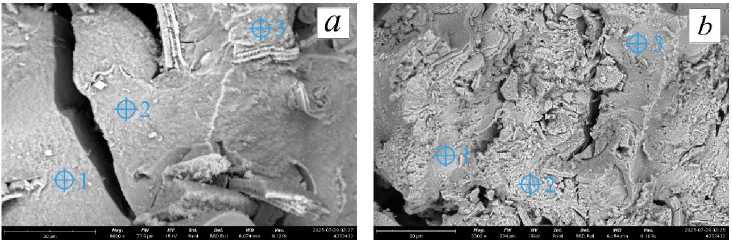
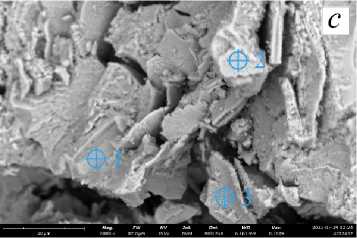
Рис. 2. Изображения SEM-EDS прекурсоров при различных условиях осаждения: a – в условиях кислого осаждения; b – условиях, близких к нейтральным;
c – условиях щелочного осаждения
Fig. 2. SEM-EDS images of precursors under different deposition conditions: a – under acidic deposition conditions; b – under near-neutral conditions; c – under alkaline deposition conditions
Table 2
Molar percentage of Y 2 O 3 in each precursor site under various conditions of stay
|
Deposition conditions |
Point 1 |
Point 2 |
Point 3 |
Standard deviation (σ) |
|
Acidic (pH < 2) |
1.17 |
3.86 |
7.25 |
2.488 |
|
Neutral (pH = 3-7) |
4.82 |
5.14 |
4.69 |
0.189 |
|
Alkaline (pH > 10) |
4.77 |
4.62 |
5.68 |
0.468 |
Figure 3 shows SEM images of 5 YSZ oxides obtained after calcination of precursors synthesized at various pH values. It was found that the morphology and degree of aggregation of the final products significantly depend on the deposition conditions. The sample formed in an acidic environment is characterized by a high degree of agglomeration, and a tight relationship between the particles is recorded. This morphology necessitates the use of high-energy crushing for their fragmentation. It should be noted that intense mechanical stress can induce distortions of the crystal lattice of the material, potentially leading to an undesirable phase transition into a monoclinic modification.
The oxide powder obtained under conditions close to neutral demonstrates satisfactory dispersion. The particles are characterized by weak aggregation and can be separated by gentle grinding modes. This approach minimizes the mechanical impact on the 5 YSZ phase composition while maintaining its structural integrity.
The sample synthesized in an alkaline medium shows significant agglomeration. The microstructure is represented by densely packed ultrafine particles, which also requires intensive grinding and, as a result, affects the phase stability of the material.
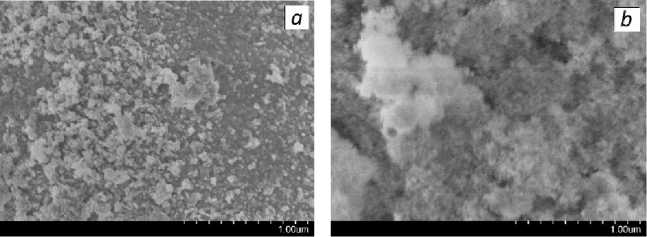
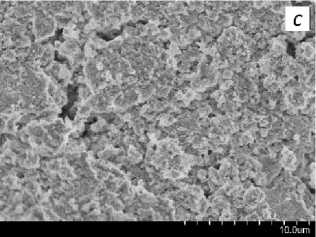
Рис. 3. Микрофотографии оксидов 5 YSZ, полученные в различных условиях осаждения после прокаливания:
a – в кислых условиях; b – условиях осаждения, близких к нейтральным;
c – щелочных условиях
Fig. 3. Micrographs of 5 YSZ oxides obtained under different deposition conditions after calcinations: a – under acidic conditions; b – under precipitation conditions close to neutral; c – under alkaline conditions
The optimal duration of high-energy grinding is critically important to achieve the desired granulometric composition with minimal damage to the crystal structure of the material. An irrational increase in the grinding time can lead to the formation of large and heterogeneous particles, while the insufficient duration of the process does not allow achieving the required degree of dispersion. An effective control method is periodic sampling of the suspension at a fixed interval and subsequent analysis of the particle size distribution by laser diffraction. This approach allows you to quickly adjust the processing time, ensuring a balance between achieving the required granulometric composition and maintaining the order of the crystal lattice.
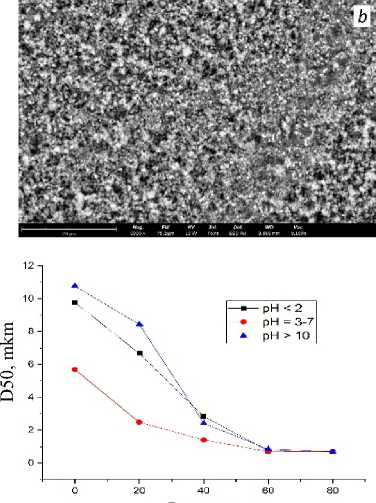
Fig. 4 shows the results of a study of the morphology and kinetics of the grinding of 5 YSZ oxides synthesized at various pH values. Micrographs of products after calcination and grinding, as well as the dependence of particle size on processing time are shown in Fig. 4.
For a sample obtained under acidic conditions, local aggregation of particles is observed after grinding, which indicates an unsatisfactory fluidity of the powder and may subsequently complicate the molding of ceramic blanks. Under conditions close to neutral, the product is characterized by partial disaggregation and separation of individual particles, demonstrating high fluidity, favorable for molding. Alkaline conditions, similar to acidic ones, lead to aggregation of the product after grinding, which can potentially negatively affect the properties of ceramics.
The kinetic curves of grinding show significant differences in the initial state and behavior of the particles during machining. Under acidic conditions, the initial median particle size (D50) is 13.0 µm. After 20 minutes of grinding at D50, it decreases to 9.3 µm, and when the duration is increased to 60 minutes, it reaches 0.3 µm. Under conditions close to neutral, the particles initially form loose, well-dispersed aggregates with D50 = 3.2 µm. Grinding for 20 minutes reduces D50 to 1.3 µm, and for 60 minutes – to 0.29 µm. The alkaline conditions are characterized by pronounced aggregation with the initial D50 = 14.2 µm. After 20 minutes of treatment, the indicator decreases to 11.4 µm, and by 60 minutes it reaches 0.4 µm.
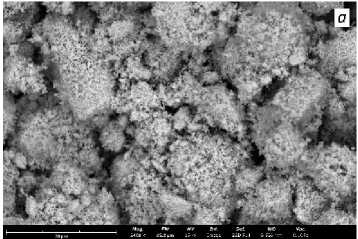
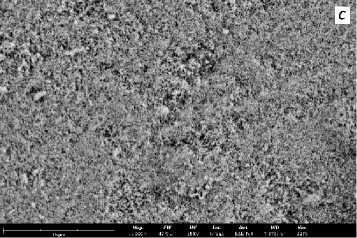
Рис. 4. Изменение размера частиц оксидов 5 YSZ, полученных при различных условиях осаждения после измельчения: а – в кислых условиях; b – нейтральных условиях; c – щелочных условиях; d – изменение размера частиц оксидов 5 YSZ в зависимости от времени измельчения
Time, min
Fig. 4. Change in the particle size of 5 YSZ oxides obtained under different deposition conditions after grinding: a – under acidic conditions; b – under neutral conditions; c – under alkaline conditions; d – change in the particle size of 5 YSZ oxides depending on the grinding time
The data obtained indicate that the precursors synthesized under neutral conditions are characterized by a smaller initial particle size and better dispersibility. On the contrary, acidic and alkaline environments contribute to the formation of large aggregated particles. As the grinding time increases to 60 minutes, the dimensional characteristics of the samples from all three conditions converge. However, it is important to note that processing the material from neutral conditions requires a lower intensity of mechanical action, which minimizes the accumulation of stresses and defects in the crystal lattice. This factor is crucial for maintaining the stability of the target phase of the final product.
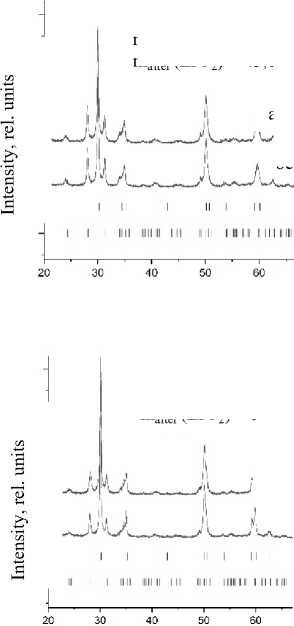
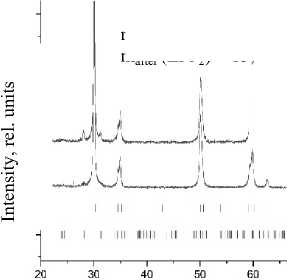
Figure 5 shows X-ray images of samples synthesized at various pH values after heat treatment and high-energy grinding. It has been established that reflexes corresponding to the monoclinic phase are detected in all the studied samples after mechanical treatment. This indicates the occurrence of a phase transition induced by the stresses of the crystal lattice during the grinding process.
PH < 2 m before (ZrO 2 ) = 41,13 % m after (ZrO 2 ) = 43,66 %
after grinding
20, deg.
а after grinding
,1, before grinding
I t-ZrO,
I m-ZrO, f-ZrO2
ii m-ZrO.
70 80
70 80
PH > 10 m before (ZrO 2 ) = 34,09 % m after (ZrO 2 ) = 34,8 %
20, deg.
c
before grinding
PH = 3-7 m before (ZrO 2 ) = 15,73 % m after (ZrO 2 ) = 15,04 %
after grinding f-ZrO2
I m-ZrO.
70 80
20, deg.
^ before grinding
b after grinding
----pH < 2
pH = 3-7
— pH > 10
d
Рис. 5. Рентгенограммы образцов оксида 5 YSZ до и после измельчения
Fig. 5. X-ray diffraction patterns of 5 YSZ oxide samples before and after grinding
As shown in Fig. 5, a , the sample obtained under acidic conditions is characterized by the presence of multiple diffraction maxima corresponding to the monoclinic phase both before and after ball grinding. This effect is mainly due to the heterogeneous distribution of alloying elements, which prevents the stabilization of the tetragonal phase in individual particles. An additional factor is the high degree of agglomeration of the product and the significant energy costs required for its dispersion and fragmentation, which leads to significant distortions of the crystal structure.
Under conditions close to neutral (Fig. 5, b ), the sample both before and after grinding exhibits tetragonal phase reflexes with a slight (~15 %) presence of the monoclinic phase. The homogeneous co-precipitation of Zr4+ and Y3+ ions, as well as the predominant coordination of zirconium with H 2 O molecules, ensure the effective removal of hydroxyl groups during heat treatment. In addition, the length of the Zr – O bond in the precursor is close to that in the tetragonal phase, which minimizes covariant stresses during the phase transition. The satisfactory dispersion of the product results in lower lattice stresses during the grinding process and, as a result, a more pronounced phase transition.
For alkaline conditions (Fig. 5, c ), after mechanical treatment, both tetragonal and monoclinic phase reflexes are present on the X-ray. The observed phenomenon is probably related to the high viscosity of the suspension during synthesis, which makes it difficult for the elements to migrate and reduces the uniformity of their distribution, despite achieving quantitative co-precipitation. This factor affects the stability of the tetragonal phase. An additional contribution is made by a significant difference in the lengths of the Zr – O bonds in the precursor and the tetragonal phase, which induces covariant stresses during the phase transformation. The combination of these factors leads to insufficient resistance of the product to phase separation and the appearance of a monoclinic phase.
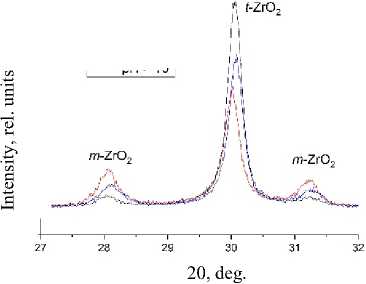
Fig. 5, d shows a comparison of the diffractograms of the samples after grinding. It is confirmed that the product synthesized under conditions close to neutral exhibits insignificant reflexes of the monoclinic phase, whereas for acidic and alkaline conditions these reflexes are clearly identified. The results obtained further confirm that the product synthesized at pH 5-6 is characterized by the lowest sensitivity to mechanical stress and the highest structural stability.
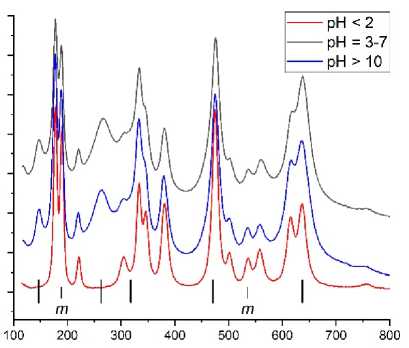
Fig. 6 shows the Raman spectra of samples synthesized at various pH values recorded after high-energy grinding. The phase composition was identified by characteristic bands: the vibrational modes at 147, 263, 318, 471, and 637 cm–1 correspond to the tetragonal phase, while the bands at 189 and 535 cm–1 belong to the monoclinic modification [14; 15].
For samples obtained under acidic conditions, vibrational modes of both tetragonal and monoclinic phases are preserved after grinding. The appearance of a new band of the monoclinic phase at 535 cm– 1 and an increase in the intensity of the existing peak of this modification were recorded. Quantitative analysis indicates that the content of the monoclinic phase after mechanical treatment is 45.34%.
Under conditions close to neutral, a weak oscillatory mode of the monoclinic phase is observed after grinding at 189 cm -1, which leads to the formation of a mixed spectral profile. The calculated content of the monoclinic phase is 17.23%, which probably allows correction of the phase composition during subsequent heat treatment. There is an increase in the intensity of the tetragonal phase bands due to a decrease in particle size during grinding, an increase in the degree of short-range order of the crystal lattice, and an increase in the density of phonon states.
For samples synthesized under alkaline conditions, vibrational modes of the monoclinic phase are recorded after grinding at 189 and 535 cm–1. The content of the monoclinic phase reaches 33.5%, which suggests significant difficulties in restoring structural integrity even with subsequent high-temperature treatment. Similarly to the samples from neutral conditions, there is an increase in the bands of the tetragonal phase associated with a decrease in particle size and associated structural changes.
The obtained Raman spectra confirm that the synthesis conditions determine the degree of phase separation induced by mechanical processing. According to the results of X-ray phase analysis, samples formed under conditions close to neutral demonstrate maximum resistance to phase transformations. The observed stability is due to the homogeneous distribution of alloying elements, the high stability of the tetragonal phase, and minimal distortion of the crystal lattice. Products synthesized in an acidic environment, on the contrary, are characterized by pronounced phase separation after grinding, which is associated with a heterogeneous distribution of components and significant distortions of the crystal lattice. These factors determine the least resistance of this material to induced phase transitions. The slightly less uniform distribution of elements and moderate lattice distortions in the samples obtained under alkaline conditions ensure resistance to phase transformations.
Fig. 7 shows the IR spectra of 5 YSZ oxides synthesized at various pH values. Infrared spectroscopy, as a method sensitive to the local molecular environment, allows obtaining information about the rotational and vibrational modes of chemical bonds based on the analysis of the position and intensity of absorption bands. The analysis of IR spectra makes it possible to additionally characterize the features of the local precursor structure depending on the synthesis conditions.
Raman shift, cm–1
Рис. 6. Рамановские спектры оксидов 5YSZ после измельчения, полученные в различных условиях
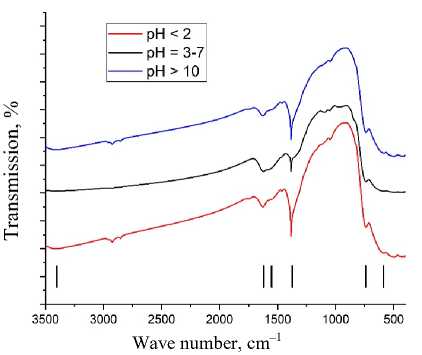
Рис. 7. ИК-спектры оксидов 5 YSZ, полученные при различных условиях осаждения
Fig. 6. Raman spectra of 5YSZ oxides after grinding obtained under different conditions
Fig. 7. IR spectra of 5 YSZ oxides obtained under different deposition conditions
The spectral bands were identified in accordance with the data [16; 17] as follows: the band at 3400 cm–1 corresponds to valence vibrations of molecules of unbound (free) water; the band 1620 cm–1 refers to deformation vibrations of free water; 1550 cm–1 is caused by deformation vibrations of hydroxyl groups in coordinated water (hydroxyl groups, bound to zirconium by hydrogen bonds); 1374 cm–1 corresponds to deformation vibrations of coordinated hydroxyl groups; deformation vibrations of Zr – O bonds in the IR spectra are manifested in the region of low wave numbers.
A comparative analysis of the IR spectra of 5 YSZ oxides synthesized at different pH values revealed significant differences in the absorption bands corresponding to coordinated hydroxyl groups. In samples obtained under acidic and alkaline conditions, a certain number of coordinated hydroxyl groups are retained after heat treatment. This effect is due to the high content of OH groups coordinated with Zr4+ ions at the deposition stage. Some of these groups are introduced into the forming crystal lattice during heat treatment, which makes it difficult for them to diffuse to the surface and then remove, leading to the formation of hydroxyl groups inside the lattice. In addition, recombination of hydroxyl groups with oxygen vacancies is possible, which leads to a decrease in the concentration of the latter. A decrease in the oxygen vacancy content disrupts the stabilization of the high-temperature phases (tetragonal and cubic). Since oxygen vacancies act as the main charge carriers in solid electrolytes based on 5 YSZ, their deficiency can lead to a decrease in the electrical conductivity of the material and a deterioration in its functional characteristics.
The product synthesized under conditions close to neutral is characterized by the complete disappearance of the bandwidth of coordinated hydroxyl groups after heat treatment, while maintaining the absorption peak corresponding to fluctuations in the Zr –O bond. The observed phenomenon contributes to the formation of a structurally homogeneous and stable product with increased resistance to external influences. The absence of residual hydroxyl groups ensures the preservation of a high concentration of oxygen vacancies in the material, which additionally increases the stability of the crystal structure and increases the concentration of charge carriers, favorably affecting the ionic conductivity of electrolytes.
The crystallographic characteristics of 5 YSZ powder have a decisive influence on the functional properties of ceramic materials based on it. It has been established that the pH value of the reaction medium during precipitation is a critical parameter affecting the phase composition of the final product. This influence is realized through three main mechanisms.
The first category includes the effect of pH on the kinetics of precipitation and the distribution of elements. Variations in the pH of the solution determine the different behavior of Y3+ and Zr4+ ions during hydrolytic deposition. In an acidic environment, there is a significant difference in the pH values that initiate the precipitation of these cations, which prevents their simultaneous co-precipitation. As a result, a product with a heterogeneous distribution of the alloying component is formed. The yttrium content in some regions is insufficient to stabilize the tetragonal phase at room temperature. This leads to the formation of a significant amount of monoclinic phase and, ultimately, negatively affects the performance characteristics of the material. In conditions close to neutral, as well as in an alkaline environment, on the contrary, effective co-precipitation of Zr4+ and Y3+ ions is observed, ensuring a homogeneous distribution of elements in the product volume. This contributes to the formation of a stable tetragonal structure at room temperature with minimal or no monoclinic phase.
Different pH levels cause significant differences in the degree of aggregation of the deposited products. Samples synthesized under acidic and alkaline conditions are characterized by pronounced agglomeration, whereas the product obtained at a pH close to neutral is represented by small, loosely packed particles. High-energy crushing was used to disperse the aggregated materials. The high degree of aggregation of acidic and alkaline synthesis products required more intensive mechanical action. This led to the formation of irregularly shaped particles and distortions of the crystal lattice, inducing an undesirable phase transition from tetragonal to monoclinic modification. The slightly aggregated product obtained under neutral conditions is easily dispersed with less intensive grinding, which makes it possible to significantly preserve the original tetragonal phase.
The third mechanism of the pH effect is related to differences in the nature of the coordination of the deposited products. IR spectroscopy data demonstrate that samples synthesized under acidic and alkaline conditions retain a significant amount of coordinated hydroxyl groups even after high-temperature calcination. During heat treatment, these groups interact with oxygen vacancies, forming complexes, which leads to a decrease in the vacancy concentration and, as a result, destabilization of the tetragonal phase at room temperature. In contrast, the oxide obtained under conditions close to neutral is completely freed from coordinated hydroxyl groups after calcination, which ensures the stability of the tetragonal modification.
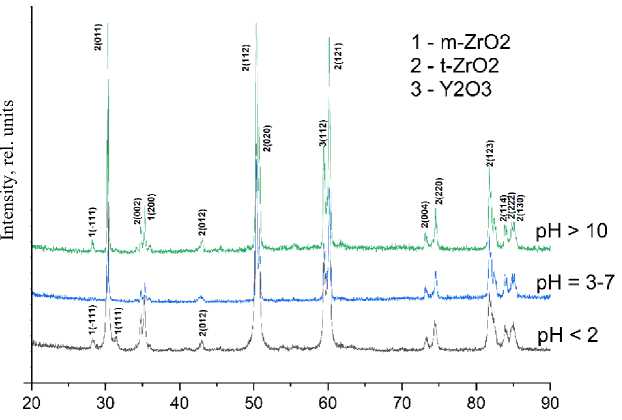
Fig. 8 shows X-ray diffractograms of 5 YSZ ceramic samples obtained from powders synthesized at various pH values. It is established that the phase composition of the final ceramics significantly depends on the conditions of deposition of the initial powder.
20, deg.
Рис. 8. Рентгенограммы спеченной керамики 5 YSZ, полученной при различных условиях осаждения
Fig. 8. X-ray diffraction patterns of sintered 5 YSZ ceramics obtained under different deposition conditions
Ceramics formed from a powder synthesized under acidic conditions retain the presence of a low-symmetry monoclinic phase, which can negatively affect its functional characteristics. The powder obtained under conditions close to neutral is characterized by minimal distortion of the crystal lattice and insignificant phase separation. In the process of high–temperature sintering, it undergoes a complete transformation - the initial monoclinic phase is effectively converted into a tetragonal one.
The powder synthesized under alkaline conditions is characterized by moderate lattice distortions, the presence of phase separation, and a relatively low concentration of oxygen vacancies. During sintering, relaxation processes occur in the crystal lattice, relieving internal stresses, and the monoclinic phase transforms into a tetragonal one. However, the phase transition prevents the material from achieving complete densification, which can affect the final characteristics of ceramics.
At the final stage of the study, solid electrolytes were formed from 5 YSZ powders synthesized under various conditions and their ion conductivity was measured at direct current using four-probe volt amperometry [18; 19]. The activation energy of ion migration was calculated using the Arrhenius equation. The results are shown in Fig. 9.
The maximum value of the activation energy ( Ea = 1.114 eV) is fixed for a ceramic electrolyte obtained from a powder synthesized under acidic conditions. The observed effect is mainly due to the minimal content of oxygen vacancies and significant distortions of the crystal lattice in the initial powder, which creates an energy barrier for ion migration. For an electrolyte formed from a powder obtained under alkaline conditions, the activation energy is Ea = 0.953 eV. The minimum value of the activation energy ( Ea = 0.938 eV) was recorded for ceramics synthesized from powder obtained under conditions close to neutral. The low energy barrier of ion migration in this sample indicates the most favorable conditions for ion transport, which correlates with its optimal microstructure and maximum concentration of oxygen vacancies.
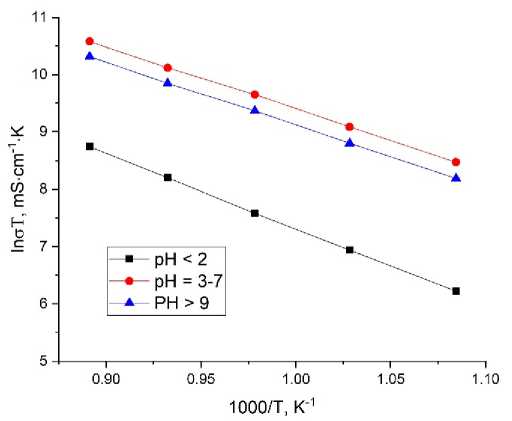
Рис. 9. Температурная зависимость ионной проводимости твердых электролитов 5 YSZ, полученных из порошков, осажденных при различных условиях
Fig. 9. Temperature dependence of ionic conductivity of solid electrolytes 5 YSZ obtained from powders deposited under different conditions
Table 3 shows the properties of solid electrolytes obtained from 5 YSZ powders synthesized under various conditions.
Properties of ceramics 5 YSZ
Table 3
|
Sample |
Acidic environment |
Neutral environment |
Alkaline environment |
Ceramics made from YSZ commercial powder |
|
Density |
92.4 |
98.7 |
95.8 |
97.9 |
|
σ650 °C (mS/cm) |
0.55 |
5.85 |
4.15 |
5.2 |
|
σ 750 °C (mS/cm) |
1.9 |
16.7 |
12.1 |
13.7 |
|
σ 850 °C (mS/cm) |
5.9 |
36.4 |
26.9 |
32.3 |
The generalized results of the study, presented in Table 3, demonstrate a clear correlation between the synthesis conditions of the initial powders and the functional characteristics of sintered ceramics.
Under conditions of precipitation close to neutral, the product is characterized by a homogeneous distribution of alloying elements and a completely tetragonal phase composition. Due to the weak aggregation of particles, the mechanical stress during the grinding process is minimal, which ensures low deformation of the crystal lattice and a high concentration of oxygen vacancies. The combination of these factors determines the maximum degree of ceramic compaction (98.7 %), which exceeds the performance of industrial analogues (97.9 %). The ionic conductivity at 850 °C reaches 36.4 mSm/cm, also exceeding the value for commercial powder (32.3 mS/cm at 850 °C).
The increased viscosity of the suspension during precipitation under alkaline conditions limits the migration of elements, leading to a slightly less uniform distribution of components and the appearance of a small amount of monoclinic phase. The pronounced aggregation of particles requires intensive mechanical action during grinding, which induces increased lattice deformations and enhances phase separation. An additional negative factor is the presence of residual hydroxyl groups that block oxygen vacancies and reduce their concentration. As a result, ceramics are characterized by a reduced density (95.8 %) and moderate ionic conductivity (26.9 mS/cm at 850 °C).
The heterogeneous distribution of elements and the high content of the monoclinic phase in the initial powder during synthesis under acidic conditions determine the minimum values of both relative density (92.4 %) and ionic conductivity (5.9 mS/cm at 850 °C) of sintered ceramics.
The study confirms the determining influence of deposition conditions on the complex of characteristics of ceramic materials based on 5 YSZ. It is established that the synthesis parameters directly affect the distribution of elements, the phase composition of precursors, their aggregative state and the content of oxygen vacancies. In turn, this determines the density and ionic conductivity of sintered ceramics.
Conclusion
As a result of the controlled co-precipitation study, 5 YSZ precursors were synthesized in acidic (pH < 2), close to neutral (pH 3-7) and alkaline (pH > 10) media with varying rates of precipitation. At the same time, the following is established:
-
1. Under acidic conditions, the deposited products and materials after post-treatment are characterized by a heterogeneous distribution of alloying elements, pronounced particle aggregation, and a high content of the monoclinic phase (43.66 % after grinding). The formed ceramics demonstrate minimum values of relative density (92.4 %) and ionic conductivity at 850 °C (5.9 mS/cm).
-
2. In alkaline conditions, despite the achievement of a uniform distribution of elements in precursors and post-treatment products, significant particle aggregation remains. After grinding, the content of the monoclinic phase is 34.8 %. Ceramics obtained from this powder are characterized by a relative density of 95.8 % and ionic conductivity at 850 °C – 26.9 mS/cm.
-
3. Under conditions close to neutral, the deposited products and materials after post-treatment are characterized by a homogeneous distribution of elements, excellent particle dispersion and a minimum content of the monoclinic phase (~15 %). The formed ceramics demonstrate maximum relative density (98.7%) and ionic conductivity at 850 °C (36.4 ms/cm), surpassing the characteristics of materials obtained from industrial powders.
Thus, it has been experimentally confirmed that optimization of the pH of the deposition medium is a critical factor determining the complex of functional characteristics of solid electrolytes based on 5 YSZ.
Acknowledgment. The work was carried out within the framework of state assignment FSRZ-2026-0005.
