
The potential of termite activity to enhance soil organic carbon and nutrient content in Alas Bromo, Karanganyar
Journal: Bulletin of the V.V. Dokuchaev Soil Science Institute @byulleten-esoil
Article in issue: 128, 2026.
Free access
Termites are increasingly recognized as key ecosystem engineers with critical roles in regulating soil processes and nutrient cycling, particularly in tropical forest ecosystems. This study investigates the functional role of termite activity in influencing soil organic carbon (SOC) and essential macronutrients (N, P, K) under different vegetation stands within the Alas Bromo Educational Forest, Central Java, Indonesia. Employing a wood stake baiting method within PVC tubes, termite activity was quantified and classified into five damage classes. Sampling was conducted during both dry and rainy seasons across pine and mahogany stands of various ages, with subsequent analysis of soil samples for SOC, total nitrogen (TN), total phosphorus (TP), total potassium (TK), and soil microbial biomass carbon (SMBC). Findings revealed significant seasonal and stand-type variation in termite diversity and activity, with higher termite abundance and diversity observed during the dry season, particularly in pine stands, which also exhibited higher palatability. Increased termite activity, as reflected by higher stake damage classes, was strongly associated with elevated levels of SOC, TN, TP, TK, and SMBC. Pearson correlation analysis confirmed positive and significant correlation between termite activity and each of the soil parameters studied, with the strongest correlation observed between termite activity and TN (r = 0.771) and SMBC (r = 0.487). These findings highlight the biological contributions of termites to soil fertility, mediated through mechanisms such as organic matter decomposition, bioturbation, and nutrient mineralization facilitated by symbiotic gut microbiota. The results demonstrate that termite activity not only enhances SOC content through stoichiometric shifts but also promotes nutrient accumulation, particularly under conditions of high wood consumption. Furthermore, the microbial biomass carbon content was significantly higher in areas with active termite presence, indicating synergistic effects between macrofauna and microbial communities in regulating soil carbon dynamics. This study underscores the ecological significance of termites in sustainable forest management and their potential utilization as bioindicators of soil health.
Short address: https://sciup.org/143186023
IDS: 143186023 | UDC: 631.4 | DOI: 10.19047/0136-1694-2026-128-85-117
Потенциальное влияние активности термитов на повышение содержания органического углерода и питательных веществ в почве в районе Алас Бромо, Каранганьяр
Термиты все чаще рассматриваются как ключевые экосистемные инженеры, играющие решающую роль в регулировании почвенных процессов и круговорота питательных веществ, особенно в тропических лесных экосистемах. В данном исследовании изучается функциональная роль активности термитов в воздействии на содержание почвенного органического углерода) (ПОУ) и основных макроэлементов (N, P, K) в различных типах растительности в пределах учебного стационара в лесу Алас Бромо, Центральная Ява, Индонезия. С помощью метода приманки из деревянных кольев в ПВХ-трубках активность термитов была количественно оценена и разделена на пять классов по степени повреждений. Отбор проб проводился как в сухой, так и в дождливый сезоны, в сосновых и краснодревесных насаждениях различного возраста, с последующим анализом образцов почвы на содержание ПОУ, общего азота (Ntotal), общего фосфора (Ptotal), общего калия (Ktotal) и углерода микробной биомассы почвы. Результаты показали значительные сезонные колебания и различия в разнообразии и активности термитов в зависимости от типа насаждений, при этом более высокая численность и разнообразие термитов наблюдались в сухой сезон, особенно в сосновых насаждениях, которые также демонстрировали более высокую привлекательность для термитов. Повышенная активность термитов, проявившаяся в более высоких классах повреждений кольев, была тесно связана с повышенными уровнями ПОУ, общего азота, фосфора и калия, а также углерода микробной биомассы почвы. Корреляционный анализ Пирсона подтвердил положительную и значимую корреляцию между активностью термитов и каждым из изученных параметров почвы, при этом наиболее сильная корреляция наблюдалась между активностью термитов и содержанием общего азота (r = 0.771) и углерода микробной биомассы почвы (r = 0.487). Эти результаты подчеркивают биологический вклад термитов в плодородие почвы, опосредованный такими механизмами, как разложение органического вещества, биотурбация и минерализация питательных веществ, облегчаемая симбиотической кишечной микробиотой. Результаты показывают, что активность термитов не только повышает содержание ПОУ за счет стехиометрических сдвигов, но и способствует накоплению питательных веществ, особенно в условиях интенсивного потребления древесины. Кроме того, содержание углерода в микробной биомассе было значительно выше в районах с активным присутствием термитов, что указывает на синергетический эффект между макрофауной и микробными сообществами в регулировании динамики углерода в почве. Данное исследование подчеркивает экологическое значение термитов в устойчивом управлении лесами и их потенциальное использование в качестве биоиндикаторов состояния почвы.
Text of the scientific article The potential of termite activity to enhance soil organic carbon and nutrient content in Alas Bromo, Karanganyar
Jl. Ir. Sutami 36a Surakarta, Central Java 57126, Indonesia, *, e-mail: , **,
*******, ********
2National Research and Innovation Agency (BRIN), Jl. Raya Bogor Km 46, Cibinong, Bogor 16911, Indonesia, ***, ****, *****
Jl. Flora, Bulaksumur, Sleman, Yogyakarta 55281, Indonesia, ******
Termites are eusocial insects belonging to the order Isoptera, and their colonies are widely distributed (Eggleton, 2000). Termites were previously recognized as pests due to their frequent damage to wood, particularly in plantation areas. However, despite their reputation as pests termites play in an important ecological role as “ecosystem engineers” (Jouquet et al., 2006) because their activities influence soil processes, structural properties, and hydrology, thereby enhancing nutrient availability and contributing to the decomposition of organic matter (Maynard et al., 2015; Myer, Forschler, 2019). The contribution of termites as decomposition agents plays a crucial role in maintaining soil fertility and health, thereby supporting sustainable agricultural practices (Khan et al., 2018). Their contribution to the carbon cycle includes the breakdown of dead organic matter, bioturbation, and the digestion of lignocellulose (Bignell et al., 2011).
Wood decomposition by termites is relatively greater than that by soil microorganisms, indicating that termites play a significant role in wood decay and may act as key agents in nutrient and carbon cycling (Vasconcellos, 2010; Griffiths et al., 2019). This carbon cycle is crucial for maintaining nutrient availability within the environment. Soil organic carbon (SOC) is an essential component of forest soils and ecosystems. The accumulation and decomposition of SOC have a sig- nificant influence on carbon sequestration and overall carbon stability within ecosystems (Joshi et al., 2021).
Environmental factors contribute to termite populations (Eggle-ton, 2000), one of which is the difference in tree stand types, which can influence environmental conditions and soil fertility, particularly the topsoil layer (Augustoa et al., 2007). This will impact the diversity of termite populations (Mugerwa et al., 2011). A study in Malawi demonstrated that stand conditions directly impact termite distribution across a landscape (Nyirenda et al., 2019). This is related to the litter conditions, de Jonge et al. (2024), reported that termites exhibit a preference for litter with a high content of secondary metabolites, such as phenolics and tannins, which can enhance litter decomposition. Stand type also influence termite preferences, with stands such as rubber (Arinana et al., 2022), pine (Waller et al., 1990), and oil palm being examples among the types of stands that are potentially preferred by termites (Risky et al., 2024).
The presence and activity levels of termites are also influenced by seasonal conditions. Several studies have shown that termite populations tend to be higher during the dry season compared to the rainy season, primarily due to increased foraging activity, as observed in termite genera such as Odontotermes sp. (Wale, Nega, 2019). However, other studies have reported contrasting findings. For example, research conducted by (Kanyi et al., 2021), indicated that in Embu County, seasonality had a significant effect on termites abundance ( Macrotemes sub-hyalinus , Macrotemes herus , and Coptotermes formosanus ), with higher numbers observed during the rainy season.
Research on termites has generally focused on mound soils. However, specific and comprehensive studies employing the wood stake baiting method within PVC pipes, which reflects termite activity levels, have not yet been conducted. Therefore, this study was carried out in the Alas Bromo Educational Forest across pine and mahogany stands of various ages. The objectives of this research were to analyze termite diversity and to assess their activity levels using the wood stake baiting method in pipes. Furthermore, the study aimed to evaluate the role of termites in the provision of soil organic carbon and essential nutrients (N, P, K) under pine and mahogany stands in Alas Bromo, and to compare the effects of termite activity levels on soil characteris- tics during the dry and rainy seasons in each stand type.
MATERIALS AND METHODS
Study site. The study was conducted in pine and mahogany stands within the Alas Bromo Educational Forest Area, Karanganyar, Central Java, Indonesia, from July to December 2024. The predominant soil order in this area is classified as Alfisols (Ariyanto et al., 2022). Soil analysis was carried out at the Soil Chemistry and Fertility Laboratory, Department of Soil Science, Faculty of Agriculture, Universi-tas Sebelas Maret, Surakarta. The research sites were selected using a descriptive exploratory method with a purposive sampling approach, focusing on stands suspected to exhibit high termite activity
Termite sampling design and identification. The presence and activity level of termites were measured using the wood stake baiting method installed within PVC pipes, with four replications in each stand. The type of wood bait was adjusted to the stand type, namely mahogany wood for mahogany stands and pine wood for pine stands, to match the dominant wood conditions in each stand. The bait installation area measured 25 meters × 25 meters, with a distance of 10 meters between replications within each stand and 2.5 meters between individual bait stakes (Fig. 1).
This research was conducted using a descriptive-exploratory approach, incorporating survey-based variables and supported by laboratory analyses. Termite identification was performed through direct field observation and subsequently confirmed via microscopic examination.
Soil chemical properties. Three types of soil samples were collected in this study (a) control soil: soil collected from each stand with four replications, obtained prior to the installation of bait stakes. (b) stake soil: soil collected based on the stake damage class in each stand (sampled two weeks after stake installation), with samples taken from each replication. (c) termite-formed soil: soil produced by termite activity within the PVC pipe.
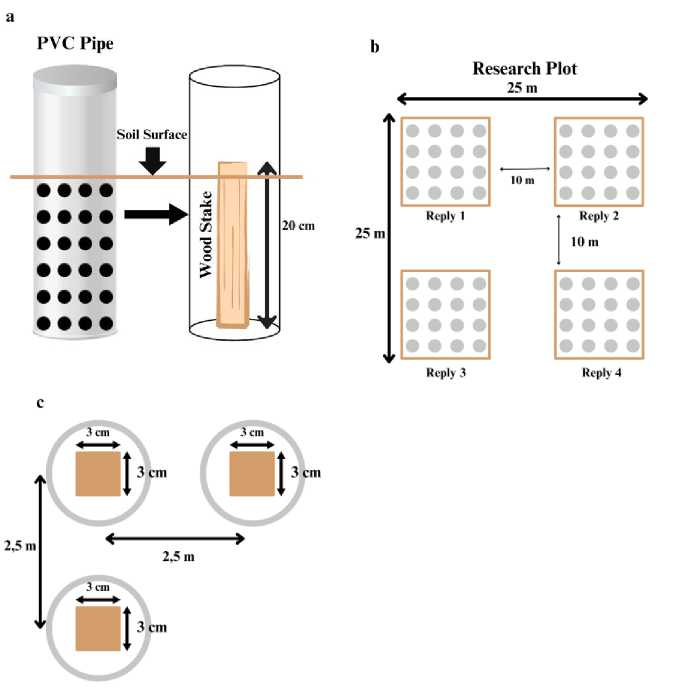
Fig. 1. Design of the stake installation for termite activity assessment. Note. ( a ) The PVC unit used in the experiment. ( b ) Top view of the research plot within each stand. ( c ) Distance between each installed PVC unit.
Two weeks after the installation of the wood stake baits, observations were conducted to assess and classify the level of damage based on specific criteria (Table 1). The damage class of each stake reflects the level of termite activity, the higher the damage class, the greater the termite activity at that location. Observations also included the identification of termite genera found on each stake. In addition, soil samples were collected for laboratory analysis to determine soil organic carbon (SOC), total nitrogen (TN), total phosphorus (TP), and total potassium (TK) content. There are five damage classes, as outlined in the damage classification table below.
Table 1. Classes and criteria of damage to wooden stakes used to assess termite activity
|
Damage Class |
Damage Level |
Damage Criteria for Stakes |
|
Class 0 |
Undamaged |
No termites and atack marks were found |
|
Class 1 |
Minor Damaged |
There were traces of termite infesation on the srake, but no termites were found |
|
Class 2 |
Moderately Damaged |
There was damage to the stake due to termite attacks and deeper attack holes |
|
Class 3 |
Major Damaged |
There was damage to the stake which was quite severe and the attack was deep |
|
Class 4 |
Severely Damaged |
Very severe damage to stake (deep and thorough) or the stake disappeared (was fully consumed), in the latter case termites are no longer active |
Note. Visual Tree Assesment (VTA) International Society of Arboriculture on Rachmadiyanto et al. (2023).
Data analysis. Data analysis was conducted to determine the effect of stake damage classes, which reflect the level of termite activity, on soil characteristic properties. The analysis was performed using analysis of variance (ANOVA) at a 95% significance confidence level, followed by Duncan’s Multiple Range Test (DMRT) at a 5% significance level to compare the parameter values among damage classes (levels of termite activity) within each stand. The strength of the relationships between parameters was further examined using Pearson’s correlation analysis.
Termite diversity in each stand was measured using the ShannonWiener Diversity Index (Spellerberg, Fedor, 2003; Soetignya et al., 2021).
H’= -(S ”=1 Pi x In Pi)
Description:
H’ : Shannon-Wiener Diversity Index.
Pi : The proportion of species “i” to the total species
In : Normal logarithm n : Number of individual species
N : Total number off all species
The criteria for interpreting the Shannon-Wiener diversity index (H') are as follows: H' < 1 = low diversity; 1 < H' < 3 = moderate diversity; and H' > 3 = high diversity.
RESULTS AND DISCUSSION
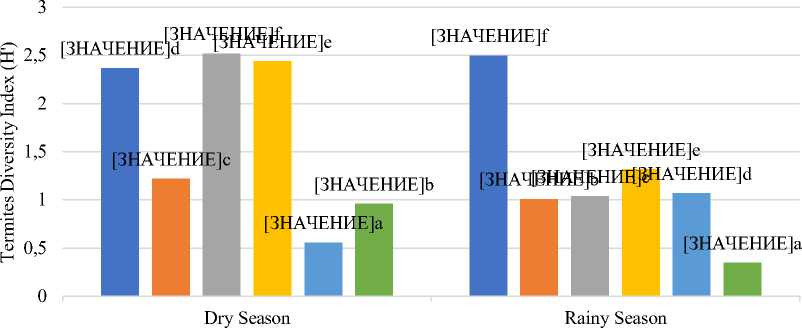
Termite diversity index in Alas Bromo during dry and rainy seasons. The termite diversity index was calculated using the ShannonWiener Diversity Index formula. The results of the macrofauna diversity index calculations across the six stands are presented in Figure 2. Several termite genera identified in this study include Macrotermes sp., Microtermes sp., Schedorhinotermes sp., and Odontotermes sp. Significant differences in termite diversity indices were observed among the stands in each season.
Based on diversity index criteria, the Alas Bromo exhibits a low to moderate level of termite diversity. During the dry season, the pine stands showed a moderate diversity level, with the highest index observed in the 2001 pine stand (H' = 2.52), which was significantly different from the other stands. The lowest diversity index was recorded in the 1973 mahogany stand (H' = 0.56), classified as low. In the rainy season, significant differences in diversity indices were also observed among stands. A moderate diversity level was found in the 1973 mahogany, 1973 pine, 2016 pine, and 2001 pine stands, with the highest value recorded in the 1973 mahogany stand (H' = 2.6), which was significantly different from the other stands. Low diversity indices during the rainy season were observed in the 1949 mahogany and 1994 pine stands, with the lowest recorded in the 1949 mahogany stand (H' = 0.35).
■ Pine1973 ■ Pine 1994 ■ Pine 2001 ■ Pine 2016 ■ Mahogany 1973 ■ Mahogany 1949
Fig. 2. Termite diversity index in Alas Bromo during dry and rainy seasons.
Note. Means followed by the same letter are not significantly different according to DMRT at P < 0.05.
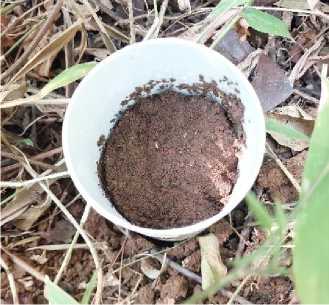
SOC content based on termite activity levels in different stands types at Alas Bromo. In general, nutrient content tends to decrease during the rainy season, which may be attributed to reduced termite activity during this period (Fig. 3). This is further supported by the absence of termite-formed soil within tunnels formed in the wood during the rainy season (Fig. 3).
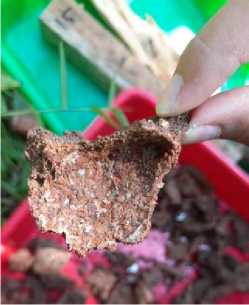
Fig. 3. Soil structures formed by termites during dry season in Alas Bromo.
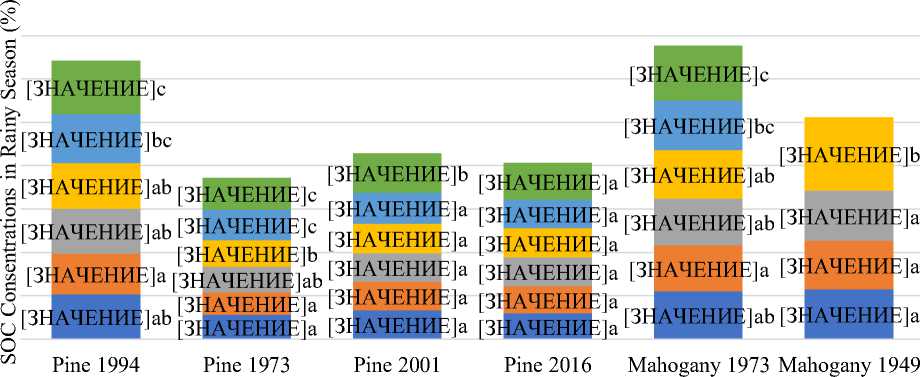
The highest SOC content was generally observed in stake damage class 4, both during the dry and rainy seasons, as seen in Pine 1994 (2.49% and 2.25%), Pine 1973 (1.48% and 1.82%), Pine 2001 (1.81% and 1.36%), and Pine 2016 (1.70% and 1.98%). In the mahogany 1973, the highest SOC content during the dry season was also recorded in stake damage class 4 (2.54%); however, during the rainy season, class 4 was not present in this stand, and the highest value was instead found in class 3 (2.08%). Stake damage classes 3 and 4 were not observed in the mahogany 1949 during the dry season, with the highest SOC content recorded in class 2 (3.40%). In contrast, during the rainy season, only class 2 was absent, and the highest SOC content was found in class 4 (2.10%). The lowest SOC contents tended to occur in stake damage class 0 and the control soils, regardless of the season (Fig. 4).
a
SOC Consentrations in Rainy Season (%)
|
[ЗНАЧЕНИЕ]e |
[ЗНАЧЕНИЕ]b [ЗНАЧЕНИЕ]c [ЗНАЧЕНИЕ]b |
|||||
|
[ЗНАЧЕНИЕ]d [ЗНАЧЕНИЕ]c [ЗНАЧЕНИЕ]cd [ЗНАЧЕНИЕ]c [ЗНАЧЕНИЕ]c [ЗНАЧЕНИЕ]ab[ЗНАЧЕНИЕ]ab [ЗНАЧЕНИЕ]b [ЗНАЧЕНИЕ]ab [ЗНАЧЕНИЕ]bc[ЗНАЧЕНИЕ]bc[ЗНАЧЕНИЕ]ab[ЗНАЧЕНИЕ]ab [ЗНАЧЕНИЕ]a |
||||||
|
[ [ЗН [ЗН |
АЧЕНИЕ]a [ЗНАЧЕНИЕ]ab[ЗНАЧЕНИЕ]ab[ЗНАЧЕНИЕ]ab [З [ЗНАЧЕНИЕ]a [ЗНАЧЕНИЕ]a [ЗНАЧЕНИЕ]ab АЧЕНИЕ]d [ЗНАЧЕНИЕ]a [ЗНАЧЕНИЕ]bc [ЗНАЧЕНИЕ]a [З |
АЧЕНИ АЧЕНИ |
]a [З ]b [ЗН |
АЧЕНИ АЧЕНИ |
Е]a ]b |
|
Pine 1994 Pine 1973 Pine 2001 Pine 2016 Mahogany 1973 Mahogany 1949
■ Control ■ Class 0 ■ Class 1 ■ Class 2 ■ Class 3 ■ Class 4
b
-
■ Control ■ Class 0 ■ Class 1 ■ Class 2 ■ Class 3 ■ Class 4
Fig. 4. SOC content based on termite activity levels across different stands during ( a ) dry and ( b ) rainy seasons.
Note. Means followed by the same letter are not significantly different according to DMRT at P < 0.05;
-
( a ) SOC concentration in dry season; ( b ) SOC concentration in rainy season.
Nutrient content (NPK) based on termite activity levels in different stand types at Alas Bromo. Similar to SOC, the total nutrient content (NPK) in the soil tends to decrease during the rainy season, which may be attributed to the reduced termite activity during this period (Fig. 5).
The TN content in the soil also showed significant differences among stake damage classes within each stand. In the Pine 1994, Pine 1973, Pine 2001, and Pine 2016 Pinus, the highest nitrogen content was observed in stake damage class 4, both during the dry season (0.4%, 0.42%, 0.41%, 0.39%) and the rainy season (0.36%, 0.42%, 0.38%, 0.33%). In Mahogany 1973, the highest value during the dry season was also recorded in stake damage class 4 (0.43%), while during the rainy season, it was found in stake damage class 3 (0.38%). In Mahogany 1949, the highest value during the rainy season was observed in stake damage class 2 (0.35%), while during the dry season, it was recorded in stake damage class 4 (0.39%). The lowest values in each stand were generally observed in stake damage class 0 and control soils (Fig. 5).
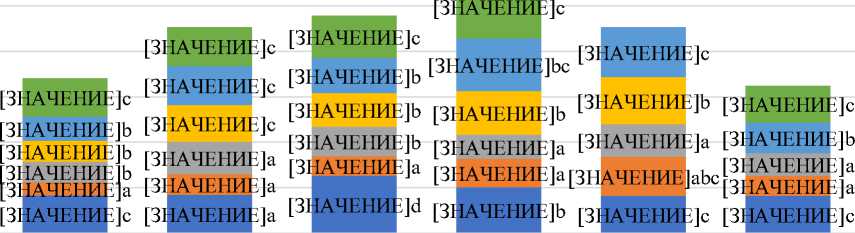
The analysis showed that the highest TP content during both the dry and rainy seasons in pine stands was consistently found in stake damage class 4, namely in Pine 1994 (4.84 mg 100 g-1 and 4.24 mg 100 g-1), Pine 1973 (7.63 mg 100 g-1 and 4.31 mg 100 g-1), Pine 2001 (7.22 mg 100 g-1 and 4.72 mg 100 g-1), and Pine 2016 (12.91 mg 100 g-1 and 4.91 mg 100 g-1). In Mahogany 1973, the highest value during the dry season was also recorded in stake damage class 4 (12.15 mg 100 g-1), while during the rainy season it occurred in stake damage class 3 (5.52 mg 100 g-1). In Mahogany 1949, the highest phosphorus content during the dry season was found in stake damage class 2 (4.53 mg 100 g-1), and during the rainy season in stake damage class 4 (4.12 mg 100 g-1). The lowest values across all stands tended to be found in stake damage class 0 and in control soils. Although values during the rainy season were more variable, the highest phosphorus content was still generally associated with stake damage class 4 (Fig. 6).
a
TN Concentrations in Dry Seasons (%)
|
[З |
АЧЕНИЕ]d [З |
НАЧЕНИЕ]c |
|||
|
[ЗНАЧЕНИЕ]c |
|||||
|
[ЗНАЧЕНИЕ]c |
|||||
|
[ЗНАЧЕНИЕ]d [ЗНАЧЕНИЕ]b |
[ЗНАЧЕНИЕ]c [ЗНАЧЕНИЕ]ab |
||||
|
[ЗНАЧЕНИЕ]c |
|||||
|
[ЗНАЧЕНИЕ]bc [ЗНАЧЕНИЕ]a |
[ЗНАЧЕНИЕ]bc [ЗНАЧЕНИЕ]b [ЗНАЧЕНИЕ]b |
||||
|
[ЗНАЧЕНИЕ]c [ЗНАЧЕНИЕ]b [ЗНАЧЕНИЕ]a [ЗНАЧЕНИЕ]a |
|||||
|
[ЗНАЧЕНИЕ]a [ЗНАЧЕНИЕ]ab [ЗНАЧЕНИЕ]ab [ЗНАЧЕНИЕ]ab[ЗНАЧЕНИЕ]a [ЗНАЧЕНИЕ]ab [ЗНАЧЕНИЕ]a [ЗНАЧЕНИЕ]a |
|||||
|
[ЗНАЧЕНИЕ]a [ЗНАЧЕНИЕ]a гпЯлттт-тИ^- гчидчршЖъ г-эи л тткитлт: [ЗН |
АЧЕНИЕ]ab [ЗНАЧЕНИЕ]a [ЗНАЧЕНИЕ]a |
||||
|
[ЗНАЧЕНИЕ]a [ Pine 1994 Pine 1973 |
Pine 2001 |
]a |
Pine 2016 Mahogany 1973 Mahogany 1949 |
||
|
■ Control ■ Class 0 ■ Class 1 ■ Class 2 ■ Class 3 |
■ Class 4 |
||||
b
|
\O 0х |
||
|
й [ЗНАЧЕНИЕ]c |
||
|
S [ЗНАЧЕНИЕ]d |
[ЗНАЧЕНИЕ]d [ЗНАЧЕНИЕ]c [ЗНАЧЕНИЕ]d |
|
|
[ЗНАЧЕНИЕ]b [ЗНАЧЕНИЕ]c |
||
|
'й [ЗНАЧЕНИЕ]bc |
[ЗНАЧЕНИЕ]cd [ЗНАЧЕНИЕ]c |
|
|
c •S [ЗНАЧЕНИЕ]bc [ЗНАЧЕНИЕ]a [ЗНАЧЕНИЕ]ab c [ЗНАЧЕНИЕ]c |
||
|
|
[ЗНАЧЕНИЕ]b [ЗНАЧЕНИЕ]c |
|
|
1 [ЗНАЧЕНИЕ]b [ЗНАЧЕНИЕ]a [ЗНАЧЕНИЕ]b [ ]a [ЗНАЧЕНИЕ]ab |
||
|
S [ЗНАЧЕНИЕ]b [ЗНАЧЕНИЕ]a [ЗНАЧЕНИЕ]a [ЗНАЧЕНИЕ]a [ЗНАЧЕНИЕ]ab [ЗНАЧЕНИЕ]a |
||
|
§ [ЗНАЧЕНИЕ]a [ЗНАЧЕНИЕ]a [ЗНАЧЕНИЕ]a [ЗНАЧЕНИЕ]bc [ЗНАЧЕНИЕ]a [ЗНАЧЕНИЕ]b |
||
|
Z Pine 1994 |
Pine 1973 |
Pine 2001 Pine 2016 Mahogany 1973 Mahogany 1949 |
■ Control ■ Class 0 ■ Class 1 ■ Class 2 ■ Class 3 ■ Class 4
Fig. 5. TN content based on termite activity levels across different stands during ( a ) dry and ( b ) rainy seasons.
Note. Means followed by the same letter are not significantly different according to DMRT at P < 0.05;
( a ) TN concentration in dry season; ( b ) TN concentration in rainy season.
a
TP Concentration in Dry Season (mg 100 gr-1)
[ЗНАЧЕНИЕ]c
[ЗНАЧЕНИЕ]c [ЗНАЧЕНИЕ]c
[ЗНАЧЕНИЕ]c [ЗНАЧЕНИЕ]bc
[ЗНАЧЕНИЕ]bc [ЗНАЧЕНИЕ]b
[ЗНАЧЕНИЕ]d [ЗНАЧЕНИЕ]bc [ЗНАЧЕНИЕ]ab [ЗНАЧЕНИЕ]b
[ЗНАЧЕНИЕ]bc [ЗНАЧЕНИЕ]b [ЗНАЧЕНИЕ]ab [ ]
L L J ГОТТ Л ТТТ?ТТТ1Г1„1-
[ЗНАЧЕНИЕ]c [ЗНАЧЕНИЕ]ab [ЗНАЧЕНИЕ]ab [ЗНАЧЕНИЕ]bc
[ЗНАЧЕНИЕ]a [ЗНАЧЕНИЕ]bc [ЗНАЧЕНИЕ]ab
[ЗНАЧЕНИЕ]ab [ЗНАЧЕНИЕ]a [ЗНАЧЕНИЕ]a [ЗНАЧЕНИЕ]a
[ЗНАЧЕНИЕ]bc [ЗНАЧЕНИЕ]a [ЗНАЧЕНИЕ]ab [З НАЧЕНИЕ ]a [ЗНАЧЕНИЕ]a
ЗНАЧЕНИЕ ЗНАЧЕНИЕ ЗНАЧЕНИЕ ЗНАЧЕНИЕ
b a a a
Pine 1994 Pine 1973 Pine 2001 Pine 2016 Mahogany 1973 Mahogany 1949
■ Control ■ Class 0 ■ Class 1 ■ Class 2 ■ Class 3 ■ Class 4
b

Pine 1994 Pine 1973 Pine 2001 Pine 2016 Mahogany 1973 Mahogany 1949
-
■ Control ■ Class 0 ■ Class 1 ■ Class 2 ■ Class 3 ■ Class 4
Fig. 6. TP content based on termite activity level across different stands during ( a ) dry and ( b ) rainy seasons.
Note. Means followed by the same letter are not significantly different according to DMRT at P < 0.05;
-
( a ) TP concentration in dry season; ( b ) TP concentration in rainy season.
The highest of TK content for both seasons was recorded in stake damage class 4, namely in Pine 1994 (32.32 mg 100 g-1 and 32.57 mg 100 g-1), Pine 1973 (28.88 mg 100 g-1 and 22.90 mg 100 g-1), Pine 2001 (45.58 mg 100 g-1 and 27.96 mg 100 g-1), and Pine 2016 (20.49 mg 100 g-1 and 28.28 mg 100 g-1). In Mahogany 1973, the highest value during the dry season was also found in stake damage class 4 (34.25 mg 100 g-1), while during the rainy season, it was recorded in stake damage class 3 (23.28 mg 100 g-1). In Mahogany 1949, the highest value during the dry season was observed in stake damage class 2 (60.87 mg 100 g-1) and in stake damage class 4 during the rainy season (45.39 mg 100 g-1). As with other nutrients, the lowest TK values were generally found in stake damage class 0 and control soils, although some stands exhibited fluctuating values (Fig. 7).
SMBC content based on termite activity levels in different stand types at Alas Bromo. Soil microbial biomass carbon (SMBC) increased during the dry season and decreased during the rainy season. This is attributed to the high termite diversity index in the dry season and its low value during the rainy season (Fig. 8).
The highest SMBC content was generally found at stake damage class 4, indicating the highest termite activity. The highest SMBC content during the rainy season in Pine 1994, Pine 2001, Pine 2016, and Pine 1973 occurred at stake damage class 4, with values of 2.59 µ g-1, 1.53 µ g-1, 2.34 µ g-1, and 2.14 µ g-1, respectively. Meanwhile, during the dry season, the SMBC values in Mahogany 1973, Pine 1994, Pine 2001, Pine 2016, and Pine 1973 were also highest at stake damage class 4, with values of 3.00 µ g-1, 2.74 µ g-1, 2.73 µg g-1, 2.37 µ g-1, and 2.28 µ g-1, respectively. In contrast, Mahogany 1949 exhibited the highest value during the rainy season at the control soil with a value of 2.55 µ g-1, and during the dry season, the highest value was recorded at stake damage class 2 (3.60 µ g-1), while during the rainy season, it was again at the control soil. Similar to Mahogany 1949, Mahogany 1973 also showed the highest value during the rainy season at stake damage class 3 with a value of 2.53 µ g-1 (Fig. 8).
a
TK Consentration in Dry Season (mg 100 gr-1)
[ЗНАЧЕНИЕ]c
[ЗНАЧЕНИЕ]b
[ЗНАЧЕНИЕ]a
[ЗНАЧЕНИЕ]b
[ЗНАЧЕНИЕ]bc [ЗНАЧЕНИЕ]c [ЗНАЧЕНИЕ]a
[ЗНАЧЕНИЕ]a [ЗНАЧЕНИЕ]b
[ЗНАЧЕНИЕ]ab [ЗНАЧЕНИЕ]c [ЗНАЧЕНИЕ]a [ЗНАЧЕНИЕ]a
[ЗНАЧЕНИЕ]ab [ЗНАЧЕНИЕ]b [ЗНАЧЕНИЕ]a [ЗНАЧЕНИЕ]a [ЗНАЧЕНИЕ]a [ЗНАЧЕНИЕ]a [ЗНАЧЕНИЕ]ab [ЗНАЧЕНИЕ]a [ЗНАЧЕНИЕ]a [ЗНАЧЕНИЕ]a [ЗНАЧЕНИЕ]ab [ЗНАЧЕНИЕ]aa [З НАЧЕНИЕ ]a [ЗНАЧЕНИЕ]a [З НАЧЕНИЕ ]a
[ЗНАЧЕНИЕ]b
[ЗНАЧЕНИЕ]a
[ЗНАЧЕНИЕ]a
[ЗНАЧЕНИЕ]a
Pine 1994 Pine 1973 Pine 2001 Pine 2016 Mahogany 1973 Mahogany 1949
■ Control ■ Class 0 ■ Class 1 ■ Class 2 ■ Class 3 ■ Class 4
b

[ЗНАЧЕНИЕ]a
[ЗНАЧЕНИЕ]a
[ЗНАЧЕНИЕ]d [ЗНАЧЕНИЕ]b
[ЗНАЧЕНИЕ]c [ЗНАЧЕНИЕ]b [ЗНАЧЕНИЕ]c [ЗНАЧЕНИЕ]a
[ЗНАЧЕНИЕ]b [ЗНАЧЕНИЕ]ab [ЗНАЧЕНИЕ]b [ЗНАЧЕНИЕ]b
[ЗНАЧЕНИЕ]bc [ЗНАЧЕНИЕ]b [ЗНАЧЕНИЕ]ab [ЗНАЧЕНИЕ]ab [ЗНАЧЕНИЕ]a
[ЗНАЧЕНИЕ]bc [ЗНАЧЕНИЕ]b [ЗНАЧЕНИЕ]ab [ЗНАЧЕНИЕ]a [ЗНАЧЕНИЕ]ab [ЗНАЧЕНИЕ]a [ЗНАЧЕНИЕ]a [ЗНАЧЕНИЕ]b [ЗНАЧЕНИЕ]ab [ЗНАЧЕНИЕ]ab [ЗНАЧЕНИЕ]a [ЗНАЧЕНИЕ [ЗНАЧЕНИЕ]a [ЗНАЧЕНИЕ]a [ЗНАЧЕНИЕ]a [ЗНАЧЕНИЕ]ab [ЗНАЧЕНИЕ]a
]a
Pine 1994 Pine 1973 Pine 2001 Pine 2016 Mahogany 1973 Mahogany 1949
-
■ Control ■ Class 0 ■ Class 1 ■ Class 2 ■ Class 3 ■ Class 4
Fig. 7. TK content based on termite activity level across different stands during ( a ) dry and ( b ) rainy seasons.
Note. Means followed by the same letter are not significantly different according to DMRT at P < 0.05;
-
( a ) TK concentration in dry season; ( b ) TK concentration in rainy season.
a
SMBC Concentration in Rainy Season (µg g-1)
[ЗНАЧЕНИЕ]e
[ЗНАЧЕНИЕ]d [ЗНАЧЕНИЕ]d [ЗНАЧЕНИЕ]c
[ЗНАЧЕНИЕ]d
[ЗНАЧЕНИЕ]c [ЗНАЧЕНИЕ]f [ЗНАЧЕНИЕ]d [ЗНАЧЕНИЕ]bc [ЗНАЧЕНИЕ]b
[ЗНАЧЕНИЕ]b [ЗНАЧЕНИЕ]b [ЗНАЧЕНИЕ]c [ЗНАЧЕНИЕ]c [ЗНАЧЕНИЕ]ab [ЗНАЧЕНИЕ]ab
[ЗНАЧЕНИЕ]a [ЗНАЧЕНИЕ]d
[ЗНАЧЕНИЕ]b [ЗНАЧЕНИЕ]b [ЗНАЧЕНИЕ]b [ЗНАЧЕНИЕ]a [ЗНАЧЕНИЕ]a
[ЗНАЧЕНИЕ]a
[ЗНАЧЕ
]c
Pine 1994 Pine 1973 Pine 2001 Pine 2016 Mahogany 1973 Mahogany 1949
-
■ Control ■ Class 0 ■ Class 1 ■ Class 2 ■ Class 3 ■ Class 4
b
[ЗНАЧЕНИЕ]d
[ЗНАЧЕНИЕ]c
ад ад
=L
[ЗНАЧЕНИЕ]e [ЗНАЧЕНИЕ]c [ЗНАЧЕНИЕ]b
[ЗНАЧЕНИЕ]c [ЗНАЧЕНИЕ]d
[ЗНАЧЕНИЕ]b
[ЗНАЧЕНИЕ]b [ЗНАЧЕНИЕ]b
[ЗНАЧЕНИЕ]d
[ЗНАЧЕНИЕ]b [ЗНАЧЕНИЕ]c
[ЗНАЧЕНИЕ]b [ЗНАЧЕНИЕ]c [ЗНАЧЕНИЕ]c [ЗНАЧЕНИЕ]b [ЗНАЧЕНИЕ]a [ЗНАЧЕНИЕ]a
[ЗНАЧЕНИЕ]b [ЗНАЧЕНИЕ]b [ЗНАЧЕНИЕ]b [ЗНАЧЕНИЕ]a [ЗНАЧЕНИЕ]a
[ЗНАЧЕНИЕ]a [ЗНАЧЕНИЕ]a [ЗНАЧЕНИЕ]a [ЗНАЧЕНИЕ]a
[З НАЧЕНИЕ ]b [ЗНАЧЕНИЕ]b [З НАЧЕНИЕ ]a [З НАЧЕНИЕ ]a [З НАЧЕНИЕ ]a [З НАЧЕНИЕ ]a
Pine 1994 Pine 1973 Pine 2001 Pine 2016 Mahogany 1973 Mahogany 1949
-
■ Control ■ Class 0 ■ Class 1 ■ Class 2 ■ Class 3 ■ Class 4
Fig. 8. SMBC content based on termite activity level across different stands during ( a ) dry and ( b ) rainy seasons.
Note. Means followed by the same letter are not significantly different according to DMRT at P < 0.05;
( a ) SMBC concentration in dry season; ( b ) SMBC concentration in rainy season.
Correlation between termite activity, soc, and soil nutrient content. The correlation between parameters were analyzed using correlation tests, where a Pearson correlation coefficient close to 1 indicates a strong association between the variables. A positive (+) value denotes a direct (positive) correlation, while a negative (–) value indicates an inverse (negative) correlation (Akoglu, 2018) (Table 2).
Table 2. The correlation between termite activity, SOC, and nutrient content
|
No |
Indicator |
Termite activity level |
SOC |
TN |
TP |
TK |
|
1 |
SOC |
0.316** |
||||
|
2 |
TN |
0.771** |
0.365** |
|||
|
3 |
TP |
0.431** |
0.198** |
0.437** |
||
|
4 |
TK |
0.256** |
0.513** |
0.311** |
-0.01 |
|
|
5 |
SMBC |
0.487** |
0.840** |
0.525** |
0.448** |
0.558** |
Note. ** Highly Significant; Soil Organic Carbon (SOC), Total Nitrogen (TN), Total Phosporus (TP), Total Potassium (TK), Soil Microbial Biomass Carbon (SMBC).
Role of termites in soil enhancement. The variation in the observed diversity index values may be influenced by several factors, one of which is the difference in the types of stake baits used. Each wood species exhibits varying levels of resistance to termite attack (Kalleshwaraswamy et al., 2022). Pine is a soft wood species preferred by termites (Waller et al., 1990), because it is highly palatable, it is commonly used as termite bait (Arinana et al., 2022). Mahogany is a hard wood with high resistance to termite attack, making it less attractive to termites (Morales-Ramos, Guadalupe Rojas, 2001).
Additionally, another factor that influences termite diversity is the season, with a tendency for a decrease in termite diversity index during the rainy season. As shown by Bissett et al. (2019), study in the semi-arid grasslands of Zimbabwe, where termite populations were found to increase during the dry season. Foraging behavior also plays a role, as the genus Odontotermes sp. is more frequently observed during the dry season compared to the rainy season (Wale, Nega, 2019). This factor is further supported by the presence of soil within tunnels constructed by termites during the dry season.
Organic compound enrichment by simbiotic microbe in termite. Stake damage classes used to reflect termite activity levels can demonstrate a tendency for higher termite activity to be associated with increased SOC content (Fig. 4). Termites are ecosystem engineers that modulate carbon flow from organic matter, such as dead wood, into the soil (Myer et al., 2021). A study conducted in the highlands of southwestern Ethiopia confirmed that termite activity can enhance soil chemical properties, particularly soil organic carbon and nutrient content (Jembere et al., 2017). Its contribution to the carbon cycle through the decomposition of dead organic matter (Issoufou et al., 2019); Jones, 1990), bioturbation, and lignocellulose digestion (Bignell et al., 2011). The wood they consume primarily consists of carbon in the form of cellulose and lignin, and within their digestive system, they form symbiotic relationships with bacteria and protozoa that assist in digesting the wood as well as extracting nutrients such as N, P, and other noncarbon elements. As a result, what remains in termite feces is carbon-rich material, a phenomenon referred to as stoichiometric shift. This means that termites and their symbionts alter the composition of organic matter, such as the wood they consume, by absorbing essential elements like carbon, thereby increasing soil carbon content through the feces they excrete (Filipiak, Weiner, 2017).
Similar to SOC, high termite activity has a significant influence on nitrogen (Fig. 5), contributing substantially to nitrogen fluxes within tropical ecosystems (Ji, Brune, 2006; Ji, Brune, 2006). Termites function as bioindicators of soil fertility, playing a crucial role in nitrogen fixation (Nithyatharani, Kavitha, 2018). According to Ji & Brune (2006), within the termite digestive system, highly alkaline conditions (up to pH 12) in the bacteria-rich hindgut facilitate the breakdown of peptides and proteins from nitrogen-containing food into ammonia (NH3 ) and ammonium (NH4 + ). This process is further supported by proteolytic enzymes that remain active under alkaline conditions. NH3 accumulation and release occur when its concentration in the termite hindgut reaches a high threshold, at which point it is excreted both through feces and directly from the body. The NH4 + released via feces is absorbed into the soil, thereby enhancing soil fertility. Additionally, nitrogen is stored within termite nests, protecting it from leaching. Termites play a vital role in influencing soil nitrogen levels through their feeding and nesting activities, which contribute to increased nitrogen mineralization and ammonia accumulation (Ngugi et al., 2011) and its role in nitrogen fixation, which subsequently affects nitrogen dynamics and the ecosystem functioning of its habitat (Benemann, 1973; Fox-Dobbs et al., 2010).
The high level of bait stake damage, accompanied by increased TP content (Fig. 6), indicates that phosphorus distribution in the soil can be significantly influenced by termite activity (Rajeev, Sanjeev, 2012). Through their biogenic structure, termites influence the phosphorus cycle in the soil and affect nutrient dynamics (Chapuis-Lardy et al., 2011) as demonstrated by a study in the savanna, which showed that termites impact soil phosphorus status, particularly in their mound structures (López-Hernández et al., 2006). The high termite activity, as reflected by the stake damage class, influences the TK content (Fig. 7). According to Lejolya et al. (2019), soil inhabited by termites experience an increase in nutrients such as potassium. Another study in the southwest Ethiopian highlands stated that soil nutrients, including potassium, increased due to high termite activity (Jembere et al., 2017). Through their construction activities, termites can influence soil properties, such as causing potassium export, which subsequently increases soil potassium in areas affected by their activity (Harit et al., 2017).
The increase in SMBC may be attributed to the activity of microorganisms present within the termite's body (Fig. 8). The termite body (gut) hosts various microorganisms that engage in mutualistic symbiosis with the termites, such as bacteria, archaea, fungi, and protozoa. These microbes are involved in cellulose degradation and contribute to the development of the termite host by producing cellulose within its body (Yu et al., 2025). Bacteria present in the termite gut can assist in degrading lignocellulosic substrates (Azizi-Shotorkhoft et al., 2016). Protist communities symbiotically associated with lower termites are capable of producing more complex cellulolytic enzymes than those produced by the termites themselves (Ni, Tokuda, 2013). This results in termite activity being closely associated with the symbi- otic microorganisms present within their bodies. The level of SMBC in the soil depends on both the microbial population and the carbon content of the soil. Other studies have confirmed that limited carbon availability can reduce overall soil microbial C and inhibit respiration rates, as microbes have less organic substrate to metabolize. Microbial respiration refers to the release of carbon dioxide (CO2 ) during the decomposition of soil organic matter by microorganisms, and it is positively correlated with soil microbial biomass content (Elrys et al., 2025).
The level of termite activity was positively correlated with SOC (r = 0.316), TN (r = 0.771**), TP (r = 0.431**), TK (r = 0.256**), and SMBC (r = 0.487**) (Table 2). These positive correlations indicate that higher termite activity is associated with increased levels of SOC, N, P, K, and microbial carbon in the soil. Ecologically, termites act as 'ecosystem engineers' as they influence soil processes and properties, including nutrient availability and the decomposition of organic matter (Ahmad, Dawah, 2018). There is a correlation between termite activity and SOC, as termites enhance SOC through the decomposition of organic materials such as litter, which are subsequently reincorporated into the soil (Donovan et al., 2001). Termites play an important role in enhancing and recycling nutrients (N, P, K). Termite activity can influence soil fertility and ecosystem dynamics due to the increased concentration of nutrients (Donovan et al., 2001; Kaschuk et al., 2006; Lejolya et al., 2019). Termites play an important role in increasing the microbial carbon content of the soil due to the presence of symbiotic microorganisms within their bodies. The termite gut contains symbiotic microorganisms such as bacteria, archaea, fungi, and protists (Yu et al., 2025), which play a crucial role in the breakdown of lignocellulose from grasses and wood (Tapiwa et al., 2025).
There is a positive correlation between SOC and Soil TN (r = 0.365**), according to (Hayadi et al., 2014; Shaheen, Matien, 2016), Due to the positive interaction, the SOC content has a significant influence on TN levels. A positive correlation is also observed between SOC and TP in the soil (r = 0.198**), according to Soemarno et al. (2021); Vermeiren et al. (2022), the increase in SOC can contribute to the rise in TP levels in the soil. A positive correlation exists between SOC and TK in the soil (Han et al., 2006; Pan et al., 2019). There is a positive correlation between SOC and SMBC (r = 0.840**). According to (Das et al., 2023), SMBC has a positive correlation with SOC and microbial respiration. C-microbial is the most active fraction of soil organic matter, thus playing a crucial role in regulating the loss and sequestration of organic carbon (Cai et al., 2025).
CONCLUSION
The results of this study show that the termite diversity index varies across different stand types. This difference is influenced by the type of wood bait used, which affects termite presence, with termites being more easily found on pine wood compared to mahogany. Termites, as soil ecosystem engineers, are linked to SOC and nutrient content. The level of termite activity, observed through the degree of damage to wooden stakes used as bait, can contribute to the improvement of soil quality. Higher termite activity leads to an increase in soil organic carbon content, nutrients (NPK), and SMBC levels.
