
The Siungkap-Ungkapon Ritual in the Batak Toba Community: Archaeological and Agricultural Aspects
Journal: Archaeology, Ethnology & Anthropology of Eurasia @journal-aeae-en
Section: Ethnology
Article in issue: 2 т.53, 2025.
Free access
In Indonesia, agricultural rituals are consistently performed before, after, and even during specific periods, with variations in form across regions and ethnicities. We outline the results of our study of the siungkapungkapon ritual and its role in agricultural practices of the Batak Toba community. We examine the ecological context and archaeological data relevant to rice farming. Our study includes interviews with community members and observation of rites involving the siungkap-ungkapon stone. We discuss intertwined aspects of the rite—religious, social, ecological, and technological. The rite itself has been practiced at least since the Late Neolithic with a view to receive the ancestors’ blessings and instructions as to which rice variety should be cultivated during a specific season. The ritual reveals the peasants’ knowledge of agricultural practices, rice types, and the environment, all of which, taken together, ensure the highest yield. How the choice of the rice variety depends on the presence of ants under the stone is not immediately apparent. We conclude that the siungkap-ungkapon ritual, which involves practical knowledge, strengthens social unity and is supposed to optimize agricultural labor.
Short address: https://sciup.org/145147497
IDS: 145147497 | DOI: 10.17746/1563-0110.2025.53.2.108-114
Text of the scientific article The Siungkap-Ungkapon Ritual in the Batak Toba Community: Archaeological and Agricultural Aspects
The Batak Toba ethnic group initially inhabited the Samosir Island and the area around Lake Toba before dispersing to various regions within North Sumatra and other provinces. Archaeological studies indicate that the ancestors of this group migrated from Taiwan, traversing southward through the Philippines, Sulawesi, and eventually reaching Sumatra (Bellwood, 2000: 238–241; Wiradnyana and Setiawan, 2013: 7). The migrants brought along megalithic cultural elements, including the use of burial containers of various types accompanied by ancestor worship
(Soejono, 2008: 5). These containers, typically crafted from stone, such as sarcophagi, jars, and coffins, served as secondary burial receptacles. Following the initial burial, the deceased were later exhumed, and then the bones were reinterred within these stone containers. This ritual, known as mangokal holi within the Batak Toba ethnic community and nurun nurun within the Karo ethnic community, is still observed in North Sumatra nowadays.
The migrants also introduced the traditions associated with agricultural activities. In the Batak Toba community, each phase of these activities, including seed preparation, planting, maintenance,
Megalithic culture, characterized by the cult of ancestors, is consistently manifested in ceremonial processes. Consequently, it is unsurprising that agricultural rituals incorporate ancestor-worship concepts. The belief in reciprocation with ancestors constitutes a fundamental aspect of past religions, with the conviction that honoring ancestors would elicit their benevolence towards descendants being a recurrent motif in their lives.
This paper will focus in depth on the siungkap-ungkapon , a ritual in agricultural activities to request blessings from ancestors, in terms of archaeology, agriculture, and insectology.
Siungkap-ungkapon
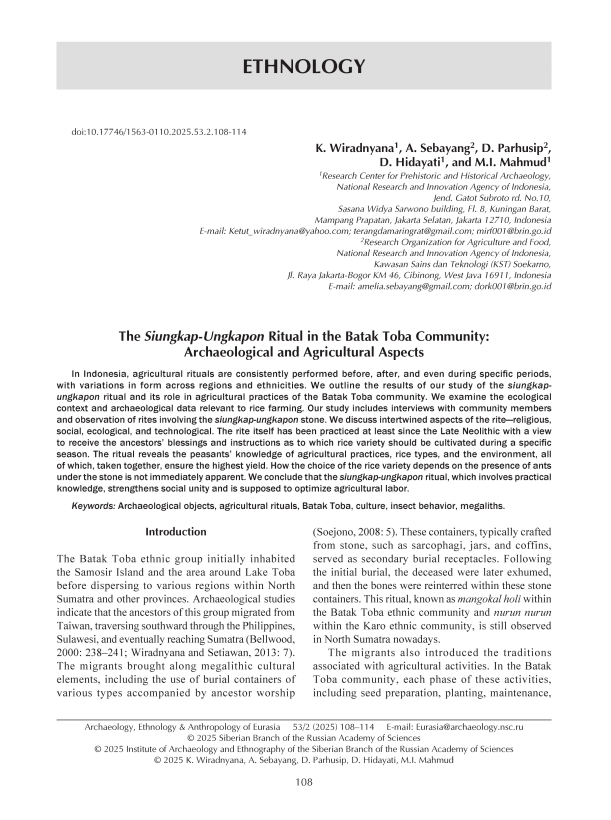
Batu siungkap-ungkapon , categorized as a lid for a stone burial jar, is associated with agricultural processes within the Batak Toba community residing in Tipang, Baktiraja District, Humbang
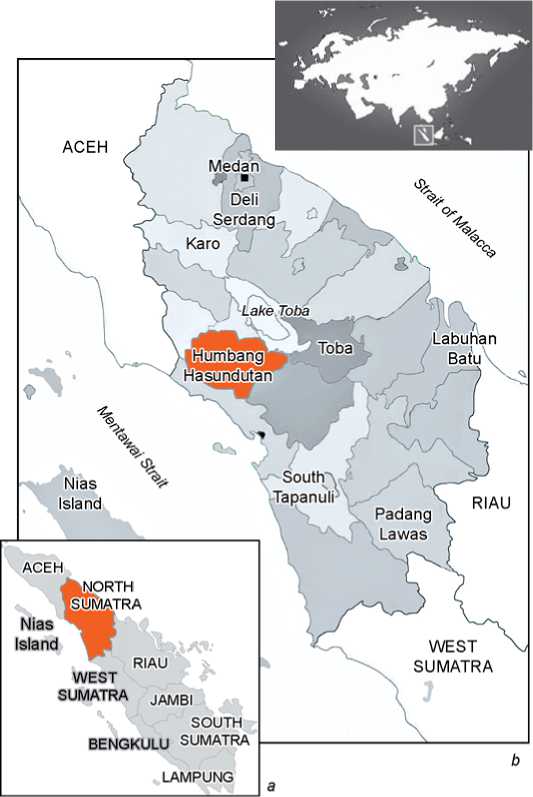
Fig. 1. Location of the North Sumatra Province ( a ) and Humbang Hasundutan Regency in this province ( b ).
Hasundutan Regency, North Sumatra Province (Wiradnyana, 2014: 19) (Fig. 1). Such jars, widespread across Samosir Island, served as burial receptacles and symbolized the presence of ancestors (Wiradnyana, 2018: 152; Wiradnyana, Setiawan, 2013: 48). Rituals associated with them are acts of reverence bestowed upon ancestors. The rituals conducted with burial containers necessitate specific means imbued with particular significance.
The siungkap-ungkapon ritual constitutes an agricultural ceremony, featuring offerings such as betel leaves and nuts and sacrificial animals. Its object is to solicit guidance from ancestors regarding the ideal type of rice to cultivate during the forthcoming planting season. The ceremony is typically overseen by traditional community leaders known as raja parjolo or raja bius, depending on the ceremony’s scale (Wiradnyana, 2014: 19). Within this context, the religious dimensions intertwined with agriculture, representing local wisdom within the Batak Toba community, are elucidated. This opens avenues for comprehending the Batak Toba community’s knowledge regarding rice varieties and planting practices, as well as the challenges entailed if uniformity in rice types and planting seasons is not observed.
The siungkap-ungkapon ritual epitomizes the knowledge underpinning the agricultural paradigm of the Batak Toba community, believed to be a product of social power (Jones, 2009: 212). However, it is perceived as a relic of bygone eras. Consequently, the Batak Toba community may no longer adhere to this knowledge paradigm, resulting in a lack of uniformity in rice types and planting seasons. Such changes may stem from cultural shifts.
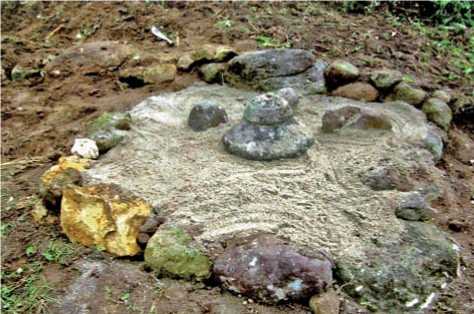
Fig. 2. Batu siungkap-ungkapon . Photographed by K. Wiradnyana .
Batu siungkap-ungkapon , as a part of a burial container, and the associated ritual, embody religious, socioeconomic, and environmental aspects of the Batak Toba community’s life (Geertz, 1992: 102; Abdullah, 2006: 144). Comprehending the significance of
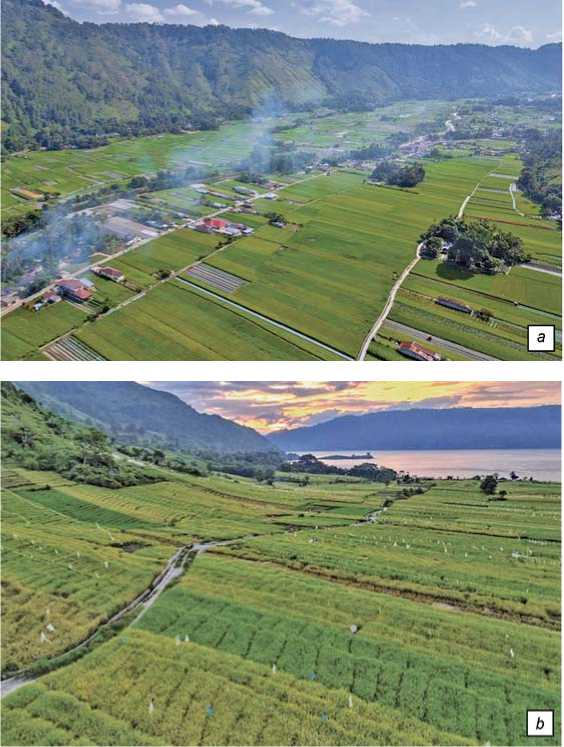
Fig. 3. Agriculture view in the Bakkara ( a ) and Tipang ( b ) valleys. Photographed by J. Siahaan, 2024.
a cultural artifact necessitates comprehensive insights into the artifact and its processes. This requires a qualitative discourse, incorporating archaeological and ethnographic elements, followed by analysis and interpretation contextualized within religion and agriculture as overarching domains, grounded in a continuous conceptual framework (Denzin, Lincoln, 2011: 547–580).
Batu siungkap-ungkapon is situated in the Hutasoit clan fields in the Baktiraja District, Humbang Hasundutan Regency, North Sumatra Province. This stone is positioned within a designated ceremonial area considered sacred ( toguan ). In the Batak Toba language, siungkap-ungkapon means “to be opened”. The stone is a sandstone archaeological object resembling a conical lid of a stone jar. It is placed in the middle of the stone structure (Fig. 2). Inside, there is a square-shaped hollow, which is a gathering place for ants in the siungkap-ungkapon ritual (Wiradnyana, 2014: 6).
During the farming season, the Raja Bius (ceremony leaders from a lineage, also known as Horja) (Vergouwen, 2004: 43; Simanjuntak, 2006: 178–188) and their descendants convene to perform the ritual. The Raja Bius invokes the ancestors for guidance concerning the rice-planting season. A few days later, he opens the stone lid to observe the color of the ant eggs: if these are white, white rice seeds are to be planted; if red, red rice seeds are chosen for planting (Wiradnyana, 2014: 6). In the Bakkara village, in the same district as the Tipang, the siungkap-ungkapon ritual is also practiced (Fig. 3). However, there it is more elaborate, with the symbolic object being the ants themselves, rather than their eggs. In Bakkara, as in Tipang, at the ritual’s conclusion, the batu siungkap-ungkapon is opened. The presence of red ants beneath the stone dictates the community’s planting of red rice seeds, while black ants signify the planting of white rice seeds (Hutauruk et al., 2023).
Siungkap-ungkapon ritual: archaeological aspect
The fertile land of the valleys of Samosir Island were ideal for agriculture, thus establishing the Batak Toba people as farmers. Archaeological studies indicate that the initial migration to the area around Lake Toba occurred in the Late Neolithic (early AD). Local folklore mentions that the progenitor of the Batak people Si Raja Batak resided in the Sianjur Mula Mula valley, an ideal area for agriculture. Farming, which was the main source of livelihood, was closely intertwined with all aspects of the ceremonies performed by the Batak Toba community. Mountains, hills, elevated places, water bodies, animals, and other environmental components related to agriculture became focal points of their religious practices (Nainggolan, 2012: 124; Wiradnyana, 2014: 19).
First, land ownership in the Batak Toba community was individual. The genealogical clan of the individual who initially cleared the land would pass it down to their male descendants, and this clan would become the primary (royal) clan. It held rights to all the land cleared by the ancestors. Over time, as the number of genealogies in the royal clan increased, the land would be divided, resulting in narrower plots. Then, the land became communal and there arose the need for proper management of agricultural activities. One method of management was collective farming, with the siungkap-ungkapon ritual representing one of its forms. The awareness of land ownership as ancestral property and the belief in the relationship between spirits and the living made this ritual indispensable.
The modern Batak Toba community, now predominantly Christian or Catholic, has experienced a gradual loss of traditional elements, although some aspects persist (Nainggolan, 2012: 6–7). This transformation is largely due to the adoption of new, more rational religious concepts that have altered the community’s behavior and understanding of rituals (Subagya, 1981: 213). As a result, the significance of the siungkap-ungkapon ritual has diminished, even though it still embodies relevant agricultural knowledge today.
The Batak Toba community holds that spirits govern specific territories, with each significant place being under the authority of a particular spirit, either genealogical or natural (Wiradnyana, Dalimunthe, Elyanta, 2021: 164). However, in ancestral land, the authority is vested in the ancestors. Burial containers are symbols of ancestral authority and serve as a means of communication with the ancestors. Consequently, ceremonies often include the presence of symbolic objects, such as the batu siungkap-ungkapon . The Batak Toba people believe in a reciprocal relationship between ancestral spirits and their descendants, where treating ancestors with respect is thought to elicit favorable treatment from them. In this context, the siungkap-ungkapon ritual is a form of supplication intended to seek ancestral protection for agricultural endeavors, ensuring defense against pests and promising a bountiful harvest (Fig. 4).
The relationship between spirits and the living embodies the concept of harmony in the Batak Toba community. The belief in the existence of structure and function in another world, which must also be visualized in the inhabited world, constitutes a form of harmony. This also reflects the aspect of orderliness,
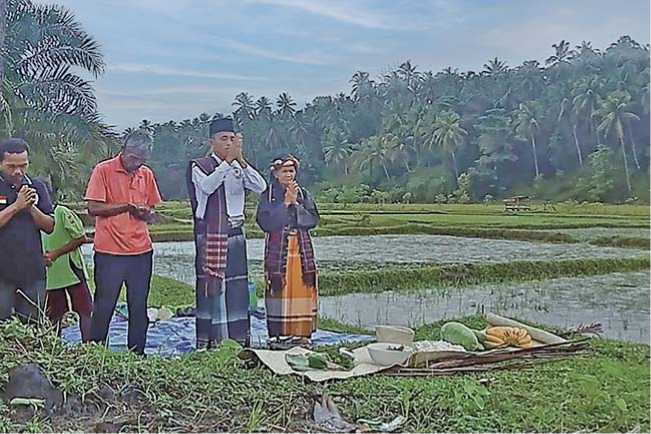
Fig. 4. Praying to ancestors for agricultural process and best harvest in the Batak Toba community. Photographed by S.J. Simarmata .
including the ritual practice. The siungkap-ungkapon ritual must be carried out in an orderly manner, ensuring that all aspects of agriculture, including planting seasons and types of rice seeds to be planted, adhere to a sense of orderliness (Prager, 2008; Nainggolan, 2012: 129–130).
The Austronesian society that migrated from Southern China to Taiwan and the Northern Philippines continued into the Malay Archipelago. These immigrants had an economy based on fishing and agriculture. They cultivated rice and millet. Initially, around 2000 BC, rice was grown in swamps or alluvial marshes. As the population grew, cultivation expanded to dry land. In Sumatra, forest clearing began around 2000 BC (Bellwood, 2000: 242), indicating that agriculture was practiced after this period. This is based on the discovery of rice grains in South Sulawesi around 1500 BP (Glover, 1985) and in Bali around 2660 BP (Simanjuntak, 2020: 221).
The Austronesian immigrants gradually brought religious practices associated with megalithic culture, which is evidenced by megaliths at Sulawesi and North Sumatra (Bellwood, 2000: 161–174; Berita..., 2016: 91). Archaeological studies show that the megalithic traditions were very intensive around 1000 BP (Berita..., 2016: 99). This is based on radiocarbon analysis of materials found in Waruga graves in North Sulawesi, including sites such as Woloan, Tomohon, and Tatelu, which date to 1540 ± 140 BP (140– 770 AD), 1260 ± 80 BP (644–954 AD), and 2070 ± ± 140 BP (400 BC to 230 AD). Some finds date to the 11–13th and 19th centuries AD (Umar, 2006: 45). Additional support for the Megalithic traditions in Sumatra is based on burials in urns, which became widespread after the 1st millennium AD. These urn burials, found at Lolo Gedang, Kerinci District, Jambi, and surrounding sites, date to 11–14th centuries AD (Budisantosa, 2011).
The siungkap-ungkapon ritual: agricultural aspect
The siungkap-ungkapon ritual encompasses several agricultural aspects, such as the life cycle and biology of ants, the diversity of local rice varieties, and abiotic factors (air temperature, rainfall, and humidity). In the past, there weren’t many options for rice types or varieties that could be planted, especially in dryland areas of medium to high altitude. Two colors of upland rice varieties thrive around Lake Toba, red and white. In this region, its biological cycle is approximately six months, with one planting season per year. Hence, the siungkap-ungkapon ritual is performed once a year to select the variety of rice to be sown.
Upland rice is susceptible to lack of moisture. When rainfall is low, periodic watering of crops is necessary. Rice is susceptible to pyriculariosis. The prevalence of this disease in rainfed paddy-fields can vary between planting seasons and regions (Asibi, Qiang Chai, Coulter, 2019: 2–3). The communal agricultural system involves simultaneous collective planting of rice, and of the variety determined through the siungkap-ungkapon ritual. Maintaining crop rotation (alternating crops or varieties) and planting at the optimal time reduce the risk of pest and disease infestations (Yulianto, 2017: 51–52). One of the preventive techniques against the development of rice blast disease is to avoid dense planting, as this weakens light and gas regimes and increases plant competition. Both red and white upland rice varieties essentially have the same resistance to pests and diseases, but the main goal of the ritual is the simultaneous planting of the same rice type. The cult of ants as an object used in the ritual is also a form of local knowledge in understanding the intended animal.
Ants (Hymenoptera: Formicidae) act as natural enemies, preying on insect pests, scavenging, and actively foraging. Ants prey on various types of insects, plant nectar, and secretions from Homoptera and Lepidoptera sticking to plants (Bhagat, Ganguli, Gauraha, 2020: 1397–1399; Abdullah et al., 2021: 2). Ants are social insects, which live in colonies, consisting of worker ants, soldier ants, and queens. Worker ants search for prey, while soldier ants immobilize and attract prey to be taken to their nest (Mizuno et al., 2021: 19; Parker, Kronauer, 2021: 1209–1210). Research by Abdullah et al. (2021: 3–5) states that ant diversity varies by location. The population of certain ant species in specific habitats shows an increase and significance based on favorable conditions for ants in nesting, feeding, and foraging.
In the siungkap-ungkapon ritual of the Batak Toba community, two types of ants determine rice planting, namely black and red ants. Based on classification, the latter belong to the Hymenoptera order, genus Solenopsis (fire ants). Research by (Abdullah et al., 2021: 3) on several vegetations with an abundance of Solenopsis sp. shows that red ants choose locations with high soil moisture, where they are more attracted to food than other ant species such as Pheidologeiton diversus, Anoplolepis gracilipes, and Dolichoderus thoracicus. The presence of red ants in the siungkap-ungkapon ritual is related to sacrifices. Sacrificial animals attract ants as a food source. Additionally, the moist environmental conditions are suitable for red ants’ development.
Black ants ( Dolichoderus sp.) are biological agents commonly found in plantation vegetation such as coconut and cocoa trees. They are known to control several major pests in coconut trees, such as Brontispa longissima (coconut leaf beetle) and Helopeltis theivora (tea mosquito bug), by preying on their larvae, pupae, and adults, reducing up to 80 % of the pest population (Anuar et al., 2017: 9–10). Furthermore, the increase in Dolichoderus sp. populations in coconut plantations decreases the incidence of fruit-rot disease. According to studies (Muhammad, Rizali, Rahardjo, 2022: 3321–3325), black ants prefer locations with high humidity, the presence of wide canopies, and proximity to food sources. They need nutrients such as proteins and carbohydrates. Foods that can attract ant colonies are fresh fish heads and honey. High protein content aids in faster growth of egg, larvae, pupae, and adult stages, while rich carbohydrate food provides ants with extra energy for movement (Wesley, MacGregor-Fors, 2021: 2–3). The presence of black ants in the siungkap-ungkapon ritual, as well as red ants, is related to the availability of sacrificial animals. Their connection to the selection of rice types to be planted is not explicitly explained.
So, ants function as tools to monitor environmental quality, track the trends among endangered or threatened species, evaluate land management actions and long-term ecosystem changes, as well as detectors for the presence of invasive species (Underwood, Fisher, 2006: 168–177). The characteristics of ants (especially red) align with local community knowledge about ants themselves about environmental conditions associated with pests and diseases that may occur during the rice planting season. Therefore, the siungkap-ungkapon ritual is a form of local wisdom of the Batak Toba community.
Conclusions
Batu siungkap-ungkapon has the appearance of a conical lid of a burial vessel, which is characteristic of the ancestral burial tradition of the Batak Toba community in Tipang, Humbang Hasundutan Regency. The ritual is also observed by the Bakkara community in the same regency. This points to the historical role of batu siungkap-ungkapon, which symbolizes the enduring presence of ancestors in every agricultural endeavor. The ritual conducted with the stone represents a manifestation of communal wisdom, honoring ancestors while managing agricultural land and coordinating planting seasons to address pest and disease challenges in rice cultivation. Additionally, the ritual underscores the deep understanding of the role of ants in agriculture. The siungkap-ungkapon ritual serves as a poignant illustration of the Batak Toba community’s agricultural livelihood, emphasizing their unity in rice cultivation.
