
Зависимость естественного возобновления хвойных пород от типов леса и таксационных показателей материнского древостоя в Орлинском участковом лесничестве Ленинградской области
Журнал: Лесохозяйственная информация @forestry-information
Рубрика: Лесоведение и лесоводство
Статья в выпуске: 1, 2026 года.
Бесплатный доступ
Исследовано влияние типов леса и таксационных показателей материнского древостоя на появление и развитие подроста хвойных пород в Орлинском участковом лесничестве Ленинградской обл. Изучались еловые, сосновые, березовые и осиновые древостои с относительной полнотой от 0,4 до 1,0 и подростом ели европейской и сосны обыкновенной. На объектах исследования представлены участки со следующими типами леса: долгомошные, кисличные, сфагновые, травяно-сфагновые, травяно-таволжные, черничные, багульниковые. Установлено, что подрост ели европейской лучше возобновляется в черничном и долгомошном типах леса, где его средняя численность составляет 2,0 тыс. экз./га. Подрост сосны обыкновенной обнаружен только в сфагновом и багульниковом типах леса. Оптимальные условия для появления и развития жизнеспособного подроста формируются при относительной полноте древостоя 0,8–0,9. В еловых и сосновых насаждениях наиболее успешное возобновление молодого поколения ели происходит со II по VI класс возраста, в березовых – в V–VI, в осиновых – в IV классе. Необходимое для успешного возобновления количество елового подроста отмечается при доле ели в составе древостоя 3, 7, 9, 10 единиц. Под пологом соснового древостоя численность елового подроста, как правило, не соответствует нормативным требованиям и варьирует от 1,4 тыс. до 1,9 тыс. экз./га. Исключением являются древостои с долей сосны в составе 4 и 5 единиц, под пологом которых количество елового подроста достигает 2,3 тыс. и 2,5 тыс. экз./га соответственно. В насаждениях с участием березы и осины наибольшая численность подроста ели (2,4 тыс. экз./га) наблюдается при их доле в составе 6 единиц. С увеличением густоты подлеска количество елового подроста снижается с 1,8 тыс. до 1,1 тыс. экз./га, а при полном его отсутствии численность подроста ели европейской обеспечивает успешное формирование взрослого древостоя.
Похожие статьи в разделе Лесное хозяйство. Лесоводство
Короткий адрес: https://sciup.org/143185529
IDS: 143185529 | УДК: 630.231.1 | DOI: 10.24419/LHI.2304-3083.2026.1.02
Dependence of Natural Regeneration of Coniferous Species on Forest Types and Taxation Indicators of the Mother Stand in the Orlinsky District Forestry of the Leningrad region
The influence of forest types and taxation indicators of the mother stand on the appearance and development of coniferous undergrowth in the Orlinsky district forestry of the Leningrad region has been studied. Spruce, pine, birch and aspen stands with relative completeness from 0.3 to 1.0 and the age of European spruce and Scots pine were taken into account. For the study of natural renewal, 1,265 test areas were laid. The undergrowth was recorded using circular platforms with a constant radius of 1.78 m or 10 m2. Sites with the following types of forest were marked at the objects of this study: long-mossy, acidic, sphagnum, herb-sphagnum, herb-tavolzhny, blueberry, and bagulnik. It was found that the undergrowth of the European spruce is better resumed in the blueberry and longmose types of forest, the average number of which is 2.0 thousand copies/ha. The undergrowth of the Scots pine was found only in the sphagnum and bagulnik forest types. The most successful renewal of conifers takes place at a relative completeness of 0.8–0.9. In spruce and pine plantations, the most successful renewal of the young generation of spruce occurs from the second to the sixth class of age, in birch plantations from the fifth to the sixth class, and in aspen plantations in the fourth class. The average number of European spruce undergrowth satisfies the amount necessary for successful renewal, with the proportion of spruce in the composition of 3, 7, 9, 10 units. The number of spruce undergrowth under the canopy of a pine stand mostly does not correspond to the required amount for successful renewal and ranges from 1.4 to 1.9 thousand copies/ha. With the proportion of pine in the composition equal to 4 and 5 units, the amount of spruce undergrowth necessary for reforestation grows – 2.3 and 2.5 thousand copies/ha, respectively. In plantations with a proportion of birch and aspen equal to 6 units, the largest number of the younger generation of spruce is observed and amounts to 2.4 thousand copies/ha. With an increase in the density of the undergrowth, the number of spruce undergrowth decreases from 1.8 thousand copies/ha to 1.1 thousand copies/ha, respectively. In the complete absence of undergrowth, the number of European spruce undergrowth corresponds to the amount necessary for the successful formation of an adult stand.
Текст научной статьи Зависимость естественного возобновления хвойных пород от типов леса и таксационных показателей материнского древостоя в Орлинском участковом лесничестве Ленинградской области
Лес – один из важнейших природных ресурсов, обладающий материальными и нематериальными ценностями, а самое главное – способностью к самовозобновлению. Это одно из основных свойств леса, выработанных в ходе естественного отбора.
В условиях таёжной зоны естественное лесовозобновление имеет определённые преимущества перед созданием лесных культур, особенно на удалённых, труднодоступных участках леса, так как не требует значительных затрат и способствует формированию древостоев, более устойчивых к неблагоприятным факторам среды.
Наблюдение за появлением подроста и развитием подлеска позволяет оценить значение растительности нижних ярусов в восстановительных процессах фитоценоза, сохранении его устойчивости и улучшении продуктивности [1–3]. Многолетние исследования по развитию подроста свидетельствуют, что его потенциал к формированию верхнего яруса ограничен [4–12]. Значительная часть подроста обречена на гибель, а оставшейся может оказаться недостаточно для замены старого древостоя.
Конкуренция со стороны других видов растений нижних ярусов за ключевые компоненты окружающей среды, такие как свет, влага и минеральные вещества, представляет собой главную угрозу для елового подроста. С целью сохранения и создания благоприятных условий для новых генераций ели необходимо осуществлять разреживание подлеска или удалять его [13].
Успешность естественного лесовозобновления зависит, прежде всего, от биологических особенностей пород, но не менее важными являются условия произрастания, природная зона, происхождение древостоя и его таксационные показатели.
Цель исследования – изучение влияния типов леса и таксационных показателей древостоя на появление и развитие подроста хвойных пород в Орлинском участковом лесничестве Ленинградской обл.
Объекты и методика исследования
Исследования проводили в 2022–2023 гг. в Орлинском участковом лесничестве Ленинградской обл., которое относится к Балтийско-Бе-лозёрскому таёжному району. На территории лесничества преобладающими породами являются ель и берёза, гораздо реже встречаются сосна, осина и ольха. Из широколиственных пород распространены клён, липа и ясень. Наиболее представлены (58% площади) насаждения кисличного (31%) и черничного (27%) типов леса.
Исследования проводили на 1 265 временных пробных площадях, заложенных в еловых, сосновых, березовых и осиновых древостоях полнотой от 0,4 до 1,0 с подростом сосны обыкновенной и ели европейской.
При таксации пробных площадей применяли метод сплошного перечёта по ступеням толщины [14, 15]. Для оценки успешности естественного возобновления на каждой пробной площади по диагонали максимально равномерно размещали по 100 учётных круговых площадок размером 10 м2 (радиус 1,78 м). На учётных площадках фиксировали следующие параметры подроста: число, жизнеспособность, высоту и встречаемость [16]. При оценке состояния подроста выделяли три категории: жизнеспособный, нежизнеспособный и сухой. Возраст подроста устанавливали по мутовкам с точностью до одного года. В некоторых случаях определяли ежегодный прирост [17, 18].
Состав молодняков оценивали по доле участия деревьев каждого элемента леса [13]. Для классификации типов леса применялась эдафо-фи-тоценотическая схема В.Н. Сукачева [19]. Учёт подлеска проводили на тех же учётных площадках и по той же методике, что и подрост.
Полученный материал был обработан методами математической статистики с помощью приложения Microsoft Excel.
Результаты и обсуждение
На объектах исследования выявлены участки со следующими типами леса: долгомошные, кисличные, сфагновые, травяно-сфагновые, травяно-таволжные, черничные, багульниковые. Средняя численность и статистические показатели учёта подроста ели европейской и сосны обыкновенной приведены в табл. 1.
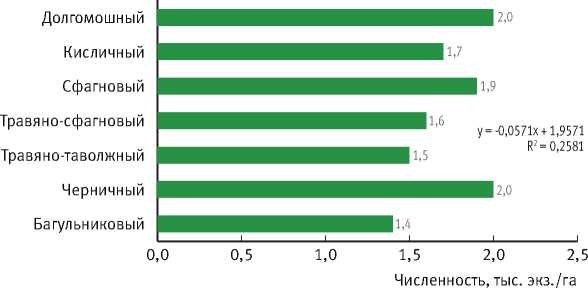
Наибольшая численность подроста ели европейской наблюдается в черничном и дол-гомошном типах леса, где составляет в среднем 2,0 тыс. экз./га (рис. 1). Такое количество способно обеспечить успешное лесовозобновление. В черничном типе леса появлению и формированию жизнеспособного подроста способствуют богатые почвы, отсутствие мощного слоя лесной подстилки, а также подходящие для данной древесной породы условия увлажнения. В долгомош-ном типе леса древостои произрастают на сла-бодренированных, суглинистых, полуболотных почвах [20–22]. Подрост хорошо возобновляется благодаря редкому подлеску и низкой относительной полноте насаждений.
В кисличном типе леса средняя численность подроста ели европейской не удовлетворяет условиям успешного возобновления и составляет 1,7 тыс. экз./га, что может быть связано с за-дернённостью почвы и высокой конкуренцией с травяно-кустарниковым ярусом.
Подрост сосны обыкновенной зафиксирован только в сфагновом и багульниковом
Ель европейская
Рис. 1. Зависимость естественного возобновления ели европейской от типов леса типах леса по 1,4 тыс. экз./га в каждом, что недостаточно для успешного возобновления. Это можно объяснить избыточным увлажнением, которое затрудняет прорастание семян и дальнейшее развитие нового поколения данной древесной породы [23, 24].
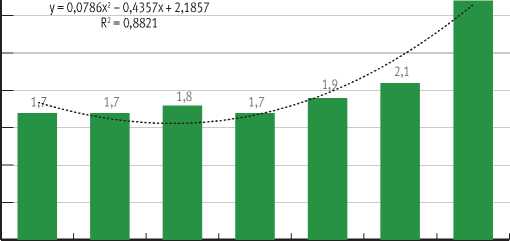
Исследование влияния относительной полноты древостоя на формирование молодого поколения проводилось в древостоях различного состава с полнотой от 0,4 до 1,0. Средняя численность подроста ели европейской и сосны обыкновенной под пологом материнского древостоя представлена в табл. 2 и на рис. 2.
Таблица 1. Статистические показатели учёта естественного возобновления ели европейской и сосны обыкновенной в разных типах леса (Орлинское участковое лесничество Ленинградской обл.)
|
Тип леса |
Средняя численность подроста, тыс. экз./га |
Коэффициент встречаемости, % |
Коэффициент вариации, % |
Точность исследования, % |
Коэффициент гомогенности |
|
Естественное возобновление ели европейской |
|||||
|
Долгомошный |
2,0±0,25 |
78,3 |
63,8 |
3,9 |
0,8 |
|
Кисличный |
1,7±0,95 |
69,0 |
55,0 |
4,2 |
0,5 |
|
Сфагновый |
1,9±0,58 |
67,9 |
79,7 |
11,3 |
1,3 |
|
Травяно-сфагновый |
1,6±0,11 |
63,1 |
71,7 |
12,0 |
0,8 |
|
Травяно-таволжный |
1,5±0,04 |
63,0 |
68,2 |
5,3 |
0,7 |
|
Черничный |
2,0±0,29 |
76,8 |
62,6 |
2,9 |
0,8 |
|
Багульниковый |
1,4±0,48 |
55,4 |
104,1 |
12,1 |
1,5 |
|
Естественное возобновление сосны обыкновенной |
|||||
|
Сфагновый |
1,4±0,55 |
42,0 |
39,1 |
17,5 |
0,2 |
|
Багульниковый |
1,4±0,48 |
39,2 |
34,8 |
17,4 |
0,2 |
Таблица 2. Средняя численность подроста ели европейской и сосны обыкновенной при разной относительной полноте материнского древостоя
|
Относительная полнота материнского древостоя |
Средняя численность елового подроста, тыс. экз./га |
Средняя численность соснового подроста, тыс. экз./га |
|
0,4 |
1,7±0,33 |
|
|
0,5 |
1,7±0,05 |
1,7±0,58 |
|
0,6 |
1,8±0,25 |
|
|
0,7 |
1,7±0,12 |
1,3±0,58 |
|
0,8 |
1,9±0,21 |
- |
|
0,9 |
2,1±0,11 |
- |
|
1,0 |
3,2±0,10 |
- |
Численность, тыс. экз./га
3,2
3,5
3,0
2,5
2,0
1,5
1,0
0,5
0,4 0,5 0,6 0,7 0,8 0,9 1,0
Относительная полнота
Рис. 2. Зависимость естественного возобновления ели европейской от относительной полноты материнского древостоя
Установлено, что численность подроста ели европейской удовлетворяет условиям успешного лесовозобновления при полноте древостоев 0,9 и 1,0 (2,1 тыс. и 3,2 тыс. экз./га соответственно). В то же время на всех учётных площадках, где был зафиксирован подрост сосны обыкновенной, его численность оказалась ниже установленных нормативных значений (2,0 тыс. экз./га) [25].
Зависимость естественного возобновления хвойных пород от относительной полноты материнского древостоя для каждого типа леса представлена в табл. 3.
Исследования показали, что наиболее благоприятные условия для появления и формирования жизнеспособного подроста в долго-мошном типе леса отмечаются при относительной полноте древостоя 0,5; в сфагновом – 0,9; травяно-сфагновом – 0,8; кисличном – 0,9–1,0;
в травяно-таволговом, черничном и багульниковом типах леса – при относительной полноте 1,0.
На объектах исследования возраст материнских еловых и сосновых древостоев с наличием елового подроста варьирует в пределах от II до VIII класса возраста, а материнских березовых и осиновых древостоев – от V до X класса. Однако оценить успешность возобновления соснового подроста невозможно, так как нет необходимого количества учётных площадок.
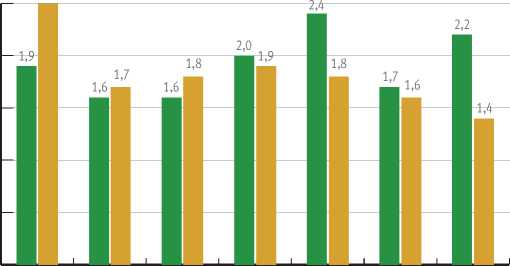
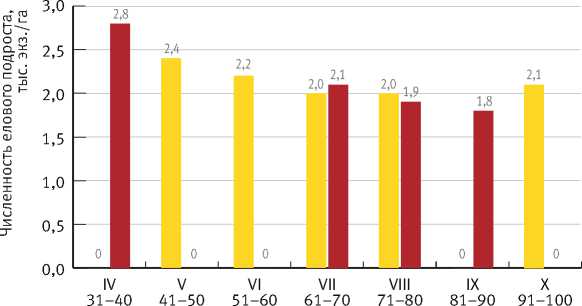
Средняя численность елового подроста в материнских еловых, сосновых, березовых и осиновых древостоях в зависимости от возраста представлена на рис. 3 и 4.
Активное появление и формирование молодого поколения ели европейской под пологом соснового материнского древостоя происходит в 35–40 лет и составляет 2,5 тыс. экз./га. В еловых насаждениях наибольшая численность елового подроста была отмечена в VI классе возраста (2,4 тыс. экз./га), в осиновых и березовых материнских древостоях – в IV и V классах возраста (2,8 тыс. и 2,4 тыс. экз./га соответственно). Далее, с увеличением класса возраста, отмечается тенденция снижения его численности.
Анализируя данные рис. 3 и 4, можно сформулировать вывод о том, что в еловых и сосновых насаждениях наиболее успешно возобновление молодого поколения ели происходит со II по VI класс возраста, в берёзовых – в V–VI, в осиновых – в IV классе, что объясняется благоприятными условиями для формирования нового поколения.
|
Относительная полнота материнского древостоя |
Средняя численность подроста, тыс. экз./га |
Долгомошный тип леса
|
0,5 |
2,7±0,41 |
|
0,6 |
2,1±0,11 |
|
0,7 |
1,8±0,15 |
|
0,8 |
1,9±0,22 |
|
0,9 |
2,3±0,45 |
Кисличный тип леса
|
0,5 |
2,0±0,20 |
|
0,6 |
1,7±0,03 |
|
0,7 |
1,9±0,19 |
|
0,8 |
2,1±0,02 |
|
0,9 |
2,4±0,54 |
|
1,0 |
2,3±0,20 |
Таблица 3. Зависимость естественного возобновления ели европейской от относительной полноты материнского древостоя в различных типах леса
|
Относительная полнота материнского древостоя |
Средняя численность подроста, тыс. экз./га |
|
Травяно-таволжный тип леса |
|
|
0,5 |
1,2±0,61 |
|
0,6 |
1,4±0,09 |
|
0,7 |
1,5±0,06 |
|
0,8 |
1,6±0,05 |
|
0,9 |
1,8±0,31 |
|
1,0 |
4,0±0,82 |

2,5
2,0
1,5
1,0
0,5
0,0
II 21–40 лет
III 41–60 лет
IV V VI VII VIII
61–80 81–100 101–120 121–140 141–160
лет лет лет лет лет
Класс возраста
и Еловый древостой и Сосновый древостой
Рис. 3. Зависимость естественного возобновления ели европейской от возраста елового и соснового материнского древостоя
Сфагновый тип леса
|
0,5 |
2,1±0,35 |
|
0,6 |
1,5±0,98 |
|
0,7 |
2,0±0,18 |
|
0,8 |
2,1±0,03 |
|
0,9 |
2,5±0,59 |
Черничный тип леса
|
0,4 |
2,1±0,33 |
|
0,5 |
1,9±0,05 |
|
0,6 |
2,4±0,47 |
|
0,7 |
1,9±0,20 |
|
0,8 |
2,0±0,20 |
|
0,9 |
2,1±0,29 |
|
1,0 |
3,1±0,94 |
Травяно-сфагновый тип леса
|
0,5 |
1,1±0,63 |
|
0,6 |
1,5±0,08 |
|
0,7 |
1,5±0,07 |
|
0,8 |
1,7±0,03 |
|
0,9 |
1,1±0,36 |
Багульниковый тип леса
|
0,5 |
1,7±0,17 |
|
0,6 |
2,2±0,47 |
|
0,7 |
2,0±0,45 |
|
0,8 |
2,1±0,47 |
|
0,9 |
2,0±0,09 |
|
1,0 |
2,9±0,20 |
лет лет лет лет лет лет лет
Класс возраста
и Березовый древостой и Осиновый древостой
Рис. 4. Зависимость естественного возобновления ели европейской от возраста березового и осинового материнского древостоя
Чтобы установить зависимость средней численности подроста хвойных пород от состава материнского древостоя, были рассмотрены чистые и смешанные древостои. Под пологом материнских сосновых и еловых древостоев подрост в основном представлен елью европейской, гораздо реже встречается сосна обыкновенная.
Средняя численность подроста ели в зависимости от состава материнского древостоя представлена в табл. 4.
Под пологом елового древостоя количество подроста ели европейской достаточно для успешного возобновления при доле ели в составе 3, 7, 9, 10 единиц и составляет 2,3 тыс., 2,1 тыс., 2,1 тыс. и 2,2 тыс. экз./га соответственно.
В насаждениях с участием сосны количество елового подроста, как правило, колеблется от 1,4 тыс. до 1,9 тыс. экз./га, что недостаточно для формирования молодого поколения. Исключение составляют древостои с долей
Таблица 4. Зависимость средней численности естественного возобновления ели европейской от доли породы в составе материнского древостоя
|
Доля породы в составе материнского древостоя |
Средняя численность подроста ели, тыс. экз./га |
|
Ель |
|
|
3Е |
2,3±0,22 |
|
4Е |
1,7±0,83 |
|
5Е |
1,8±0,17 |
|
6Е |
1,9±0,53 |
|
7Е |
2,1±0,70 |
|
8Е |
1,7±0,25 |
|
9Е |
2,1±0,38 |
|
10Е |
2,2±0,27 |
|
Сосна |
|
|
3С |
1,9±0,53 |
|
4С |
2,3±0,43 |
|
5С |
2,5±0,15 |
|
6С |
1,9±0,03 |
|
7С |
1,9±0,04 |
|
8С |
1,9±0,09 |
|
9С |
1,6±0,07 |
|
10С |
1,4±0,08 |
|
Доля |
Средняя |
|
породы |
численность |
|
в составе |
подроста |
|
материнского |
ели, |
|
древостоя |
тыс. экз./га |
Берёза
|
4Б |
1,5±0,75 |
|
5Б |
1,6±0,02 |
|
6Б |
2,4±0,46 |
|
7Б |
2,0±0,18 |
|
8Б |
1,9±0,48 |
|
9Б |
1,6±0,82 |
|
10Б |
1,0±0,76 |
Осина
|
4Ос |
1,8±0,15 |
|
5Ос |
2,2±0,14 |
|
6Ос |
2,4±0,95 |
|
7Ос |
2,0±0,03 |
|
8Ос |
1,6±0,41 |
сосны в составе 4 и 5 единиц, где численность подроста достигает 2,3 тыс. и 2,5 тыс. экз./га соответственно.
Численность елового подроста, тыс. экз./га
Относительная полнота
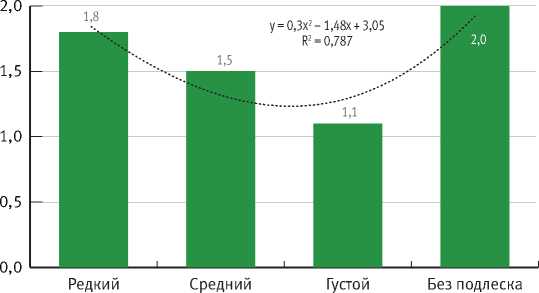
Рис. 5. Зависимость естественного возобновления ели европейской от густоты подлеска
В насаждениях с берёзой и осиной наибольшая численность молодого поколения ели (2,4 тыс. экз./га) наблюдается при их доле в составе 6 единиц, однако при повышении их участия количество ели в подросте снижается. Это связано с увеличением освещенности под пологом лиственных древостоев, вследствие чего разрастаются травы, которые препятствуют появлению и формированию подроста.
На основании полученных результатов можно отметить комплексное влияние различных таксационных показателей насаждения на появление и развитие подроста хвойных пород.
Так, наибольшая численность подроста ели наблюдается:
/ в еловых насаждениях - в черничном и долгомошном типах леса, в основном в спелых и перестойных, с относительной полнотой 0,9–1,0.
^ в сосновых насаждениях - в долгомош-ном, сфагновом и черничном типах леса, в основном в спелых и перестойных, с относительной полнотой 0,8–0,9.
^ в березовых насаждениях - в черничном и кисличном типах леса, в основном в приспевающих, с относительной полнотой 0,8–0,9.
Подрост сосны в сфагновом и багульниковом типах леса с относительной полнотой материнского древостоя 0,5 и 0,7 произрастает в количестве, недостаточном для успешного возобновления (1,7 тыс. и 1,3 тыс. экз./га соответственно).
На объектах исследования также изучен подлесок различной густоты, однако на некоторых учётных площадках он отсутствовал. Видовой состав подлеска представлен преимущественно ивой козьей, рябиной обыкновенной, крушиной ломкой и ольхой серой.
Зависимость средней численности подроста ели европейской от густоты подлеска представлена на рис. 5.
С увеличением густоты подлеска численность елового подроста снижается с 1,8 тыс. до 1,1 тыс. экз./га. При отсутствии подлеска численность подроста ели европейской достаточна для успешного формирования взрослого древостоя [25].
Необходимо отметить, что подлесок редкой и средней густоты не только не препятствует успешному возобновлению подроста ели, но и создаёт благоприятные условия для его роста и развития: он притеняет почву, уменьшая испарение влаги, и заглушает травяную растительность.
Выводы
Таким образом, появление и развитие хвойного подроста на лесных участках зависит от типа леса и таксационных показателей материнского древостоя.
На объектах исследования подрост представлен в основном елью европейской, сосна обыкновенная встречается гораздо реже, есть пробные площади с елово-сосновым или сосново-еловым подростом (6Е4С, 9Е1С, 5С5Е, 6С4Е). Оптимальные условия для появления и развития подроста складываются под пологом материнского елового и в 35–40-летнем сосновом древостое при относительной полноте 0,8–0,9.
Состав материнского древостоя оказывает большое влияние на подрост ели европейской и сосны обыкновенной. Согласно нашим исследованиям, необходимое для успешного возобновления количество елового подроста отмечается при доле ели в составе 3, 7, 9, 10 единиц, при доле сосны – 4, 5 единиц, при доле березы и осины – 6 единиц.
Наибольшая средняя численность молодого поколения ели (2,0 тыс. экз./га) зафиксирована на учётных площадках без подлеска. Это объясняется отсутствием высокой конкуренции между подростом и подлеском за свет, влагу и минеральные элементы.
