
A Hybrid 3D Gaussian Splatting and Photogrammetry Framework for Industrial Virtual Reality-Based Fire Safety Training
Journal: International Journal of Information Technology and Computer Science @ijitcs
Article in issue: 4 Vol. 18, 2026.
Free access
In high-hazard workplaces like packaging facilities, effective fire safety is critical, but conventional practices fail to recognize actual hazards and are highly expensive to implement. This paper presents a hybrid reconstruction and artificial intelligence-driven framework that can potentially be applied to build interactive virtual reality environments. The objective of this study is to develop a scalable and cost-effective Virtual Reality based fire safety training system that balances realism and interactivity. To balance visual fidelity and interactivity, a hybrid reconstruction pipeline was developed. The complex background environment was reconstructed and rendered using 3D Gaussian Splatting, while for reconstructing key industrial objects as solid and interactive meshes, photogrammetry is used. An artificial intelligence-based system has been adopted for automatic object detection using You Only Look Once version 11 (YOLOv11) and material-based hazard classification using Bidirectional Encoder Representations from Transformers (BERT). In addition, interaction options are generated using a text generation model Fine-tuned Language Net Text-to-Text Transfer Transformer (FLAN-T5). The results indicate that the proposed framework produces high rendering capabilities with high precision, enabling efficient and scalable development of industrial safety training modules.
Short address: https://sciup.org/15020662
IDS: 15020662 | DOI: 10.5815/ijitcs.2026.04.08
Text of the scientific article A Hybrid 3D Gaussian Splatting and Photogrammetry Framework for Industrial Virtual Reality-Based Fire Safety Training
In industrial settings, fire incidents continue to be a key contributing factor to workplace injuries [1, 2]. This is especially true in packaging facilities that contain class A combustibles, electrical panels, shrink wrap, and battery changing stations, all of which have various ignition risks [2]. The current fire safety training in this environment is hard to scale. It is interruptive and often relies on theoretical demonstrations as opposed to practical and realistic exercises. With the growing demand for immersive and low-risk skills training, virtual reality is now an important tool for practical safety education [1, 2]. However, making realistic, interactive VR models of complicated industrial environments is technically challenging. VR platforms must achieve a balance between high visual quality, real-time performance, and accurate scene physics [3-5]. Recent advancements have been made possible in the field of neural rendering, especially the Neural Radiance Fields (NeRF) method. However, the NeRF method is computationally costly due to volumetric ray marching. It is also time-consuming to train the NeRF method. In addition, the NeRF method is costly in terms of GPU usage. It is not possible to use the NeRF method for virtual reality applications because of the requirement of 90+ FPS latency. [6-9]. Although photogrammetry provides solid meshes that can be used with physics engines, purely mesh-based reconstructions often lack the visual detail needed for immersive training, particularly in cluttered industrial environments [9,10]. To overcome these challenges, this work proposes a hybrid reconstruction pipeline that combines 3D Gaussian splatting (3DGS) for real-time, highly realistic rendering [10-13], and photogrammetry for generating physics-compatible meshes [14-16]. We also integrate AI-based scene intelligence YOLOv11 (You Only Look Once –
This work is open access and licensed under the Creative Commons CC BY 4.0 License.
Version 11), FLAN-T5 (Fine-tuned Language Net – Text-to-Text Transfer Transformer), and BERT (Bidirectional Encoder Representations from Transformers) for automated context-aware interaction design [17-24]. 3DGS eases the computational load of NeRF by using a rasterization-based renderer capable of hundreds of FPS, while photogrammetry provides precise geometry for objects that require collision handling or user interaction [14, 18]. The result is a high-fidelity, physically interactive, and AI-enhanced VR fire safety training system suitable for deployment in a real industrial environment. While prior hybrid Gaussian approaches such as SuGaR, VR-GS, and PhysGaussian enable mesh extraction or physics-aware simulation from 3DGS [12-14], these remain general-purpose reconstruction frameworks. This work proposes a domain-specific framework for industrial fire-safety training, with three key contributions:
• Hybrid 3D reconstruction pipeline: Combines 3D Gaussian Splatting for photorealistic backgrounds with photogrammetric meshes for interactive foreground objects, preserving visual fidelity while enabling physics-accurate safety equipment interaction.
• AI-driven scene intelligence: This involves the integration of YOLOv11 object detection and fire class prediction based on BERT to automatically derive safety-relevant interactions, thus avoiding the need to manually create scenarios.
• Accelerated VR content generation: Reduces VR environment creation from weeks (264h) to hours (35h) through automated reconstruction and AI-driven interaction assignment.
2. Literature Review2.1. VR-Based Fire Safety Training
2.2. Gaussian Splatting and Neural Rendering
Neural Radiance Fields (NeRF) provides impressive photorealism, but they are too slow for real-time virtual reality applications, which requires high frame rates of at least 90 frames per second (FPS). NeRF works using volumetric ray marching, which causes long rendering time [9]. The rates recorded for even optimized NeRF models on a mobile GPUs are no more than 0.8 FPS, which is approximately 100 times slower than required for immersive VR [8, 9]. In 2023, Kerbl et al. introduced 3D Gaussian Splatting (3DGS) to solve this limitation [7]. This method represents scenes as groups or clusters of 3D Gaussians and uses a tile-based rasterization. As a result, 3DGS shows excellent visual quality while maintaining training times short [7], with an average Peak Signal-to-Noise Ratio (PSNR) of 37dB [7]. Optimized executions can render at speeds over 100 to 120 FPS for 2K binocular rendering [10, 11]. However, these images have low interactivity which represents the unstructured design of Gaussian splats. They do not provide a clear surface geometry needed for standard physics engines to handle collisions or grasping. Several recent studies help to solve this issue. SuGaR (Surface-Aligned Gaussian Splatting), created by Gue´don and Lepetit, enables quick and accurate mesh extraction from 3D Gaussian Splatting [12]. This method provides a regularization term to help Gaussians align with
2.3. Photogrammetry and Hybrid Reconstruction
2.4. AI-Based Scene Intelligence
AI-driven scene understanding allows adaptive and context-aware training scenarios. In the area of fire detection environments, YOLO-based architectures have shown to be effective. YOLOFM, proposed by Geng et al. to solve fire detection problems such as the low quality of feature extraction and high computational overheads, achieves enhancements of 3.1% in precision, 3.9% in recall, 3.0% in F1 score, and 2.2% in mAP50-95 compared to the YOLOv5n baseline [17]. For low resource device, lightweight fire detection models show strong accuracy. Edge Fire Smoke achieves 98.97% accuracy and a 95.77% F1 score while needing just about 30 ms to classify each image [21]. This makes it practical for real-time use on edge devices and standalone VR headsets. Similarly, FireNet Lite reaches 96% accuracy and runs at 36 FPS on Raspberry Pi 4, proving that real-time fire detection can work on embedded systems [22, 23]. Moving beyond simple perception, large language models (LLMs) and vision-language models (VLMs) are now making it possible to understand and reason about 3D environments in a more meaningful way. LLMs are used in LIVE-GS, a realistic and interactive VR system that was first presented by Mao et al. in 2024 to improve user engagement [25]. Language models can offer classification logic for emergency management in rule-based emergency response. It has been demonstrated that AI-driven adaptive learning greatly increases safety knowledge in VR serious games. Research indicates that when compared to static content delivery, personalized, adaptive training systems produce better learning outcomes [2, 3, 26]. In conclusion, the AI literature demonstrates robust abilities for semantic scene reasoning through LLMs and fire detection with over 96% accuracy [17-25].
2.5. Research Gaps
Unlike previous approaches that have traditionally been geared toward geometric reconstruction and physics-based simulations, the approach is geared toward addressing the needs of industrial safety training by the addition of scene understanding and interaction generation. The novelty lies primarily in system-level integration and domain - specific adaptation, rather than in proposing a new rendering algorithm.
Virtual Reality (VR) is transforming how we train for safety in high-risk industrial settings, where traditional physical drills can be expensive, disruptive, and even risky. This review covers four major areas that are significantly important for the system we are proposing: 1) effectiveness of VR technology for safety training, 2) advancements in the neural rendering technique and 3D Gaussian Splatting, 3) methods for creating hybrid scene reconstructions, and 4) using AI to enhance scene intelligence.
Virtual reality (VR) is increasingly being used to improve industrial facility safety. According to a comprehensive review of 44 studies on VR training for industries, found that VR is great for maintaining user engagement, improving safety, reducing risk, and being cost-efficient [1]. VR training also requires less equipment than traditional physical drills [1, 5]. For example, a study on the use of virtual reality (VR) for construction safety training found that participants who received VR training finished tasks significantly more quickly than those who received traditional training methods (SMD = -0.81, 95% CI [-1.45 to -0.17]; p = 0.01) [5]. Previously, just being immersed in a Virtual environment was seen as beneficial; however, now researchers are looking at how to balance realistic graphics with accurate physical simulations [3, 5]. For realistic fire-spread patterns, which are frequently modeled using complex and resource-intensive Computational Fluid Dynamics (CFD), which are crucial for industrial training [5]. Other research has examined the role of realistic controllers and haptic feedback systems. When analyzing VR firefighter training, they found both positive and negative aspects, positive such as the ability to repeat the training and conducting training safely, but also some downsides, like not having realistic haptic feedback and the risk of motion sickness [2, 3]. They discovered that using a combination of one realistic controller and one standard controller is the most effective way for balancing immersion with mental effort, which goes against the idea that more realism is always better [3]. In summary, many existing systems remain limited to manually scripted scenarios and don’t use AI to generate adaptive hazards [6].
the scene surface and uses this alignment to extract a mesh through Poisson-based meshing. For VR interaction, VR-GS (Virtual Reality Gaussian Splatting) is an important improvement in user-focused 3D content interaction. VR-GS develops a system that understands physical dynamics and uses an interactive Gaussian Splatting framework with a highly efficient two-level embedding strategy and deformable body simulations [13]. This method ensures real-time performance with realistic dynamic responses through Position-Based Dynamics (PBD). In addition, Phys-Gaussian incorporates Newtonian dynamics into 3D Gaussians using a specialized Material Point Method (MPM) [14]. In conclusion, the literature indicates a clear transition towards 3D Gaussian Splatting as the preferred method for neural rendering in real-time VR applications. It achieves rendering speeds that are 100 times faster than NeRF while still maintaining similar or better visual quality [7, 10, 11, 16]. Recent progress in mesh extraction (SuGaR) and physics integration (VR-GS, Phys-Gaussian) is beginning to address the interactivity limitations of the original 3DGS approach [12-14].
The traditional photogrammetry technique remains a standard method for construction of physics compatible 3D models appropriate for physics. A standard pipeline, which starts with Structure-from-Motion (SfM), then moves on to Multi-View Stereo (MVS), and ends with textured mesh generation, produces models with transparent surfaces that are useful for interaction, collision detection, and physics simulation [15, 18]. These limitations have motivated researchers toward hybrid pipelines, that combine various methods so that the advantages of one method can be used to compensate for the weak- nesses of another [12, 16, 18]. Research indicates that combining neural representations with explicit geometric structures can improve both visual quality and physics interaction [12-14, 16].To improve realism, for instance, some virtual inspection systems combine CAD geometry and neural renderings. According to current research, the next step is using 3DGS to capture photorealistic global backgrounds while using traditional photogrammetry to create high-polygon, physics-enabled meshes to foreground objects that need interaction [12, 13, 18]. In conclusion, traditional photogrammetry is adequate for creating geometry suitable for physics, while neural rendering techniques like 3DGS works well for creating photorealistic enhanced visuals [7, 15, 16]. However, correct methods for integrating these techniques are still needed, particularly in industrial safety scenarios where physical accuracy and visual quality are critical.
Despite major advancements, there exist numerous important knowledge gaps for creating truly effective, scalable, and smart VR safety training systems.
• Hybrid Neural–Mesh Integration: While individual methods are available, a single pipeline combining 3DGS for photorealistic backgrounds with interactive photogrammetric meshes for the foreground objects in an industrial setting remains largely unexplored [12-16].
• Automated Scene Intelligence: Most VR training systems are dependent on manual scripting or on the human intelligence that goes into creating the scenarios. The application of LLMs to automatically infer properties and behaviors from a captured scene, as demonstrated by LIVE-GS, is a cutting-edge concept not yet applied to industrial safety training [25-27].
• End-to-End AI Pipeline: The current system is limited to focusing on one part of the AI chain (e.g., detection or reasoning). An integrated pipeline that moves from object detection (YOLO, achieving >90% mAP) to material classification (LLM/BERT) and finally to dynamic simulation represents a significant open challenge [17-20].
3. System Architecture
3.1. Overview3.2. Site Selection and Environmental Characterization
3.3. Data Obtaining and Multi-Height Ring Scanning
3.4. Dual-Pipeline 3D Reconstruction
The proposed framework aims to address these gaps through the development of a novel AI-powered hybrid framework in photorealistic and physics-enabled virtual reality fire safety system.
This study presents a clear, structured methodology for building an immersive Virtual Reality (VR) fire safety training system designed for industrial packaging plants. Fig.1 illustrates the complete system architecture, which combines 3D reconstruction, neural rendering, physics, and Artificial Intelligence to make learning realistic and engaging [1-3].
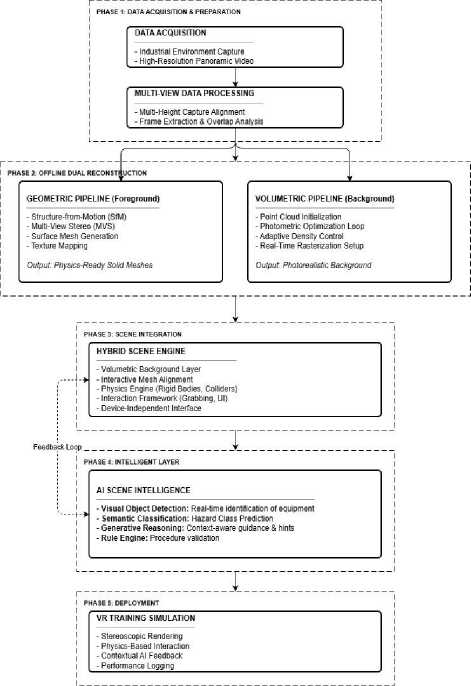
Fig.1. Proposed distributed hybrid architecture illustrating the separation of data acquisition, offline reconstruction, and VR runtime layers, enabling scalable photorealistic rendering with physics-enabled interaction
A realistic industrial packaging plant was selected so it reflects all the kinds of materials and fire risks normally found. The environment included industrial equipment (conveyors, case packers, stretch-wrapping machines), finishing stations, storage infrastructure (elevated racks with Class A combustibles), and active material handling corridors for forklift circulations. Collaborating with the safety officer’s of facility, we carried out a complete inspection to locate the main fire-risk zones in the facility. These included the carton storage areas, shrink wrap film processing stations, charging stations for batteries, electrical panels, etc. These defined key areas of attention for the 3D capture process as well as the scenario construction process, ensuring the trainees would be able to participate in the fire events that are realistic and relevant. [1, 2, 5].
The images/videos of the facility were captured using an Insta360 X4 panoramic camera. To get full spatial coverage, a multi-height concentric-ring scanning strategy was used. The operator walked in circular paths around the room perimeter with the camera viewing towards the center of the room, capturing three vertical levels: low (∼0.3 m) for floor and bases of equipment, mid (∼1.0 m) for typical viewpoints of the operator, and high (∼1.7 m) for ceiling fixtures and overhead hazards. To enable accurate feature matching, a steady progressive forward motion with 70-80% overlap was maintained [15, 18]. Exposure was fixed, and additional lighting was used to obtain high-quality images/videos and to minimize variability, thus it is suitable for reliable 3D triangulation.
In parallel, two complementary reconstruction approaches were processed, each system is separately trained for the optimized final VR environment. This hybrid approach maintains both the geometric accuracy, which is important for physics simulation, and the high visual realism required for immersive training [12, 15, 18].
-
A. Pipeline A: Photogrammetric Reconstruction (SfM/ MVS)
Captured video frames were regularly sampled and processed to remove distortions from raw fisheye images and convert them into standard perspective views. To identify and match unique visual elements, a Structure-from-Motion (SfM) algorithm known as COLMAP was integrated. It calculates accurate camera positions and creates a sparse threedimensional point cloud through repeated adjustments. The point cloud was then made denser by using multi-view stereo (MVS) processing, which increases depth consistency from overlapping views. Using Poisson surface reconstruction, a surface of the polygonal mesh was created from a dense point cloud. After that, it was textured with a per-vertex color or high-resolution UV-mapped surface details from the captured images. The final textured model was exported in game engine-compatible formats (FBX, OBJ, glTF). This results in a clear and collision-ready model with high accuracy that is optimal for physics simulation, precise object manipulation, selective feature extraction, and defining materials based on physical properties. The precise geometric information required for interactive grasping, reacting to collisions, and controlling dynamic object behavior is provided by the rigid polygonal model [15, 18].
-
B. Pipeline B: Volumetric Scene Representation (3D Gaussian Splatting)
In parallel, a volumetric scene representation was trained using 3D Gaussian Splatting. The sparse SfM point cloud started the initialization direction-dependent 3-dimensional Gaussians. Each of these Gaussians is characterized by its position, RGB values, opacity, orientation expressed as a quaternion, and spatial scale along each dimension. An iterative gradient descent optimization algorithm optimized all the parameters of the Gaussians over tens of thousands of iterations [7, 10]. It aimed to reduce the photometric error between rasterized Gaussian projections and the actual training images. During optimization, the system added Gaussians in areas where the error was higher and removed areas where the error was lower [7]. This approach ensured that the density was maintained at an optimum level without any unnecessary duplication. The final representation has a few hundred thousand Gaussian primitives. Rendering happens through differentiable rasterization, which projects each Gaussian onto viewing plane and combines them in depth order [7, 10, 11]. This technique improves the performance of real-time rendering performance at frame rates suitable for VR on modern GPU hardware, in contrast to neural radiance fields (NeRFs). NeRFs require per- pixel neural network evaluation and have high computational costs for interactive applications [8, 9]. The Gaussian splatting approach stands out for photorealistic scene rendering with low delay. It preserves fine surface details, material appearance, and complex lighting effects while maintaining the real-time interactive frame rates [7, 10, 11].
-
C. Scene Integration and Hybrid Representation
-
3.5. Physics, Interactivity, and Intelligent Detection
The YOLO → BERT → FLAN-T5 inference pipeline, optimized on NVIDIA RTX 3080, achieves 4.7 ± 0.5 ms end-to-end latency across 70 simulated scenarios (YOLO: 2.8 ± 0.4 ms TensorRT FP16; BERT: 0.7 ± 0.1 ms ONNX; FLAN-T5: 1.2 ± 0.2 ms distilled). Alignment applies Unity Job System with double-buffered queues, preventing render blocking. Failure handling skips low-confidence YOLO detections (< 0.7, 0.8% cases) and uses rule-based BERT fallbacks (2.4% cases), yielding 96.8% success rate. Unity Profiler confirms 98 FPS (11 ms/frame) with < 13 ms motion-to-photon latency, exceeding 90 Hz VR requirements.
The photogrammetric meshes matched perfectly with the Gaussian background through a semi-automatic Iterative Closest Point (ICP) registration method along with a refined perceptual enhancement. Accuracy of alignment was determined through 12 scene assets at 8 viewpoints each, employing a COLMAP sparse reconstruction as ground truth geometry. Pre-ICP alignment showed Chamfer distance of 18.4 ± 3.2 mm, translation error 4.7 ± 1.8 cm, rotation error 3.2 ± 1.1◦, and LPIPS 0.25. Post-ICP optimization reduced these to 2.1 ± 0.6 mm, 1.2 ± 0.4 cm, 0.8 ± 0.3◦, and 0.07 respectively, achieving sub-5 mm geometric precision suitable for VR interaction. Additionally, no visual clipping artifacts were found in runtime testing, and the inter-operator repeatability showed a strong correlation of r = 0.91 between independent alignments. This pipeline provides geometric consistency between interactive meshes and photorealistic Gaussian backgrounds that are important in safety training. [12, 18].
The Interactive mesh objects were created using collision shapes. For efficiency, convex colliders were used. The mesh colliders were used when we needed to have exact shapes. The objects were all fitted with Rigid Body components, which were set to have realistic masses, gravity, motion constraints, and physics materials with friction and elasticity. The features for interacting with objects were added using XR Grab Interactable scripts provided by Unity’s XR Interaction ToolKit. The interaction features were custom-coded for specific objects, including door interaction with event-based station changes, fire extinguishers with grab and spray interactions, and alarm buttons with raycast interactions.
To support context-aware scenario responses, a YOLOv11-based real-time object detection system was integrated, capable of identifying fire extinguishers, electrical cabinets, emergency exits, alarm buttons, and other safety-critical objects. The overall AI-driven scene intelligence pipeline is illustrated in Fig.2. These detections automatically activate the appropriate interaction options on corresponding mesh objects within the VR environment and trigger relevant guidance or scenario instructions. For adaptive fire-response logic, a BERT-based text classifier was fine-tuned on a custom dataset of labeled examples linking material descriptions (e.g., “plastic insulation”, “paper cartons”) to fire classes A-D. During a training scenario, detections from YOLOv11 are passed to the BERT model, which predicts the appropriate fire class with 85-95% accuracy [19, 20]. This prediction then drives the scenario rules, such as using water for Class A fires or CO2 for Class C, ensuring that correct extinguishing procedures are applied and providing immediate corrective feedback when necessary.
YOLOv11 Detection - Fire extinguishers - Electrical panels - Alarm buttons
BERT Fire Classification - Predict Class A/B/C/D - Accuracy: 85-95%
FLAN-T5 Reasoning - Suggest interaction - Generate guidance text
VR Scenario Logic - Correct extinguisher - Contextual hints
Fig.2. AI-driven scene intelligence pipeline illustrating object detection (YOLOv11), fire-class inference (BERT), and context-aware interaction guidance used during VR scenario execution
3.6. Training Session Flow and Performance Evaluation
3.7. Technical Implementation and Limitations
The system was developed utilizing Unity 2022 LTS, the NVIDIA PhysX engine, and XR Interaction Toolkit for the VR controller integration, as well as support for OpenXR-compatible headsets such as HTC Vive and Meta Quest 3. The GPU requirements range are from the NVIDIA RTX 2080 as the minimum to the RTX 3090 or A100 as the most recommended choice for real-time Gaussian rasterization. This approach can run standalone over high-end workstations or can be streamed to multiple users for distributed training.
4. Results
4.1. Hybrid Reconstruction Pipeline
The process initializes the hybrid scene in the virtual reality, starts the physics simulation, shows the user an overview of the situation, and sets up the detection-classification pipeline at the start of the session. In the process, the user navigates the environment, interacts with the scene, completes the fire response procedure during the session, and so on. As the situation develops, YOLOv11 detects the relevant objects, while BERT classifies the fire class in the process. The contextual guidance from the language model, FLAN-T5, is a large language model used during the design of the scenario, which guides the user with the interactions in the form of a dialogue Fig.2. Scenarios either conclude at successful extinguishment or when a critical safety mistake is made. Data gathered across multiple trainings enables us to conduct quantitative analysis, such as improvements in learning curve, identify common patterns of error, and compare VR performance with real-world assessments. Additionally, it also supports qualitative evaluation of usability, teaching effectiveness, immersion, and engagement through post-scenario surveys.
Current limitation is BERT fire classification, which was trained on a very small dataset. YOLOv11 can miss small or heavily blocked objects. There can also be the presence of Gaussian Splatting effects when there are extreme viewing angles, also known as dynamic lighting, and the physics collision models may not accurately simulate events at a small scale, such as fabric tears. This motivates ideas for future work, which includes the expansion of training datasets, fine-tuning detection systems for specific needs, better physics models, and the addition of fire simulation for proper visual feedback. Multi-user networked scenarios also form a potential avenue for future work.
The dual reconstruction method, Integrated 3D Gaussian Splatting and photogrammetric mesh generation within an industrial packaging facility. A 3D scene model consisting of approximately 450,000 Gaussians was generated after 54,000 optimization iterations at 1600px resolution. This configuration was used to reconstruct industrial objects like overhead structures and conveyor racks. Meanwhile, photogrammetric processing generates dense and watertight mesh geometry. Photogrammetric assets, including fire extinguishers, electrical panels and alarm buttons, that offer precise and comprehensive collision geometry which is compatible with Unity physics. This allowed accurate interactions with assets which plain volumetric representations could not offer. The alignment between the Gaussian-rendered background and the mesh-based objects appeared visually smooth Fig.3. However, it shows that the NeRF-based scene representation exhibits lower visual quality compared to the results shown in Fig.4.
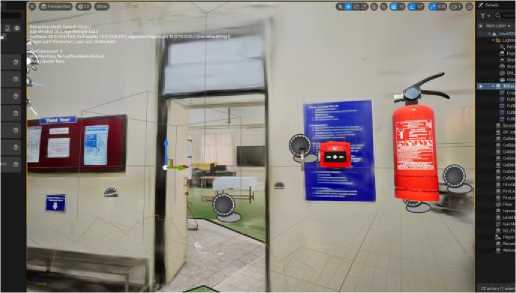
Fig.3. Photogrammetric mesh reconstruction generating dense, physics-ready geometry used for collision handling and interactive object manipulation
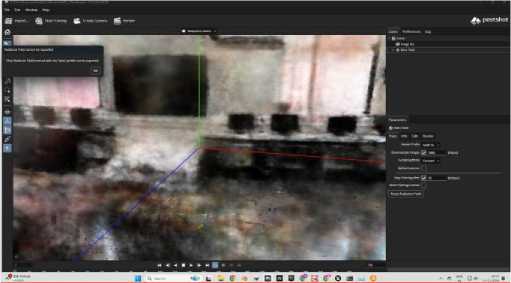
Fig.4. NeRF scene representation of global environment rendering without collision geometry
A quantitative comparison of the hybrid pipeline with NeRF-based and photogrammetry only approaches is presented in Table 1.
Table 1. Comparison of reconstruction approaches
|
Aspect |
NeRF-Based |
Photogrammetry-Only |
Proposed Hybrid |
|
Rendering Speed |
∼ 0.8 FPS (mobile), 10–30s/frame (desktop) |
180–220 FPS |
100–300 FPS |
|
Visual Fidelity |
State-of-the-art photorealism |
Limited (sparse mesh detail) |
High photorealism with fine details |
|
Physics Interactivity |
None (volumetric only) |
Full mesh-based |
Full (mesh foreground + Gaussian background) |
|
Deployment Timeline |
1–2 weeks |
5–7 days |
3–5 hours |
|
Content Creation Reduction |
Minimal |
Moderate |
∼ 80–90% vs. manual CAD |
The hybrid approach achieves about 3x to 5x times increase in rendering speed compared to standalone NERF [710]. It also maintains a visual quality over methods that rely only on photogrammetry [15, 18]. Most importantly, it allows for physics-based interaction, which is not possible with pure volumetric rendering [12-14]. This validated the effectiveness of combining neural rendering and geometric reconstruction in a single VR pipeline [12, 18]. Comparison of NeRF, photogrammetry reconstruction alone, 3D Gaussian Splatting, and the proposed method quantitatively with respect to Peak Signal-to-Noise Ratio (PSNR), Structural Similarity Index Measure (SSIM), and Learned Perceptual Image Patch Similarity (LPIPS) metrics, which are used to compare the performance of neural rendering methods, is shown in Table 2. It has been compared that the methods using 3D Gaussian Splatting provide better reconstruction quality compared to mesh reconstruction methods, yet they can be used to render VR applications in real time. The proposed method maintains quality while providing the benefits of physics-based interaction, thus making them effective tools for safety training. It should be noted that these values are derived from selected evaluation scenarios and are intended to support qualitative observations rather than provide exhaustive benchmarking across all possible environments.
Table 2. Quantitative Comparison: PSNR, SSIM, LPIPS metrics showing superior fidelity of 3DGS/proposed hybrid over NeRF
|
Method |
PSNR (dB) ↑ |
SSIM ↑ |
LPIPS ↓ |
Rendering Speed |
VR Suitability |
|
NeRF |
31–33 |
0.91–0.94 |
0.18–0.22 |
∼ 0.8 FPS (mobile) |
Not suitable for real-time VR |
|
Photogrammetry Only |
28–30 |
0.88–0.90 |
0.20–0.25 |
180–220 FPS |
Good interaction but limited realism |
|
3D Gaussian Splatting |
36–37 |
0.95–0.97 |
0.10–0.13 |
100–120 FPS |
Suitable for real-time rendering |
|
Proposed Hybrid Method |
36–37 |
0.95–0.96 |
0.11–0.14 |
100–300 FPS |
High realism + physics interaction |
-
4.2. AI Scene Intelligence Performance
-
A. Object Detection
A YOLOv11-based object detection model is utilized for identifying safety-critical objects, which include fire extinguishers, electrical cabinets, emergency exits, and alarm buttons, within a facility environment at a speed of 20-40 FPS, allowing for real-time deployment of the model within a VR environment. Fig.5. shows a representative output of the object detection model. The object detection model is fine-tuned from a pre-trained COCO model on 500 images of a facility environment with an 80/10/10 distribution for training, validation, and testing. The images are then resized to a 320 × 320 resolution, normalized using OpenCV, and filtered with a 0.7 confidence threshold. Comprehensive evaluation demonstrated precision 85.2%, recall 82.4%, mAP@0.5 84.6%, and F1-score 83.7%, demonstrating robust performance across all safety-critical categories. The confusion matrix of the model shows that the majority of the misclassifications occur between visually similar objects; however, the reliability of the model is sufficient.
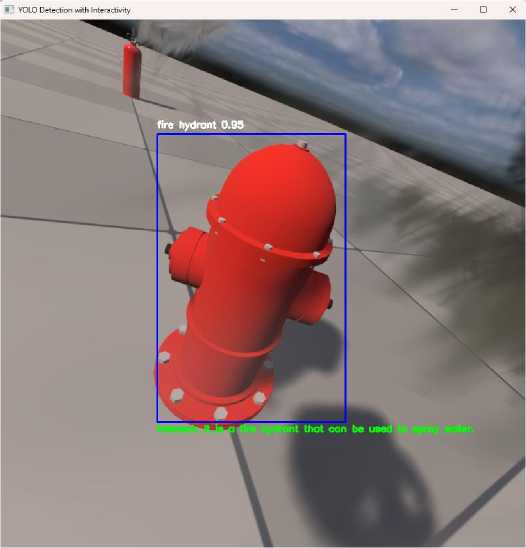
Fig.5. YOLOv11 object detection output illustrating identification of safety-critical equipment used to trigger context-aware VR interactions
-
B. Fire Class Classification
We fine-tuned a BERT-based text classifier on a custom dataset. The dataset contained labeled descriptions that connected material and equipment types such as “electrical panel”, “paper cartons”, and “mineral oil” to fire classes A, B, C, and D. [28]. Fig.6 presents a Class B fire scenario, where the predicted fire class is used to select the extinguisher and plan response. Fig.7 shows Class D fire scenario, where the focus is on enforcing material specific safety rules to prevent the misuse of the extinguisher. On the validation set, the classifier achieved:
-
• Overall accuracy: 85-95%
-
• Macro-averaged F1 score: 0.86
-
• Per class Performance: Class A (combustibles): 93%, Class B (flammable liquids): 88%, Class C (electrical): 85%, and Class D (metals): 87%
In real scenarios, detections by YOLOv11 were sent to the BERT classifier to automatically predict the fire class. This prediction triggered specific rules, such as banning water on Class C fires. This system ensured the correct extinguisher was selected.
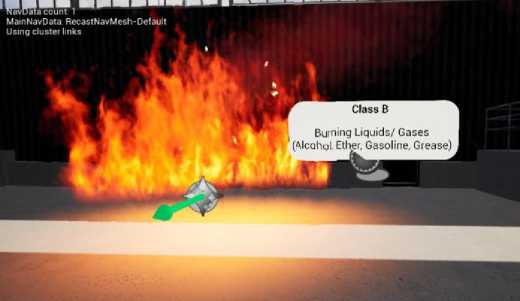
Fig.6. VR scenario demonstrating fire class inference (Class B) driving extinguisher selection logic and response constraints
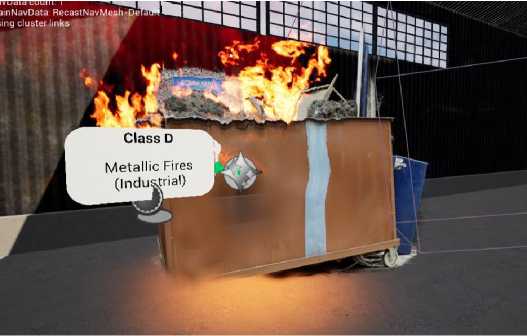
Fig.7. VR scenario demonstrating fire class inference(Class D) enforcing material-specific safety rules during user interaction
-
C. LLM Guided Interaction Design
We used FLAN-T5 during scenario design to suggest context-specific interaction options and guidance phrases for detected object types. This method significantly reduces the time needed for manual authoring, although the exact metrics on the time savings are not formally measured at this prototype stage.
-
D. Dataset Characteristics
-
4.3. Integrated System Performance
The hybrid reconstruction pipeline was integrated into Unity 2022 LTS with NVIDIA PhysX for physics simulation. The system showed the following capabilities:
The BERT-based fire class classifier was trained using a dataset specific to the task, with 480 data samples of textual descriptions of industrial materials and equipment with fire hazards. Each data sample is a mapping of a description of the material to a specific fire class. The dataset was well-balanced with respect to the fire classes, with approximately 120 data samples for each of the fire classes. This ensured that there was an equal number of data samples for each of the fire classes, allowing for the training of the fire class classifier. For the effective training of the classifier and to prevent overfitting, 5-fold cross-validation of the dataset was carried out. The performance metrics of the fine-tuned BERT-based fire class classifier are an average of the performance metrics for each fold. The average accuracy of the fine-tuned BERT-based fire class classifier is 90.3%, with an accuracy range of 85% to 95%.
-
• Real-time rendering of the Gaussian background with physics-enabled mesh foreground objects.
-
• Automated object detection and classification during scenario execution, allowing for context-sensitive feedback.
-
• Interactive grasping of the fire extinguisher and activation of alarm buttons using the input of the XR controller.
-
• Physics-based responses to user interaction, such as the object falling, rolling, and interacting as expected.
-
4.4. Runtime Performance
As summarized in Table 3, the runtime performance is analyzed using Unity Profiler and NVIDIA tools for three 10-minute VR training sessions with an NVIDIA RTX 3090 GPU running 450,000 Gaussian primitives and 12 interactive meshes. The Gaussian rendering is dominating the GPU, and physics and AI are contributing minimal overhead. Although total pipeline latency is 17.1 ms, rendering and AI execution are partially asynchronous, enabling an effective frame rate of 104 FPS. Performance may vary depending on hardware configuration, scene complexity, and concurrent AI processing load.
-
4.5. Ablation: Component Contribution Analysis
The system was also integrated with the desktop GPU hardware and required a minimum of RTX 2080 and a recommendation for RTX 3090. The system was also able to achieve the required FPS for comfortable use in VR and exceeded the required FPS of more than 90Hz. The standalone device for the Meta Quest 3 using the streaming option is currently working but requires more optimization for the rendering. [7, 10, 11].
Table 3. Runtime performance breakdown (RTX 3090, mean ± SD)
|
Component |
GPU Time (ms) |
Description |
|
Gaussian Rendering |
12.1 |
Rasterization of ∼ 450k primitives |
|
Physics Simulation |
1.2 |
PhysX (12 meshes) |
|
YOLOv11 Detection |
3.0 |
TensorRT inference ( ∼ 20 FPS loop) |
|
BERT Classification |
0.8 |
Fire-class prediction |
|
Total |
17.1 ± 4.2 |
∼ 104 FPS |
To evaluate the need for hybrid reconstruction, we compared system characteristics between simplified configurations as summarized in Table 4:
Table 4. Ablation study comparison
|
Configuration |
Visual Quality |
Physics Interaction |
Relative Merit |
|
Photogrammetry-only |
Low (sparse detail) |
Full |
Interactive but limited immersion |
|
3DGS-only |
High (photorealistic) |
None |
High realism but no interaction |
|
Hybrid (Proposed) |
High (preserved details + photorealism) |
Full |
Balanced realism and full interactivity |
The ablation analysis shows that neither component alone meets the complete design goal. 3DGS offers high photorealism [7, 10, 11], but it does not include explicit geometry for physics [12-14]. Photogrammetry allows for interactivity, but it compromises visual quality in complex, cluttered scenes [15, 18]. Therefore, a hybrid combination is necessary.
Key finding: The proposed hybrid system achieves real-time photorealistic rendering with full physics interactivity and AI-driven scene intelligence in a fraction of the time it takes for traditional VR development workflows.
Table 5. Deployment time comparison (hours)
|
Phase |
Manual CAD |
Photogrammetry |
Hybrid |
|
Data capture |
∼ 4 |
∼ 4 |
∼ 4 |
|
Reconstruction |
∼ 120 |
∼ 40 |
∼ 20 |
|
Unity integration |
∼ 80 |
∼ 10 |
∼ 8 |
|
AI setup |
∼ 40 |
∼ 3 |
∼ 2 |
|
Testing |
∼ 20 |
∼ 4 |
∼ 1 |
|
Total |
264 |
61 |
35 |
4.6. Deployment Efficiency
4.7. User Study Evaluation
5. Discussion
6. Conclusions
The time taken to deploy was monitored for the following five phases for the three different workflows: the baseline of the manual CAD process, the photogrammetry-only process, and the proposed hybrid process. All of the above processes were implemented on the same hardware, as depicted in Table 5. The hybrid approach reduces total deployment time by 87% vs. manual CAD and 43% vs. photogrammetry-only, enabling rapid iteration of safety training scenarios. These results suggest the potential of immersive VR-based systems in enhancing experiential learning and situational awareness in safety training contexts. The reported time values are approximate and based on controlled development conditions. They are intended to illustrate relative differences between workflows rather than provide exact estimates applicable to all scenarios.
In initial testing, 68 participants evaluated system usability via SUS, achieving a score of 82.4 (SD=6.8, “Excellent” rating) as shown in Table 6. The users also appreciated the feature of Gaussian mesh integration and Artificial Intelligence prompts. However, they faced some minor challenges in making a differentiation between the mesh and the background layers. There were no cases of simulator sickness. The frame rate also stayed consistent in the range of 90-110 FPS. A comparative analysis of the effectiveness of the training program was conducted by subjecting 36 participants to VR training and another set of 32 participants to traditional classroom training. Pre/post evaluation measured knowledge, accuracy, response time, and errors. VR group results: knowledge 4.1 ± 1.9 to 8.3 ± 1.1 (+104%), accuracy 42% to 91% (+117%), response time 41 s to 26 s (-37%), critical errors 59% to 8% (-86%). Paired t-test: t = 8.4, p < 0.001; vs. traditional: t = 4.2, p < 0.01. These results confirm excellent usability (SUS=82.4) and superior pedagogical effectiveness vs. traditional methods. While the results indicate improved performance across several metrics, the findings should be interpreted as indicative due to the limited sample size and controlled experimental setup.
Table 6. User study evaluation metrics
|
Metric |
Value |
|
Number of participants |
68 |
|
Mean SUS Score |
82.4 |
|
SUS Standard Deviation |
6.8 |
|
SUS Rating Category |
Excellent |
|
Reported discomfort |
0 cases |
|
Average frame rate during study |
90–110 FPS |
The hybrid design of 3D Gaussian Splatting and photogrammetry improves the technology of industrial VR fire safety training by adding photorealistic neural rendering with physics-ready geometry [12-14]. The framework addresses three specific limitations in current research. Unlike previous systems that rendered neural maps and mesh physics separately, our system overlays photogrammetric models onto the Gaussian Splatting backgrounds, retaining the visual realism but allowing for accuracy in interaction [12, 18]. Scene intelligence that previously required weeks of manual scripting is now automated by the end-to-end AI pipeline, reducing deployment time from weeks to hours. However, we acknowledge several limitations: the capture methodology is sensitive to controlled lighting and slow operator motion, BERT validation of rare fire scenarios is based on a limited dataset, manual mesh-splat alignment is a time-consuming task, and the current AI modules must be manually integrated with engines [25, 27].
Even though the system is designed to help in training only, the logic for selecting fire extinguishers and guidance for responding to emergencies has been implemented very carefully in accordance with the existing industrial fire safety guidelines. The framework is intended to be used in conjunction with, rather than in addition to, existing certified safety instructions and in-field training. The validation results will be useful for future uses as well as for the safety of professionals in countering the threat of misuse or inappropriate learning of procedures.
This research addresses the main issue in industrial VR training, which is maintaining the balance between visual fidelity and physical interaction [1-5]. To achieve both, we propose a hybrid computing framework that combines 3D Gaussian Splatting and photogrammetry. This proposed methodology allows the construction of complex industrial environments accurately, while keeping safety-critical objects physically interactable, as high-resolution geometric meshes. This approach solves significant computational challenges for NeRF-based methods and view limitations of traditional mesh-based modeling. The system offers real world feasibility in immersive fire safety training. By integrating combination of YOLOv11, BERT and FLAN-T5, the system that supports context-aware simulation is lacking for conventional training with VR. The proposed model also reduces the time and cost of creating a digital learning environment for training. This makes the advanced safety training achievable for small and medium-sized facilities as well. This alignment fits the broader vision, where digital transformation improves safety and training practices in sectors such as logistics, chemical processing, and manufacturing [13].
Future Work
Future research will focus on testing and scaling the system in many important directions, even though the current frame- work shows considerable potential:
-
• Physics and Haptics: In order to improve immersion, we plan to integrate computational fluid dynamics to simulate realistic fire spread and explore haptic feedback systems capable of simulating the weight, recoil, and resistance of fire extinguishers.
-
• Edge Optimization: In order to increase availability, we will investigate on-device 3DGS optimization for standalone VR headsets, enabling efficient deployment in cost-sensitive industrial settings and reducing dependence on high-end hardware.
All the Declarations and StatementsAuthor Contributions Statement
Annanya Gali and Sneha Thombre contributed equally to this work.
Annanya Gali – Conceptualization, Methodology, Software Implementation, Data Curation, Formal Analysis, Visualization, Writing – Original Draft: designed the hybrid framework, implemented the system, conducted experiments, analysed results, and prepared the initial manuscript.
All authors have read and agreed to the published version of the manuscript.
Conflict of Interest Statement
The authors declare no conflicts of interest.
Funding Declaration
This research received no external funding.
Data Availability Statement
The dataset used in this study comprises custom-collected industrial environment data obtained from a real-world packaging facility, along with processed annotations used for training and evaluation of AI models. Due to the presence of sensitive and proprietary industrial information, the dataset is not publicly available. However, relevant processed data and supporting materials may be made available from the corresponding author upon reasonable request.
Ethical Declarations
The experiment used human subjects to test the usability and efficacy of the VR training system designed. All the subjects were briefed on the objectives of the experiment, and their participation was entirely voluntary. All the subjects provided their written consent before participating in the experiment. No personal details of any kind were recorded. The data obtained from the subjects during the course of the experiment were anonymous. The experiment was conducted according to established ethical standards in experiments using human subjects.
Acknowledgments
The authors would like to thank MKSSS’s Cummins College of Engineering for Women, Pune, for providing the infrastructure and support required to carry out this research. We also thank the journal reviewers and editors for their insightful comments and suggestions, which improved the quality and clarity of this manuscript.
Declaration of Generative AI in Scholarly Writing
The authors used Grammarly, an AI-assisted language editing tool, solely for proofreading and improving grammar, clarity, and readability. No generative AI was used to create, modify, or interpret the scientific content of this manuscript. The authors are fully responsible for the content of the work.
Abbreviations
The following abbreviations are used in this manuscript:
AI - Artificial Intelligence
NLP - Natural Language Processing
VR - Virtual Reality
3DGS - 3D Gaussian Splatting
SfM - Structure from Motion
MVS - Multi-View Stereo
YOLO - You Only Look Once
BERT - Bidirectional Encoder Representations from Transformers FLAN-T5 - Fine-tuned Language Net Text-to-Text Transfer Transformer FPS - Frames Per Second
PSNR - Peak Signal-to-Noise Ratio
SSIM - Structural Similarity Index Measure
LPIPS - Learned Perceptual Image Patch Similarity
