
An Improved Trust-based and Energy Efficient Secure Routing Protocol for 5g-Wsn
Journal: International Journal of Information Technology and Computer Science @ijitcs
Article in issue: 4 Vol. 18, 2026.
Free access
The 5G-enabled Wireless Sensor Networks (WSN) use the increased capabilities of 5G technology to represent the next version of conventional WSN environments. WSN performance may be affected by interference from high-density 5 G networks. The novel Hummingbird-based Graph Bernoulli Binomial Trust Management Network (HBbGBBTMN) proposed in this research is to enhance smart, secure, and energy-saving routing in 5G-enabled wireless networks. Python is initially used to simulate and model the network under consideration, accounting for fluctuating network conditions and dynamic node dynamics. An improved Hummingbird algorithm is used to detect and remove nodes with high energy consumption, thereby minimizing routing inefficiencies and avoiding suspicious behavior. To protect data integrity and prevent route disruption, malicious nodes are continuously detected and removed. The trust of the remaining nodes is calculated using the Bernoulli-Binomial distribution, which estimates each node's trust based on its previous packet-forwarding history. Such trust mechanisms are combined with node energy levels as well as network dynamics to form a fitness function that identifies optimal routing patterns. The suggested system is validated through extensive performance analysis, including measurements of packet delivery ratio, throughput, packet drop rate, delay, and malicious node prediction accuracy. The findings indicate that in decentralized wireless environments, HBbGBBTMN significantly enhances network efficiency, security, and dependability.
Short address: https://sciup.org/15020659
IDS: 15020659 | DOI: 10.5815/ijitcs.2026.04.05
Text of the scientific article An Improved Trust-based and Energy Efficient Secure Routing Protocol for 5g-Wsn
Because of their mobility, scalability, and capacity to monitor and transmit vital data in real time, Wireless Sensor Networks (WSNs) have become an essential part of contemporary communication systems [1]. Because WSNs offer decentralized, affordable, and dependable data collecting and communication, they are extensively utilized in a wide range of applications [2], including as smart cities, industrial automation, healthcare, and environmental monitoring [3]. Significant benefits, such as increased bandwidth, ultra-low latency [4], massive device connectivity [5], and support for extensive Internet of Things (IoT) deployments [7], are provided by combining 5G technology with WSNs [7]. These characteristics make it possible for new applications that need dependable [8], fast, and low-latency data exchange, like smart energy management [9], real-time surveillance, and driverless cars [10]. Although 5G offers many benefits, there are several obstacles to overcome before it can be implemented in WSNs [11]. 5G-enabled WSNs have dense network environments, which can cause interference, network congestion [12], and lower quality of service. Furthermore, energy-efficient communication is a crucial requirement, as sensor nodes are frequently resource-constrained, with limited battery power [13], processing capability, and storage [14]. By introducing security risks such as data manipulation [15], packet loss, and denial-of-service attacks [16], which can jeopardize the reliability and integrity of transmitted information, the presence of malicious or misbehaving nodes makes network operations even more difficult [17]. The creation of routing protocols that can effectively control energy consumption, provide secure
This work is open access and licensed under the Creative Commons CC BY 4.0 License.
communication [18], and uphold high network dependability is required by these coupled criteria [19].
In WSNs, routing protocols are in charge of figuring out the best routes for data packets to travel from source nodes to sink nodes [20]. Conventional routing techniques often focus on security or energy efficiency [21], but they rarely combine the two into a cohesive framework suitable for high-density 5G networks [22]. Certain protocols have used trust-based procedures to assess nodes' dependability based on past behavior, thereby lessening the impact of malicious activity [23]. These techniques, however, often ignore energy expenditure, leading to suboptimal routing and a shorter network lifetime [24]. Similarly, energy-aware protocols prioritize battery preservation but may overlook security risks, leaving the network vulnerable to intrusions [25]. As a result, in heterogeneous 5G-enabled WSN systems, there is a glaring gap in the design of routing protocols that simultaneously account for energy efficiency, trustworthiness, and secure data delivery. This study suggests the Hummingbird-based Graph Bernoulli-Binomial Trust Management Network (HBbGBBTMN) as a solution to these issues. To guarantee safe and effective data transfer, the suggested protocol combines energy-aware routing with a trust assessment system. By identifying and eliminating nodes that exhibit malicious activity or high energy consumption, the enhanced Hummingbird algorithm minimizes routing inefficiencies and averts possible security breaches. The Bernoulli-Binomial probability distribution, which assesses each node's dependability based on past packet-forwarding behavior, is used to compute trust levels. A fitness function that guides optimal routing decisions is created by combining these trust scores with energy measures and network dynamics.
In-depth Python simulations are used to assess HBbGBBTMN's performance in dynamic network scenarios. Compared with current routing techniques, the proposed protocol significantly improves network efficiency, reliability, and security, as evidenced by key performance metrics such as packet delivery ratio, throughput, delay, packet drop rate, and malicious node detection accuracy. According to the findings, HBbGBBTMN offers a potential foundation for enabling safe, reliable, and energy-efficient communication in next-generation 5G-enabled WSNs, addressing key issues in contemporary wireless networks.
The critical contribution of this work is presented as follows,
-
• Initially, a 5G-enabled wireless network is designed and trained using Python to simulate dynamic node behaviour and network conditions.
-
• Meanwhile, an innovative Hummingbird-based graph Bernoulli Binomial trust management network (HBbGBBTMN) has been introduced to enable intelligent, secure, and energy-efficient routing.
-
• An improved Hummingbird fitness function is employed to detect and eliminate high-energy-consuming nodes, reducing overload and routing inefficiencies and avoiding suspicious node behaviour.
-
• Malicious suspected nodes were dynamically detected and isolated to minimize the risk of route disruption.
-
• The remaining nodes are assessed for trustworthiness using the Bernoulli-Binomial distribution, which
evaluates each node’s historical forwarding behaviour to compute trust levels.
• The routing path is optimized using a fitness function that balances trust values, energy status, and network dynamics, ensuring the selection of secure, efficient routes.
• Subsequently, the designed network performance was validated regarding packet delivery, throughput, packet drop, malicious prediction, and delay.
2. Related Works
This paper's second section includes a recent related study, and the third section outlines the system's difficulties. The problem with traditional approaches is explained in detail in the fourth section, and the proposed model's performance evaluation is presented in the fifth section. In the sixth segment, the work is concluded.
The following is a summary of several research works currently associated with this study:
Due to energy limitations, WSNs face challenges that affect their efficiency and lifespan. For that reason, Gururaj et al. [26] proposed a collaborative energy-efficient routing protocol (CEEPR) to support sustainable communication in 5G/6G WSNs. The protocol supports performance improvement through the deployment of a multi-objective improved seagull algorithm (MOISA), cluster head selection based on residual energy, and reinforcement learning. Additionally, the suggested strategy reduces energy usage by 50% while also enhancing the network's durability and efficiency. However, it performs very well in cluster head selection, while the implementation part uses only limited resources to attain the results.
Wakili et al. [27] introduced a machine learning-aided solution to improve the Routing Protocol for Low-Power and Lossy Networks (RPL) for IoT networks. The architecture involves a random forest classifier for traffic type detection, an enhanced RPL objective function, and a reinforcement-learning module for dynamic routing control. The augmented framework improves jitter, increases the packet delivery ratio (PDR), reduces delay, and provides better end-to-end throughput, as shown in simulation results. This paper explains the end-to-end solution for improving the RPL mechanism and protecting against standard security attacks. Nevertheless, it leads to high computational power.
Shanmathi et al. [28] applied fuzzy logic and a convolutional neural network to examine the extent to which WSNs are vulnerable to malicious attacks. The method efficiently separates malicious nodes from trustworthy ones, and an enhanced routing technique that utilizes a Neuro Genetic Optimizer improves WSN lifetime, reduces latency, and outperforms current protocols in terms of energy efficiency and packet delivery ratio. However, in some cases, it affects the malicious prediction rate.
WSNs are subject to different types of network attacks. Li et al. [29] use enhanced Q-learning and physical unclonable functions to ensure the integrity of the transmission line. The refilling energy value of the nodes is forecast in the meantime using an LSTM-based model. Through simulations, the suggested algorithm's effectiveness is contrasted with that of alternative methods under various attacks. PDR, node energy consumption, and selfish node filtering are all enhanced better by the proposed method. However, in some rare cases, it faces security overhead that consumes more energy and power.
Sharma et al. [30] present a hybrid routing technique for Energy-Efficient IoT WSN applications with reduced energy consumption. In order to better route, it integrates an energy-aware heuristic mechanism with swarm optimization. Particle Swarm Optimized Residual Energy-Based Stable Election Protocol reduces the cycle of cluster head selection and achieves scalability in the network. The method improves on earlier heterogeneous algorithms in terms of energy consumption, alive nodes, and network lifetime. At last, it turns the communication path into an unreliable one, increasing packet loss during transmission.
3. Problem Statement
Significant issues arise in energy management, routing effectiveness, and security when 5G is integrated with WSNs. Due to the inability of traditional routing methods in WSNs to identify and isolate rogue nodes, data integrity is compromised, energy consumption is uneven, network congestion occurs, and network lifetime is shortened. Additionally, current methods do not combine energy-aware routing with trust-based processes, leading to ineffective communication and increased susceptibility to attacks. An intelligent routing system that can detect hostile nodes, maximize energy use, guarantee dependable data transfer, and improve overall network security is therefore desperately needed. The Hummingbird-based Graph Bernoulli-Binomial Trust Management Network (HBbGBBTMN), which combines node trust assessment with energy-aware routing to identify and isolate malicious nodes, increase network efficiency, and lengthen network lifetime, is proposed in this article as a solution to these problems. Fig. 1 displays the problematic system model that highlights these difficulties.
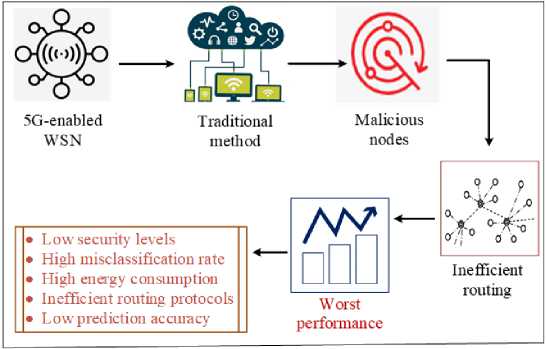
Fig.1. System model with difficulties
4. Proposed Methodology
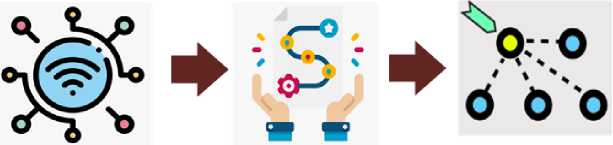
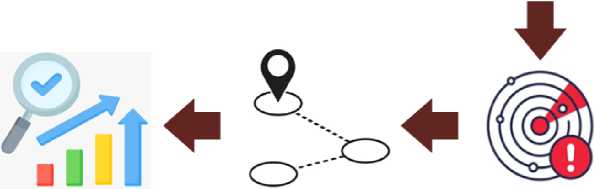
An innovative Hummingbird-based graph Bernoulli Binomial trust management network (HBbGBBTMN) has been introduced to enable intelligent, secure, and energy-efficient routing. Initially, a 5G-enabled wireless network is designed and trained using Python to simulate dynamic node behaviour and network conditions. An improved Hummingbird fitness function is employed to detect and eliminate high-energy-consuming nodes, reducing overload and routing inefficiencies and avoiding suspicious node behaviour. Malicious suspected nodes were dynamically detected and isolated to minimize the risk of route disruption. The remaining nodes are assessed for trustworthiness using the Bernoulli-Binomial distribution, which evaluates each node’s historical forwarding behaviour to compute trust levels. The routing path is optimized using a fitness function that balances trust values, energy status, and network dynamics, ensuring the selection of secure, efficient routes. Subsequently, the designed network performance was validated regarding packet delivery, throughput, packet drop, malicious prediction, and delay. The proposed architecture is illustrated in Fig. 2.
5G enabled wireless network system
HBbGBBTMN
High energy consumption detection and elimination
Performance Evaluation
Optimized path routing
Malicious node Elimination
Fig.2. Proposed architecture
-
4.1. Process of the proposed HBbGBBTMN
This paper introduces the Hummingbird-based graph Bernoulli Binomial trust management network to enable intelligent, secure, and energy-efficient routing. The various phases of the new HBbGBBTMN were discussed, including network design, high-energy consumption prediction, malicious node detection, and secure routing path selection.
-
A. Network Design
In the first stage, the 5G wireless network is designed and trained on the Python platform. Based on simulations of node parameters such as mobility, energy consumption, and communication protocols, the environment emulates the dynamic aspects of wireless communication. The network design can be represented in Eqn. (1).
Here, Wo represents the network design variable, and N denotes the nodes, N1, N2,N3,....., Nm is the m number of nodes in the designed network.
-
B. High-energy Consumption Node Prediction
After that, high-energy-consuming nodes are identified and removed using an improved Hummingbird-inspired fitness function to improve energy efficiency and prolong the network's operational lifetime. These nodes typically exhibit a significant decrease in residual energy due to malicious activity, excessive data transmission, or reception overhead. The energy consumption rate of each node is continually monitored over time by the specification in order to identify these nodes systematically. The prediction of high energy consumption is exposed in Eqn. (2).
CE j =
L j,initial ^ j,current
Vy
Tb
Here, L j, lnltlal denotes the initial energy of node j , L j, current signifies the energy that remains in node j , Vy indicates the quantity of cycles of communication, Tb denotes the hummingbird fitness function and CE j is the high energy consumption node prediction parameter. When a node CE j > X is removed from routing pathways because of its high energy consumption, where (X = 0). The enhanced Hummingbird optimization technique removes such nodes from the routing pool in order to minimize network overload, increase network lifespan, and improve total routing performance here, X is the threshold range parameter.
-
C. Malicious Node Detection
In a 5G-enabled WSN, identifying and removing rogue nodes is necessary for effective, secure communication. The packet-forwarding behavior of each node is continuously observed. If a node regularly misses packets, alters data, or neglects to forward messages, it is deemed suspect. Such actions could be a sign of malicious activity, which could lead to network failures or route disruptions. To identify the malicious node, For -each node i, the score of the malicious characteristics zl is computed by Eqn. (3), here, Ql is the packets that forwarded successfully, and Fl is the number of packet failed during forwarding process. The more suspicious behavior is denoted as z; £ [0,1]
zi = ^~
1 Q i +f i
M
Normal z; < 9
.Malicious z1 > 9
:}
Here, H l; denotes the node status in Eqn. (4), 9 is the Malicious behavior threshold (typical value: 0.5, adjustable based on network requirements). Nodes with z; beyond the threshold are regarded as malevolent and are not taken into account when making routing decisions, preventing route disruption and safeguarding data integrity.
The Bernoulli-Binomial trust model is used to assess the reliability of surviving nodes after malicious nodes are isolated. Packet forwarding is treated as a binary outcome—success or failure—in this statistical method. A node's consistent contribution to network functionality is indicated by a higher trust rating, which also aids in selecting reliable, energy-efficient routing paths.
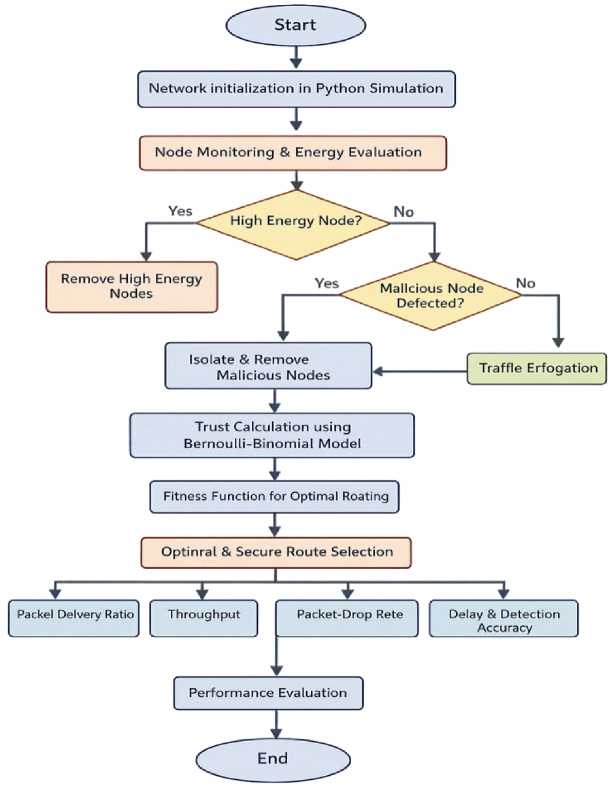
Fig.3. Flow work of HBbGBBTMN
-
D. Optimizing Secure Routing Path
Following the detection and isolation of malicious nodes, the remaining nodes are assessed for network dynamics, energy efficiency, and trustworthiness. The suggested Hummingbird fitness model anticipates the occurrence of route impediments, such as malicious nodes. During migration, nodes with sufficient energy combine to form a new path; after malicious nodes are detected, it takes time for the normal route to revert. To improve data transfer and reduce transmission delays, a new path has been developed. A trust node is a normal node that remains after predicted malicious nodes are identified and eliminated. It ensures that the data transmission path is the most stable, energyefficient, and secure. The optimized secure routing path is illustrated in Eqn. (5).
G route
^ jepat h (A' R j + R‘
FJ F maxj
Where Groute signifies the overall fitness score of a routing path, R j denotes the node’s trust value, F j represents the residual energy of node j, Fmax is the maximum energy, and A, r, i9 are the weight factors and D j is the shortest path. These weight coefficients indicate the importance of the factors included in the routing selection process. The routing algorithm selects the path with the finest fitness score after evaluating each feasible route. Thus, the 5G wireless network has a highly robust, adaptable routing system that enhances reliability and performance. The algorithm for the present work is described in algorithm 1.
The step-by-step algorithm completely explains the methods and processes outlined in the suggested framework. In a 5G-capable wireless sensor network, the HBbGBBTMN method initializes node energy and trust values. A Hummingbird-based optimization system identifies and eliminates nodes that consume excessive energy at each iteration. Malicious nodes are identified and separated, and trust levels are updated based on packet forwarding behavior. A fitness function based on trust, energy, and latency is used to construct and assess multiple routing paths. Network parameters are dynamically updated, and the most secure path for data transmission is chosen. Fig. 3 shows the flowchart for HBbGBBTMN.
Algorithm 1: HBbGBBTMN
1: Initialize network with all sensor nodes
2: Assign initial energy value to each node
3: Assign initial trust value to each node
4: Set malicious node list as empty
5: For each iteration do
|
6: |
// Hummingbird Energy Optimization Phase |
|
7: |
For each node in network do |
|
8: |
Measure current energy consumption |
|
9: |
If energy consumption is high then |
|
10: 11: 12: 13: 14: 15: 16: 17: 18: 19: 20: 21: 22: 23: 24: 25: 26: 27: 28: 29: 30: 31: 32: 33: 34: 35: 36: 37: 38: 39: |
Mark node as inefficient End If End For Remove inefficient nodes from network // Trust Evaluation Phase For each remaining node do Observe packet forwarding behavior Update success and failure counters Compute trust value If trust value is below threshold then Mark node as malicious End If End For Add malicious nodes to malicious list Remove malicious nodes from network // Hummingbird Routing Search Phase Generate multiple candidate routing paths For each path do Evaluate path based on:
End For Select best path with highest fitness // Data Transmission Phase Transmit data using selected path Update node energy levels Update trust values End For Return best routing path and malicious node list |
5. Result and Discussion
To demonstrate the effectiveness of the developed model, the charts are compared using several metrics. Switching the network's nodes (N=100) illustrates the significance of the suggested HBbGBBTMN. A comparison of specific parameters with existing methods illustrates the efficacy of the concept. Table 1 describes the parameter execution.
Table 1. Execution parameter
|
Parameter |
Description |
|
Operating system |
Windows 10 |
|
Platform |
Python |
|
Version |
3.7.14 |
|
Network type |
WSN |
|
Number of nodes |
100 |
|
Optimization |
Humming bird |
Python (version 3.7.14) was used to implement and assess the suggested HBbGBBTMN protocol on a Windows 10 system. A two-dimensional deployment area was used to mimic a wireless sensor network environment with 100 sensor nodes. Throughout the simulation, nodes remained stationary and were randomly dispersed.
To simulate actual wireless communication, a log-distance path loss radio model was used. Every node has a defined broadcast range and an omnidirectional antenna. Sensor nodes periodically sent sensed data toward the sink node, and data transmission followed a constant bit rate traffic model. The packet size was fixed at 512 bytes. To ensure statistical fairness and repeatability, the simulation was run for 1000 communication rounds, and the outcomes were averaged across multiple independent runs with different random seeds. To ensure uniformity across all compared methods, a fixed random seed was utilized for every run. Energy was used during transmission, reception, and idle states in an energy model based on the first-order radio energy consumption model. Every node started with the same amount of energy, and energy loss was continuously monitored throughout the simulation. An attacker model, in which a portion of nodes acted maliciously by deliberately deleting or misrouting packets, was proposed in order to assess security performance. Between 10% and 30% of the network was composed of malicious nodes. By discarding forwarded packets and fraudulently advertising routes, these hostile nodes sought to interfere with routing. During route creation, reliable and energy-efficient nodes were dynamically chosen using the Hummingbird optimization technique. To ensure a fair comparison, all protocols were evaluated under the same network configurations, traffic patterns, and attacker setups.
-
5.1. Case Study
The purpose of this case study is to offer the optimal path of the proposed HBbGBBTMN. First, the necessary number of 100 source nodes was determined. A Python program generates the nodes, which are then placed randomly in the network. The hummingbird fitness was embedded in the suggested method.
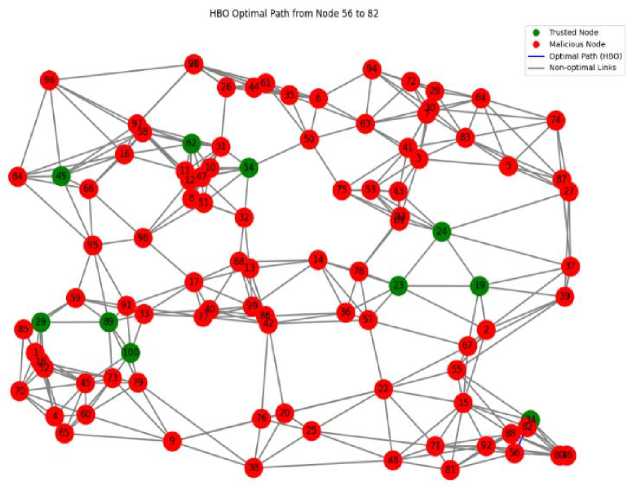
Fig.4. Routing path
A network graph with nodes classified as malicious or trusted is shown in Fig. 4. The goal is to use the Hamming Bird Optimization (HBO) method to determine the optimal route from Node 56 to Node 82. The gray edges show other inefficient connections within the network. The HBO algorithm effectively locates secure routes through trusted nodes, ensuring that data is transmitted on a more secure path while avoiding dangers, even in the occurrence of a high frequency of hostile nodes.
-
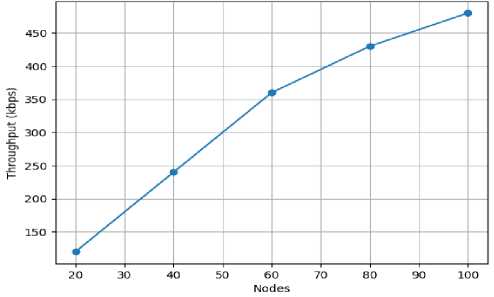
Fig.5. Throughput graph
The throughput graph (Fig. 5) shows how the number of sensor nodes and the network's achieved data throughput are related. The throughput steadily improves as the number of nodes rises from 20 to 100. This behavior shows that, even with a higher node density, the suggested HBbGBBTMN protocol effectively utilizes the network resources at its disposal and establishes reliable routing paths. By choosing reliable, energy-conscious routes, the Hummingbird-based optimization mechanism reduces packet loss and retransmissions, boosting overall data delivery performance. The growing trend validates that the suggested routing solution is scalable for dense 5G-enabled WSN environments.Fig. 6 shows the packet drop graph.
-
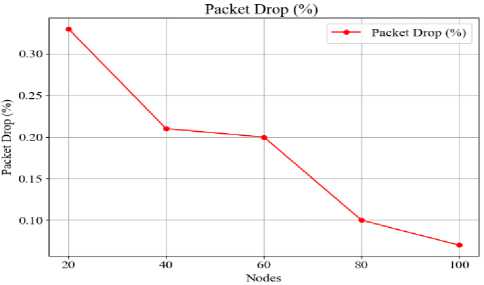
Fig.6. Packet drop graph
Packet drop is plotted against node size in this plot, which clearly shows a reduction in packet loss as the network grows from 20 to 100 nodes. The packet drop rate is around 0.32% at 20 nodes, but it drops to below 0.07% at 100 nodes. This downward trend indicates that the routing protocol can better find reliable, stable paths as the network becomes denser, with less disruption by malicious nodes or network failures. Improved data transport and greater dependability are provided by larger networks' greater redundancy and provision of backup routes.
-
Fig.7. Energy consumption graph
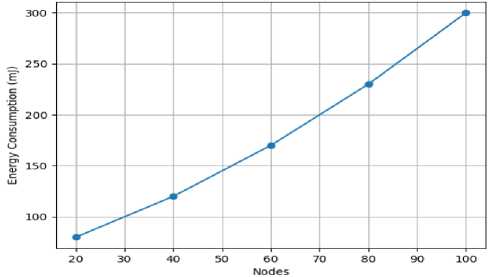
The network's overall energy consumption relative to the number of sensor nodes is displayed in the energy consumption graph (Fig. 7). As would be predicted, as network size increases, so does overall energy use. This is because more nodes result in more communication activity, including greater routing overhead, packet transmissions, and receptions. However, by removing malicious and inefficient nodes and choosing energy-efficient routing methods, the suggested HBbGBBTMN protocol maintains regulated energy growth despite the upward trend. This indicates that the protocol strikes a reasonable compromise between energy efficiency and performance, which is essential for wireless sensor networks to function over the long term.
-
Fig.8. Delay graph
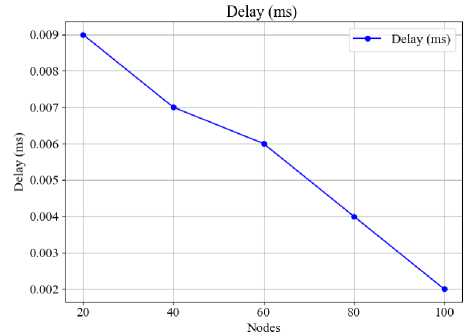
The network delay is plotted against the number of nodes in Fig. 8, clearly showing that the delay decreases with network growth. The delay is around 0.009 ms at 20 nodes and then decreases to about 0.002 ms at 100 nodes. This pattern suggests that larger networks can more effectively select fewer or faster channels, avoid overloaded or malicious nodes, and increase overall communication speed—all made possible by improved routing techniques such as the HBO methodology. The delay reduction directly supports applications that require low delay performance in rapidly evolving networks.
Fig.9. PDR graph
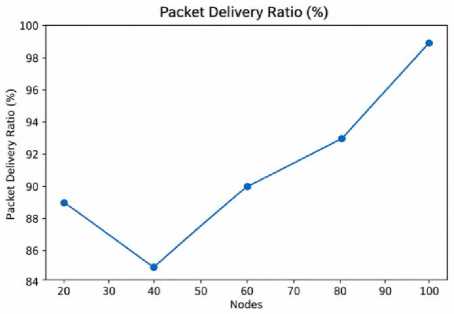
Fig. 9 displays the packet delivery ratio as a percentage as a function of the number of nodes in the network. At 20 nodes, the PDR is high; however, at 40 nodes, it decreases significantly, likely due to initial network congestion. Nevertheless, the PDR gradually improves as the total number of nodes increases, reaching about 99% at 100 nodes. This rising pattern suggests that as node density increases, the network becomes more reliable and efficient. This is certainly because improved connection and route redundancy lead to enhanced successful packet transmissions.
Fig.10. Malicious prediction graph
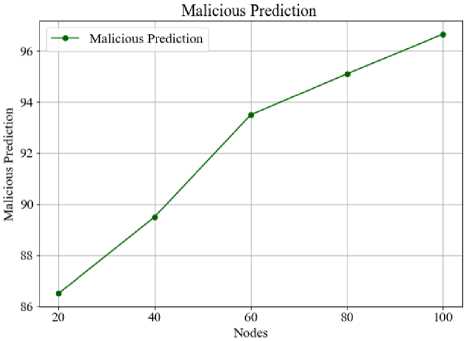
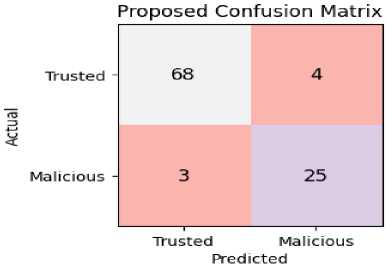
Fig.10 illustrates the rate of malicious predictions for a series of network node numbers. The prediction rate for malicious nodes increases from approximately 86% to approximately 97% as the number of nodes increases from 20 to 100. This pattern suggests that the larger the network, the more effective the detection model at identifying malicious behavior. The improved ability of the prediction system to distinguish between trustworthy and malicious nodes may be due to the greater amount of data that is available for evaluation. Fig. 11 shows the confusion matrix.
- 50
- 40
- 30
- 20
Fig.11. Confusion matrix
The confusion matrix in Fig. 11 shows how well the suggested HBbGBBTMN trust-based classification system distinguishes between malicious and trusted sensor nodes. A network of 100 nodes is used for the evaluation. Four trusted nodes are mistakenly identified as malicious, whereas 68 of the total trusted nodes are correctly classified as trusted. Legitimate nodes are rarely misclassified, as seen by the extremely low false alert rate. In a similar vein, only 3 harmful nodes are mistakenly categorized as trusted, whereas 25 malicious nodes are clearly identified as such. This indicates that the suggested approach has strong detection capabilities and successfully identifies damaging or aberrant network behavior. The suggested HBbGBBTMN procedure achieves high classification accuracy with few misclassifications, as confirmed by the overall confusion matrix. The outcomes confirm the dependability of using Hummingbird optimization in conjunction with Bernoulli-based trust evaluation for secure routing in 5G-enabled wireless sensor networks.
-
5.2. Performance Analysis
The efficacy of the developed model is evaluated by validating metrics including energy consumption, malicious prediction accuracy, throughput, latency, and packet loss ratio. To ensure its performance increase, it is compared with a few existing techniques such as Energy Aware on Demand Routing Protocol (EA-DRP), Energy Efficient Optimized hierarchical Routing Algorithm (EE-OHRA), Bacteria for Aging Optimization Algorithm (BFOA) [31], Distributed Congestion Control Protocol (DCCP), Packet Priority Intimation-based Congestion Control Mechanism (PPI), Intelligent Video Surveillance Platform (IVSP), and NoDPCC [32].
All baseline routing methods (EA-DRP, EE-OHRA, and BFOA) as well as the suggested HBbGBBTMN approach were implemented and assessed using the same network setups, simulation times, traffic patterns, and energy models to ensure an equitable and repeatable comparison. The wireless sensor network consisted of 100 randomly placed nodes in a 1000 x 1000 m area. Each node had a transmission range of 100 m, static locations, and an initial energy of 1 joule. Over the course of 1000 simulation rounds, traffic used a Constant Bit Rate model with 512-byte packets. To guarantee constant computational budgets for optimization-based techniques (BFOA and HBbGBBTMN), the population size was set to 30 agents and the maximum number of iterations to 100. Route discovery interval = 5 s, neighbor update interval = 2 s, energy threshold = 30% of initial energy, maximum hops = 10, route maintenance timeout = 10 s, and forwarding probability = 0.8 were the EA-DRP parameters that were configured. The EE-OHRA parameters were set as follows: opportunistic window = 3 s, energy threshold = 25%, link quality threshold = 0.6, route refresh interval = 6 s, forwarding probability = 0.75, and candidate forwarders = the top 5 neighbors. Population size = 30 bacteria, chemotactic steps = 20, reproduction steps = 10, elimination-dispersal events = 5, step size = 0.1, and maximum iterations = 100 were the BFOA parameters that were established. Additionally, trust update and node elimination methods were added to the proposed HBbGBBTMN at each iteration, without requiring additional processing resources. Using the same framework, all metrics—throughput, energy consumption, delay, and malicious node prediction accuracy—were averaged across 10 simulation runs with different random seeds. To provide equitable, controlled, and repeatable baseline comparisons with the suggested approach, these parameter values—which correspond to well-recognized standard configurations in the WSN and swarm-based routing literature—were consistently used.
-
A. Packet Delivery Ratio
The PDR, a statistic used in wireless networks, primarily WSNs, measures the success rate of sending packets of data from the source to the destination. The packet delivery ratio can be represented as Eqn. (6).
PDR
T о t а I гесе i ие dp а с ке ts
Totalsentpackets
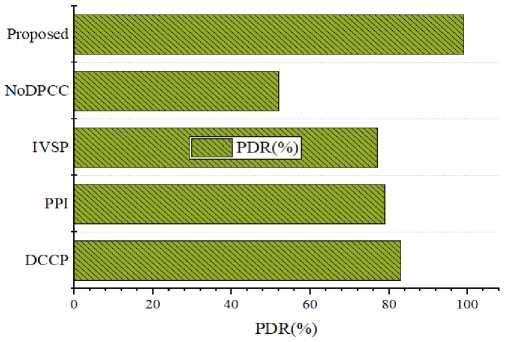
Fig.12. Comparison of PDR
Compared with the DCCP, PPI, IVSP, and NoDPPC protocols combined, the PDR values of the proposed approaches are more stable in Fig. 12. HBbGBBTMN is higher than the values obtained with existing methods. With an HBbGBBTMN, the maximum value of other protocols is lower. Table 2 shows that Packet delivery ratio with existing methods.
Table 2. Packet delivery ratio with existing methods
|
Methods |
Percentage (%) |
|
DCCP |
83 |
|
PPI |
79 |
|
IVSP |
77 |
|
NoDPCC |
52 |
|
Proposed |
99 |
-
B. Throughput
Throughput is an essential metric in wireless networks that describes how quickly and effectively data is transmitted from the source to the destinations through the communication channel. The throughput can be expressed as Eqn. (7).
Totalno.ofreceiveddata
Throughput =
Totalno .oftransmissiontime
The system has a reasonable data transfer rate if it performs well. Moreover, low performance decreased the data transfer score. It leads to the metrics of the HBbGBBTMN simulations per second within the network. Fig. 13 shows that Comparison of throughput.
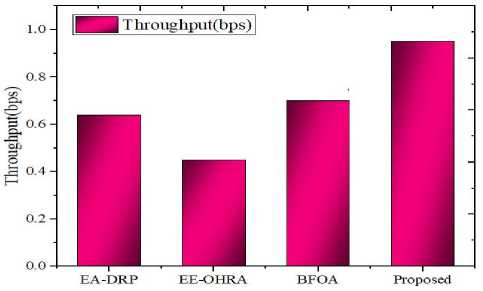
Fig.13. Comparison of throughput
-
C. Energy Consumption
The entire amount of energy required by sensor nodes for network functions, such as data sensing, processing, transmission, and reception, is referred to as energy consumption. The energy consumption is equated as Eqn. (8).
Energyconsumption = Te + Re + Ie
Here, Te represents the transmitted energy, Re represents the received energy, and Ie denotes the idle energy.
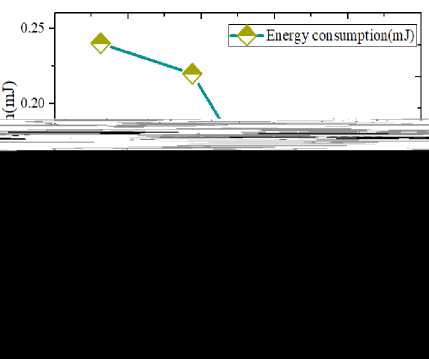
Fig.14. Comparison of energy consumption
Fig. 14 shows that Comparison of energy consumption. In Comparison, the EA-DRP protocol used 0.24 mJ, the BFOA method used 0.12 mJ, and the EE-OHRA technique used 0.22 mJ. On the other hand, the suggested approach has used sufficient energy, including 0.08mJ.
-
D. Delay
Delay in WSN refers to the time required for a data packet to be transmitted from its source to its destination. This delay is a critical performance metric that affects data transfer efficiency and the overall network performance. The delay can be illustrated as Eqn. (9).
Averagedelay = Pat — Pst (9)
Here, Pst denotes the packet sending time, and Pat denotes the packet receiving time.
Fig.15. Comparison of delay
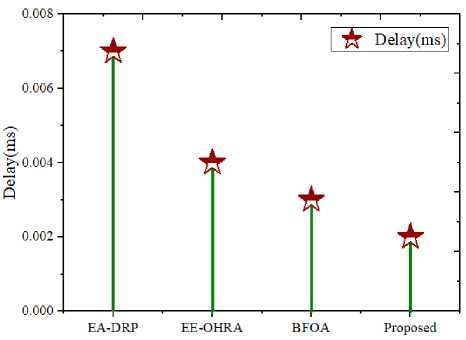
Fig. 15 shows that Comparison of delay. The method with the lowest delay values is HBbGBBTMN. The EA-DRP has the highest value compared to other protocols used. The recommended method has the lowest value, 0.002 ms.
-
E. Malicious Prediction Accuracy
A system's capacity to accurately detect nodes demonstrating malicious or incorrect activity is termed malicious node prediction. This metric is essential to ensure network security and stability in the context of HBbGBBTMN. The accuracy of malicious predictions can be equated to eqn. (10).
Malicious Pr ediction accuracy =
HB p + HBn
HB p + KL p + HBn + KLn
Here, HBp is the true positive HBn signifies the true negative, KLp denotes the false positive, and KLn denotes the false negative.
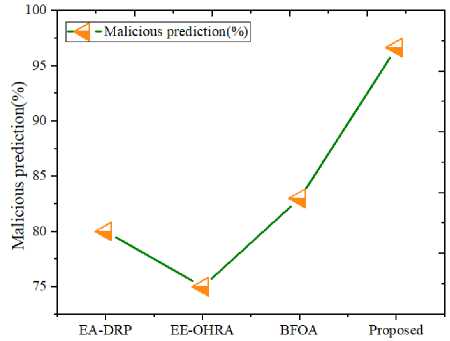
Fig.16. Comparison of malicious prediction accuracy
The malicious node prediction accuracy is shown in Fig. 16. Compared to other techniques, the proposed method only shows a high prediction accuracy. Malicious prediction accuracy is 96.66% overall. Table 3 shows that Comparative analysis of existing methods.
Table 3. Comparative analysis of existing methods
|
Methods |
Throughput (bps) |
Energy consumption (mJ) |
Delay (ms) |
Malicious prediction (%) |
|
EA-DRP |
0.64 |
0.24 |
0.007 |
80 |
|
EE-OHRA |
0.45 |
0.22 |
0.004 |
75 |
|
BFOA |
0.70 |
0.12 |
0.0035 |
83 |
|
Proposed |
0.95 |
0.08 |
0.002 |
96.66 |
5.3. Discussion
6. Conclusions
The main goal of the developed model was to examine methods for secure and efficient routing. The study's last section included a comparative analysis to verify its efficiency improvements. To address these shortcomings, the suggested method used the hummingbird optimization technique. Consequently, the present study helps defend the wireless channel against malicious activity. The total effectiveness of the recommended approach is displayed in Table 4.
Table 4. Overall performance of HBbGBBTMN
|
Metrics |
Performance |
|
Energy consumption |
0.08 mJ |
|
Throughput |
0.95 bps |
|
Packet delivery ratio |
99% |
|
Packet drop |
0.07% |
|
Delay |
0.002 ms |
|
Malicious prediction |
96.66% |
By contrasting its performance with alternative methods, the outstanding outcomes of the proposed model are illustrated. The outcomes of the suggested approach are evaluated using the following metrics: delay, PDR, throughput, packet drop, energy consumption, and malicious node identification. Compared with the available data, the suggested method yields good results. The suggested HBbGBBTMN model performed effectively, achieving a 99% packet delivery ratio, 0.95 bps throughput, 0.07% packet loss, 96.66% prediction accuracy, 0.002 ms delay, and 0.08 mJ energy consumption. Thus, the present technique is appropriate for securing efficient routing.
For 5G-enabled WSN routing, the proposed approach provided an intelligent, secure, and energy-efficient routing solution. This proposed approach reduces energy consumption, optimizes routes, and identifies and isolates malicious nodes using an improved Hummingbird fitness function and a Bernoulli-Binomial trust assessment. As validated by key metrics such as PDR, throughput, packet loss, malicious node detection, and delay, this method provides enhanced network performance and reliability, confirming its robustness and effectiveness in dynamic networks. In addition, the novel HBbGBBTMN technique is evaluated by comparing it with previous research, including EA-DRP, EE-OHRA, BFOA, DCCP, DSBR, PPI, NoDPCC, and IVSP. To achieve more accurate findings, a continuous bit-rate simulation is performed here. Finally, the proposed method has achieved 99.3% packet delivery ratio, 0.95 bps throughput ratio, 0.07% packet loss ratio, 96.66% prediction accuracy, 0.002 ms delay, and 0.08 mJ energy consumption. Future research can involve developing multiple trusted, safe routing paths for improved energy efficiency.
All the Declarations and StatementsAuthor Contributions Statement
Sachin B M – Writing – Drafted the initial manuscript, contributed to the literature survey, and documented the technical background of the study.
Dr. Mrinal Sarvagya – Writing – Review and Editing, and Project Management: Reviewed and edited the manuscript, ensured clarity and coherence, and helped coordinate project milestones and deadlines.
All authors have read and agreed to the published version of the manuscript.
Conflict of Interest Statement
The authors declare no conflicts of interest.
Funding Declaration
This research received no specific grant from funding agencies in the public, commercial, or not-for-profit sectors.
Data Availability Statement
Data sharing is not applicable to this article as no datasets were generated or analyzed during the current study.
Ethical Declarations
Ethical approval States that no human subjects and/or animals are involving for this studies.
Acknowledgments
None
Declaration of Generative AI in Scholarly Writing
AI and AI-assisted technologies were not used during the writing process.
Abbreviations
The following abbreviations are used in this manuscript:
WSN - Wireless Sensor Networks
HBbGBBTMN - Hummingbird-based Graph Bernoulli Binomial Trust Management Network
IoT - Internet of Things
CEEPR - collaborative energy-efficient routing protocol
MOISA - multi-objective improved seagull algorithm
RPL - Routing Protocol for Low-Power and Lossy Networks
PDR - packet delivery ratio
HBO - Hamming Bird Optimization
EA-DRP - Energy Aware on Demand Routing Protocol
EE-OHRA - Efficient Optimized hierarchical Routing Algorithm
BFOA - Bacteria for Aging Optimization Algorithm
DCCP - Distributed Congestion Control Protocol
PPI - Packet Priority Intimation
IVSP - Intelligent Video Surveillance Platform
Appendix
Implication: The suggested algorithm HBbGBBTMN is essential in enhancing the efficiency of WSNs 5G technology. The incorporation of energy-efficient optimization and trustful decisions alongside the continuous detection of any malicious nodes will lead to improved security and energy efficiency in the process of routing in 5G. This would improve the efficiency of vital applications such as smart cities, IoT in industries, health monitoring, and autonomous transport, where reliable data transfer and security are vital. Moreover, with the application of probabilistic trust evaluation and intelligent optimization, packet loss would be minimized, and network lifetime maximized, making this model applicable in large-scale decentralized networks.
