
Application of interactive digital tools in economics students’ education
Journal: Bulletin of South Ural State University. Series: Education. Pedagogical Sciences @vestnik-susu-ped
Section: Цифровая трансформация и искусственный интеллект в образовании
Article in issue: 4 т.17, 2025.
Free access
Abstract. In today's digitally-driven society, there is a demand for economists who can make informed decisions, possess analytical skills, strategic planning capabilities, and proficiency in using digital tools for interaction. A review of the existing literature has shown a deficiency in a systematic approach to exploring the concept of “interactive digital tools”, underdevelopment of a comprehensive set of interactive digital tools for economics students. Having studied practical experience, a request from educators for materials using interactive digital tools was revealed. Thus, there is a need to clarify the concept and develop a comprehensive set of interactive digital tools to use them in the training of students of economic special-ties. The study aims to reveal the essence of interactive digital tools and to integrate a comprehensive set of interactive digital tools into the training of Economics students at the South Ural State University. The methods employed included the literature analysis, questionnaires, interview, and the reliability testing using Cronbach's alpha. The authors clarified the concept of interactive digital tools, revealed students’ knowledge of the types of interactive digital tools in education, analyzed the effectiveness of using these tools in teaching students, analyzed the use of interactive digital tools by educators, and introduced a comprehensive set of interactive digital tools into teaching Economics students. The empirical study showed that most students were not previously familiar with some interactive digital tools and the possi-bilities of their application. Lecturers do not always use and do not know about many tools. The main problems the lecturers face are lack of awareness about the new tools and lack of time to master them. The results obtained will help educators in teaching students using interactive digital tools.
Similar articles in the section Higher education. Universities. Academic study
Short address: https://sciup.org/147252483
IDS: 147252483 | UDC: 378.018.43:005 | DOI: 10.14529/ped250407
Применение интерактивных цифровых средств в образовании студентов экономических специальностей
Современному обществу во времена цифровизации нужны экономисты, способные принимать решения, обладающие аналитическими способностями, навыками стратегического планирования и умением взаимодействовать с помощью цифровых средств. На основе изучения литературы было выявлено отсутствие системного подхода к изучению понятия «интерактивные цифровые средства», недостаточность разработки комплекса интерактивных цифровых средств в образовании студентов экономических специальностей. На основе изучения практического опыта был выявлен запрос преподавателей на материалы с применением интерактивных цифровых средств. Таким образом, возникает необходимость уточнения понятия и разработки комплекса интерактивных цифровых средств для их внедрения в образовательный процесс подготовки студентов экономических специальностей. Цель исследования – раскрыть сущность интерактивных цифровых средств и интегрировать их комплекс в образовательный процесс студентов-экономистов в Южно-Уральском государственном университете. В исследовании использовались анализ современной научной литературы, анкетирование, опрос и метод математической обработки данных с применением альфа-метода Кронбаха. В ходе исследования было уточнено понятие «интерактивные цифровые средства», а также выявлено, насколько студенты осведомлены о видах интерактивных цифровых средств в образовательном процессе. Проанализирована эффективность их применения в обучении студентов, а также использование этих средств преподавателями. В результате был внедрен комплекс интерактивных цифровых средств в обучение студентов-экономистов. Эмпирическое исследование показало, что большинство студентов не имели представления о некоторых интерактивных цифровых средствах и их возможностях. Преподаватели также не всегда используют и не знают о многих из них, что связано с нехваткой времени для их освоения. Полученные результаты могут помочь преподавателям в обучении студентов с использованием интерактивных цифровых средств.
Text of the scientific article Application of interactive digital tools in economics students’ education
Digital tools have transformed the landscape of education, particularly in terms of how, when, and where learning occurs. Consequently, researchers have emphasized the necessity for both theoretical and practical support for educators to utilize technology effectively within the classroom [5, 14]. The successful integration of digital tools, informed by research-informed pedagogy, has the potential to boost motivation and actively involve learners in the educational process. Many research studies have examined attitudes toward and outcomes of successful technology adoption in classrooms, focusing on the skillful use of tech tools to encourage valuable interactions that improve learner proficiency [29].
Digital competences have been put forward as key for personal development, active citizenship, employment, and inclusion, especially it concerns economics students. This will be not only about developing basic literacy on information and communication technologies but rather about enabling economics students to achieve higher-order skills to live and work in a digitalized and networked society [10].
Most universities participating in the “Priority 2030” program have set their primary objective as cultivating students as future leaders equipped to tackle worldwide issues, enhancing global conditions via innovative methods [22].
There is a pressing need to incorporate a complex of interactive digital tools (IDT) into the training process for economics students, given the underdeveloped methodology for teaching foreign languages to economics majors using such tools [19, 20, 23].
In actual educational settings, lecturers and economics students fail to recognize the significance of implementing interactive digital tools in teaching. Instructors are unfamiliar with certain tools and lack the time to learn them.
The aim is to elucidate the nature of interactive digital tools and embed their integrated complex into the educational framework, exemplified by English language instruction for economics students at South Ural State University. The research tasks included: clarifying the concept of interactive digital tools; assessing students’ familiarity with various types of educational interactive digital tools; evaluating the usage frequency and efficacy of these tools in foreign language teaching; identifying lecturers’ viewpoints and obstacles associated with applying interactive digital tools in language education; and deploying a complex of interactive digital tools in the instruction of economics students.
Literature Review
For many years, information technology has been an essential component of contemporary life. It was inevitable that the fact would be reflected in the realm of education. For example, educators can use blended learning [18] to arrange high-quality online instruction that also incorporates traditional methods together with digital tools.
Various authors express concerns about the drawbacks of implementing digital tools and the challenges that arise from such studies. These adverse impacts can be classified into technological and non-technological types. Technological problems encompass restricted access to essential resources in regions with poor internet infrastructure and elevated expenses for devices and services. Non-technological hurdles include psychological repercussions, cheating incidents, classroom interruptions, and deficiencies in technical abilities and theoretical understanding among instructors [8, 12, 16, 26].
The integration of digital tools in education is mainly studied by researchers focusing on different learner groups, particularly regarding elementary, secondary, and higher education [25, 27, 30]. Studies indicate that adopting digital technologies enhances student engagement and motivation [10], diversifies interaction methods [7], and enriches learning experiences by facilitating the practical application of knowledge in real-life contexts [20].
Many researchers focus on specific subjects where digital tools are applied, such as secondary mathematics, financial education for college students, and foreign language teaching [13, 19, 25]. The identification and selection of effective tools for particular topics is a significant area of investigation.
Our main focus will be on how educators understand and apply principles and methods related to organizing foreign language instruction in a university setting, especially for economics students in non-linguistic institutions. Some authors highlight how digital technologies in the classroom change the role of instructors and grant students greater autonomy in their foreign language studies [4]. Furthermore, numerous scholars have investigated diverse pedagogical elements of instructing foreign languages for academic and scholarly objectives in the framework of smart education [15]. This includes the implementation of digital tools in part-time education systems [28] and the engagement of students with these digital resources to enhance their foreign language skills for professional objectives [23]. Even though research articles address several facets of the topic being investigated, there are not many studies specifically focused on the integration of digital technologies into the economics students’ training.
Before discussing the application of digital tools in language teaching, it is important to first clarify what is meant by “interactive digital tools”, which is the key concept of this study. O. Kalugina defines digital technologies as “tech- nological tools with educational value that can operate independently and provide teachers and students access to information beyond the classroom” [13]. This highlights a crucial aspect of digital smart technologies: their ability to offer continuous global access to information, thereby extending learning opportunities beyond traditional classroom boundaries.
While there is no single, widely agreed-upon definition for this concept, we turn to the Oxford Dictionary for precision. It defines “digital” as pertaining to the application of computer technology [ digital]. “Technology” is defined as the practical implementation of scientific knowledge, particularly within industrial contexts [https://en. ]. Interactive digital educational materials are considered to boost students’ involvement in the learning experience [21].
A further essential attribute of digital smart technologies is their promotion of interactivity. E. Zhdanov highlights this aspect, portraying smart technologies in education as systems that combine technical and pedagogical elements to provide teaching in an interactive environment through tailored content [31]. Interactivity is not limited to multimedia use; it also involves engaging with the environment and responding flexibly to changing situations. This adaptability allows educators to tailor digital technologies to meet individual student needs, enabling more personalized instruction.
Interactive digital tools can be categorized according to the language skills they target – writing, reading, speaking, and listening – following the conventional classification of speech activities. Various websites support the development of these comprehensive skills [17].
A diverse array of digital platforms and tools is at users’ disposal, encompassing Quizlet, Ed-modo, TED, interactive neural network platforms such as Gliglish and Pi, digital guides, electronic books, presentation software, blogs, mobile applications, learning management systems (for instance, Moodle, Coursera, EdX), etc. These tools can be utilized through desktop or laptop computers, smart gadgets including tablets, smartphones, and smart TVs. Digital technologies are intended to complement, not replace, traditional teaching methods by providing new avenues for communication between students and educators.
Considering these definitions, we adopt the following understanding: interactive digital tools encompass both smart and online technologies, enabling students and educators to develop digital learning materials and blend their own content with authentic global resources for engaging foreign language acquisition. To this end, we utilize a complex of interactive digital tools, including Quizlet and the interactive neural network websites Gliglish and Pi, as they comprehensively support the teaching of speaking, reading, writing, and listening skills.
Materials and Methods
To attain the goals of this study and fulfill the specified tasks, we utilized a combination of theoretical and empirical approaches, such as reviewing current scientific and methodological literature, along with administering questionnaires and conducting interviews. We also utilized Cronbach's alpha, a statistical method for data processing, to assess the reliability of the responses.
The research aimed to accomplish the following tasks:
-
1) to clarify the definition of interactive digital tools, we conducted a literature review to refine the concept of “interactive digital tools”;
-
2) to assess students’ awareness of various types of interactive digital tools in education, we administered questionnaires and conducted interviews with 35 economics students;
-
3) to evaluate the frequency and effectiveness of these tools in foreign language teaching, we used questionnaires and interviews with 35 economics students;
-
4) to ascertain educators’ viewpoints and the obstacles they encounter in employing interactive digital tools for language teaching, we evaluated the requirements of 24 English language lecturers;
-
5) based on the analysis of the results and the needs of educators, we introduced a complex of interactive digital tools into the educational process for economics students (the digital site Quizlet, interactive neural network websites Gliglish and Pi).
Participants. The research took place in February 2025, involving 35 economics students of the first year of their studying at SUSU who completed a questionnaire and participated in interview sessions regarding interactive digital tools types. Of these participants, 27, constituting 77% were male, while 8, accounting for 23%, were female. This disparity is attributed to a greater number of men choosing to engage in the experiment.
In total, 35 students, representing 100%, are 18–19 years old. A total of 24 ESL educators were interviewed to assess their readiness to utilize interactive digital tools for language instruction and to identify the challenges they encounter in this endeavor.
Instruments. The integration of the questionnaire and the interview allowed for the verification of results, thereby enhancing the validity of the data [2].
We utilized Google Forms, a complimentary online platform, to gather information. The online questionnaire designed for economics students included 10 questions. The initial section contained 5 inquiries regarding age, citizenship, institution/university, gender, and year of study. The subsequent section consisted of 5 questions focused on assessing economics students’ awareness of interactive digital tools types in the educational process.
The questionnaire designed for educators aimed to gather insights regarding the ESL lecturers’ familiarity with interactive digital tools types for teaching foreign languages, along with their experiences and challenges in application interactive digital tools within the classroom setting. A combination of single-choice, multiplechoice, and yes/no questions was utilized for the responses [3, 6]. To analyze the quantitative data, SPSS Version 26 was employed. Prior to the analysis, Cronbach's alpha was calculated to assess the internal consistency of the responses.
Results and discussion
The initial outcome involved elucidating the concept of interactive digital tools (refer to the Literature Review). This understanding enabled us to evaluate the findings from the questionnaires and interviews.
Our focus was on examining the application of interactive digital tools types within the educational framework of the university. Responses were gathered from economics students and lecturers of English to specific questions, which were later analyzed for reliability. The questionnaires exhibited an acceptable level of consistency and can be regarded as reliable for research purposes (Tables 1 and 2).
To evaluate the economics students’ comprehension of the various types of interactive digital tools employed in the university’s educational process (task 2), we conducted interviews that concentrated on the types of interactive digital tools related to foreign language learning which they are familiar with. Our research re- veals that Moodle ranks as the most favored option among students. As demonstrated in Fig. 1, Quizlet and Quizizz hold the second and third points, respectively, in the types most frequently mentioned by economics students.
Table 1
The educators' questionnaire – reliability statistics
Chronbach’s Alpha
0,801
Items №
Table 2
The economics students’ questionnaire – reliability statistics
|
Chronbach’s Alpha |
Items № |
|
0,985 |
64 |
To perform a frequency analysis of the various types of interactive digital tools employed in foreign language teaching (task 3), we surveyed economics students about the types they commonly use during their English lessons. The results are depicted in Fig. 2 below. Both Figs. 1 and 2 demonstrate that the familiarity and fre- quency values pertaining to Quizlet are equivalent. However, the frequency values for Moodle and Quizizz are notably lower than their familiarity counterparts. This suggests that not all types of interactive digital tools are actively utilized by English instructors in their teaching practices.
In order to evaluate the effectiveness of the interactive digital tools use in foreign language education (task 3), economics students answered questions regarding how these interactive digital tools might aid their language learning process. Participants were presented with a range of options, from which they could choose in a free way. The distribution of responses regarding the reasons for utilizing interactive digital tools in foreign language education was as follows: 82% indicated it enhances motivation; 73% noted it makes the learning experience more engaging; and 54% reported it assists in understanding complex concepts.
To explore the views of lecturers and the challenges associated with using interactive digital tools as a language teaching resource (task 4), a set of questions was posed to English instructors.
Interactive digital tools types familiar to economics students
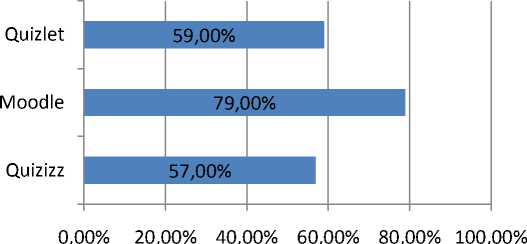
Fig. 1. Interactive digital tools types based on economics students’ familiarity
Types of interactive digital tools used
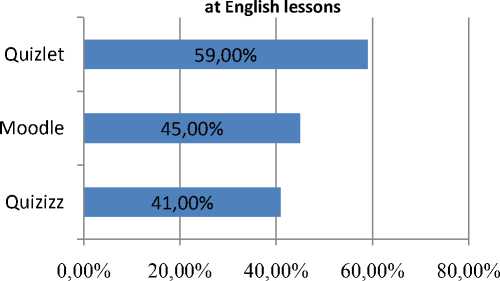
Fig. 2. Frequency of interactive digital tools types according to economics students
The first question addressed the various types of interactive digital tools acknowledged for teaching foreign languages. The responses are illustrated in Fig. 3. Among English lecturers, the type of interactive digital tools Quizlet, with 70% acknowledgement, surpasses the 59% response rate from students. Educators are more familiar with Moodle, with 85% recognition, compared to 79% among economics students. This may be attributed to educators’ greater reliance on this learning management system Moodle and their inclination towards working in it, also SUSU is working in LMS Moodle making this process interactive and easier. Quizizz is not so much popular as the interactive digital type for educators (55%).
The second inquiry aimed at educators examined the types of interactive digital tools they primarily use in English lessons. The findings regarding the frequency of interactive digital tools types utilization by English lecturers in the classroom indicated lower numbers compared to their familiarity with these tools (refer to Fig. 4). Slightly more than half of the respondents (53%)
indicated that they incorporate Moodle into their lessons. In contrast, Quizlet and Quizizz were utilized by less than half of the educators, with usage rates of 42% and 44%, respectively. The limited practical application of interactive digital tools can be attributed to various challenges encountered by educators, which were outlined separately in the questionnaire.
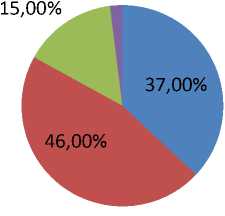
The subsequent inquiry posed to educators focused on the challenges they encounter when employing interactive digital tools . Responses related to these challenges shed light on the reasons for the low evaluations concerning the use of various interactive digital tools types in practical English classes. A significant portion of respondents (46%) indicated that developing lessons with interactive digital tools is overly timeconsuming. Additionally, 37% of educators found that choosing the appropriate type of interactive digital tools for lesson objectives requires considerable time investment. Furthermore, 15% of respondents admitted to lacking adequate knowledge to effectively conduct a lesson using interactive digital tools (Fig. 5).
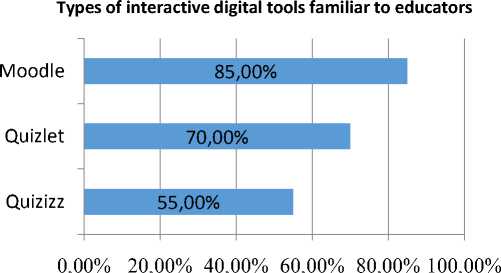
Fig. 3. Types of interactive digital tools according to English lecturers
Types of interactive digital tools mentioned by frequency according to English lecturers
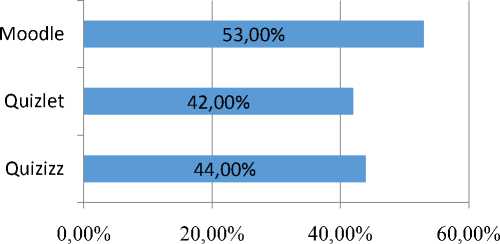
Fig. 4. Types of interactive digital tools mentioned by frequency according to English lecturers
Challenges in using infographics among English lecturers
2,00%
choosing the IDT type requires time investment
-
■ developing lessons with IDT is timeconsuming
lack of knowledge for conducting lessons using IDT
-
■ all the above mentioned issues
Fig. 5. English lecturers’ challenges in employing interactive digital tools
The findings suggest that interactive digital tools should be an essential component of the educational process. Applying different interactive digital tools types could transform foreign language instruction to better meet the needs of economics students [24].
Sometimes students behave as inactive ones due to different reasons, some are willing to work alone without joining to others. With the help of interactive digital tools as a means of economics students’ language training motivation is raised and communication skills are improved. Interactive digital tools aid to conduct classes in an engaging atmosphere, assist to get the ideas easier and make economics students active participants of the process, game elements also boost understanding [9, 11, 18]. Accordingly, we applied a complex of interactive digital tools into the process of teaching economics students, that is the digital site Quizlet, interactive neural network websites Gliglish and Pi (task 5), as they represent all the necessary tools for teaching speaking, reading, writing and listening skills.
Interactive digital site Quizlet. The complimentary Quizlet platform enables users to effortlessly commit any material to memory using educational flashcards. What sets it apart is its availability as both a smartphone app and a webbased tool. Users can design their own cards or utilize pre-existing ones.
Quizlet provides seven unique study methods: five learning modes and two interactive games. In card mode, all flashcards are shown, allowing learners to flip them to check terms and their explanations. Memorization mode develops a customized study schedule aimed at fully grasping the module’s content; to advance a level, each question needs two correct answers. Upon finishing a level, terms are sorted by proficiency: “familiar” for one correct response and “mas- tered” for two. This mode lets users set memorization deadlines, track their progress, and get app notifications. Writing mode presents a term’s definition or image, assessing knowledge and spelling precision. After the initial round, a second one targets previously missed items, requiring two correct answers each to complete and view results. Spelling mode involves typing out what is heard. Testing mode auto-generates quizzes in formats like matching, multiple-choice, true/false, and fill-in-the-blank. The Live game pits players against each other to rapidly link terms with definitions, competing on speed. In Gravity, learners must supply accurate responses to shield the planet from asteroid impacts [1].
The most popular type of work is the Live game where students compete, usually creating several teams. Such a kind of a game gives the opportunity to memorize the words and expressions quickly on the definite topic, making the process engaging and memorable. Table 3 below shows the topics studied and corresponding games played via Quizlet.
Table 3
Topics and corresponding games via Quizlet
|
Unit № |
Topic |
Game |
|
1 |
Problem Solving |
Problem Solving Household Problems |
|
2 |
Behaviour |
Feelings and Emotions Personal Qualities Behaviour: Expressions |
|
3 |
Material World |
Money Money Idioms |
|
4 |
Fame |
Fame Celebrities |
|
5 |
Trends |
Social Changes Environmental Problems |
|
6 |
Careers |
Jobs Career Occupations |
Interactive neural network website Gliglish. This web service is a neural network designed to help users practice speaking foreign languages. It enables communication with a virtual teacher, providing various conversational scenarios along with sample phrases to facilitate dialogue, although users can also input their own phrases. A microphone is required for interaction. Students can adjust the virtual teacher’s speaking speed, and feedback on grammar and vocabulary is available when needed. However, a downside is that Gliglish offers only 10 minutes of free usage per day, and conversations are capped at a maximum of 50 messages. Additionally, the service may experience limitations during peak usage times. Economics students used this tool at home and at the lesson. At the lesson students spoke on a variety of topics, e.g. “Problem Solving”, “Behaviour”, “Material World”, “Fame”, “Trends” and “Careers”.
Interactive neural network website Pi. It is a neural network for practicing written foreign language speech, which is a personal AI assistant for communication. You can choose any topic for communication and also choose any voice of the AI assistant that you like, which will provide a supportive manner of communication. This tool is free. Economics students used this interactive digital tool at home and then presented their writing at the lesson on the following topics “Trends in Society”, “Environmental Matters”, “Finding a Career” etc.
The mentioned above interactive digital tools are considered to be specialized neural networks for foreign language teaching, which make economics students the doers of the action and let them be active participants on any topic [9].
Thus, the scientific novelty of the research lies in the fact that a complex of interactive digital tools was developed and applied in the educational process of training students in economic specialties, including interactive digital site Quizlet and interactive neural network websites Gliglish and Pi.
Theoretical significance of the research is that the authors’ approaches to the concept of “interactive digital tools” were studied, and the concept was clarified.
And practical significance of the research is that the complex of interactive digital tools (interactive digital site Quizlet and interactive neural network websites Gliglish and Pi) was described and represented in topics to guide ESL lecturers in applying these tools.
Conclusion
We clarified the concept “interactive digital tools”, that is interactive digital tools encompass both smart and online technologies, enabling students and educators to develop digital learning materials and blend their own content with authentic global resources for engaging foreign language acquisition.
35 economics students and 24 lecturers of English participated in the research. It showed that economics students are familiar only with some IDT types, however they are not aware of the other types, and they do not know neural networks in learning English. Economics students proved that IDT can enhance their motivation. ESL lecturers are familiar with basic types, but are not aware of the specific IDT and how to apply them at the lessons. Educators are reluctant to apply IDT due to various challenges. Among them are as follows educators do not have enough time to learn new types of IDT and knowledge how to apply them. Based on the results, we applied a complex of interactive digital tools into the process of teaching economics students, that is the digital site Quizlet, interactive neural network websites Gliglish and Pi, as they represent all the necessary tools for teaching speaking, reading, writing and listening skills.
To sum up, ESL lecturers and economics students relate positively to IDT application in the educational process of the university. IDT turn students into effective speakers and writers through various types, during games economics students quickly catch the main vocabulary of the topic, they become active doers of the process of studying. The complex of IDT brings to effective teaching and learning the language in economics students’ training that gives better results.
The study may prove beneficial for foreign language educators in the context of economics education by utilizing interactive digital tools (Quizlet, Gliglish and Pi).
