
Assessment of Solar Energy Potential for Photovoltaic Systems (PV) in the Absheron Peninsula using Analytic Hierarchy Process (AHP) and Water Balance Modeling
Journal: Bulletin of Science and Practice @bulletennauki
Section: Естественные науки
Article in issue: 9 т.12, 2026.
Free access
The feasibility and sustainability of integrating photovoltaic (PV) systems with water treatment processes on the Absheron Peninsula is examined through the combined use of the analytic hierarchy process (AHP) and water balance modeling. Results indicate that the water balance of Lake Khojasan remains stable throughout the year, with a net balance of approximately 0 m³/month, while the required treatment volume is consistently 160,000 m³/month, representing 5% of the total lake volume of 3,200,000 m³. The solar resource assessment reveals clear seasonal variability, with the expected daily energy production ranging from 4.66 kWh/day per kWp in summer (June) to 1.04 kWh/day per kWp in winter (December). These values indicate sufficient potential for solar energy to support system operation year-round when complemented with energy storage solutions. The AHP analysis results show that the most influential parameters determining the solar energy potential are precipitation (0.3362) and global horizontal irradiance (GHI) (0.2218), followed by temperature (0.1540) and opacity index (0.1063). The low consistency coefficient (CR = 0.027) confirms the robustness and stability of the proposed decision-making system. In terms of practical application, the system design demonstrates that three PV panels (550 W each) are sufficient to meet the operational energy needs of supplying 30 tons of reclaimed water per day to irrigate 2 hectares of plantation. Overall, the study provides a robust and practically applicable framework for integrating renewable energy into water resource management systems. Future research should focus on economic optimization, long-term performance assessment, and hybrid integration of renewable energy to further enhance the sustainability and scalability of the system.
Short address: https://sciup.org/14139005
IDS: 14139005 | UDC: 504.064 | DOI: 10.33619/2414-2948/130/09
Оценка потенциала солнечной энергии для фотоэлектрических систем на Апшеронском полуострове с использованием метода анализа иерархий и анализа водного баланса
Рассматривается техническая возможность и устойчивость интеграции фотоэлектрических (ФЭ) систем с процессами очистки воды на Апшеронском полуострове посредством комбинированного использования метода анализа иерархий (AHP) и моделирования водного баланса. Результаты показывают, что водный баланс озера Ходжасан остается стабильным в течение года, с чистым балансом приблизительно 0 м³/месяц, в то время как необходимый объем очистки постоянно составляет 160 000 м³/месяц, что соответствует 5% от общего объема озера в 3 200 000 м³. Оценка солнечного ресурса выявляет явную сезонную изменчивость: ожидаемая суточная выработка энергии колеблется от 4,66 кВт·ч на кВтп летом (июнь) до 1,04 кВт·ч на кВтп зимой (декабрь). Эти значения указывают на достаточный потенциал солнечной энергии для поддержания работы системы круглый год при дополнении её решениями по хранению энергии. Результаты анализа показывают, что наиболее влиятельными параметрами, определяющими потенциал солнечной энергии, являются осадки (0,3362) и глобальная горизонтальная освещенность (GHI) (0,2218), за которыми следуют температура (0,1540) и индекс прозрачности (0,1063). Низкий коэффициент согласованности (CR = 0,027) подтверждает надежность и устойчивость предложенной системы принятия решений. С точки зрения практического применения, проектирование системы демонстрирует, что трех фотоэлектрических панелей (по 550 Вт) достаточно для удовлетворения эксплуатационных потребностей в энергии для подачи 30 т очищенной воды в день для орошения 2 гектаров плантаций. В целом исследование предоставляет надежную и применимую на практике основу для интеграции возобновляемой энергии в системы управления водными ресурсами. Будущие исследования должны быть сосредоточены на экономической оптимизации, долгосрочной оценке производительности и гибридной интеграции возобновляемых источников энергии.
Text of the scientific article Assessment of Solar Energy Potential for Photovoltaic Systems (PV) in the Absheron Peninsula using Analytic Hierarchy Process (AHP) and Water Balance Modeling
Бюллетень науки и практики / Bulletin of Science and Practice
UDC 504.064
The Absheron Peninsula is known to be the most highly developed and densely populated industrial zone in Azerbaijan. Its steadily deteriorating environmental conditions, and the state of its lakes, are a constant subject of research by scientists in our country [1-4].
The Absheron Peninsula has abundant solar energy potential due to its high levels of solar radiation (Figure 1).
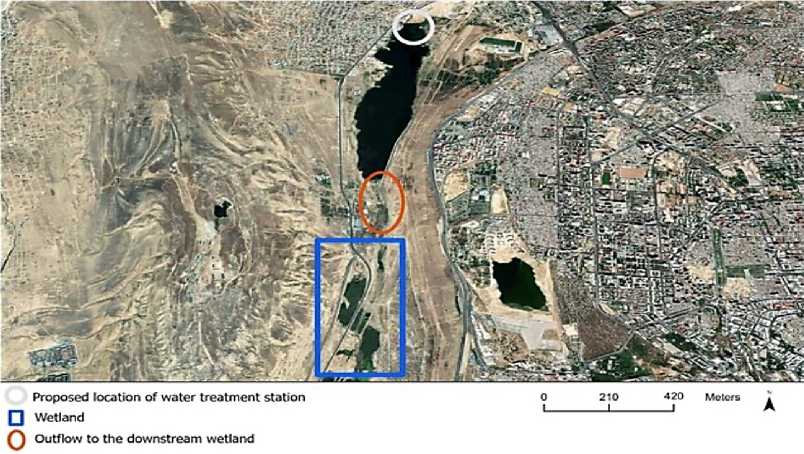
Figure 1. Satellite Image of Lake Khojasan and Proposed Location of the Water Treatment Facility
To address the dual challenges of water management and sustainable energy use, this study explores the integration of solar power with water treatment systems, specifically for Khojasan Lake. The lake, facing seasonal water deficits, presents an opportunity to utilize solar energy for water treatment.
The primary aim of this study is to evaluate the solar energy potential of the Absheron Peninsula to power a solar-driven water treatment system for Khojasan Lake. An Analytic Hierarchy Process (AHP) was employed to identify the most influential meteorological criteria—such as Global Horizontal Irradiance (GHI), temperature, humidity, and precipitation—and to evaluate their impact on the system's performance. Additionally, this study also focuses on the efficiency of the Multimedia Filtration (MMF) system in removing contaminants from the lake water, which is crucial for ensuring water quality for irrigation and other non-potable uses.
The study’s goal is to demonstrate that solar energy can be used as the primary energy source for MMF systems, with a high filtration efficiency to treat lake water contaminated with organic pollutants and heavy metals. The system will provide the required 30 tons of water per day (in terms of drop irrigation) for 2 hectares of newly planted trees, as part of the General Plan Baku (2040).
Materials and Methods
Based on the water balance calculations for both summer and winter months, the net water balance for the lake is approximately 0 m³/month, indicating that the inflows and outflows are balanced over a monthly cycle (Figure 2). While the precise water balance value is negligible due to calculation precision, this suggests that the lake's water level remains relatively stable across both seasons, with no significant gain or loss in volume. The volume of water to be treated remains constant at 160,000 m³ per month in both summer and winter, assuming a treatment efficiency of 5% of the total lake volume (Figure 3).
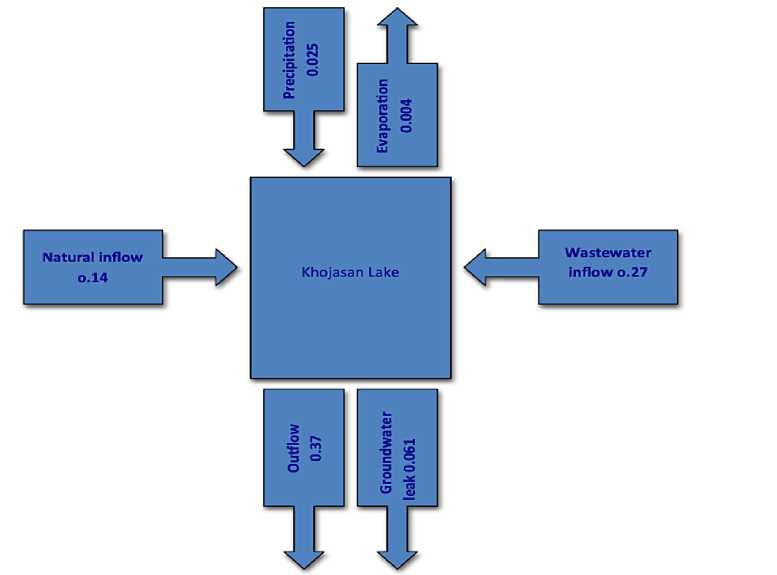
Figure 2. Water Balance Diagram of Lake Khojasan Showing Major Inflows and Outflows [5]
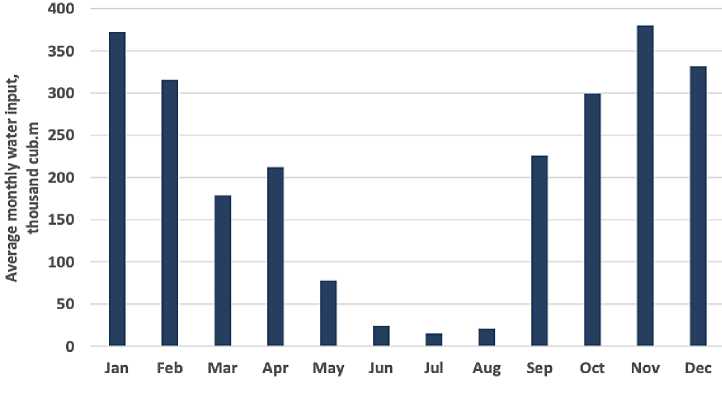
Figure 3. Average Monthly Water Inflow to Lake Khojasan [5]
To calculate the net water volume change in the lake for each month, we will use the formula:
Уbalance (У inflow + ^^precipitation + ^ wastewater ) (У outflow + Уevaporation + Vgroundwaterleak ) (1)
Calculation of the Volume of Water to be Treated:
From the table, we know that the volume of water to be treated each month can be calculated as:
Уcleaning ^ ^ Уtotal
Where: k = 0.05 (the assumed treatment efficiency), V total = 3,200,000 m³ (the total volume of the lake).
The seasonal dynamics of the water balance were further analyzed in conjunction with the Expected Daily Energy Output ( E₍day ₎), calculated on the basis of monthly Global Horizontal Irradiance ( GHI) values. Periods characterized by elevated GHI , particularly during the summer months, correspond to increased solar energy availability, which is essential for sustaining the operation of water treatment pumps under peak load conditions. Concurrently, higher ambient temperatures intensify evaporation losses, thereby increasing treatment demand. This temporal alignment between maximum solar energy generation and heightened water treatment requirements highlights the functional synergy of the proposed photovoltaic-powered system and supports its suitability for addressing seasonal stress within the water–energy nexus.
Water Balance for Summer and Winter: The net water balance for both the summer and winter months is approximately 0 m³/month. This indicates that the inflows and outflows of water in the lake are balanced on a monthly cycle. The negligible value is a result of calculation precision, but practically, the water levels in the lake remain stable across the seasons.
Volume of Water to be Treated: The volume of water to be treated is 160,000 m³ per month for both summer and winter months, assuming a treatment efficiency of 5% of the total lake volume.
Expected Daily Energy Output (E₍day₎): For the summer months (June, July, August), the expected daily energy output is: June: 4.66 kWh/day per kWp; July: 4.03 kWh/day per kWp; August: 3.49 kWh/day per kWp.
For the winter months (December, January, February), the expected daily energy output is: December: 1.04 kWh/day per kWp; January: 1.37 kWh/day per kWp; February: 2.07 kWh/day per kWp.
In the context of renewable energy studies, particularly solar energy, decision-making often requires evaluating multiple criteria that influence energy generation potential. The Analytic
Hierarchy Process (AHP) is a powerful method employed to assess the relative importance of different criteria. A key application of AHP in environmental and solar energy systems involves pairwise comparisons between various meteorological and environmental parameters [6]. This study uses AHP to determine the relative importance of seven key criteria that influence solar energy generation: ALLSKY_SFC_SW_DWN (Surface Shortwave Downward Irradiance), T2M (Temperature at 2 meters), WS2M (Wind Speed at 2 meters), RH2M (Relative Humidity at 2 meters), PRECTOTCORR (Precipitation), ALLSKY_KT (Insolation Clearness Index), and GHI (Global Horizontal Irradiance).
The criteria for solar energy modeling are selected based on their significant impact on solar radiation, energy capture efficiency, and climatic conditions, all of which are essential for accurately forecasting solar power generation potential. To justify the judgments made in the pairwise comparison matrix, the following academic references are considered:
-
1. Surface Shortwave Downward Irradiance (ALLSKY_SFC_SW_DWN) is a critical parameter for solar energy assessments. It quantifies the solar radiation that reaches the Earth's surface and is the primary input for solar power generation models. Surface solar radiation is essential for determining the efficiency of solar energy systems [7]. Given its direct influence on the solar power potential of a region, this parameter holds considerable weight in the pairwise comparison matrix.
-
2. Temperature plays a significant role in the performance of solar panels and energy systems. Higher ambient temperatures generally decrease the efficiency of solar photovoltaic (PV) systems. The temperature at 2 meters (T2M) is widely used in environmental models to assess how thermal conditions affect solar energy production. This factor is critical but not as directly influential as surface shortwave downward irradiance, leading to its moderate priority in the pairwise comparison.
-
3. Wind speed at 2 meters (WS2M) is another important meteorological factor in energy generation studies. Although not as directly correlated with solar radiation, wind speed can influence temperature patterns and atmospheric conditions, indirectly affecting solar power generation [8]. In the context of a hybrid solar-wind energy system, WS2M has a lower weight compared to other criteria directly related to solar radiation.
-
4. Relative humidity at 2 meters (RH2M) significantly impacts cloud formation and precipitation patterns, which in turn affect solar radiation availability. High humidity can reduce the amount of solar radiation reaching the surface due to cloud cover and atmospheric moisture [9]. However, its influence is secondary to more direct measures of solar energy, such as irradiance, leading to a lower weighting in the pairwise matrix.
-
5. Precipitation (PRECTOTCORR) affects solar energy generation through cloud cover, which obstructs sunlight and reduces the amount of solar radiation reaching the Earth's surface. The relationship between precipitation and solar radiation is indirect, but it remains significant, especially in regions with frequent rainfall [10]. As such, it is assigned a relatively lower importance in the pairwise comparison matrix compared to more direct meteorological variables like irradiance and temperature.
-
6. The Insolation Clearness Index (ALLSKY_KT) is a key parameter for determining the clarity of the atmosphere and its impact on solar radiation availability. A high KT value indicates clear skies, which are ideal for solar energy generation, making this index highly relevant for solar energy models [7]. The clarity of the atmosphere directly influences the amount of solar radiation that reaches the surface, thus making ALLSKY_KT a highly important factor in the pairwise comparison matrix.
-
7. Global Horizontal Irradiance (GHI) is one of the most widely used parameters in solar energy studies. It represents the total solar radiation incident on a horizontal surface and is a direct indicator of solar energy potential. Moussa et al. [11] states that GHI is fundamental for calculating solar energy
generation in various regions, making it the most critical factor in solar energy modeling. Consequently, GHI receives the highest weight in the pairwise comparison matrix.
Results and Discussion
This solar-powered water treatment system is designed to operate autonomously, utilizing solar energy to perform critical water treatment tasks, with energy storage ensuring system continuity during periods of low irradiance or nighttime operation. The integration of the air blower for backwashing plays a significant role in ensuring the MMF system's longevity by maintaining filter performance and efficiency. The demonstrated solar-powered water treatment system for Khojasan Lake is designed to meet the irrigation demand for the Baku Green Plan, which involves irrigating 2 hectares of newly planted trees with 30 tons of water per day. The calculations reveal that 3 solar panels of 550 W each are sufficient to meet the daily energy needs of the system's water pumps and MMF filtration process, with energy storage incorporated to ensure continuous operation throughout the day and night. This design demonstrates the feasibility of using solar energy for sustainable, autonomous water treatment in regions with seasonal solar variations, such as the Absheron Peninsula. By quantifying the solar potential through AHP, this study provides a clear understanding of the relevance of using solar power to drive the MMF system, ensuring that the water treatment process remains sustainable and energy-efficient (Table 1). The findings also underscore the importance of integrating solar power with energy storage solutions to address seasonal variations in solar availability, allowing for year-round operation of the water treatment system.
Table 1
PAIRWISE COMPARISON MATRIX
|
Criteria |
ALLSKY_SFC_ SW_DWN |
T2 M |
WS2 M |
RH2 M |
PRECTOTCO RR |
ALLSKY_ KT |
GH I |
|
ALLSKY_SFC_SW_DWN |
1 |
3 |
2 |
1/3 |
5 |
2 |
3 |
|
T2M |
1/3 |
1 |
1/2 |
1/5 |
3 |
1/2 |
2 |
|
WS2M |
1/2 |
2 |
1 |
1/3 |
4 |
2 |
3 |
|
RH2M |
3 |
5 |
3 |
1 |
7 |
3 |
5 |
|
PRECTOTCORR |
1/5 |
1/3 |
1/4 |
1/7 |
1 |
1/3 |
1/2 |
|
ALLSKY_KT |
1/2 |
2 |
1/2 |
1/3 |
3 |
1 |
3 |
|
GHI |
1/3 |
1/2 |
1/3 |
1/5 |
2 |
1/3 |
1 |
Normalized Weights and Consistency Check Results. Normalization of the pairwise comparison matrix is done by dividing each element by the sum of the corresponding column. Let S j represent the sum of column j :
S j = ∑n a ij i=1
Matrix normalization is achieved by dividing each element aij by the corresponding column sum Sj.
aij nij =
The normalized matrix N is given by:
n
S j
n
n
N=(
|
11 |
n12 |
n1n |
|
21 |
n22 |
n2n |
|
n1 |
nn2 |
nnn |
)
Бюллетень науки и практики / Bulletin of Science and Practice Т. 12. №9 2026
|
/ 0.170 |
0.217 |
0.264 |
0.131 |
0.200 |
0.218 |
0.171 |
(6) |
||
|
[ 0.057 |
0.072 |
0.066 |
0.079 |
0.120 |
0.055 |
0.114 |
|||
|
0.085 |
0.145 |
0.132 |
0.131 |
0.160 |
0.218 |
0.171 |
|||
|
N = |
0.511 |
0.361 |
0.396 |
0.393 |
0.280 |
0.327 |
0.286 |
||
|
0.034 |
0.024 |
0.033 |
0.056 |
0.040 |
0.036 |
0.029 |
|||
|
. 0.085 |
0.145 |
0.066 |
0.131 |
0.120 |
0.109 |
0.171 |
|||
|
0.057 |
0.036 |
0.044 |
0.079 |
0.080 |
0.036 |
0.057 |
|||
The final weight for each criterion is obtained by averaging the values in each row of the normalized matrix. The weight for criterion i is:
W i = 1 2 n ij nj=1
where wi denotes the normalized weight of criterion, nij represents the elements of the normalized matrix N, and n is the total number of criteria considered in the analysis.
The evaluation of solar power potential for the Absheron Peninsula indicates that Precipitation Correlation (PRECTOTCORR) and Global Horizontal Irradiance (GHI) constitute the dominant criteria, attaining the highest normalized weights of 0.3362 and 0.2218, respectively. These parameters exert a primary influence on solar energy availability, as precipitation governs cloud cover and atmospheric attenuation, while GHI directly quantifies the total solar irradiance incident on horizontal photovoltaic surfaces. Temperature at 2 m (T2M) and the Sky Clearness Index (ALLSKY_KT), with respective weights of 0.1540 and 0.1063, play a secondary yet significant role by affecting photovoltaic conversion efficiency and atmospheric transmissivity (Table 2). Although Wind Speed (WS2M) and Relative Humidity (RH2M) exhibit comparatively lower weights, they remain relevant due to their indirect effects on thermal regulation and atmospheric conditions. Overall, the combined influence of GHI, PRECTOTCORR, and T2M emerges as the principal determinant of photovoltaic system viability in the region.
Table 2
NORMALIZED WEIGHTS OF EVALUATION CRITERIA DERIVED
FROM THE ANALYTIC HIERARCHY PROCESS (AHP)
|
Criteria |
Weight |
|
ALLSKY_SFC_SW_DWN |
0.0639 |
|
T2M |
154 |
|
WS2M |
84 |
|
RH2M |
0.0338 |
|
PRECTOTCORR |
0.3362 |
|
ALLSKY_KT |
0.1063 |
|
GHI |
0.2218 |
Consistency Vector:
C = Aw
Maximum Eigenvalue:
Consistency Index:
Consistency Ratio:
Л таХ =1£^ ni = 1 W i
CI
^■тах П
П — 1
CI
cr = ri
The consistency of the pairwise comparison matrix was assessed through the computation of the consistency vector C=Aw, where A denotes the original pairwise comparison matrix and w is the normalized priority vector. The maximum eigenvalue λmax was subsequently estimated from the ratio of the components of the consistency vector to the corresponding weights. For the present analysis, the resulting value of λmax is 7.215. Based on this value, the Consistency Index was calculated as CI=0.036, and the Consistency Ratio was determined as CR=0.027. Since CR<0.10, the pairwise comparison matrix satisfies the AHP consistency requirement, indicating that the judgment matrix is logically consistent and the derived weights are reliable.
Conclusion
This study confirms the technical feasibility and sustainability of integrating photovoltaic (PV) systems with water treatment processes in the Absheron Peninsula through the combined use of the Analytic Hierarchy Process (AHP) and water balance modeling. The results show that the water balance of Khojasan Lake remains stable throughout the year, with a net balance of approximately 0 m³/month, while the required treatment volume is consistently 160,000 m³/month, representing 5% of the total lake volume of 3,200,000 m³. The solar resource assessment reveals clear seasonal variability, with expected daily energy outputs ranging from 4.66 kWh/day per kWp in summer (June) to 1.04 kWh/day per kWp in winter (December). These values indicate sufficient solar energy potential to sustain system operation year-round when complemented by energy storage solutions. The AHP results identify precipitation (0.3362) and Global Horizontal Irradiance (GHI) (0.2218) as the most influential parameters affecting solar energy potential, followed by temperature (0.1540) and clearness index (0.1063). The low consistency ratio (CR = 0.027) confirms the robustness and reliability of the decision-making framework. From an application perspective, the system design demonstrates that three photovoltaic panels (550 W each) are sufficient to meet the operational energy demand required to supply 30 tons of treated water per day for irrigation over 2 hectares of plantation. Overall, the study provides a robust and transferable framework for integrating renewable energy into water management systems. Future research should focus on economic optimization, long-term performance evaluation, and hybrid renewable energy integration to further enhance system resilience and scalability.
