
Beyond US Hegemony: Sino-Russian Networked Security and the Rise of an Archipelagic Global Order
Section: Глобальные стратегии
Article in issue: 2 т.31, 2026.
Free access
Introduction. The current paper studies the networked security cooperation between China and Russia within the emerging fragmented world order, where American hegemony is on the verge of decline. A multipolar structure relies on the heart of this emerging order, in which clusters of states form autonomous, interlinked “archipelagos” based on shared strategic interests. Methods and materials. Using the theory of Networked Security Complexes (NSC) as the theoretical framework, this study looks at how China and Russia respond to changing geopolitical patterns by creating interconnected security architectures that challenge conventional U.S.-dominated alliances. The study is seeking to answer the question of why and how China and Russia have significantly strengthened their security cooperation, constructing a strategic partnership, and how this partnership contributes to the new archipelago-based world order. To answer this question, methodologically, the research adopts a qualitative approach, integrating discourse analysis of official documents, joint statements, and strategic policy papers with process-tracing of key diplomatic and military engagements between Beijing and Moscow from 2010 to 2024. Analysis and results. The paper views Sino-Russian cooperation in contemporary world politics as a strategic deployment to fragmentation, suggesting an alternative version of regional stability, which, in turn, puts emphasis on sovereignty, non-interference, and mutual security guarantees over unipolar security leadership. Finally, the study comes to the conclusion that the aforementioned Sino-Russian network signifies not only contestation against Western-led global governance but also the alignment with the autonomous security balancing strategy, highlighting the rise of a polycentric and archipelago-based security governance system as the defining feature of the present-day international system.
Short address: https://sciup.org/149151482
IDS: 149151482 | UDC: 327(470+571:510) | DOI: 10.15688/jvolsu4.2026.2.4
За пределами американской гегемонии: китайско-российская сетевая безопасность и становление глобального порядка архипелажного типа
Введение. В данной статье рассматривается сетевая безопасность и сотрудничество между Китаем и Россией в условиях формирующегося фрагментированного мирового порядка, в котором американская гегемония находится на грани упадка. В основе этого нового порядка лежит многополярная структура, в рамках которой группы государств образуют автономные, взаимосвязанные «архипелаги», основанные на общих стратегических интересах. Методы и материалы. Используя теорию сетевых комплексов безопасности (Networked Security Complexes, NSC) в качестве теоретической рамки, исследование анализирует, каким образом Китай и Россия реагируют на изменяющиеся геополитические конфигурации посредством создания взаимосвязанных архитектур безопасности, бросающих вызов традиционным союзам, доминируемым Соединенными Штатами. Исследование направлено на ответ на вопрос о том, почему и каким образом Китай и Россия значительно усилили свое сотрудничество в сфере безопасности, сформировав стратегическое партнерство, а также о том, каким образом данное партнерство способствует становлению нового мирового порядка, основанного на принципе «архипелагов». Для ответа на этот вопрос в методологическом плане исследование использует качественный подход, объединяя дискурс-анализ официальных документов, совместных заявлений и стратегических программных материалов с методом process-tracing ключевых дипломатических и военных взаимодействий между Пекином и Москвой в период с 2010 по 2024 год. Анализ и результаты. В статье китайско-российское сотрудничество в современной мировой политике рассматривается как стратегический ответ на глобальную фрагментацию, предлагающий альтернативную модель региональной стабильности, которая, в свою очередь, делает акцент на суверенитете, невмешательстве и взаимных гарантиях безопасности вместо однополярного лидерства в сфере безопасности. В заключение исследование приходит к выводу, что вышеупомянутая китайско-российская сеть означает не только оспаривание западноцентричного глобального управления, но и согласование с автономной стратегией балансирования безопасности, подчеркивая рост полицентрической системы управления безопасностью как определяющей характеристики современной международной системы.
Text of the scientific article Beyond US Hegemony: Sino-Russian Networked Security and the Rise of an Archipelagic Global Order
DOI:
Цитирование. Джавади Р. За пределами американской гегемонии: китайско-российская сетевая безопасность и становление глобального порядка архипелажного типа // Вестник Волгоградского государственного университета. Серия 4, История. Регионоведение. Международные отношения. – 2026. – Т. 31, № 2. – С. 40–50. – (На англ. яз.). – DOI:
Introduction. In recent decades, the liberal international order dominated by the United States has encountered significant challenges, gradually giving rise to a fragmented global system marked by regional powers asserting greater autonomy in international affairs [14, p. 8]. This shift has intensified as American hegemony has weakened, notably following the financial crisis of 2008, creating a geopolitical vacuum that allowed for the emergence of multiple power centers [19, pp. 205206]. Within this multipolar reality, states have begun aligning themselves into distinct clusters or “archipelagos,” prioritizing cooperation based on mutual interests and shared strategic goals rather than adherence to overarching global norms established during US predominance [1, p. 32].
At the forefront of this emerging structure, China and Russia have notably deepened their strategic partnership in East Asia, becoming principal architects of what scholars now characterize as “networked security.” This approach to international security governance differs markedly from the UScentric model, as it emphasizes bilateral and multilateral coordination without a clear hegemonic center [18, p. 18]. As American influence recedes, Beijing and Moscow have consciously positioned their relationship as a counterweight to Western dominance, capitalizing on their complementary strengths to address regional and global security challenges collaboratively.
The paper sets the starting point of the study from 2010 primarily because this period marked a notable intensification in Sino-Russian relations, especially following the global financial crisis of 2008–2009. Around this time, China and Russia accelerated cooperation within frameworks like the Shanghai Cooperation Organization (SCO) and subsequently initiated coordinated responses to events such as the Arab Spring (2011) and the geopolitical tensions following the Ukraine crisis (2014). Furthermore, China’s ascendance to the world’s second-largest economy in 2010 solidified its global influence and created a new environment and perception of this state in the geopolitical arena. During this period, China and Russia aligned their interests in opposing U.S.-led security and economic frameworks, establishing a solid foundation for these two states to deepen their involvement in developing stronger security cooperation.
Addressing the strategic convergence between Russia and China requires a theoretical lens capable of encapsulating today’s complex world politics. The framework of Networked Security Complexes (NSC) proposed by Barry Buzan and Ole Waever provides such a lens, explaining how security interdependencies between states can outweigh traditional boundaries, leading to the formation of clusters of interlinked security relationships [7, p. 45]. This theory explains not only the Sino-Russian mutual interaction but also their broader engagement within multilateral frameworks such as the SCO and BRICS. Networked security thus implies a layered structure of bilateral agreements and multilateral engagements that collectively shape a coherent security architecture resistant to external hegemonic pressures [7, p. 47].
The recent evolution of Sino-Russian relations underscores how discursive alignment facilitates practical cooperation. A thorough examination of official joint statements and strategic policy papers reveals shared language promoting multipolarity, sovereignty, and noninterference. This common discourse explicitly criticizes Western interventionism and unilateralism, framing NATO expansion and US-led alliances as destabilizing forces within the international system [15]. For instance, the pivotal joint declaration signed by President Vladimir Putin and President Xi Jinping during the Beijing Winter Olympics in February 2022 emphasized the rejection of “Cold War mentality” and NATO’s eastward expansion, underscoring a mutual commitment to reshape international security governance according to principles opposed to Western hegemonic dominance [15].
Discursive convergence between Russia and China translates into concrete diplomatic alignment and military coordination. Diplomatic cooperation has been notably visible in multilateral forums such as the United Nations Security Council, where both countries have consistently coordinated their vetoes on critical issues ranging from Syria to North Korea, effectively challenging Western-backed resolutions aimed at regime change or sanctions [3, p. 112]. These joint positions reflect a strategic calculation aimed at preserving sovereignty norms and preventing precedents of external intervention, which both nations view as existential threats to their internal stability and international standing.
In tandem with diplomatic alignment, Sino-Russian military cooperation has markedly intensified, reinforcing their shared discourse. Since the early 2010s, joint military exercises have become much more common and complicated. For example, the Vostok-2018 exercises were the first time China took part in a large-scale strategic military drill on Russian soil [34, p. 2, 8]. Further demonstrations of military cohesion include joint naval exercises across strategic waterways like the South China Sea, East China Sea, Baltic Sea, and the Mediterranean, deliberately aimed at sending geopolitical signals to the United States and its allies regarding Sino-Russian military interoperability and mutual support [31; 34, p. 4].
Such activities are underpinned by extensive arms trade and technological cooperation, with notable transactions including China’s procurement of advanced Russian defense systems like the S-400 missile defense system (2015–2020) and Su-35 fighter jets, indicating a significant leap in bilateral trust and strategic alignment [6, p. 6; 28].
The significance of Sino-Russian networked security cooperation extends beyond mere bilateral engagement; it signals a broader strategic intention to reshape the global order into a polycentric system of governance. This evolution, marked by growing regional autonomy and clusters of strategic cooperation, contrasts sharply with the post-Cold War unipolar moment characterized by US preeminence [19, p. 207]. Sino-Russian strategic alignment, therefore, represents a deliberate response to perceived deficiencies and threats within the Western-led global order, promoting instead a multipolar configuration based on decentralized, networked interactions [18, p. 20].
Ultimately, analyzing Sino-Russian cooperation within the fragmented global context provides critical insights into how contemporary powers adapt strategically to a world marked by declining hegemony and increasing regionalization. This analysis highlights not only how these states coordinate to challenge Western dominance but also how they proactively establish alternative structures for global governance. By emphasizing a multipolar world order that prioritizes sovereignty and an “archipelago-based” order instead of a hegemonic order, China and Russia offer an attractive counter-narrative to states seeking alternatives to Western-led alliances and governance mechanisms, effectively contributing to the ongoing decentralization of global power and reshaping contemporary international relations [1, p. 115].
Methods and materials. As for the methodology, the study has shed light on the discourse analysis and process tracing of diplomatic and military engagements between China and Russia from 2010 and 2024. In international relations, discourse analysis focuses on examining how language and official narratives shape political realities. For analyzing Sino-Russian relations, the primary documents include joint statements, official speeches, strategic policy papers and doctrines, statements within international forums (e. g., UN Security Council). Here are the specific sources assessed for the core of the study:
-
1. Joint Statement on International Relations and Global Sustainable Development (2022): Issued during the Xi-Putin summit in February 2022, this document clearly opposed U.S.-dominated international governance and advocated multipolarity, sovereignty, and non-interference. Furthermore, the statement showed that Moscow and Beijing were backing each other on issues like Ukraine and Taiwan, reflecting an important strategic alignment. On the other side of the ledger, they criticized NATO expansion as destabilizing, which highlighted a notable rhetorical coordination between the two countries [15].
-
2. Russia’s Foreign Policy Concept (2023): This document explicitly picks Beijing as Moscow’s primary strategic partner for establishing a fair, multipolar world order, highlighting the collective efforts to pragmatically oppose the Western hegemonic practices that hinders the collaborative efforts among the nations [22].
-
3. China’s Global Security Initiative (2022): Introduced by President Xi Jinping in April 2022 at the Boao Forum for Asia, this foreign policy framework put forward the idea of “indivisible security,” reflecting Russian views and directly challenging the U.S.-led security order, which empowered the ideological alignment between Beijing and Moscow. At the same time, it expressed its firm stance against bloc politics, unilateralism, and “Cold War mentalities” [21].
-
4. United Nations Security Council Vetoes and Statements (2011–present): During 2011–
2026, Russia and China’s concrete actions in the UN, summarized in their repeated coordinated vetoes on resolutions regarding Myanmar and the Syrian civil war, further underline their commitment to sovereignty and non-interference. They have used their veto powers on important international issues, specifically in conflict zones, to show their shared opposition to the Western-led interventions [32].
-
5. National Security Strategy of the United States (2025): This document clearly confesses to the wrong positioning of the U.S. during the Cold War and endorses a multipolar world in which the U.S. is no longer a hegemon [33, p. 1].
Process tracing of diplomatic and military engagements is another tool to investigate and explore the links between the two countries in question. Process-tracing is a method that tracks causal mechanisms through key events and interactions, clearly revealing how and why actors choose certain policy paths. Key examples of diplomatic engagements between the two states include the high-level summits and exchanges (2014–2024) and SCO and BRICS summits (2010–present). Regular meetings between Xi Jinping and Vladimir Putin, notably post-Crimea annexation in 2014, the Vladivostok summit (2019), and the 2022 Beijing Winter Olympics, symbolized consistent bilateral strategic solidarity, particularly in opposition to Western sanctions and geopolitical pressures [5]. In addition, SCO and Brics summits, as multilateral platforms, have become vehicles for articulating alternative economic and security visions opposing Western-led governance. Both nations leveraged these forums for coordinated diplomatic messaging [27].
The two states’ responses to international crises can also be categorized by shared interests and engagements. Regarding the Ukraine crisis (2014 – present), China abstained from condemning Russia’s annexation of Crimea and maintained diplomatic neutrality during Russia’s invasion of Ukraine (2022), indirectly supporting Russia’s diplomatic positions [17, pp. 233-252; 26, p. 148]. Also, in the Syrian Civil War (2011 – present), consistent joint vetoes against Western-backed resolutions at the UN highlighted unified diplomatic strategies protecting mutual interests against regime change policies [9].
The two countries have also enjoyed joint military exercises and military/technology cooperation. Vostok-2018 is the prominent engagement between the two countries in which China’s extensive participation in Russian strategic military exercises demonstrated a significant enhancement of military trust and operational interoperability [30]. Additionally, Zapad/Interaction-2021 military exercises, conducted in northwestern China, notably tested the strategic coordination and interoperability between the two militaries, underscoring the depth of their strategic partnership [29].
While direct arms sales from China are not publicly acknowledged, exports of dual-use technologies have gone under sharp increase through complex intermediary networks [26, p. 148]. Moreover, joint collaboration in missile defense, cybersecurity, and early-warning systems indicated mutual strategic trust and a shared interest in countering perceived U.S. military dominance [35, p. 107].
In the path to analyze the military and security engagement of China and Russia, the integration of discourse analysis and processtracing demonstrates mutual reinforcement between ideological narratives and tangible diplomatic and military cooperation. Joint narratives of multipolarity and non-interference legitimize security and diplomatic coordination, indicating intentional Sino-Russian alignment against U.S.-led security alliances. This partnership illustrates pragmatic cooperation driven by shared strategic objectives rather than ideological convergence alone in a decentralized global order.
Networked Security Complexes (NSC) Theory. The study has utilized Buzan and Wжver’s theory of Networked Security Complexes (NSCs) as the theoretical framework of the study. This theory is considered a comprehensive and evolutionary version of their earlier Regional Security Complex Theory (RSCT). The difference between these two is that, while RSCT concentrated on geographically connected clusters of states with interlinked security concerns [7, pp. 44-47], NSC theory goes beyond this narrow emphasis and extends this logic to embrace the multi-layered and transregional networks of security interdependencies that move beyond the rigid regional geographical boundaries [8, pp. 28-33].
Furthermore, NSC theory argues both state and non-state actors are participating in overlapping, and multifaceted security arrangements in a network-based world in the post-Cold War era. These networks reflect the complexity and fragmentation of contemporary global politics, characterized by:
-
1. The emergence and rise of non-hegemonic, multipolar, or polycentric orders in which the power is distributed across multiple centers.
-
2. The formation of security coalitions and partnerships that are issue-specific, flexible, and often informal, rather than strictly territorial.
-
3. The intertwining of regional and global security concerns, producing cross-cutting networks that challenge traditional state-centric paradigms [8, pp. 139-142].
This conceptual shift is critical in understanding the emerging Sino-Russian security partnership, which defies the classic notion of a security complex confined to geography alone. Instead, the Sino-Russian relationship is best analyzed as a networked security complex, wherein both states coordinate across multiple military, energy, cyber, and diplomatic domains to counterbalance U.S. hegemony and shape a new order. This partnership illustrates how networked security dynamics foster polycentric governance, where multiple centers of authority interact horizontally and vertically, fragmenting the formerly U.S.-dominated international system [2, pp. 67-69; 8, pp. 145-150; 12, pp. 39-41].
NSC theory offers a practical framework for understanding how Sino-Russian security collaboration contributes to the undermining of U.S. dominance while fostering an archipelago-based world order marked by distributed but interconnected centers of governance. This approach highlights the significance of transregional networks and non-hierarchical security arrangements in shaping today’s international relations [10, pp. 81-83; 16, pp. 352-355].
Analysis. In analyzing Sino-Russian networked security cooperation within an archipelago-based world order, several key insights pop up; this will be discussed in detail. The central puzzle is related to understanding why and how China and Russia, despite a historical legacy of competition and mutual suspicion, have substantially deepened their security cooperation, forming a strategic partnership that endures despite divergent long-term geopolitical objectives, and how this partnership contributes to the emerging archipelago-based world order.
A central finding of this research is that the Sino-Russian partnership reflects not merely a reactionary alignment against the West but represents a sophisticated strategic calculus aimed at mutual reinforcement of each nation’s international standing and security. As the US-led global order weakens, China and Russia increasingly view security interdependence as a pathway to safeguarding sovereignty and regional influence [18, p. 42]. Indeed, the emergence of networked security between these two states is grounded in shared perceptions of threat, primarily the expansive nature of U.S.-led alliances and institutions such as NATO and the Quadrilateral Security Dialogue (Quad), and secondarily in fears related to regime security and domestic stability influenced by external interference [3, p. 119]. China and Russia share a common strategic objective: “to ensure a balance of power among major countries and to prevent the formation of a unipolar international system. Establishing a balance against the pressures exerted by the West, led by the United States, and promoting a multipolar system are among the key external factors driving the development of relations between these two nations” [26, p. 151].
One striking aspect of Sino-Russian networked security is its comprehensive nature, spanning diplomatic coordination, military interoperability, economic integration, and ideological synchronization. Looking from the military perspective, both of the nations have increased their involvement in joint exercises and arms exchanges since the mid-2010s. Operations such as Vostok-2018, Tsentr-2019, and Zapad/ Interaction-2021 demonstrate not only the growing level of mutual military trust but also function as strategic signals aimed at countering Western influence [34, p. 2].
According to a report by the Stockholm International Peace Research Institute (SIPRI), China ranks as the fifth-largest exporter of major arms globally for the 2021–2025 period. Chinese weapons and armaments are now considered more advanced, and Beijing has been the main contributor to Moscow’s defense industry by exporting dual-use items, electronic components, and raw materials used in Russian drone production, according to Center for European
Policy Analysis (CEPA). Back in April 2024, US Secretary of State Antony Blinken was at pains to reiterate that “China is currently the main contributor to Russia’s defense industrial base. We observe China providing machine tools, semiconductors, and other dual-use items that have assisted Russia in rebuilding its defense industry, which sanctions and export controls had severely undermined” [25, p. 9]. On the other side of the ledger, Russia is also exporting arms to China, serving as the main foreign supplier to Beijing. Russia’ share of Chinese total arms imports between 2000 and recent years stands at around 77 percent. Chinese imports of Russian military hardware in 2025 were estimated at approximately 25 million trend-indicator values (TIV). Even prior to that, following the collapse of the Soviet Union, around 25 of the total value of trade between Russia and China was related to sales of Russian arms to Beijing [26, p. 156].
The expansion of joint naval exercises, notably the Joint Sea series initiated in 2012, further underscores this cooperation. This maritime cooperation has progressed into tangible military alignment, encompassing the sharing of strategic operational doctrines and increasing interoperability between the Russian Navy and China’s People’s Liberation Army Navy (PLAN) [11, p. 71].
Delving more into the defense collaboration between the two states, between 2012 and 2014, Beijing and Moscow conducted nine joint military exercises, according to the data provided by the Center for Strategic and International Studies. A decade later, from 2022 until August 2024, they held fifteen according to the graph below.
The military-technical cooperation between Russia and China has equally significant implications for global power dynamics. China’s assistance to Russia’s defense sector encompasses sensitive technologies, navigation systems for helicopters, parts for fighter jets, jamming equipment, radar and optics, components for drones, excavators for trench construction, as well as electronics, microchips, machinery, vehicles, and a variety of essential metals and chemicals for the defense industry [26, p. 156]. These arms deals not only reinforce mutual security interests but also help both nations counterbalance technological and military advancements within U.S.-led alliances,
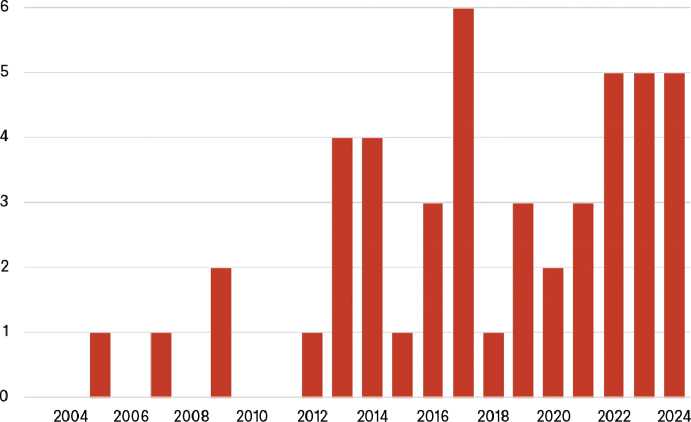
Source: Center for Strategic and International Studies.
China-Russia Military Exercises Have Grown More Frequent. Number of Bilateral Military Exercises (as of August 2024)
particularly those involving U.S. deployments in the Indo-Pacific region [6, p. 11].
Diplomatic coordination has mirrored military cooperation. The two states’ coordination at the UNSC further illustrates a shared commitment to a vision of global governance that respects state sovereignty and non-intervention, directly challenging Western liberal narratives that justify humanitarian interventions or regimechange operations [4].
Economically, Sino-Russian relations have significantly deepened, providing a material underpinning for security cooperation. Russia’s strategic pivot to Asia after 2014, prompted by Western sanctions following the annexation of Crimea, accelerated its economic integration with China, leading to increased bilateral trade, substantial Chinese investments in Russia’s energy and infrastructure sectors, and collaborative ventures within the Belt and Road Initiative (BRI) [13]. Economic interdependence has thus created structural incentives for continued cooperation, binding both states together through shared strategic infrastructure projects and energy supply chains, which reinforce their geopolitical alignment [13].
Ideological synchronization is another critical element driving Sino-Russian networked security. Both countries articulate a shared discourse emphasizing multipolarity, sovereignty, and opposition to Western universalism. Joint statements repeatedly criticize the Western “double standards” in global governance and human rights discourse, thus providing a normative framework that legitimizes their bilateral cooperation and appeals to other states disenchanted with Western liberal hegemony. China’s position in the international system has evolved from that of a “detached spectator” who used to “accept and learn” the international rules to an active participant in the development of new rules that will “break the Western moral advantage” [24]. Accordingly, the East Asian country, along with Russia, has always opposed the Western block. For instance, the 2022 Joint Statement during Putin and Xi’s meeting explicitly framed NATO’s expansion and Western unilateral sanctions as principal threats to international security, underscoring ideological alignment between Moscow and Beijing [15].
Yet, despite significant alignment, Sino-Russian cooperation is characterized by certain complexities and limitations. Historical mistrust and long-term strategic divergences persist beneath their public unity. For example, Russia remains wary of China’s growing economic and military influence in Central Asia, traditionally considered Moscow’s sphere of influence [20, p. 74]. Similarly, China carefully avoids explicit endorsements of Russian military actions in
Ukraine, maintaining a diplomatic balance to protect its global economic interests [36, p. 33]. These nuances highlight that their networked security partnership is pragmatic rather than ideological, driven by mutual interest rather than shared long-term visions.
Addressing the central puzzle – why this cooperation thrives despite underlying tensions – the findings suggest that the fragmentation of the global order creates a context where mutual strategic threats outweigh bilateral competition. The uncertainty stemming from declining U.S. hegemony incentivizes both China and Russia to manage their differences pragmatically, fostering cooperation that enhances their collective leverage against external pressures [2, p. 112]. In other words, the threat posed by a fragmented yet still assertive Western alliance structure, particularly NATO’s posture towards Russia and U.S. Indo-Pacific policies targeting China, binds Beijing and Moscow into closer cooperation than historical rivalry might predict [2, p. 117].
Regarding the decline of the unipolar world, the 2025 U.S. National Security Strategy explicitly acknowledges the limits of American global dominance, noting that “After the end of the Cold War, American foreign policy elites convinced themselves that permanent American domination of the entire world was in the best interests of our country.” It also continues that “[the US] elites badly miscalculated America’s willingness to shoulder forever global burdens to which the American people saw no connection to the national interest” [33, p. 1]. The document further asserts that “the days of the United States propping up the entire world order like Atlas are over” [33, p. 13], signaling a formal recognition of declining unipolarity.
These statements provide a context for understanding the emergence of multipolar security networks, as states such as China and Russia increasingly pursue autonomous and interconnected strategies in response to the diminishing certainty of U.S.-led security. The NSS also emphasizes that U.S. alliances must now be transactional and interest-driven. It observes that American elites “overestimated America’s ability to fund, simultaneously, a massive welfare-regulatory-administrative state alongside a massive military, diplomatic, intelligence, and foreign aid complex” [33, p. 1] and that partners have “offload[ed] the cost of their defense onto the American people” [33, p. 1]. This focus on regional priorities and shared responsibility underscores the structural space for alternative security arrangements, such as the Sino-Russian networked security cooperation, which aligns with the rise of polycentric, archipelago-based governance systems.
In a nutshell, the Sino-Russian partnership represents a strategic adaptation to an evolving international order characterized by fragmentation and multiple centers of power. The aforementioned partnership cannot be classified as a traditional alliance nor as a purely transactional relationship; instead, it functions as an adaptive, networked security complex, following the archipelago-based world order and responding to shifts in the global distribution of power. Future research on this relationship should continue to consider the broader geopolitical context, assessing whether the partnership can sustain its cohesion amid the ongoing and unpredictable evolution of global power dynamics.
Results. Amidst shifting global power structures characterized by declining American dominance and the simultaneous rise of regional power centers, the strategic partnership between Beijing and Moscow emerges as a compelling example of pragmatic realignment shaped by shared vulnerabilities and mutual strategic advantages. The emergence of this networked security cooperation and partnership between the states (such as China and Russia or other states in the East and West) creates an archipelago-based world order, in which the states are benefiting their mutual connection inside the archipelago. Afterwards, there can be witnessed several archipelagos (composed of different countries that share strategic interests) that are located in different parts of the world and might be for or against each other, based on their collective interests [23].
The Sino-Russian alignment, grounded in historical challenges and external pressures, strongly appeals to the domestic nation, which views the bilateral cooperation as an affirmation of national dignity and authority. The leadership systems of China and Russia have successfully constructed narratives about their mutual cooperation that value the collective memories and speak directly to cultural perceptions of resilience against external domination.
According to the Chinese discourse, from Beijing’s perspective, closer ties with Russia symbolize a strategic stance against perceived threats from U.S.-led military and economic containment, particularly in the Indo-Pacific. While China’s growing economic and military capabilities are considerable, they do not fully eliminate its susceptibility to coordinated Western pressure. Hence, in this context, the partnership with Russia offers essential diplomatic leverage and opportunities for military and technical cooperation, improving China’s ability to manage these strategic challenges. At the same time, this alignment sends significant symbolic messages to the domestic Chinese people, emboldening the legitimacy of Xi’s leadership and fostering nationalist sentiments that depict China as a rising global power, capable of contributing to the reshaping of the international order by the help of Russians.
On the other side of the ledger, Russia’s tendency to consider China as its principal strategic partner reflects Moscow’s calculated reaction to sustained Western isolation and economic sanctions following its special military operations in Ukraine. Russia’s “pivot east,” which was followed very cautiously by Moscow previously, has now become a cornerstone of Moscow’s foreign policy, aimed at countering NATO’s eastward expansion and Western time-to-time intervention into its political affairs. The Russian policymakers see China’s support not just as diplomatic backing but as crucial to maintaining their country’s global influence and strategic independence. Beyond symbolism, the partnership offers tangible benefits such as economic alternatives, access to advanced technologies, and military cooperation that strengthen both Russia’s international position and its domestic political credibility.
After all, the current strategic alignment between China and Russia remains a significant geopolitical reality contributing to the shaping of global order. By articulating a vision of international relations grounded in multipolarity, sovereignty, and non-interference, Beijing and Moscow present an alternative paradigm to Western liberal hegemony. This approach resonates with numerous states in Asia, Africa, and Latin America that share similar historical experiences of colonialism and external domination, fostering an informal network of likeminded actors disenchanted with the status quo. As such, Sino-Russian cooperation extends its influence far beyond bilateral interests, shaping broader geopolitical alignments and contributing to the ongoing fragmentation and reconfiguration of the global order.
By contributing to the elements of a world order rooted in multipolarity and non-interference, Beijing and Moscow are on the path of offering an alternative to Western-dominated liberal norms. This approach resonates particularly with countries in Asia, Africa, and Latin America, many of which have histories of colonialism or foreign domination and are skeptical of the current international order. Over time, this cooperation has begun to create a loose network of like-minded states, extending influence well beyond bilateral ties and nudging global alignments in new directions, contributing to the archipelago-based international system.
The study shows just how adaptable and pragmatic states can be when navigating today’s complex international relations arena. Both China and Russia seem keenly aware of what their partnership can and cannot achieve, approaching it with a practical, rather than ideological, mindset. They don’t aim for full alignment in worldview or policy, but they share a clear recognition of their mutual vulnerabilities and overlapping strategic interests in an increasingly unpredictable world. Watching how these two manage their relationship offers a window into how states negotiate uncertainty in practice, revealing both the possibilities and the limits of cooperation in an archipelago-based world order.
